

Water Flosser Market Size, Growth and OEM Guide (2026)
Data Bridge Market Research (DBMR) estimates that the global water flosser market was worth USD 1.06 billion in 2025 and projects USD 1.66 billion by 2033. This guide reviews the forecast, product formats and regional considerations, then turns to supplier selection and OEM planning.
Market Overview: Estimates and Growth Drivers
Water flossers, also called oral irrigators, sit alongside toothbrushes and other interdental-cleaning products in an oral-care range. For a new brand, a market forecast provides category context. Product demand, channel costs and the configuration buyers want still need to be assessed for the intended launch market.
Some water flosser models have received the American Dental Association (ADA) Seal of Acceptance based on evidence for those products. Comparisons with string floss depend on the device, users and outcome studied. People with braces, bridges, implants or limited manual dexterity can discuss suitable interdental-cleaning tools with their dental professional.
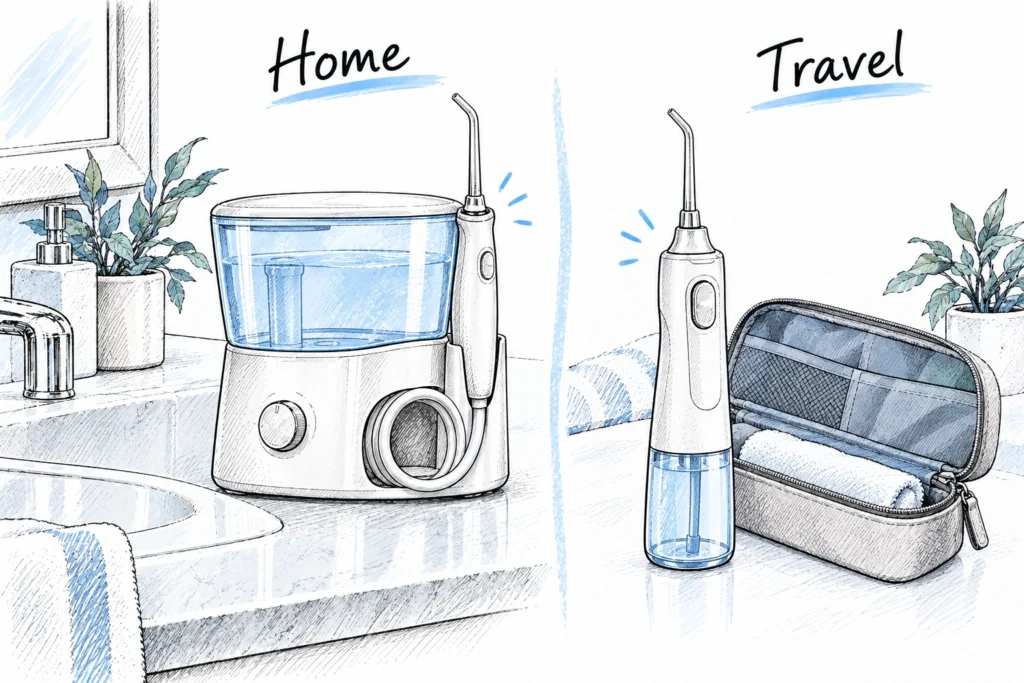
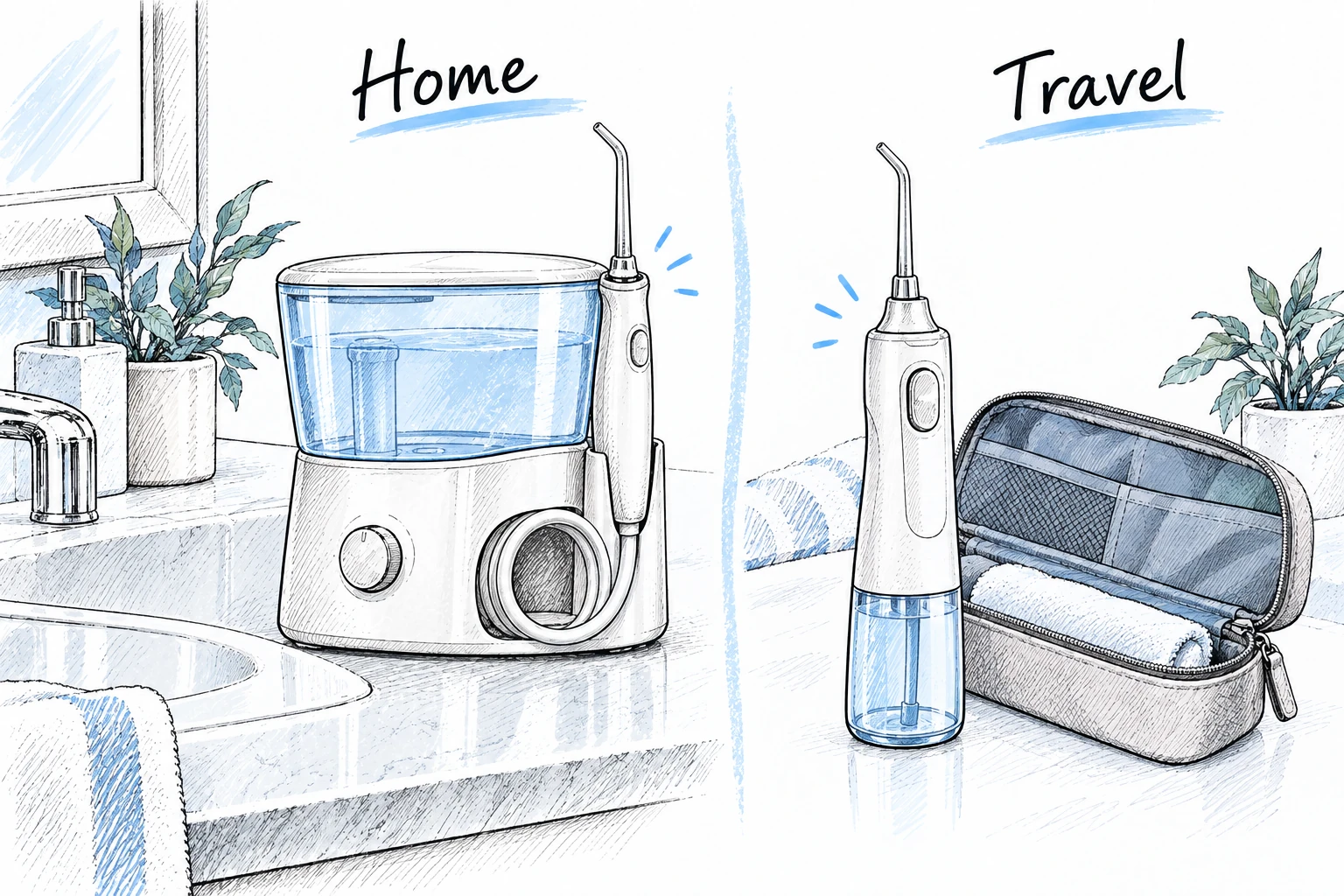
Product options include countertop, cordless and attachable formats. Reservoir size, pressure settings, noise, charging and price vary by design and market. Compare the finished configuration and intended use rather than assuming that one format or price point removes barriers for every buyer.
Demand can be shaped by product availability, distribution, user preferences and oral-care routines. A water flosser may complement a broader oral-care range; cross-selling should reflect customer demand, channel economics and the intended use of each product. For OEM teams, the electric toothbrush market guide provides related category context.
Water Flosser Market Estimate and Forecast (2025–2033)
Data Bridge Market Research estimated the global water flosser market at USD 1.06 billion in 2025 and forecasts USD 1.66 billion by 2033, with a 5.75% CAGR for 2026–2033. Its report was updated on May 12, 2026. The figures are market estimates and forecasts; use them as category context rather than verified sales totals.
The DBMR report separates countertop, portable and attachable formats and also analyzes application, end use and distribution channel. Check the definitions used in each report before comparing figures or applying a segment forecast to your product plan.
Common Water Flosser Formats
Countertop, cordless/portable and attachable designs offer different combinations of reservoir capacity, power source, nozzle connection and intended setting. Compare the features and use conditions of the models under consideration.
- Countertop water flossers: These models use a base unit and a separate reservoir. Compare reservoir capacity, footprint, pressure modes, cleaning and maintenance needs for the intended setting. DBMR identifies countertop products as the largest product-type segment in its 2025 estimate.
- Cordless and portable water flossers: These designs combine a pump, reservoir and power source in a compact unit. Compare battery runtime, charging, reservoir capacity and pressure settings. DBMR forecasts faster growth for this segment, while the suitability of an individual model depends on its features and intended users.
Applications and End-Use Categories
Market reports may classify applications such as home, dental clinic and hospital separately from end use such as household or commercial use. These are different reporting dimensions. For product planning, define the intended user and setting for the specific model rather than treating these categories as interchangeable.
Distribution and Market Access
Water flossers may be sold through e-commerce, marketplaces, pharmacies, specialty retailers and other channels. Each route brings different onboarding, listing, fulfillment, returns and customer-support requirements. A product’s online availability does not remove market-specific import, labeling or product-compliance obligations.
Regional Market Considerations
North America: Largest in the DBMR 2025 Estimate
DBMR identifies North America as the largest regional market, with an estimated 36.5% share in 2025. When planning a U.S. launch, review the product’s intended use and FDA classification, retailer documentation, import arrangements and after-sales support.
Europe: Local Requirements and Channels
Review language requirements, product rules, distribution channels and service arrangements for each European destination. In the EU, the compliance assessment starts with the product’s configuration and intended purpose. Check these alongside the distributor’s requirements when comparing launch options.
Asia-Pacific: Growth Across Diverse Markets
DBMR forecasts faster growth in Asia-Pacific. Product requirements, distribution, language, pricing and customer-support arrangements differ across countries, so assess each intended market individually.
Use Cases and Product-Planning Considerations
Interdental Cleaning Around Braces and Aligners
Brackets, wires and some aligner attachments can make cleaning more difficult. A water flosser may be one option for interdental cleaning, but it is not required for every orthodontic patient and does not replace brushing. People should follow advice from a dental professional for their own appliance and oral-health needs.
Gum Health and Individual Care
A water flosser can be considered as part of an interdental-cleaning routine. Claims about preventing or treating gum disease need evidence for the specific product and intended use. People with bleeding gums, other symptoms or a diagnosis should seek advice from their dental professional.
Connected Features as an Optional Configuration
Bluetooth, apps and usage records are optional features. Include software development, maintenance, battery use and data handling in the project budget. Agree what the app records, how users provide consent and which privacy rules apply in the intended markets. Usage tracking alone does not provide a diagnosis.
OEM Planning for Water Flossers
When sourcing a water flosser, compare a supplier’s relevant product experience, component sources, engineering support, sample process, production controls and delivery plan. For brands entering oral-care hardware, our water flosser OEM buyer guide outlines supplier evaluation, tooling and compliance-planning questions.
Key Components and Verification Considerations
- Pump technology: Compare pressure, flow, noise, durability and cost using the pump in the finished product, across its operating modes and expected loads. Assess cleaning performance and user comfort separately from maximum pressure.
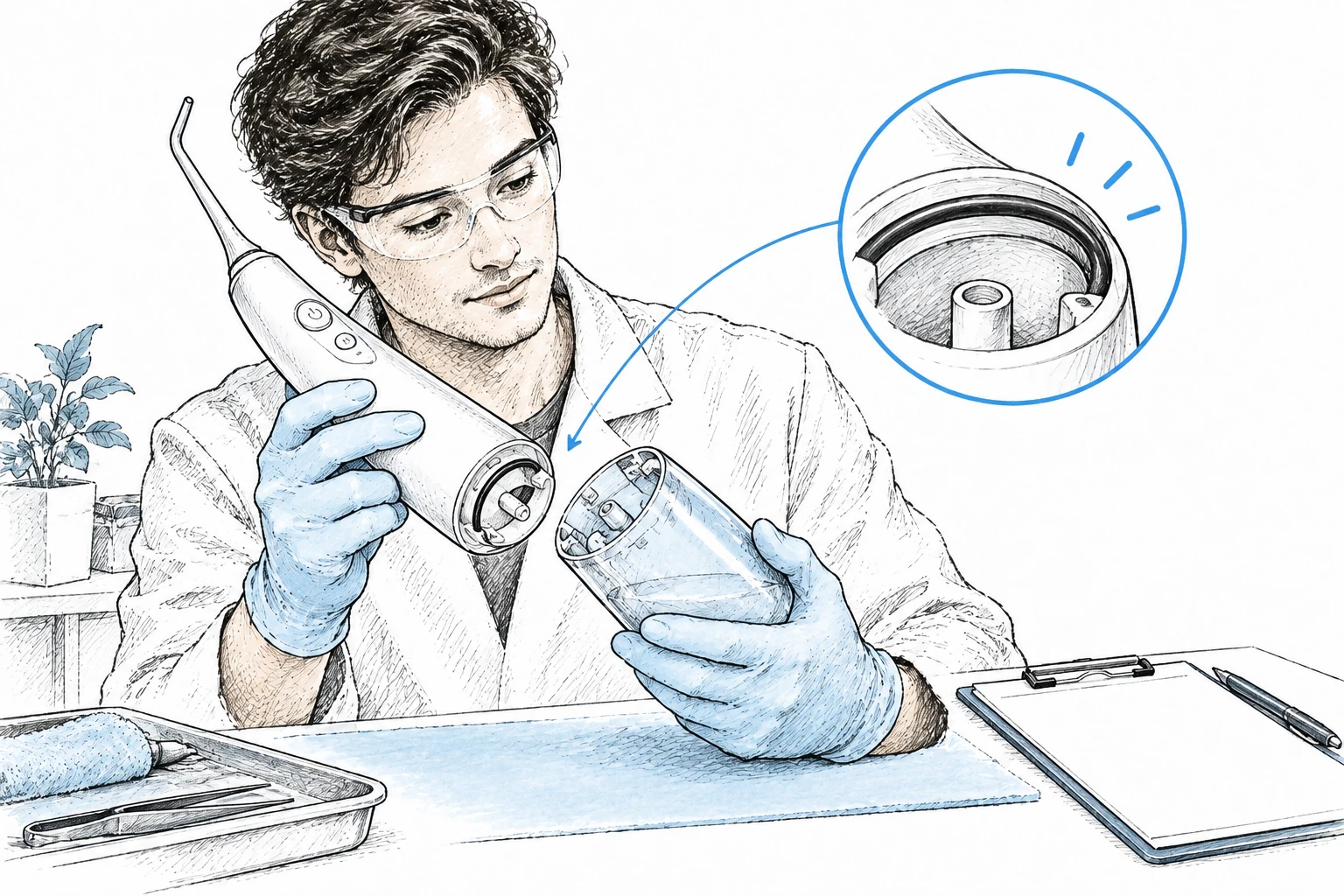
- Water reservoir: Select reservoir materials and geometry for the intended water contact, cleaning routine, product life and target-market requirements. Verify leakage, material compatibility and ease of cleaning in the finished design; do not assume that one material claim applies to every model.
- Battery and power management: For cordless models, define the battery, charging interface and expected use conditions. Validate runtime with a stated number of daily cycles, pressure mode and other test conditions. A USB-C connector does not by itself establish charging safety. Battery transport testing, including UN 38.3 where applicable, is separate from whole-product conformity assessment.
- Motor: Evaluate the motor and pump together under representative loads. Measure noise, vibration, output and energy use on the finished product to understand how the components perform as a system.
- Nozzle assembly: Define nozzle types and compatible models for the intended users. Check the connection dimensions, retention, seals and pressure performance for each compatible combination; there is no universal nozzle thread across product lines.
Supplier Selection and Production Planning
Ask which production steps the supplier handles directly and which involve subcontractors. Review component sources, tooling, sample approvals, capacity, corrective actions and delivery milestones. Use these records and quotations to compare suppliers, alongside their location.
Common OEM Verification Questions
Build verification around the final design, intended use and target market. Agree test methods, acceptance criteria, sample sizes and responsibilities in the project specification.
- Water ingress and leakage: Check reservoir connections, pump seals, charging interfaces and enclosure ingress separately. Agree test conditions and sampling for the finished product. An enclosure IP test covers specified conditions; it does not establish that every liquid path remains leak-free throughout use.
- Noise: Agree the measurement distance, background-noise level, pressure mode and water load before comparing results. Set an acceptance criterion suited to the product brief.
- Pressure and flow: Measure output across battery charge levels and operating modes on the finished product. Decide whether regulation or another control method is needed based on the design and test results.
- Mold and dimensional control: Review resin behavior, tooling design, shrinkage, release, maintenance and part inspection against the expected production volume. Validate any surface treatment for the specific tool and material.
Relish Technology works with brands on water flosser OEM projects. Standard custom orders start at 1,000 units; smaller quantities may be considered case by case. Wholesale orders for available stock start at 50 units. Product scope, tooling, testing and production timing depend on the agreed specifications and project schedule. See our certifications information for records currently published by Relish Tech.
Get a Free OEM Quote →How Relish Tech Supports Water Flosser OEM Projects
Relish Technology works with oral-care brands on OEM water flosser projects. Available support depends on the product and agreed project scope. Project planning can include:
- Product design and engineering coordination based on the agreed project brief
- Industrial design coordination, including 3D modeling and ergonomic review where included in scope
- Prototype and sample planning; timing is confirmed for each project
- Pump and component supplier coordination for the selected configuration
- Tooling and injection-molded part planning with the suppliers involved
- PCB and electronic-feature coordination where required by the selected model
- Agree quality records, inspection criteria and sampling plans for the product and project; review certification records published by Relish Tech and verify each supplier’s certificate scope separately.
- Coordinate available product documentation for the target market; the responsible manufacturer must determine and document applicable conformity requirements.
- Packaging planning for target-market labeling and agreed material options
- Standard custom orders start at 1,000 units; smaller quantities may be considered case by case. Wholesale orders for available stock start at 50 units. Confirm production and custom-tooling timing against the final specifications and project plan.
Whether you are launching a new water flosser brand, expanding an oral-care range or developing a model for a professional network, discuss the product brief, target markets and project scope with our team. Explore our water flosser range, read our private label guide, or contact us about your project.
Regional Sourcing and Launch-Planning Checklist
| Region | Channel planning | Product configuration | Compliance checks | After-sales planning |
|---|---|---|---|---|
| North America | Retailer and marketplace onboarding | Match model and charger to intended use | Check FDA classification and applicable U.S. requirements | Define importer, complaints and returns |
| Europe | Localize listings and distributor materials | Confirm the model and charging configuration | Check the applicable EU route and language rules | Plan local service and returns |
| Asia-Pacific | Assess channels country by country | Adapt plug, labeling and product format | Verify national product rules for each market | Plan local support and replacement parts |
| Latin America | Confirm importer and channel responsibilities | Review configuration and local user needs | Check country-specific product and import rules | Set language, warranty and service plans |
| Middle East & Africa | Evaluate distributors and channel access | Match product and power configuration | Check local obligations and importer duties | Confirm customer support and spares |
| All markets | Compare channel costs and fulfillment | Document each target model and accessory | Assign an owner for market-specific evidence | Track complaints, batches and corrective actions |
Key Takeaways
- DBMR estimated the 2025 market at USD 1.06 billion and projects USD 1.66 billion by 2033, at a 5.75% CAGR for 2026–2033.
- The report includes countertop, portable and attachable formats; product design and use conditions vary by model.
- DBMR identifies North America as the largest regional market and forecasts faster growth in Asia-Pacific. Assess the launch opportunity country by country.
- A water flosser may support interdental cleaning for some people with braces; product choice should follow individual dental advice.
- Standard custom orders at Relish start at 1,000 units; smaller quantities may be considered case by case. Wholesale orders for available stock start at 50 units. Confirm price and timing for the agreed specification.
- Evaluate pump output, seals, electrical safety, ingress protection and usability against a model-specific verification plan.
- Connected features are optional; assess functionality, privacy, consent, maintenance and project economics for each target market.
Plan a Water Flosser OEM Project with Relish Tech
Discuss your product brief, target markets and required project support with our team. We can review a water flosser OEM proposal based on the agreed specifications and scope.
Request a Manufacturing QuoteFrequently Asked Questions
References
Sources used for market estimates, product guidance and regulatory classification:
- Data Bridge Market Research. Global Water Flosser Market. Report updated May 12, 2026; forecast period 2026–2033. Retrieved from https://www.databridgemarketresearch.com/reports/global-water-flosser-market
- American Dental Association. Floss. Retrieved from https://www.ada.org/resources/ada-library/oral-health-topics/floss/
- MouthHealthy, American Dental Association. Water Flossers. Retrieved from https://www.mouthhealthy.org/all-topics-a-z/water-flossers/
- American Dental Association. Water Flossers. ADA Seal of Acceptance information. Retrieved from https://www.ada.org/resources/research/science-and-research-institute/oral-health-topics/water-flossers
- World Health Organization. Oral health. Retrieved from https://www.who.int/en/news-room/fact-sheets/detail/oral-health
- U.S. Food and Drug Administration. Product Classification: Oral irrigation unit (EFS, 21 CFR 872.6510). Retrieved from FDA Product Classification
- International Organization for Standardization. ISO 13485:2016 — Quality management systems for medical devices. Retrieved from https://www.iso.org/standard/59752.html