

Sustainable Oral Care Market 2026: Outlook & OEM Guide
1. Why Sustainability Matters in Oral Care
Sustainability is becoming a more visible consideration in oral care, alongside product performance, price and convenience. Buyers may encounter bamboo handles, refill formats and alternative materials, but the environmental profile of a product depends on its full design, supply chain, use and end-of-life route. This guide reviews the market outlook and practical questions for brands planning oral care products.
For oral care OEMs, material selection and environmental claims require product-specific evidence. Brands should compare the intended use, relevant market rules, supplier documentation, performance requirements and disposal routes before choosing a material or making a sustainability claim.
Plastic waste is a practical concern for oral care brands, from toothbrush components to product packaging. The wider environmental context is discussed by UNEP. For a specific product, disposal options depend on its materials and the collection systems in its sales market. Toothpaste tubes, for example, may combine layers for barrier protection, making them difficult to recycle through some standard programs.
For OEM manufacturers such as Relish Tech, material changes can affect product design, sourcing, testing and cost. Brands should evaluate those trade-offs against the intended market and substantiate any environmental benefit they communicate.
2. Sustainable Oral Care Market Size & Forecast (2025–2032)
Stratistics Market Research’s 2025 report estimates the sustainable oral care market at $5.6 billion in 2025 and forecasts $8.9 billion by 2032, at a compound annual growth rate of 6.8%. The report covers toothbrushes, toothpaste, floss, mouthwash and other categories, with materials and packaging among its market segments. Its figures therefore describe the broader category rather than electric toothbrushes alone.
Product and Sourcing Considerations
Toothbrushes: Toothbrushes are one part of the broader sustainable oral care category. Materials such as bamboo or recycled polymers may be considered for selected components, but composition, product performance and end-of-life claims must be checked for the specific design.
Floss and Interdental Products: Floss and interdental products use a range of materials and formats. Evaluate each component separately, and verify any bio-based, recycled-content or disposal claim against the relevant material grade and finished-product evidence.
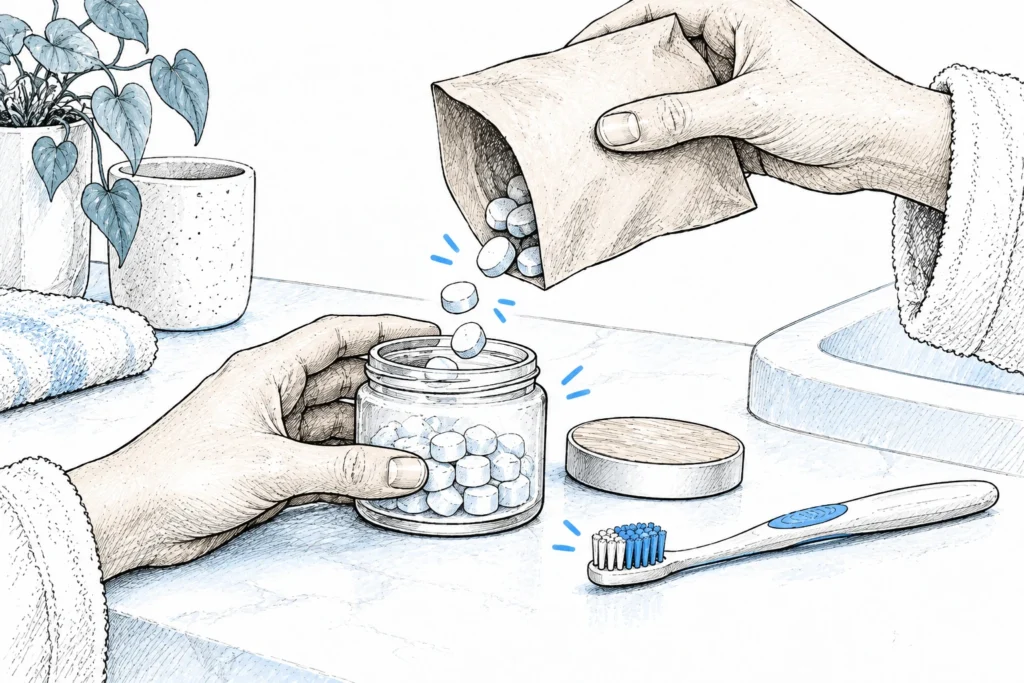
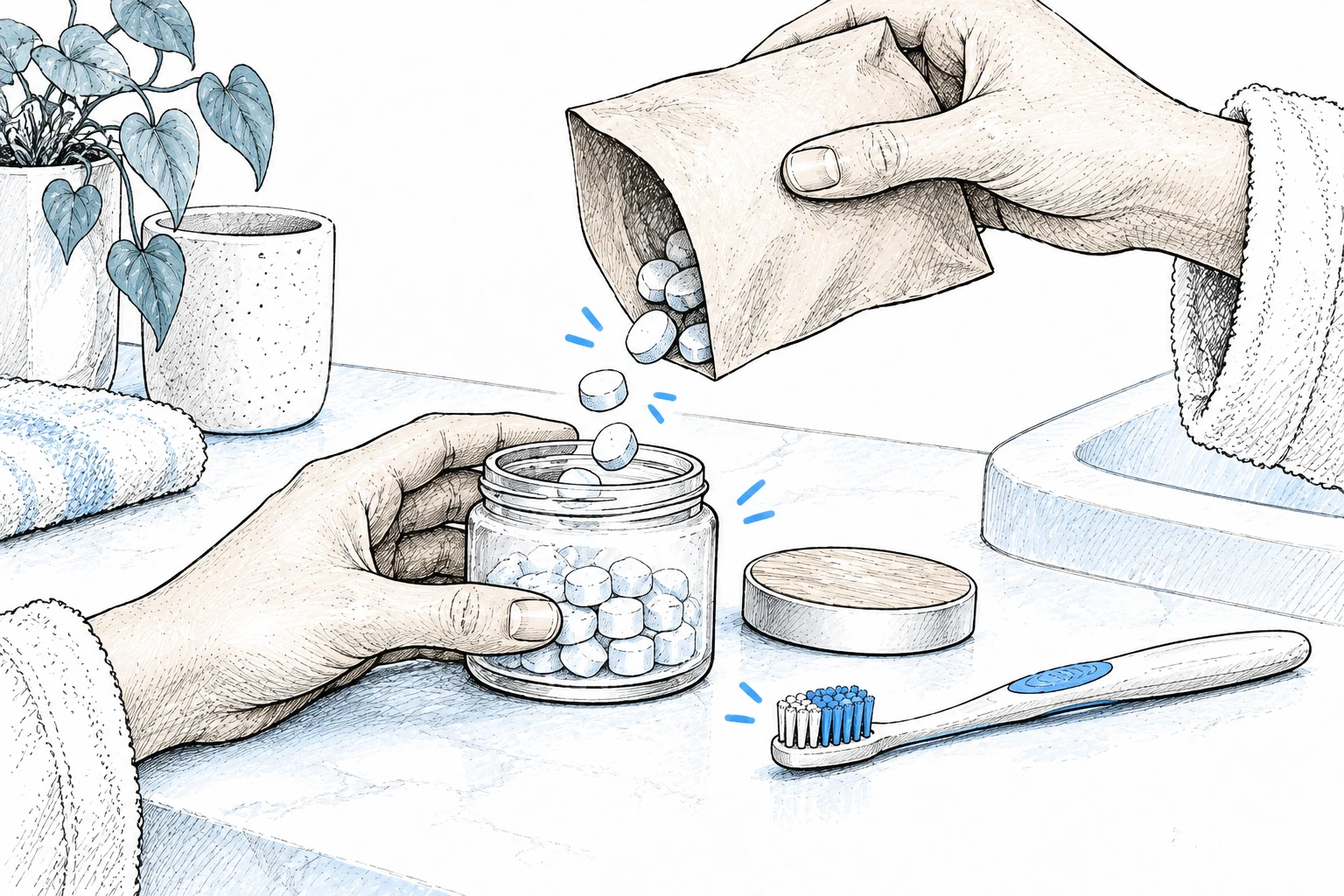
Toothpaste and Mouthwash: Tablets, powders, concentrates and refill formats may change packaging and shipping needs. Product stability, shelf life, use instructions and packaging compatibility still need to be assessed for each formulation and market.
Packaging: Packaging is a design and sourcing consideration across product categories. Compare material composition, protective function, transport needs and the collection or recycling options available in the intended market.
What Buyers May Evaluate
Price acceptance varies with the product, sales channel and market. Research with a clearly defined geography, sample and method can help a brand assess how its intended buyers value material choices, refill formats and other features alongside performance and cost.
Specific claims give buyers something concrete to compare: the recycled content of a handle, the materials in a package or a measured reduction within a defined comparison. The supporting evidence should cover the same attribute and scope as the claim.
3. Materials and Product Design Considerations
Bamboo Handles and Responsible Sourcing
FSC-certified bamboo can be considered for toothbrush handles where the supplier’s certification and chain-of-custody records cover the material and claim. Bristles, coatings and attachments also affect the finished toothbrush’s disposal options; FSC certification establishes sourcing credentials within its scope, rather than compostability.
Bio-Based Bristle Materials
Bio-based content describes where a material’s feedstock comes from; biodegradability and compostability describe how it breaks down under specified conditions. Nylon-4 and castor-oil-based nylons are different materials. For bristles, assess the specific commercial grade’s durability, cleaning performance and contact requirements, with separate evidence for any end-of-life claim.
Refill Formats
Refill systems can change how much packaging a product needs. Compare the primary container and refill pack together, including protection during storage and transport, the number of refills used and the available local collection routes.
Recycled and Recovered Plastics
“Ocean-recovered” describes material recovered from the marine environment, while “ocean-bound” generally refers to material collected at risk of entering it. These terms should not be used interchangeably. Verify the source, recycled-content percentage, chain-of-custody records and performance of the actual material grade.
Packaging Design
Recycled paperboard, refill packs and alternative materials each offer different design possibilities. Assess the complete package, including inks, coatings and adhesives, before choosing wording such as recyclable, compostable or plastic-free. Seaweed- and mushroom-based formats also need evaluation for the intended application and supply volume. For brand-ready packaging information, see our custom packaging options.
Environmental Claims and Production
Manufacturing-related environmental claims need a defined boundary and supporting records. Energy sourcing, process efficiency, purchased materials, transport and offsets cover different parts of an emissions profile; an offset alone does not establish that a product or factory is carbon neutral.
Developing an Oral Care Product?
Discuss material options, product requirements and the supplier documentation available for your project.
Get a Custom OEM Quote4. EU Environmental-Claims and Packaging Rules
For EU market planning, distinguish current consumer-law and packaging requirements from the Green Claims Directive proposal. The proposal is separate from Directive (EU) 2024/825, which requires Member States to apply their implementing measures from 27 September 2026. Check the national rules for the sales market and match each environmental statement to evidence for the attribute it describes.
For brands selling in the EU, review each environmental statement against its evidence and the applicable consumer-protection rules. A claim about one material or component should not imply an unverified benefit for the entire product, package or business.
The Packaging and Packaging Waste Regulation (PPWR), Regulation (EU) 2025/40, generally applies from 12 August 2026. Individual obligations have their own schedules and scope, so packaging type, material and the business’s role determine which recycled-content, reuse, labelling or other provisions need to be addressed.
OEM partners can provide specifications and records for the components they supply. The brand or importer should determine which product and packaging obligations apply, what evidence is needed and who is responsible for each filing or claim.
5. Planning for Different Oral Care Buyers
Audience Research
Younger consumers: For younger audiences, test how the intended buyers weigh price, product performance, materials, packaging and the evidence behind environmental claims. Local research is more useful for a launch decision than assumptions based on age alone.
Family and Household Buyers: Household buyers may compare durability, ease of use, replacement costs and refill availability. Customer interviews and product trials can help establish which of these factors matter most for the intended offer.
Value-Conscious Buyers: For a value-focused offer, compare the purchase price with performance, replacement needs and clear product information. Test any proposed premium against the product’s benefits and the prices available in the chosen channel.
Older Consumers: For older consumers, research the product requirements and communication that suit the intended users. Environmental preferences are one part of that picture, alongside usability, cost and maintenance.
Regional Considerations
European Markets: Requirements, certification availability and waste-collection systems vary by country. Check the relevant claim rules, certification scope and local end-of-life routes for each target market.
North American Markets: Consumer expectations and collection systems also vary across the United States and Canada. Use current, market-specific research and confirm the rules that apply to the product and package.
Premium and Mainstream Channels: Material choices and other sustainability features affect both design and cost. Assess their value in the specific product and channel before setting a premium price or projecting demand.
6. OEM Manufacturing Considerations for Sustainable Products
Material Sourcing for Oral Care Products
For bamboo components, establish the material’s origin and the supplier records available for the order. A planned FSC claim needs current certification and chain-of-custody documentation covering that claim, together with the applicable trademark permissions. Learn more about our bamboo toothbrush OEM capabilities. Agree on the handle’s finish, dimensional requirements and inspection criteria. Where the design calls for sanitation or sterilization, specify the actual process and the requirements it must meet.
Recycled polymers should be assessed by grade and intended application. For recovered materials, document the source and chain of custody, and verify the finished component’s mechanical, chemical and contact-related suitability against the product specification.
OEM Project Parameters Relish Tech’s standard custom MOQ is 1,000 units, with flexibility according to the order. Stock products are available for wholesale from 50 units. A project quotation should confirm the quantities for the selected configuration, components or kit, together with lead time, inspection criteria and documentation.
Bio-Based Materials
Select a bio-based polymer by its chemistry, commercial grade and intended use. Nylon-4 differs from castor-oil-based nylons; sourcing and disposal claims need evidence for the material actually supplied. For bristles, evaluate durability, cleaning performance and applicable contact requirements before final selection.
PLA is used in some packaging and other applications. For an oral-care component, evaluation should cover the selected grade’s moisture resistance, durability and the requirements of its intended use.
Lifecycle Assessment (LCA) and Evidence
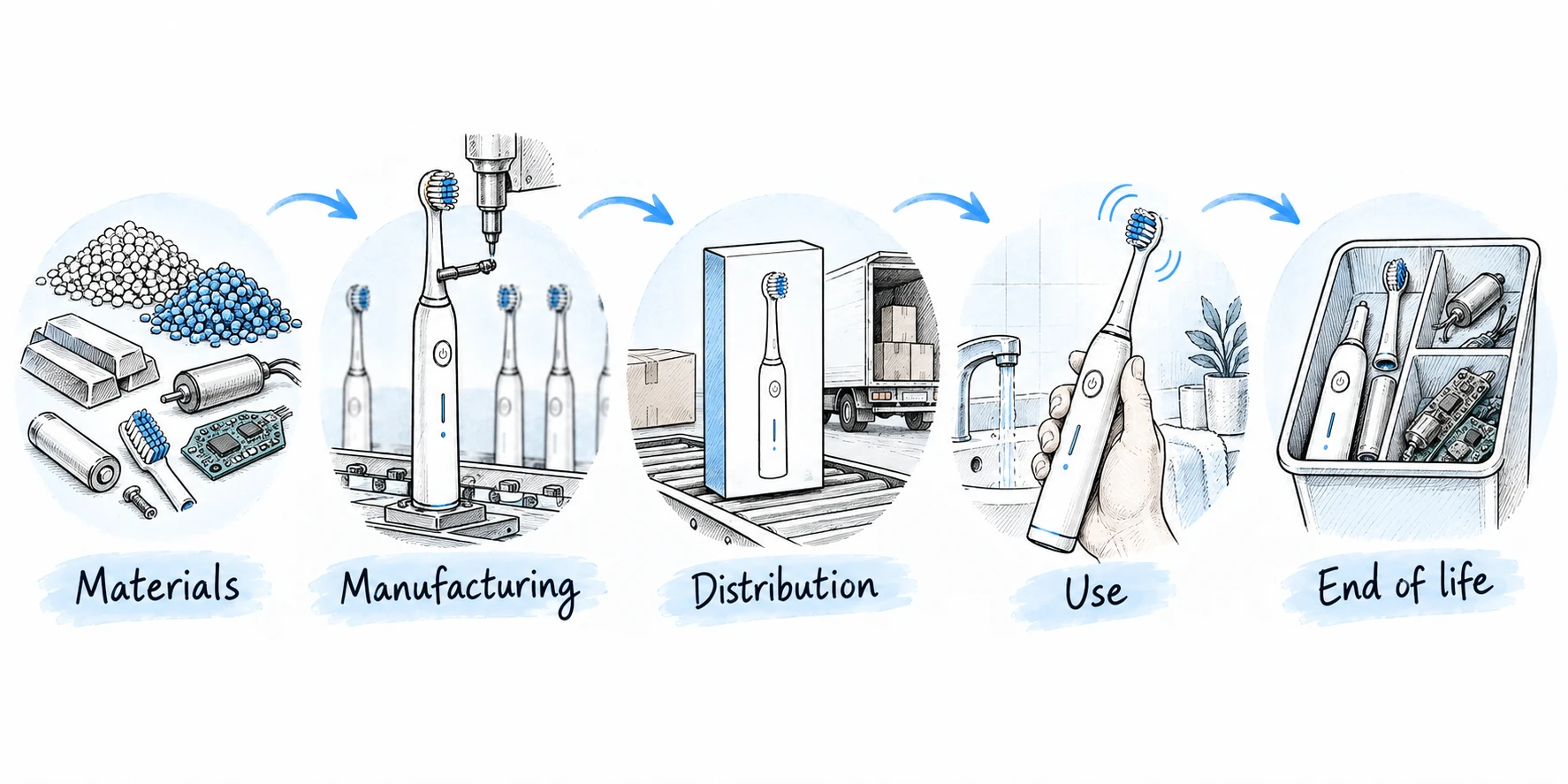
A lifecycle assessment (LCA) evaluates environmental impacts across defined life-cycle stages. ISO 14040 and ISO 14044 provide principles, a framework and requirements for this work. A useful comparison states its functional unit, system boundary, data and assumptions so readers can understand what the result covers.
For an OEM project, agree on the LCA question, product configuration and data needed before commissioning the work. Scope and cost depend on the assessment and information available. Claims based on an LCA should refer to its documented results and comparison boundaries.
Certification and Claim Scope
Certification requirements depend on the product, component, target market and claim. For electric toothbrush requirements, see our OEM certifications guide . The programs below serve different purposes, so choose the one whose criteria and scope match the intended claim.
USDA BioPreferred: USDA BioPreferred is a voluntary program for eligible bio-based products, using testing to verify bio-based content. Its label addresses that content; biodegradability, compostability and application suitability require their own assessment.
EU Ecolabel: The EU Ecolabel is available for product groups with established criteria. Confirm that the selected oral-care product falls within an eligible group and can meet its current requirements before planning an application or using the label.
B Corp: B Corp assesses companies. See the program’s explanation of B Corp certification for its requirements and scope. Company certification does not extend automatically to every customer brand, product or package.
Planning an Oral Care OEM Project?
Share the product design, target markets and documentation requirements so the project scope can be assessed.
Start Your Project7. Relish Tech’s Role in Oral Care OEM Projects
Relish Tech operates across facilities in Shenzhen and Huizhou, with a combined area of 20,000 m², more than 350 employees, over 30 R&D personnel and 12 production lines. Learn about our manufacturing processes and manufacturing facilities . Material and process options depend on the product design and supplier availability. For an FSC, recycled-content or bio-based claim, confirm the records available for the selected material, component and batch.
Our engineering team can discuss material options against the design, target market and cost requirements. The project review can establish which supplier records, specifications and test documents are available, and whether an LCA or other third-party assessment is needed.
Request current quality records and audit reports for the relevant facility, product and customer requirements, checking the issuer, scope and validity. Product and environmental claims need evidence appropriate to their own scope in addition to any quality-system certification.
For EU-bound products, define the brand’s and importer’s responsibilities for claims and packaging requirements. Relish Tech can discuss product specifications and component records available for the project; specialist regulatory support can be included where needed.
For each sustainability statement, identify the product attribute it covers and keep evidence that supports that exact scope. Consider material composition, product performance, durability, packaging and the available end-of-life route together.
Key Takeaways
- Stratistics Market Research estimates a $5.6 billion sustainable oral care market in 2025 and forecasts $8.9 billion by 2032; the scope includes multiple oral-care categories.
- Test customer priorities and price acceptance with research for the intended product and market.
- Bamboo, recycled polymers and selected bio-based materials may be options for particular components. Validate each grade for performance, durability and intended use.
- EU environmental-claims and packaging requirements have different legal bases, scopes and timelines. Confirm which provisions apply to the product and market.
- Request current supplier, material and test records for the components in scope. Upstream certification does not automatically certify the finished product.
- Carbon-related statements need a clear boundary and supporting evidence. Offsets alone do not establish that a product or factory is carbon neutral.
- Evaluate refill formats with their primary packaging, protection requirements and local collection routes.
Browse more industry insights →
Planning a Sustainable Oral Care Product?
Discuss an OEM brief covering product design, material options, target markets and available documentation.
Contact Our TeamFrequently Asked Questions
What is the projected size of the sustainable oral care market by 2032?
Stratistics Market Research’s 2025 report forecasts $8.9 billion by 2032, from an estimated $5.6 billion in 2025, at a compound annual growth rate of 6.8%. It covers toothbrushes, toothpaste, floss, mouthwash and other categories, rather than electric toothbrushes alone.
What materials are used in sustainable toothbrushes?
Materials may include bamboo handles, recycled polymers and selected bio-based polymers. Their properties differ: bio-based content does not by itself mean a material is biodegradable or compostable, and a component-level claim does not describe the complete toothbrush. Check the grade, product design, test evidence and local end-of-life route.
How much are consumers willing to pay more for sustainable oral care?
Price acceptance varies by product, channel and market. Use research with a defined geography, sample and method, then test the intended offer with its target buyers to assess whether its features support a higher price.
Which certifications matter for sustainable oral care products?
It depends on the claim and product scope. FSC relates to forest and chain-of-custody claims; USDA BioPreferred addresses bio-based content for eligible products; the EU Ecolabel applies to product groups with established criteria; and B Corp assesses companies. Confirm each program’s current criteria and do not treat one certification as a substitute for another.
What are the EU rules on environmental claims and packaging?
Directive (EU) 2024/825 requires Member States to apply their implementing measures from 27 September 2026. The PPWR generally applies from 12 August 2026, with phased obligations for different packaging and business roles. The separate Green Claims Directive remains a proposal. Check the national consumer rules and packaging provisions relevant to the sales market.
How can an OEM support sustainable oral care production?
An OEM may provide product specifications, supplier records and test documents for components within its scope. The brand or importer should define the applicable requirements, verify that the available evidence supports its claims and confirm who is responsible for each regulatory or packaging obligation.
References
- Stratistics Market Research. (2025). Sustainable Oral Care Market. Market report overview and forecast. https://www.strategymrc.com/report/sustainable-oral-care-market
- European Commission. Bio-based, biodegradable and compostable plastics. Guidance on terminology and environmental claims. Retrieved from https://environment.ec.europa.eu/topics/plastics/bio-based-biodegradable-and-compostable-plastics_en
- European Parliament and Council. (2024). Directive (EU) 2024/825 on empowering consumers for the green transition. https://eur-lex.europa.eu/eli/dir/2024/825/oj
- European Parliament and Council. (2025). Regulation (EU) 2025/40 on packaging and packaging waste. https://eur-lex.europa.eu/eli/reg/2025/40/oj/eng
- Forest Stewardship Council. FSC and bamboo sourcing. https://connect.fsc.org/bamboo