







Electric Toothbrush OEM/ODM Manufacturing Process Guide
A B2B guide to choosing OEM or ODM, defining a customization brief, evaluating samples, and managing electric toothbrush development from inquiry to delivery.
Table of Contents
- What Is OEM/ODM Electric Toothbrush Manufacturing?
- OEM vs ODM vs OBM: Which Model Should You Choose?
- How to Evaluate an Electric Toothbrush OEM/ODM Partner in China
- Electric Toothbrush Manufacturing Cost Breakdown (2026)
- Essential Certifications & Compliance Requirements
- The Complete OEM Process: From Inquiry to Delivery
- Quality Control & Factory Audit Guide
- Private Label Branding: From Packaging to Market Launch
- Common Pitfalls & How to Avoid Them
- Frequently Asked Questions
1. What Is OEM/ODM Electric Toothbrush Manufacturing?
If you're looking to launch a private label electric toothbrush range, you don't need to build a factory from scratch. That's where OEM (Original Equipment Manufacturer) and ODM (Original Design Manufacturer) partnerships help turn your product plan into a market-ready oral-care range.
Straits Research projects the global electric toothbrush market to grow from USD 5.02 billion in 2026 to USD 8.50 billion by 2034, with a CAGR of 6.8% over 2026–2034 [1]. The OEM/ODM manufacturing segment represents a significant and growing portion of this market, driven by increasing demand for private label brands and cost-efficient production solutions.
Industry data indicates that approximately 70% of global oral care brands use OEM or ODM manufacturing partners to produce their products [2]. This means that even major brands like Oral-B, Philips Sonicare, and Colgate rely on manufacturing partners — many based in China's Guangdong province — to produce their electric toothbrushes at scale.
Why Do Most Brands Use OEM/ODM Partners?
Brands use OEM/ODM partnerships to combine manufacturing expertise with a faster route to market:
- Lower unit costs: Manufacturing in China reduces production costs by 40–70% compared to Western markets
- Speed to market: An experienced factory can take you from concept to finished product in 60–120 days
- Scalability: Start custom orders at 1,000 units, with flexibility to suit the order, and scale to 100,000+ units for retail distribution. In-stock wholesale starts at 50 units.
- Technical expertise: Access to engineering teams who've solved vibration, waterproofing, and battery life challenges across hundreds of product iterations
- Regulatory support: Established manufacturers already hold certifications and can guide you through compliance for multiple markets
Key Insight
Approximately 70% of global oral care brands use OEM or ODM manufacturing partners. A manufacturing partnership gives your brand access to specialist production capabilities without the investment needed to build its own factory. Work with experienced electric toothbrush factories.
About the Manufacturer: Relish Tech
This guide is authored by Shenzhen Relish Technology Co., Ltd., a professional OEM/ODM manufacturer with over a decade of experience in the oral care industry. Our manufacturing capabilities include:
- Factory footprint: 20,000 m2 dust-free workshop
- Monthly production capacity: 1.2 million+ units
- Workforce: 350+ employees across 12 automated production lines
- R&D capability: 30+ dedicated engineers with full product development capabilities
- Global reach: Products exported to 120+ countries worldwide
- Certifications and compliance: ISO 9001 and ISO 13485 certifications, FDA establishment registration, and CE, FCC, RoHS and REACH documentation. Complete test reports are available on request.
- Client base: Trusted by globally recognized oral care brands for OEM/ODM partnerships

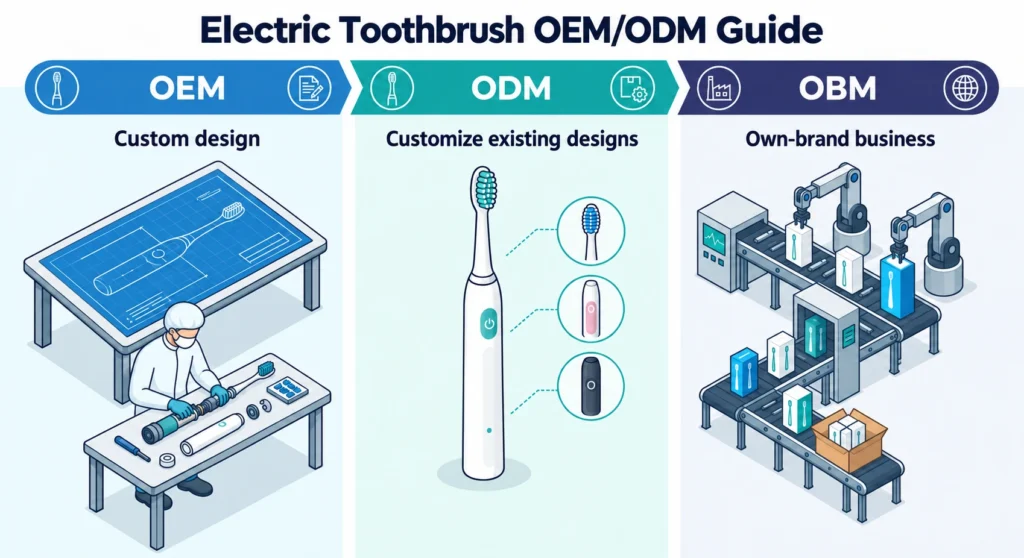
2. OEM vs ODM vs OBM: Which Model Should You Choose?
Choosing the manufacturing model is one of the most important decisions you’ll make before committing to product development. The model you choose shapes design control, upfront investment and your launch schedule.
If the table is not fully visible, scroll horizontally to view all columns.
| Factor | OEM | ODM | OBM |
|---|---|---|---|
| What it means | You design the product; factory manufactures to your specs | Factory has existing designs you customize with your branding | You design, manufacture, and sell under your own brand |
| Design control | Full design control; IP ownership defined in the manufacturing agreement | Customization of an existing design; core design rights retained by the factory | Full — everything in-house |
| Time to market | 90–150 days (new molds + testing) | 30–60 days (customization only) | 180–365 days (build everything) |
| Typical MOQ | 1,000 units at Relish, with order flexibility | 1,000 custom units at Relish; in-stock wholesale from 50 | N/A (your own factory) |
| Unit cost | Higher (mold investment amortized) | Lower (shared tooling costs) | Highest (full overhead) |
| Differentiation | High — unique product | Medium — cosmetic customization | Maximum |
| Upfront investment | $5,000–$30,000 (molds + R&D) | $500–$5,000 (branding + packaging) | $500,000+ (factory setup) |
| Best for | Brands wanting unique, defensible products | Brands entering the market quickly with low risk | Large corporations with massive volume |
Decision Tree: Which Model Is Right for You?
Pro Tip
Many successful brands start with ODM for market testing (validate demand, gather customer feedback), then transition to OEM for their second-generation product based on real user data. This hybrid approach minimizes risk while building toward a unique product line.
Read more: For a deep-dive comparison, see our detailed guide on OEM vs ODM vs OBM for Oral Care Brands.
3. How to Find a Reliable Electric Toothbrush OEM Manufacturer in China
There are thousands of factories claiming to manufacture electric toothbrushes in China. To find the right electric toothbrush OEM manufacturer, compare relevant experience, samples, quality systems and the support available for your project.
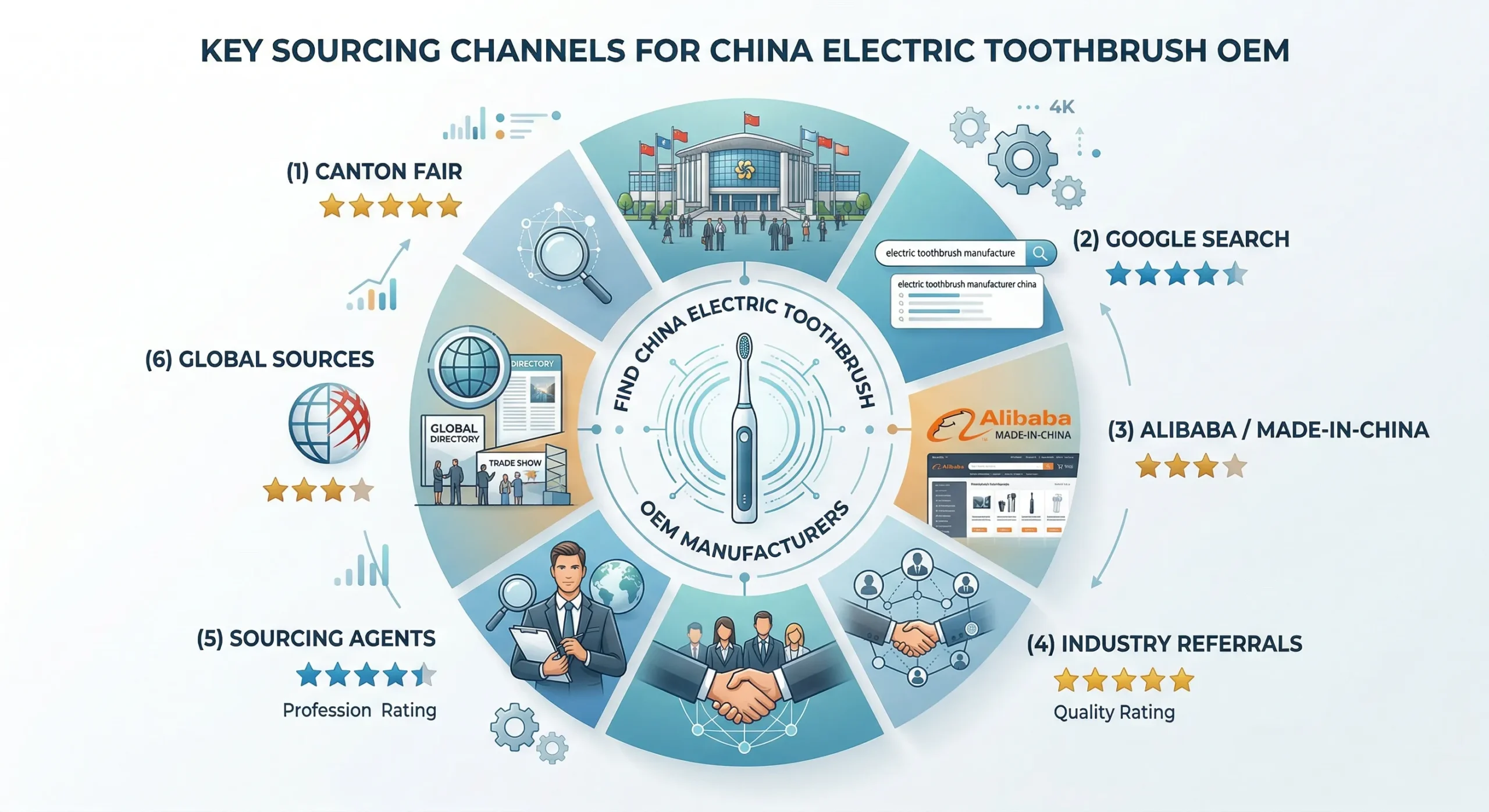
Six Channels to Find Manufacturers
- Trade shows: The Canton Fair (Guangzhou, April & October), CES (Las Vegas), and IFA (Berlin) are the top events where OEM manufacturers exhibit.
- B2B platforms: Alibaba, Made-in-China, and Global Sources list thousands of suppliers. Use filters for "Verified Supplier" and "Trade Assurance."
- Industry directories: Specialized oral care sourcing directories curate pre-vetted manufacturers with detailed capability profiles.
- Google search: Search queries like "electric toothbrush OEM manufacturer China" surface factory websites with detailed specs and certifications.
- Industry associations & referrals: The China Oral Care Products Association and trade peers can provide verified recommendations.
- Social media & LinkedIn: Many legitimate manufacturers maintain active LinkedIn profiles showcasing capabilities and client case studies.
Factory Evaluation Checklist
- Business licenses & certifications: Verify the factory's Chinese business license, ISO 9001 quality management certification, and product-specific certifications (CE and FCC documentation, plus FDA establishment registration and device listing for the US market)
- Manufacturing capability: Confirm they have in-house injection molding, SMT for PCB assembly, ultrasonic welding, and automated assembly lines — not just trading company arrangements
- R&D team: A proper R&D department with 10+ engineers can support custom designs and product iteration. Review the team’s relevant work as well as its size.
- Production capacity: Ask about monthly output, current utilization and the production capacity available for your order. Discuss how the factory handles peak demand and schedule changes.
- Quality control system: Verify they have IQC (Incoming Quality Control), IPQC (In-Process Quality Control), and OQC (Outgoing Quality Control) processes documented and in practice
- Existing client references: Request 2–3 client references or relevant case studies. Use these to assess the factory’s experience with projects similar to yours.
- Sample quality: Always order samples before committing to production. Test for brush vibration quality, battery life, waterproof integrity, and overall build quality
- Communication quality: Evaluate their English proficiency, response time, and willingness to provide detailed technical answers
Red Flags to Watch For
- Factory cannot provide verifiable business license or certification documents
- Quotes more than 30% below comparable offers: check that components, testing, packaging and delivery terms match
- Reluctance to allow factory visits or video factory tours
- No documented quality control processes or inspection reports
- Trading company claiming to be a manufacturer (ask if they own their production lines)
Read more: See our step-by-step guide on How to Evaluate an Electric Toothbrush OEM/ODM Partner in China.
4. Electric Toothbrush Manufacturing Cost Breakdown (2026)
Understanding the cost structure is essential for pricing your product profitably. The OEM electric toothbrush cost depends primarily on the quality tier, customization level, and order quantity. Here's a detailed breakdown from our manufacturing operations.
If the table is not fully visible, scroll horizontally to view all columns.
| Component / Cost | Basic Tier | Mid-Range | Premium |
|---|---|---|---|
| Motor | $0.30–0.50 (standard coreless) | $0.60–1.20 (sonic, 30,000+ vibrations/min) | $1.50–3.00 (magnetic levitation) |
| Battery | $0.20–0.40 (NiMH, 600mAh) | $0.50–1.00 (Li-ion, 1000mAh) | $1.20–2.50 (Li-ion, 2000mAh+) |
| PCBA / Controller | $0.40–0.80 (basic timer) | $0.80–1.50 (multi-mode, pressure sensor) | $2.00–5.00 (smart, Bluetooth, app-enabled) |
| Brush Head | $0.10–0.20 (standard nylon) | $0.25–0.50 (DuPont bristles) | $0.50–1.50 (premium, multiple types) |
| Housing / Shell | $0.30–0.60 (ABS, basic finish) | $0.60–1.20 (ABS/PP, soft-touch) | $1.50–3.00 (premium materials, metal accents) |
| Charging System | $0.20–0.40 (USB-C cable) | $0.50–1.00 (wireless inductive) | $1.50–3.00 (fast wireless + case) |
| Assembly & Testing | $0.30–0.50 | $0.50–0.80 | $1.00–2.00 |
| Packaging | $0.20–0.40 (basic box) | $0.50–1.00 (retail-ready) | $1.50–3.50 (premium unboxing) |
| TOTAL per unit | $2.00–3.80 | $4.25–8.20 | $10.70–23.50 |
| Typical retail price | $9.99–19.99 | $29.99–59.99 | $79.99–199.99 |
| Illustrative gross margin | 60–80% | 70–85% | 75–88% |
Important Notes on Cost
- Prices above are estimates at 1,000-unit MOQ. Scaling to 5,000+ units typically reduces unit costs by 15–30%.
- Mold costs ($3,000–$15,000 per mold set) are a one-time investment for OEM projects, amortized across production volume.
- Certification costs ($2,000–$8,000 depending on target markets) are typically shared across product families.
- Shipping costs ($0.50–2.00/unit by sea, $3–8/unit by air) are significant and often overlooked in initial budgets.
Cost Reduction Strategies
- Use standard components: Custom motors, batteries, or chips increase both cost and lead time. Standard components achieve 80% of performance at 50% of the cost.
- Minimize SKU complexity: Each color, material, or feature variant requires separate inventory management and may increase minimum order quantities.
- Order at scale: Order 5,000+ units rather than 1,000 to significantly reduce per-unit tooling amortization and material costs.
- Bundle certifications: Plan all target markets upfront so certifications are done simultaneously rather than sequentially.
Read more: For the full cost analysis with profit margin calculations, see our Electric Toothbrush Manufacturing Cost & Profit Margins (2026).
5. Essential Certifications & Compliance Requirements
Prepare your electric toothbrush for each target market by addressing the relevant certifications and documentation early in development. The table below outlines common requirements, planning costs and timelines.
If the table is not fully visible, scroll horizontally to view all columns.
| Market | Marking / Requirement | Scope | Typical Cost | Timeline |
|---|---|---|---|---|
| European Union | CE Marking | EMC and RoHS; RED for radio-enabled models; LVD for equipment within its voltage range, such as relevant mains adapters | $2,000–5,000 | 3–6 weeks |
| European Union | RoHS Directive | Restriction of hazardous substances (lead, mercury, cadmium, etc.) | Part of applicable CE conformity assessment | Planned alongside the CE assessment |
| European Union | REACH | Relevant substance restrictions and information duties for substances in articles | $500–1,500 | 2–4 weeks |
| United States | FCC | Electromagnetic interference and radio frequency emissions | $1,500–3,000 | 2–4 weeks |
| United States | FDA registration / listing | Powered toothbrushes: Class I under 21 CFR 872.6865; 510(k)-exempt subject to §872.9 | $1,000–3,000 | 4–8 weeks |
| Japan | PSE Mark | PSE obligations for designated equipment; assess the toothbrush, adapter and supplied battery configuration | $2,000–4,000 | 4–6 weeks |
| South Korea | KC Mark | Electrical safety and electromagnetic compatibility | $1,500–3,000 | 3–5 weeks |
| Eurasian Economic Union (EAEU) | EAC | Applicable EAEU technical regulations for the product and supplied accessories | $2,000–4,000 | 4–8 weeks |
| Product specification | IPX7 water resistance | Temporary immersion test: up to 1 metre for 30 minutes under specified test conditions | $300–800 | 1–2 weeks |
Manufacturer Advantage
An established manufacturer’s certifications, technical files and test reports can reduce duplicated work and help you plan market entry. Where a report covers a product family, the laboratory can assess whether a new SKU needs an update or additional tests.
Water Resistance: What IPX7 Tells Buyers
Electric toothbrushes are used in wet bathroom environments. IPX7 indicates protection against temporary immersion under specified test conditions, commonly described as up to 1 metre for 30 minutes. It provides a useful basis for evaluating water sealing and preparing product information:
- Water-ingress protection for bathroom use
- Water-sealing checks during product validation
- Water-resistance information for retailers and distributors
- A defined reference for immersion-test documentation
- Clear, accurate water-resistance specifications for customers
- A starting point for separate humidity, temperature and durability tests
IPX7 testing is conducted by accredited third-party labs such as SGS, TUV Rheinland, or Intertek. Always request a copy of the test report, not just the certificate — reports show actual test data that can be valuable for retailer compliance.
Read more: For a complete certification checklist, see our Electric Toothbrush Export Certification Guide (2026).
6. The Complete OEM Process: From Inquiry to Delivery
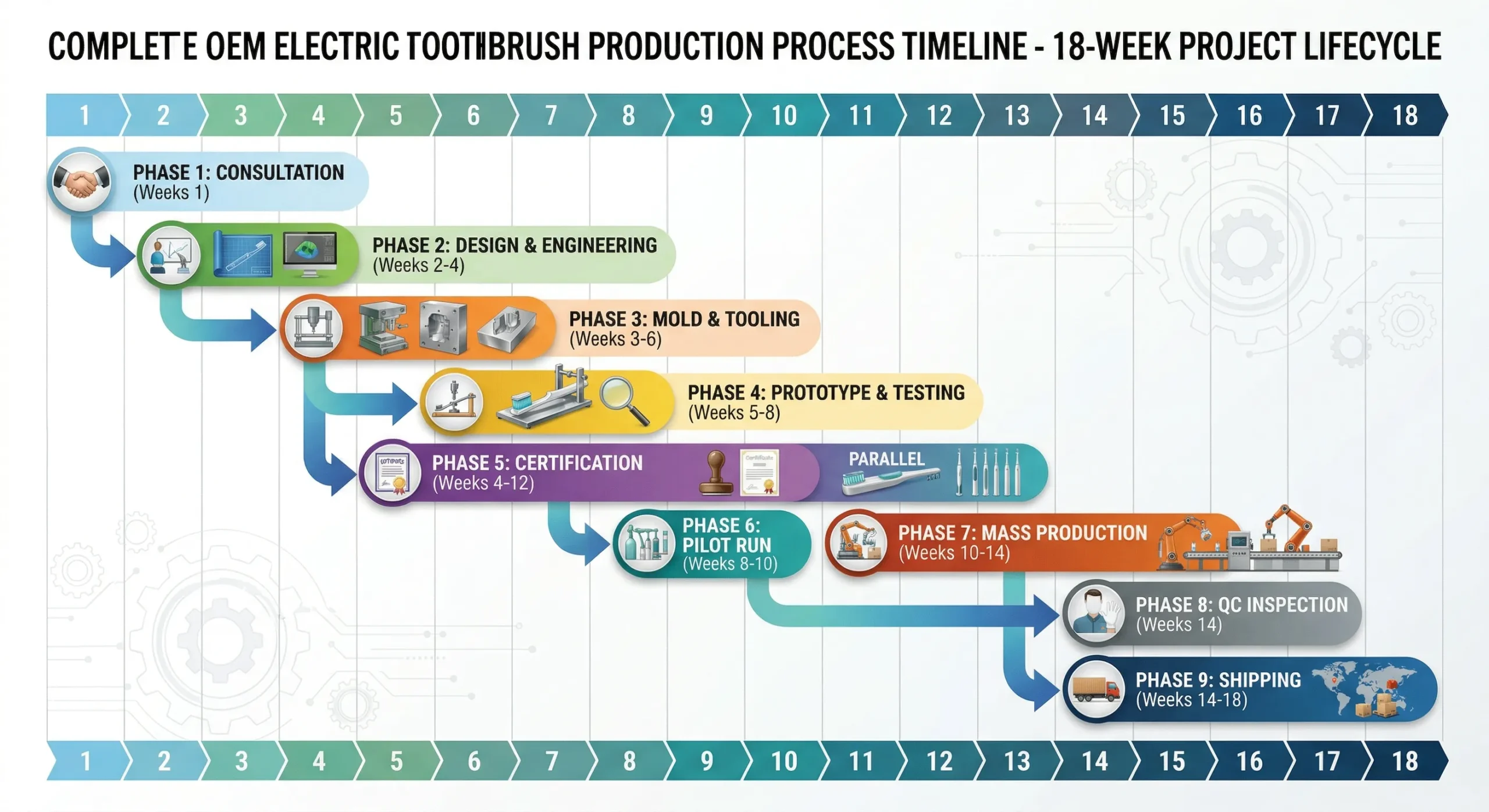
A structured OEM electric toothbrush manufacturing process typically spans 60–120 days from initial inquiry to finished product delivery. Here's a detailed phase-by-phase breakdown.
Phase 1: Initial Inquiry & Factory Selection (Week 1–2)
- Define your product requirements: Compile detailed specifications including product dimensions, motor type, battery capacity, waterproof rating, color/material preferences, target retail price, and quantity requirements
- Request quotes from 3–5 factories: Provide identical specifications to each factory to ensure comparable quotes. Ask for itemized breakdowns: mold costs, per-unit prices at different volumes, certification costs, and shipping estimates
- Evaluate quotes critically: The lowest quote isn't always the best. Compare quality of samples, communication responsiveness, factory credentials, and flexibility
- Sign NDA (Non-Disclosure Agreement): Before sharing detailed designs, have the factory sign a mutual NDA to protect your intellectual property
What to Include in Your RFQ (Request for Quotation)
- Product specifications: dimensions, materials, motor specs, battery type
- Order quantity and delivery timeline requirements
- Target markets and required certifications
- Packaging requirements (retail box, master carton)
- Sample quantity and sample timeline
- Payment terms expected (typically 30% deposit, 70% balance before shipping)
Phase 2: Sample & Prototype Development (Week 3–6)
- Technical review: The factory's engineering team reviews your specifications and flags any technical challenges, material alternatives, or cost optimization suggestions
- Mold/tooling creation: For custom housing, the factory creates injection molds. This is a 3–4 week process with costs ranging from $3,000 to $15,000 depending on complexity. For ODM products, this step is skipped
- Prototype sample: First samples are produced for your review. For electric toothbrushes, pay special attention to motor vibration quality, battery life in real testing, waterproof integrity, and charging system reliability
- Sample revision: Based on your feedback, the factory makes adjustments. Typically 1–3 revision rounds are needed. Budget for at least 2 weeks for revisions
- Pre-production sample approval: A final sample that represents mass production quality. This becomes your reference standard
Sample Testing Checklist
Before approving pre-production samples, conduct these tests:
- Battery and endurance tests: Measure battery runtime under the specified operating cycle and conduct a separate 72-hour full-unit endurance test.
- Immersion test: Test water sealing at 1-metre depth for 30 minutes under the defined IPX7 test conditions.
- Drop test: Drop from 1-meter height onto hard surface 5 times to check for housing cracks
- Brush head connection test: Verify brush head attaches/removes securely 50+ times
- Charging compatibility: Test with multiple charging cables and adapters from different markets
- Temperature cycling: Test at 0°C and 40°C to evaluate the specified storage and shipping conditions.
Phase 3: Mass Production (Week 7–10)
- Deposit payment: Typically 30% of the total order value is paid to start mass production
- Production scheduling: Factory schedules your order and provides an estimated completion date
- In-process quality inspections: During production, quality teams perform inline inspections at critical checkpoints
- Random inspection (optional): You or a third-party inspection company (QIMA, Asia Inspection, Bureau Veritas) can perform random inspections
- Pre-shipment inspection: A final inspection verifies quantity, packaging, labeling, and random sample testing
Phase 4: Shipping & Customs (Week 11–12)
- Balance payment: The remaining 70% is paid before shipping
- Documentation preparation: Commercial invoice, packing list, certificate of origin, and bill of lading
- Sea freight vs. air freight: Sea freight to the US or Europe typically takes 3–5 weeks and suits larger orders, including volumes over 1,000 units. Air freight typically takes 3–7 days for urgent or smaller shipments. Include route-specific customs and final delivery time in your schedule.
- Customs clearance: Work with a customs broker to clear goods at the destination port
- Last-mile delivery: From port to your warehouse or fulfillment center
Timeline Factors That Can Delay Your Project
- Mold revisions: Each revision adds 1–2 weeks. Minimize changes during the prototype phase
- Certification delays: Book laboratory capacity early, especially during peak demand and before Chinese New Year.
- Component shortages: Changes in component availability can affect PCB lead times. Plan approved alternatives and supply-chain contingencies with your manufacturer.
- Holiday seasons: Chinese New Year (January/February) shuts down most factories for 2–4 weeks
- Custom packaging: If your packaging requires separate production lines, add 1–2 weeks to the timeline
Read more: See our complete OEM Electric Toothbrush Timeline: Week-by-Week Process Guide.
7. Quality Control & Factory Audit Guide
Quality control isn't a single step — it's a continuous process that spans the entire OEM electric toothbrush manufacturing journey. Without it, you risk receiving shipments of defective products, costly recalls, and brand damage.
Factory Audit Framework
If the table is not fully visible, scroll horizontally to view all columns.
| Audit Category | Key Questions to Ask | Pass Standard |
|---|---|---|
| Business legitimacy | Is the business license current and verifiable? What's their registration capital? | Verified through Tianyancha or Qichacha business databases |
| Production capacity | What is their monthly output? How many production lines do they operate? | Capacity >= 1.5x your order volume per month |
| Quality certifications | Do they hold ISO 9001? Do they have product-specific certifications? | Current, valid ISO 9001 certification covering the relevant facility and activities |
| Engineering capability | How many R&D engineers do they have? Can they create new molds? | >= 5 engineers for OEM-capable factories |
| Testing equipment | Do they have waterproof testing tanks, battery cycling machines, vibration testers? | In-house testing for all critical parameters |
| Worker conditions | Are labor contracts in place? What's the worker turnover rate? | Compliance with local labor laws, reasonable turnover |
| Environmental compliance | Do they have wastewater treatment? RoHS material controls? | Environmental permits current and verifiable |
Quality Control at Each Production Stage
Incoming Quality Control (IQC)
Before components are used in production, they must be verified:
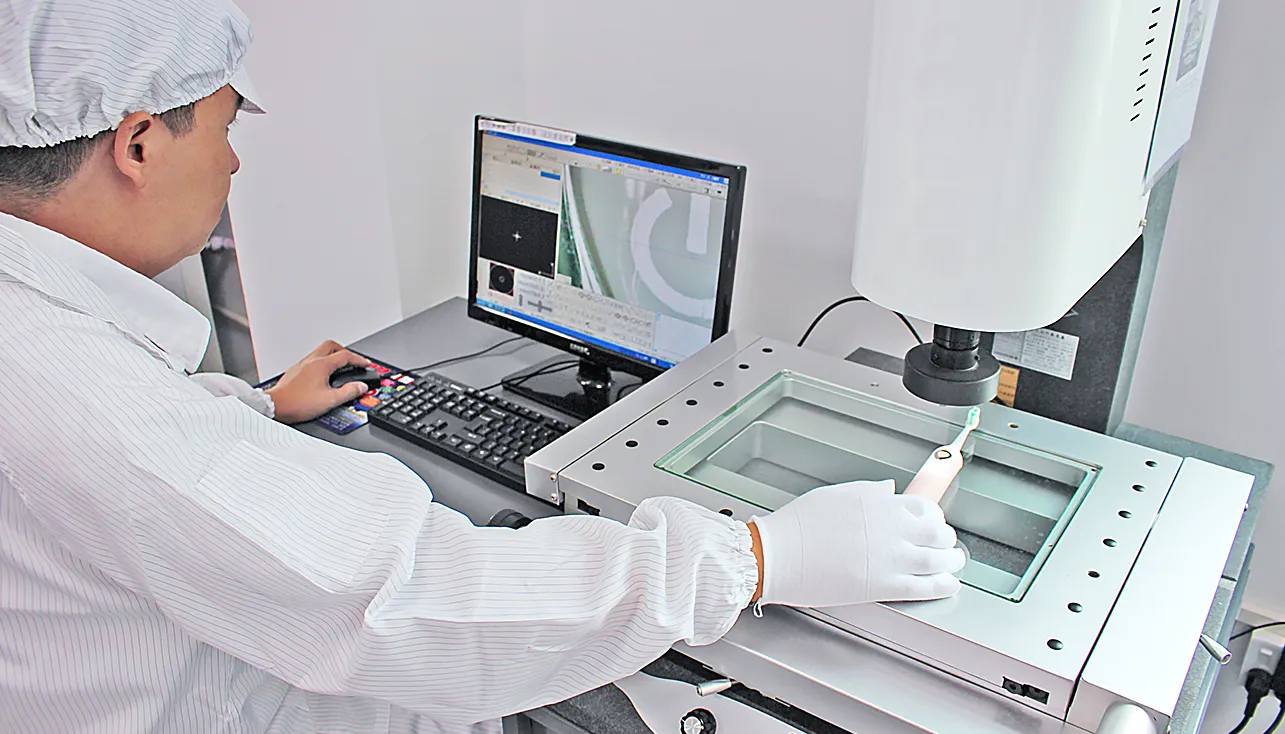
- Motor inspection: Check the specified rotational speed or oscillation frequency, noise level and vibration pattern
- PCB inspection: Visual inspection under magnification, basic functionality testing
- Battery testing: Capacity verification, charge/discharge cycle testing
- Material inspection: ABS housing density, bristle hardness, charging base quality
In-Process Quality Control (IPQC)
- Waterproof sealing: Ultrasonic welding quality check at each unit
- Motor installation: Verify motor is properly seated, aligned, and secured
- PCBA connection: Check all solder joints and wire connections
- Functional testing: Each unit is powered on and tested before final assembly
Final Quality Control / Outgoing Quality Control (OQC)
- Visual inspection: Surface finish, color consistency, logo accuracy, packaging condition
- Functional testing: 100% of units powered on and tested (not just sample-based)
- Waterproof retest: Random sampling of final products for IPX7 compliance
- Packaging inspection: Verify retail box labeling, barcodes, user manuals, and master carton integrity
- Quantity verification: Confirm the correct quantity of each SKU in each master carton
Third-Party Inspection vs. In-House Inspection
Third-party inspection companies (QIMA, Asia Inspection, Bureau Veritas, SGS) provide unbiased quality assessments but add cost ($200–$500 per inspection day). For most startup brands, in-house pre-shipment inspection by factory combined with random third-party sampling is the most cost-effective approach.
AQL (acceptance quality limit) sampling defines acceptance criteria for an inspection lot. Agree the inspection level, sample size and limits for critical, major and minor defects before production; 2.5 and 4.0 are common AQL values for different defect categories.
Read more: Download our free Factory Audit Checklist Template for OEM Manufacturers.
8. Private Label Branding: From Packaging to Market Launch
Private label electric toothbrush manufacturing is one of the fastest-growing segments in oral care. With the right custom packaging strategy, you can compete against established brands at a fraction of the cost.
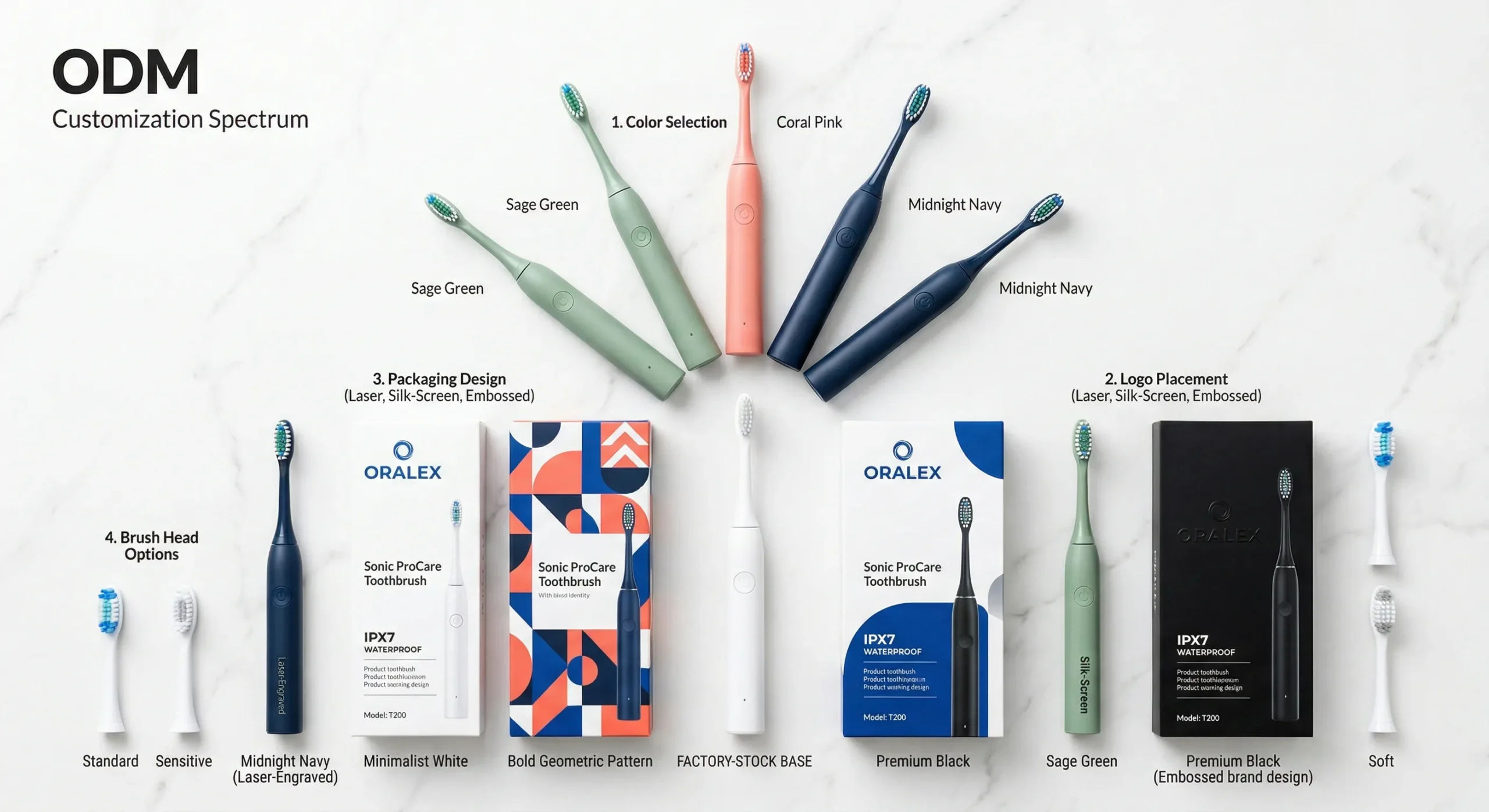
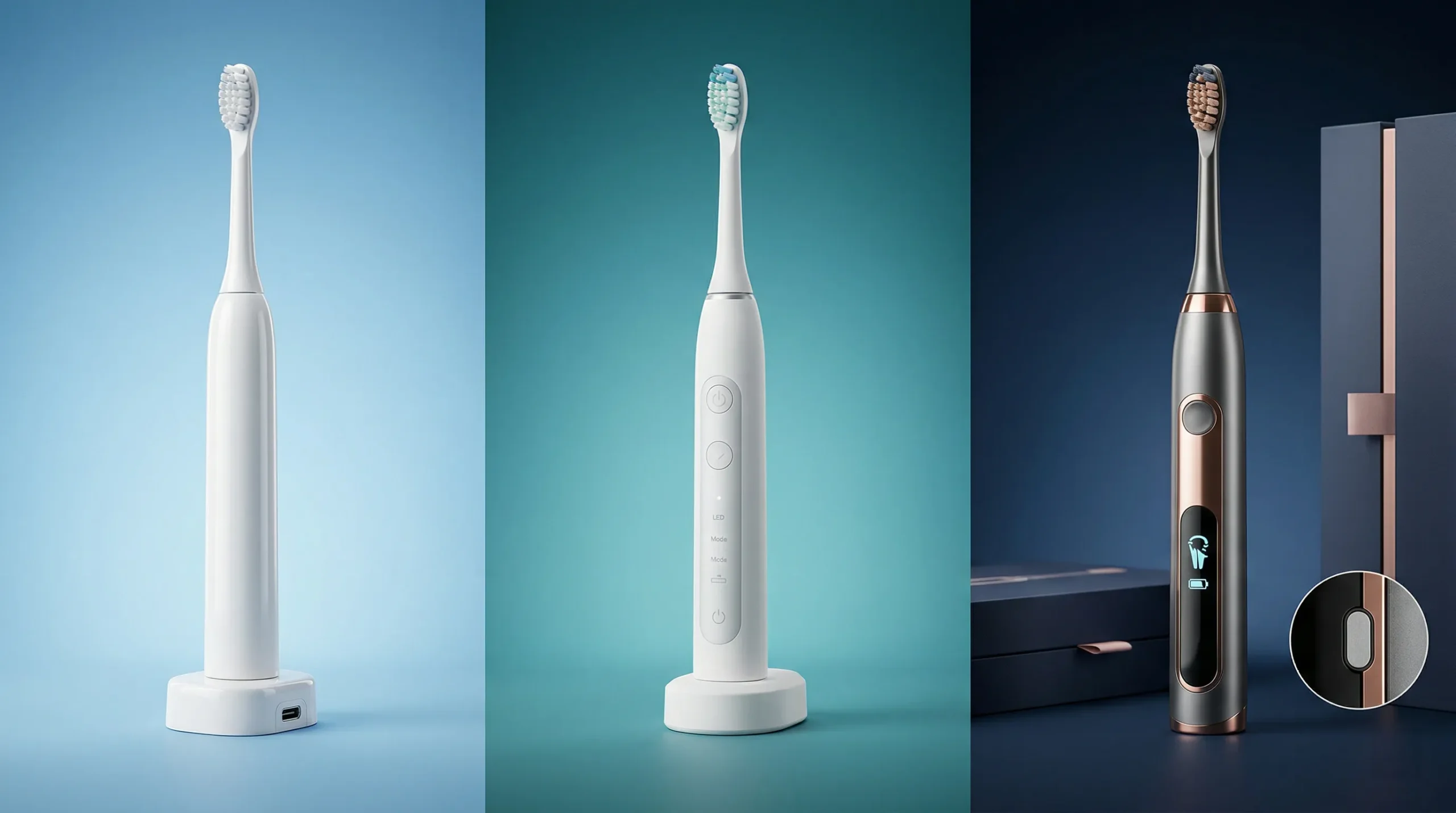
What Can You Customize in a Private Label Electric Toothbrush?
If the table is not fully visible, scroll horizontally to view all columns.
| Customization Level | What's Included | MOQ Impact | Cost Impact |
|---|---|---|---|
| Level 1: Logo Only | Laser logo on handle, custom retail box with your branding | From 1,000 custom units; flexible by order | Minimal add-on |
| Level 2: Color + Logo | Custom housing color (Pantone-matched), custom box | From 1,000 custom units; flexible by order | Moderate |
| Level 3: Cosmetic Design | Modified housing shape, custom colors, full packaging suite | From 1,000 custom units; tooling scope agreed | Moderate–High |
| Level 4: Feature Modification | Adjust motor specs, add/remove modes, modify battery capacity | From 1,000 custom units; engineering scope agreed | High |
| Level 5: Full OEM | Complete custom product and tooling; IP rights defined in the agreement | From 1,000 custom units; development and tooling agreed | Very High |
Packaging Requirements for International Markets
- Language requirements: User manual and box in the official language of each target market — our custom packaging team can assist with localization
- Regulatory marks: Place the applicable marks and identification details on the product, packaging and instructions as required for the target market.
- Barcode (EAN/UPC): Obtain a GS1 company prefix and generate unique barcodes for each SKU before production
- EU economic-operator details: Include the required manufacturer, importer and EU responsible-person contact details on the product or permitted alternative location under the applicable rules.
- WEEE symbol: Required on electrical products sold in the EU
- Battery disposal symbol: Provide the battery marking and disposal information applicable to the battery and market.
- Country of origin: Apply country-of-origin marking, including “Made in China”, where required by the destination market.
Market Positioning for Private Label Brands
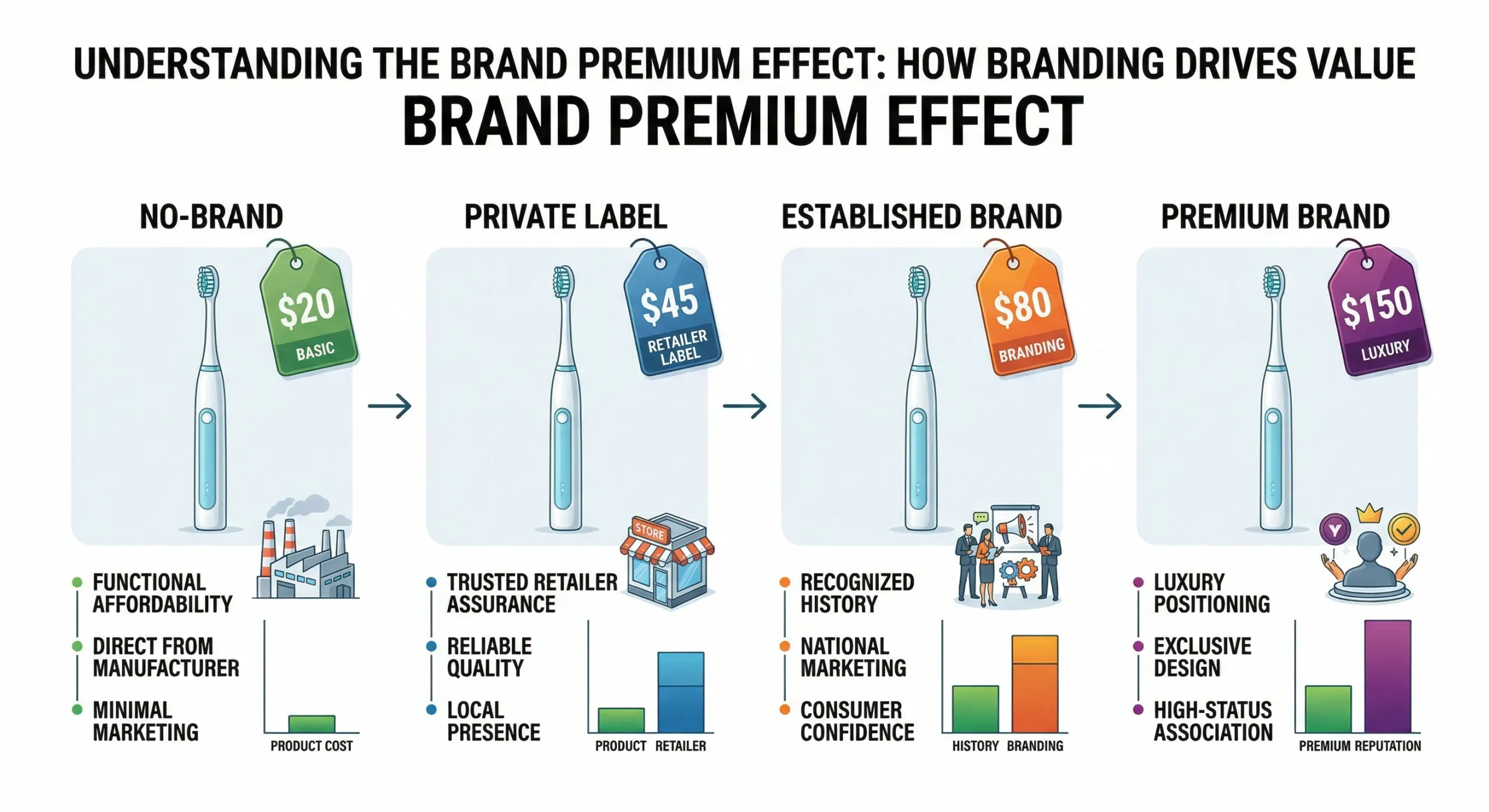
The most successful private label electric toothbrush brands find a specific positioning gap:
- Value segment: Offer comparable quality to major brands at 30–50% lower price point
- Specialty segment: Focus on specific audiences: eco-conscious consumers, sensitive gums, orthodontic patients, or children's toothbrushes
- Premium segment: Compete on design aesthetics and smart features, targeting affluent urban consumers
Read more: Our complete guide on Private Label Strategy for Oral Care Brands: From Concept to Retail Shelf.
9. Common OEM/ODM Pitfalls & How to Avoid Them
After working with hundreds of brands on OEM electric toothbrush manufacturing projects, we've seen the same mistakes repeat themselves. Here's a guide to the most costly pitfalls and how to prevent them.
1. Unrealistic Cost Expectations
A quote of $1.50 for a quality electric toothbrush can look attractive when buyers expect savings of 80–90% against Western manufacturing. Compare the complete specification and cost breakdown before deciding whether an offer fits your product.
The Solution: Compare itemized quotes for the same specification and volume. Basic sonic models commonly fall around $3–5 at 1,000 units, while component choices can change the price. Evaluate total landed cost alongside unit price.
2. Insufficient Sample Testing
We've seen brands approve samples after a 5-minute visual inspection, then receive mass production units that are clearly different in quality. Common issues: different motor vibration strength, cheaper battery, poor waterproof sealing.
The Solution: Conduct comprehensive sample testing over at least 1–2 weeks. Test battery life, waterproof integrity, charging reliability, and drop durability. Document the approved sample with photos and measurements as your production reference standard.
3. IP and Design Theft
Protect your design from the first supplier discussion. Clear confidentiality, tooling and design-right agreements help both parties understand how your product may be used.
The Solution: Work with a factory that has established IP protection procedures. Consider design registration in China before sharing detailed specifications, and agree confidentiality and design rights before exchanging engineering drawings.
For brand owners building products from scratch, read our complete guide to electric toothbrush design — covering every stage from motor selection to mass production.
4. Communication Breakdown
Time zone differences, language barriers, and vague specifications lead to products that don't match your vision. "The factory said they understood" is one of the most expensive phrases in OEM manufacturing.
The Solution: Use visual references (CAD drawings, 3D renders, reference products) alongside written specifications. Request written confirmation of every key decision. Use video calls for complex technical discussions. Designate a single point of contact on both sides to avoid conflicting instructions.
5. Ignoring Certification Realities
Define your target markets and required documents at the start. FDA registration and device listing for the US, CE conformity assessment for the EU, and other applicable steps should be built into the launch schedule.
The Solution: Define all target markets and required certifications before signing any contract. Build certification timelines into your project schedule. Work with factories that have existing certifications — it can save 4–8 weeks.
6. Quality Control Neglect
Skipping quality control to save time or money is almost always a false economy. The cost of a product recall, Amazon account suspension, or negative reviews far exceeds the inspection fee.
The Solution: Conduct pre-shipment inspection using the agreed sampling plan. Document issues and complete corrective actions before shipment and the next production run.
7. Underestimating Shipping Complexity
Sea freight delays, port congestion, customs clearance issues, and warehouse receiving problems can all derail a launch timeline. We've seen perfectly manufactured products sit in a port for 3 weeks due to paperwork errors.
The Solution: Work with an experienced freight forwarder who understands your product category. Build in 2–4 weeks of buffer time for shipping and customs. Never ship goods until all documentation is verified.
10. Frequently Asked Questions (FAQs)
Ready to Start Your Electric Toothbrush OEM Project?
Launch your first private label range or expand an established product line with Relish Tech’s manufacturing expertise and quality control systems. See what our clients say →
Get Your Free OEM Quote TodayReferences
- Straits Research. (2026). Electric Toothbrush Market Size, Share & Trends Analysis Report, 2026–2034. Source: https://straitsresearch.com/report/electric-toothbrush-market. Projected market size: USD 5.02 billion (2026) to USD 8.50 billion (2034); CAGR: 6.8% over 2026–2034.
- IndustryARC (2026). Electric Toothbrush Market Research Report: Market size, Industry outlook, Market Forecast, Demand Analysis, Market Share, 2024–2030. Retrieved from https://www.industryarc.com/Report/17992/electric-toothbrush-market.html. Market size estimated at USD 6.92 billion by 2030; CAGR: 7.76%.
- Made-in-China.com (2026). Electric Toothbrush OEM Factory Directory. Retrieved from https://www.made-in-china.com/factory/electric-toothbrushes.html.
- Aiwejay Electric Toothbrush Manufacturer (2026). OEM & ODM Solutions for Electric Toothbrush Brands. Retrieved from https://www.aiwejay.com/en/h-nd-122.html.
- European Commission (2024). Radio Equipment Directive (RED) 2014/53/EU: requirements for radio-enabled products, including Bluetooth electric toothbrushes.
- Electronic Code of Federal Regulations. Powered toothbrush, 21 CFR 872.6865: Class I; 510(k)-exempt subject to §872.9. Retrieved from https://www.ecfr.gov/current/title-21/section-872.6865.