











Vibrosonic Toothbrush: What the 60° Oscillation + Sonic System Does
A vibrosonic toothbrush is Relish Tech’s brushing platform that combines a 60° oscillating sweep with sonic vibration at 31,000 VPM. The head vibrates and sweeps across tooth surfaces in one coordinated movement. This guide explains how the vibrosonic platform works, what sets it apart from conventional sonic brushing, and which models can support your product range.
- Vibrosonic is a two motion system: a 60° oscillation plus 31,000 VPM sonic vibration.
- The oscillation adds a wider sweep across tooth surfaces to the head’s sonic vibration.
- A servo drive delivers precise, repeatable control of the head’s back-and-forth movement.
- The range includes models from the VS01C to the LCD-equipped VS0360B.
Building a vibrosonic brush line? Explore private label options →
What Is a Vibrosonic Toothbrush?
A conventional sonic toothbrush cleans through high-frequency bristle movement and direct contact with the teeth. Fluid movement can also contribute under specific conditions. Relish Tech’s Vibrosonic platform adds a 60° oscillating sweep to its specified sonic vibration, changing the path the bristles follow across the tooth surface.
Both sonic and Vibrosonic brushes use mechanical bristle contact. The Vibrosonic platform combines high-frequency vibration with a wider oscillating sweep; its defining feature is this combination of head movements.
Two Motions Working Together
Every vibrosonic toothbrush in the Relish Tech range is built around the same core, which the product pages list as 60° oscillation plus sonic at 31,000 VPM.
Sonic Vibration Plus 60° Oscillation
- Sonic vibration (31,000 VPM). High-frequency bristle motion provides direct contact with tooth surfaces and creates fluid movement around the head.
- 60° oscillation. The head moves back and forth through the specified arc, sweeping the bristles across tooth surfaces.
- A servo motor. The servo drive controls the head angle electronically, delivering precise, repeatable back-and-forth movement. The platform supports motion tuning to give your brand a distinctive brushing feel.
The platform brings high-frequency vibration and a wide oscillating sweep together on one brush head. The combined motion gives brands a clear product story and buyers a distinctive brushing experience.
Vibrosonic vs. Conventional Sonic
Compare the head movements and documented specifications when evaluating the two designs.
How the Two Motions Compare
The American Dental Association explains that manual and powered toothbrushes can both remove plaque effectively. The Cochrane review compares powered and manual brushing, while the narrative review discusses how powered-brush designs differ. Together, these sources explain powered-brushing principles and the role of brush design. For Vibrosonic buyers, the practical distinction is the combination of sonic vibration and a 60° oscillating sweep. See our guides to how electric toothbrushes work and how sonic and oscillating-rotating brushes differ.
The Vibrosonic Product Range
The vibrosonic platform spans three generations. Every model combines a servo-driven 60° oscillating sweep with sonic vibration, a 2,000 mAh battery for up to 30 days of use, and an IPX8 water-resistance rating.
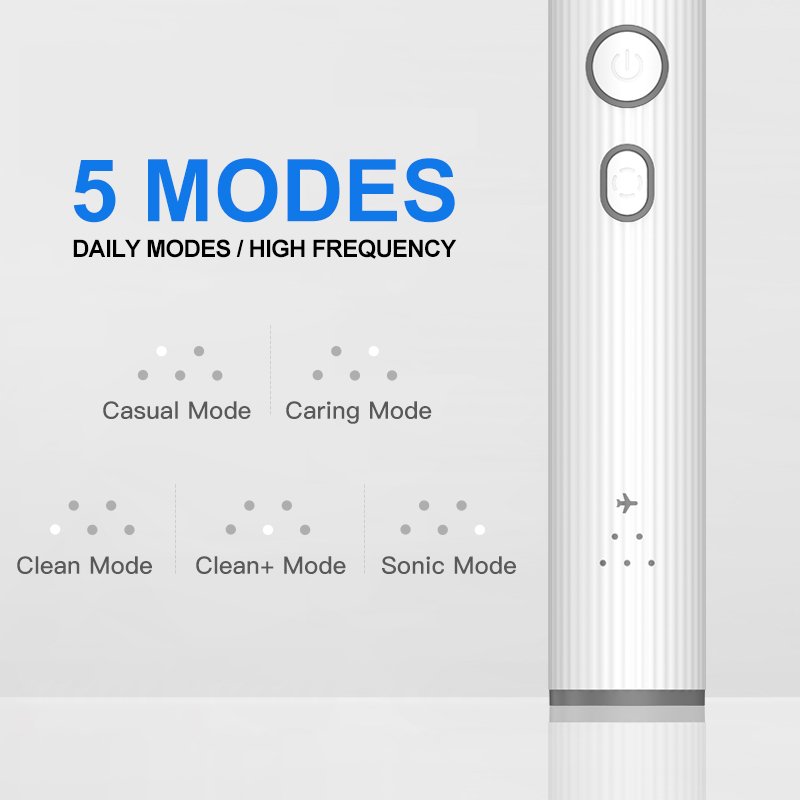
- VS01C (Gen 1) is the entry platform, with five cleaning modes and Type-C charging.
- VS0260B (Gen 2) adds wireless charging and USB-C connectivity to the five-mode platform.
- VS0860B (Gen 2, Flagship) brings silicone elements, DuPont 5 mil bristles and Pantone colour matching to the flagship range. A 5 mil filament is approximately 0.127 mm in diameter.
- VS0360B (Gen 3) adds an LCD smart display that shows real time brushing data, with 5+1 cleaning modes.
Across the range, the core specification is a 60° oscillating sweep, 31,000 VPM sonic vibration, a 2,000 mAh battery for up to 30 days of use, and an IPX8 water-resistance rating.
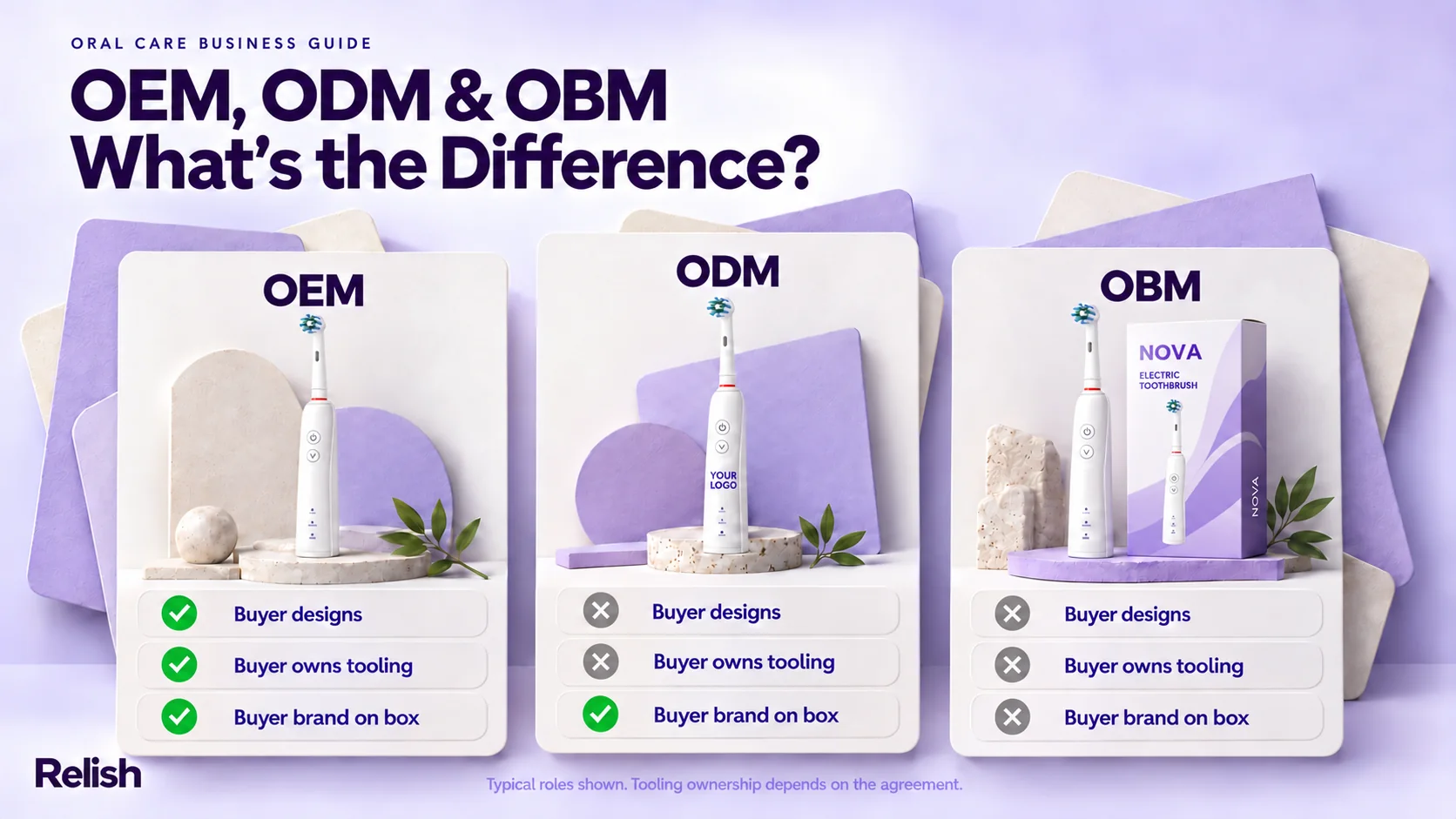
Each model is an OEM and private label platform, so the same vibrosonic toothbrush core can be configured with different colors, brush heads, and packaging to match a buyer’s brand.
What the Servo Motor Changes
The Vibrosonic platform uses an electronically controlled servo motor to drive the head to a set angle and back. This produces consistent, repeatable oscillation and allows motion tuning for a distinctive brushing feel. For brands, it creates a way to differentiate a product beyond its colour and packaging.
For Brands: The Vibrosonic Platform
For OEM and private label buyers, the vibrosonic toothbrush brings three clear selling points: combined sonic and oscillating motion, a servo-driven head, and a product ladder from the entry VS01C to the LCD-equipped VS0360B.
The OEM Case for a Vibrosonic Line
- Lead with the two motion story. “60° oscillation plus sonic” is a concrete, demonstrable difference from plain sonic brushes.
- Offer a clear generation ladder. The VS01C, VS0260B, VS0860B, and VS0360B let a brand step its range from entry to flagship.
- Match the finish. Pantone colour matching, DuPont bristles and compatible brush heads help the platform fit your brand’s design.
- Make the dual motion easy to see. Use the comparison table to show buyers how sonic vibration and the 60° sweep work together.
Custom orders start at 1,000 units, with flexibility to suit the order; in-stock wholesale starts at 50 units. Samples ship in 3–7 days, and mass production takes 25–35 days after approval. A new custom casing carries a one-time mould fee of $500–$3,000, fully refundable when cumulative orders reach 5,000 units within 12 months. Our factory is ISO 9001 and ISO 13485 certified, with FDA establishment registration. We supply CE, RoHS, FCC and UKCA documentation, plus EU design-patent coverage for the platform.
Our reliability laboratory has logged more than 450 test items over nine months. Testing covers the 60° oscillation and sonic drive, including a factory frequency specification of 30,000 ± 3,000 strokes per minute, a 72-hour full-unit life test, immersion testing to GB 4208-2017, and 48-hour salt spray testing to GB/T 2423.17-2008. The 3.7 V lithium cell was tested at 0.5 C for 300 cycles against a capacity-retention criterion of at least 80%; the measured result was 98.6%. Reports are available on request.
Customization options. Build your brief around the motion, brush heads, finish, charging and packaging your range needs. Our engineering team develops the configuration with you, including the tooling and validation needed to bring it into production.
Relish Tech manufactures the full vibrosonic range for private label programs, with brush heads matched to the selected model. Browse the electric toothbrush catalog to compare the current platforms, or read about the next step in the lineup with our Rotasonic technology explainer.
Need a vibrosonic platform for your brand? Contact Relish Tech →
Frequently Asked Questions
What is a vibrosonic toothbrush?
How is vibrosonic different from a normal sonic toothbrush?
Does a vibrosonic toothbrush clean better than a sonic one?
What is the 60° oscillation in a vibrosonic toothbrush?
Which models use vibrosonic technology?
Is vibrosonic good for sensitive teeth?
Relish Tech supplies the full vibrosonic range for OEM/ODM and private label, from the VS01C to the LCD equipped VS0360B. Open the digital product catalog, or request a spec sheet and a sample unit to evaluate.
This guide explains Relish Tech’s platform terminology and product specifications. For persistent tooth sensitivity or gum discomfort, seek advice from a dentist.
References
- American Dental Association. (n.d.). Toothbrushes. Retrieved from https://www.ada.org/resources/ada-library/oral-health-topics/toothbrushes
- Yaacob, M., Worthington, H. V., Deacon, S. A., Deery, C., Walmsley, A. D., Robinson, P. G., & Glenny, A.-M. (2014). Powered versus manual toothbrushing for oral health. Cochrane Database of Systematic Reviews, (6), CD002281. DOI: 10.1002/14651858.CD002281.pub3. https://www.cochrane.org/evidence/CD002281_poweredelectric-toothbrushes-compared-manual-toothbrushes-maintaining-oral-health
- Ng, C., Tsoi, J. K. H., Lo, E. C. M., & Matinlinna, A. J. P. (2020). Safety and design aspects of powered toothbrush—A narrative review. Dentistry Journal, 8(1), 15. Retrieved from https://pmc.ncbi.nlm.nih.gov/articles/PMC7148448/
- Relish Tech. (n.d.). Vibrosonic electric toothbrush product specifications (VS01C, VS0260B, VS0860B, VS0360B). Retrieved from https://relish-tech.com/product-category/electric-toothbrushes/