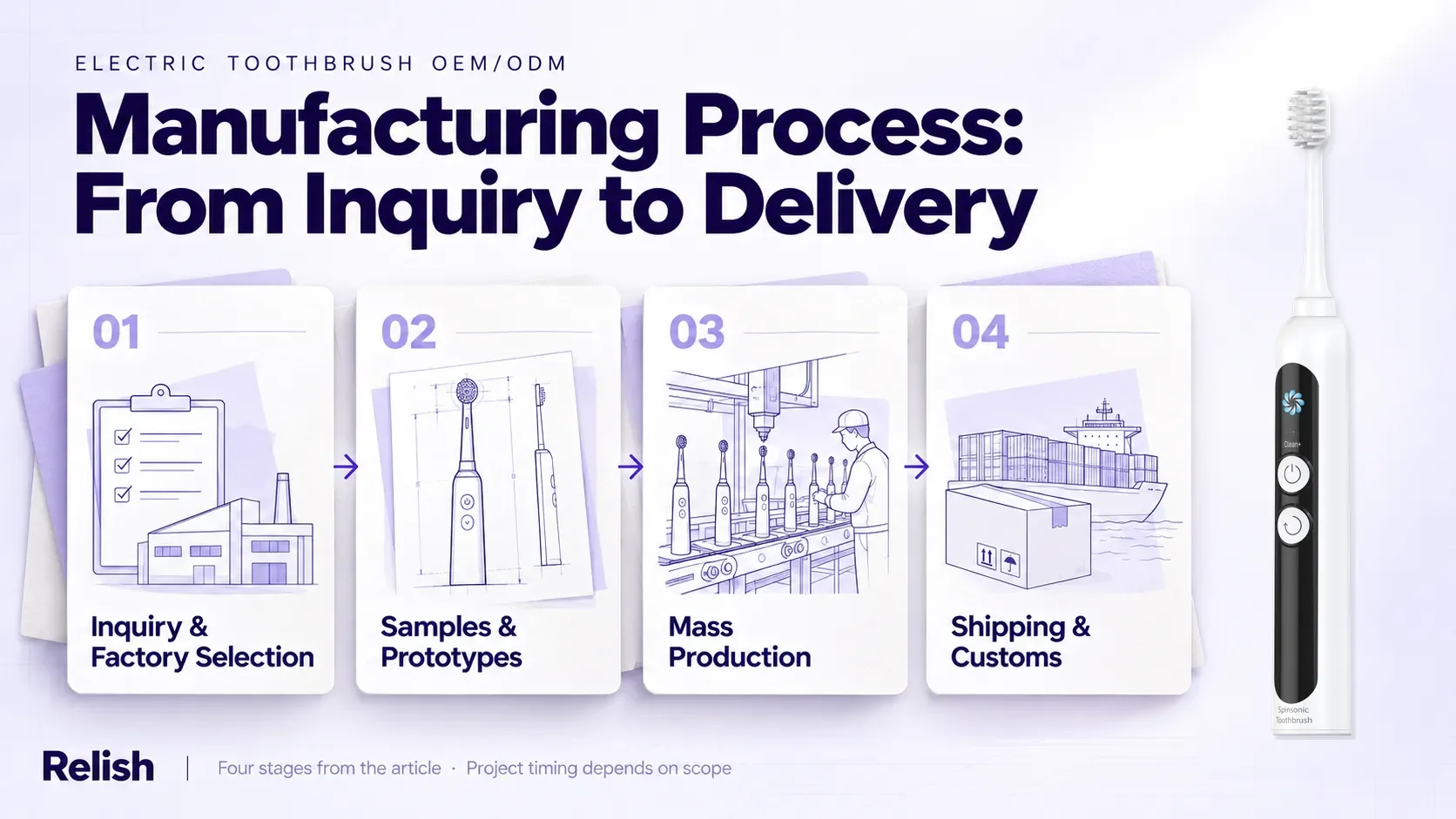












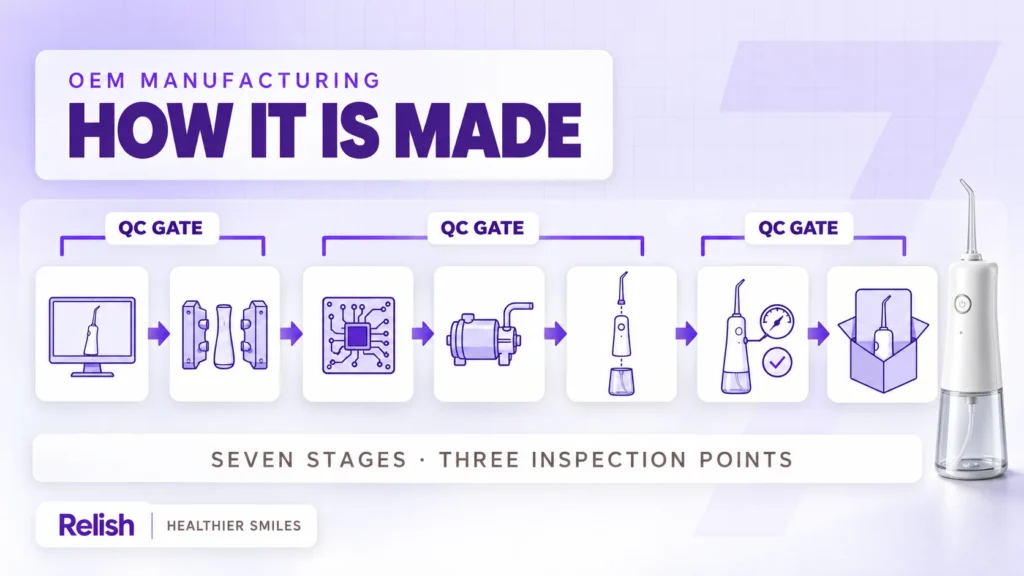
La produzione di spazzolini da denti elettrici è un processo coordinato, non una singola operazione di assemblaggio. Un prodotto tipicamente passa da requisiti concordati a un design producibile, componenti approvvigionati, assemblaggio controllato, validazione, revisione della qualità e rilascio in produzione. Il percorso esatto varia in base all'architettura del prodotto, alle scelte dei componenti, al mercato di destinazione e ai controlli di fabbrica.
Questa panoramica si concentra sugli spazzolini da denti elettrici. Illustra il flusso di produzione, non l'anatomia interna dettagliata di un prodotto specifico o il processo completo di approvvigionamento OEM/ODM. Per una spiegazione componente per componente, consultare la guida alla struttura interna dello spazzolino da denti elettrico.
Il flusso di produzione in sintesi
Un utile modello di alto livello è:
Requisiti → Ingegnerizzazione → Componenti e attrezzature → Assemblaggio → Validazione → Controllo qualità → Prontezza alla produzione
Queste fasi si sovrappongono. Ad esempio, la geometria dell'involucro influenza le attrezzature, l'accesso per l'assemblaggio e le opzioni di sigillatura; le scelte relative a batteria e ricarica influenzano il design elettrico e il piano di validazione. Un problema riscontrato durante una build pilota può riportare il team a una decisione su disegno, componente o attrezzatura prima dell'inizio della produzione in volume.
Iniziare con i requisiti del prodotto e una specifica producibile
La produzione inizia con una definizione del prodotto che possa essere costruita e verificata. Normalmente registra l'uso previsto, il formato fisico, le funzioni operative, l'approccio a alimentazione e ricarica, le aspettative dell'interfaccia utente, le esigenze di imballaggio, i mercati di destinazione e i requisiti documentali applicabili.
Tali requisiti diventano una specifica di ingegnerizzazione. La specifica fornisce ai diversi team un riferimento condiviso per dimensioni, materiali, interfacce, funzioni critiche, aspettative estetiche e criteri di accettazione. Rende inoltre visibili i compromessi prima che vengano presi impegni su attrezzature e componenti. Un manico compatto, ad esempio, può limitare lo spazio disponibile per batteria, PCB, motore, guarnizioni e attrezzature di assemblaggio.
L'obiettivo non è semplicemente creare un concetto accattivante. È definire un prodotto che possa essere assemblato ripetutamente e valutato rispetto a requisiti chiari.
Trasformare il concetto in design meccanico, di azionamento ed elettronico
Considerazioni su involucro, ergonomia e attrezzature
L'ingegneria meccanica traduce la forma esterna in parti che possono essere realizzate e unite. Gli ingegneri considerano la geometria delle pareti, le interfacce, i giochi di assemblaggio, il comportamento dei materiali, le superfici estetiche e la posizione di elementi come pulsanti, contatti di ricarica o connessioni della testina. Per le parti in plastica, il materiale scelto, la geometria delle pareti, il comportamento al raffreddamento e il design dello stampo possono influenzare la coerenza dimensionale e l'aspetto della parte stampata.
L'involucro deve inoltre essere compatibile con il metodo di assemblaggio. Un design può utilizzare gusci separati, un telaio interno, un giunto incollato, un giunto saldato o un'altra strategia di chiusura. La scelta giusta dipende dalla specifica del prodotto e dalle evidenze di validazione; non è una sequenza universale per ogni spazzolino da denti elettrico.
Selezione del motore e del sistema di azionamento
Il sistema di azionamento converte l'energia elettrica nel movimento previsto della testina. A seconda del prodotto, ciò può comportare un motore, un meccanismo di trasmissione o conversione del movimento, un albero o accoppiamento e caratteristiche meccaniche di supporto. Gli ingegneri esaminano come queste parti si incastrano, come si accumulano le tolleranze e come il sistema in movimento può essere assemblato senza danneggiare i componenti adiacenti.
Qui l'architettura funzionale di un prodotto incontra la sua architettura produttiva. Una modifica al motore, al layout di azionamento o all'interfaccia della testina può richiedere modifiche all'involucro, ai supporti interni, alle attrezzature di assemblaggio e al piano di validazione.
PCB, controlli e interfacce elettriche
Il design elettronico definisce come il dispositivo riceve alimentazione, controlla il sistema di azionamento e risponde agli input dell'utente o ai segnali di stato. L'assemblaggio del PCB, i collegamenti elettrici, gli interruttori, gli indicatori e l'interfaccia di ricarica devono adattarsi al layout meccanico ed essere protetti durante l'assemblaggio e l'uso.
La produzione elettronica si basa comunemente su requisiti documentati di assemblaggio e accettazione appropriati al prodotto e alla specifica del cliente. L'approvvigionamento esatto dei PCB, il processo di saldatura, la funzione del firmware e il metodo di ispezione sono specifici del prodotto e del fornitore; non devono essere presunti dallo spazzolino finito. Per una visione più completa delle decisioni a monte, consultare la guida separata guida alla progettazione e sviluppo dello spazzolino da denti elettrico.
Progettare il sistema di alimentazione e l'approccio di ricarica
Il sistema di alimentazione è progettato come un insieme integrato di scelte: chimica e configurazione della batteria, metodo di ricarica, approccio di protezione, interfacce elettriche, ritenzione meccanica e considerazioni termiche. Quando si utilizza una cella ricaricabile agli ioni di litio, il design di ricarica e protezione deve essere compatibile con quella cella e con le condizioni operative previste del prodotto. Le funzioni di protezione possono affrontare condizioni come sovraccarica, sovrascarica, sovracorrente o limiti di temperatura quando l'architettura selezionata lo richiede.
La ricarica può essere implementata tramite contatti, una base, una connessione via cavo, un sistema induttivo o un altro approccio specifico del prodotto. Il metodo selezionato influisce sulle caratteristiche dell'involucro, sulle interfacce elettriche, sulle fasi di assemblaggio e sul piano di validazione. È quindi meglio trattarlo come una dipendenza ingegneristica, non come un accessorio aggiunto dopo il completamento del design meccanico.
Sviluppare l'involucro, i componenti e le attrezzature
Molti involucri di spazzolini elettrici e parti interne in plastica sono realizzati mediante stampaggio a iniezione. In termini generali, un polimero viene processato in uno stampo, raffreddato fino a poter essere rimosso e poi verificato rispetto ai requisiti applicabili della parte. Le decisioni sulle attrezzature sono importanti perché influenzano caratteristiche, tolleranze, qualità estetica e ripetibilità dell'assemblaggio successivo.
Altri componenti possono provenire da fornitori specializzati, tra cui motori, PCB, batterie, parti di ricarica, interruttori, guarnizioni elastomeriche e materiali di imballaggio. La testina dello spazzolino può essere una configurazione separata con materiali e percorso produttivo propri. Se un prodotto utilizza setole, i relativi metodi di fissaggio e finitura devono essere descritti solo per quella specifica configurazione della testina; non costituiscono una fase universale nella produzione del manico.
Prima dell'assemblaggio in produzione, i team generalmente verificano che le parti rilasciate, i disegni, le specifiche dei materiali e le revisioni dei componenti corrispondano alla build pianificata.
Assemblaggio dello spazzolino elettrico
L'assemblaggio riunisce componenti e sottogruppi approvati secondo istruzioni di lavoro documentate. L'ordine dipende dall'involucro e dall'architettura del prodotto. Un design può prevedere la costruzione del gruppo di azionamento e dell'elettronica su un telaio interno prima dell'inserimento nell'involucro; un altro può assemblare in un guscio prima della chiusura finale. Alcune operazioni possono essere manuali, semi-automatizzate o automatizzate, a seconda del prodotto e della fabbrica.
In questa fase, la ripetibilità è fondamentale. Attrezzature, controlli di coppia o serraggio ove applicabili, identificazione dei componenti e istruzioni di manipolazione chiare contribuiscono a ridurre la variabilità. Il punto non è che ogni fabbrica utilizzi le stesse attrezzature o la stessa sequenza, ma che il metodo di costruzione produca in modo coerente la configurazione specificata.
Sigillatura, validazione e verifica funzionale
La sigillatura viene considerata insieme al design dell'involucro, alle interfacce dei componenti e all'ambiente d'uso previsto. A seconda del prodotto, un design può utilizzare guarnizioni, caratteristiche sovrastampate, giunti incollati, giunti saldati o un'altra chiusura ingegnerizzata. Il metodo di sigillatura e le modalità di valutazione devono essere scelti per la configurazione specifica.
La validazione funzionale verifica se il prodotto assemblato svolge le funzioni definite dalla sua specifica. Un piano di validazione può considerare il funzionamento del sistema di azionamento, i controlli, il comportamento di ricarica, i collegamenti elettrici e l'integrità dell'involucro. I metodi di prova, le dimensioni del campione, i limiti di accettazione e qualsiasi grado di protezione dall'ingresso devono essere stabiliti per il prodotto e il mercato di destinazione; non possono essere presunti per tutti gli spazzolini elettrici.
Quando la validazione identifica un guasto o una variazione imprevista, il team indaga se la causa principale è collegata a un componente, a una tolleranza, a una fase di assemblaggio, a una condizione dell'attrezzatura, all'allestimento del test o a una decisione progettuale. Il risultato può portare a una correzione controllata prima del rilascio.
Integrare il controllo qualità e la tracciabilità nella produzione
Controlli in ingresso, in processo e sul prodotto finito
I controlli qualità sono più utili quando sono collegati alla specifica del prodotto. I controlli in ingresso possono confermare che le parti acquistate siano la versione prevista e soddisfino i requisiti definiti. I controlli in processo possono identificare problemi prima che vengano chiusi o passati a un'operazione successiva. La revisione del prodotto finito può confermare i criteri di rilascio definiti prima dell'imballaggio o della spedizione.
I controlli appropriati variano in base al prodotto e al rischio. Un piano qualità documentato dovrebbe identificare cosa viene verificato, come viene verificato, chi può prendere una decisione di rilascio e cosa succede quando un prodotto o componente non soddisfa il requisito.
Non conformità e decisioni di rilascio
Un articolo non conforme deve essere identificato e controllato in modo che non venga utilizzato o rilasciato inavvertitamente. La disposizione può comportare correzione, segregazione, ulteriore valutazione o un'altra decisione documentata. Se viene apportata una correzione, il prodotto viene ricontrollato rispetto al requisito pertinente prima del rilascio.
Registrazioni di tracciabilità e controllo delle modifiche
La tracciabilità offre a un produttore un modo per collegare un prodotto o una build a informazioni pertinenti come revisioni dei componenti, lotti di materiali o fornitori, registrazioni di costruzione, risultati delle ispezioni e modifiche approvate. Il sistema di registrazione esatto differisce per organizzazione e prodotto. Il suo valore è pratico: quando emerge un problema, il team può indagare quale configurazione è stata costruita, quali prove esistono e se una modifica ha influenzato il risultato.
Il controllo delle modifiche mantiene significativa quella registrazione. Una modifica a un componente, attrezzatura, processo, impostazione software o elemento di imballaggio dovrebbe essere valutata e autorizzata secondo il sistema qualità del prodotto prima di essere utilizzata in una build di produzione.
Imballaggio, produzione pilota e preparazione alla produzione di massa
L'imballaggio protegge la configurazione finita e presenta le informazioni richieste per il mercato di destinazione. Può includere il manico, la testina o le testine, gli accessori di ricarica, le istruzioni e altri contenuti approvati. Il design dell'imballaggio dovrebbe essere rivisto insieme al prodotto in modo che le esigenze di vestibilità, etichettatura, manipolazione e distribuzione siano affrontate prima del rilascio.
La produzione pilota è un'opportunità controllata per verificare se parti rilasciate, attrezzature, istruzioni di assemblaggio, dispositivi di fissaggio, metodi di validazione, imballaggio e registrazioni qualità funzionano insieme in una build realistica. È diversa dal semplice produrre una piccola quantità. Il pilota può rivelare problemi di ripetibilità non visibili in un prototipo.
La preparazione alla produzione di massa significa che il prodotto, i componenti, la documentazione di processo, i controlli qualità e i criteri di rilascio sono allineati per una produzione ripetibile. Non significa che ogni rischio sia scomparso; significa che le questioni aperte sono state valutate e il processo produttivo ha una base controllata per gestirle.
Cosa dovrebbero confermare gli acquirenti OEM prima della produzione
Prima che uno spazzolino elettrico passi alla produzione in volume, un acquirente può richiedere chiarezza su:
- I requisiti di prodotto approvati, i disegni e lo stato di revisione.
- La configurazione dei componenti selezionata, inclusi il motore, l'elettronica, la batteria, il metodo di ricarica, l'alloggiamento e la disposizione della testina dove pertinente.
- Il campione o la build pilota che rappresenta la configurazione approvata.
- Le evidenze di validazione e i criteri di accettazione appropriati al prodotto e al mercato di destinazione.
- La documentazione di qualità, il processo di gestione delle non conformità e l'autorità di rilascio.
- Le aspettative di tracciabilità e controllo delle modifiche per i componenti e i registri di produzione.
- La configurazione del packaging e le informazioni che devono accompagnare il prodotto.
Queste domande aiutano ad allineare la definizione del prodotto con il piano di produzione. Non sostituiscono la revisione ingegneristica, normativa o commerciale specifica del prodotto. Per le domande di program management che vanno oltre questa panoramica sulla produzione, consultare la guida al processo OEM/ODM per spazzolini elettrici.