











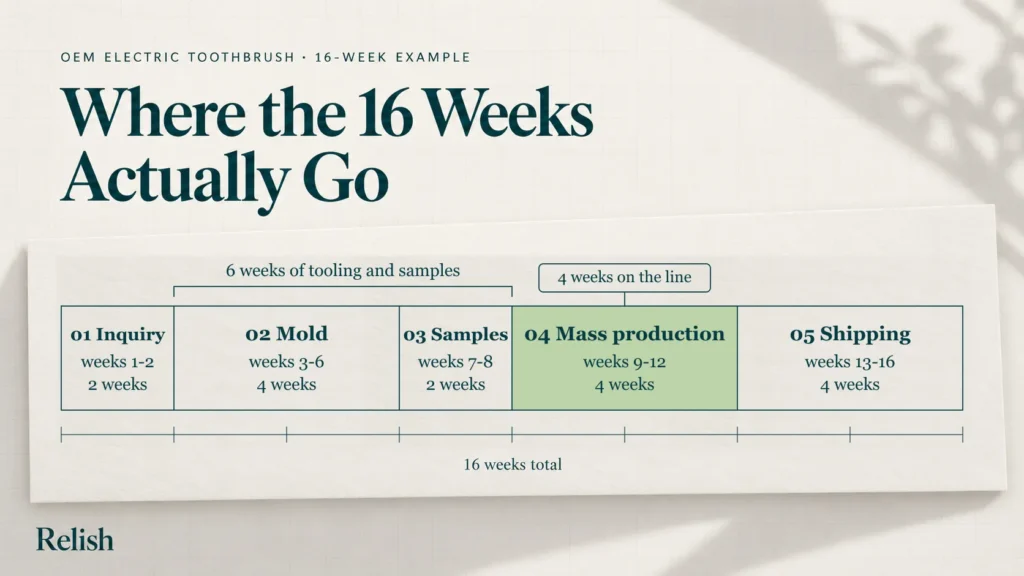
Zeitplan für die OEM-Elektrozahnbürste: Leitfaden für den Prozess Woche für Woche (2026)
Projektzeitpläne hängen vom Produktumfang, dem Werkzeugbau, den Freigaben, den Prüfungen, der Lieferantenbereitschaft, dem Frachtweg, der Zollabfertigung und dem Bestimmungsort ab. Nutzen Sie den folgenden Kalender als Planungsbeispiel und stimmen Sie die Meilensteine anschließend mit dem konkreten Projekt und der aktuellen Verfügbarkeit ab.
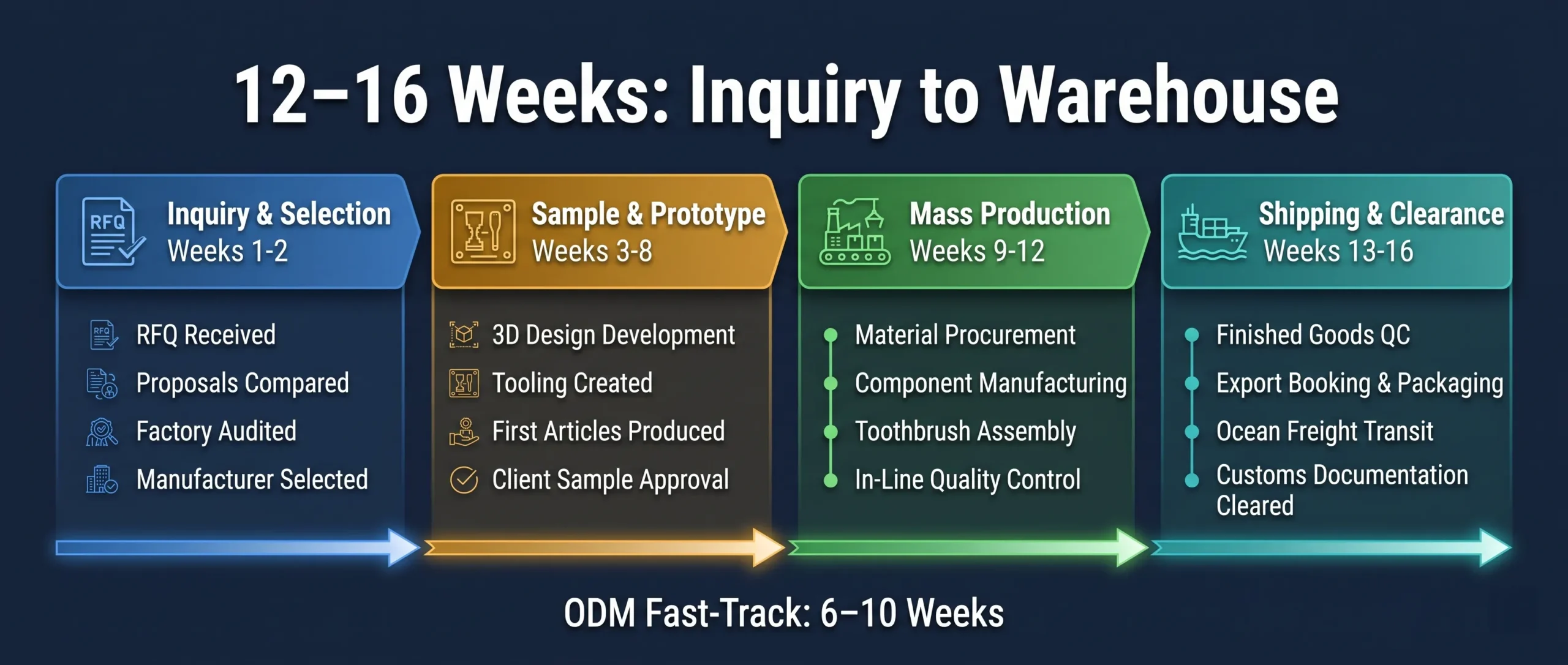
Zusammenfassung: OEM-Produktionszeitplan für elektrische Zahnbürsten
- Standard-OEM-Zeitleiste: 12–16 Wochen (84–112 Tage) sind ein beispielhafter Planungsrahmen vom Erstkontakt bis zur Lieferung und keine garantierte Lieferzeit. Lassen Sie sich den Projektzeitplan bestätigen.
- Ein ODM-Projekt auf Basis einer bestehenden Plattform kann ohne einen Teil des strukturellen Werkzeugbaus auskommen, wenn Modell und Konfiguration passen. MOQ, Anpassungen, Einrichtungskosten, Prüfungen und Zeitplan hängen vom Produkt und den schriftlichen Vereinbarungen ab.
- Die größten Verspätungsrisiken: Zu den Terminrisiken zählen unter anderem Designänderungen, verfügbare Prüfkapazitäten, Betriebsschließungen bei Lieferanten, die Verfügbarkeit von Komponenten oder Verpackungen, Fracht und Zollabfertigung. Planen Sie projektspezifische Puffer ein und stimmen Sie die Termine mit den jeweiligen Dienstleistern ab.
- Zahlungs- und Werkzeugmeilensteine werden vertraglich ausgehandelt. Legen Sie im unterzeichneten Vertrag Anzahlungen, Fälligkeit des Restbetrags, Eigentum am Werkzeug, Abnahmekriterien und den Umgang mit Abweichungen fest.
In diesem Leitfaden
- Die gesamte Zeitachse im Überblick
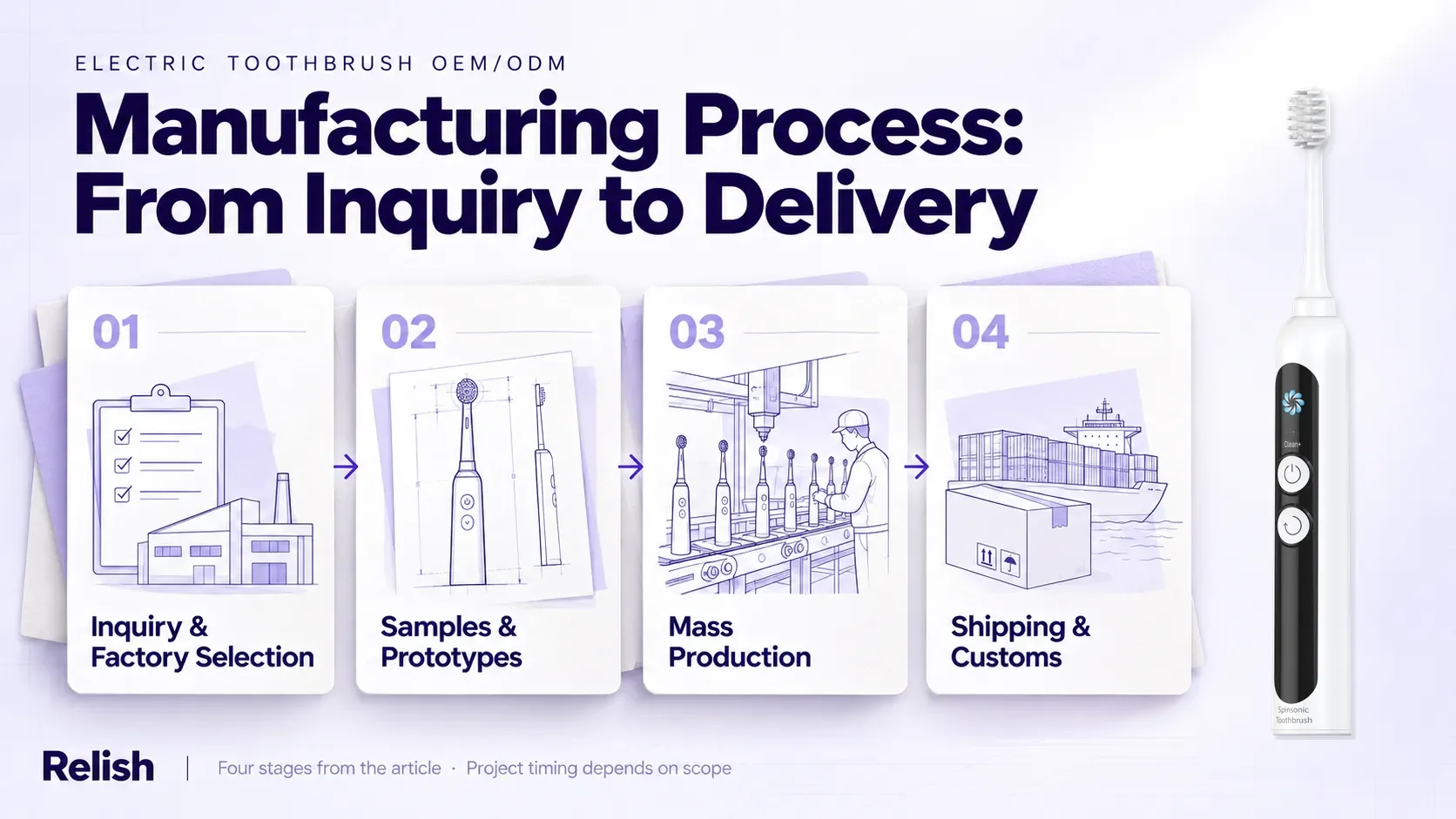
- Phase 1: Anfrage und Werksauswahl (Wochen 1–2)
- Phase 2: Muster- und Prototypentwicklung (Wochen 3-8)
- Phase 3: Massenproduktion (Wochen 9-12)
- Phase 4: Versand und Zollabfertigung (Wochen 13-16)
- ODM-Optionen auf Basis bestehender Plattformen
- Die größten Verspätungsrisiken und wie man sie vermeidet
- Umgekehrte Kalenderplanung: Arbeiten Sie von Ihrem Starttermin rückwärts
- Häufig gestellte Fragen
1. Die gesamte Zeitachse im Überblick
Bevor Sie auf die einzelnen Wochen eingehen, sollten Sie sich ein Gesamtbild verschaffen. Das Wissen um die Gesamtform des Zeitplans hilft Ihnen, mit den Betrieben zu verhandeln, realistische Starttermine festzulegen und herauszufinden, wo Pufferzeiten am wichtigsten sind.
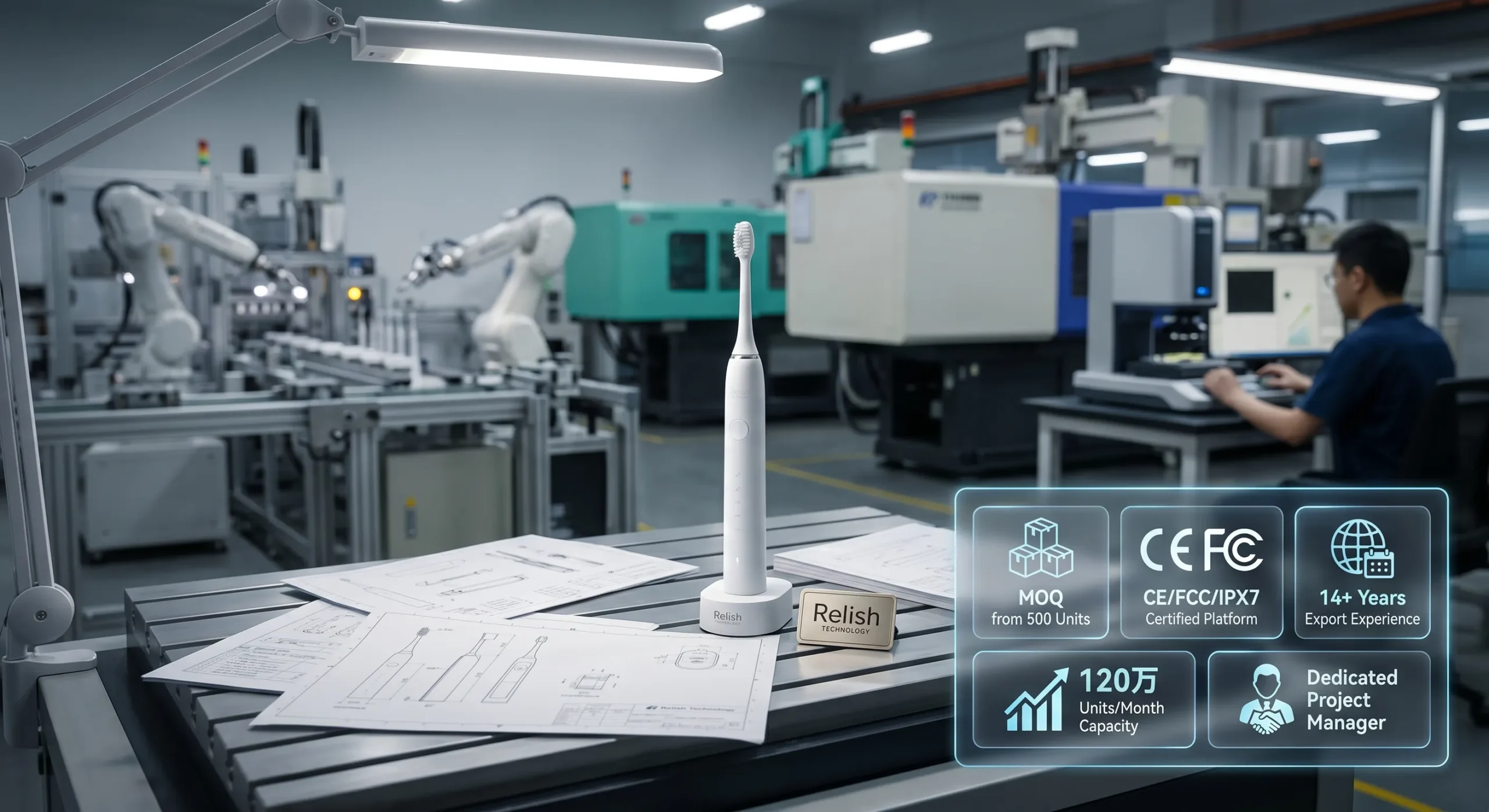
🏭 Über den Hersteller: Relish Technology
Relish Technology fertigt seit 2012 Mundpflegeprodukte. Die Standorte in Shenzhen und Huizhou umfassen zusammen 20.000 m². Teilen Sie uns die Produktkonfiguration, den Zielmarkt, den Auftragsumfang und den Zeitplan mit, damit wir passende Fertigungsoptionen und produktspezifische Unterlagen besprechen können.
Mehr erfahren → · Kundenfallstudien → · Zertifizierungen ansehen →
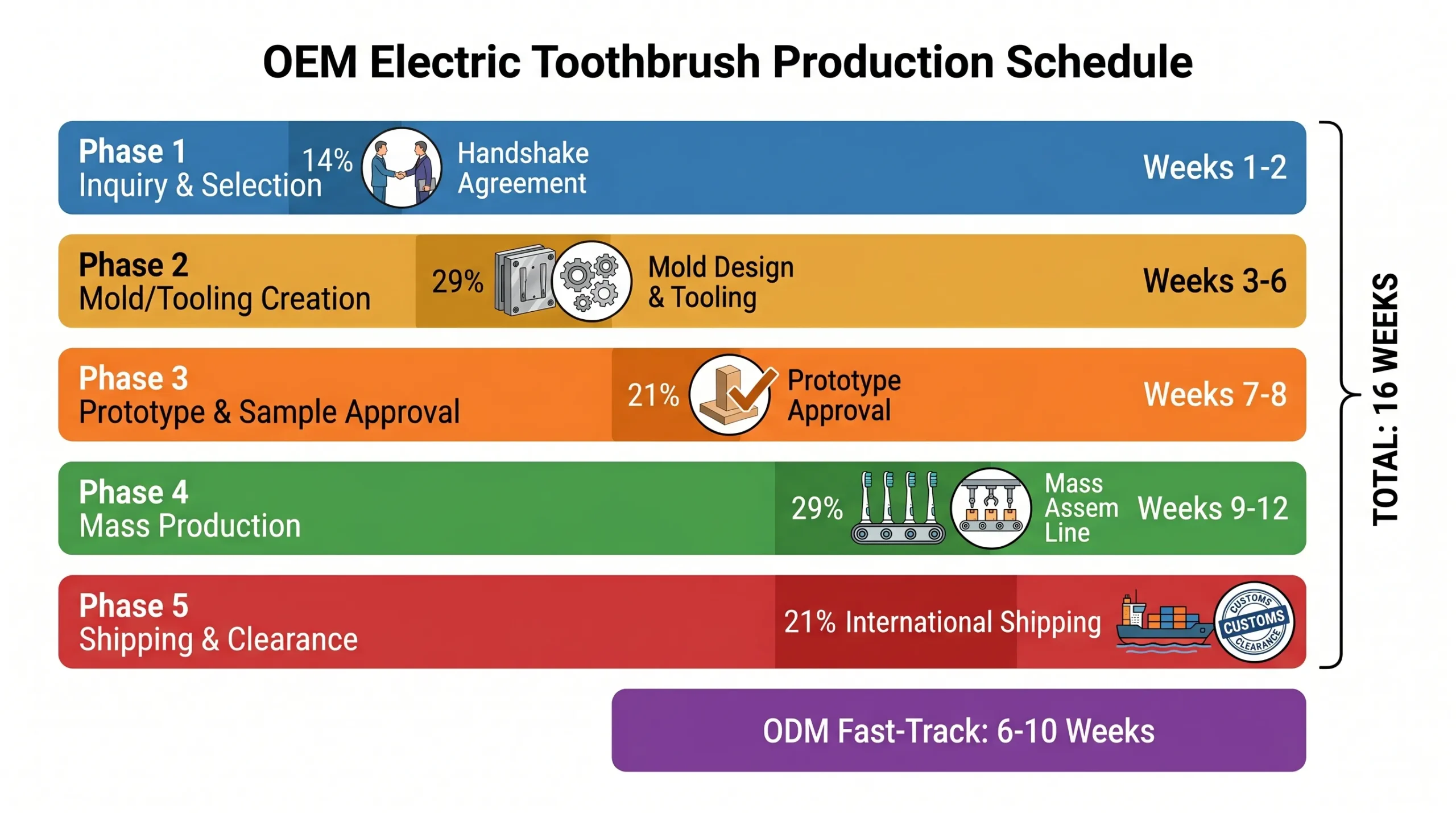
OEM-Elektrozahnbürste: beispielhafter 16-Wochen-Zeitplan (visuelle Übersicht)
| Phase | Wochen | Wichtigste Aktivitäten | Ihre Entscheidungspunkte |
|---|---|---|---|
| 1. Anfrage & Auswahl | 1-2 | RFQ, Angebotsvergleich, NDA-Unterzeichnung, Vorauswahl der Werke | Werk auswählen, Spezifikationen bestätigen |
| 2. Formenbau | 3-6 | Technische Überprüfung, Herstellung der Form, erster Formtest | Werkzeugkonstruktion freigeben, Werkzeuganzahlung leisten |
| 3. Prototyp & Genehmigung | 7-8 | Erste Muster, Tests, Überarbeitungen, Freigabe vor der Produktion | Muster genehmigen, Bestellung unterzeichnen |
| 4. Massenproduktion | 9-12 | Produktionsanzahlung, laufende Prüfungen, Verpackung und Vorversandkontrolle: Zeitplan und Zahlungsbedingungen sind projektspezifisch und vertraglich zu vereinbaren. | Prüfen Sie die Inspektionsergebnisse und halten Sie die vertraglich vereinbarten Zahlungsbedingungen ein. |
| 5. Versand und Zollabfertigung | 13-16 | See-/Luftfracht, Zollagenten, Last-Mile-Lieferung | Empfang bestätigen, Inventar protokollieren |
Eine Nummer zum Merken
Nutzen Sie den 16-Wochen-Kalender als Beispiel und erstellen Sie anschließend einen projektspezifischen Zeitplan. Planen Sie nach Bestätigung der Anforderungen mit den jeweiligen Lieferanten oder Dienstleistern zusätzliche Zeit für Designänderungen, Musterprüfungen, Tests, Transport und Zollabfertigung ein.
2. Phase 1 - Anfrage und Werksauswahl (Wochen 1-2)
Eine frühzeitige Lieferantenbewertung hilft, Produktumfang, Unterlagen, kaufmännische Bedingungen und Zeitplanannahmen zu klären, bevor Werkzeugbau oder Produktion beginnen.
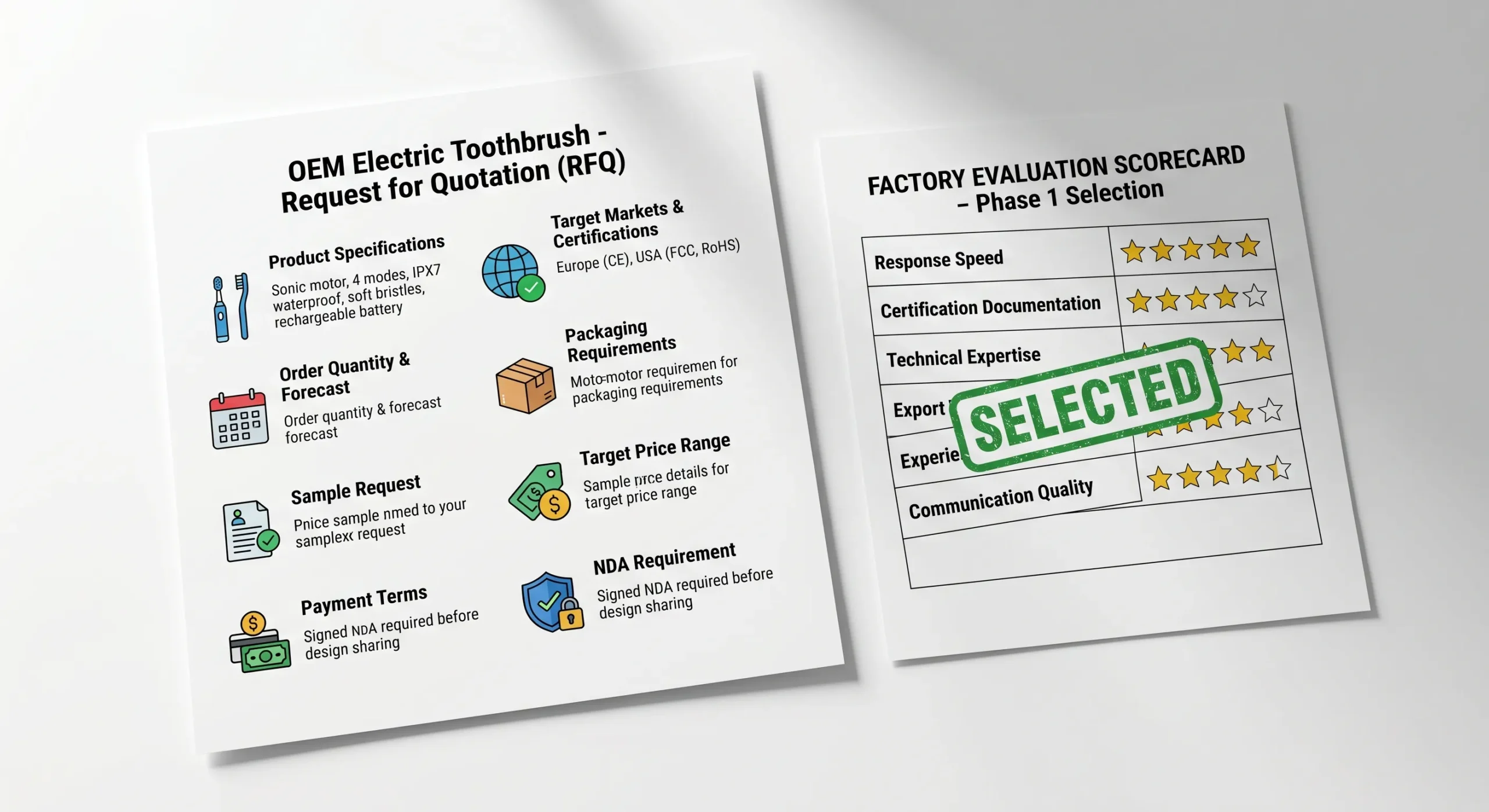
Angebotsanfrage vorbereiten und mehrere Werke kontaktieren
AnfrageBeginnen Sie Woche 1 mit einer klaren, detaillierten Angebotsanfrage (RFQ) und senden Sie sie gleichzeitig an 4–6 Werke. Die Qualität Ihrer Anfrage bestimmt die Qualität der eingehenden Angebote. Vage Anfragen führen zu vagen Antworten und zu überhöhten Preisen, die oft erst später erkennbar werden.
- Legen Sie die Produktspezifikationen fest: Antriebstechnologie und festgelegte Bewegungskennzahl, Batteriespannung und -kapazität in Wh, zutreffende Schutzart, Abmessungen des Handstücks, Bürstenkopftyp, Lademethode und Betriebsmodi.
- Legen Sie Ihre Zielmengen fest: Geben Sie Ihre anfängliche Bestellmenge und das voraussichtliche Jahresvolumen an. Fabriken haben unterschiedliche Preise für 500 bzw. 5.000 Einheiten
- Führen Sie die Compliance-Anforderungen des Zielmarkts auf: Ermitteln Sie die für Modell und Konfiguration geltenden Produktvorschriften und Nachweise und stimmen Sie Prüfungen und Dokumentation mit dem Labor oder einem qualifizierten Berater ab.
- Verpackungsanforderungen festlegen: Abmessungen der Verkaufsverpackung, Einlegekarte, Umkarton und Kennzeichnungsanforderungen für Amazon
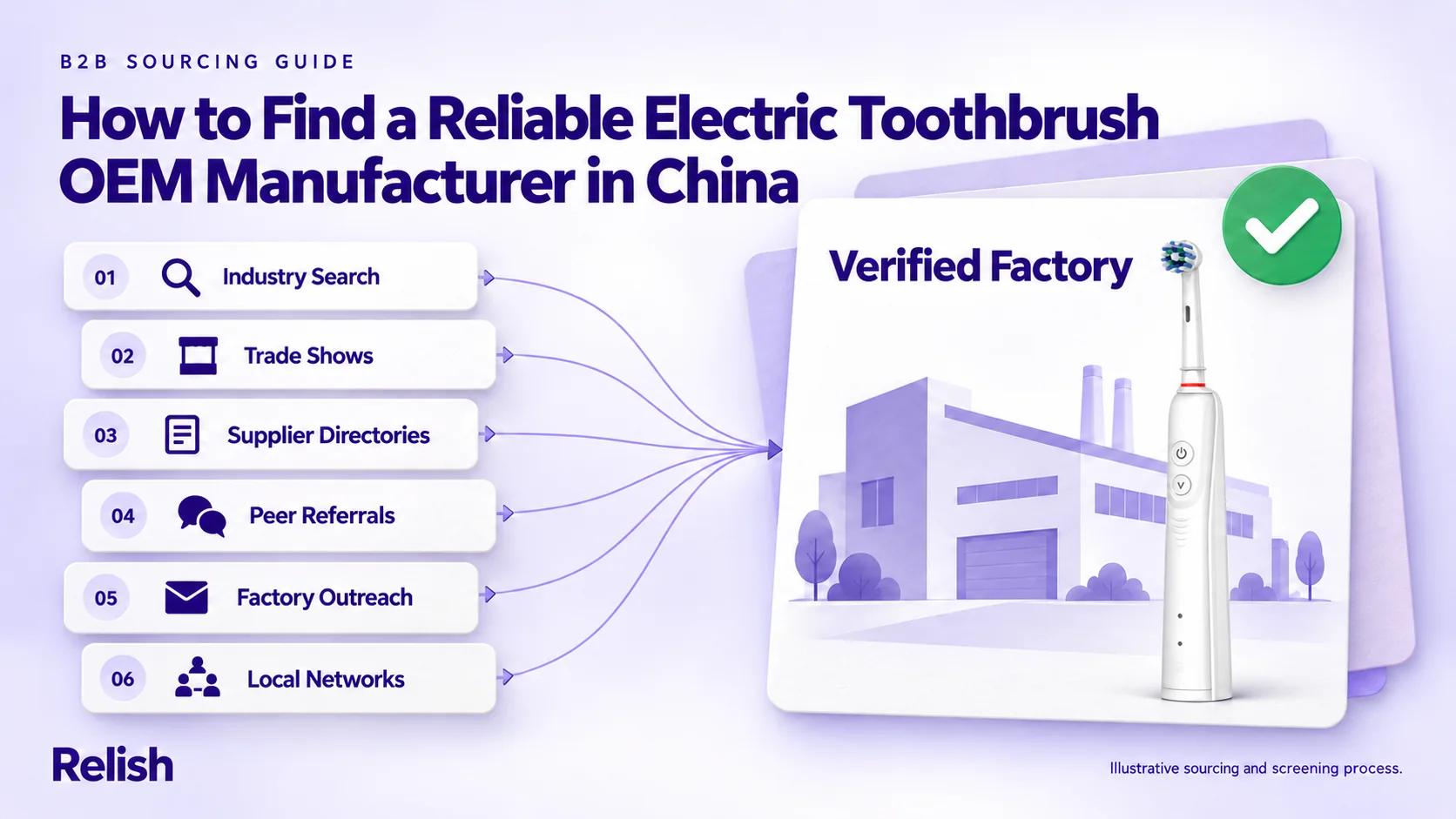
- Identifizieren Sie 4-6 Kandidatenfabriken: Verwenden Sie Verzeichnisse der Canton Fair, den Alibaba Gold Supplier Filter, Made-in-China.com oder direkte Empfehlungen.
Eine vollständige RFQ umfasst diese acht Punkte
Produktname und eine 1-2 zeilige Beschreibung. Ein technisches Datenblatt mit Abmessungen, Materialien und Leistungszielen. Ihr(e) Zielmarkt(e) und erforderliche Zertifizierungen. Die Erstbestellmenge sowie eine 12-monatige Volumenprognose. Verpackungsspezifikation für Einzelhandel und Umkarton. Anforderungen an Mustermenge und Vorlaufzeit. Angestrebte FOB-Preisspanne - dies ist optional, hilft aber, Fabriken herauszufiltern, die in Ihrer Spanne nicht wettbewerbsfähig sind. Und Ihre erwarteten Zahlungsbedingungen.
Angebotsauswertung & Fabrikauswahl
AuswahlVergleichen Sie Angebote anhand identischer Spezifikationen, Mengen, Incoterms, Prüfungen, Verpackungen und Dokumentationen. Bewerten Sie die Gesamtkosten bis zum Bestimmungsort und die zugrunde gelegten Annahmen; der Preis allein belegt weder die Qualität eines Lieferanten noch künftige Nacharbeitskosten.
- Vergleichen Sie die Angebote auf derselben Grundlage: Bestätigen Sie, dass alle Angebote dieselben Incoterms (in der Regel FOB Shenzhen) verwenden, dieselben Zertifizierungen enthalten und identische Verpackungsspezifikationen abdecken.
- Prüfen Sie den Lieferanten: Prüfen Sie die Gewerbeanmeldung und gegebenenfalls ein angegebenes ISO-9001-Zertifikat. Bitten Sie bei vergleichbaren Produkten um modellspezifische Prüfberichte und Konformitätsunterlagen für Ihren Zielmarkt. CE ist ein Konformitätszeichen; FCC-Anforderungen hängen von der Produktkonfiguration ab.
- Bewerten Sie die Kommunikationsgeschwindigkeit: Beobachten Sie während der Bewertung die Reaktionszeiten und vereinbaren Sie vor Produktionsbeginn Erwartungen an die Kommunikation sowie Eskalationskontakte.
- Fabrikprofil anfordern: Wie viele Produktionslinien? Jährliche Kapazität? Derzeitige Großkunden (anonymisiert)? Haben sie bereits in Ihren Zielmarkt exportiert?
- Erstellen Sie eine engere Auswahl an Lieferanten für die weitere Prüfung. Beauftragen Sie bei Bedarf ein Audit des Werks mit klar abgegrenztem Umfang und holen Sie vom Anbieter ein aktuelles Angebot ein.
Wie eine zuverlässige Fabrik aussieht
Ein Lieferant sollte seine Fähigkeiten erläutern, offene technische Fragen benennen, aktuelle Unterlagen zu vergleichbaren Produkten vorlegen und einen praktikablen Kommunikations- und Prüfprozess vereinbaren. Gleichen Sie Aussagen mit dem Projektumfang ab.
Bei diesen Warnzeichen sollten Sie die Zusammenarbeit beenden
Gehen Sie widersprüchlichen Angeboten, unklaren Unterlagen oder Druck, schriftliche Vereinbarungen zu überspringen, nach. Vergleichen Sie Kosten auf gleicher Grundlage und bitten Sie um Klärung; kein einzelnes Signal beweist Betrug.
3. Phase 2 - Muster- und Prototypentwicklung (Wochen 3-8)
Die Musterentwicklung kann mehrere Wochen dauern und Prüfungsrunden erfordern. Bündeln Sie Rückmeldungen, dokumentieren Sie freigegebene Änderungen und prüfen Sie neue Anforderungen im Hinblick auf den Zeitplan.
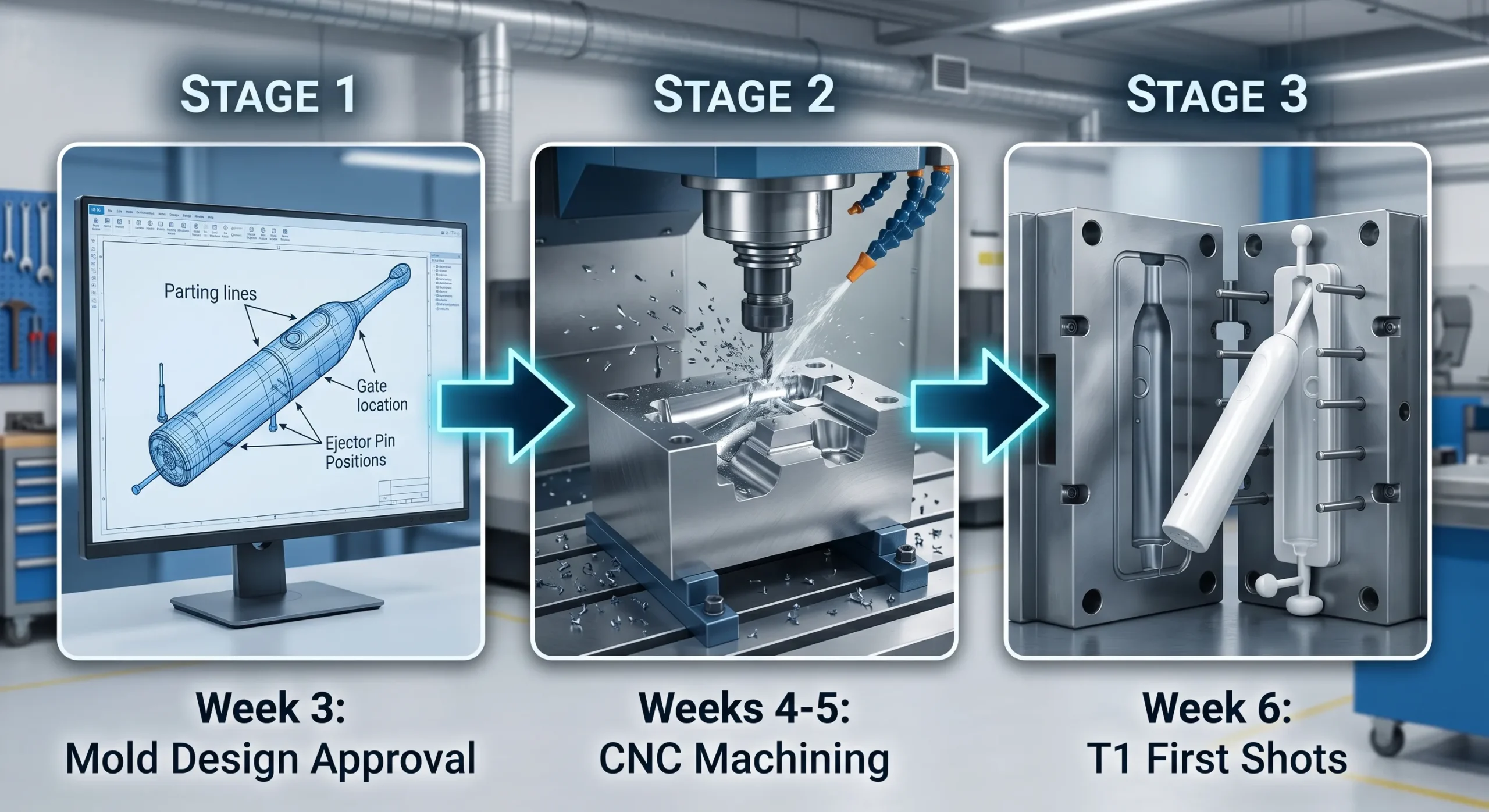
Technische Überprüfung und Bestätigung der Formgestaltung
Startschuss für den WerkzeugbauNachdem Umfang und kaufmännische Bedingungen vereinbart sind, prüft das Engineering Design, Werkzeugbau, Materialien, Montage und verfügbare Verfahren. Anzahl und Bearbeitungszeit der Rückfragen hängen vom Projekt ab.
- DFM-Prüfung: Bitten Sie das Engineering, Fragen zu Design, Werkzeugbau, Montage und Verfahren zu benennen und vorgeschlagene Änderungen zu dokumentieren.
- Prüfen Sie die vorgeschlagenen CAD- und Werkzeugkonstruktionen, bevor Sie die Fertigung freigeben. Änderungen nach Arbeitsbeginn können Engineering, Zeit und Kosten beeinflussen; vereinbaren Sie Freigabeprozess und Werkzeugeigentum schriftlich.
- Materialien bestätigen: Griffmaterial (ABS, PC oder ABS/PC-Mischung), Borstenmaterial (Nylonsorte oder DuPont Tynex) und Spezifikationen für die TPE-/Gummi-Umspritzung
- Dokumentieren Sie die relevante Vibrations- oder Bürstenkopf-Bewegungskennzahl und das Prüfverfahren; unterscheiden Sie VPM, Hz und Drehzahl. Bezeichnen Sie den Betrieb nicht ohne entsprechende Frequenzdaten als Ultraschall.
- Werkzeugkosten und Zahlungszeitpunkt hängen von Design und Vertrag ab. Vereinbaren Sie Betrag, Eigentum, Abnahmemeilenstein und Zahlungsauslöser schriftlich.
Herstellung von Formen (CNC-Bearbeitung)
WerkzeugbauBitten Sie während der Werkzeugfertigung um Aktualisierungen zu den vereinbarten Meilensteinen. Der Werkzeugbau erfordert Prüfungen und Anpassungen; die geeignete Korrektur hängt vom Problem und der technischen Bewertung ab.
- Vorlaufzeit und Lebensdauer eines Werkzeugs hängen von Design, Material, Verfahren, Auslastung, Produktionsbedingungen und Wartung ab. Holen Sie eine projektspezifische Schätzung ein.
- Fordern Sie Fortschrittsfotos an: Fragen Sie nach Fotos der CNC-Bearbeitung bei der Fertigstellung von 50% und 100%
- Parallele Aufgaben während dieser Wartezeit:
- Fertigstellung des Markenlogos und der Farbpalette für die Formtexturierung
- Entwurf einer Einzelhandelsverpackung zur Überprüfung durch das Werk
- Bitten Sie Ihr Prüflabor, die Vorschriften und den Prüfumfang für das vorgesehene Produkt und die Zielmärkte zu prüfen.
- Klären Sie, falls für Bestimmungsort und Transaktion erforderlich, die Rolle des Importeurs.
- Die Werkzeugstandzeit hängt von Werkstoffgüte, Wärmebehandlung, Werkzeugkonstruktion, Kunststoffharz, Produktionsbedingungen und Wartung ab; angegebene Schusszahlen sind keine allgemeingültigen Garantien.
Vergeuden Sie nicht die Wochen 4-5 mit Warten
Nutzen Sie die Werkzeugfertigungszeit, um das Verpackungsdesign fertigzustellen, und senden Sie es dem Werk zur Anfertigung eines Verpackungsmusters. Registrieren Sie Barcodes (EAN/UPC) für jede SKU früh genug für Produktlistings und Verpackung. Bereiten Sie während des Werkzeugbaus Listingtexte, die Lagerabwicklung und Entwürfe der Bedienungsanleitungen vor. Klären Sie regulatorische Anforderungen frühzeitig mit dem Labor; Produkttests und endgültige Freigaben können repräsentative Muster erfordern.
Erste Werkzeugabmusterung und T1-Muster
Erste SpritzgussmusterEin erster Werkzeugversuch (häufig T1 genannt) dient zur Prüfung der Formteile und ihrer Passung. Dabei können Maß-, Oberflächen- oder Montageprobleme sichtbar werden; es handelt sich nicht zwingend um ein vollständig funktionsfähiges Produkt.
- T1-Maßkontrolle: Das Werk misst kritische Abmessungen anhand der von Ihnen genehmigten Zeichnungen mit Hilfe von CMM (Coordinate Measuring Machine) oder Messschiebern.
- Oberflächenprüfung: Prüfen Sie Struktur, Glanzgrad, Sichtbarkeit der Formtrennlinie sowie Einfallstellen und Bindenähte.
- Montageversuch: Die Gehäusehälften werden mit den internen Komponenten (Leiterplatte, Motor, Batterie) montiert, um Passung und Toleranzkette zu prüfen.
- T1-Befunde und Korrekturmaßnahmen:
- Prüfen Sie Grat, Einfallstellen, Bindenähte, Passung und Oberflächenstruktur anhand der Zeichnung und der Musterkriterien.
- Bitten Sie das Engineering, die Ursache zu ermitteln, bevor Design, Verfahren oder Werkzeug geändert werden.
- Dokumentieren Sie Korrekturmaßnahmen und den Zeitpunkt eines erneuten Werkzeugversuchs im Projektzeitplan; eine einheitliche Reparatur oder Durchlaufzeit gibt es nicht.
- Prüfen Sie das überarbeitete Muster, bevor Sie die nächste Phase freigeben.
- T1-Muster zusenden lassen: Auch gute Fotos ersetzen keine Prüfung am realen Muster. Beurteilen Sie Haptik, Gewichtsverteilung und Tastengefühl, die auf Bildern nicht vollständig erkennbar sind.
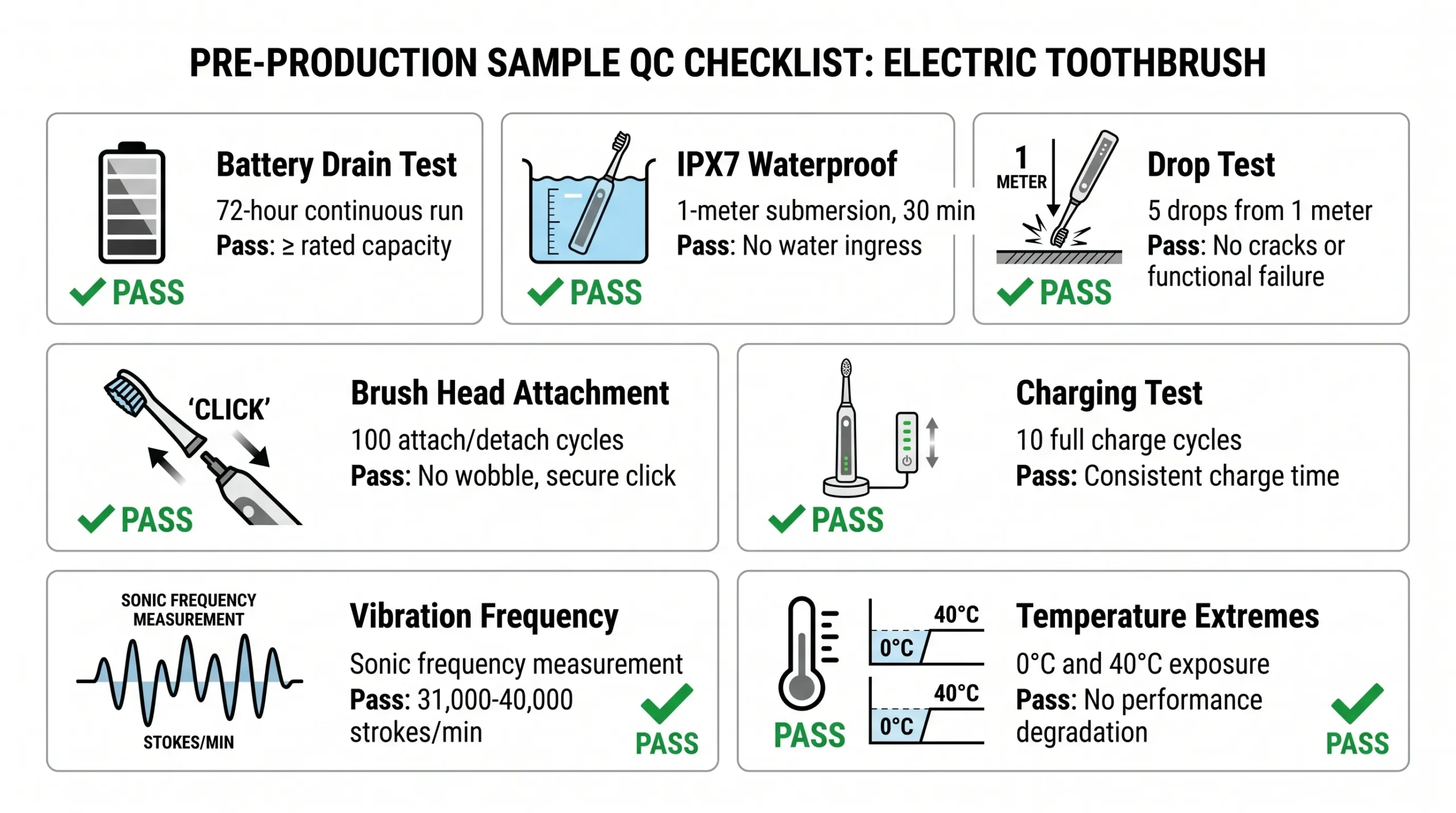
Vorproduktionsmuster (Funktionsprototyp) & Prüfung
MusterprüfungDas Vorserienmuster sollte das vereinbarte Design so genau abbilden, dass es geprüft werden kann. Legen Sie Prüfungen, Stichprobengröße, Bedingungen, Abnahmekriterien und Änderungen fest, die eine erneute Bewertung erfordern.
- Funktionsprüfung des Musters:
- Batterielaufzeit: Legen Sie Muster, Ladezustand, Betriebsmodus, Belastung und Abbruchkriterien fest. Eine einzelne Prüfbedingung weist die Laufzeit nicht für jeden Modus und jede Batterie nach.
- IPX7-Eintauchprüfung: Wenden Sie die zutreffenden Bedingungen der IEC 60529 an; für das betreffende Gehäuse sind 1 m für 30 Minuten ein häufiges Beispiel. Eine längere Dauer ist keine IPX7-Anforderung; eine Druckluftprüfung ersetzt den Wassertest nicht.
- Falltest: Vereinbaren Sie Muster, Fallhöhe, Oberfläche, Ausrichtungen, Wiederholungen und Abnahmekriterien im Projektprüfplan.
- Bürstenkopf-Befestigung: Legen Sie Muster, Zyklenzahl und Bewertungskriterien in der Produktspezifikation fest.
- Lade-/Zyklustest: Legen Sie Ladegerät, Batterie, Zyklenzahl, Messwerte und Abnahmekriterien fest.
- Vibrationsmessung: Dokumentieren Sie Messgerät, Messpunkt, Verfahren und Kennzahl; unterscheiden Sie Schallzahnbürsten-Vibration von Ultraschallfrequenz und Drehzahl.
- Temperaturprüfung: Legen Sie Produktzustand, Einwirkdauer, Betriebsbedingungen und Kriterien fest; begrenzte Prüfungen belegen keine Leistung unter allen Umgebungsbedingungen.
- Überprüfung des Verpackungsprototyps: Prüfen Sie die Farben der Einzelhandelsverpackungen (fordern Sie einen Pantone-genauen Proof an), die Scanbarkeit von Barcodes und die Passgenauigkeit der Einsteckkarten.
- Prüfung der Bedienungsanleitung: Prüfen Sie Kennzeichnung und Anweisungen anhand der Anforderungen, die für den jeweiligen Zielmarkt und die Produktkonfiguration gelten.
Bevor Sie das Vorproduktionsmuster abzeichnen
Vergleichen Sie das serienrepräsentative Muster und die dokumentierten Ergebnisse mit den vereinbarten Spezifikationen und Kriterien. Entscheiden Sie, ob Änderungen weitere Prüfungen oder Freigaben vor Produktionsbeginn erfordern.
Bestellungsbestätigung und Produktionsplanung
Start der MassenproduktionNachdem Muster und kaufmännische Bedingungen freigegeben wurden, stellen Sie eine Bestellung aus und bestätigen Sie den Produktionsslot. Legen Sie Spezifikationen, Menge, Preis, Lieferbedingungen, Prüfkriterien und Zahlungsplan schriftlich fest.
- Erteilen Sie eine formelle Bestellung: Ihre unterzeichnete Bestellung sollte genaue Mengen pro SKU, Stückpreis, Incoterms, Lieferfrist, Verpackungsspezifikationen und Zahlungsbedingungen enthalten.
- Bestätigung des Produktionsplans: Die Fabrik stellt ein Gantt-Diagramm oder einen Produktionsplan zur Verfügung, aus dem das Startdatum, die voraussichtliche Fertigstellung und die QC-Meilensteine hervorgehen.
- Beschaffung von Komponenten: Bestätigen Sie mit dem Lieferanten Verfügbarkeit und Vorlaufzeiten der spezifizierten Leiterplatten, Batterien, Motoren und Materialien; aktualisieren Sie den Projektzeitplan, falls ein Artikel nicht bereitsteht.
- Start der Verpackungsproduktion: Stimmen Sie Artwork-Freigabe, Produktionsmenge und Liefertermin mit dem Verpackungslieferanten und dem Montagezeitplan ab.
- Prüfplanung: Vereinbaren Sie Prüfumfang, Anbieter, Stichprobenplan und Zeitpunkt mit Lieferant und Prüfer; die Verfügbarkeit variiert.
4. Phase 3 - Massenproduktion (Wochen 9-12)
Vereinbaren Sie Statusmeldungen und die zu teilenden Aufzeichnungen. Nutzen Sie dokumentierte Fortschritte, Prüfergebnisse und die Nachverfolgung von Problemen; halten Sie Lieferantenvertrag und standortbezogene Vorgaben ein.
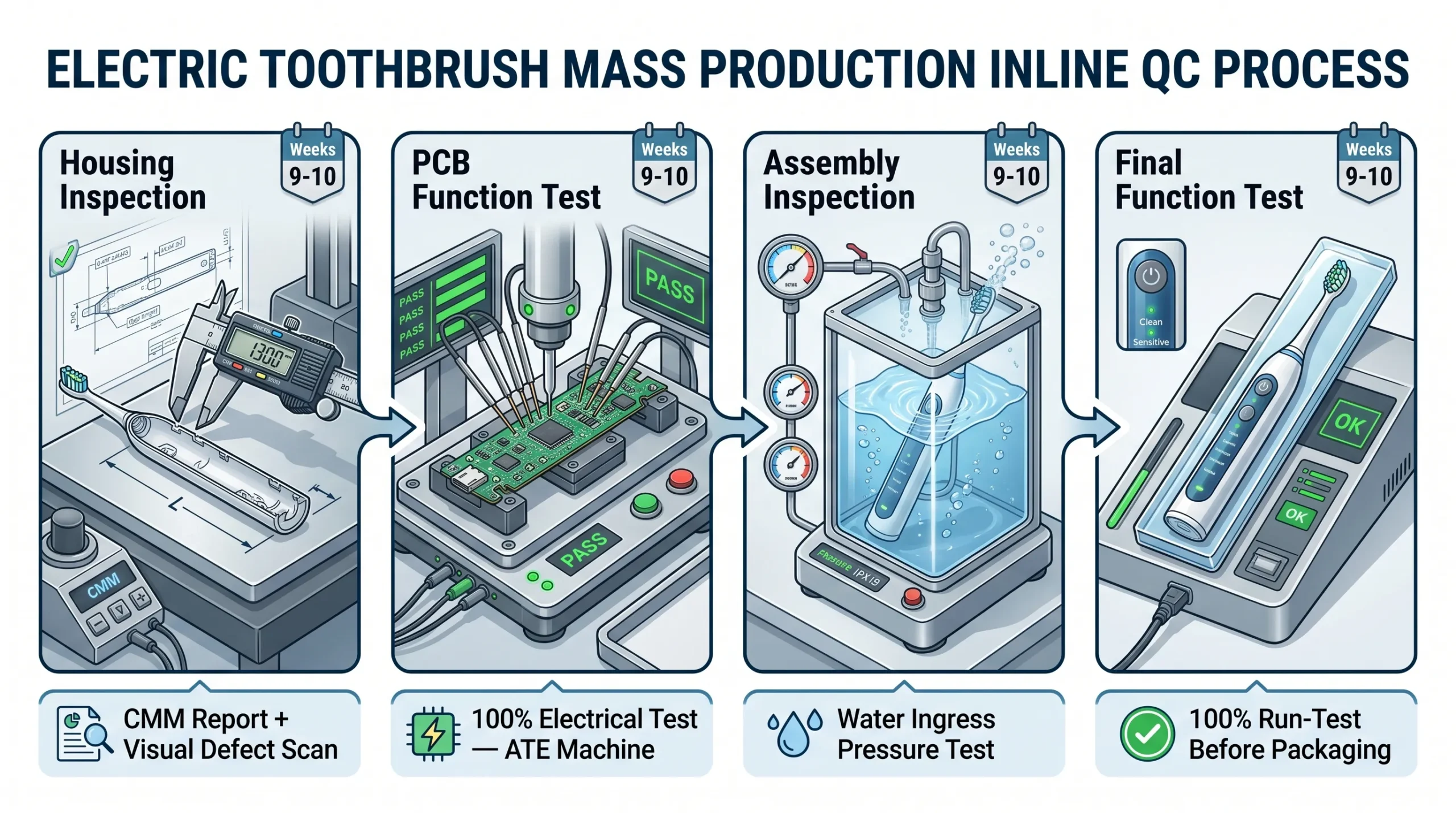
Aktive Produktion und Inline-Qualitätskontrolle
ProduktionDokumentieren Sie Produktionsprüfpunkte, Prüfumfang, Stichprobenpläne, Grenzwerte und den Umgang mit Fehlern anhand der freigegebenen Spezifikation.
- Laufende Qualitätsprüfpunkte (vereinbarten Plan dokumentieren):
- Gehäuse: Prüfen Sie Abmessungen und sichtbare Mängel anhand der freigegebenen Spezifikation und des Stichprobenplans.
- Leiterplatte: Dokumentieren Sie Prüfumfang und Grenzen; bezeichnen Sie eine Prüfung nur dann als 100%-Prüfung, wenn jedes einzelne Gerät dem angegebenen Test unterzogen wird.
- Montage: Prüfen Sie Ausrichtung und Dichtungen anhand der Spezifikation. Eine Druckluftprüfung ist keine Wassereindringprüfung nach IEC 60529.
- Endfunktion: Benennen Sie die je Gerät geprüften Funktionen und dokumentieren Sie, wie Fehler erfasst und behandelt werden.
- Verpackung: Prüfen Sie SKU, Kennzeichnungen, Zubehör und Kartondaten anhand der freigegebenen Spezifikation.
- Fordern Sie wöchentlich Produktionsfotos/Videos an: Fertige Einheiten auf der Linie, QC-Inspektionsprotokolle und Verpackungslinie in Betrieb
- Produktionsfortschritt verfolgen: Vergleichen Sie beispielsweise die gemeldete Produktionsmenge mit dem Produktionsplan und der Bestellmenge. Gehen Sie erheblichen Abweichungen frühzeitig nach.
- Falls Prüfungen erforderlich sind, stimmen Sie repräsentative Muster, Umfang, Laborzeitplan und Auswirkungen von Produktionsänderungen mit dem Labor ab; der Zeitbedarf ist nicht garantiert.
Warnzeichen während der Produktion: sofort handeln
Wenn das Werk ohne Erklärung nicht mehr reagiert, stimmt etwas nicht. Bittet es plötzlich wegen „Lieferengpässen“ um den Austausch einer Komponente, bestehen Sie auf der ursprünglichen Spezifikation oder einer schriftlichen Erklärung. Bleibt das Produktionstempo deutlich und ohne klaren Grund hinter dem Zeitplan zurück, eskalieren Sie das Thema. Fordert ein Lieferant eine Zahlung vor einem vereinbarten Meilenstein, vergleichen Sie die Forderung mit dem Vertrag und klären Sie Abweichungen vor der Zahlung schriftlich.
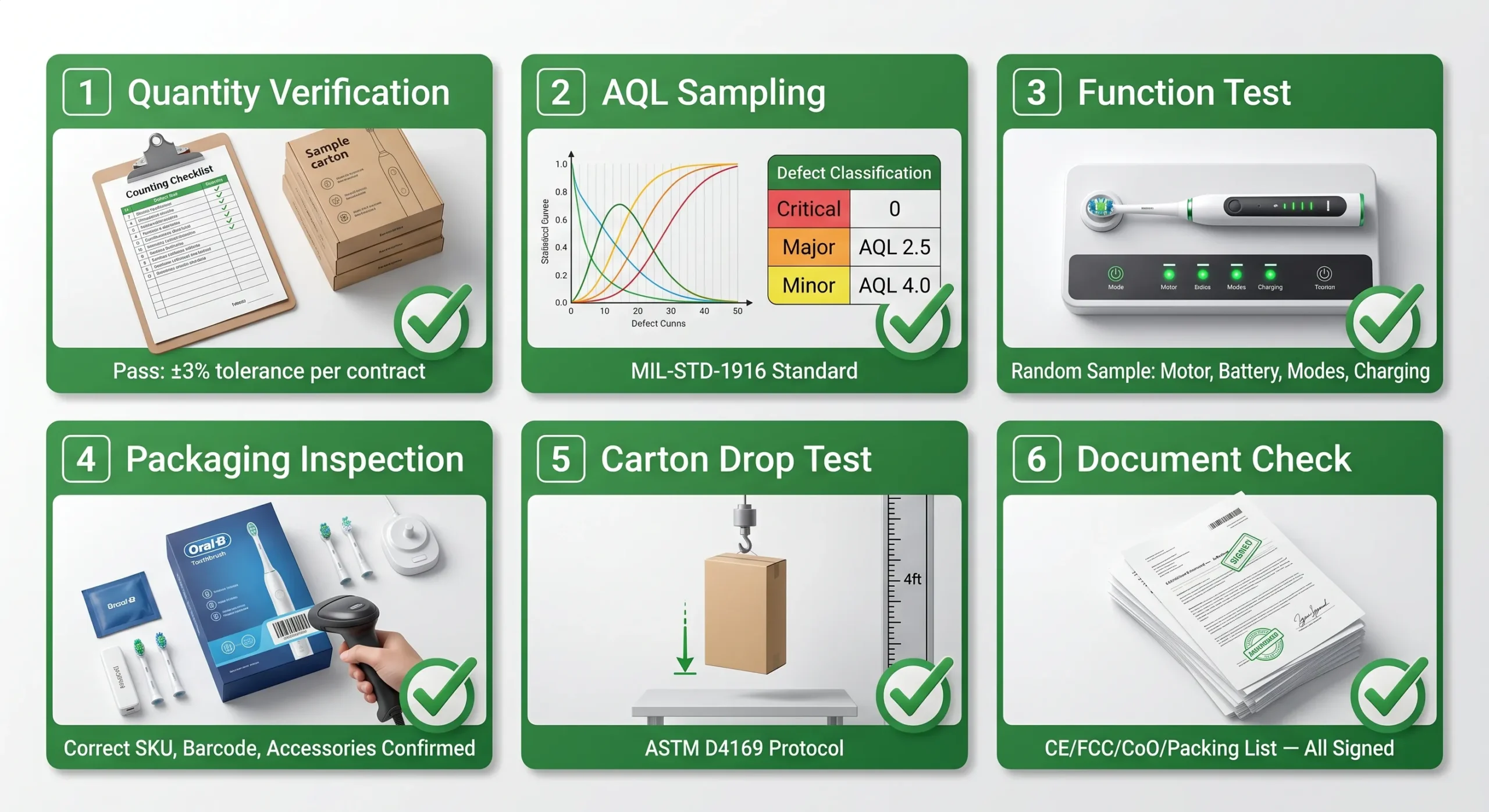
Produktionsabschluss und Vorversandkontrolle
QC & InspektionBei einer Vorversandkontrolle können die Waren anhand der vereinbarten Bestellung und des Abnahmeplans geprüft werden. Legen Sie Umfang und Verfahren im Voraus fest; die Kontrolle garantiert nicht jede einzelne versandte Einheit.
- Umfang der Vorversandkontrolle:
- Menge: Vergleichen Sie die physische Stückzahl mit der Bestellung und einer gegebenenfalls ausdrücklich vertraglich vereinbarten Toleranz.
- Stichproben: Legen Sie Verfahren, Prüfniveau, Stichprobengröße, Fehlerklassen sowie Annahme- und Ablehnungszahlen fest. AQL ist ein Parameter des Prüfplans und keine gemessene Fehlerquote; MIL-STD-1916 verwendet Verifikationsstufen, keine AQL-Tabelle.
- Verarbeitung: Bewerten Sie Oberfläche, Farbe, Montage und die vereinbarten Kriterien.
- Funktion: Legen Sie Prüffunktionen, Stichprobenplan und Abnahmekriterien fest.
- Verpackung: Prüfen Sie Kartonkennzeichnungen, Zubehör und Barcodes anhand der freigegebenen Spezifikation.
- Fallprüfung des Kartons: Wenden Sie das vereinbarte Prüfprotokoll zu Fallhöhe, Ausrichtungen, Oberfläche, Wiederholungen und Abnahmekriterien an.
- Wählen Sie je nach vereinbartem Umfang und Nachweisbedarf einen unabhängigen Anbieter, einen vom Käufer benannten Vertreter oder Lieferantenunterlagen. Gebühren und Verfügbarkeit variieren; lassen Sie sich die Bedingungen schriftlich bestätigen.
- Dokumentieren Sie Abweichung, Korrekturmaßnahme, Nacharbeit und Kriterien für die erneute Prüfung. Der zusätzliche Zeitbedarf hängt vom Problem und der vereinbarten Entscheidung ab.
- Bereiten Sie Dokumente entsprechend Transportweg, Produkt, Batteriekonfiguration, Bestimmungsort und Käuferanforderungen vor. Verwenden Sie Ursprungszeugnisse oder Konformitätsunterlagen nur, wenn sie zutreffen.
Kriterien für das Bestehen der Vorversandkontrolle
Verwenden Sie Menge, Stichprobenplan, Funktionsprüfungen, Verpackung, Kennzeichnungen und Dokumente aus dem Vertrag. Werden Kriterien verfehlt, dokumentieren Sie die Korrekturmaßnahmen und prüfen Sie deren Abschluss vor dem Versand.
5. Phase 4 - Versand und Zollabfertigung (Wochen 13-16)
Dauer von Versand und Zollabfertigung hängt von Transportweg, Frachtführer, Service, Dokumenten, Batteriekonfiguration, Hafenbedingungen und Zollabfertigung ab. Behandeln Sie die Wochenangaben als Beispiel und bestätigen Sie den aktuellen Plan.
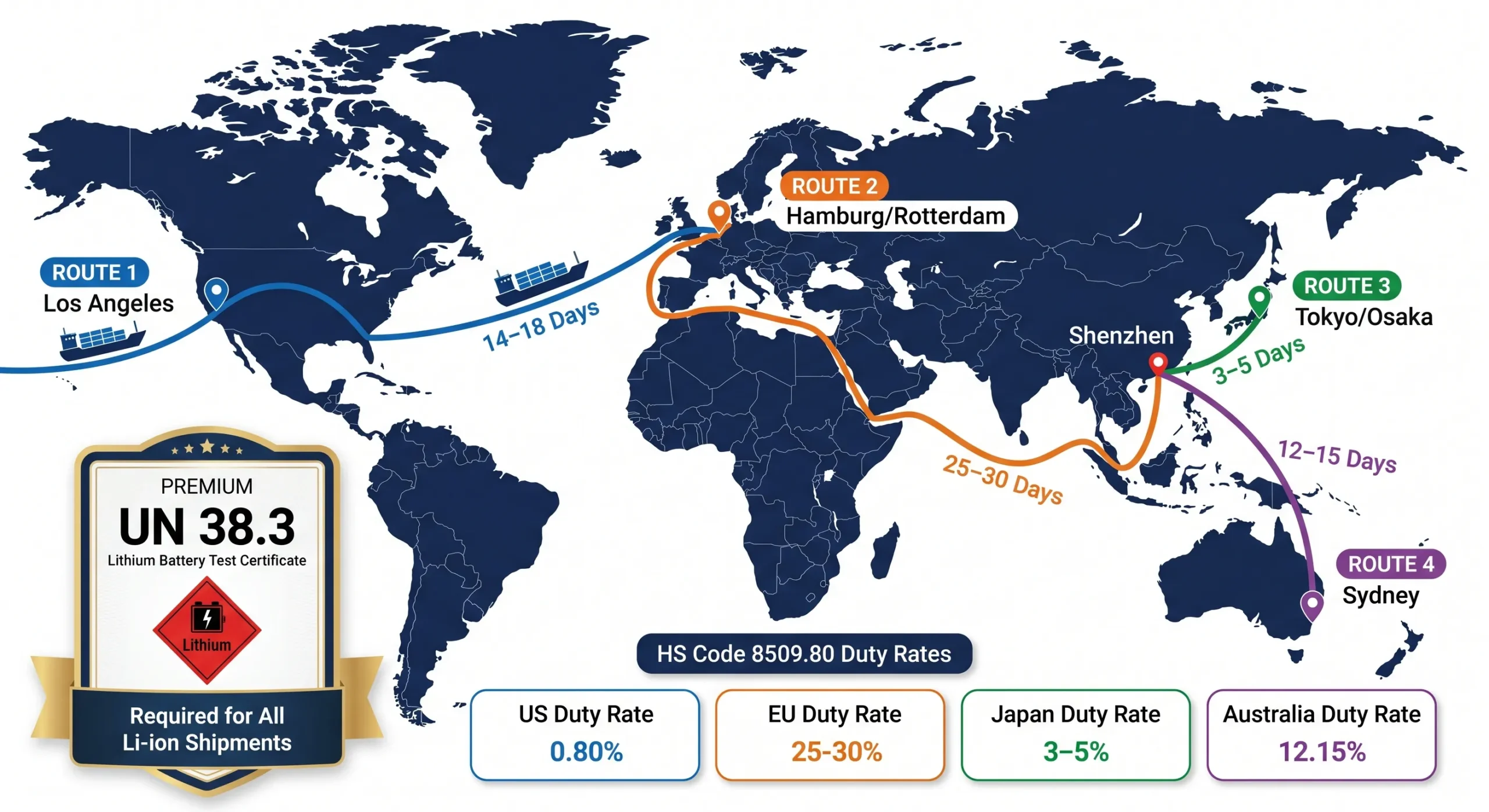
Frachtabholung und Exportzoll (chinesische Seite)
Abgang der SendungDer Spediteur koordiniert die Abholung und die Ausfuhrformalitäten. Die Dauer der Zollabfertigung hängt von der Sendung und ihren Dokumenten ab; bestätigen Sie Fristen und erforderliche Unterlagen für den gewählten Service.
- Beispiele für die Seefrachtplanung:
- Shenzhen nach Los Angeles: Holen Sie eine aktuelle Schätzung für Route und Service ein.
- Shenzhen nach Hamburg oder Rotterdam: Holen Sie eine aktuelle Schätzung für Route und Service ein.
- Shenzhen nach Tokio oder Osaka: Holen Sie eine aktuelle Schätzung für Route und Service ein.
- Shenzhen nach Sydney: Holen Sie eine aktuelle Schätzung für Route und Service ein.
- Luftfracht kann für Muster oder dringende Sendungen geeignet sein. Laufzeit und Kosten hängen von Route, Service, frachtpflichtigem Gewicht, Annahme der Batterie und aktueller Kapazität ab; vergleichen Sie aktuelle Angebote.
- Die Einstufung hängt von Produktkonfiguration, Rechtsraum, Ursprung und Einfuhrdatum ab. Betrachten Sie HS 8509.80 nur als mögliche Position, die geprüft werden muss, nicht als endgültigen nationalen Zolltarifcode oder Zollsatz.
- Checkliste für Versanddokumente (Anwendbarkeit bestätigen):
- Handelsrechnung mit zutreffendem Transaktionswert und den erforderlichen Versandangaben.
- Packliste mit Anzahl, Gewicht, Abmessungen und Inhalt der Packstücke, soweit erforderlich.
- Konnossement oder Luftfrachtbrief für den ausgewählten Transportservice.
- Ursprungszeugnis nur, wenn es der Bestimmungsort, der Käufer oder ein anwendbares Verfahren verlangt; Formular und Ursprungsregeln prüfen.
- Für Produkt und Bestimmungsort geltende Konformitätsunterlagen.
- FCC-Unterlagen nur, wenn sie für Produkt und Einfuhr zutreffen.
- Batterieprüfzusammenfassung und Versandangaben, die für Batteriedesign und Transportart erforderlich sind.
Kritisch: Lithiumbatterie-Versandvorschriften
Bei Produkten mit Lithiumbatterien sind Batterietyp, Wattstunden, Verpackungskonfiguration, Versandart und anwendbare Vorschriften festzustellen. Beschaffen Sie die erforderliche UN-38.3-Prüfzusammenfassung und bestätigen Sie Deklarationen und Kennzeichnungen für die jeweilige Sendung; Luft- und Seefracht unterliegen unterschiedlichen Vorschriften.
Während des Transports: Einfuhrabfertigung vorbereiten
TransitBereiten Sie Einfuhrunterlagen vor der Ankunft vor. Bestätigen Sie Freistellungszeiten, Lager- oder Standgeldbedingungen und Fristen des Zollagenten anhand aktueller Angaben von Frachtführer und Hafen; Gebühren variieren.
- Übermitteln Sie die Unterlagen mit der mit dem Zollagenten vereinbarten Vorlaufzeit. Eine Prüfung vor der Ankunft kann Lücken aufdecken; eine einheitliche Frist für alle Sendungen gibt es nicht.
- Prüfen Sie bei zutreffenden US-Seefrachtsendungen, ob eine ISF-Anmeldung erforderlich ist, und übermitteln Sie die erforderlichen Angaben innerhalb der vorgeschriebenen Frist vor dem Verladen. ISF ist keine allgemeine Anmeldung für Luftfracht.
- Klären Sie bei EU-Einfuhren mit Importeur und Zollagent den Wirtschaftsakteur und die Importeurregelungen, die zutreffenden Konformitätsunterlagen sowie die Zollregistrierung. Trennen Sie diese Anforderungen von den Vorschriften für Großbritannien und Nordirland.
- Bestätigen Sie den Konformitätsweg für Großbritannien oder Nordirland und das jeweilige Produkt. Großbritannien erkennt für viele zutreffende Produkte CE neben UKCA im Rahmen der geltenden Regelungen an; für Nordirland gelten andere Bedingungen.
- Zu berücksichtigende Einfuhrzölle:
- USA: Zölle und zusätzliche Abgaben hängen von der endgültigen Einreihung, dem Ursprung, den Produktdetails und dem Einfuhrdatum ab. Prüfen Sie aktuelle offizielle Quellen und holen Sie Rat beim Zollagenten ein.
- EU: Ermitteln Sie den Zoll anhand der endgültigen Einreihung, des Ursprungs und des Einfuhrdatums; verlassen Sie sich nicht auf einen allgemeinen Prozentsatz.
- UK: Ermitteln Sie den Zoll anhand des endgültigen Warencodes, des Ursprungs und des Einfuhrdatums.
- Bereiten Sie die Fulfillment-Anforderungen vor dem Versand vor. Bestätigen Sie bei Amazon FBA die aktuellen Anforderungen an Kartons, Kennzeichnung, Vorbereitung und Versandplan in Seller Central; sie unterscheiden sich von der üblichen Drittanbieterlogistik.
Lieferung, Wareneingang und Bestandsfreigabe
AnkunftDie Fracht wird vom Zoll abgefertigt und an Ihr Lager oder Fulfillment Center geliefert. Das OEM-Projekt ist abgeschlossen. Aber die Arbeit ist noch nicht vorbei. Der Wareneingang ist ein Qualitätsprüfpunkt, den viele Marken zu ihrem Nachteil auslassen.
- Gleichen Sie die Kartonanzahl und den sichtbaren Zustand ab und prüfen Sie die Einheiten gemäß dem für die Bestellung vereinbarten Wareneingangsplan. Eine prozentuale Stichprobe ist projektspezifisch und nicht allgemeingültig.
- Aktualisierung des Inventarsystems: Protokollieren Sie Chargennummern, Produktionsdaten und Chargencodes. Dies ist wichtig für Garantieansprüche und mögliche Rückrufe
- Wareneingang bei Amazon FBA (falls zutreffend): Gleichen Sie die gelieferten Kartons ab und verfolgen Sie den Wareneingangsstatus anhand des vor dem Versand erstellten Versandplans. Die Verfügbarkeit des Bestands hängt von der Bearbeitung durch Amazon ab.
- Produktfotos und Produktlistings aktualisieren: Falls noch keine Produktfotos vorliegen, organisieren Sie umgehend ein Shooting im eigenen Unternehmen oder in einem Studio. Die Produktlistings sollten innerhalb weniger Tage nach Verfügbarkeit des Bestands online sein.
- Nachbesprechung des Projekts: Dokumentieren Sie, was gut gelaufen ist, was zu Verzögerungen geführt hat und was Sie anders machen würden. Dies wird zu Ihrer SOP für den nächsten Produktionslauf.
Sind Sie bereit, Ihr OEM-Projekt für elektrische Zahnbürsten zu starten?
Teilen Sie uns Ihre Projektanforderungen mit, um ein Angebot und einen Zeitplan zu besprechen. Umfang, MOQ, Werkzeugbau, Prüfungen, Musterbedingungen und aktuelle Kapazität hängen vom Produkt und der schriftlichen Vereinbarung ab.
Welches ist Ihr angestrebtes Einführungsdatum? Geben Sie es im Formular an - wir sagen Ihnen, ob der Zeitplan realistisch ist.
ODM-Optionen auf Basis bestehender Plattformen
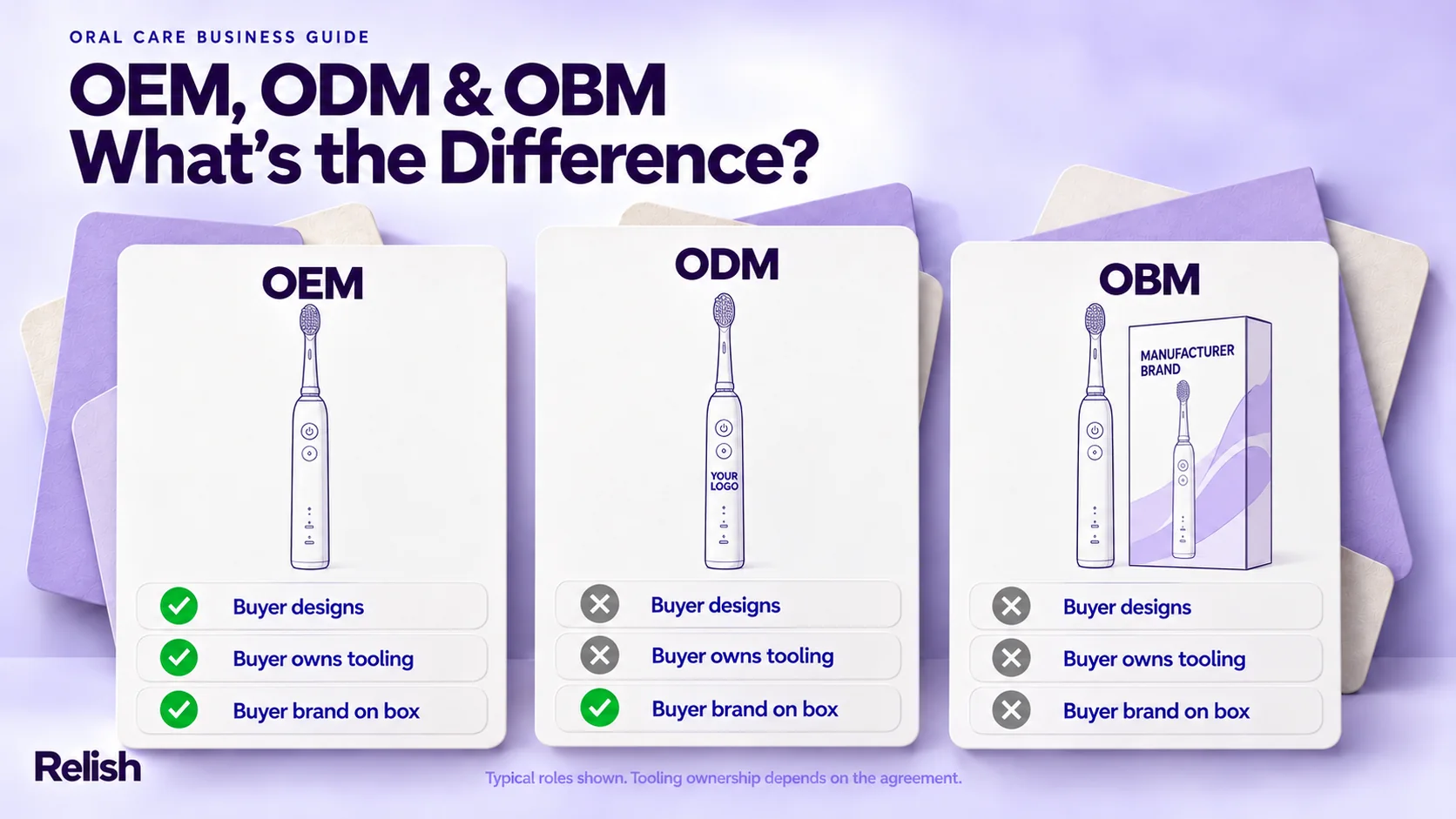
ODM kann für ein Projekt geeignet sein, das zu einer bestehenden Plattform und verfügbaren Konfiguration passt. Bei strukturellen Änderungen kann weiterhin neues Werkzeug erforderlich sein; Branding, Zubehör, Verpackung, Prüfungen und Zeitplan hängen vom vereinbarten Umfang ab. Vergleichen Sie Gesamtkosten, MOQ, Rechte und Zeitplan mit einem OEM-Angebot.
Kundenspezifisches OEM: Ein projektspezifisches Design kann Engineering und strukturellen Werkzeugbau erfordern. Vereinbaren Sie Zeitplan, Werkzeugkosten, MOQ, Designumfang und Rechte an geistigem Eigentum schriftlich.
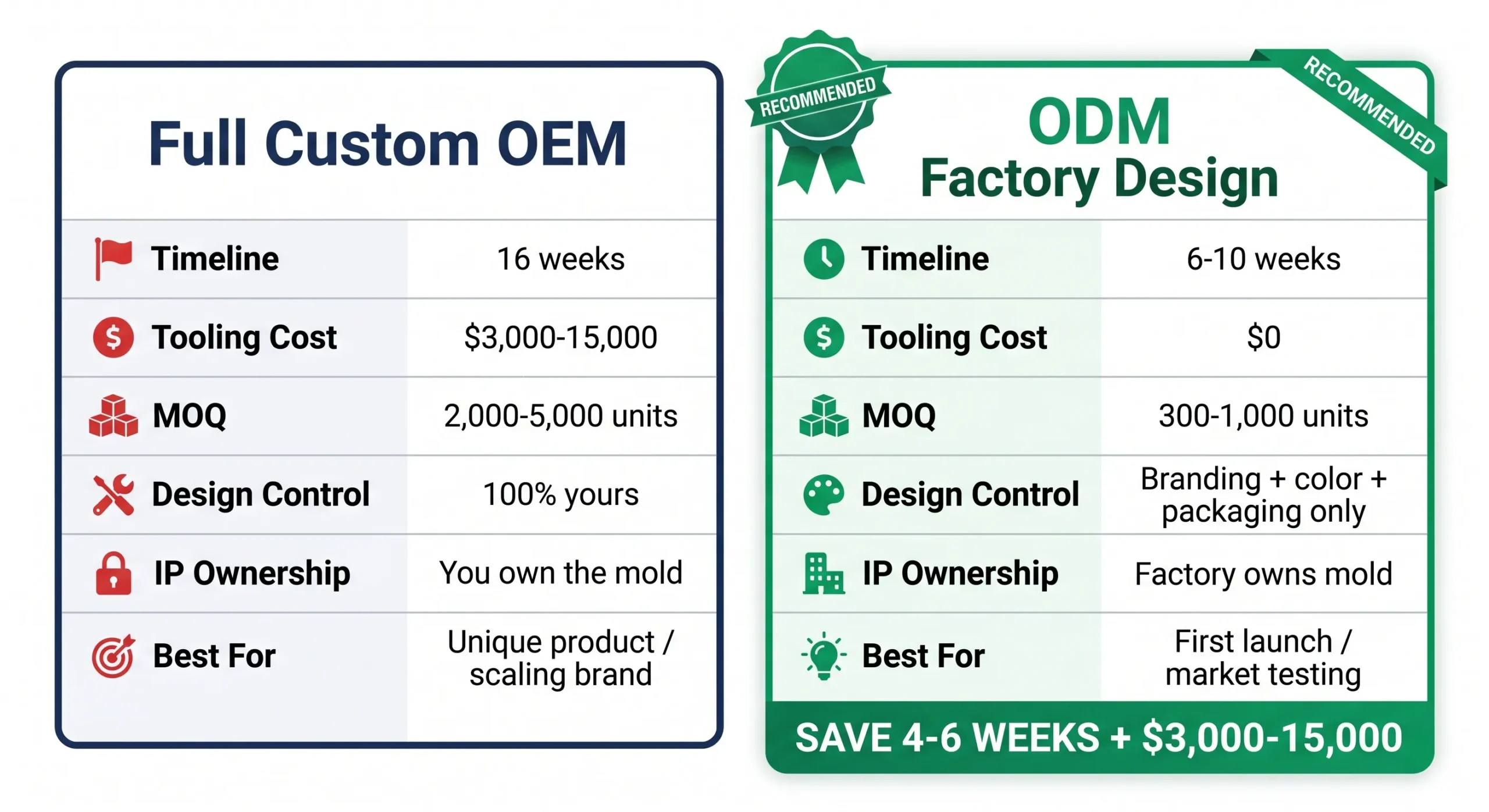
ODM auf Basis einer bestehenden Plattform: Passt die Plattform zu den Projektanforderungen, kann sie einen Teil der Entwicklungs- oder Werkzeugbauarbeiten einsparen. Bestätigen Sie Anpassungsgrenzen, Einrichtungskosten, MOQ, Prüfungen, Zeitplan und Rechte an geistigem Eigentum in der schriftlichen Vereinbarung.
Beispielhafte ODM-Meilensteine
Die folgende Abfolge zeigt, wie ein Projekt mit bestehender Plattform verlaufen kann; bestätigen Sie Muster-, Produktions-, Fracht- und Wareneingangstermine für das konkrete Projekt.
| Woche | Aktivität | Schlüsselaktion für Sie |
|---|---|---|
| Woche 1 | Sehen Sie sich verfügbare Optionen auf Basis bestehender Plattformen an und fordern Sie projektspezifische Muster an. | Prüfen Sie Produkteignung, Konfiguration, Musterbedingungen, MOQ und Zeitplan. |
| Woche 2 | Mustereinheiten erhalten; Funktionalität testen; Auswahl bestätigen | Produktmodell genehmigen |
| Woche 3 | Branding einreichen: Logo, Farben, Verpackungsdesign | Vollständige Markengestaltungsdateien bereitstellen |
| Woche 4 | Fabrik bereitet kundenspezifische Vorproduktionsmuster vor | Muster prüfen und freigeben |
| Woche 5 | Stellen Sie die Bestellung aus und halten Sie die schriftlich vereinbarten Zahlungsbedingungen ein. | Bestellung ausstellen |
| Wochen 6-8 | Massenproduktion, Inline-Qualitätskontrolle, Verpackung | Fortschritte überwachen, PSI buchen |
| Woche 9 | Prüfen Sie die Inspektionsergebnisse und halten Sie die vereinbarten Zahlungs- und Versandbedingungen ein. | Inspektion genehmigen, Fracht organisieren |
| Woche 10 | Zollabfertigung, Lieferung | Ware einlagern und Produktlistings aktivieren |
Wenn ODM den OEM schlägt
ODM kann für ein Projekt mit bestehender Plattform geeignet sein. Vergleichen Sie MOQ, Anpassungen, Werkzeug- oder Einrichtungskosten, Prüfungen, Zeitplan, IP-Bedingungen und Gesamtkosten mit einem OEM-Angebot; bestätigen Sie etwaige Versuchsmengen schriftlich.
7. Wo OEM-Zeitpläne tatsächlich zusammenbrechen
Die folgenden Faktoren können den Projektzeitplan beeinflussen; bewerten Sie sie anhand des Lieferantenplans und aktueller Service-Schätzungen.
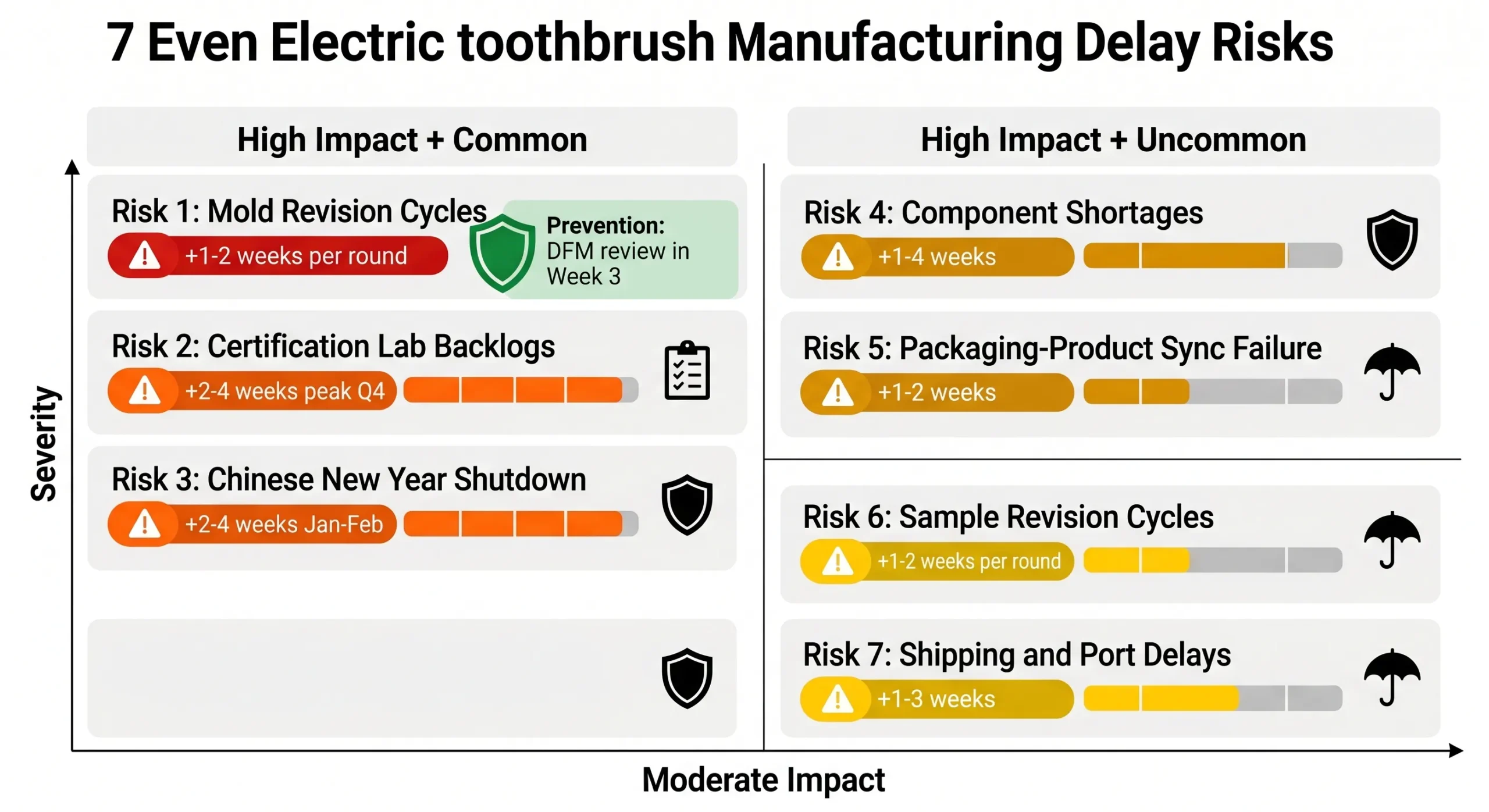
Werkzeugkorrekturen und Designänderungen
Prüfen Sie Design- und Werkzeugänderungen vor der Fertigung. Dokumentieren Sie Freigabe sowie Auswirkungen auf Kosten und Zeitplan im Projektplan.
Rückstände im Zertifizierungslabor - unsichtbar, bis man festsitzt
Die Verfügbarkeit von Laboren variiert je nach Produkt, Prüfumfang, Markt, Saison und Anbieter. Bestätigen Sie die aktuelle Verfügbarkeit und ob repräsentative Muster geprüft werden können.
Das chinesische Neujahrsfest - die Störung, die Sie 12 Monate im Voraus erkennen können
Die Termine des chinesischen Neujahrs und die Betriebsschließungen der Lieferanten variieren je nach Jahr und Werk. Prüfen Sie den offiziellen Kalender und erfragen Sie bei jedem Lieferanten geplante Schließungs- und Wiederanlaufdaten; planen Sie einen projektspezifischen Puffer ein.
Verpackung und Produkt kommen zu unterschiedlichen Zeiten an
Die Verpackung kann von einem separaten Lieferanten stammen. Stimmen Sie Artwork, Menge, Produktion und Liefertermine mit diesem Lieferanten ab.
Wiederholte Musterkorrekturen: immer neue Rückmeldungen
Mehrere Überarbeitungsrunden können die Musterfreigabe verlängern. Bündeln Sie Rückmeldungen in einem Dokument, priorisieren Sie Probleme und bestätigen Sie die Auswirkungen jeder freigegebenen Änderung auf den Zeitplan.
Bauteilknappheit - das Problem der Lieferkette, das mitten in der Produktion auftritt
Komponenten wie Leiterplatten und Batterien können den Zeitplan beeinflussen, wenn die Versorgung nicht bestätigt ist. Bitten Sie den Lieferanten, Verfügbarkeit und vorgeschlagene Alternativen zu dokumentieren; bewerten Sie jeden Austausch im Rahmen des Änderungsmanagements. Eine Zweitquelle kann helfen, sofern dies technisch und vertraglich umsetzbar ist.
Verspätungen bei Schiffen und Häfen - die letzte Meile, die Wochen ausmacht
Frachtpläne variieren je nach Route, Kapazität, Hafenbedingungen, Dokumenten und Zollabfertigung. Nutzen Sie aktuelle Schätzungen und planen Sie einen projektspezifischen Puffer ein.
Meilensteine und Entscheidungen transparent halten
Vereinbaren Sie einen regelmäßigen Rhythmus für Statusmeldungen und dokumentieren Sie Meilensteine, offene Punkte und Entscheidungen. Gehen Sie unerklärten Kommunikationslücken nach und bewerten Sie ihre Auswirkungen auf den Projektzeitplan.
8. Umgekehrte Kalenderplanung: Arbeiten Sie von Ihrem Startdatum aus rückwärts
Die Rückwärtsplanung kann Abhängigkeiten verdeutlichen. Rechnen Sie von einem angestrebten Verfügbarkeitsdatum rückwärts und verwenden Sie für das Projekt bestätigte Schätzungen zu Lieferant, Prüfung, Produktion, Fracht, Zollabfertigung und Lager.
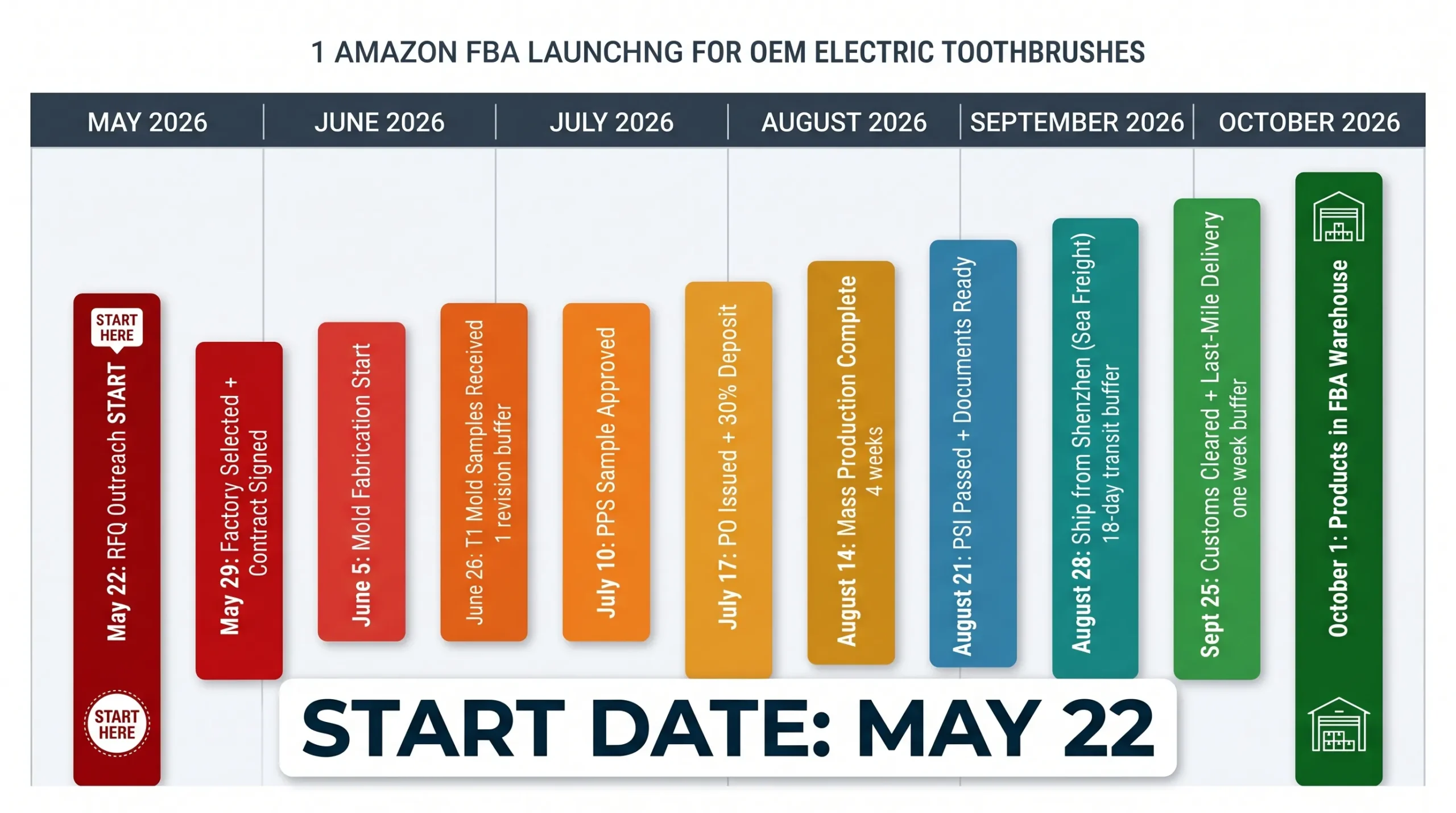
Beispiel: Markteinführung auf Amazon zum Weihnachtsgeschäft im vierten Quartal planen
Nur ein beispielhafter Zieltermin: Bestätigen Sie die aktuelle Event-Berechtigung, FBA-Termine, Wareneingangsanforderungen und den tatsächlichen Transportplan; dies ist keine offizielle Frist.
| Meilenstein | Zieltermin | Hinweise |
|---|---|---|
| Im FBA-Lager eingegangene Produkte | 1. Oktober | Planen Sie die aktuellen FBA-Termin-, Wareneingangs- und Bearbeitungszeiten ein; sie variieren und stellen keine feste Garantie von ein bis zwei Wochen dar. |
| Zollabfertigung + Zustellung auf der letzten Meile | 25. September | Nur beispielhaft; bestätigen Sie Hafen-, Zollabfertigungs- und Nachlaufzeiten für die Route. |
| Versand ab Shenzhen (Seefracht) | 28. August | Nur eine beispielhafte Schätzung von Hafen zu Hafen; bestätigen Sie aktuelle Route, Service und Laufzeit von Tür zu Tür mit dem Spediteur. |
| Vorversandkontrolle bestanden | 21. August | Planen Sie Prüfungen und Dokumente entsprechend dem vereinbarten Umfang und Transportweg ein. |
| Massenproduktion abgeschlossen | 14. August | Beispielhaftes Produktionsfenster; bestätigen Sie aktuelle Kapazität und Zeitplan. |
| Bestellung ausgestellt / Zahlungsmeilenstein gemäß Vertrag | 17. Juli | Beginn der Massenproduktion |
| Vorproduktionsmuster genehmigt | 10. Juli | Planen Sie die Musterprüfung und zutreffende Tests ein; bestätigen Sie Umfang und Laborzeitplan. |
| T1-Muster aus der Werkzeugabmusterung erhalten | 26. Juni | Die Prüfzeit hängt von den Befunden, den Korrekturarbeiten und der Freigabe ab. |
| Beginn der Formherstellung | 5. Juni | Beispielhaftes Werkzeugfenster; holen Sie eine projektspezifische Schätzung ein. |
| Fabrik ausgewählt, Vertrag unterzeichnet | 29. Mai | NDA unterzeichnet, Werkzeugkonstruktion freigegeben |
| Angebotsanfragen an Werke versenden | 22. Mai | Beginnen Sie die Werkssuche hier |
Für einen Amazon FBA-Start am 1. Oktober: Starten Sie Ihre Fabriksuche bis zum 22. Mai
Der Zeitraum vom 22. Mai bis zum 1. Oktober umfasst in diesem Beispiel 132 Tage, also etwa 18 Wochen und 6 Tage. Dies ist ein Planungszeitraum, kein Versprechen; aktualisieren Sie die Termine, sobald Meilensteine bestätigt sind.
Wenn Sie das Mai-Fenster verpasst haben: Vergleichen Sie eine passende ODM-Option auf Basis bestehender Plattformen oder passen Sie das angestrebte Markteinführungsziel an. Tatsächlicher Zeitbedarf und saisonale Nachfrage hängen vom Projekt und Markt ab.
Zeitplan für die Hochsaison
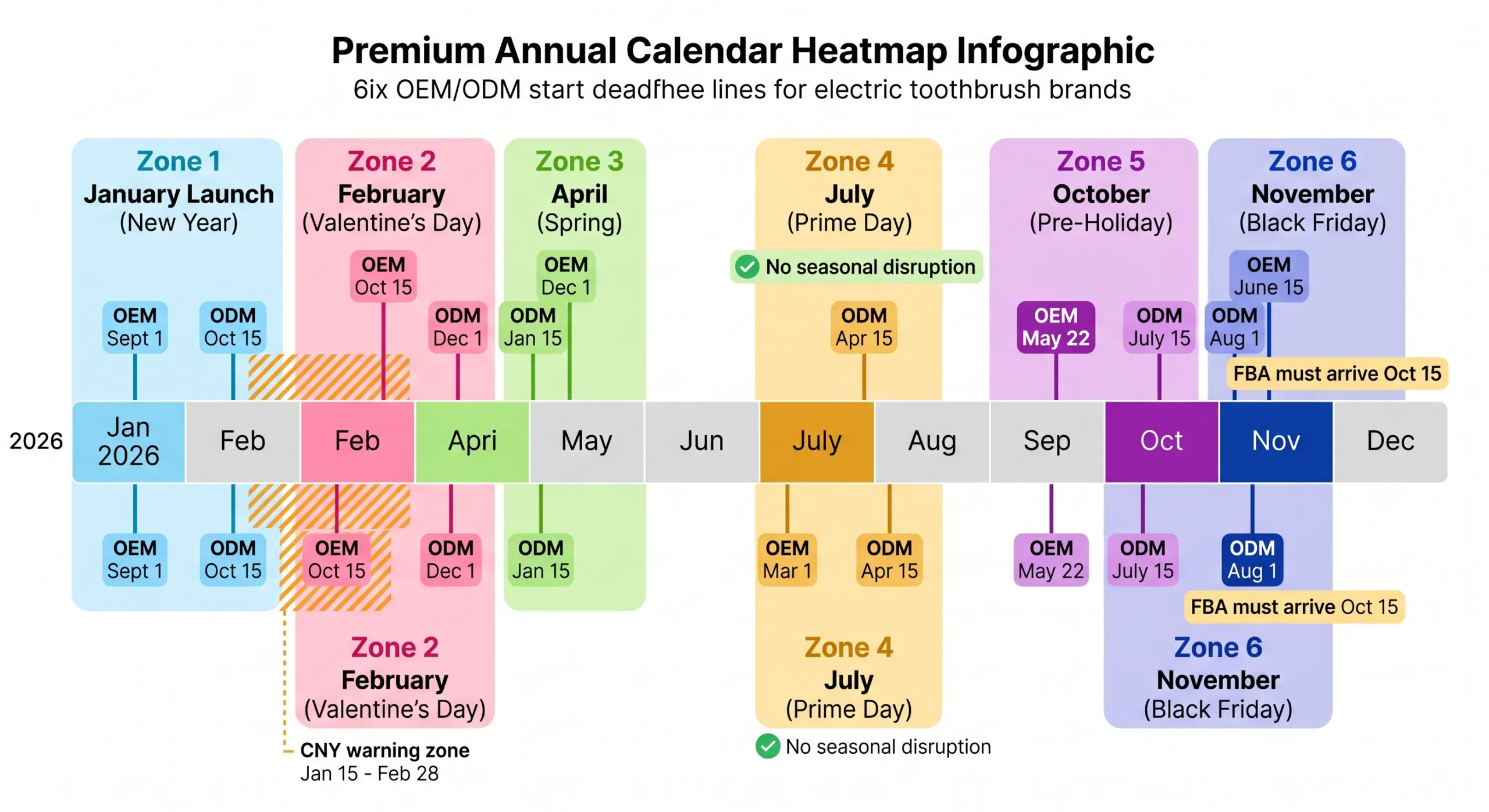
| Angestrebter Markteinführungszeitraum | Beispielhafter OEM-Starttermin | Beispielhafter ODM-Starttermin | Hinweise |
|---|---|---|---|
| Januar (Neujahr) | 1. September | 15. Oktober | Prüfen Sie den offiziellen Kalender und erfragen Sie für das betreffende Jahr bei den Lieferanten Schließungs- und Wiederanlaufdaten. |
| Februar (Valentinstag) | 15. Oktober | 1. Dezember | Nur ein beispielhafter Hinweis; prüfen Sie den offiziellen Feiertagskalender sowie Schließungs- und Wiederanlaufdaten der einzelnen Lieferanten. |
| April (Frühling) | 1. Dezember | 15. Januar | Bestätigen Sie für das betreffende Jahr die Verfügbarkeit und Wiederanlaufdaten der Lieferanten. |
| Juli (Prime Day) | 1. März | 15. April | Nur ein Beispiel; prüfen Sie die aktuelle Verfügbarkeit bei Lieferanten und Logistikdienstleistern. |
| Oktober (vor dem Weihnachtsgeschäft) | 22. Mai | 15. Juli | Beispielhafter Hinweis zum Vertriebskanal; prüfen Sie die aktuelle Marktlage. |
| November (Black Friday) | 15. Juni | 1. August | Bestätigen Sie die aktuelle veranstaltungsspezifische Teilnahmeberechtigung und Einreichungsfristen; es wird kein allgemeiner Stichtag am 15. Oktober behauptet. |
📚 Referenzen
- ISO 20127:2025 — Zahnheilkunde — Physikalische Eigenschaften von angetriebenen Zahnbürsten.
- Leitfaden der britischen Regierung: UKCA-Kennzeichnung, Konformitätsbewertung und Dokumentation.
- Europäische Kommission: Liste der Nicht-EU-Länder und Präferenzhandelsregelungen.
- MIL-STD-1916, Prüfmethodenstandard des US-Verteidigungsministeriums.
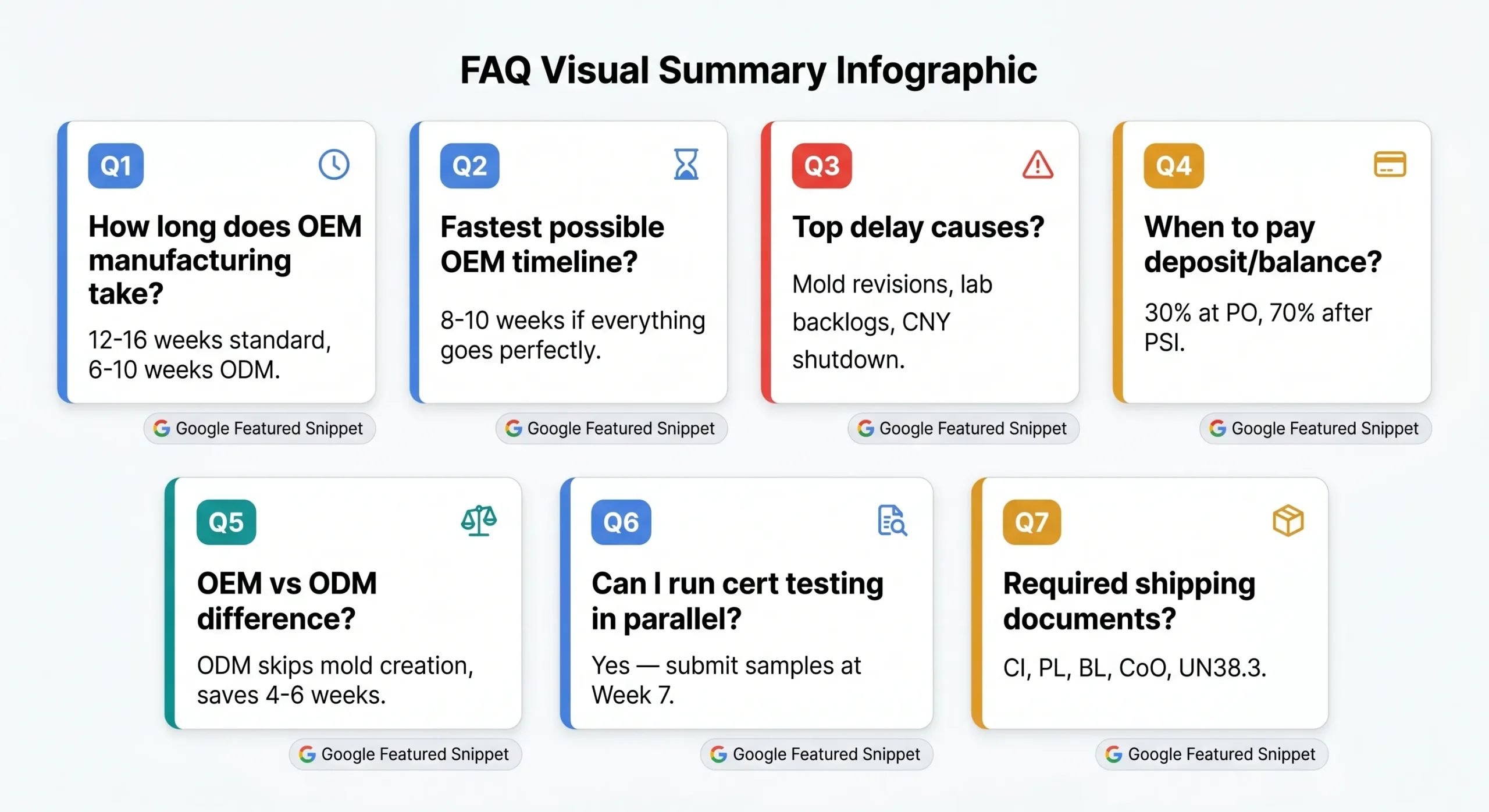
9. Häufig gestellte Fragen
Erhalten Sie einen personalisierten OEM-Zeitplan für Ihr Projekt
Nennen Sie uns Ihren angestrebten Markteinführungstermin und Ihre Produktanforderungen. Unser Projektteam kann einen projektspezifischen Zeitplan und die zutreffenden kaufmännischen Bedingungen mit Ihnen besprechen.
Tipp: Nennen Sie Ihren angestrebten Markteinführungstermin, den Zielmarkt und Ihre Produktanforderungen, damit bei der Zeitplanbesprechung die Projektbedingungen berücksichtigt werden können.