

Szczoteczka soniczna vs oscylacyjno-rotacyjna: Przewodnik na 2026 rok
Compare sonic and oscillating-rotating toothbrushes by drive mechanism, cleaning evidence, brushing feel, cost and OEM requirements to choose the right platform for your brand.
Choosing between sonic and oscillating-rotating electric toothbrush technology shapes your product design, target price and brand positioning. This guide compares the engineering and buying considerations that matter when developing an oral care range.
With 15+ years of electric toothbrush manufacturing experience for brands sold in 120+ countries, we have helped hundreds of entrepreneurs make this choice. Here is how to compare the platforms and select the right fit for your brand.
Ważny kontekst: Ten artykuł jest częścią naszego Przewodnika po technologii szczoteczek elektrycznych– jeśli chcesz zrozumieć podstawy działania szczoteczek elektrycznych, zacznij tam.
Najważniejsze wnioski
- Szczoteczki soniczne combine rapid bristle motion with fluid agitation. The 24,000–48,000 movements-per-minute range shown here is an example specification; counting conventions vary by model.
- Szczoteczki oscylacyjno-rotacyjne (O-R) move the head back and forth through a limited angle. Example specifications of 7,500–10,500 oscillations per minute describe alternating motion, not continuous full revolutions.
- A 2025 randomized trial favored the tested O-R brush for plaque and gingivitis outcomes. Results apply to the specific brushes and study conditions, rather than a fixed advantage for every model.
- For gum care, compare model-specific evidence, soft bristles, brushing pressure and user comfort alongside the drive technology.
- Both technologies can support premium or value ranges. Drive design, brush heads, controls, accessories and user experience shape the final positioning.
- Hybrid platforms such as Relish Tech’s Rotasonic™ offer another route to product differentiation by combining motion characteristics.
Wyjaśnienie dwóch technologii: Jak faktycznie działają
Czym jest szczoteczka soniczna?
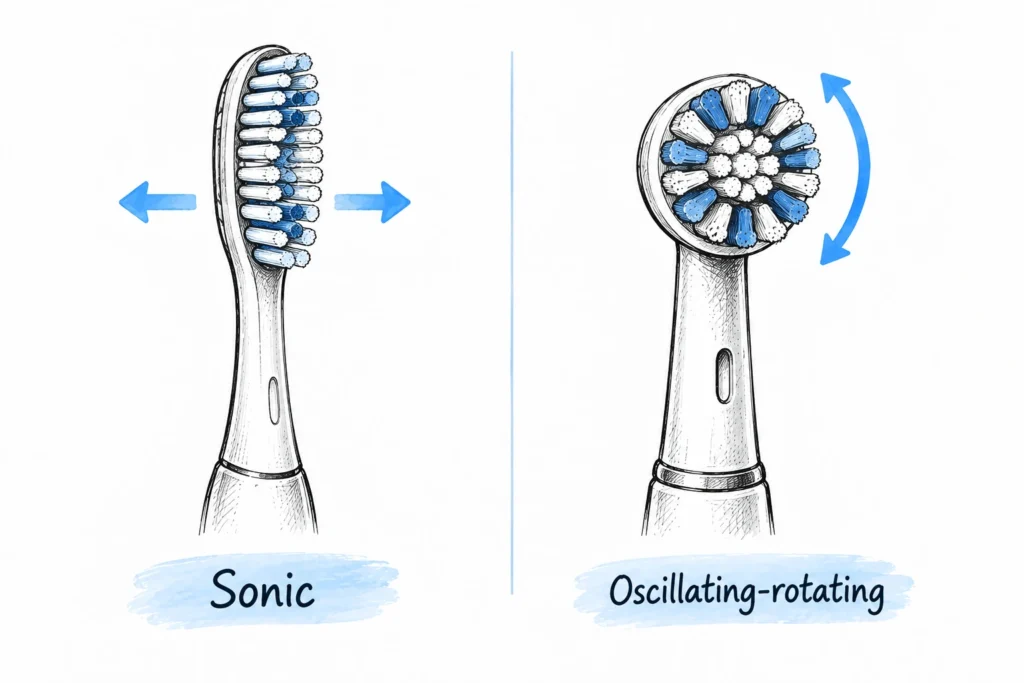
A sonic toothbrush uses an electromagnetic drive to create rapid brush-head movement. Example ratings of 24,000–48,000 movements per minute describe motion counts, not frequency in hertz; check how each manufacturer counts strokes.
Mechanizm czyszczenia szczoteczki sonicznej działa na dwa główne sposoby:
Bristle contact: Moving bristles disrupt plaque where they contact tooth surfaces. Head design, brushing pressure and technique all affect performance.
Fluid agitation: Rapid bristle movement also moves the toothpaste-and-saliva mixture around the head. This complements contact cleaning; it does not replace brushing all tooth surfaces or cleaning between teeth.
Fizyka: Hertz measures complete cycles per second. For example, 24,000–48,000 movements per minute equals 400–800 counted movements per second, but the frequency in hertz depends on whether each count means a full cycle or a one-way stroke. Sonic brushing should not be described as 20,000+ Hz ultrasound.
Czym jest szczoteczka oscylacyjno-rotacyjna?
An oscillating-rotating toothbrush moves the brush head back and forth through a limited angular range. The example specifications below show 45–90 stopni na stronę and 7,500–10,500 oscillations per minute; the actual angle and counting method depend on the mechanism.
Oral-B is a well-established O-R brand with a substantial clinical research base. Assess individual study designs and tested products when using that evidence in a technology comparison.
Mechanizm czyszczenia: Alternating head movement brings the bristles into contact with tooth surfaces. Some designs, including the Oral-B iO range, combine this movement with micro-vibrations. Guide the head over every surface using the model’s recommended technique.
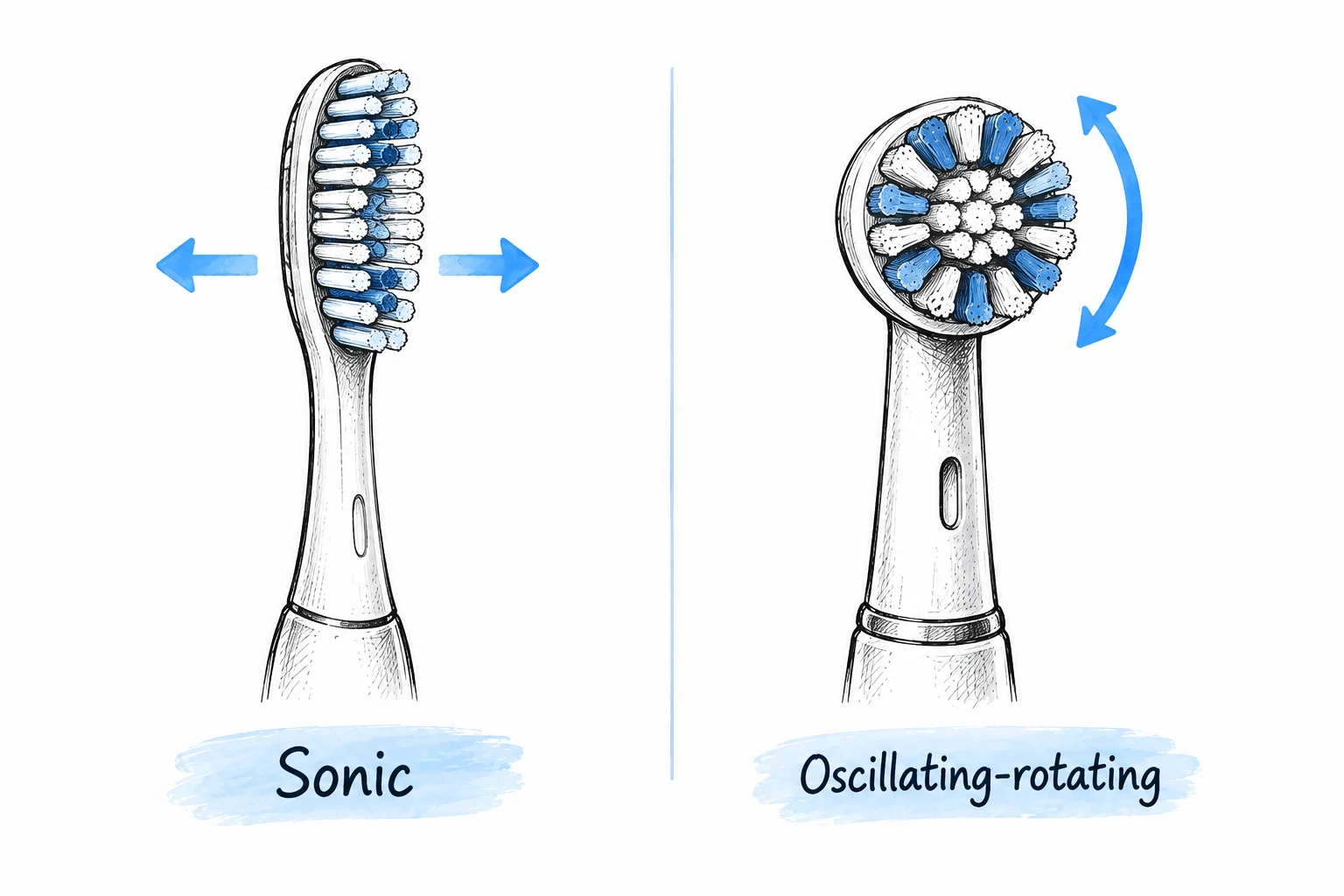
Wewnątrz technologii sonicznej: Inżynieria spotyka się z higieną jamy ustnej
Jak działa technologia Vibrosonic™
W Relish Tech, nasza Vibrosonic™ reprezentuje nasze inżynieryjne podejście do wysokowydajnego szczotkowania sonicznego. Zbudowana na latach badań i rozwoju, technologia koncentruje się na precyzyjnie zaprojektowanym silniku z lewitacją magnetyczną, który dostarcza spójne, kontrolowane wibracje bez zużycia związanego z tradycyjnymi silnikami szczotkowymi.
Example Vibrosonic™ specifications: Actual values depend on the selected model and test conditions.
| Parametr | Specyfikacja |
|---|---|
| Rated brush movements per minute | 31 000–40 000 vpm |
| Brush-head movement amplitude | 1,5–2,5 mm |
| Typ silnika | Lewitacja magnetyczna (bezszczotkowy) |
| Example motor efficiency | >85% |
| Example measured noise level | 55–65 dB |
A brushless electromagnetic drive avoids carbon-brush commutation wear, offering these design advantages:
- Motor durability: Eliminating carbon-brush wear can support motor life. Replaceable brush heads still wear with use.
- Reliability: Drive design and assembly quality help reduce failure risk and support a consistent brushing experience.
- Precyzyjna kontrola: Obwody cyfrowe mogą modulować wzorce wibracji dla różnych trybów
Co to oznacza dla Twojej marki
Szczoteczki soniczne oferują kilka przewag pozycjonujących:
Premium positioning: A well-controlled drive, comfortable brushing feel and useful features can support a premium offer. Explain the motion specification clearly rather than relying on a large number alone.
Comfort: Soft bristles, a suitable intensity setting and pressure feedback can help users brush gently. Comfort depends on the whole design, not the word “sonic” alone.
Czynnik nowości: Buczący dźwięk i delikatne łaskotanie są niezapomniane – konsumenci rozmawiają o swoich szczoteczkach sonicznych, co napędza organiczny marketing szeptany.
Slim head options: Some sonic head designs offer an elongated, slim profile that can suit your product’s appearance and handling.
Ograniczenia do rozważenia
Technologia soniczna nie jest pozbawiona kompromisów:
User technique: Users need to guide the head along all tooth surfaces with gentle pressure, following the model’s instructions. Avoid prescribing one fixed dwell time per tooth for every sonic design.
Koszt: A precision electromagnetic drive can cost more than a basic motor-and-gear assembly, but the complete product specification determines the price.
Wewnątrz technologii oscylacyjno-rotacyjnej: Inżynieria
Mechanika
Many O-R designs use a motor and transmission to move a small, round head back and forth. Other drive architectures are also available. The head shape supports tooth-by-tooth guidance rather than matching every tooth’s shape exactly.
Illustrative O-R design parameters: Confirm the selected model’s motion definitions, operating load and electrical test conditions.
| Parametr | Specyfikacja |
|---|---|
| Łuk oscylacji | 45–90 stopni na stronę |
| Oscylacje na minutę | 7,500–10,500 |
| Internal motor speed, where applicable | Example: 2,800–4,000 rpm; not brush-head oscillation count |
| Pobór mocy | 3–8 W |
A small O-R head can make tooth-by-tooth guidance intuitive. Users still need to cover every surface, allow enough brushing time and avoid excessive pressure.
Przewaga kliniczna
O-R toothbrushes have an extensive clinical literature. The useful question for an OEM buyer is which results apply to the chosen model, brush head, mode and intended product claims.
Kluczowe wnioski z literatury klinicznej:
- A four-week randomized trial compared Oral-B iO2 with usmile Marble-Art and favored the tested O-R model for plaque and gingivitis outcomes.
- Study duration, plaque indices, brush heads and brushing instructions affect comparisons; short- and long-term results should be assessed separately.
- The Oficjalna lista zatwierdzonych szczoteczek elektrycznych ADA obejmuje wiele modeli O-R
Dla certification and compliance planning, distinguish ADA product acceptance, FDA requirements and ISO quality-management certification. Our zespół badawczo-rozwojowy has experience with both technologies.
Dla Twojej marki: Use clinical research to guide development and claim planning. Evidence for another manufacturer’s brush does not automatically substantiate the same claim for your own product.
Implikacje strategiczne
Clinical evidence: Review the tested model, outcomes, study design and funding when assessing the research base.
Clear user guidance: A small round head supports a straightforward tooth-by-tooth brushing routine.
Efektywność produkcji: Established O-R supply chains can support competitive component sourcing. Plan the relevant FDA, CE and other compliance requirements around the actual product and target market.
Dziedzictwo marki: Jeśli pozycjonujesz się jako "sprawdzony" lub "zaufany", technologia O-R niesie to ukryte przesłanie.
Ograniczenia do rozważenia
Brushing feel: The movement and sound differ from sonic designs. Test whether the chosen head and intensity settings suit your audience.
Marki do konkurowania: Oral-B dominuje w postrzeganiu O-R. Będziesz potrzebować znacznych wydatków marketingowych, aby ustanowić zróżnicowanie.
Rozmiar końcówki: Okrągła konstrukcja główki może wydawać się nieporęczna dla użytkowników preferujących smukłe profile.
Cleaning Evidence: How Should You Compare the Technologies?
Porównanie usuwania płytki nazębnej
Przejdźmy do prawdziwego pytania: która technologia usuwa więcej płytki nazębnej? Odpowiedź wymaga niuansów.
Some direct trials favor particular O-R models for plaque removal:
- The 2025 four-week trial found better plaque outcomes with the tested O-R model after a single brushing and at follow-up. This is a comparison of specific products, not a universal percentage difference.
- The result depends on the complete brush system: drive, head, bristles, settings and how it is used.
For repeated use, assess sustained performance and everyday brushing habits:
- Both technologies can support effective plaque removal when used correctly.
- User comfort and ease of covering every tooth surface affect whether a routine is maintained.
- Do not assume that learning a single brushing technique makes every sonic and O-R model clinically equivalent.
Dla Twojej marki: Compare suitable samples using consistent instructions, and choose the model whose handling, comfort and evidence fit your intended users.
Gum Care: Compare the Brush System and the Evidence
What direct comparisons can tell you:
- Some model-specific trials favor O-R brushes for gingivitis outcomes. Use the reported measure and study conditions when interpreting those findings.
- Plaque disruption matters for gum care with either technology. Bristle softness, applied pressure and coverage also affect the brushing experience.
What to assess in a sonic design:
- Look for effective plaque removal alongside a comfortable head, suitable intensity settings and clear instructions.
- A gentle mode can help users find a comfortable setting; evaluate the actual sample rather than assuming all sonic brushes feel the same.
- For sensitive gums, compare soft heads, pressure feedback and brushing feel across both technologies.
Dla Twojej linii produktów: A gum-care range needs comfortable heads, suitable controls and evidence for the final product’s claims. Age or drive type alone does not establish a clinical advantage.
Co faktycznie preferują prawdziwi użytkownicy
Use sample testing to explore the following aspects of brushing feel:
Sonic designs:
- How users respond to the initial vibrating or tickling sensation
- Whether the controls and brushing modes feel useful
- Perceived noise and vibration at the chosen settings
O-R designs:
- Comfort with alternating head movement
- Ease of guiding a small round head from tooth to tooth
- Perceived mechanical sound and handling
Wniosek dla Twojej strategii produktowej: Doświadczenie użytkownika często przeważa nad danymi klinicznymi w preferencjach konsumentów. Zastanów się, kim jest Twój docelowy klient i co sprawi, że poleci Twoją markę znajomym.
Match the Technology to Your Brand Strategy
Kiedy wybrać technologię soniczną
Technologia szczoteczek sonicznych ma strategiczny sens, gdy:
Premium technology positioning: Sonic designs can suit a target retail range such as USD 80–150+, when the complete product offers the performance, finish and features your customers value.
Comfort-focused products: Combine a soft head, controlled intensity and clear pressure guidance for users who prefer a gentle brushing feel.
Chcesz estetycznego zróżnicowania: Główki szczoteczek sonicznych mogą być znacznie smuklejsze, umożliwiając unikalne projekty produktów, które wyróżniają się na półkach.
Regional launch planning: Check current retail assortments, consumer expectations and distributor feedback in each target market rather than assuming a region-wide technology preference.
Studium przypadku: Europejski startup odnoszący sukces z Vibrosonic™
Europejski startup, z którym współpracowaliśmy, wprowadził markę zasilaną Vibrosonic™, skierowaną do milenialsów poszukujących "inteligentnej estetyki łazienki". Pozycjonowali technologię jako "niemiecką precyzję inżynieryjną" i osiągnęli 340% swojego rocznego celu sprzedażowego poprzez wyróżnienie się zarówno roszczeniami dotyczącymi wydajności, jak i designem wizualnym.
Kiedy wybrać technologię oscylacyjno-rotacyjną
Technologia O-R ma strategiczny sens, gdy:
Value-focused ranges: An established O-R design may suit an example retail target of USD 30–80, depending on the complete specification and sales channel.
Dental association acceptance: Plan the evidence required for your own product. A technology’s research history does not grant endorsement or regulatory approval.
Konkurujesz z Oral-B (lub chcesz ich uniknąć): Wyróżnienie się na tle dominacji Oral-B wymaga albo całkowitego zróżnicowania technologicznego, albo znalezienia nisz O-R, które nie są w pełni obsługiwane.
Simple handling: A small round head can support an easy-to-explain brushing routine. Test comfort with the intended age group; for children’s toothbrush OEM projects, also assess head size, age suitability and caregiver guidance.
Trzecia ścieżka: Innowacja hybrydowa
A co, jeśli nie musisz wybierać? Technologie hybrydowe połącz wiele mechanizmów czyszczących w jednej główce szczoteczki, a platforma Relish Tech Rotasonic™ stanowi przykład takiego podejścia.
Technologia Rotasonic™ łączy:
- Sonic motion, with a 32,000-movements-per-minute example profile, alongside the selected head movement
- Precyzyjny ruch oscylacyjno-rotacyjny do mechanicznego usuwania płytki nazębnej
- Additional drive features according to the selected platform; a sonic movement count alone does not establish ultrasonic output or an antimicrobial effect.
Integrating motion characteristics requires the drive, head and control system to work together. Rotasonic™ offers a platform for:
- Combining bristle movement patterns in one brushing system
- Tuning brushing feel through controlled vibration
- Autentyczną historię wyróżnienia dla pozycjonowania premium
Dla Twojej marki: A hybrid platform can support a distinctive product concept. Build the positioning around the selected model’s features and validated performance.
Uwagi dotyczące produkcji dla nabywców OEM
Konsekwencje kosztowe według technologii
Use the following ranges as early planning examples, with the final cost determined by the specification, quantity and packaging. For a component-level breakdown, see our przewodnik po kosztach produkcji elektrycznych szczoteczek do zębów.
Szczoteczki soniczne:
- Precision electromagnetic drives can add cost; compare current supplier quotes rather than applying a fixed motor-price multiplier.
- Konstrukcja główki szczoteczki wymaga precyzyjnej inżynierii dla stałych wibracji
- Złożoność PCB wzrasta wraz z trybami wibracji i funkcjami inteligentnymi
- Zakres kosztów fabrycznych: $8–25 za kompletne urządzenia (w zależności od funkcji)
Szczoteczki oscylacyjno-rotacyjne:
- Dojrzała technologia silników z konkurencyjnymi cenami komponentów
- Montaż mechaniczny jest dobrze poznany, z wysokim potencjałem automatyzacji
- Brush-head material use depends on geometry, tufting and the replacement-head mechanism.
- Zakres kosztów fabrycznych: $5–20 za kompletne urządzenia (w zależności od funkcji)
Technologie hybrydowe (jak Rotasonic™):
- Wyższe koszty komponentów odzwierciedlają złożoność podwójnego mechanizmu
- Inwestycja inżynieryjna zwraca się dzięki możliwości pozycjonowania premium
- Koszt znacznie się różni w zależności od konkretnej integracji funkcji
Minimalne ilości zamówień i planowanie produkcji
| Technologia | Custom-order MOQ | Czas realizacji produkcji |
|---|---|---|
| Soniczna | 1,000 units; flexible by order | Example: 45–60 days after specification approval |
| Oscylacyjno-rotacyjna | 1,000 units; flexible by order | Example: 35–50 days after specification approval |
| Hybrydowy (Rotasonic™) | 1,000 units; flexible by order | Example: 60–90 days; allow extra for new development |
Custom orders normally start at 1 000 sztuk, with flexibility according to the order; wholesale orders for in-stock products start at 50 units. Timing depends on the model, customization, tooling, approvals and order size. Przeglądaj naszą kolekcję elektrycznych szczoteczek do zębów or review our harmonogramie produkcji OEM to plan your project.
Kluczowe wskaźniki jakości
Review the manufacturer’s quality system, relevant product tests and certification and compliance support:
- Wskaźnik defektów: We maintain <0.3% defect rate across all product lines
- Spójność: Agree the permitted variation and test conditions for the selected model; a ±5% frequency target is an example specification, not a universal lifetime guarantee.
- Wydajność baterii: Rzeczywiste testy cykliczne (nie tylko zgodność z arkuszem danych)
- Motor durability: Define the load, duty cycle and acceptance criteria for life testing. A 500-hour loaded test is an example target that must be matched to the project.
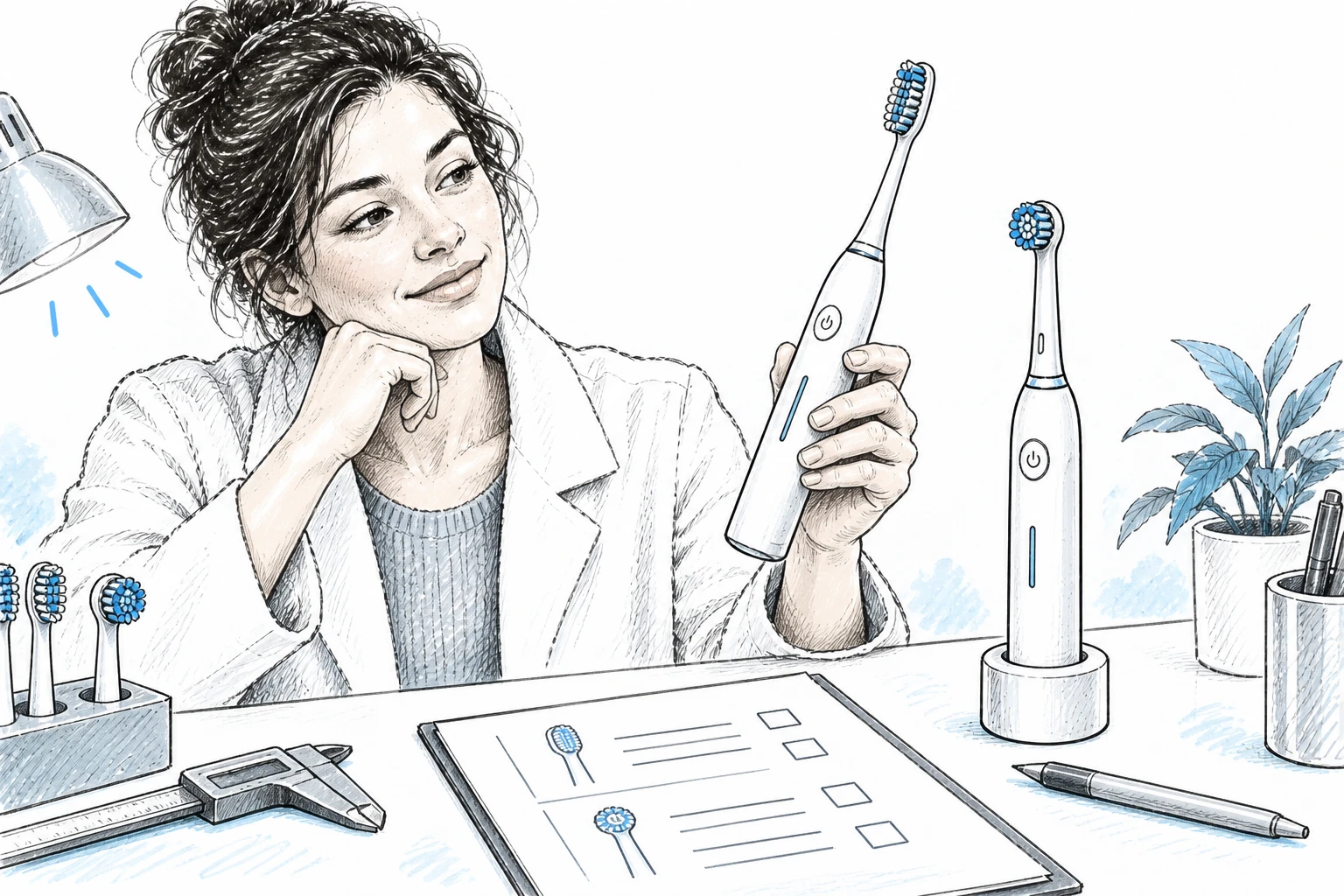
Lista kontrolna decyzji technologicznych: 5 pytań do zadania
Użyj tych ram, aby pokierować swoją decyzją:
- Zdefiniuj swoją główną propozycję wartości
Plaque-removal positioning → Compare model-specific clinical evidence
Gentle brushing feel → Compare soft heads, intensity control and pressure feedback
Distinctive motion platform → Consider hybrid designs such as Rotasonic™
- Zidentyfikuj swojego docelowego klienta
Technology-focused customers → Assess sonic or hybrid designs
Value-focused families → Compare complete product cost and usability
Profesjonaliści poszukujący produktów premium → Soniczna lub hybrydowa
Gum-care customers → Compare comfort, pressure control and product evidence
- Ustal swoją cenę
Example: USD 100+ premium positioning → Assess the complete sonic, O-R or hybrid offer
Example: USD 50–100 mid-market positioning → Compare models from both platforms
Example: under USD 50 → Prioritize the full product cost and required features
- Oceń swoje zasoby marketingowe
Clinical claims → Build an evidence plan for the selected product
Możliwa narracja innowacyjna → Soniczna lub hybrydowa
Ograniczone opcje różnicowania → Wybierz ścieżkę z mniejszą konkurencją
- Oceń skalę produkcji
Starting small → Discuss flexible custom quantities; in-stock wholesale products start at 50 units
Szybkie skalowanie → Obie opcje realne; upewnij się, że Twój producent może skalować
Complex hybrid features → Allow development and validation time beyond routine production
Poza technologią: inne czynniki
Wybór technologii jest ważny, ale pamiętaj:
- Kompatybilność końcówek szczoteczki: Czy głowice wymienne będą dostępne w rozsądnych cenach?
- Czas pracy akumulatora: Set a target using a stated mode and brushing schedule. Four weeks per charge can be a product goal, but is not a fixed expectation or capability of every model.
- Funkcje inteligentne: Łączność z aplikacją, czujniki nacisku i timery szczotkowania dodają wartości
- Wsparcie gwarancyjne: Dłuższe gwarancje sygnalizują pewność jakości
Choose the Platform That Fits Your Product
Oto, czego nauczyło nas 15 lat produkcji: "najlepsza" technologia zależy wyłącznie od strategii Twojej marki.
Soniczna a oscylacyjno-rotacyjna szczoteczka do zębów to nie binarny wybór między dobrem a złem. To strategiczna decyzja, która powinna wynikać ze zrozumienia rynku docelowego, pozycjonowania i możliwości produkcyjnych.
Technologia soniczna offers a range of slim-head designs, controlled vibration profiles and feature options.
Technologia oscylacyjno-rotacyjna offers tooth-by-tooth guidance, established mechanisms and a substantial clinical research base.
Technologia hybrydowa (taka jak Rotasonic™) umożliwia prawdziwą dywersyfikację markom dążącym do zmiany rynku.
Whatever the mechanism, brush-head quality, drive control, reliability and user instructions determine whether the finished product delivers a consistent brushing experience.
Gotowy, aby przejść dalej?
Jeśli oceniasz technologię szczoteczek elektrycznych dla swojej marki, chętnie pomożemy Ci znaleźć odpowiednie rozwiązanie. Nasz zespół inżynierów ma doświadczenie ze wszystkimi głównymi platformami technologicznymi. Pobierz nasz katalog produktów aby zapoznać się ze specyfikacjami.
Często zadawane pytania
Która technologia czyści lepiej, soniczna czy oscylacyjno-rotacyjna?
Both technologies can clean effectively. Some direct trials favor particular O-R models for plaque and gingivitis outcomes; this does not establish one fixed percentage advantage for every brush. For an OEM project, compare evidence for the selected model and head.
Czy soniczna czy oscylacyjno-rotacyjna jest lepsza dla wrażliwych dziąseł?
Either technology can offer a comfortable brushing experience with a soft head, gentle pressure and suitable settings. Compare the actual head, pressure feedback and brushing feel rather than treating the drive type as a guarantee of gentleness.
Jaka jest główna zaleta technologii hybrydowych, takich jak Rotasonic™?
Hybrid designs combine motion characteristics to create a distinctive brushing system. Relish Tech’s Rotasonic™ platform supports this approach. The selected model’s specifications and tests should establish its performance; a sonic motion count alone does not demonstrate ultrasonic or antimicrobial effects.
Która technologia jest lepsza dla kosztów produkcji OEM?
Compare complete specifications and current quotations. A basic O-R mechanism may offer competitive component costs, while a precision sonic drive or added smart features can increase cost. Either technology can support different price tiers.
Które rynki preferują którą technologię?
Preferences vary by country, channel, brand familiarity and price segment. Check current local assortments and user feedback before choosing a technology for a regional launch.
Jaki jest typowy MOQ dla produkcji OEM szczoteczek elektrycznych?
Custom electric toothbrush orders normally start at 1,000 units, with flexibility according to the actual order. Wholesale orders for in-stock products start at 50 units. Production timing depends on the model, customization, tooling, approvals and quantity; new development needs additional time.
Czy jedna marka może oferować zarówno szczoteczki soniczne, jak i oscylacyjno-rotacyjne?
Yes. Offering both can help a brand serve different preferences and price segments. Plan replacement-head availability, spare parts, testing and after-sales support for each platform with a manufacturing partner experienced in both.
Źródła
- Adam, R., Grender, J., Timm, H., Qaqish, J., & Goyal, C. R. (2025). A randomized controlled trial evaluating a novel oscillating-rotating electric toothbrush versus a sonic toothbrush for plaque and gingivitis. American Journal of Dentistry, 38(1), 3–8. PubMed study record
- Arockiam, A. S. et al. (2025). Should clinicians recommend oscillating-rotating toothbrushes over sonic models for superior plaque and gingivitis control? Evidence-Based Dentistry, 26, 99–100. Commentary on the four-week trial. Published commentary
- Amerykańskie Stowarzyszenie Stomatologiczne. Szczoteczki: brushing guidance and the Seal of Acceptance. ADA toothbrush guidance
- Amerykańska Agencja ds. Żywności i Leków. Powered toothbrush product classification: JEQ, Class I, 21 CFR 872.6865; 510(k)-exempt subject to applicable limitations. FDA classification record
- Amerykańskie Stowarzyszenie Stomatologiczne. Oral-B Oscillating-Rotating-Pulsating: product-specific Seal of Acceptance listing. ADA product listing
- International Organization for Standardization. ISO 13485:2016 — Medical devices — Quality management systems — Requirements for regulatory purposes. ISO standard overview
- Amerykańskie Stowarzyszenie Stomatologiczne. ADA Seal of Acceptance category requirements overview. ADA Seal requirements