



Przewodnik po certyfikatach dla OEM szczoteczek elektrycznych: CE, FDA, FCC i więcej (2026)
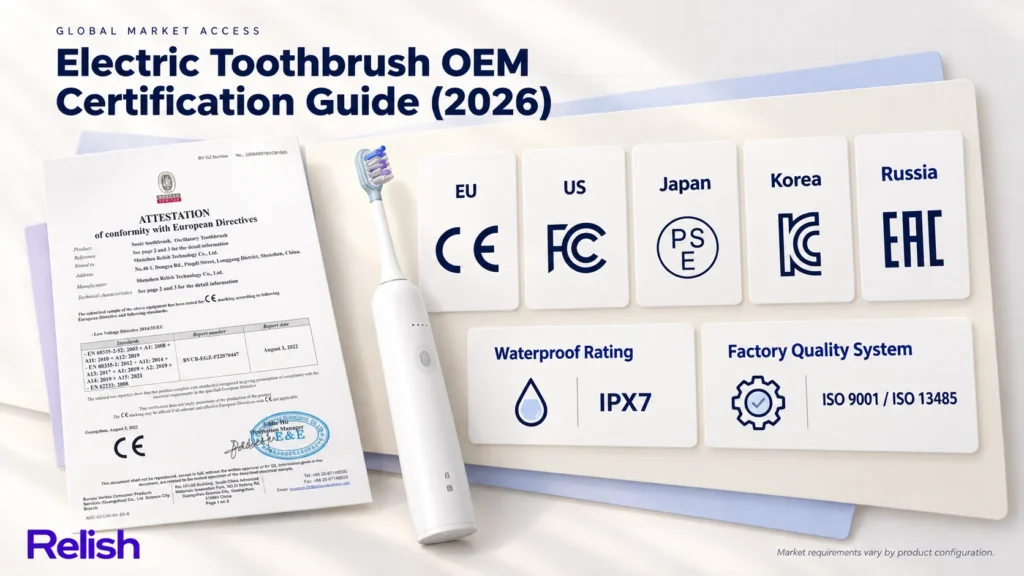
OEM szczoteczek elektrycznych wymaga obowiązkowych certyfikatów dla każdego rynku docelowego: CE + RoHS dla UE (koszt: $3 000–$8 000, 4–8 tygodni), FCC dla USA (koszt: $1 500–$4 000, 2–4 tygodnie), PSE dla Japonii, KC dla Korei Południowej, EAC dla Rosji. Wodoszczelność IPX7 to standard branżowy (nie jest prawnie wymagana). CE obejmuje wszystkie 27 państw UE; FCC dotyczy tylko USA. System IEC CB Scheme pozwala na wykorzystanie jednego raportu z testów do certyfikacji na wielu rynkach, oszczędzając 30–50% całkowitych kosztów przy celowaniu w 3+ regiony.
Podsumowanie wykonawcze: Certyfikaty OEM szczoteczek elektrycznych
- Obowiązkowe w UE (CE): Szczoteczki elektryczne sprzedawane w UE muszą spełniać wymagania LVD (2014/35/UE), EMC (2014/30/UE), RoHS (2011/65/UE) oraz RED (2014/53/UE dla modeli Bluetooth). Koszt: $3 000–$8 000 · Harmonogram: 4–8 tygodni. CE obejmuje wszystkie 27 państw członkowskich UE oraz EFTA.
- Obowiązkowe w USA (FCC + FDA): FCC SDoC jest wymagane dla wszystkich szczoteczek elektrycznych. Rejestracja urządzenia klasy I w FDA jest obowiązkowa dla fabryki — marki konsumenckie bez roszczeń terapeutycznych są zwolnione z 510(k). Koszt: $1 500–$4 000 (FCC) · Rejestracja zakładu w FDA: $11 423/rok.
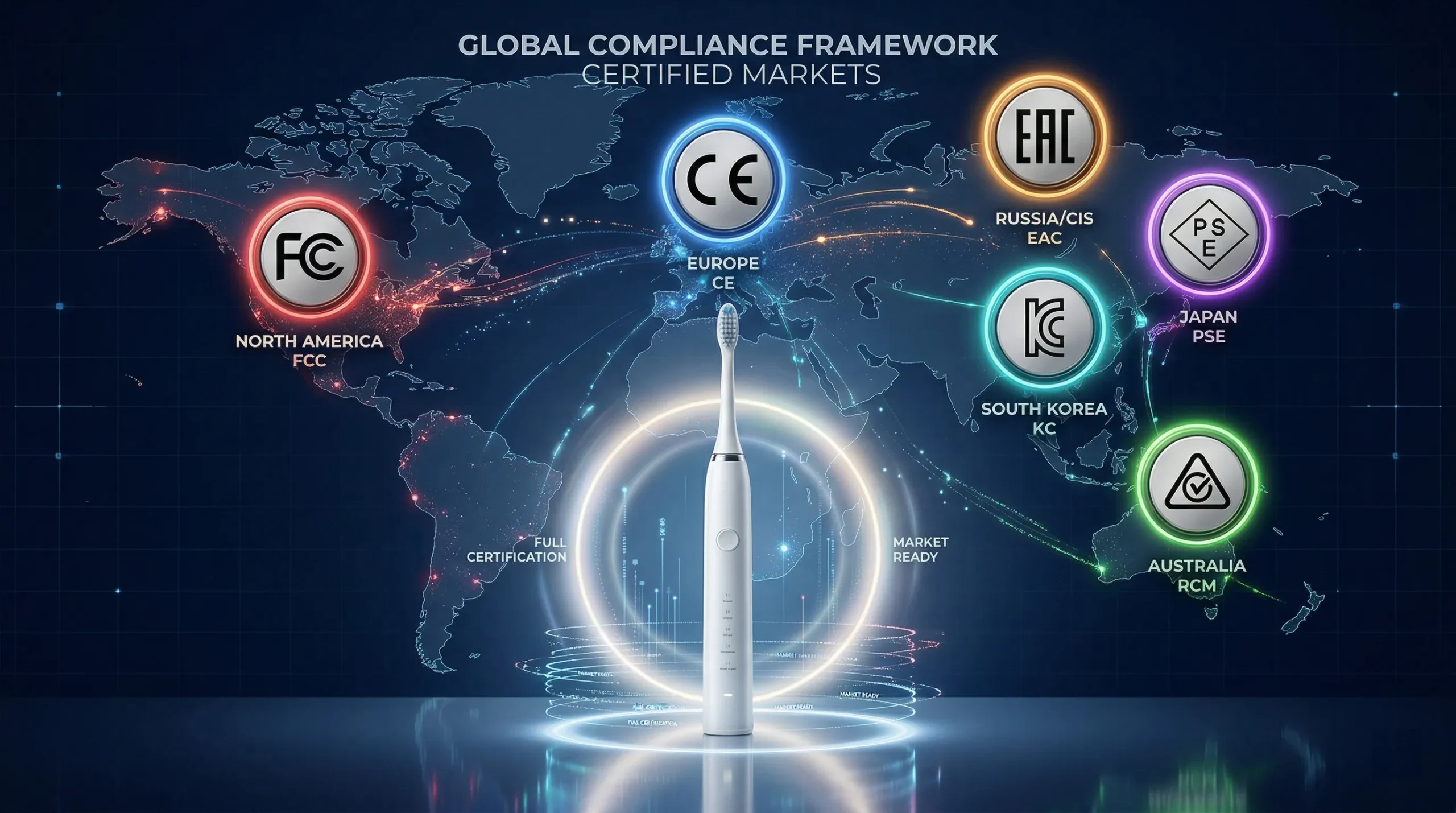
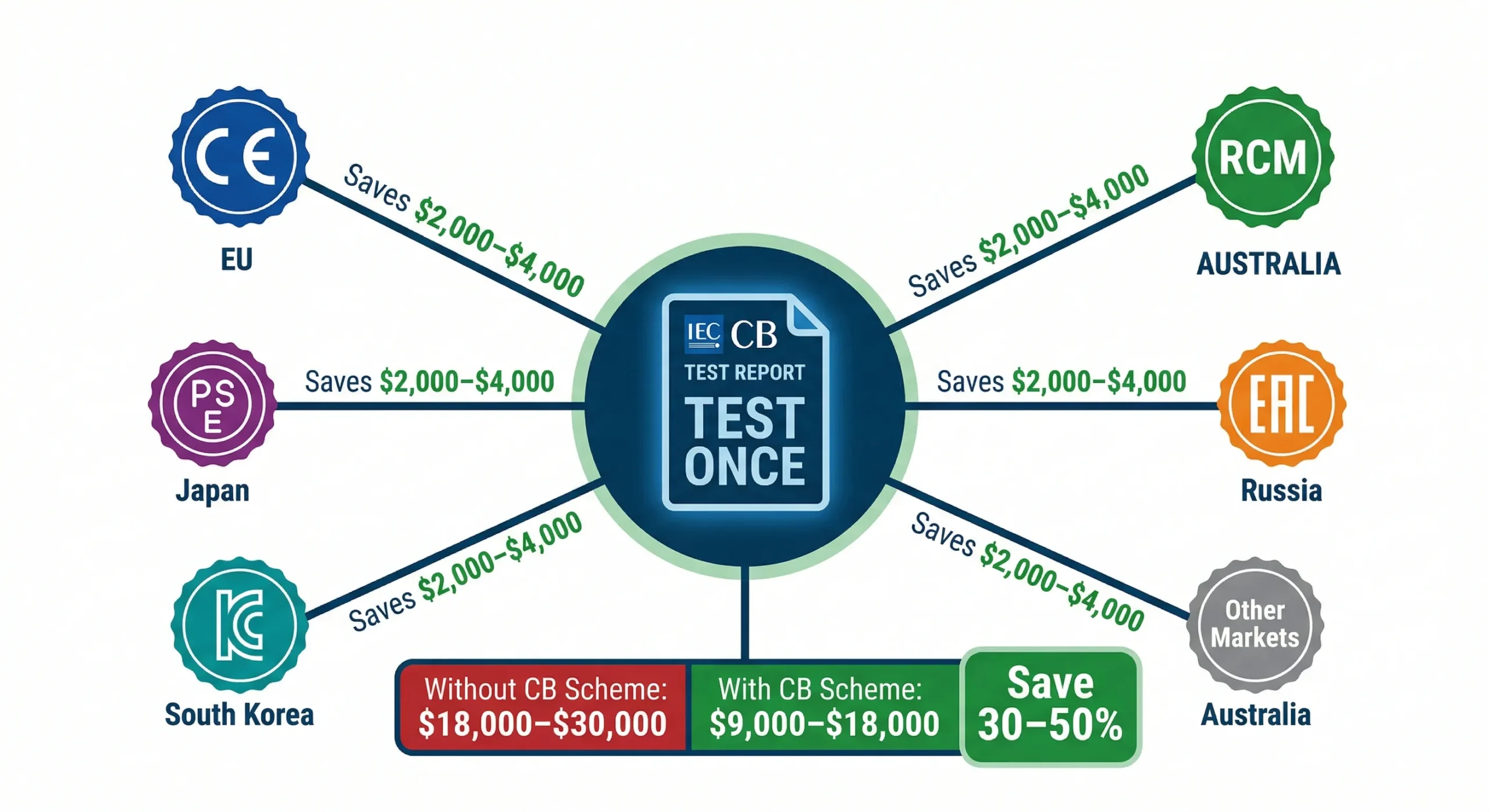
- Efektywność na wielu rynkach: System IEC CB Scheme pozwala na wykorzystanie jednego zestawu raportów z testów jako podstawy dla CE, PSE (Japonia), KC (Korea Południowa) i RCM (Australia) — oszczędzając 30–50% całkowitych kosztów certyfikacji przy celowaniu w 3+ rynki.
- Kluczowa informacja: Sourcing ODM może zaoszczędzić $5 000–$15 000 na kosztach certyfikacji poprzez wykorzystanie istniejących raportów z testów CE, FCC, RoHS i IPX7 fabryki na ich obecnej platformie.
Spis treści
- Szybki przegląd: Wszystkie certyfikaty w skrócie
- Oznaczenie CE (Unia Europejska)
- Certyfikacja FCC (Stany Zjednoczone)
- Wymagania FDA (Stany Zjednoczone)
- RoHS i REACH (Środowiskowe)
- Azja-Pacyfik: PSE, KC, EAC i inne
- Klasa wodoszczelności IPX7
- Normy ISO dla fabryk OEM
- Strategia kosztów certyfikacji dla marek działających na wielu rynkach
- Najczęściej zadawane pytania
Szybki przegląd: Wszystkie certyfikaty w skrócie
Przed szczegółowym omówieniem każdego certyfikatu, oto pełna tabela referencyjna dla produkcji OEM szczoteczek elektrycznych:
| Certyfikacja | Rynek | Typ | Typowy koszt | Czas realizacji | Wymagany? |
|---|---|---|---|---|---|
| CE (LVD + EMC) | Unia Europejska | Bezpieczeństwo + EMI | $3 000–$8 000 | 4–8 tygodni | Obowiązkowy |
| CE RED | UE (modele Bluetooth) | Radio | $2 000–$5 000 | 4–6 tygodni | Jeśli Bluetooth |
| FCC (SDoC) | Stany Zjednoczone | EMI | $1 500–$4 000 | 2-4 tygodnie | Obowiązkowy |
| Rejestracja FDA | Stany Zjednoczone | Urządzenie medyczne | $5 000–$15 000* | 4–12 tygodni | Wymagany* |
| RoHS | UE / Globalny | Środowiskowy | $500–$2 000 | 2-4 tygodnie | Obowiązkowy (UE) |
| REACH | Unia Europejska | Bezpieczeństwo chemiczne | $1 000–$3 000 | 3-6 tygodni | Obowiązkowy |
| PSE (Japonia) | Japonia | Bezpieczeństwo | $2 000–$5 000 | 4–8 tygodni | Obowiązkowy |
| KC (Korea Południowa) | Korea Południowa | Bezpieczeństwo + EMI | $2 000–$5 000 | 4–8 tygodni | Obowiązkowy |
| EAC (Rosja/WNP) | Rosja, Białoruś, Kazachstan | Bezpieczeństwo | $2 000–$4 000 | 6–10 tygodni | Obowiązkowy |
| IPX7 | Wszystkie rynki | Wodoodporny | $200–$800 | 1-2 tygodnie | Standard branżowy |
| ISO 9001 | Wszystkie rynki | Jakość fabryczna | $3 000–$8 000 | 6-12 miesięcy | Oczekiwane przez nabywców |
* Koszty i wymagania FDA zależą od klasyfikacji. Większość konsumenckich szczoteczek elektrycznych bez deklaracji działania terapeutycznego należy do klasy I i jest zwolniona z powiadomienia przed wprowadzeniem do obrotu 510(k), ale nadal wymaga rejestracji zakładu produkcyjnego.
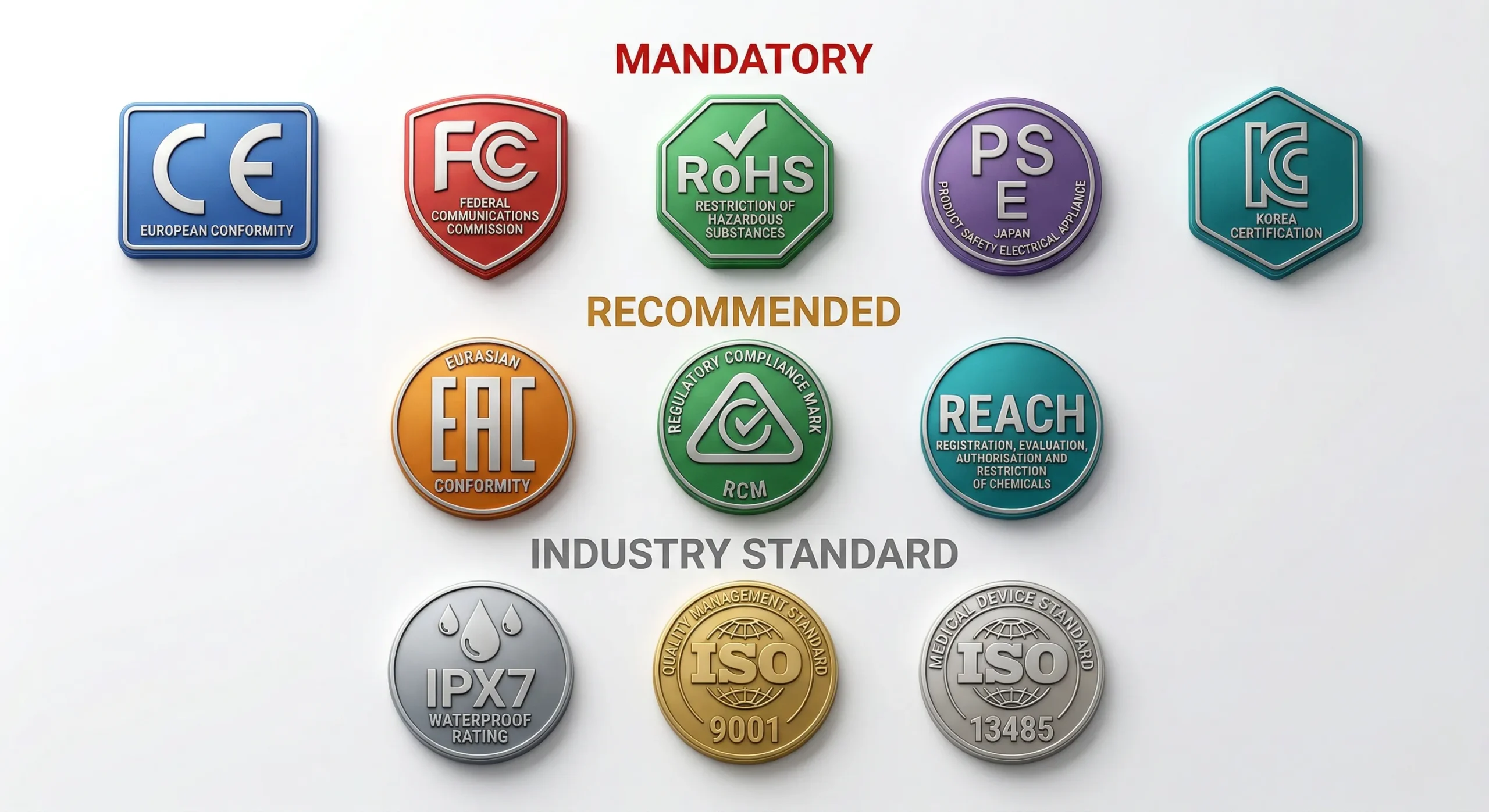
CE + RoHS
Wymagane do sprzedaży w dowolnym miejscu w Unii Europejskiej — 27 państw członkowskich plus EFTA.
FCC + FDA Reg
Wymagane do sprzedaży w Stanach Zjednoczonych. FCC dla kompatybilności elektromagnetycznej, FDA dla rejestracji urządzenia.
PSE + KC
Wymagane dla Japonii i Korei Południowej — wysokowartościowe rynki higieny jamy ustnej z premium cenami.
ISO 13485
Zarządzanie jakością wyrobów medycznych. Wyróżnia Twoją fabrykę i wspiera marki o pozycjonowaniu klinicznym.
📋 O producencie: Relish Technology
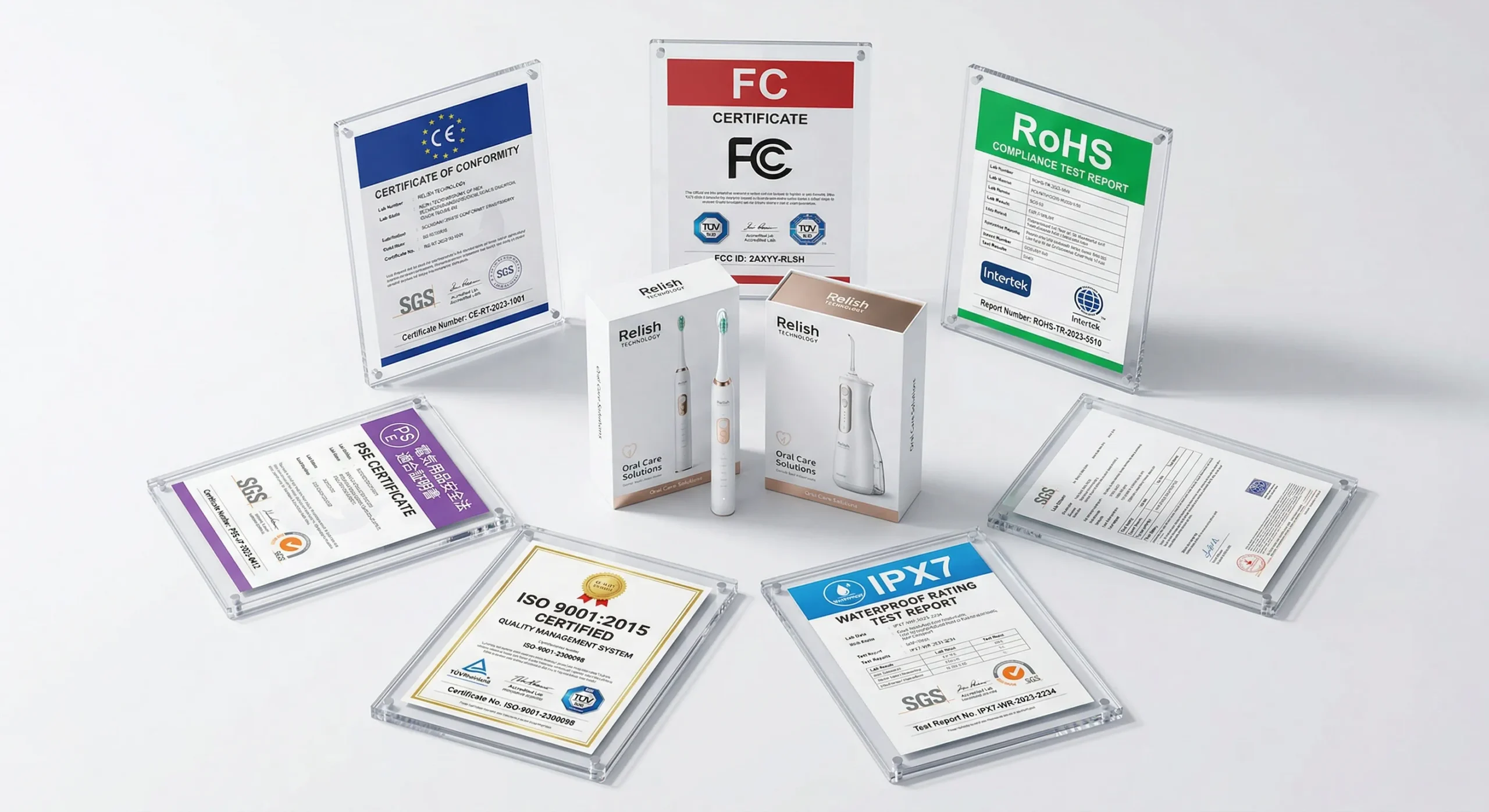
Relish Technology to fabryka OEM/ODM produktów do higieny jamy ustnej z siedzibą w Shenzhen, mająca ponad 14 lat doświadczenia eksportowego w branży szczoteczek elektrycznych. Nasze istniejące platformy mają już certyfikaty CE, FCC, RoHS, IPX7 oraz PSE. Nabywcy produktów ODM i pod własną marką mogą więc często korzystać z istniejących raportów z badań, oszczędzając miesiące potrzebne na certyfikację oraz $5 000–$15 000 kosztów badań. Nasz zakład: hala o powierzchni 20 000 m² · ponad 1,2 mln sztuk miesięcznie · certyfikaty ISO 9001 i ISO 13485 · eksport do ponad 120 krajów. Poproś o konsultację w sprawie certyfikacji →
Oznakowanie CE (Unia Europejska)
Oznakowanie CE jest najważniejszym certyfikatem dla każdej marki szczoteczek elektrycznych sprzedającej w Europie. Bez niego Twoje produkty nie mogą być legalnie sprzedawane w UE, a organy celne mogą przechwycić i zniszczyć niezgodne przesyłki na granicy.
Obowiązujące dyrektywy UE
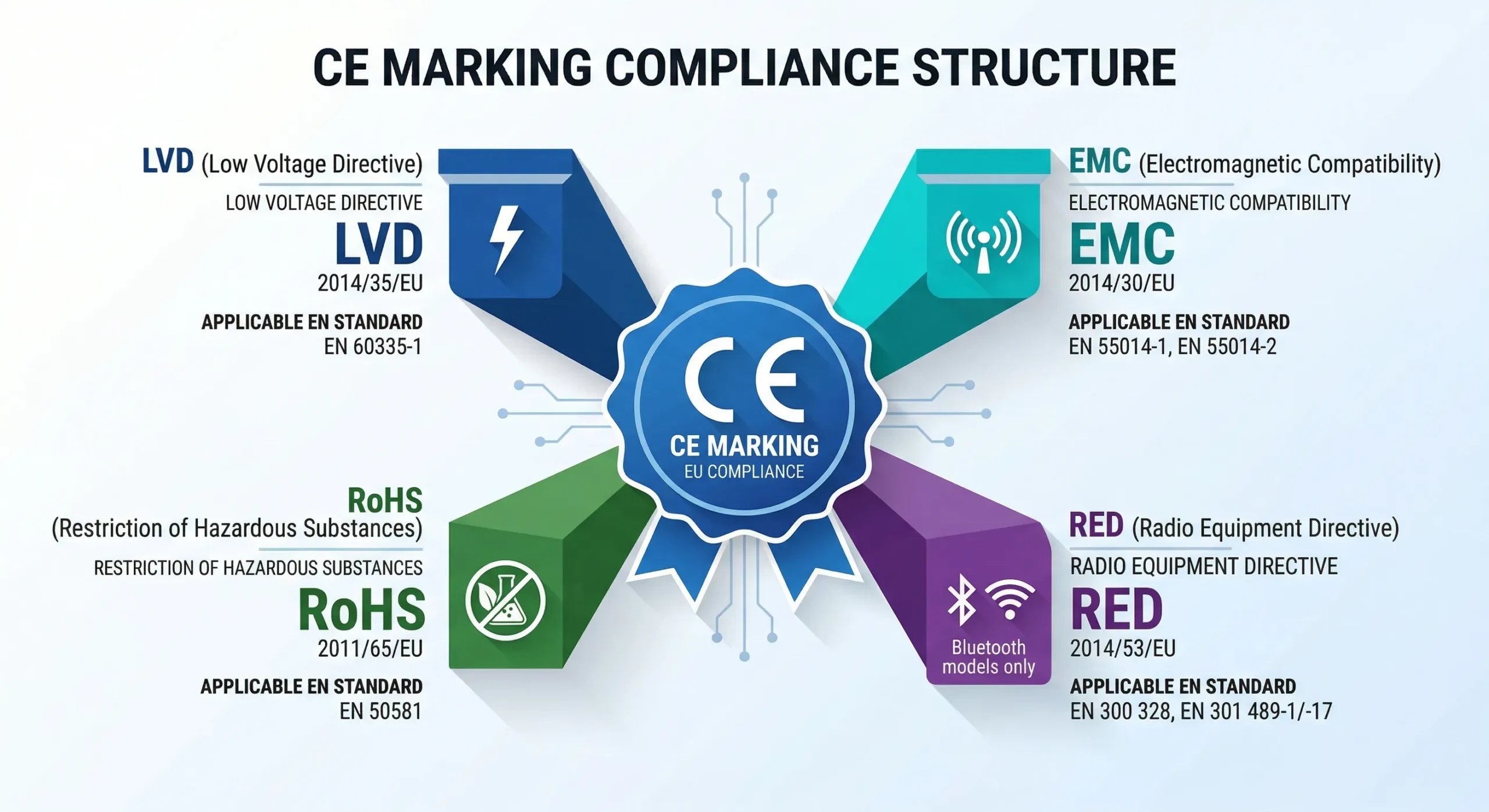
Szczoteczki elektryczne podlegają wielu dyrektywom UE jednocześnie [1]. Twój produkt musi spełniać wszystkie, które mają zastosowanie:
- LVD (2014/35/UE) — Dyrektywa niskonapięciowa: Wymagania bezpieczeństwa dla sprzętu elektrycznego pracującego w zakresie 50–1000 V AC. Testuje izolację elektryczną, prąd upływu, wytrzymałość mechaniczną i odporność na temperaturę. Norma: EN 60335-1 (ogólna) + EN 60335-2-52 (specyficzna dla urządzeń do higieny jamy ustnej).
- EMC (2014/30/UE) — Kompatybilność elektromagnetyczna: Zapewnia, że szczoteczka nie emituje nadmiernych zakłóceń elektromagnetycznych i jest odporna na zewnętrzne EMI. Normy: EN 55014-1 (emisje) + EN 55014-2 (odporność).
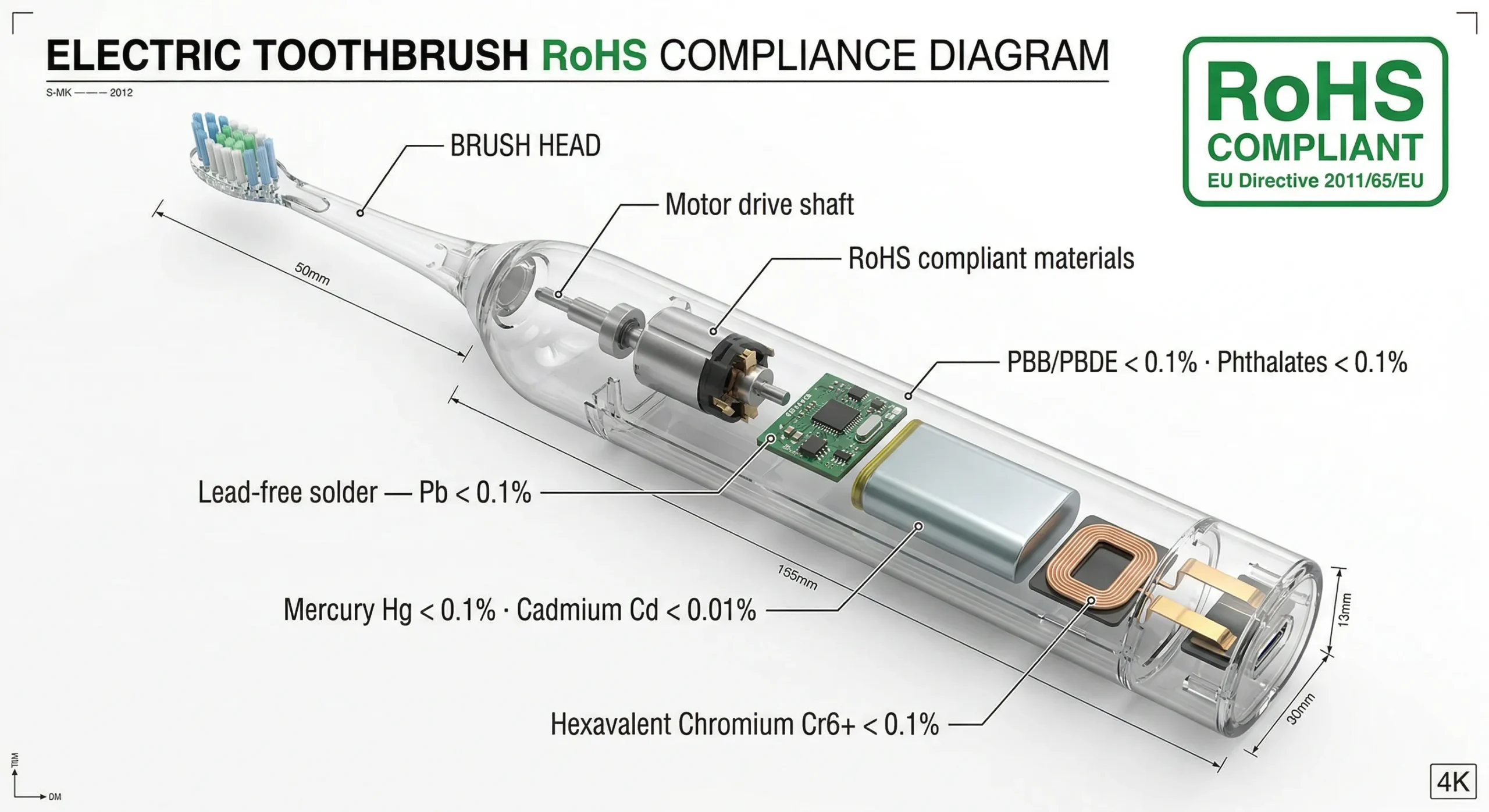
- RoHS (2011/65/UE) — Ograniczenie stosowania substancji niebezpiecznych: Ogranicza stosowanie ołowiu, rtęci, kadmu, chromu sześciowartościowego, PBB i PBDE w komponentach elektronicznych i lutowiu.
- RED (2014/53/UE) — Dyrektywa dotycząca urządzeń radiowych: Wymagana tylko wtedy, gdy szczoteczka ma Bluetooth lub ładowanie bezprzewodowe. Testuje emisje częstotliwości radiowych i bezpieczeństwo. Dodatkowy koszt: $2 000–$5 000.
Proces certyfikacji CE
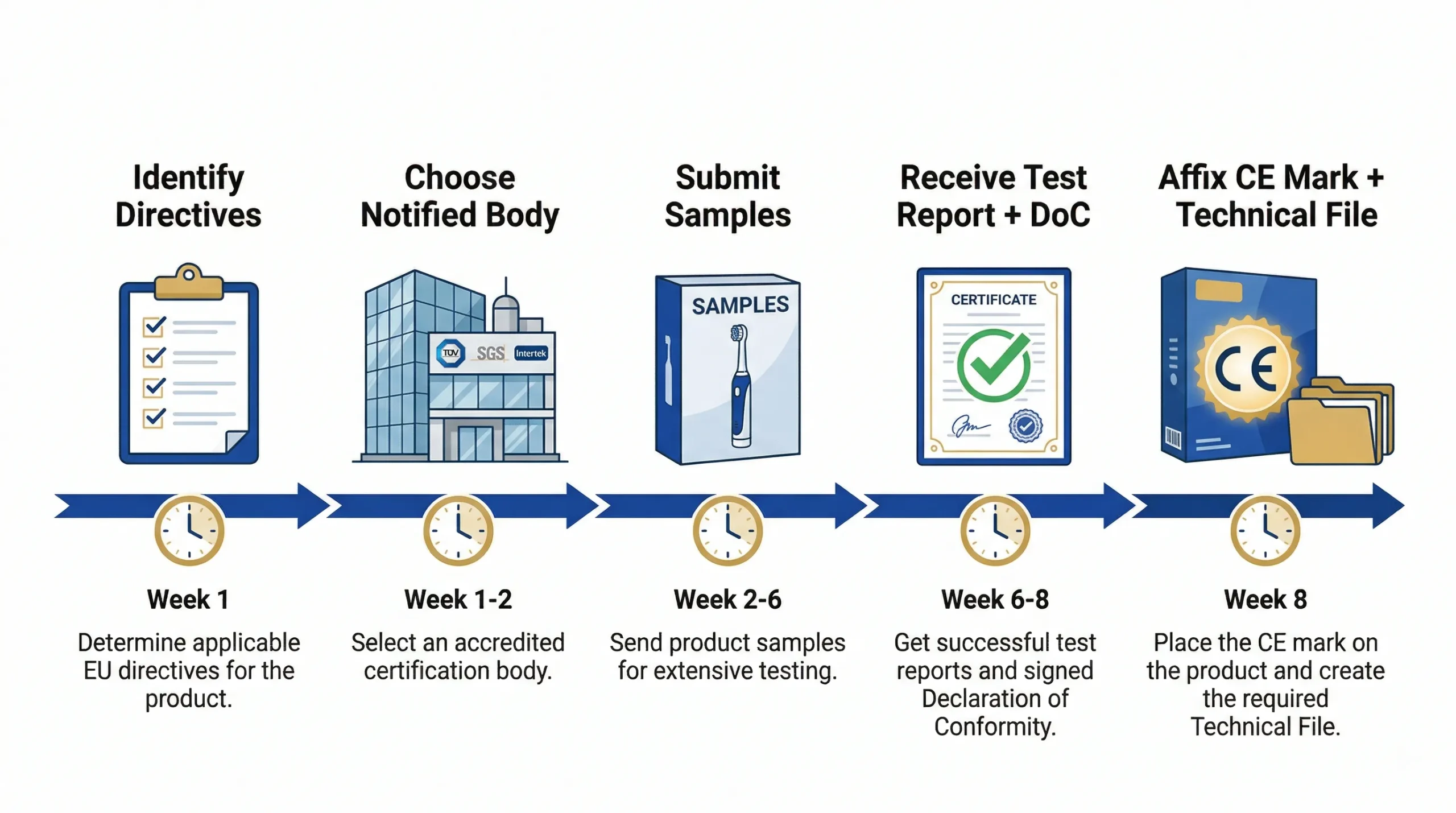
Zidentyfikuj obowiązujące dyrektywy i normy
Określ, które dyrektywy UE mają zastosowanie na podstawie cech Twojego produktu (Bluetooth? ładowanie bezprzewodowe? typ baterii?). Dopasuj każdą dyrektywę do odpowiedniej normy EN.
Wybierz jednostkę notyfikowaną (dla LVD)
Ocena LVD dla szczoteczek elektrycznych zazwyczaj wymaga jednostki notyfikowanej — akredytowanej organizacji testującej wyznaczonej przez UE. Opcje: TÜV Rheinland, TÜV SÜD, SGS, Intertek, DEKRA.
Prześlij próbki do testowania
Wyślij 5–10 reprezentatywnych próbek produkcyjnych do wybranego laboratorium. Testy obejmują: wytrzymałość dielektryczną, rezystancję izolacji, prąd upływu, wytrzymałość mechaniczną, pracę w warunkach awaryjnych, wnikanie wody (IPX7) oraz EMC.
Otrzymaj raport z testów + Deklarację zgodności UE
Po pomyślnym przejściu wszystkich testów laboratorium wydaje raport z testów. Ty (jako marka/producent) następnie sporządzasz i podpisujesz Deklarację zgodności UE (DoC).
Umieść oznaczenie CE i przygotuj dokumentację techniczną
Wydrukuj znak CE na produkcie, opakowaniu i instrukcji obsługi. Skompletuj dokumentację techniczną zawierającą raporty z testów, ocenę ryzyka, dokumenty projektowe i DoC. Dokumentacja ta musi być dostępna do kontroli przez 10 lat po zakończeniu produkcji.
⚠️ Kto jest "producentem" do celów CE?
W ramach przepisów UE „producentem” jest podmiot, którego nazwa i adres widnieją na produkcie i opakowaniu. Jeśli na produkcie znajduje się Twoja marka, odpowiedzialnym producentem jesteś Ty, a nie chińska fabryka. Odpowiedzialność za zgodność z CE spoczywa więc na Tobie. Upewnij się, że umowa z fabryką jasno określa, kto odpowiada za zgodność z CE i prowadzi dokumentację techniczną.
Certyfikacja FCC (Stany Zjednoczone)
Certyfikacja FCC (Federalna Komisja Łączności) jest obowiązkowa dla każdego urządzenia elektronicznego sprzedawanego w Stanach Zjednoczonych, które emituje energię elektromagnetyczną — dotyczy to każdej ładowalnej szczoteczki elektrycznej z silnikiem i baterią.
SDoC vs FCC ID
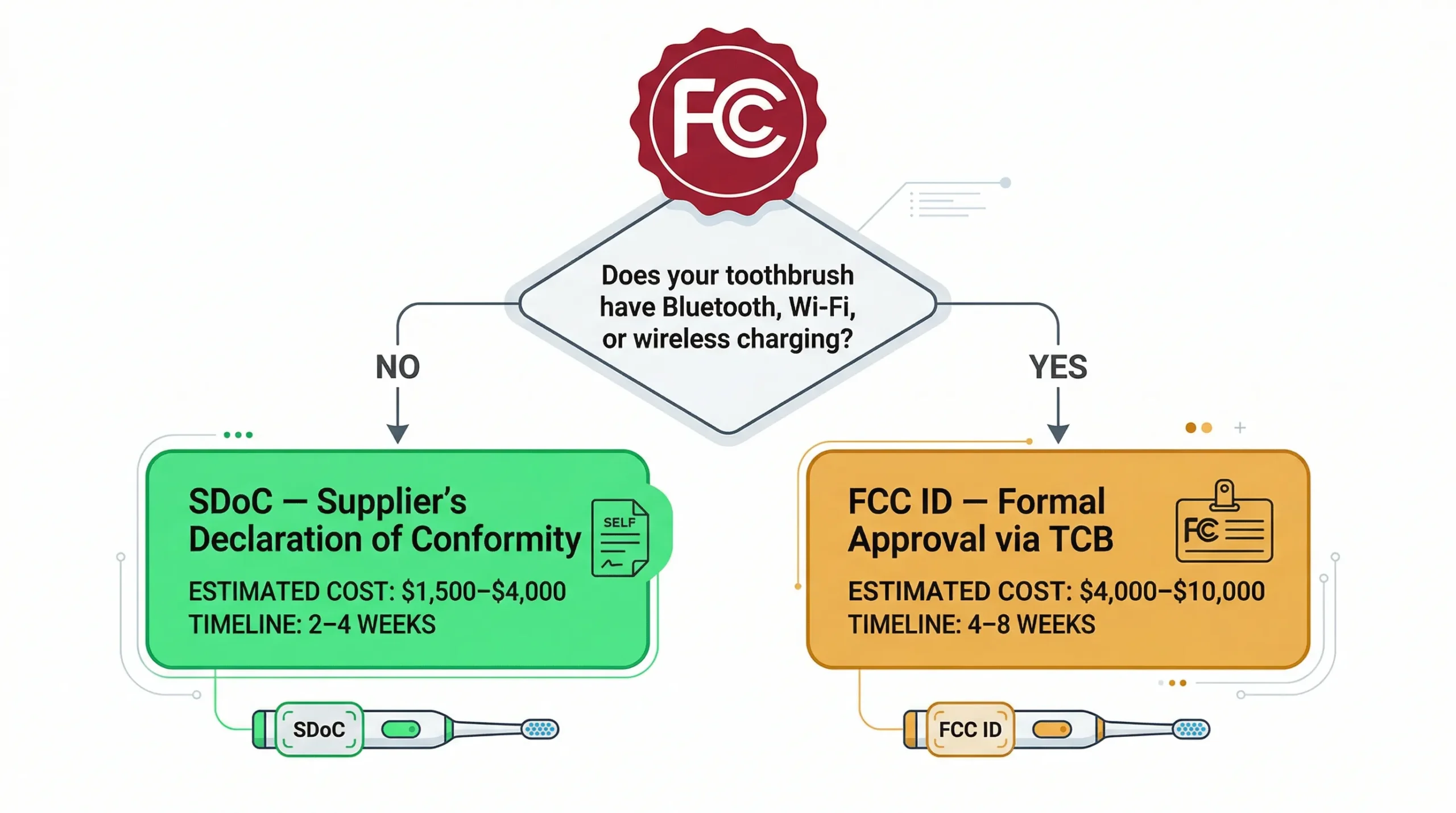
Większość szczoteczek elektrycznych (bez Bluetooth lub ładowania bezprzewodowego) kwalifikuje się do SDoC (Deklaracja zgodności dostawcy), która jest prostszą ścieżką:
- SDoC: Nie wymaga zatwierdzenia FCC. Testujesz w akredytowanym laboratorium, otrzymujesz pozytywny raport z testów i samodzielnie deklarujesz zgodność. Umieszczasz logo FCC + oświadczenie "To urządzenie jest zgodne z częścią 15" na etykiecie. Koszt: $1 500–$4 000.
- FCC ID: Wymagane, jeśli urządzenie ma celowe emitery (Bluetooth, Wi-Fi, ładowanie bezprzewodowe). Wymaga formalnego zatwierdzenia FCC przez jednostkę certyfikującą telekomunikację (TCB). Koszt: $4 000–$10 000. Czas: 4–8 tygodni.
Wymagania dotyczące testowania
- Część 15.109: Emisje promieniowane — zapewnia, że emisje elektromagnetyczne silnika pozostają poniżej limitów FCC
- Część 15.107: Emisje przewodzone — testuje emisje przez zasilacz / kabel do ładowania USB
- Emisje przewodzone przez linię zasilania AC: Jeśli urządzenie ładuje się przez adapter AC (nie bezpośrednio przez USB)
💡 Zaleta ODM: Wstępnie certyfikowane platformy
Jeśli korzystasz z ODM, istniejąca platforma szczoteczek fabryki może już posiadać ważne raporty testów FCC SDoC. Możesz wykorzystać te raporty dla swojej wersji markowej — pod warunkiem, że silnik, bateria i płytka drukowana pozostają identyczne. Oszczędza to $1 500–$4 000 i 2–4 tygodnie. Potwierdź z fabryką, że raport FCC obejmuje Twoją dokładną konfigurację.
Wymagania FDA (Stany Zjednoczone)
Rola FDA w przypadku szczoteczek elektrycznych jest jednym z najbardziej niezrozumianych obszarów w produkcji artykułów do higieny jamy ustnej. Oto rzeczywistość:
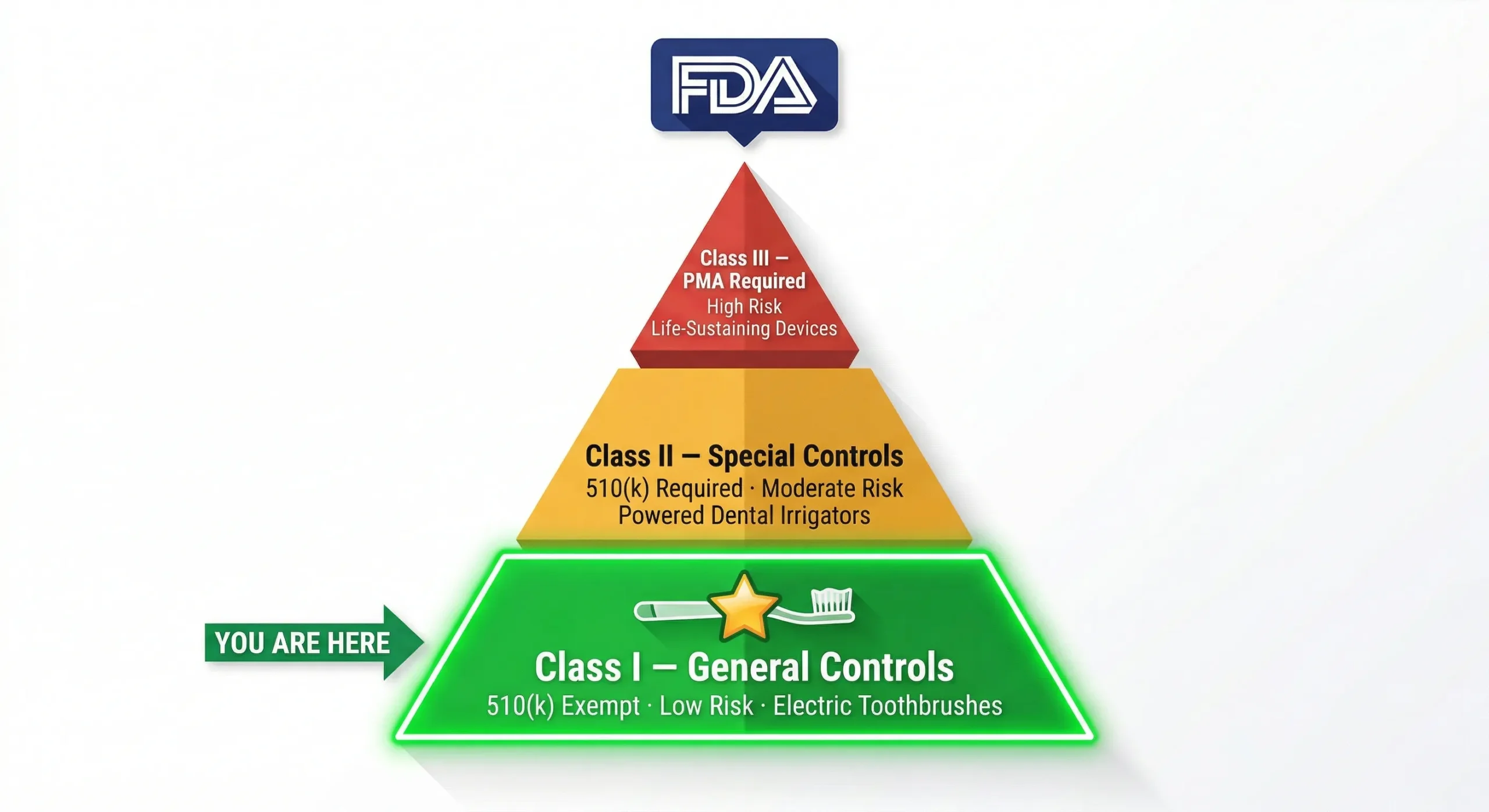
Klasyfikacja: Urządzenie medyczne klasy I (zwolnione z 510(k))
FDA klasyfikuje większość konsumenckich szczoteczek elektrycznych jako urządzenia medyczne klasy I zgodnie z 21 CFR Część 872 (Urządzenia dentystyczne), konkretnie 872.6840 (Szczoteczka elektryczna) [3]. Są one generalnie zwolnione z obowiązku powiadomienia przed wprowadzeniem do obrotu 510(k) JEŚLI nie są zgłaszane żadne twierdzenia terapeutyczne na opakowaniu lub w materiałach marketingowych.
Co JEST wymagane
- Rejestracja zakładu: Każdy zakład produkcyjny wytwarzający urządzenia medyczne na rynek amerykański musi zarejestrować się w FDA. Chińska fabryka zajmuje się tym — ale marka musi również zarejestrować się jako "początkowy importer". Roczna opłata za rejestrację zakładu (rok podatkowy 2026): $11,423.
- Wykaz urządzeń: Każdy model produktu musi być wymieniony w bazie danych urządzeń FDA, powiązanej z zarejestrowanym zakładem.
- System jakości (21 CFR Część 820): W przypadku wyrobów klasy I zwolnionych z 510(k) pełna zgodność z QSR nie jest obowiązkowa, ale FDA oczekuje „odpowiednich kontroli jakości”. Większość profesjonalnych fabryk OEM posiada ISO 13485 lub co najmniej ISO 9001.
- Zgłaszanie zdarzeń niepożądanych (MDR): Jeśli Twój produkt spowoduje obrażenia, musisz zgłosić raport o urządzeniu medycznym do FDA w ciągu 30 dni.
Kiedy 510(k) jest wymagane
- Produkt jest reklamowany z deklaracjami działania terapeutycznego: „leczy zapalenie dziąseł”, „klinicznie udowodniono, że odwraca chorobę przyzębia”, „uzyskano zezwolenie FDA na wprowadzenie do obrotu (FDA cleared)”.
- Twój produkt wykorzystuje znacząco inną technologię niż urządzenia referencyjne dostępne na rynku
- Chcesz wprowadzić produkt na rynek jako wyrób medyczny do celów refundacji ubezpieczeniowej lub profesjonalnego użytku stomatologicznego
Jeśli wymagane jest 510(k), dodaj $20 000–$100 000 i 3–12 miesięcy do swojego harmonogramu.
⚠️ Nie używaj sformułowania "FDA Approved" w przypadku szczoteczek elektrycznych
FDA nie "zatwierdza" wyrobów medycznych klasy I — rejestruje je. Używanie "FDA Approved" w materiałach marketingowych dla szczoteczki elektrycznej stanowi naruszenie zgodności. Prawidłowe sformułowanie: "FDA Registered" lub "FDA Listed." To rozróżnienie ma znaczenie dla zgodności z przepisami FTC dotyczącymi reklamy.
RoHS i REACH (Zgodność środowiskowa)
RoHS (Dyrektywa w sprawie ograniczenia stosowania niebezpiecznych substancji)
RoHS ogranicza stężenie niebezpiecznych materiałów w produktach elektronicznych sprzedawanych w UE [1]. Dyrektywa obecnie ogranicza dziesięć substancji w sprzęcie elektronicznym, w tym ołów, rtęć, kadm, chrom sześciowartościowy, PBB, PBDE oraz cztery ftalany (DEHP, BBP, DBP, DIBP) [2]. Dla szczoteczek elektrycznych najbardziej krytyczne limity to:
- Ołów (Pb): < 0,1% (1000 ppm) — najbardziej krytyczny dla lutu i komponentów PCB
- Rtęć (Hg): < 0,1% — istotna dla ogniw baterii
- Kadm (Cd): < 0,01% (100 ppm) — istotny dla styków baterii i powłok galwanicznych
- Chrom sześciowartościowy (Cr6+): < 0,1% — wykończenia metalowe
- PBB / PBDE: < 0,1% — uniepalniacze w tworzywach sztucznych
REACH (Rejestracja, Ocena, Udzielanie Zezwoleń i Stosowane Ograniczenia w Zakresie Chemikaliów)
REACH wymaga, aby każda substancja chemiczna wytwarzana lub importowana do UE w ilościach >1 tona/rok była zarejestrowana w ECHA (Europejska Agencja Chemikaliów). Dla marek szczoteczek elektrycznych REACH wpływa przede wszystkim na:
- Materiały obudów z tworzyw sztucznych (ABS, PP, TPE)
- Włókna szczotek wymiennych (filamenty nylonowe)
- Kleje i uszczelniacze stosowane w montażu
- Elektrolity baterii
Twoi dostawcy materiałów powinni dostarczyć deklaracje zgodności z REACH. Fabryka OEM jest odpowiedzialna za skompilowanie dokumentacji zgodności, ale odpowiedzialność spoczywa na marce, której nazwa widnieje na produkcie.
💡 Skrót ODM: Materiały wstępnie zgodne
Uznane platformy ODM zazwyczaj już używają materiałów zgodnych z RoHS i posiadają deklaracje REACH od swoich dostawców. Poproś swoją fabrykę o istniejące raporty z testów RoHS i raporty przesiewowe SVHC (Substancje wzbudzające szczególnie duże obawy) REACH przed opłaceniem nowych testów.
Azja-Pacyfik: PSE, KC, EAC i inne
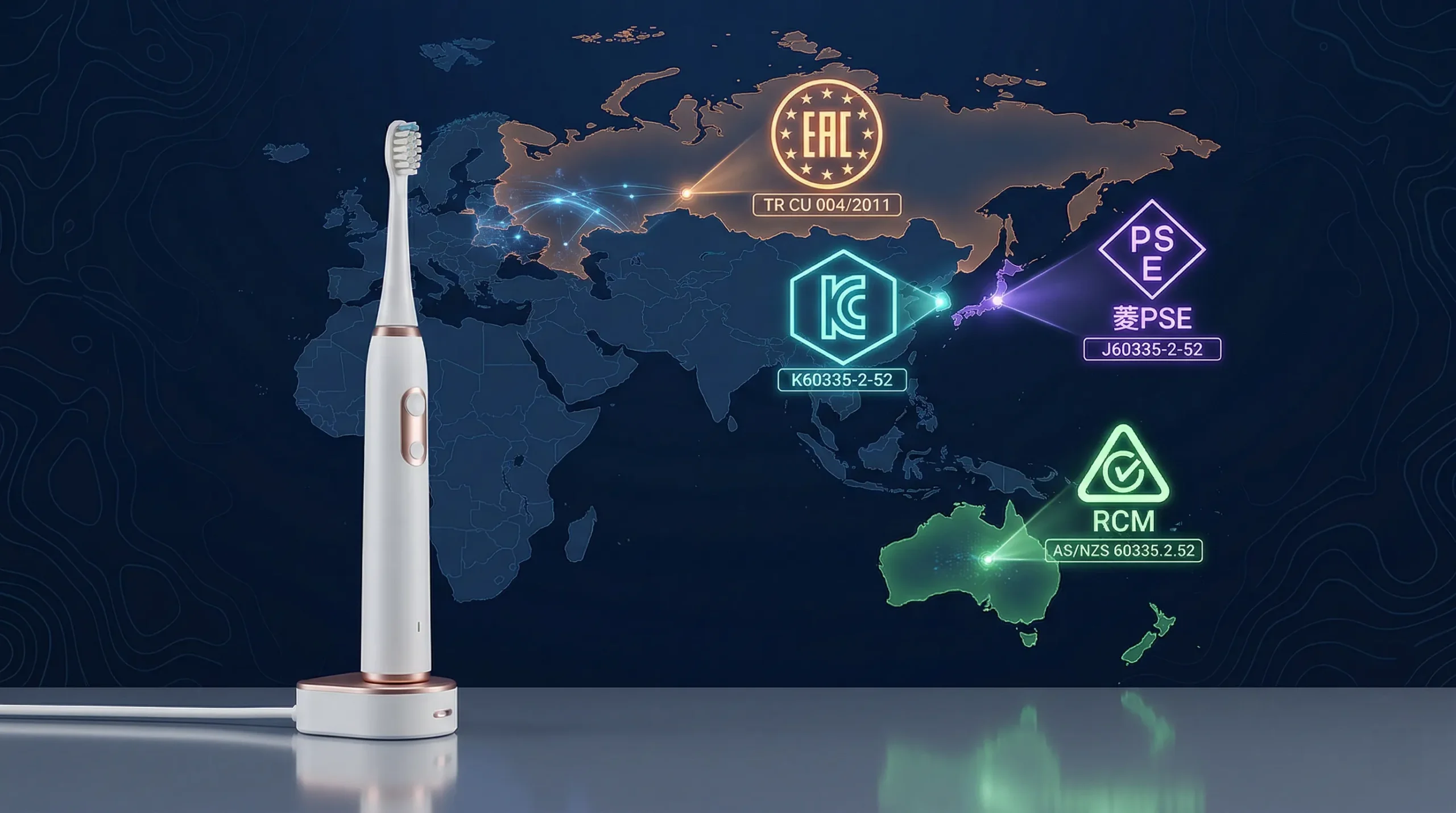
Japonia i Korea Południowa należą do rynków produktów do higieny jamy ustnej o najwyższej wartości na świecie — japońscy konsumenci płacą $50–$150 za premium szczoteczki elektryczne. Ale oba rynki mają rygorystyczne wymagania certyfikacyjne przy imporcie.
🇯🇵 Znak PSE (Japonia)
Szczoteczki elektryczne podlegają japońskiej ustawie o bezpieczeństwie urządzeń elektrycznych i materiałów (DENAN). Wymagają certyfikacji PSE (Product Safety Electrical Appliance & Material).
- Kategoria: Prawdopodobnie sklasyfikowane jako „Urządzenia elektryczne do pielęgnacji osobistej” — wymagają znaku PSE w kształcie rombu, dla którego konieczny jest udział zarejestrowanej jednostki certyfikującej.
- Norma: J60335-2-52 (japońskie przyjęcie IEC 60335-2-52)
- Proces: Testowanie w laboratorium uznanym przez Japonię + inspekcja fabryki (można wykorzystać niektóre raporty z systemu CB)
- Koszt: $2 000–$5 000
- Harmonogram: 4–8 tygodni
🇰🇷 Znak KC (Korea Południowa)
Korea Południowa wymaga KC (Certyfikat Koreański) dla szczoteczek elektrycznych zgodnie z koreańską ustawą o kontroli bezpieczeństwa urządzeń elektrycznych.
- Norma: K60335-2-52 (koreańskie przyjęcie normy IEC)
- Proces: Testowanie w akredytowanym laboratorium KTL lub KTC. Niektóre raporty IEC CB są akceptowane po dodatkowych testach odchyleń krajowych.
- Koszt: $2 000–$5 000
- Harmonogram: 4–8 tygodni
🇷🇺 Znak EAC (Rosja / EAEU)
Euroazjatycka Unia Gospodarcza (Rosja, Białoruś, Kazachstan, Armenia i Kirgistan) wymaga oznakowania EAC (zgodność euroazjatycka) dla urządzeń elektrycznych.
- Norma: GOST/TR CU 004/2011 (sprzęt niskonapięciowy) + GOST/TR CU 020/2011 (kompatybilność elektromagnetyczna)
- Proces: Próbki testowane w akredytowanym laboratorium w państwie członkowskim EAEU + audyt fabryki dla certyfikatów produkcji seryjnej
- Koszt: $2 000–$4 000
- Harmonogram: 6–10 tygodni
🇦🇺 Znak RCM (Australia / Nowa Zelandia)
Australia i Nowa Zelandia stosują wspólny system RCM (Regulatory Compliance Mark, znak zgodności z przepisami).
- Norma: AS/NZS 60335.2.52
- Proces: Testowanie + rejestracja w krajowej bazie danych. Raporty IEC CB są ogólnie dobrze akceptowane.
- Koszt: $1 500–$3 000
- Harmonogram: 3-6 tygodni
Klasa wodoodporności IPX7
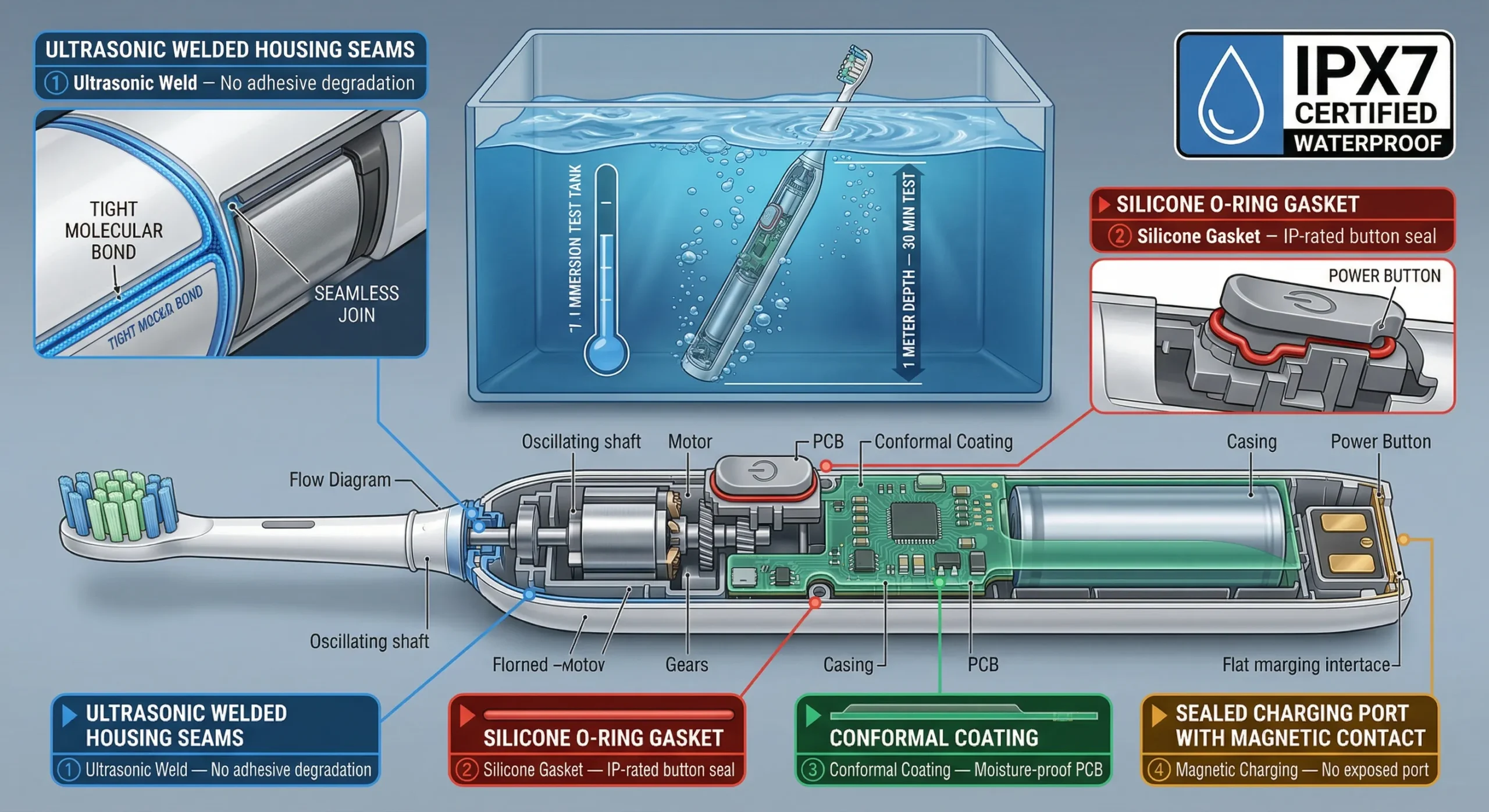
IPX7 nie jest certyfikatem wymaganym przez rząd – to międzynarodowa norma (IEC 60529), która stała się de facto minimalnym wymogiem dla szczoteczek elektrycznych na wszystkich rynkach. Konsumenci oczekują, że będą mogli używać szczoteczki pod prysznicem i płukać ją pod bieżącą wodą.
Co oznacza IPX7
- Urządzenie może wytrzymać zanurzenie w wodzie do głębokości 1 metra na 30 minut
- Testowanie obejmuje całkowite zanurzenie włączonego urządzenia w zbiorniku z wodą
- Po zanurzeniu urządzenie musi działać normalnie bez wykrycia wniknięcia wody
Jak fabryki OEM osiągają IPX7
- Zgrzewanie ultradźwiękowe szwów głównej obudowy (nie klej – klej ulega degradacji)
- Uszczelki silikonowe na wszystkich interfejsach przycisków i portach ładowania
- Powłoka konforemna na płytce PCB zapobiegająca korozji spowodowanej wilgocią
- Uszczelnienie śrub z O-ringami na komorze baterii (jeśli serwisowalna)
Testowanie i koszt
Koszt testowania IPX7 wynosi $200–$800 za model w akredytowanym laboratorium. Czas: 1–2 tygodnie. Większość renomowanych fabryk OEM posiada własny sprzęt do testowania IPX7 i testuje 100% jednostek produkcyjnych na końcowym etapie kontroli jakości (FQC). Zapytaj swoją fabrykę o wskaźnik pokrycia testów wodoodporności — testowanie inline 100% to standard, którego powinieneś oczekiwać.
Normy ISO dla fabryk OEM
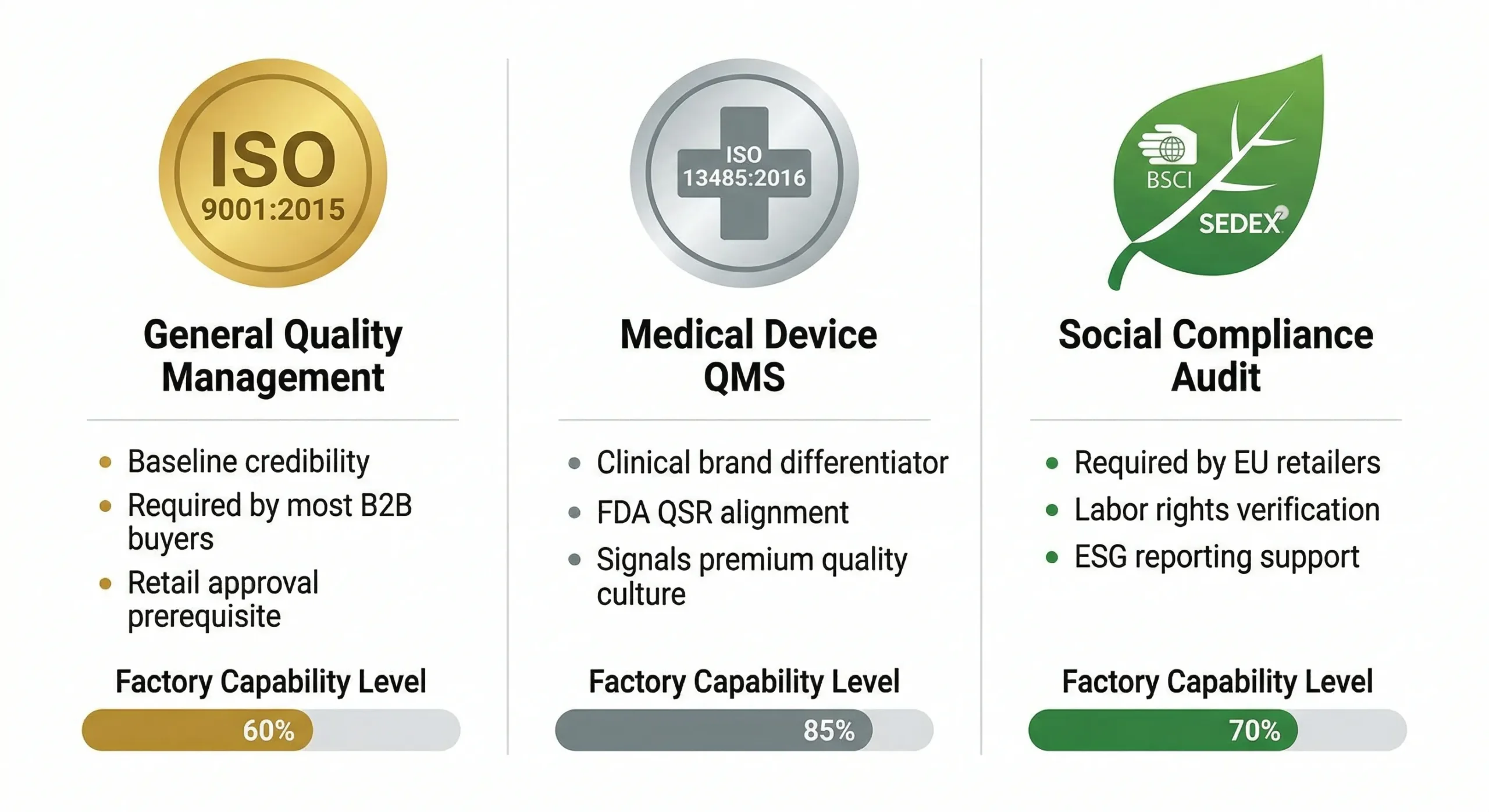
Certyfikaty ISO dotyczą fabryki, a nie produktu. Ale jako właściciel marki, certyfikaty ISO Twojej fabryki bezpośrednio wpływają na zaufanie kupujących, akceptację detaliczną i profil ryzyka regulacyjnego.
| Norma | Co Obejmuje | Dlaczego To Ma Znaczenie dla Twojej Marki |
|---|---|---|
| ISO 9001:2015 | Ogólny system zarządzania jakością (QMS) | Oczekiwany przez większość nabywców B2B. Wymagany do akceptacji przez kupców detalicznych. Podstawowa wiarygodność. |
| ISO 13485:2016 | Zarządzanie jakością dla wyrobów medycznych | Silny wyróżnik dla marek o pozycjonowaniu klinicznym. Wymagany do zgodności z FDA QSR. Sygnalizuje poważną kulturę jakości. |
| ISO 22716:2007 | Dobra Praktyka Produkcyjna dla kosmetyków | Istotne, jeśli produkujesz kosmetyki do pielęgnacji jamy ustnej (pasta do zębów, płyn do płukania ust) wraz ze sprzętem. |
| BSCI / SEDEX | Audyt zgodności społecznej i etycznej | Wymagane przez wielu detalistów z UE. Obejmuje prawa pracownicze, warunki pracy, praktyki środowiskowe. |
9. Strategia kosztów certyfikacji dla marek działających na wielu rynkach
Jeśli celujesz w więcej niż jeden rynek, całkowity rachunek za certyfikację może szybko przekroczyć $15 000–$25 000. Oto jak doświadczone marki zarządzają tym efektywnie:
Schemat CB: Przetestuj raz, certyfikuj wszędzie
System IEC CB (Certification Body) umożliwia przeprowadzenie jednego zestawu badań w jednym akredytowanym laboratorium, a następnie wykorzystanie raportu CB jako podstawy krajowych certyfikacji na całym świecie. Przy planowanym wejściu na 3 lub więcej rynków pozwala to zaoszczędzić 30–50% całkowitych kosztów badań.
Proces: Raport z testów CB → CE (z przeglądem przez Jednostkę Notyfikowaną) → PSE (Japonia) → KC (Korea) → RCM (Australia). Każda krajowa jednostka przegląda raport CB i może przeprowadzić drobne dodatkowe testy dla lokalnych odstępstw.
Zalecana sekwencja certyfikacji
Podejście do certyfikacji fazowej
- Faza 1 (Przedprodukcyjna): Raport z testów CB + CE + FCC. Koszt: $5 000–$12 000. To odblokowuje UE + USA — twoje dwa największe rynki.
- Faza 2 (Pierwsze dostawy): Test IPX7 + test RoHS (jeśli nie jest wliczony w CE). Koszt: $500–$2 500.
- Faza 3 (Ekspansja): PSE (Japonia) + KC (Korea) z wykorzystaniem raportu CB. Koszt: $4 000–$10 000. Otwiera dwa rynki premium.
- Faza 4 (W miarę wzrostu wolumenu): EAC (Rosja/WNP), RCM (Australia), audyt BSCI. Koszt: $5 000–$10 000.
💡 Kluczowa informacja: ODM oszczędza $5 000–$15 000 na kosztach certyfikacji
Fabryka ODM dobrej jakości posiada już certyfikaty CE, FCC, RoHS, a czasem PSE/KC dla swojej istniejącej platformy. Jeśli twój produkt ODM wykorzystuje dokładnie tę samą elektronikę i obudowę (tylko inne oznakowanie), często możesz wykorzystać istniejące certyfikaty fabryki — oszczędzając miesiące czasu i tysiące dolarów. To jeden z najsilniejszych argumentów finansowych za rozpoczęciem od ODM przed inwestycją w pełne OEM.
10. Często zadawane pytania
Potrzebujesz pomocy z certyfikatami?
Istniejące platformy Relish Technology posiadają certyfikaty CE, FCC, RoHS i IPX7. W przypadku projektów ODM możesz wykorzystać naszą istniejącą zgodność — oszczędzając miesiące i tysiące na kosztach testowania. Zobacz studia przypadków klientów →
Źródła
- [1] Komisja Europejska, Dyrekcja Generalna ds. Środowiska. (2024). Dyrektywa RoHS — Ograniczenie stosowania niektórych niebezpiecznych substancji w sprzęcie elektrycznym i elektronicznym. Źródło: https://environment.ec.europa.eu/topics/waste-and-recycling/rohs-directive_en. Dyrektywa 2011/65/UE; ogranicza 10 niebezpiecznych substancji, w tym ołów, rtęć, kadm, chrom sześciowartościowy, PBB, PBDE i cztery ftalany (DEHP, BBP, DBP, DIBP).
- [2] Europejska Agencja Chemikaliów (ECHA). (2024). Zrozumieć REACH — Rejestracja, Ocena, Udzielanie Zezwoleń i Stosowanie Ograniczeń w zakresie Chemikaliów. Źródło: https://www.echa.europa.eu/regulations/reach/understanding-reach. REACH wszedł w życie 1 czerwca 2007 r., jest administrowany przez ECHA w Helsinkach.
- [3] Amerykańska Agencja ds. Żywności i Leków (FDA), Centrum Urządzeń i Zdrowia Radiologicznego (CDRH). (2024). Wyroby medyczne — Przegląd i klasyfikacja wyrobów. Źródło: https://www.fda.gov/medical-devices. Elektryczne szczoteczki do zębów sklasyfikowane zgodnie z 21 CFR Part 872 (Urządzenia stomatologiczne), 872.6840.