











OEM szczoteczek elektrycznych dla hoteli: przewodnik po zakupie akcesoriów hotelowych
Plan what each guest will receive, how the toothbrush will be powered and how staff will manage stock. This guide helps hotel buyers compare product formats, prepare a supplier brief and organise an amenity programme.
Before requesting samples, decide whether the toothbrush will be supplied in the room, offered on request or sold to guests. Define the kit contents, charging arrangements, instructions and replenishment process so suppliers can quote for the same specification.
Choose how the hotel will offer the toothbrush
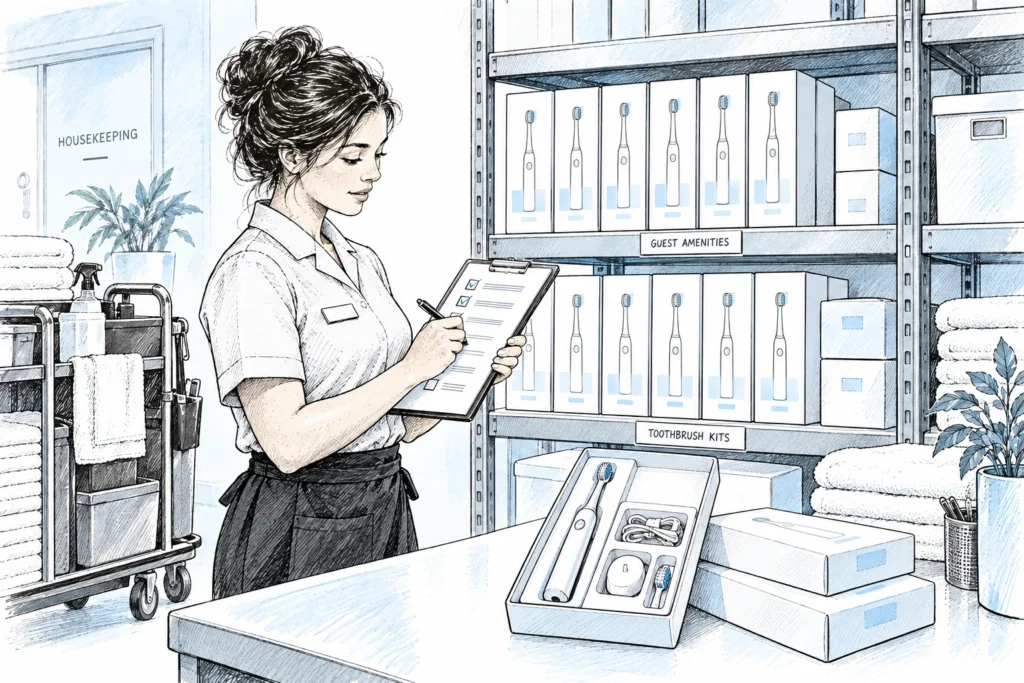
Will the toothbrush be placed in every room, supplied on request, included in selected room categories, sold at reception or provided as a travel kit? Each option affects stock levels, storage, charging and housekeeping work. For a new programme, consider a limited trial and record take-up, staff workload, replenishment costs and guest feedback before extending it. Cornell’s research on other hotel amenities supports assessing returns at property or brand level; it did not study electric toothbrushes.
In-room amenity
Specify whether the item is included by default or provided on request, what packaging the guest receives, and how housekeeping records replacement.
Selected-room inclusion
Identify the room types or booking conditions involved and how staff can distinguish the approved pack from other amenities.
Retail or paid upgrade
Agree the selling terms, the product information shown to guests and who will answer questions or handle returns.
Distributor or travel kit
Agree the kit contents, instruction languages, destination and delivery responsibilities with the distribution partner before approving artwork.
Write a brief the supplier can quote against
Describe what guests will receive and what staff need to do. Must the brush arrive charged and ready to use? Which parts will need replenishing? Can guests take the kit home? Who will handle missing accessories, damaged packs or a brush that does not work? Include these decisions in the brief, then compare samples with the agreed specification.
| Programme question | Why it matters | Decision or record |
|---|---|---|
| Room use | The kit must fit the way it will be offered to guests and the hotel’s storage space. | Where the kit is supplied, what it contains and who prepares the guest instructions. |
| Replenishment | Handles, brush heads, batteries, chargers and packs may need replenishing at different intervals. | Pack count, approved accessories, inventory owner and reorder trigger. |
| Ładowanie | Staff need to know how the brush is charged and how to resolve charging questions. | Charging method, compatible accessories and user instructions. |
| Branding and pack | Artwork should not obscure product identity or required market information. | Approved artwork file, instruction languages and packaging sample. |
| Documents | Product records, supplier statements and shipment documents serve different purposes. | List of documents showing the model covered, issuer, validity and reviewer. |
Choose features that staff and guests can use easily. Extra brushing modes, app functions or a charging travel case may require more instructions, accessories and support. Check the actual model rather than assuming every option is available. See thekolekcją szczoteczek elektrycznych for product options.
Compare power and amenity formats
Compare rechargeable models, models with replaceable batteries and manual brushes. For each powered option, check what is supplied in the kit, how power is replenished and what instructions guests receive. Use a manual brush as a comparison when deciding whether the added charging or battery work suits the hotel.
Rechargeable, replaceable-battery and manual formats
| Czynnik | Rechargeable electric | Replaceable-battery electric | Manualna |
|---|---|---|---|
| Power arrangement | Confirm handle, charging method and compatible charging accessory. | Confirm cell type, whether cells are supplied and replacement instructions. | No powered handle or charger. |
| Room operations | Plan where charging and storage take place and who checks readiness. | Plan battery stocking, replacement and local disposal information. | Plan stock levels, packaging and replacement. |
| Guest information | Provide model-specific charging and use instructions. | Provide model-specific cell and use instructions. | Provide the information applicable to the supplied product. |
| Replenishment | Identify the handle, head and charging components by configuration. | Identify the handle, heads and approved cell specification. | Identify the supplied brush and packaging specification. |
| Decision to record | Confirm whether the hotel can support the charging workflow. | Confirm whether cell supply and replacement fit the programme. | Confirm whether a manual format meets the defined service brief. |
Review samples, packaging and guest information together
Review the handle, brush heads, charging accessories, instructions, amenity pack and shipping carton together. Keep a record of the sample version and any differences from the planned order. Check that product reports and declarations identify the model and accessories you will buy; a general factory certificate does not cover every finished kit.
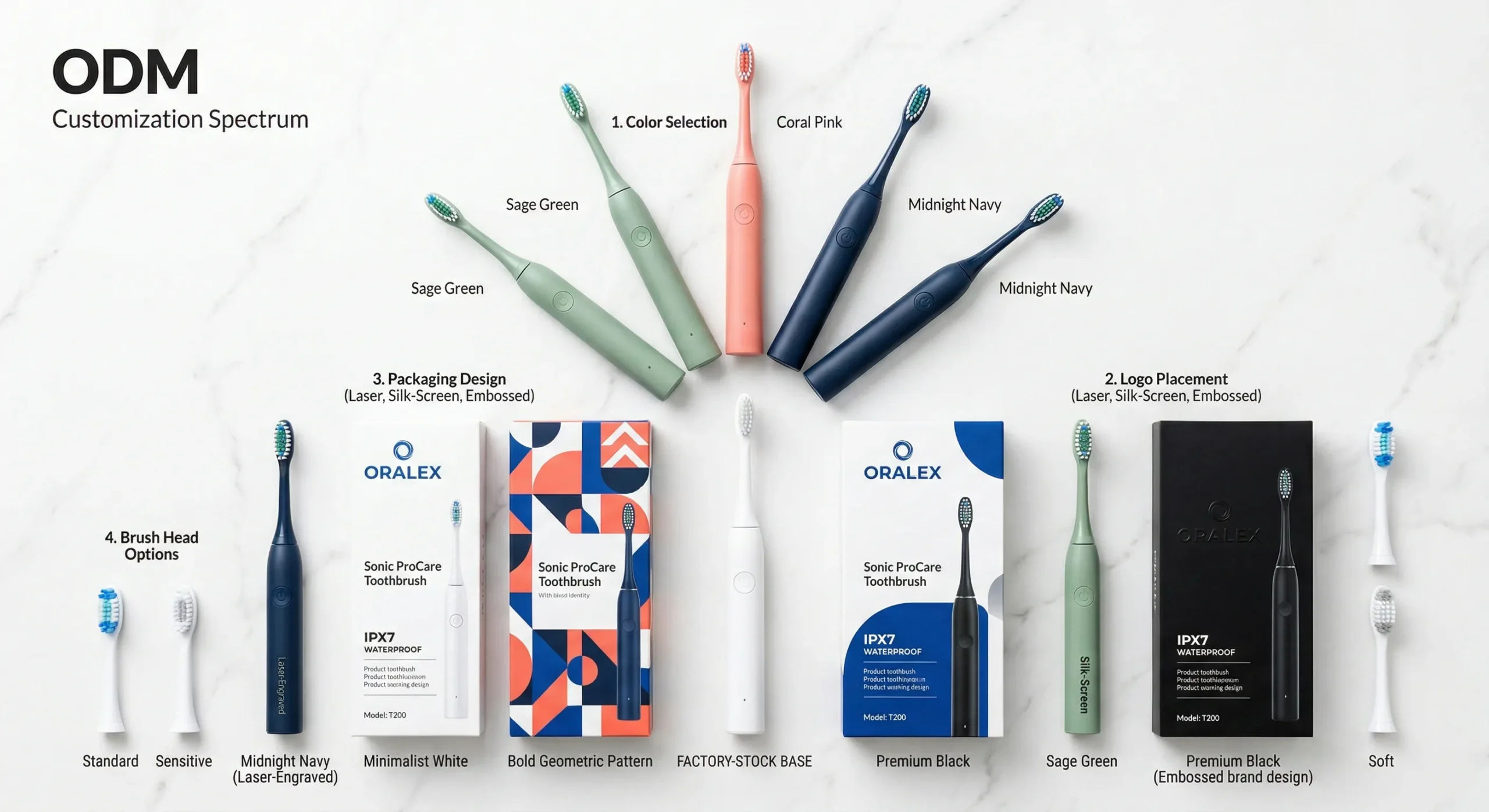
For branded packs, confirm the artwork owner, languages, product identity, included contents and approval record. Relish’s custom packaging information can help you brief the pack structure, printing and artwork. Agree the exact design and included work in the quotation.
Plan replenishment and exceptions
- Define what is stocked at each location and which team owns replenishment.
- Identify compatible brush heads, chargers and batteries by model or part number.
- Name the team responsible for missing accessories, damaged packs, charging questions and proposed substitutions.
- Keep unopened stock separate from opened or returned kits. Agree how staff will isolate damaged items, record replacements and follow the product instructions and hotel hygiene procedures.
- Use the model and approved pack version on purchase, stock and shipment records.
Compare quotations and estimate the delivered cost
Request a quotation for the model, quantity, branding, packaging and delivery destination you need. Build the delivered-cost estimate from the product price, freight, duties, insurance, local handling and any agreed inspection or testing charges. Check the quotation date, validity, currency, delivery terms and exclusions.
| Input | What to specify | What to confirm in the quote |
|---|---|---|
| Produkt | Model, power configuration, brush head and accessories. | Exact configuration and any approved alternatives. |
| Quantity | Initial quantity, delivery schedule and possible repeat order. | Applicable MOQ and whether a smaller project can be discussed. |
| Branding and packaging | Logo method, colours, pack structure, languages and artwork version. | Included work, sample approval, tooling if applicable and exclusions. |
| Destination and route | Delivery locations, required date and known carrier constraints. | Incoterm, freight scope, duties/taxes responsibility and quote validity. |
| Quality and documents | Acceptance criteria, record requests and intended market. | Inspection/testing scope, document names, product scope and issuing party. |
Relish’s standard minimum order for custom products is 1,000 units. Smaller quantities may be considered case by case. Obtain the MOQ and schedule for your selected model, packaging and customisation work in the written quotation.
Check labels, power and market responsibilities
Identify the requirements for the destination market, including those for the charger and any wireless functions. CE marking, PSE requirements and FCC rules serve different purposes. Request the model-specific reports or declarations needed for the kit, and check the model, accessories, issuer and scope covered by each document.
For Japan, confirm the AC input shown on the supplied charger and the applicable product and installation information. Japan’s nominal mains supply is 100 V AC; do not assume a 110–120 V input or infer dual-voltage support from the toothbrush handle. Review the charger label, plug, frequency and user instructions for the actual model and destination.
Use certification and compliance information as a starting point for document questions, then confirm that the records cover the selected product and market.
Coordinate samples, production and delivery
Set the schedule around sample and artwork approval, production, inspection and dispatch. Name the person who signs off each stage and record the expected dates, delivery locations and any work that must be completed first. Confirm the supplier’s current capacity before treating a delivery date as agreed.
1. Define the brief
Confirm the service model, destination, configuration, quantity range, pack contents and document questions.
2. Review sample and artwork
Record sample and artwork revisions, comments, approvals and any differences from the requested configuration.
3. Confirm order and checks
Agree the order specification, acceptance criteria, inspection scope and change-control contact before production.
4. Plan shipment and receiving
Confirm carrier, route, consignee, shipment documents, receiving locations and responsibility for local distribution.
For several properties, compare delivery to one central warehouse, direct delivery to each hotel and regional distribution. Use the actual quantities, receiving arrangements and customs responsibilities for each option. If the kits contain batteries, confirm the transport classification and required shipment documents with the shipper and carrier.
Review sustainability statements by material and disposal route
Evaluate an environmental statement at the level it describes: handle material, bristles, packaging or complete product. A bamboo handle does not make an electronic toothbrush biodegradable. Bio-based plastics or a bristle material claim does not establish that the whole brush is compostable. Distinguish recycled ocean-bound plastic from plastic recovered from the ocean, and request evidence for the stated source and percentage.
- For compostability claims, identify all covered materials, the relevant composting conditions and whether suitable facilities are available to guests or the hotel.
- For recycled-content claims, record the component, percentage, source definition and supporting documentation.
- For electric products, identify the local route for the battery and electronic components, separately from the packaging route.
- For replaceable heads, define the replacement process and disposal information without implying that a handle can be shared hygienically between guests.
Environmental wording should match the evidence and the markets where the pack will be sold or supplied. See the sustainability information and review product-specific statements before printing them on guest-facing materials.
Questions to ask before approving a supplier
- Which exact product and accessory configuration does the sample represent?
- Which product, packaging and artwork revisions would be used in the planned programme?
- Who confirms destination, label, language and shipment-route questions?
- What records show that the sample, final pack and supplier documents refer to the same configuration?
- What change-control process applies if a component, charger, brush head or artwork must change?
Procurement checklist
- Define where the product is used, who supplies it and who replenishes it.
- Specify the actual power configuration, accessories, guest information and packaging.
- Review MOQ, cost, schedule and shipping assumptions for the requested project in writing.
- Match market documents and environmental wording to the exact product and claim scope.
- Keep the approved sample, artwork, order and shipment records linked to one configuration.
Discuss a hotel amenity procurement brief
Tell us the property type, destination, how guests will receive the toothbrush, preferred kit contents and order quantity. Include any charging, packaging or replenishment questions you want to discuss.
Contact Relish TechCzęsto zadawane pytania
References and scope
The references below cover toothbrush care, environmental claims and hotel amenity planning. The hotel studies concern other amenities and guest-service factors; they provide context for planning a trial rather than evidence of returns from electric toothbrushes.
- American Dental Association: Toothbrushes— toothbrush care and guidance against sharing toothbrushes.
- U.S. Federal Trade Commission: Environmental Claims — Summary of the Green Guides— substantiation and qualification of environmental claims in the United States.
- Cornell Hotel School research summary (2016)— amenity returns and property-level decisions, based on bottled water, internet access and fitness facilities.
- Cornell Hotel School research summary (2017)— the importance of consistent service and room quality in guest reviews.