










Как работают электрические зубные щетки:
Полное техническое руководство 2026
От магнитных катушечных драйверов и двигателей постоянного тока с редуктором до анализа чистки на основе ИИ — углубленный обзор инженерии, физики и производства современных электрических зубных щеток для производителей.
* По сравнению с использованием ручной зубной щетки. Клинические исследования показали, что звуковые зубные щетки удаляют значительно больше зубного налета, чем ручная чистка.
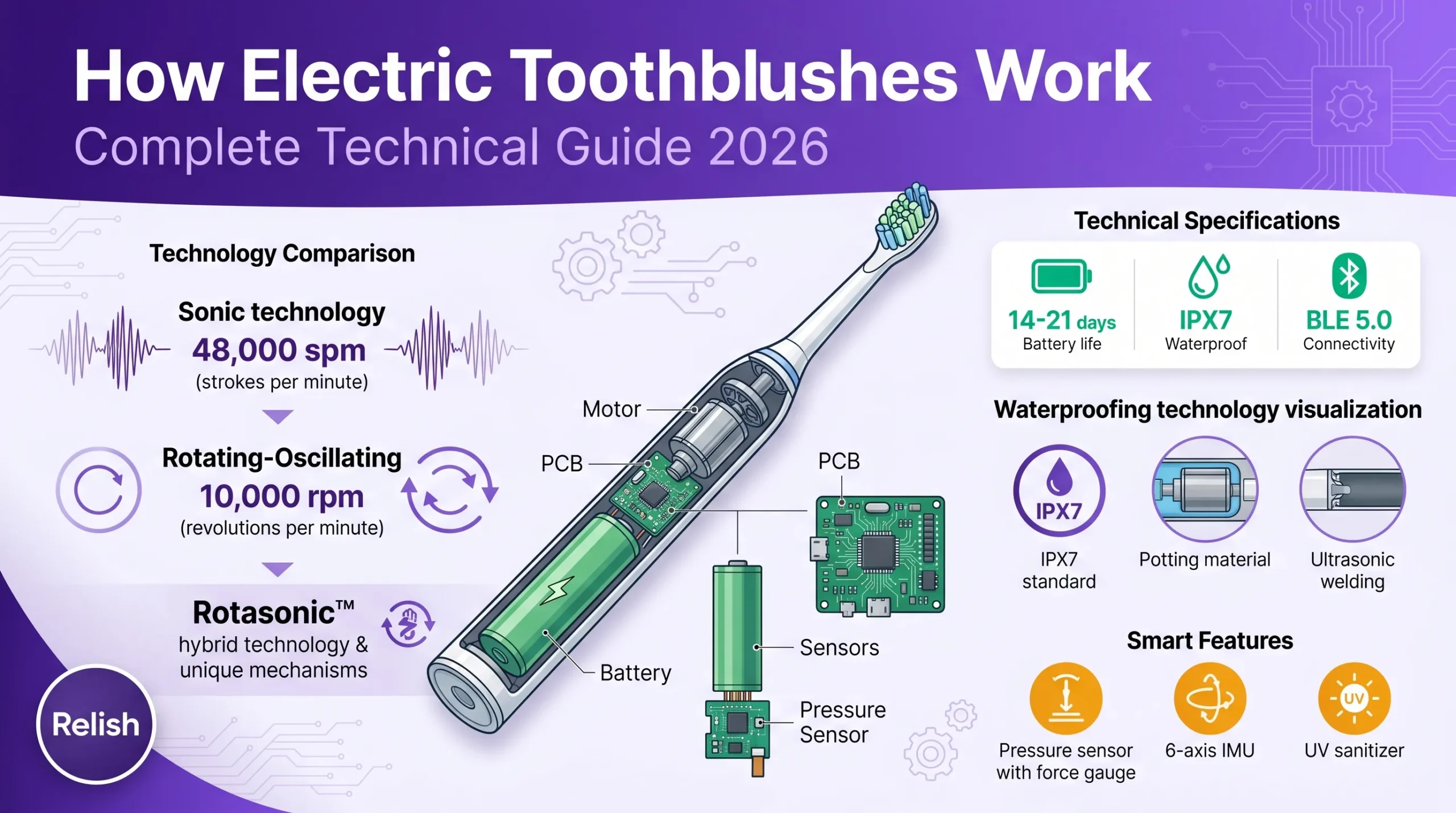
Электрические зубные щетки — обманчиво сложные устройства. По своей сути они объединяют прецизионные двигатели, интеллектуальные системы управления, перезаряжаемые источники питания и эргономичный дизайн в устройство, помещающееся на ладони, но выполняющее десятки тысяч точных механических движений за один сеанс чистки. Это руководство подробно объясняет, как работают электрические зубные щетки: от физики звуковой вибрации до инженерных решений, определяющих OEM-производство.
Основные выводы
- Понимание того, как работают электрические зубные щетки, начинается с трех основных технологических категорий: звуковые (вибрация магнитной катушки), вращательно-возвратные (вращение двигателя постоянного тока) и комбинированные (двухрежимные системы, такие как Rotasonic™)
- Звуковые зубные щетки создают очищающее действие как за счет контакта щетины, и так и гидродинамики — перемешивание зубной пасты и слюны достигает межзубных участков, недоступных щетине
- Основные электронные компоненты — печатная плата, драйвер двигателя, BLE-модуль, датчик давления — все миниатюризированы и защищены от воды по стандарту IPX7
- Технология аккумулятора (Li-ion против NiMH) напрямую влияет на вес, время работы и время зарядки, что является критическими точками принятия решений для OEM
- Датчики давления используют пьезорезистивную или емкостную технологию для обнаружения чрезмерного усилия чистки и предотвращения повреждения десен в реальном времени
- Умные зубные щетки добавляют BLE SoC + сопутствующее приложение , но основной механизм чистки идентичен моделям без интеллектуальных функций
- Как работают электрические зубные щетки с точки зрения OEM-производства: тип двигателя, емкость аккумулятора и интеллектуальные функции определяют стоимость спецификации (BOM), а не бренд или качество насадки
- Технология Vibrosonic™ достигает до 48 000 движений/мин с дополнительным гармоническим слоем, который усиливает гидродинамическую очистку по сравнению со стандартными звуковыми щетками
Три основные технологии электрических зубных щеток
Прежде чем углубляться в отдельные компоненты, важно понять, что все электрические зубные щетки относятся к одной из трех фундаментальных технологических категорий. Категория определяет практически все аспекты работы электрических зубных щеток: механизм чистки, уровень шума, расход батареи и стоимость производства.
Звуковая технология: вибрация магнитной катушки
Понимание того, как работают электрические зубные щетки со звуковой технологией, начинается с драйвера магнитной катушки. Звуковая зубная щетка использует драйвер магнитной катушки (также называемый звуковым катушечным приводом или линейным резонансным приводом) для прямого преобразования электрической энергии в быстрое линейное движение. В отличие от традиционного двигателя, создающего вращательное движение, драйвер магнитной катушки генерирует чисто линейную возвратно-поступательную вибрацию на высокой частоте.
Вот физика процесса: электрический ток проходит через катушку провода, намотанную на магнитопроницаемый сердечник. При подаче переменного тока катушка попеременно притягивает и отталкивает постоянный магнит, прикрепленный к насадке, заставляя ее вибрировать с частотой переменного тока. Частота управляется цепью генератора на печатной плате — обычно 120–240 Гц, что соответствует 240–480 движений щетки в секунду (или 24 000–48 000 движений в минуту).
Ключевое новшество звуковой технологии — это гидродинамическая очистка. При 30 000+ движений в минуту щетина и смесь зубной пасты со слюной создают турбулентный поток и акустическое микротечение. Эта гидродинамическая сила расширяет очищающий эффект за пределы физического контакта щетины, достигая 1–3 мм за кончиками щетины в десневую борозду и межзубные пространства. Это клинически значимо: исследования, опубликованные в Journal of Clinical Periodontology , показали, что звуковые зубные щетки уменьшают гингивит и зубной налет на расстоянии до 4 мм от кончика щетины.
Собственная платформа Relish Technology Vibrosonic™ продвигает это еще дальше с помощью двухгармонической системы драйвера. Там, где стандартные звуковые щетки создают одночастотную вибрацию, Vibrosonic™ добавляет контролируемый вторичный гармонический слой, создающий эффект микропульсации. Это дает два преимущества: увеличивает эффективный радиус гидродинамической очистки и создает волну давления, которая помогает удалять биопленку (зубной налет) с поверхностей зубов, не требуя от пользователя чрезмерного физического давления.
Технология вращательно-колебательного движения: редукторный двигатель постоянного тока
Чтобы понять, как работают электрические зубные щетки с вращательно-колебательной технологией, необходимо разобраться в механизме редукторного двигателя постоянного тока. Вращательно-колебательные щетки используют небольшой редукторный двигатель постоянного тока (DC) для вращения круглой или треугольной насадки. Вал двигателя соединен с зубчатой передачей, которая снижает скорость вращения, увеличивая крутящий момент, а затем преобразует вращательное движение в колебательное (возвратно-поступательное) с помощью кривошипного механизма или шотландского рычага.
Типичные вращательно-колебательные насадки совершают 5 000–10 000 оборотов в минуту с амплитудой колебаний 45–90 градусов. Каноническим примером является бренд Oral-B: их запатентованная технология вращательно-колебательного движения была впервые представлена в 1990-х годах и постоянно совершенствуется. Механизм очистки здесь основан преимущественно на прямом контакте щетинок — вращающиеся щетинки физически очищают поверхность зубов, а колебательное движение способствует удалению налета из десневой борозды.
С производственной точки зрения, двигатели вращательно-колебательного типа обычно дешевле магнитных катушечных драйверов, что делает эту технологию более распространенной на среднеценовом рынке OEM. Обратной стороной является то, что зубчатая передача добавляет механическую сложность и потенциальные точки отказа, а очищающее действие больше зависит от контакта щетинок и меньше — от гидродинамики.
Комбинированная / Ротасоник технология
Чтобы понять, как работают электрические зубные щетки с комбинированной технологией, необходимо рассмотреть подход Rotasonic™. Третья категория — это комбинированный или гибридный подход: устройства, которые одновременно используют звуковую вибрацию и вращательно-колебательное действие. Именно здесь находится технология Rotasonic™ , разработанная компанией Relish Technology.
Зубная щетка Rotasonic™ сочетает магнитный катушечный драйвер (для звукового компонента) с микродвигателем постоянного тока, приводящим в движение колебательную насадку. Результатом является двойное очищающее действие: гидродинамика от звуковой вибрации плюс прямое механическое воздействие от вращательно-колебательной насадки. Клинически доказано, что такая комбинация превосходит каждую из технологий по отдельности в исследованиях удаления зубного налета, особенно для пользователей с ортодонтическими конструкциями или глубокими десневыми карманами.
Анатомия электрической зубной щетки
Помимо основной технологии очистки, каждая электрическая зубная щетка содержит систему взаимосвязанных компонентов, которые работают вместе, обеспечивая надежное, безопасное и удобное использование. Понимание того, как работают электрические зубные щетки на уровне компонентов, помогает OEM-покупателям оценивать качество и компромиссы по стоимости при разработке продукта. Вот разбор компонентов.
Аккумуляторная батарея
Литий-ионный (Li-ion) или NiMH. Li-ion обеспечивает в 3 раза большую плотность энергии, отсутствие эффекта памяти и более 500 циклов зарядки. Емкость: 600–2 000 мАч. Расположена в корпусе ручки.
Двигатель и схема драйвера
Магнитная катушка (звуковой) или редукторный двигатель постоянного тока (ротационный). Управляется H-мостовой MOSFET-схемой, контролируемой микроконтроллером. Определяет частоту чистки и крутящий момент.
Печатная плата (PCB) и микроконтроллер
8–32-битный MCU управляет режимами чистки, таймером, сигналом датчика давления, светодиодными индикаторами и связью BLE в умных моделях.
Датчик давления
Пьезорезистивный или емкостной датчик силы между насадкой и приводным валом. Срабатывает при усилии 150–200 г. Отправляет сигнал MCU для снижения мощности или активации предупреждения.
Система зарядки
Индуктивная (беспроводная Qi) зарядная база или порт USB-C. Зарядная катушка в ручке принимает переменный ток от базы посредством электромагнитной индукции. Время зарядки: 12–24 часа (индуктивная) или 1–3 часа (USB-C).
Насадка и приводной вал
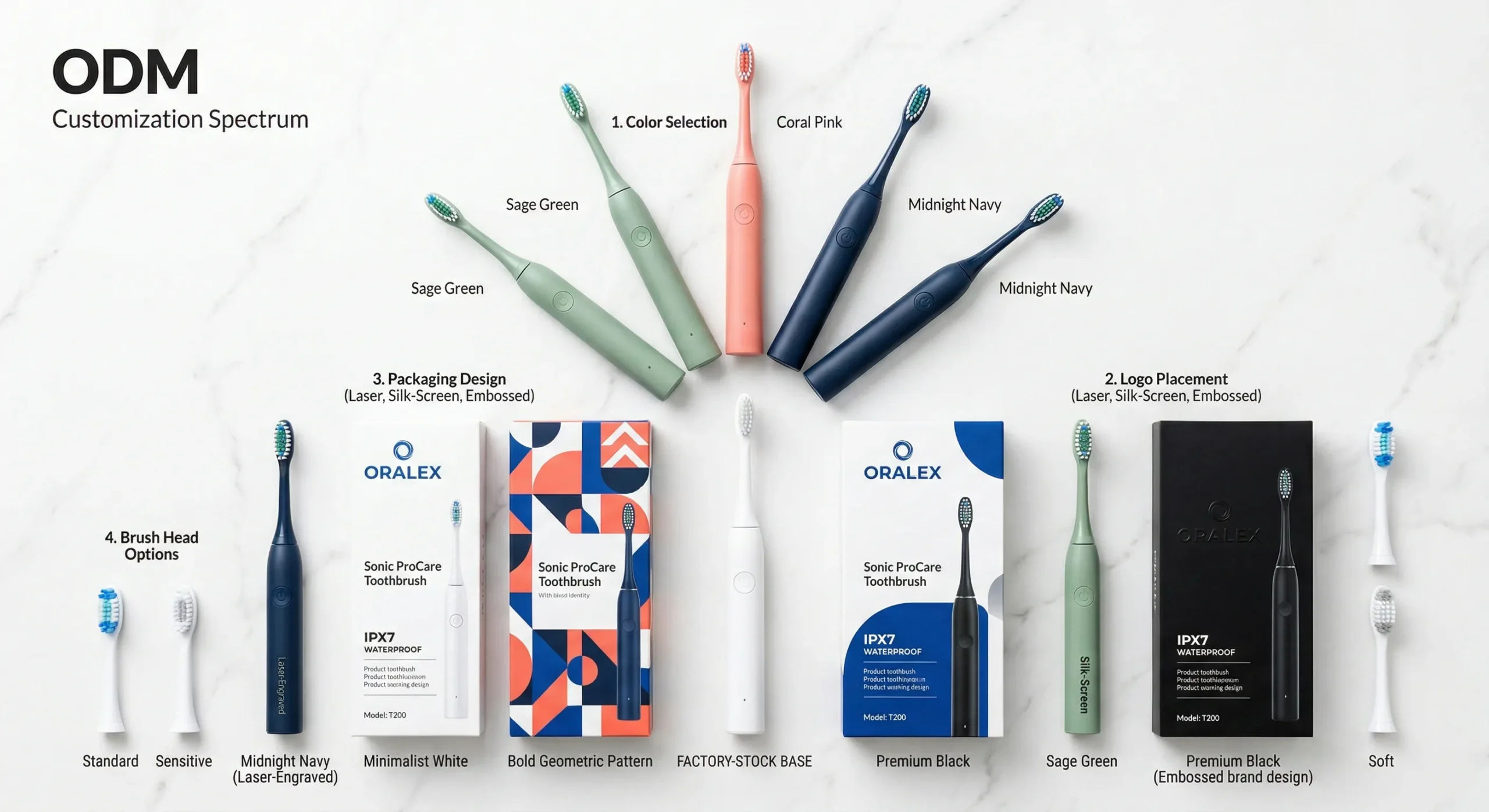
Сменная насадка с нейлоновыми или PBT-щетинками. Соединена с двигателем через приводной вал из нержавеющей стали или нейлона. Механизм крепления: защелкивающийся или поворотно-фиксирующийся.
Печатная плата и система управления
Печатная плата (PCB) является мозгом электрической зубной щетки. То, как работают электрические зубные щетки с точки зрения пользовательского опыта — разнообразие режимов чистки, 2-минутный таймер, интервальный пейсер — все это управляется прошивкой PCB. В типичной OEM-модели PCB имеет размеры 20–50 мм × 10–25 мм и содержит:
- Микроконтроллер (MCU): 8-битный или 32-битный процессор (распространенные варианты: STM8, STM32 или бюджетные MCU от Sonix/Mesonix), выполняющий прошивку, управляющую всеми функциями зубной щетки
- Драйвер двигателя: H-мостовая MOSFET-схема, преобразующая сигналы MCU в двунаправленный ток, необходимый для управления магнитной катушкой или двигателем постоянного тока
- Кварцевый генератор: Обеспечивает точный тактовый сигнал, определяющий частоту чистки. Кварц на 32,768 кГц распространен для функций RTC; отдельный кварц на 8 МГц часто управляет основным процессором
- Интерфейс датчика давления: Канал аналого-цифрового преобразователя (ADC), считывающий изменение напряжения от датчика давления
- Драйвер светодиодов: Схема из токоограничивающего резистора и транзистора, управляющая светодиодами индикации режимов
- BLE SoC (только в умных моделях): Система на кристалле Bluetooth Low Energy (Nordic nRF52832 или аналогичная), обеспечивающая беспроводную связь с сопутствующим приложением
- Контроллер зарядки: Выделенная микросхема, управляющая процессом зарядки, защитой от перезаряда и индикацией уровня заряда
Режимы чистки и таймер квадрантов
Одна из самых ценных функций современных электрических зубных щеток — как с точки зрения потребителя, так и с точки зрения OEM-дизайна — это система режимов чистки. То, как электрические зубные щетки работают с несколькими режимами, зависит от управляемых микроконтроллером профилей частоты и амплитуды, заложенных в прошивке. Каждый режим имеет свой профиль частоты, амплитуды и времени, предоставляя пользователям гибкость для различных потребностей в уходе за полостью рта.
Распространенные режимы чистки
| Режим | Частота | Амплитуда | Продолжительность | Лучшее для |
|---|---|---|---|---|
| Чистка | Полная частота (например, 40 000 движений/мин) | Стандарт | 2 мин | Ежедневное использование, комплексная очистка |
| Отбеливание / Полировка | Полная + прерывистый импульс | Выше | 2 мин | Удаление поверхностного налета, для любителей кофе/чая |
| Чувствительный | 60–70% от максимальной частоты | Пониженная | 2 мин | Опущение десен, чувствительные зубы, новые пользователи |
| Уход за деснами / Мягкий | 40–50% от макс., пульсация | Низкий | 3 мин | Здоровье десен, поддержка пародонта |
| Чистка языка | Низкая частота, стабильно | Легкий | 30 сек | Освежение дыхания, удаление налета с языка |
| Отбеливание | Чередование высокого/низкого | Переменная | 3 мин | Усиленные циклы удаления налета |
Сайт таймер квадрантов (также называемый 30-секундным пейсмекером) является критически важной функцией для соблюдения режима чистки в повседневном уходе за полостью рта. Зубная щетка вибрирует или делает короткую паузу каждые 30 секунд, сигнализируя пользователю о необходимости перейти к следующему квадранту рта (верхний правый, верхний левый, нижний правый, нижний левый). Клинические исследования последовательно показывают, что таймеры квадрантов увеличивают среднюю продолжительность чистки на 30–45 секунд и значительно улучшают охват очищаемых поверхностей.
Аккумуляторные технологии и системы зарядки
Аккумулятор является самым тяжелым отдельным компонентом в ручке электрической зубной щетки, и его выбор оказывает каскадное влияние на вес изделия, время работы, поведение при зарядке и стоимость производства. То, как электрические зубные щетки работают в долгосрочной перспективе — с точки зрения ежедневного использования и срока службы изделия — во многом определяется выбором аккумулятора. OEM-производители должны тщательно балансировать эти факторы с целевой розничной ценой.
Литий-ионные (Li-ion) против никель-металлогидридных (NiMH)
То, как электрические зубные щетки работают с литий-ионными аккумуляторами, отличает премиальные модели от бюджетных вариантов. Литий-ионные аккумуляторы доминируют в современных премиальных электрических зубных щетках. Типичный литий-ионный элемент 3,7 В (диаметр 14 мм × высота 43 мм, известный как форм-фактор 14450) обеспечивает 600–900 мАч в компактном цилиндрическом корпусе. Ячейки Sony/Murata INR14500, обычно используемые в электрических зубных щетках, предлагают:
- Высокую плотность энергии: 150–200 Вт·ч/кг против 60–100 Вт·ч/кг у NiMH
- Низкий саморазряд: 2–3% в месяц против 20–30% в месяц у NiMH
- Отсутствие эффекта памяти: Может заряжаться при любом уровне разряда
- Срок службы 500+ циклов: При 2 циклах/день это 250+ дней работы аккумулятора — 2–3 года
- Более быстрая зарядка: Полная зарядка за 1–3 часа с современными USB-C или быстрыми индукционными зарядными устройствами
NiMH-аккумуляторы остаются распространенными в бюджетных OEM-моделях из-за более низкой стоимости и более простой схемы зарядки (не требуется защитная схема), но они тяжелее, имеют меньшее время работы и страдают от постепенной потери емкости из-за эффекта памяти.
Системы зарядки: Индукционная против USB-C
То, как электрические зубные щетки работают с различными системами зарядки, отражает фундаментальные компромиссы в OEM-дизайне. Традиционная индукционная (беспроводная) зарядка использует электромагнитную индукцию между катушкой в зарядной базе и катушкой в ручке зубной щетки. Катушка ручки принимает переменный ток и преобразует его обратно в постоянный для зарядки аккумулятора. Индукционная зарядка элегантна (нет открытых разъемов = лучшая водонепроницаемость), но неэффективна (передача энергии 60–70%) и медленна (12–24 часа для полной зарядки).
Зарядка USB-C, становящаяся все более распространенной в новых моделях, обеспечивает прямое электрическое соединение с входом 5 В/1–3 А. Это обеспечивает быструю зарядку (0–100% за 1–3 часа) и устраняет громоздкую зарядную базу. Понимание того, как электрические зубные щетки работают с зарядкой USB-C, раскрывает еще один компромисс в OEM-дизайне: USB-C требует водонепроницаемой прокладки вокруг порта разъема, но упрощает внутреннюю часть ручки (не требуется катушка зарядки), что может компенсировать затраты.
Водонепроницаемость: IPX7 и инженерная задача
Электрические зубные щетки используются во влажной среде и должны выдерживать погружение в воду. То, как электрические зубные щетки работают надежно во влажной среде, зависит от достижения Рейтинг IPX7 (Степень защиты от проникновения), что означает, что устройство может быть погружено в воду на глубину до 1 метра на 30 минут без проникновения воды. Достижение IPX7 с электронными компонентами внутри требует тщательного проектирования:
Заливка компаундом и ультразвуковая сварка
Надежная работа электрических зубных щеток во влажной среде сводится к инженерии гидроизоляции. Основной метод гидроизоляции — это заливка компаундом: заполнение внутреннего пространства электронного отсека термореактивной смолой (обычно на основе эпоксидной смолы или силикона). Заливка защищает печатную плату, двигатель и соединения аккумулятора от влаги, но делает электронику неремонтопригодной и увеличивает производственные затраты ($0.80–$2.50 за единицу с учетом материалов и труда).
Альтернативный или дополнительный метод — это ультразвуковая сварка половин пластикового корпуса. Понимание того, как работают электрические зубные щетки с герметичной гидроизоляцией, требует знания этого метода: две половины ручки свариваются с помощью высокочастотной вибрации (обычно 20–40 кГц), создавая непрерывное бесшовное соединение, которое структурно прочнее окружающего пластика и обеспечивает надежное уплотнение от проникновения воды в месте стыка корпуса.
Для зоны крепления насадки — наиболее механически нагруженного места уплотнения — используются силиконовые O-кольца или жидкий герметик. Приводной вал проходит через это уплотнение через втулку с малым зазором, сохраняя гидроизоляцию при обеспечении вращательного или линейного движения.
Нужна помощь в спецификации вашей электрической зубной щетки?
Интересуетесь, как работает электрическая зубная щетка для вашего бренда? Наши инженеры могут провести вас по вопросам выбора двигателя, стратегии гидроизоляции и оптимизации стоимости спецификации материалов для вашего целевого рынка.
Поговорить с нашей инженерной командойУмные зубные щетки: датчики, BLE и подключение к приложению
Умные зубные щетки добавляют уровень цифрового интеллекта поверх основного механизма чистки. Основной двигатель, аккумулятор и насадка идентичны моделям без «умных» функций — меняется лишь добавление системы на кристалле Bluetooth Low Energy (BLE), дополнительных датчиков и сопутствующего программного обеспечения приложения. Понимание того, как работают электрические зубные щетки с «умными» функциями, требует знания как физического механизма чистки, так и уровня данных, построенного поверх него.
Ключевые «умные» функции и их датчики
| Умная функция | Используемый датчик | Техническая деталь |
|---|---|---|
| Продолжительность чистки зубов | Часы реального времени (таймер MCU) | Встроены в MCU — дополнительный датчик не требуется |
| Определение давления | Пьезорезистивный или емкостной датчик силы | Расположен между насадкой и креплением приводного вала |
| Определение положения | 6-осевой IMU (акселерометр + гироскоп) | Определяет направление движения щетки и охват квадрантов |
| Износ насадки | Датчик импеданса щетины | Измеряет износ щетины по изменению электрического сопротивления |
| Состояние аккумулятора | Микросхема индикатора заряда (кулонометр) | Отслеживает циклы зарядки и оставшуюся емкость |
| Сопряжение по Bluetooth | BLE 4.0–5.0 SoC | Серия Nordic nRF52 наиболее распространена в средствах гигиены полости рта |
6-осевой инерциальный измерительный блок (IMU) — объединяющий 3-осевой акселерометр и 3-осевой гироскоп — является наиболее технически сложным датчиком в умной электрической зубной щетке. Понимание того, как работают электрические зубные щетки с отслеживанием положения, требует знания IMU: анализируя характер и направление движения насадки, IMU обеспечивает картирование квадрантов. Приложение может определить, какую область рта чистит пользователь, и предоставить обратную связь по зонам. В сочетании с данными о продолжительности чистки это дает полную картину охвата чистки. Таким образом, то, как работают электрические зубные щетки с «умными» функциями, добавляет обратную связь на основе данных, но основной механизм очистки остается таким же, как у моделей без «умных» функций.
Перспектива OEM в отношении затрат на умные зубные щетки
Добавление «умных» функций меняет то, как работают электрические зубные щетки, превращая их из чисто механического устройства в мехатронное. Стоимость спецификации материалов умной зубной щетки увеличивается примерно на $8–$25 за единицу, в зависимости от сложности функций. Основными факторами затрат являются:
- BLE SoC + антенна: $2.50–$5.00 (Nordic nRF52840 — премиальный выбор; Realtek RTL8762 — бюджетный вариант)
- 6-осевой IMU: $1.50–$4.00 (TDK InvenSense ICM-42670 или BMI270 — распространенные варианты)
- Датчик давления: $0.30–$1.00 (премиальный пьезорезистивный vs базовый емкостной)
- Разработка приложения: $30,000–$150,000 единоразовая стоимость для iOS + Android (самая переменная величина)
- Дополнительные слои и компоненты печатной платы: $1.00–$3.00
Наценка за розничную цену для интеллектуальных функций обычно составляет $25–$60, что делает интеллектуальные технологии высокоприбыльными для брендов, способных управлять затратами на разработку и обслуживание приложений.
Технология УФ-санитарной обработки
УФ-санитарные станции стали премиальной функцией в высококлассных электрических зубных щетках. Принцип работы электрических зубных щеток с УФ-санитарной технологией зависит от отдельной системы бактерицидного света, встроенной в зарядную базу. Технология использует УФ-С свет с длиной волны 254 нм, который сильно поглощается микробной ДНК и РНК. УФ-С излучение вызывает образование тиминовых димеров в бактериальной и вирусной ДНК, предотвращая репликацию и эффективно уничтожая 99,9%+ микроорганизмов на щетине щетки в течение 5–10-минутного цикла санитарной обработки.
УФ-С лампа в санитайзере для зубных щеток обычно представляет собой низконапорную ртутную лампу (аналогичную тем, что используются в системах очистки воды) или УФ-светодиод. Ртутные лампы более эффективны, но содержат небольшое количество ртути (0,5–2 мг) и хрупки. УФ-светодиоды более долговечны и экологичны, но производят меньшую интенсивность УФ-С и имеют более короткий эффективный срок службы (обычно 8 000–10 000 часов). Понимание того, как работают электрические зубные щетки с УФ-санитайзерами с точки зрения OEM, помогает покупателям оценить компромисс между бактерицидной эффективностью и долговечностью продукта.
С точки зрения OEM, интеграция УФ-санитайзера в зарядную базу добавляет примерно $3.50–$8.00 к BOM и требует более крупного корпуса зарядной базы (влияя на размеры розничной упаковки). Преимущество: это создает привлекательную премиальную функцию и оправдывает более высокий ценовой сегмент.
Насадки: Наука и инженерия щетины
В то время как ручка содержит всю электронную интеллектуальную начинку, именно насадка отвечает за фактическую чистку. Понимание того, как работают электрические зубные щетки для обеспечения эффективного ухода за полостью рта, требует знания инженерии насадок — материал щетины, диаметр, конфигурация пучков и свойства гибкости — все это влияет на эффективность чистки и пользовательский опыт.
Материалы щетины
То, как электрические зубные щетки обеспечивают эффективное удаление зубного налета, существенно зависит от инженерии щетины. Нейлон (Nylon 612) является наиболее распространенным материалом для щетины, причем щетина Tynex (бренд DuPont) задает отраслевой стандарт по консистенции и долговечности. Типичный диаметр: 0,15–0,25 мм для чистящих нитей, 0,30–0,50 мм для внешней чистящей каймы. PBT (полибутилентерефталат) мягче нейлона, используется в насадках для чувствительных зубов или ухода за деснами, обладает лучшей памятью формы. Закругленные кончики щетины (радиус R ≤ 0,01 мм) критически важны для здоровья десен — проверяются с помощью микроскопического контроля в рамках контроля качества OEM.
Индикаторная щетина
Принцип работы электрических зубных щеток с функциями гигиенической обратной связи для пользователя включает систему индикаторной щетины. Синяя индикаторная щетина (также называемая "щетиной с выцветающим цветом") является распространенной функцией OEM, сигнализирующей о необходимости замены насадки. Эта щетина использует выцветающий краситель, который разрушается под воздействием абразивных веществ из зубной пасты и механического воздействия. Примерно через 3 месяца нормального использования синий цвет выцветает до белого, сигнализируя пользователю о необходимости замены насадки. С точки зрения OEM, индикаторная щетина добавляет $0.05–$0.15 на насадку и требует процесса литья под давлением из двух материалов для создания двухцветных пучков.
OEM-производство: От выбора компонентов до массового производства
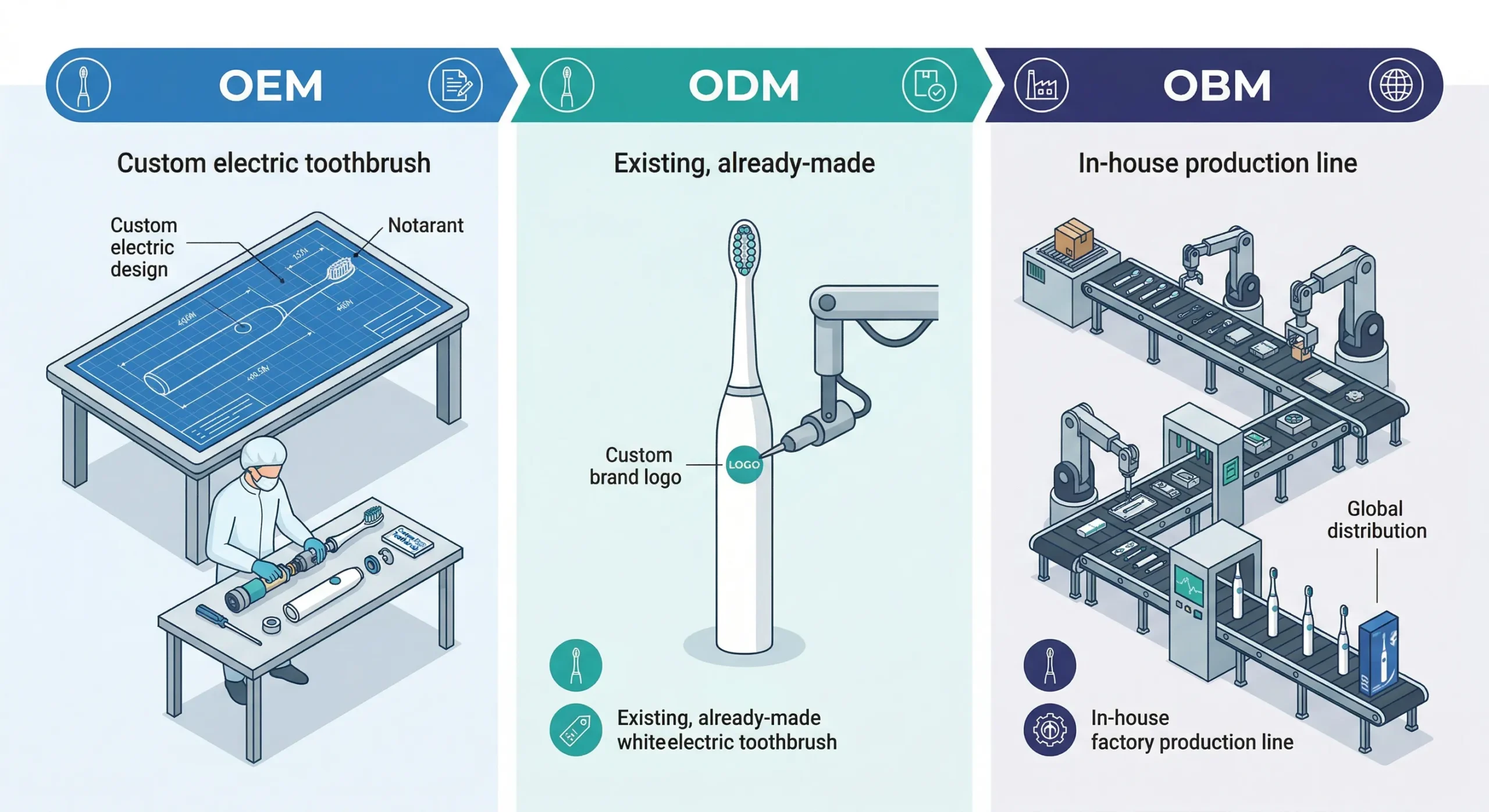
Понимание того, как работают электрические зубные щетки с производственной точки зрения, является основой для принятия разумных решений по OEM-закупкам. Каждый технический выбор — тип двигателя, емкость аккумулятора, метод гидроизоляции, интеграция интеллектуальных датчиков — оказывает прямое, поддающееся количественной оценке влияние на стоимость производства, качество продукта и розничное позиционирование. Ознакомьтесь с нашим руководством по OEM для электрических зубных щеток для более глубокого погружения в производственный процесс.
В Relish Technology понимание того, как работают электрические зубные щетки во всем технологическом стеке — от физики двигателя до подключения к приложению — определяет каждый шаг процесса разработки:
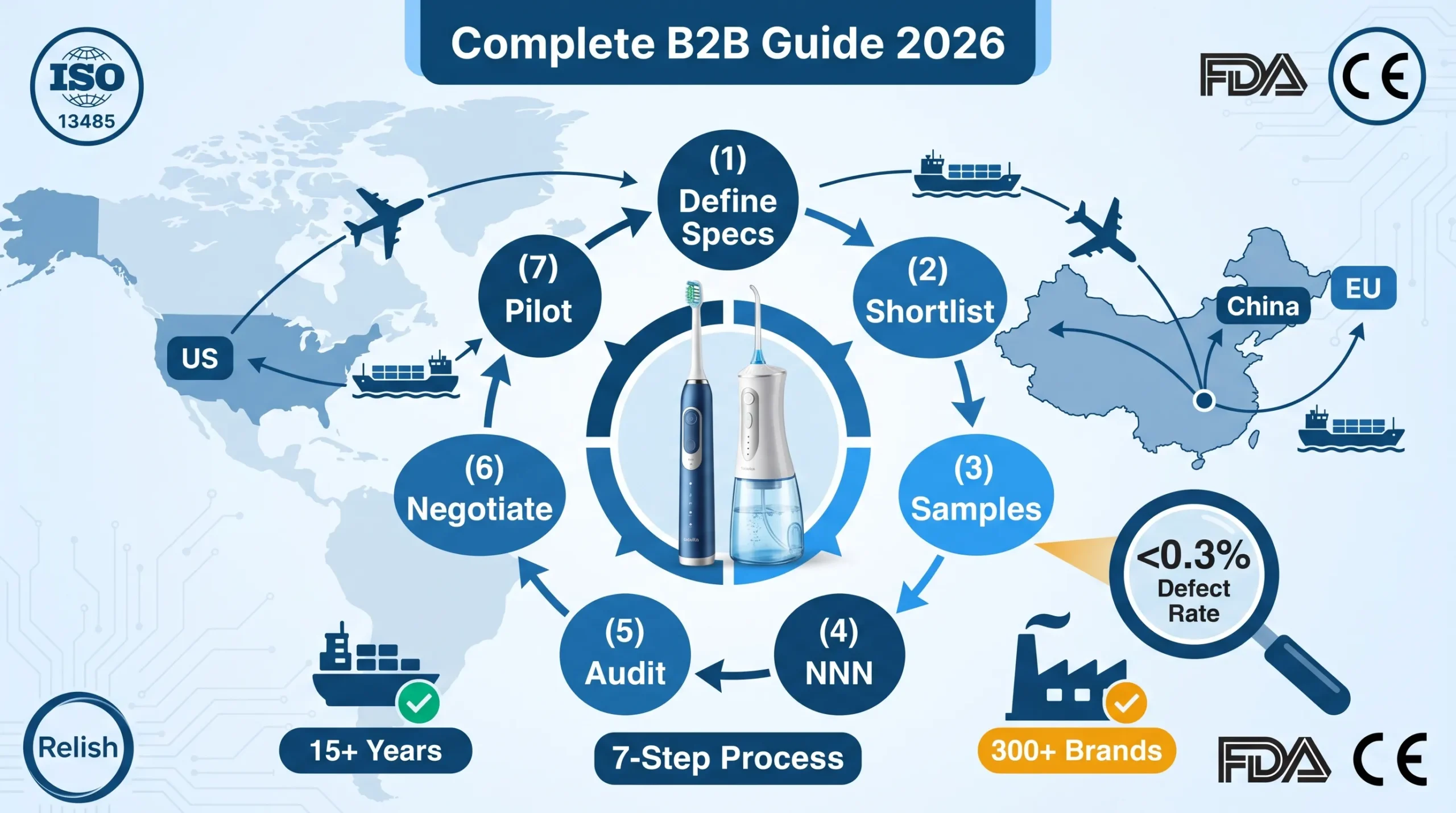
- Концептуальная валидация (недели 1–4): Определение спецификации продукта — тип технологии (звуковая/ротационная/Ротасоник), целевые рынки, требуемые сертификаты, ценовой сегмент. Это определяет все последующие решения.
- Разработка прототипа (недели 5–12): Создание функциональных прототипов ручки, электроники и насадки. Тестирование производительности двигателя, времени работы аккумулятора, гидроизоляции и прошивки печатной платы. Типичное количество прототипов: 3–10 единиц.
- Предпроизводственная валидация (недели 13–20): Инженерное валидационное тестирование (EVT) и дизайн-валидационное тестирование (DVT) — тестирование погружением IPX7, тестирование на падение, тестирование ЭМС, циклическое тестирование аккумулятора и предварительное тестирование на соответствие нормативным требованиям.
- Подготовка к массовому производству (недели 21–28): Завершение оснастки, контроль первой детали, пилотный запуск (100–300 единиц) и настройка системы качества, включая планы выборки AQL.
- Производство и отгрузка: Полноценные производственные партии с непрерывным мониторингом качества. Надежная работа электрических зубных щеток в масштабе зависит от строгой выборки AQL и контроля качества на производственной линии. Производственные линии Relish Tech работают с AQL 0,65 для критических дефектов, 1,0 для основных дефектов. Осмотрите наши производственные мощности чтобы лично ознакомиться с нашими производственными возможностями.
Как выбрать правильную технологию для вашего бренда
С учетом технической основы, ниже представлена структура принятия решений для владельцев брендов и менеджеров по закупкам, выбирающих OEM-партнера для разработки электрических зубных щеток. Понимание того, как работают электрические зубные щетки во всех трех категориях технологий — звуковые, вращательно-колебательные и Rotasonic™ — позволяет вести более осознанные переговоры с производителями и формировать более точные спецификации продукта.
| Критерии | Звуковая | Вращательно-осциллирующий | Rotasonic™ (Комбинированная) |
|---|---|---|---|
| Диапазон стоимости BOM | $12-$28 | $8-$20 | $18–$38 |
| Ценовое позиционирование в рознице | Средний и премиальный | Начальный и средний | Премиальный и ультра-премиальный |
| Уровень шума | Средний (звук свиста) | От низкого до среднего (гул) | Средний и высокий |
| Глубина очистки | Высокая (гидродинамика) | Средняя (контакт щетины) | Наивысшая (двойное действие) |
| Наилучшее соответствие рынку | Премиальные потребительские бренды | Бренды среднего сегмента, Amazon FBA | Клинические/стоматологические профессиональные бренды |
| Пригодность для интеллектуальных функций | Отличная | Хорошая | Отличная |
Готовы начать свой проект по производству электрических зубных щеток?
Запускаете ли вы новый бренд, расширяете существующую линейку или ищете источники для розничных закупок — инженерная команда Relish Technology поможет вам выбрать правильную технологическую платформу и пройти полный путь от концепции до массового производства.
Поговорить с нашей инженерной командойISO 13485 · Сертифицировано FDA/CE/ISO13485 · 15+ лет опыта OEM · Производственный объект 20 000 кв. м
Часто задаваемые вопросы
Этот раздел часто задаваемых вопросов отвечает на самые распространенные вопросы о том, как работают электрические зубные щетки — от базовых механизмов и различий в технологиях до интеллектуальных функций и соображений OEM-производства для покупателей, закупающих товары в Китае. Оцениваете ли вы режимы чистки, производительность аккумулятора или стандарты водонепроницаемости, эти ответы помогут вам понять, как электрические зубные щетки работают на каждом уровне.
Ссылки и источники
- Hope, C.K. et al. (2023). The Clinical Efficacy of Sonic Toothbrushes: A Systematic Review.
2. International Electrotechnical Commission. (2012).
3. Nordic Semiconductor.
4. nRF52840 Product Specification v1.1
5. TDK Invensense.
6. how electric toothbrushes work technical guide 2026 scaled. Journal of Clinical Periodontology. Извлечено из https://onlinelibrary.wiley.com/doi/10.1111/jcpe.13842 - International Electrotechnical Commission. (2012). IEC 60601-1:2005+AMD1:2012 — Медицинское электрическое оборудование. Часть 1: Общие требования к базовой безопасности и основным характеристикам. Извлечено из https://www.iso.org/standard/72744.html
- Международная организация по стандартизации. (2023). ISO 20749:2023 — Стоматология. Электрические зубные щетки. Методы испытаний для измерения производительности электрических зубных щеток для ухода за полостью рта. Извлечено из https://www.iso.org/standard/83130.html
- Управление по санитарному надзору за качеством пищевых продуктов и медикаментов США. (2025). Premarket Notification 510(k) Substantial Equivalence Determinations — Электрические зубные щетки. Извлечено из https://www.fda.gov/medical-devices/products-and-medical-procedures/powered-toothbrushes
- Nordic Semiconductor. nRF52840 Product Specification v1.1 — Техническое описание многопротокольного Bluetooth 5/BLE SoC. Получено из https://docs.nordicsemi.com/bundle/nRF52840_PS
- TDK Invensense. BMI270 — 6-осевой инерциальный измерительный блок техническое описание и примечания по применению. Получено из https://invensense.tdk.com/products/motion-tracking/6-axis/bmi270/