








Анализ затрат на производство и прибыли электрической зубной щетки (полное руководство на 2026 год)
Разбивка BOM на уровне компонентов от $6 до $55/единица, маржа прибыли на каждом уровне, и как B2B покупатели могут захватить 75-88% валовой маржи путем закупки непосредственно у китайских OEM-производителей.
Оглавление
- Почему электрические зубные щетки такие дорогие?
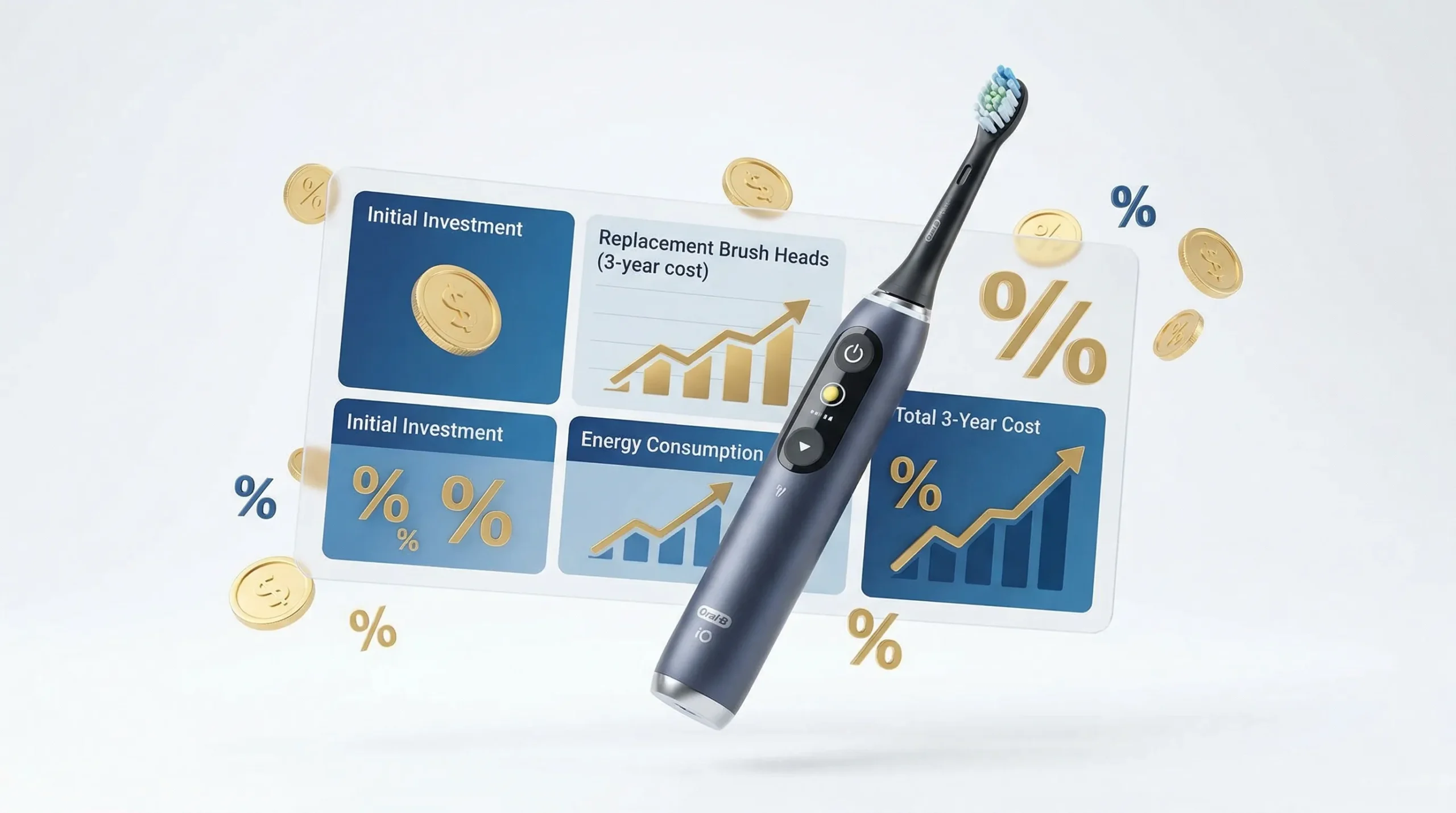
- Разбивка стоимости основных компонентов
- Стоимость производства по уровням продукции
- Анализ маржи прибыли: Куда уходят деньги?
- 5 ключевых факторов ценообразования
- 2026 Тенденции рынка, влияющие на стоимость
- B2B-сорсинг: Захват маржи
- Почему стоит выбрать Relish Tech в качестве OEM-партнера
- Часто задаваемые вопросы
1. Почему электрические зубные щетки такие дорогие?
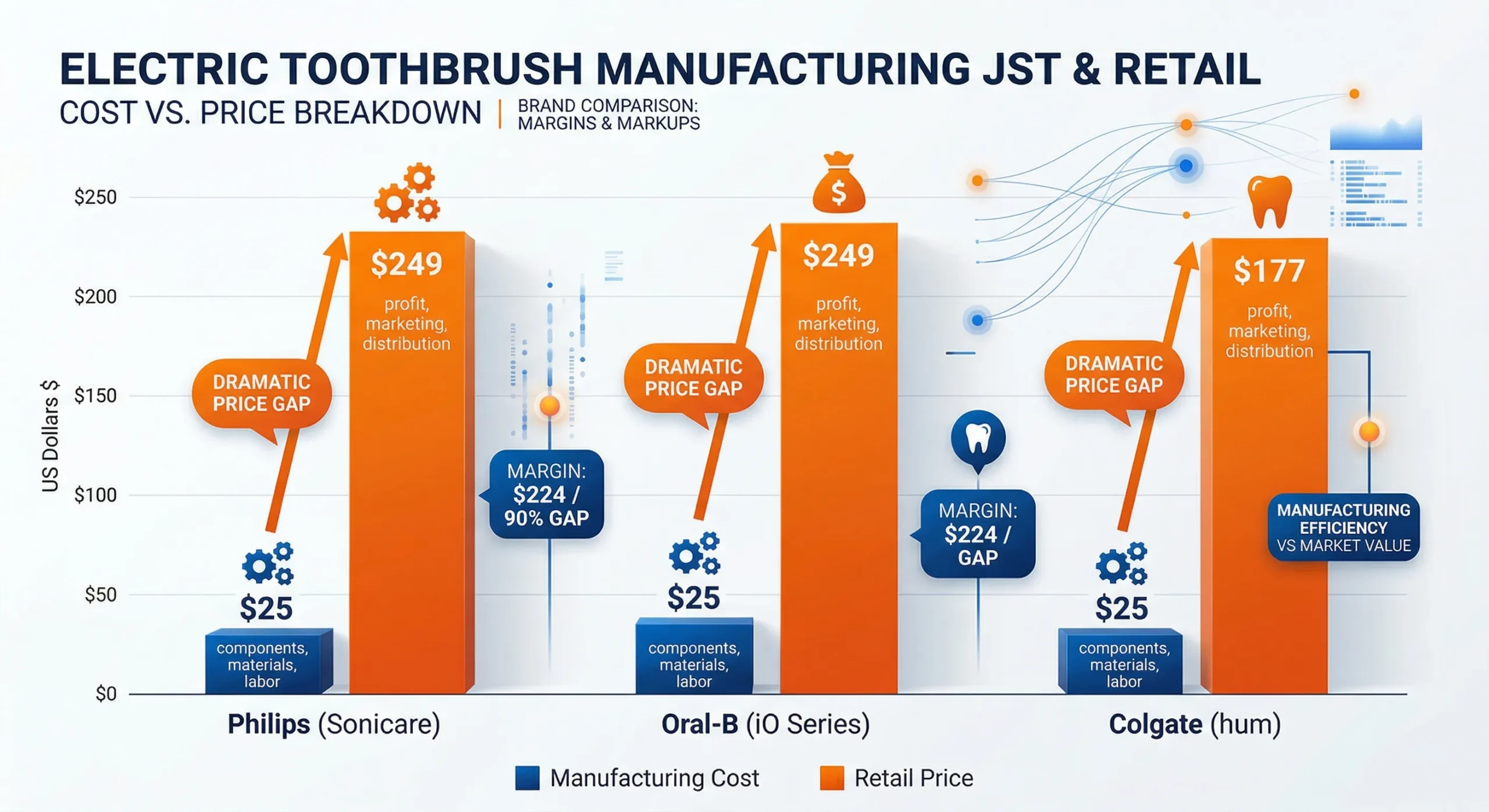
Розничная цена ручной зубной щетки в США обычно составляет от $2-8, а электрические зубные щетки - от От $25 до более $400. Разрыв между себестоимостью и розничной ценой значителен, но понимание почему раскрывает реальные возможности для покупателей B2B.
Рассмотрите ландшафт основных брендов:
| Бренд | Цена входа | Премиальная цена | Эст. Стоимость изготовления |
|---|---|---|---|
| Philips Sonicare | $25 | $330 | $8-$25 |
| Oral-B (P&G) | $30 | $400 | $10-$30 |
| Colgate | $20 | $150 | $8-$20 |
| Panasonic | $35 | $200 | $12-$28 |
| Частная марка (OEM) | $15 | $80 | $8-$25 |
Источник: Данные по розничному рынку, 2026 г.; оценка производственных затрат на основе данных о деятельности фабрики Relish.
Эта закономерность прослеживается на всех уровнях бренда: Разница между электрической зубной щеткой начального уровня $30 и моделью премиум-класса $200 редко заключается в аппаратной части. Это маркетинговые расходы, наценка на канал сбыта и капитал бренда. Именно поэтому частные торговые марки быстро растут - они обеспечивают сопоставимое качество за меньшую часть розничной цены, получая при этом значительно большую маржу для владельца бренда.
Возможности B2B
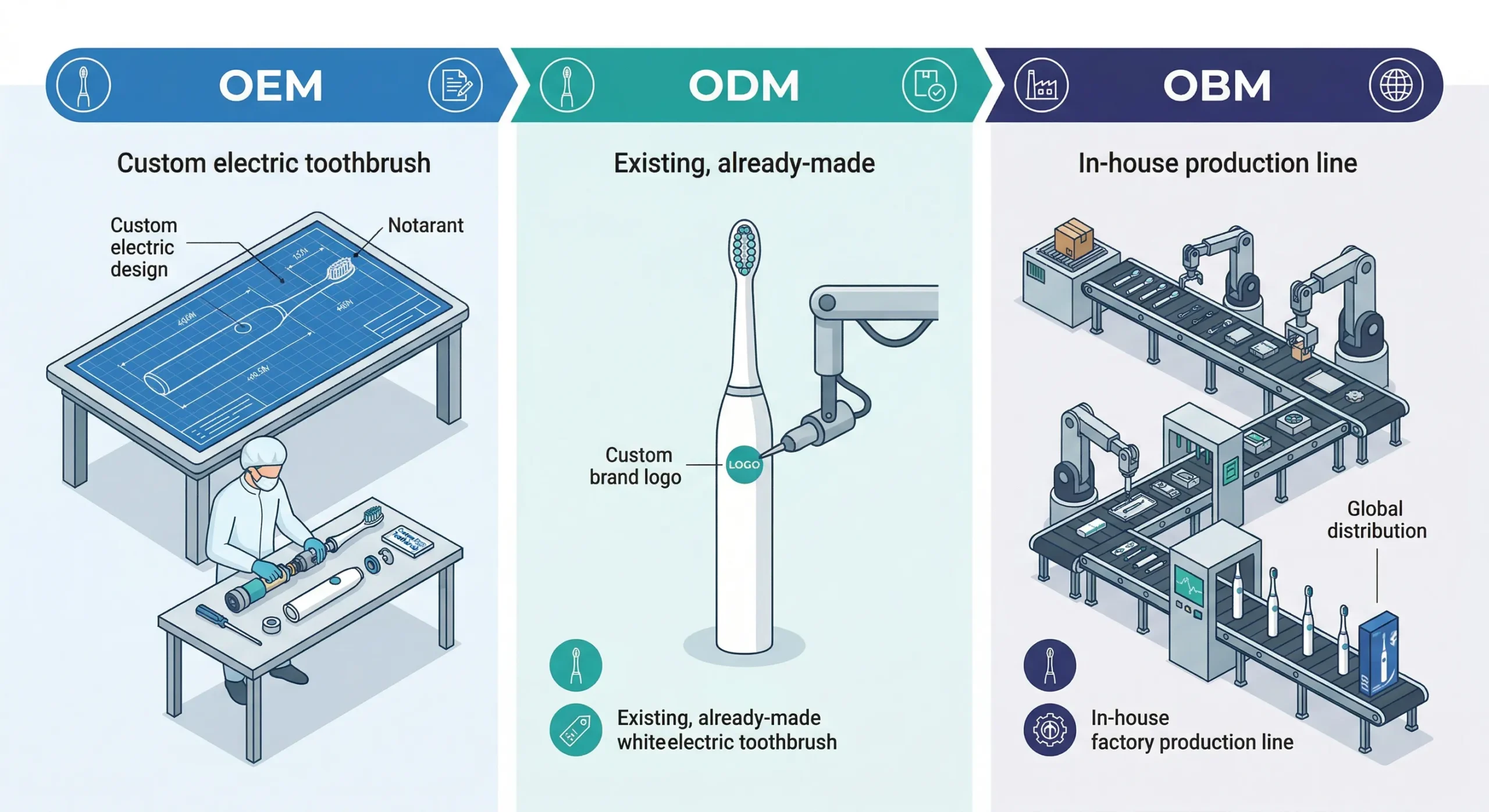
При поиске поставщиков через Китайский производитель OEM, Бренды могут получить доступ к той же производственной инфраструктуре, что и крупные международные бренды, по ценам, устанавливаемым непосредственно на заводе. Модель среднего класса, производство которой обходится в $12-18, может продаваться в розницу по цене $60-150, что дает валовую прибыль в размере 75-88%.
2. Распределение затрат на основные компоненты
An электрическая зубная щётка состоит из шести основных групп компонентов. Понимание того, на что идут затраты, - первый шаг к принятию взвешенных решений по выбору поставщиков.
2.1 Звуковой электрический приводной двигатель
Мотор - это сердце любой электрической зубной щетки. На рынке преобладают два типа:
| Тип двигателя | Стоимость спецификации | Диапазон вибрации | Продолжительность жизни | Лучшее для |
|---|---|---|---|---|
| Щеточный двигатель | $0.50-$2.00 | 5,000-15,000 ударов/мин | 200-400 часов | Модели начального уровня |
| Бесщеточный двигатель | $2.00-$8.00 | 20,000-62,000 ходов/мин | 500-1,000 часов | Модели среднего и премиум-класса |
В щеточном двигателе ротор представляет собой катушку, соединенную с силовым валом с помощью статора с постоянным магнитом. В бесщеточном двигателе ротор представляет собой постоянный магнит, соединенный непосредственно с валом, что устраняет трение, снижает нагрев и позволяет значительно повысить частоту вибрации. К 2026 г, бесщёточные двигатели стали стандартом для любой зубной щетки выше начального уровня, прежде всего потому, что разница в характеристиках сразу ощутима для потребителей.
2.2 Аккумулятор
Качество аккумулятора напрямую определяет удобство использования по двум важнейшим параметрам: время работы между зарядками и общая продолжительность жизни аккумулятора.
| Тип батареи | Стоимость спецификации | Время использования | Время зарядки | Циклы зарядки |
|---|---|---|---|---|
| NiMH (никель-металлический гидрид) | $0.80-$2.00 | 2-3 недели | 12-24 часа | 300-500 |
| Li-ion (литий-ионный) | $1.50-$4.00 | 4-8 недель | 2-4 часа | 500-800 |
| Литий-ионный + беспроводная зарядка | $3.00-$7.00 | 4-12 недель | 1-3 часа | 800-1,200 |
В большинстве моделей 2026 года используется литий-ионные батареи в качестве базового уровня. Добавление беспроводной зарядки увеличивает BOM на $3-7 за единицу, но значительно повышает воспринимаемую ценность - и готовность потребителей платить премию.
2.3 Печатная плата (PCB)
Печатная плата управляет частотой вибрации, режимами синхронизации, датчиками давления и - в моделях премиум-класса - интеллектуальными функциями подключения.
| Тип печатной платы | Стоимость спецификации | Характеристики |
|---|---|---|
| Основная печатная плата | $0.50-$1.50 | Включение/выключение, односкоростной режим, основной таймер |
| Стандартная печатная плата | $1.50-$4.00 | Несколько режимов, 2-минутный таймер, датчик давления |
| Интеллектуальная печатная плата | $4.00-$12.00 | Bluetooth, возможность подключения приложений, обратная связь в реальном времени, ИИ-коучинг |
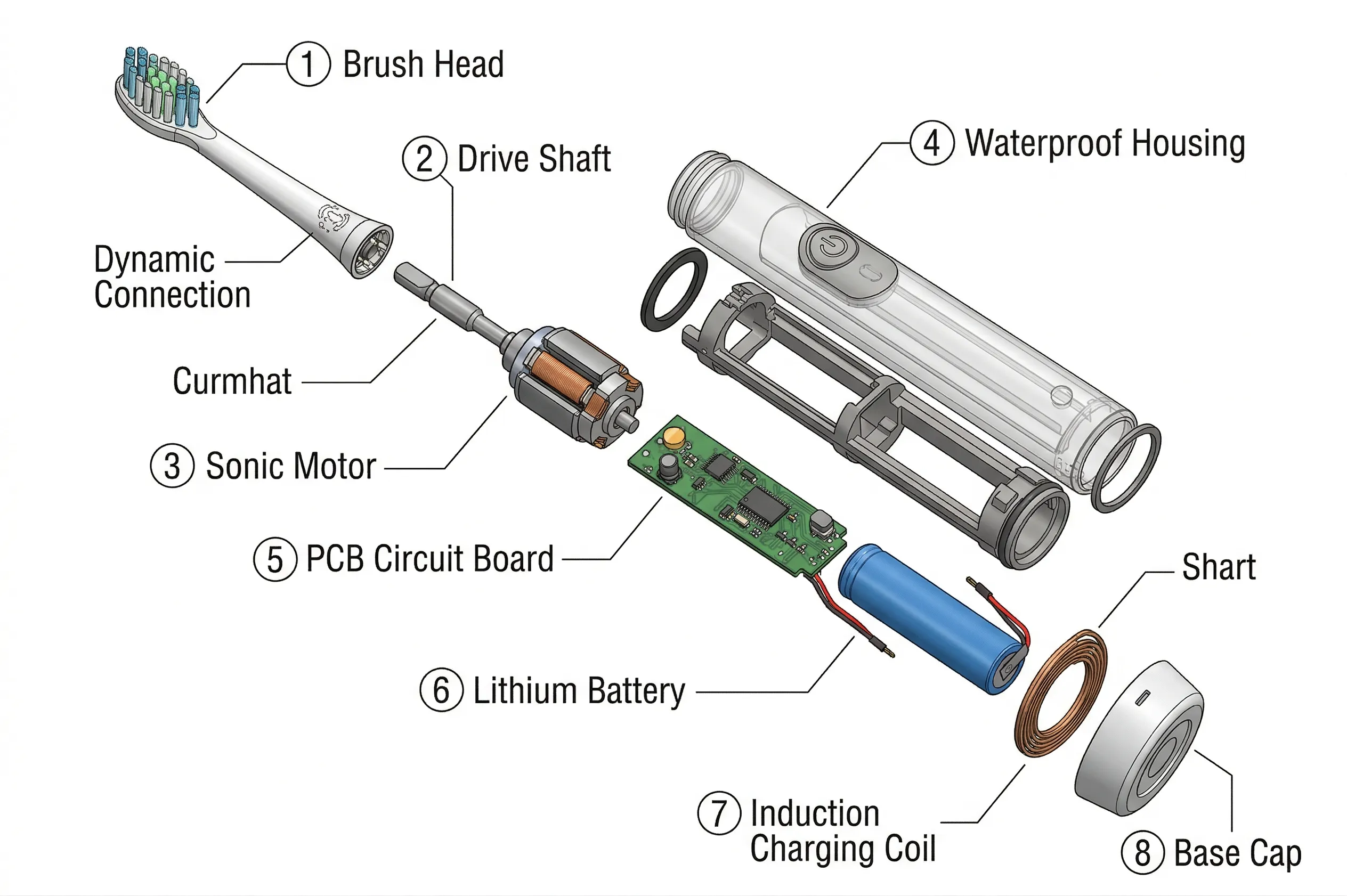
2.4 Приводной вал и механическая сборка
| Компонент | Стоимость спецификации | Примечания |
|---|---|---|
| Приводной вал | $0.30-$1.00 | Передает вращение двигателя на головку щетки |
| Сборка редуктора | $0.50-$2.00 | Преобразование вращения в линейное/импульсное движение |
| Водонепроницаемость (IPX7) | $0.50-$1.50 | Требуется ультразвуковая сварка; очень важно для обеспечения безопасности |
| Корпус / корпус (ABS-пластик) | $1.00-$3.00 | Варианты отделки: софт-тач, матовая или металлическая |
Насадка для щеток 2,5
| Тип щетины | Стоимость спецификации | Характеристики |
|---|---|---|
| Стандартная нейлоновая щетина | $0.30-$0.80 | Базовая очистка, средняя прочность |
| Щетина DuPont Tynex | $0.80-$2.00 | Заостренные наконечники, неизменное качество, предпочтительное для стоматологов |
| Древесный уголь / специальная щетина | $1.00-$3.00 | Бамбуковый уголь, наносеребро или текстурированные специальные материалы |
2.6 Упаковка и аксессуары
| Артикул | Стоимость спецификации | Примечания |
|---|---|---|
| Зарядный кабель / док-станция | $0.50-$3.00 | Стандарт USB-C в 2026 году; беспроводные док-станции добавят $2-5 |
| Дорожный чемодан | $0.50-$2.00 | Жесткие жесткие кейсы для премиального позиционирования |
| Розничная упаковка (коробка, вкладыш) | $0.80-$3.00 | Готовая для розничной торговли упаковка повышает привлекательность магазинов Amazon / аптек |
| Руководство пользователя / документы о соответствии | $0.10-$0.30 | Руководства на нескольких языках увеличивают расходы |
3. Стоимость производства по уровням продукции
Объединив все компоненты, вы получите общую стоимость производства (BOM + труд + накладные расходы) по уровням продукции в 2026 году. Эти цифры отражают прямые заводские цены при стандартном MOQ в 1000 единиц.
| Ярус продукта | Стоимость спецификации | Трудовые и накладные расходы | Общая стоимость производства | Розничная цена | Валовая маржа |
|---|---|---|---|---|---|
| Начальный уровень | $4-$7 | $2-$4 | $6-$11 | $20-$50 | 70-85% |
| Средний диапазон | $8-$15 | $4-$6 | $12-$21 | $50-$120 | 75-85% |
| Премиум | $15-$25 | $5-$8 | $20-$33 | $120-$250 | 85-90% |
| Ультра-премиум (Smart) | $25-$45 | $6-$10 | $31-$55 | $200-$400 | 85-90% |
Показатели валовой маржи представляют собой маржу на уровне бренда после затрат на производство, до расходов на маркетинг, дистрибуцию и розничную торговлю. Затраты рассчитаны при MOQ в 1 000 единиц. При масштабировании до 5 000+ единиц стоимость единицы продукции обычно снижается на 15-30%.
Эффект масштаба
Увеличение объема заказа с 1 000 до 5 000+ единиц, как правило, снижает стоимость производства каждой единицы продукции на 15-30%, В первую очередь за счет амортизационного спреда на оснастку и ценообразования на компоненты в зависимости от объема. Именно поэтому наиболее успешные бренды частных марок начинают с одного SKU и постепенно масштабируются.
4. Анализ маржи прибыли: Куда уходят деньги?
Для $100 розничная торговля электрическая зубная щетка, Вот типичная разбивка затрат на каждом этапе цепочки создания стоимости:
| Категория затрат | Сумма ($) | % от розничной цены |
|---|---|---|
| Стоимость изготовления | $12-$18 | 12-18% |
| Упаковка и логистика | $3-$6 | 3-6% |
| Маркетинг и реклама | $15-$25 | 15-25% |
| Маржа дистрибьютора | $10-$15 | 10-15% |
| Маржа розничной торговли | $20-$30 | 20-30% |
| Чистая прибыль бренда | $10-$20 | 10-20% |
Основано на розничных ценах среднего уровня ($80-120) при использовании традиционных каналов дистрибуции. Бренды DTC исключают дистрибьютора и значительно снижают маржу розничной торговли.
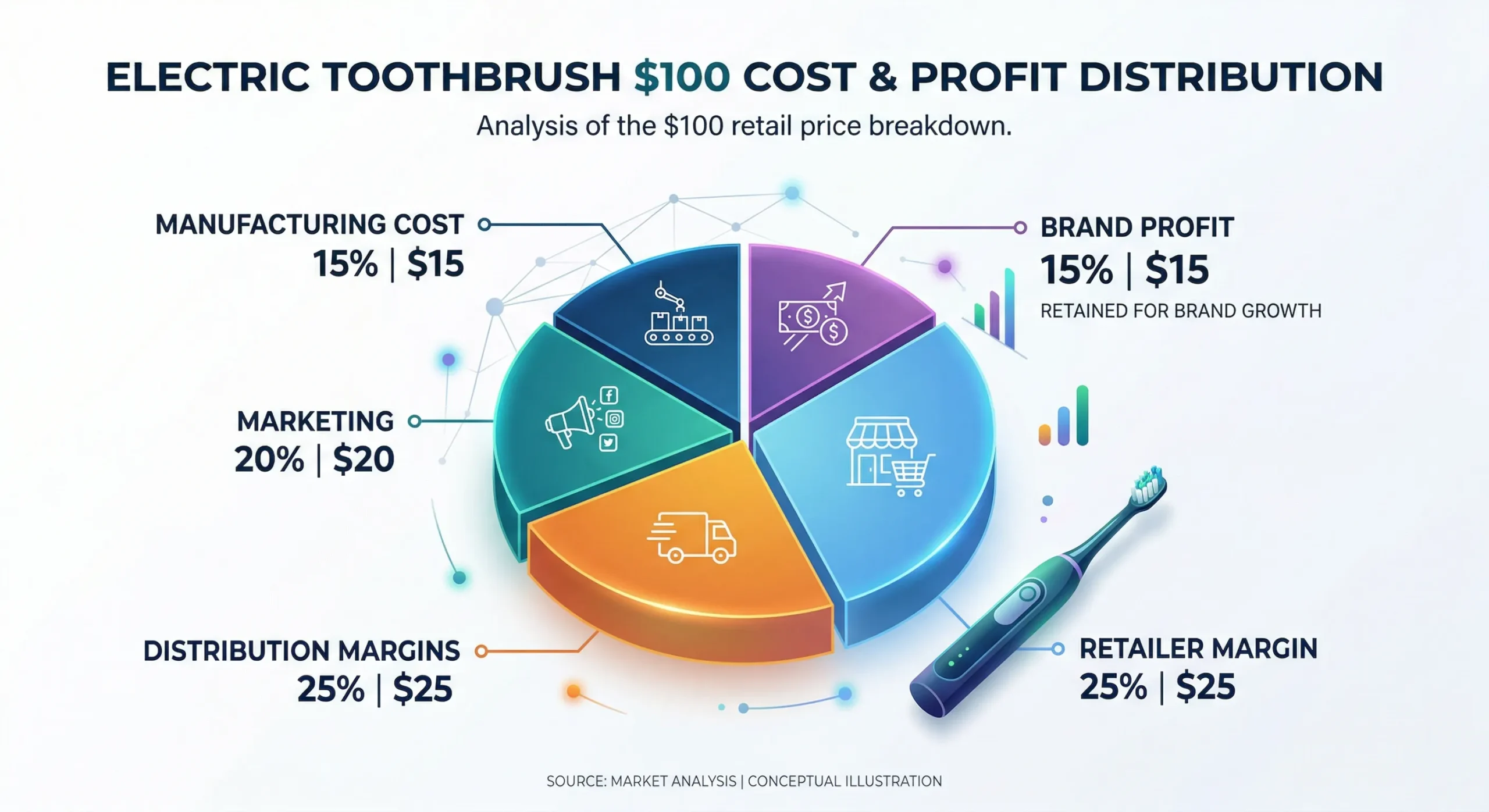
Производитель фиксирует только 12-18% от розничной цены. Доминирующими категориями затрат являются маркетинговые расходы и маржа на дистрибуцию - вот почему бренды, ориентированные на потребителя и частные торговые марки постоянно опережают конкурентов по эффективности использования маржи.
Мультипликатор премиальности бренда
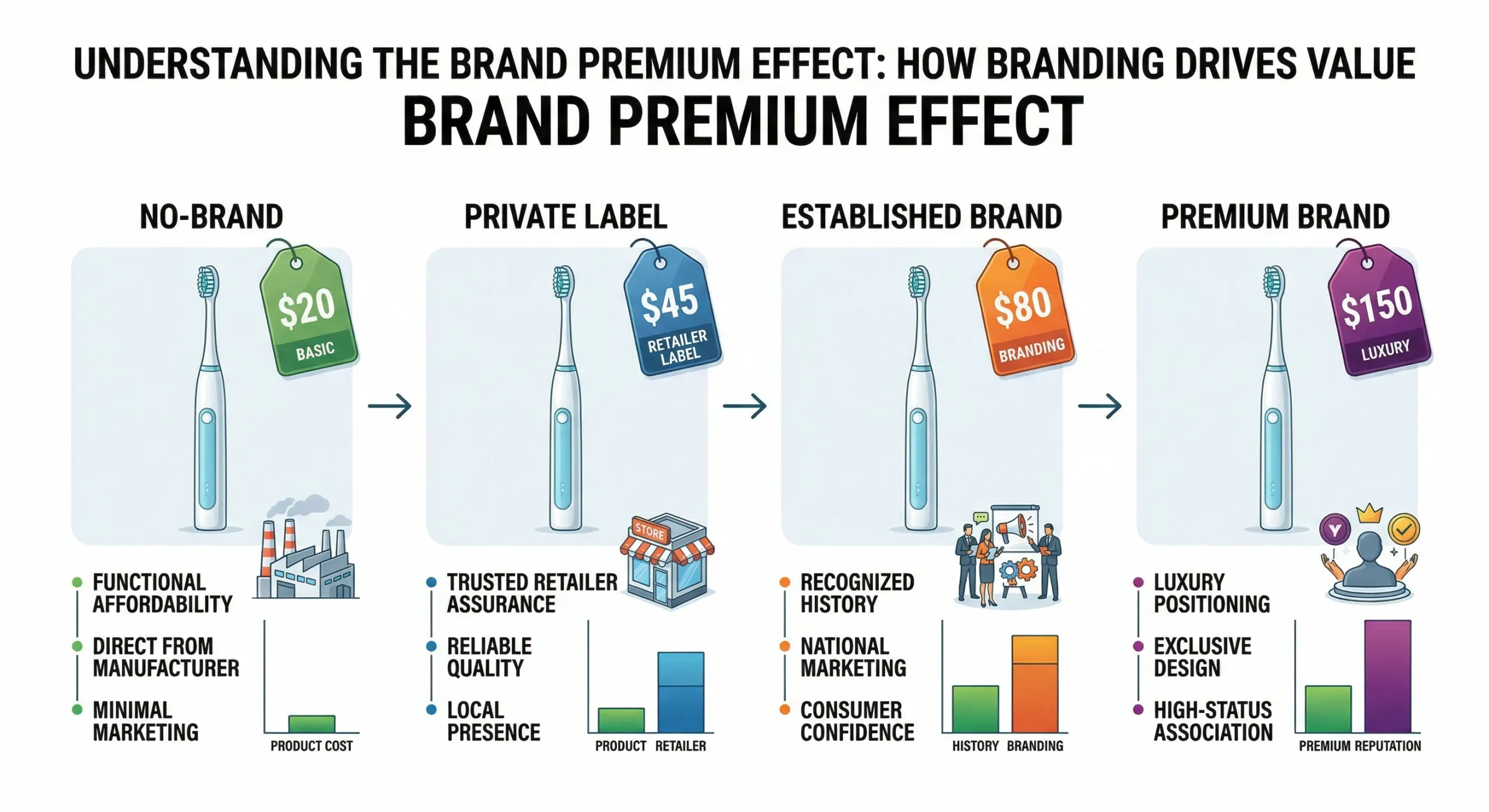
Премия за бренд - самый мощный рычаг ценообразования. Продукт с одинаковой себестоимостью может иметь совершенно разные розничные цены в зависимости от позиционирования:
| Модель поиска поставщиков | Стоимость изготовления | Розничная цена | Коэффициент наценки | Валовая маржа |
|---|---|---|---|---|
| Нефирменный OEM | $12 | $20 | 1.7x | 40% |
| Бренд Private Label | $12 | $45-$60 | 3.75-5x | 73-80% |
| Устоявшийся бренд | $12 | $80 | 6.7x | 85% |
| Бренд премиум-класса (Philips / Oral-B) | $15 | $150 | 10x | 90% |
Ключевой момент: наценка почти полностью зависит от бренда, а не от различий в продукте. Запустив свой собственный частный бренд марка электрической зубной щетки Через OEM-партнера вы получаете премию за бренд, которая в настоящее время достается признанным игрокам - без их десятилетий маркетинговых инвестиций.
О производителе: Relish Tech
Шэньчжэнь Relish Technology Co., Ltd. это профессиональный OEM/ODM производитель 15 с лишним лет в сфере производства средств по уходу за полостью рта. Наш завод в Шэньчжэне располагает цехом площадью 20 000 м2 Непыльный цех с 12 автоматизированными производственными линиями, выпускающими 1,2 млн.+ единиц продукции в месяц по линиям электрических зубных щеток и водных флоссеров. Мы держим CE, FCC, FDA, ISO 13485, BSCI, RoHS и REACH сертификаты для основных экспортных рынков.
5. Ключевые факторы ценообразования с пояснениями
Помимо стоимости комплектующих, конечная розничная цена электрической зубной щетки определяется пятью факторами:
1. Качество двигателя и аккумулятора
Двигатель и аккумулятор - две самые большие переменные стоимости в спецификации. Комбинация бесщеточный двигатель + литиевая батарея добавляет $5-12 в спецификацию но обеспечивает премиальное розничное позиционирование по цене $50-150+. Ощутимая потребителем разница в производительности оправдывает эту премию в большинстве рыночных тестов.
2. Умные функции
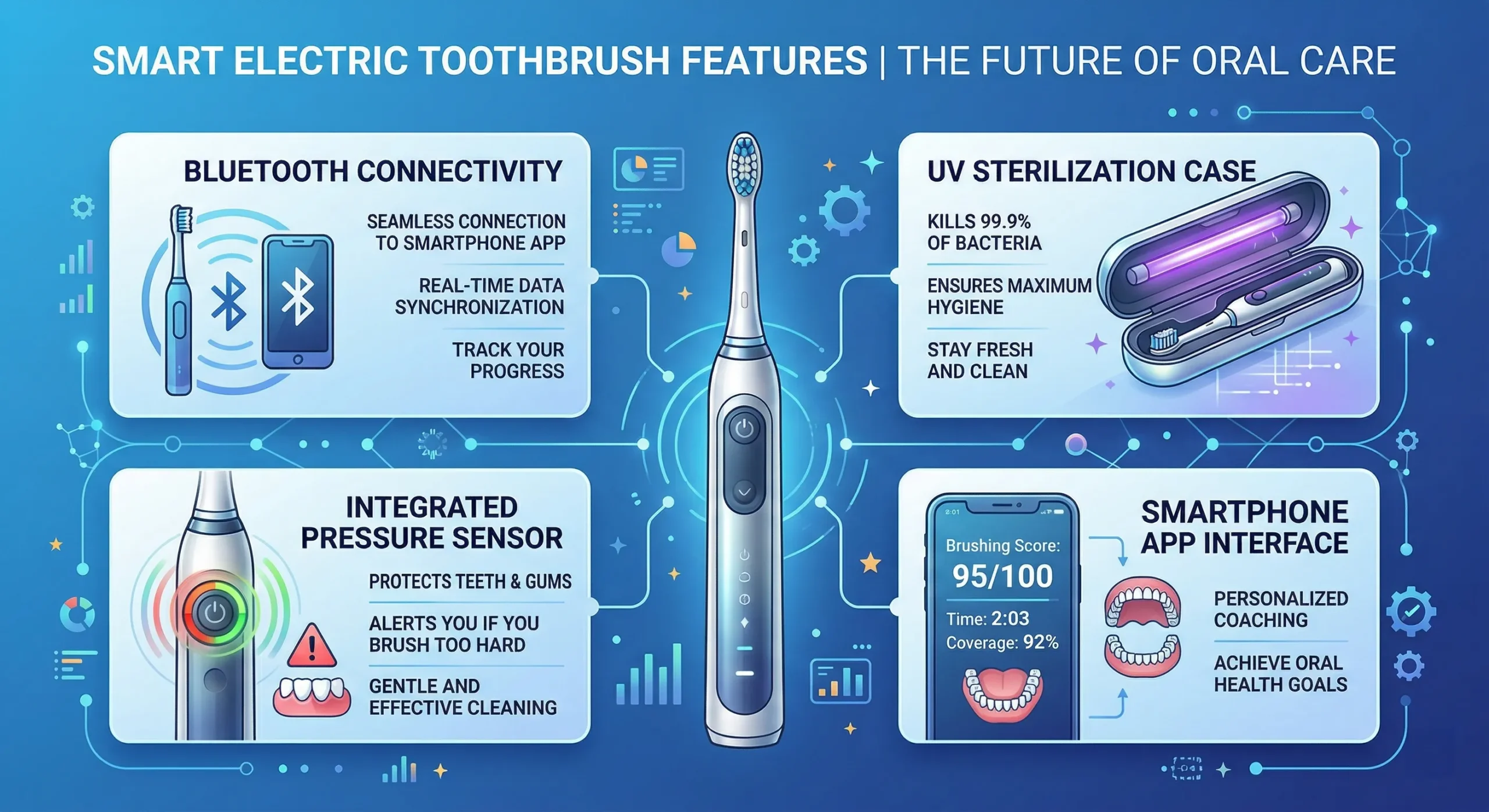
В 2026 году "умные" функции станут основным фактором ценообразования, особенно в премиум-сегменте:
| Умная функция | Добавленная стоимость спецификации | Добавленная розничная стоимость | ROI Multiple |
|---|---|---|---|
| Возможность подключения Bluetooth | +$4-$8 | +$30-$80 | 4-10x |
| Датчик давления | +$1-$3 | +$15-$40 | 5-15x |
| УФ-стерилизация | +$3-$6 | +$20-$50 | 3-8x |
| Интеграция приложений / ИИ-коучинг | +$2-$5 | +$20-$60 | 4-12x |
Интеллектуальные функции постоянно демонстрируют 4-15-кратную окупаемость инвестиций в BOM, что является самым высоким показателем в структуре стоимости всего продукта. Однако они также усложняют процесс сертификации (тестирование FCC, требования к кибербезопасности) и требуют постоянного обслуживания приложений.
3. Бренд премиум-класса
Philips и Oral-B тратят в совокупности $500M+ ежегодно на маркетинг средств по уходу за полостью рта. Эти инвестиции оправдывают премиальные цены, но также создают рыночное пространство для брендов-претендентов. Исследование потребителей, проведенное компанией Mintel, показало, что 75% покупателей не могут определить значимую разницу в производительности между электрическими зубными щетками среднего и премиум-класса в слепых тестах (Mintel, 2025).
4. Канал распределения
| Канал | Типичная маржа | Влияние на розничную цену | Лучшее для |
|---|---|---|---|
| Amazon / Электронная коммерция | 15-25% | Нижний | Безрецептурные бренды, частные марки |
| Розничные магазины (Walmart, Target) | 30-50% | Выше | Устоявшиеся потребительские бренды |
| Прямая связь с потребителем (веб-сайт бренда) | 5-10% | Самый низкий | Стратегия высокомаржинального бренда |
| Стоматологические клиники / аптеки | 40-60% | Самый высокий | Клиническое позиционирование высшего класса |
5. Сертификация и соответствие
| Сертификация | Типичная стоимость | Временная шкала | Доступ на рынок |
|---|---|---|---|
| CE (ЕС) | $2,000–$5,000 | 3-6 недель | Все 27 стран-членов ЕС |
| FCC (США) | $1,500–$3,000 | 2-4 недели | Соединенные Штаты |
| Регистрация FDA (США) | $1,000–$3,000 | 4-8 недель | США (при наличии терапевтических требований) |
| IPX7 Водонепроницаемый | $300-$800 | 1-2 недели | Требуется для всех крупных розничных сетей |
| ISO 13485 | $10,000–$30,000 | 3-6 месяцев | Глобальное доверие к качеству |
| BSCI (этичный подбор поставщиков) | $2,000–$5,000 | 4-8 недель | Европейские ритейлеры, Costco, Walmart |
Сертификация представляет собой фиксированные первоначальные инвестиции которая амортизируется на все произведенные единицы продукции. Именно поэтому бренды с более длинными продуктовыми линейками и большими объемами производства достигают более низких эффективных затрат на сертификацию единицы продукции.
Читать далее: Смотрите наш полный обзор сертификатов охватывает требования FDA, CE, FCC, ISO 13485 и другие основные требования к экспортерам средств по уходу за полостью рта.
6. Тенденции рынка 2026 года, влияющие на затраты
1. Ускорение внедрения интеллектуальных функций
На долю "умных" электрических зубных щеток (Bluetooth + подключение к приложениям) теперь приходится 45% продаж в премиальном сегменте, по сравнению с примерно 15% в 2020 году. (Grand View Research, 2026). Это привело к увеличению средней стоимости BOM на $8-15 за единицу в премиум-уровне, но позволило 30-50% более высокая розничная цена. Для покупателей B2B это означает, что премиум-сегмент становится более доступным благодаря ODM-платформам - существующие дизайны умных зубных щеток, которые могут быть адаптированы к вашему бренду за долю стоимости разработки.
2. Премия за устойчивое развитие на ключевых рынках
Экологически чистые материалы - переработанный пластик, бамбуковые ручки, биоразлагаемая упаковка - добавляют $1-3 к производственным затратам но прикажите 15-25% розничная премия на рынках Европы и Северной Америки. Это особенно актуально для брендов, ориентированных на Великобританию, Германию, Скандинавию и американских ритейлеров премиум-класса. Электрические зубные щетки с бамбуковой ручкой и переработанная упаковка все чаще предлагаются известными производителями комплектующих.
3. Нормализация цепочки поставок
Нарушения в цепочке поставок после пандемии в основном устранены. Стоимость компонентов в 2026 году составит примерно 8-12% нижний по сравнению с пиком 2022 года, что повышает маржу как для производителей, так и для брендов. Сроки выполнения заказов стабилизировались на уровне 30-45 дней для заказов ODM и 60-90 дней для полных OEM-проектов.
4. Доминирование Китая в производстве
Китай производит примерно 75% мировых электрических зубных щеток В 2026 году провинция Гуандун станет лидером в производстве OEM-комплектующих премиум-класса. (Исследование отраслевых рынков, 2026). Такая концентрация создает значительные преимущества для покупателей B2B: полная экосистема цепочки поставок в одном географическом регионе, конкурентные цены за счет плотности поставщиков и опытные OEM-производители с налаженной системой управления качеством. Водяные флоссеры и другие средства по уходу за полостью рта работают по одной и той же цепочке поставок, что позволяет разрабатывать комплексные линейки продуктов.
7. B2B Sourcing: Захват маржи
Экономические преимущества OEM-сорсинга по сравнению с обычной дистрибуцией убедительны:
| Модель поиска поставщиков | Стоимость единицы продукции | Типичная розничная торговля | Валовая маржа |
|---|---|---|---|
| Купить у дистрибьютора | $25-$40 | $60-$100 | 40-60% |
| OEM из Китая (стандарт) | $12-$18 | $60-$100 | 70-80% |
| OEM из Китая (частные лейблы) | $12-$18 | $80-$150 | 80-88% |
Приобретая продукцию непосредственно у производителя комплектующих, бренды получают Дополнительные 20-30 процентных пунктов валовой маржи по сравнению с покупкой через дистрибьюторов. При объеме продаж 10 000 единиц в год эта разница в марже может составить $150 000-$400 000 дополнительной валовой прибыли. Для получения пошаговой информации см. Руководство по производству средств по уходу за полостью рта под собственной торговой маркой.
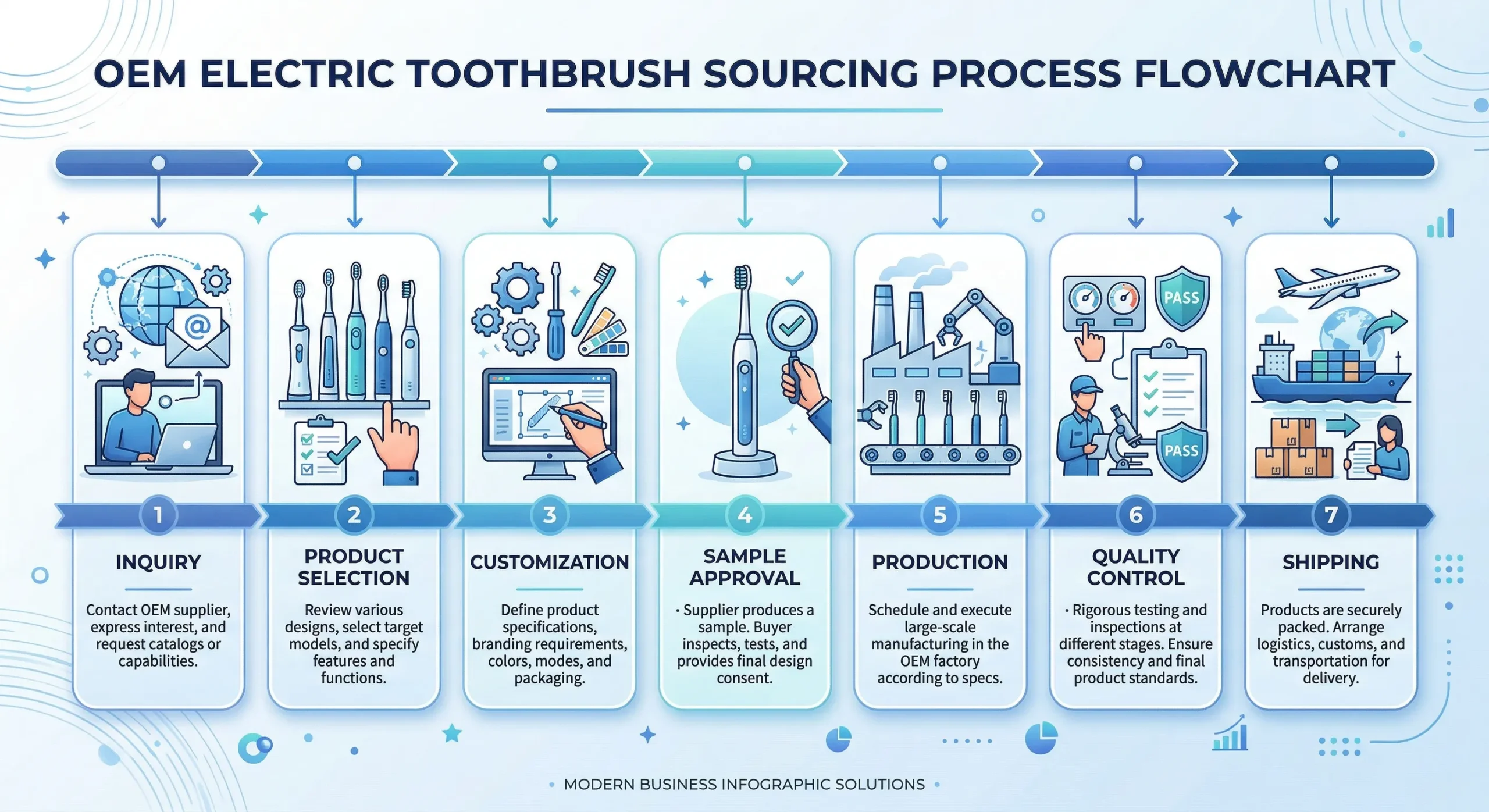
Контрольный список для оценки фабрики
- Сертификаты: Проверьте FDA, CE, ISO 13485, BSCI - обеспечивают доступ на рынки основных экспортных направлений
- Возможность проведения исследований и разработок: Ищите специализированный Отдел исследований и разработок 10+ инженеров, способных разрабатывать продукты на заказ
- Производственная мощность: Подтвердите ежемесячный объем производства и текущий коэффициент использования; завод мощностью 80%+ может иметь ограничения по времени выполнения заказа.
- Система контроля качества: Проверка процессов IQC, IPQC и OQC с помощью документированных отчетов о проверках и отслеживания уровня дефектов.
- Гибкость MOQ: Оцените, сможет ли производитель вместить ваши текущие объемы и масштабировать их по мере вашего роста
- Опыт работы с частными марками: Запросите примеры предыдущих брендинг и упаковка проекты для оценки качества дизайна и производства
- Образец политики: Всегда заказывайте предсерийные образцы; проверяйте качество вибрации, время автономной работы, водонепроницаемость и общую сборку.
- Качество связи: Оцените уровень владения английским языком, время ответа и техническую глубину ответов
Красные флажки
- Не могут предоставить документы, подтверждающие наличие лицензии на ведение бизнеса или сертификации
- Цены более чем на 30% ниже среднерыночных - углы срезаются
- Нежелание проводить экскурсию по заводу или видеопрогулку
- Отсутствие документированных процессов контроля качества и отчетов о проверках
- Торговая компания, выдающая себя за производителя, - попросите показать вам производственную линию.
Читать далее: Смотрите наше полное руководство по Как найти надежного производителя электрических зубных щеток в Китае.
8. Почему стоит выбрать Relish Tech в качестве OEM-партнера
В качестве Профессиональный производитель электрических зубных щеток и ирригаторов полости рта, Shenzhen Relish Technology предлагает глубину производства, опыт соблюдения требований и масштабируемость, которые необходимы покупателям B2B:
| Возможности | Подробности |
|---|---|
| Опыт | Более 15 лет в сфере производства средств по уходу за полостью рта |
| Сертификаты | FDA, CE, ISO 13485, BSCI, FCC, RoHS, REACH |
| Производственные мощности | 1,2 млн.+ единиц ежемесячно по всем продуктовым линейкам |
| Команда разработчиков | 30+ инженеров для разработки индивидуальных продуктов |
| Контроль качества | Строгое тестирование IQC/IPQC/OQC; уровень брака ниже 1% |
| Ассортимент продукции | Электрические зубные щетки (роторные, звуковые, U-образные), водные флоссеры (портативные, настольные, комбинированные) |
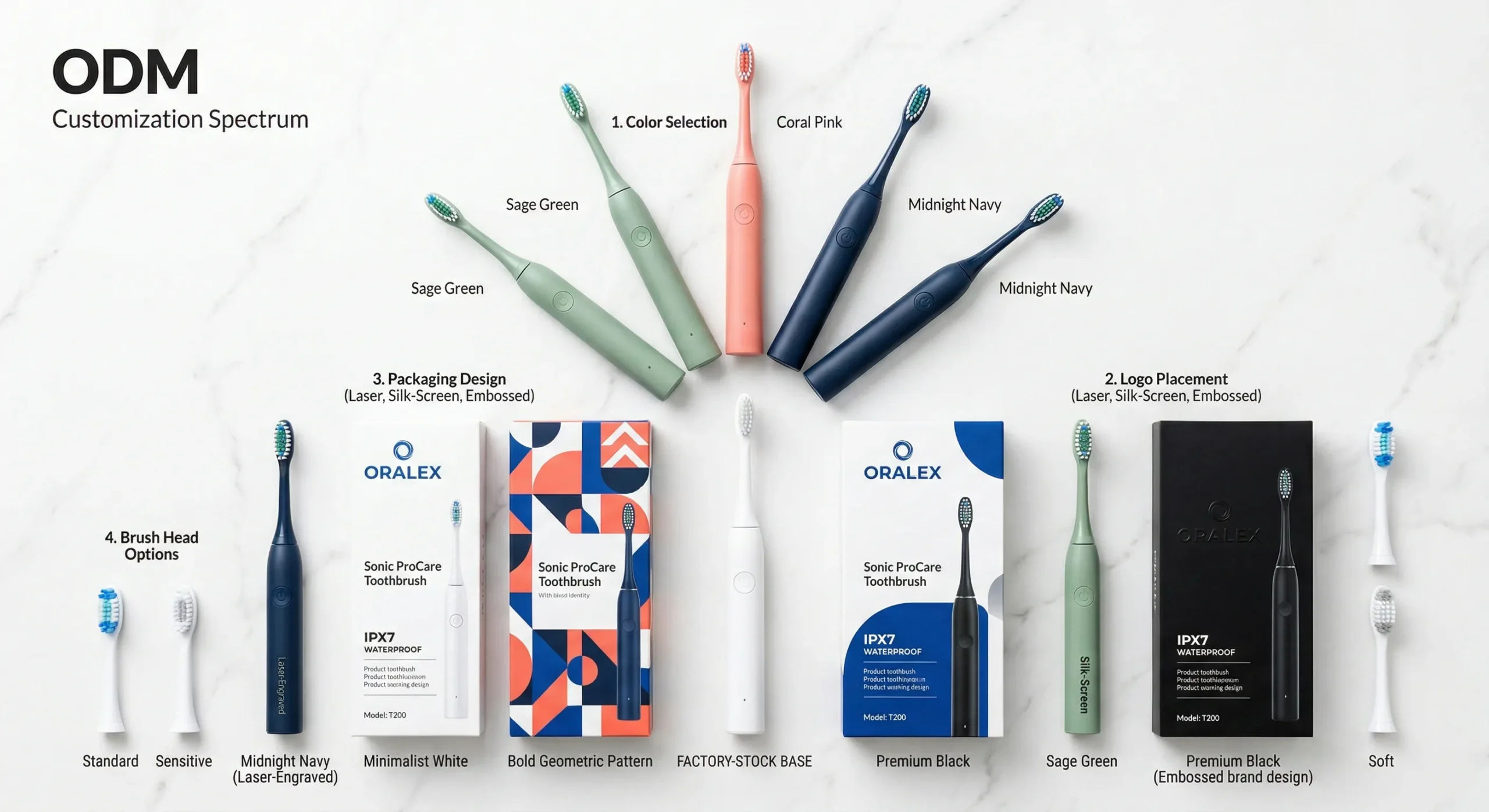
| Настройка | Логотип, цвет, упаковка, интеллектуальные функции - полностью Услуги OEM/ODM |
| MOQ | 500-1 000 единиц для стандартных моделей; гибкость для растущих брендов |
| Время выполнения | 30-45 дней для ODM; 60-90 дней для полного OEM пользовательского дизайна |
| Глобальный охват | Доверяют брендам в Северной Америке, Европе, Азиатско-Тихоокеанском регионе и на Ближнем Востоке. ознакомьтесь с примерами из практики наших клиентов и прочитайте, что говорят наши клиенты |
Наш производственный комплекс в районе Гуанмин в Шэньчжэне располагается на площади 20 000 м.2 непыльный цех с 12 автоматизированными производственными линиями. Мы обслуживаем бренды по уходу за полостью рта, начиная от стартапов с частными торговыми марками на ранних стадиях и заканчивая признанными международными дистрибьюторами, и понимаем, что каждый этап развития требует своего производственного подхода.
Получите оценку стоимости производства сегодня
Получите подробную разбивку стоимости спецификации и индивидуальное предложение в течение 24 часов. Или сначала загрузите наш каталог продукции.
Запрос бесплатного предложенияЧасто задаваемые вопросы
Об этом FAQ
Эти ответы основаны на 15-летнем опыте производства компании Relish Tech и проверенных данных маркетинговых исследований. Стоимость указана при стандартном MOQ в 1000 единиц; фактические затраты зависят от спецификации и объема.
| Вопрос | Ответить |
|---|---|
| Какова средняя стоимость производства электрической зубной щетки в 2026 году? | Стоимость изготовления варьируется от $6-$11 для моделей начального уровня до $31-$55 для ультрапремиальных "умных" моделей с Bluetooth и интеграцией приложений. Электрические зубные щетки среднего ценового диапазона - самый распространенный уровень для частных брендов - обычно стоят $12-$21 на единицу продукции при MOQ в 1000 единиц, включая спецификацию, трудозатраты и накладные расходы. |
| Почему существует такой большой разрыв между себестоимостью и розничной ценой? | Разрыв в основном обусловлен премия за бренд, расходы на маркетинг, маржа дистрибьюторов и плата за услуги розничной торговли - а не стоимость компонентов. Производство электрической зубной щетки в розничной сети $100 обычно обходится в $12-18. Оставшиеся $82-88 покрывают маркетинг ($15-25), маржу дистрибьютора ($10-15), маржу розничного продавца ($20-30) и прибыль бренда ($10-20). Запуская бренд под частной маркой через OEM-производителя, B2B-покупатели могут получить маржу, которая в настоящее время достается известным брендам. |
| Какие компоненты электрической зубной щетки являются самыми дорогими? | Сайт двигатель и аккумулятор это две самые большие переменные стоимости. Бесщеточный двигатель стоит $2-8 по сравнению с $0.50-2.00 для щеточного двигателя. Литий-ионные батареи с беспроводной зарядкой добавляют $3-7 к стоимости заказа по сравнению с $0.80-2.00 для NiMH. Интеллектуальные печатные платы с Bluetooth и датчиками давления стоят $4-12 против $0.50-1.50 для базовых контроллеров. Вместе эти три группы компонентов составляют примерно 40-60% от общей стоимости BOM. |
| Какова минимальная сумма заказа для OEM электрические зубные щетки? | MOQ зависит от производителя и уровня кастомизации. Стандартные ODM-модели (существующая платформа с кастомизацией под брендинг) обычно начинаются от 300-1,000 единиц за SKU. Нестандартный цвет, логотип или упаковка требуют 1 000-2 000 единиц. Полностью индивидуальный дизайн с новой оснасткой обычно требует 2 000-5 000 единиц. Relish предлагает гибкие MOQ, начиная с 500 единиц для стандартных моделей. |
| Какова типичная норма прибыли для частного бренда электрических зубных щеток? | Бренды электрических зубных щеток под частной маркой, поставляемые китайскими OEM-производителями, обычно достигают валовая рентабельность 75-88% в розницу. Модель среднего класса, производство которой обходится в $12-18, может продаваться в розницу по цене $60-150, что дает $42-132 валовой прибыли на единицу товара. После оплаты маркетинга, логистики и услуг платформы чистая маржа составляет 25-45% достижимы для брендов, работающих на Amazon или по принципу "прямого потребителя". |
| Какие сертификаты необходимы для продажи электрических зубных щеток на международном рынке? | Обязательно наличие сертификатов, соответствующих специфике рынка: Маркировка CE (ЕС), Сертификация FCC (США), Регистрация в FDA (США, если продается с терапевтическими заявлениями), Степень водонепроницаемости IPX7 (глобальный стандарт розничной торговли) и маркировка PSE (Япония). Стандарт ISO 13485 рекомендован для обеспечения надежности управления качеством. Relish имеет сертификаты CE, FCC, FDA, ISO 13485, BSCI, RoHS и REACH. |
| Как тенденции рынка 2026 года повлияли на стоимость производства электрической зубной щетки? | Три основные тенденции: (1) Нормализация ситуации после пандемии привела к снижению стоимости компонентов 8-12% ниже пиковых значений 2022 года. (2) Внедрение интеллектуальных функций - на Bluetooth и подключение приложений теперь приходится 45% продаж в премиальном сегменте - увеличило среднюю цену BOM на $8-15 за единицу, но позволило повысить розничную цену на 30-50%. (3) Китай производит 75% мировых электрических зубных щеток (Industry Market Research, 2026), что делает прямой OEM-сорсинг наиболее экономически эффективным путем для новых частных брендов. |
Ссылки и источники
- Grand View Research. (2026). Размер, доля и тенденции рынка электрических зубных щеток. Извлечено из https://www.grandviewresearch.com/industry-analysis/electric-toothbrush-market
- Statista. (2026). Доход рынка электрических зубных щеток в мире. Извлечено из https://www.statista.com/statistics/478707/electric-toothbrush-market-revenue-worldwide
- Mintel. (2025). Уход за полостью рта - США - Отношение потребителей и восприятие брендов. Mintel Group Ltd.
- Управление по санитарному надзору за качеством пищевых продуктов и медикаментов США. (2025). Стоматологические устройства - классификация и нормативные указания. Извлечено из https://www.fda.gov/medical-devices/dental-devices
- Международная организация по стандартизации. (2016). ISO 13485:2016 - Медицинские изделия - Системы менеджмента качества. Извлечено из https://www.iso.org/standard/71607.html
- Relish Technology Co., Ltd. (2026). Данные о внутренних производственных затратах и заводских операциях. Извлечено из https://relish-tech.com/