

Szczoteczka elektryczna vs manualna: Nauka stojąca za skutecznym szczotkowaniem
Od dziesięcioleci trwa debata na temat skuteczności szczoteczek elektrycznych vs. manualnych. Dentyści, naukowcy i konsumenci zadają pytanie: czy technologia w szczoteczkach elektrycznych rzeczywiście przekłada się na lepsze zdrowie jamy ustnej, czy też odpowiednia technika przy użyciu szczoteczki manualnej jest wystarczająca?
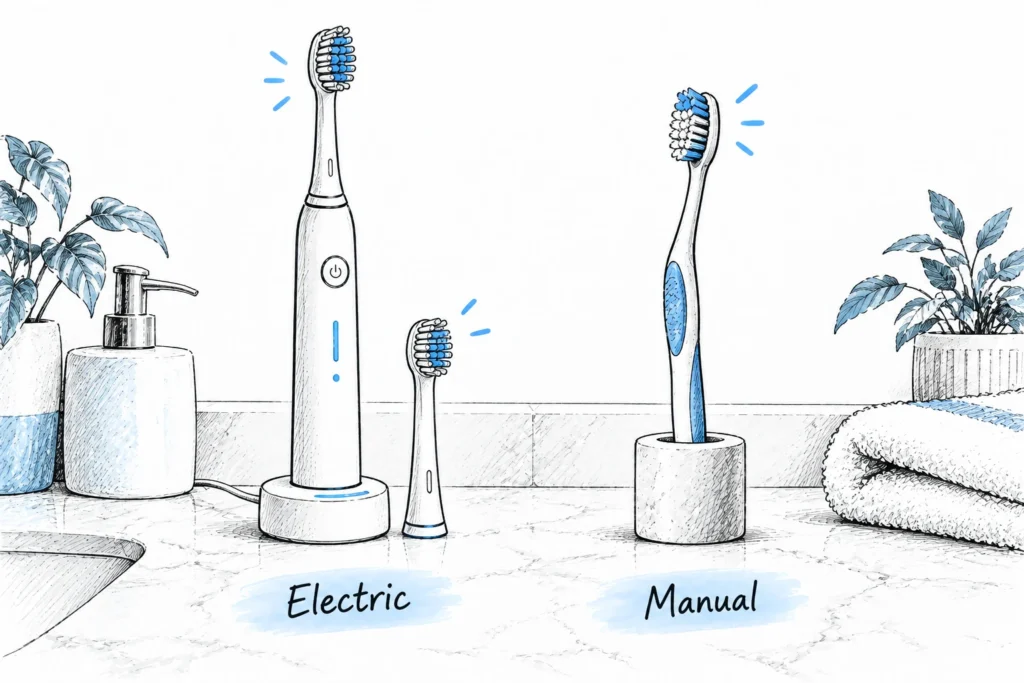
This guide compares the research, brushing features and ownership costs that matter to consumers and brands choosing between electric and manual toothbrushes.
Dowody: Co mówią nam badania
Najbardziej wiarygodne dowody pochodzą z przeglądów systematycznych i metaanaliz przeprowadzonych przez niezależnych badaczy:
Wyniki przeglądu systematycznego Cochrane
The 2014 Cochrane review compared powered and manual toothbrushes in everyday use. Its findings help explain the average benefits seen in the studies:
- 56 randomized controlled trials were included; 51 trials with 4,624 participants contributed data to the meta-analysis.
- Plaque index was 21% lower with powered brushing than manual brushing in studies lasting more than 3 months.
- Gingivitis index was 11% lower with powered brushing in studies lasting more than 3 months.
- Oscillating-rotating brushes had the largest evidence base. The pooled results do not establish the same benefit for every powered brush or motion type.
Clinical Findings by Study Duration
The Cochrane review reported the following average differences in plaque and gingivitis indices:
| Czas trwania badania | Wskaźnik | Lower index with powered brushing |
|---|---|---|
| 1-3 miesiące | Plaque index | 11% |
| 1-3 miesiące | Gingivitis index | 6% |
| More than 3 months | Plaque index | 21% |
| More than 3 months | Gingivitis index | 11% |
Źródło: Yaacob et al., Cochrane (2014). These percentages describe relative differences in clinical indices, rather than guaranteed improvements for an individual or product. The review rated the evidence as moderate quality and noted that the clinical importance remained unclear.
Jak działają elektryczne szczoteczki do zębów?
For brands, brush motion is an important design choice. An electric toothbrush drives the cleaning movement with a motor, reducing the need to produce every stroke by hand. Brush placement, coverage and pressure still matter.
Technologia oscylacyjno-rotacyjna
Oscillating-rotating brushes move a small, usually round head back and forth to clean tooth surfaces. Some designs operate at around 7,500–10,000 oscillations per minute. This is a back-and-forth movement rate, not a count of full revolutions, and the specification depends on the model.
Evidence strength: Oscillating-rotating designs had the largest evidence base in the Cochrane review. Relish manufactures these models within its ISO 13485-certified quality management system and supports applicable FDA registration requirements. FDA registration does not mean FDA certification or approval.
Technologia soniczna
Sonic brushes use rapid bristle movement to clean tooth surfaces and move fluid around the teeth. Advertised rates of 24,000–40,000 movements per minute depend on the model and whether the manufacturer counts strokes or complete cycles. Fluid movement can support cleaning around the bristles, but it does not establish deep subgingival cleaning or replace interdental cleaning.
Evidence strength: Assess clinical evidence for the specific brush design and measured outcome.
Technologia ultradźwiękowa
Ultrasonic toothbrushes use acoustic energy above the audible frequency range. For example, 1.6 MHz means 1.6 million acoustic cycles per second, or 96 million per minute; it does not mean 96 million bristle strokes. Whether ultrasound is combined with mechanical bristle movement depends on the design. Frequency alone does not establish cleaning performance or justify claims about heat or cavitation.
Siła dowodów: Ograniczone długoterminowe dane kliniczne
Dlaczego szczoteczki manualne mogą zawodzić
Oceniając opcje szczoteczek elektrycznych i manualnych, ważne jest zrozumienie nieodłącznych ograniczeń szczotkowania manualnego. Szczoteczki manualne wymagają odpowiedniej techniki i czasu, aby być skuteczne — to obszary, w których wielu użytkowników ma trudności:
Czas szczotkowania
The challenge: The ADA recommends brushing for 2 minutes, twice daily. Stopping early can leave tooth surfaces inadequately cleaned, whether the brush is manual or powered.
Szczoteczki elektryczne z wbudowanymi timerami (zazwyczaj 2 minuty z 30-sekundowymi pacerami kwadrantowymi) pomagają użytkownikom osiągnąć zalecany czas.
Spójność techniki
The Bass technique is one approach to manual brushing. The essential points include:
- Kąta 45 stopni w kierunku linii dziąseł
- Krótkich, delikatnych pociągnięć
- Wibracji główki szczoteczki na powierzchni zęba
- Pokrycia wszystkich powierzchni (policzkowej, językowej, żującej)
Powered movement reduces the need for repetitive hand strokes. Users still need to guide the brush across every tooth surface and follow the instructions for the selected head and motion type.
Kontrola nacisku
Excessive pressure and abrasive brushing can contribute to:
- Recesję dziąseł: Odsłonięcie wrażliwych powierzchni korzeni
- Tooth-surface wear: Abrasion of enamel or exposed dentin can contribute to sensitivity.
- Cervical abrasion: Wear near the gumline, which can have several contributing factors.
Models with pressure sensors can alert users when they press too hard. This feedback supports gentler brushing, alongside a soft brush head and appropriate technique.
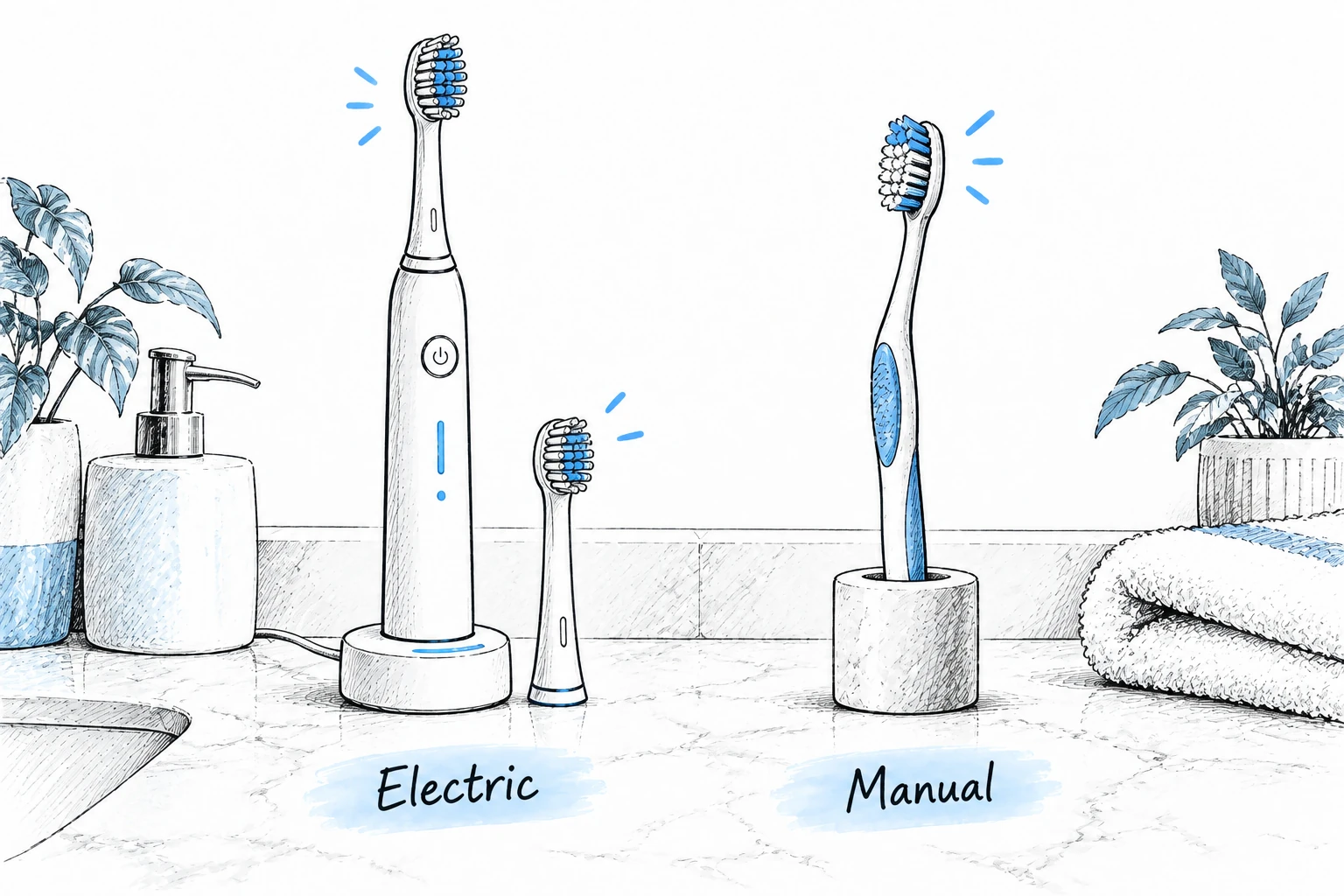
Porównanie: Szczoteczka elektryczna vs manualna — cecha po cesze
✓ Szczoteczki elektryczne
Wybierając szczoteczkę elektryczną vs manualną do swojej oferty produktów, rozważ te zalety:
- Lower average plaque index in the Cochrane review
- Wbudowany 2-minutowy timer
- Motor-driven movement reduces repetitive hand strokes
- Pressure feedback on models equipped with a sensor
- Wiele trybów dla różnych potrzeb
- Łatwiejsze dla osób z ograniczoną sprawnością ruchową
- Age-appropriate features can help engage children
- Small heads can help users clean around orthodontic appliances
- Poznaj naszą kolekcję szczoteczek elektrycznych →
✓ Szczoteczki manualne
Porównując szczoteczkę elektryczną vs manualną dla linii budżetowych, szczoteczki manualne wciąż mają wartość:
- Niższy koszt początkowy ($1-10)
- Nie wymagają ładowania
- Brak baterii do wymiany
- Przenośne i przyjazne w podróży
- No proprietary replacement-head system
- Direct manual control of brush movement and pressure
- Skuteczne przy odpowiedniej technice
- No battery or electronic components to dispose of
- Zobacz naszą ofertę szczoteczek manualnych →
Gotowy, aby uruchomić swoją markę szczoteczek elektrycznych? Uzyskaj wycenę OEM od Relish w 24 godziny — od modeli podstawowych po zaawansowane inteligentne szczoteczki z łącznością z aplikacją.
Poproś o wycenę OEM →Populacje specjalne
Ease of use can matter as much as brush motion. Consider the needs of each user group:
Dzieci
Age-appropriate powered brushes can offer:
- Powered cleaning with a small, soft brush head
- Timers or playful features that encourage a brushing routine
- An opportunity to practise coverage with an adult’s guidance
Choose a brush with an age rating, head size and bristle softness appropriate for the child. Adults should assist or supervise as needed and follow the product instructions and dental advice.
Osoby z Ograniczoną Mobilnością
A powered brush can make daily cleaning easier for people who find repetitive hand movements difficult, including some users with arthritis, carpal tunnel syndrome or Parkinson’s disease. Handle shape, grip and ease of switching modes should be assessed for the individual.
- Artretyzm
- Zespół cieśni nadgarstka
- Choroba Parkinsona
- Ograniczona kontrola motoryczna
Motor-driven movement can reduce repetitive hand effort, while the user or caregiver guides the brush across all tooth surfaces.
Pacjenci Ortodontyczni
For people with braces, a suitable small head can help with access around brackets and wires. Cleaning technique and appropriate interdental tools remain important. Choose the brush and head with advice from the orthodontic team.
- Small heads for access around brackets and wires
- Gentle pressure and guidance from the orthodontic team
- Brushing combined with suitable interdental cleaning
Analiza kosztów
Dla właścicieli marek porównujących szczoteczkę elektryczną vs manualną w ofertach detalicznych lub promocyjnych, zrozumienie dynamiki kosztów od zaopatrzenia do użycia konsumenckiego jest niezbędne. Oceniając koszt szczoteczki, należy wziąć pod uwagę całkowity koszt posiadania w czasie:
| Czynnik kosztowy | Manualna | Elektryczna |
|---|---|---|
| Początkowy zakup | $1-10 | $30-300+ |
| Annual brush or replacement-head cost | $6-60 | $30-120 |
| Brushes or heads per year | 4 (kwartalnie) | 4 (kwartalnie) |
| Koszt 5-letni | $35-300 | $180-900 |
| Wyniki zdrowia jamy ustnej | Can be effective with appropriate daily use | Average plaque and gingivitis benefit in the Cochrane review |
Buying insight: Compare the initial price, replacement availability and features the user will actually use. The figures above are illustrative USD ranges, not current retail quotations. The two five-year examples use different purchasing assumptions and should not be treated as the minimum and maximum of every price combination.
Podstawy Zaopatrzenia OEM dla Szczoteczek Elektrycznych
- MOQ (Minimalna Ilość Zamówienia): Relish Tech’s standard custom MOQ is 1 000 sztuk, with flexibility according to the order. Stock products are available for wholesale from 50 units. Confirm the quantity for the selected configuration in the quotation.
- Czas realizacji: Plan for 45–90 dni of OEM production after deposit confirmation, plus an indicative 7–14 days for shipping on the selected route. A 30-day rush order and a 15–25% premium depend on capacity and project scope; confirm the schedule and charges in the quotation.
- Kontrola jakości: Agree on relevant walidację IQ/OQ/PQ and pre-shipment inspections. Specify defect classes and sampling criteria; AQL 2.5 may be agreed for relevant cosmetic defects, alongside 100% functional testing for electronics. It is not an acceptance limit for safety-critical defects.
- Market Compliance: For the US, check the product’s FDA classification and applicable establishment registration and device listing requirements. Powered toothbrushes under JEQ/21 CFR 872.6865 are Class I and 510(k)-exempt within the exemption limits. For the EU, confirm CE obligations for the actual design and intended purpose, including applicable EMC, RoHS or radio-equipment rules. MDR 2017/745 and IEC 60601-1 are not universal requirements for every consumer electric toothbrush.
Najważniejsze wnioski
- Research supports powered brushing: The 2014 Cochrane review found plaque and gingivitis indices 21% and 11% lower, respectively, after more than 3 months. These are pooled study results, not a promise for every model.
- Technique still matters: The motor supplies brush movement; the user supplies placement, coverage and appropriate pressure.
- Budget for ongoing use: The table illustrates five-year costs of USD 35–300 for manual brushes and USD 180–900 for powered models. The Cochrane review does not establish savings in dental expenses.
- Match the brush to the user: Children, people with limited dexterity and orthodontic patients may find suitable powered features helpful.
- Najlepsza szczoteczka = ta, której używasz: Najskuteczniejsza szczoteczka to ta, której używasz prawidłowo każdego dnia
Szukasz partnera OEM do produkcji szczoteczek elektrycznych? Pobierz nasz katalog produktów na 2026 rok, obejmujący modele soniczne, oscylacyjno-rotacyjne i inteligentne.
Pobierz katalog produktów →Często zadawane pytania dotyczące szczoteczki elektrycznej vs manualnej
Dla właścicieli marek oceniających, czy oferować szczoteczki elektryczne czy manualne — lub oba — te odpowiedzi oparte na dowodach naukowych odnoszą się do najczęstszych pytań dotyczących zaopatrzenia i pozycjonowania.
Czy elektryczne szczoteczki do zębów są lepsze niż manualne szczoteczki do zębów?
Powered brushes showed an average advantage in the 2014 Cochrane review: plaque and gingivitis indices were 21% and 11% lower, respectively, in studies lasting more than 3 months. Both manual and powered brushes can clean effectively with appropriate use. Choose a brush that supports thorough, gentle brushing every day.
Co mówią badania na temat szczoteczek elektrycznych vs manualnych?
The 2014 Cochrane review included 56 trials, with 51 providing data for meta-analysis. At 1–3 months, plaque and gingivitis indices were 11% and 6% lower with powered brushing; after more than 3 months, the differences were 21% and 11%. Evidence was rated moderate quality, and the review did not establish identical performance for every technology or model.
O ile bardziej skuteczne są szczoteczki elektryczne?
The frequently quoted 21% plaque and 11% gingivitis figures come from clinical index comparisons in studies lasting more than 3 months in the 2014 Cochrane review. They do not mean that every powered brush removes 21% more plaque in a single session. Brush design, correct use and daily consistency all affect results.
Czy manualna szczoteczka do zębów jest wystarczająco dobra dla zdrowych zębów?
Yes. The ADA states that both manual and powered brushes can remove plaque effectively. Brush gently with a soft-bristled brush and fluoride toothpaste for 2 minutes, twice daily, covering all tooth surfaces. A powered brush may help if repetitive hand movement or maintaining a routine is difficult.
Jakie są zalety szczoteczek elektrycznych?
Useful features can include motor-driven movement, a 2-minute timer, interval reminders, pressure feedback and an easy-to-grip handle. Age-appropriate features may help engage children. Availability depends on the model, and these features support correct use rather than guarantee it.
Dlaczego dentyści polecają szczoteczki elektryczne?
A dentist may recommend a powered brush when its movement, timer, pressure feedback or handle makes daily cleaning easier for a particular patient. Manual brushes can also be effective. The recommendation should fit the person’s oral health, dexterity and brushing habits.
Czy drogie szczoteczki do zębów są warte swojej ceny?
A mid-range model in the illustrative USD 50–150 range may provide useful features such as a timer, pressure feedback or multiple modes. Premium models can add position detection, app connectivity and AI coaching. Higher price alone does not establish better clinical results, and an affordable brush may be sufficient when used correctly.
Jak długo powinieneś myć zęby?
The ADA recommends brushing for 2 minutes, twice daily, with fluoride toothpaste. A 2-minute timer and 30-second interval reminders can help users spread brushing across the mouth and stay with the routine. They are useful aids, alongside gentle pressure and coverage of every tooth surface.
Źródła
- Yaacob, M., i in. (2014). Powered versus manual toothbrushing for oral health. Cochrane Database of Systematic Reviews, CD002281. Cochrane review.
- Amerykańskie Stowarzyszenie Stomatologiczne. Szczoteczki. Oral Health Topics. wytycznymi ADA.
- US Food and Drug Administration. Powered toothbrush: Product Code JEQ, 21 CFR 872.6865. klasyfikację FDA.
- US Food and Drug Administration. Are There FDA Registered or FDA Certified Medical Devices? FDA registration and approval guidance.
- Sanz, M., et al. (2020). Treatment of stage I–III periodontitis: The EFP S3 level clinical practice guideline. Journal of Clinical Periodontology, 47(Suppl. 22), 4–60. EFP guideline.
Powiązane artykuły
Źródło wysokiej jakości szczoteczek elektrycznych dla Twojej marki
Relish Tech brings 15 years of oral care technology to electric toothbrush manufacturing, with models ranging from entry-level designs to premium smart brushes with app connectivity.