


Hoe begin je een merk voor mondverzorging? Van idee tot markt (2026)
Een compleet stappenplan voor ondernemers die een private label mondverzorgingsmerk lanceren — van het valideren van je niche tot het plaatsen van je eerste productieorder tot je eerste Amazon-verkoop.
Deze gids in één alinea: Het starten van een mondverzorgingsmerk in 2026 vereist vijf dingen: (1) een gevalideerde niche en productfocus, (2) een geverifieerde OEM-fabrikant met de juiste certificeringen, (3) conforme verpakking en productdocumentatie, (4) een distributiekanaalstrategie (Amazon, DTC, of beide), en (5) voldoende kapitaal om voorraad + marketing voor de eerste 90 dagen te dekken. Je kunt beginnen voor slechts $3,000–$8,000 met een bamboe tandenborstel, of investeer $15K–$50K voor een elektrische tandenborstel of water flosser vlaggenschipproduct. Deze gids leidt je stap voor stap door het proces.
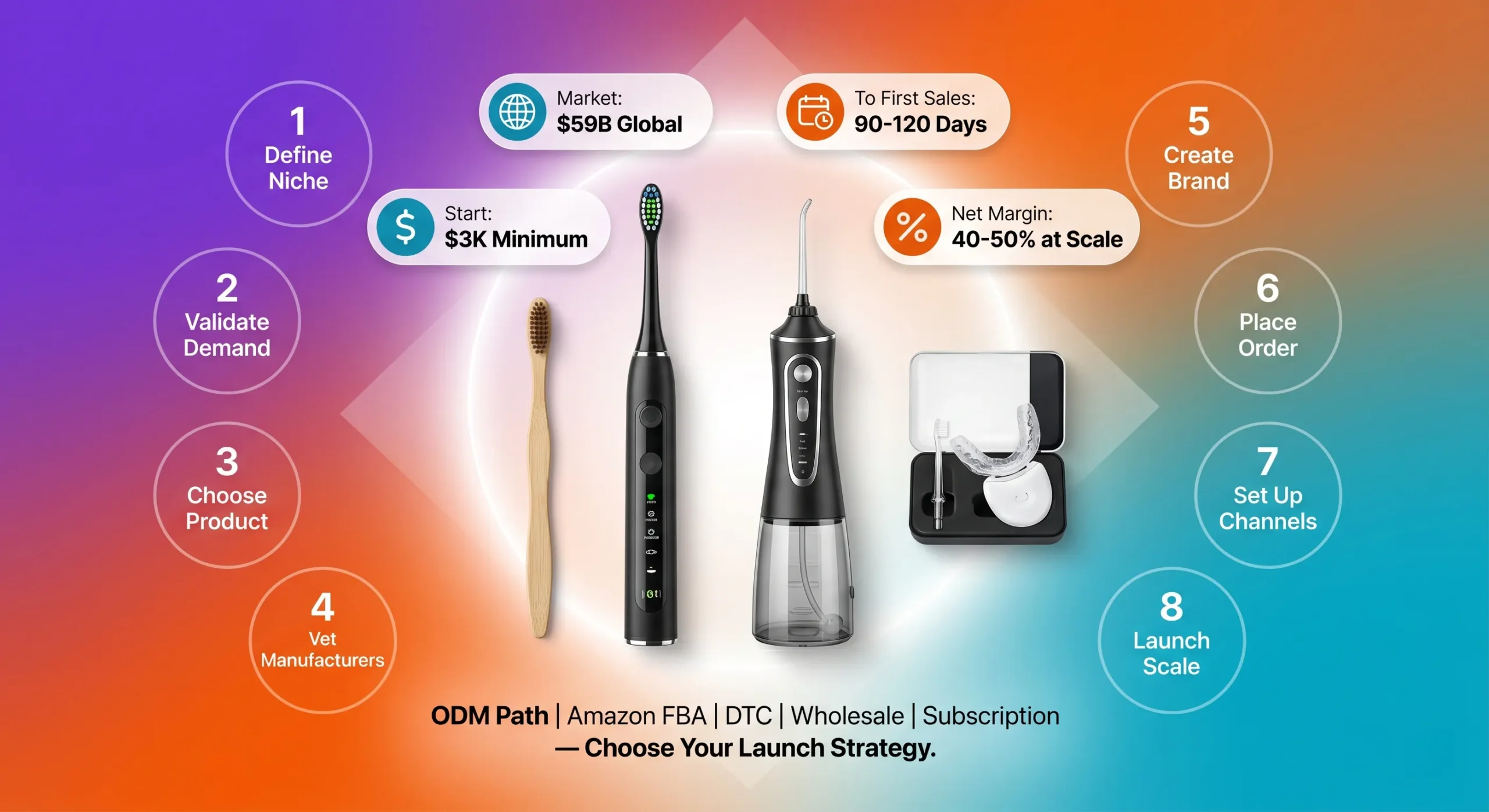
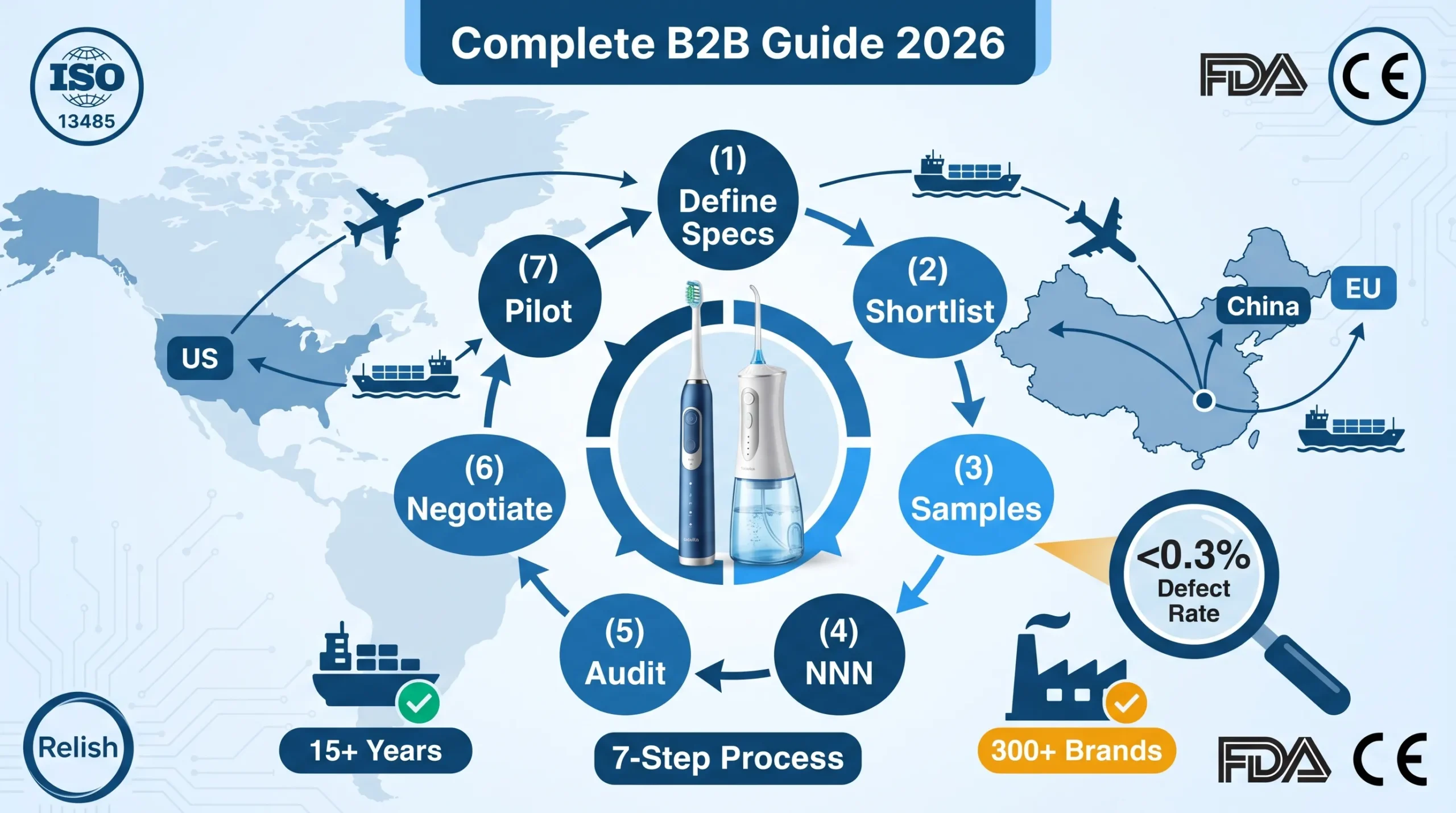
Hoe start je een mondverzorgingsmerk: 8-stappen lanceringskader
Bepaal je niche & merkpositionering
De mondverzorgingsmarkt is groot maar concurrerend in het midden (generieke "tandenborstel"). Succesvolle private label merken creëren een verdedigbare niche. Voordat je een fabrikant benadert, beantwoord deze vragen:
- Wie is je doelgroep? Milieubewuste ouders? Tandheelkundig bewuste millennials? Reizigers? Tandartspraktijkkopers?
- Wat is de primaire waarde van je merk? Duurzaamheid? Prestatietechnologie? Betaalbaarheid? Premium ontwerp?
- Welke productcategorie past het beste bij die positionering? (Bamboe = eco, Elektrisch = tech/prestaties, Whitening = schoonheid, Kinderen = ouderlijke zorg)
- Wat is je prijsklasse? Massamarkt ($8–$20) vs. middenmarkt ($20–$50) vs. premium ($50–$100+)
Valideer vraag met zoekwoord- & concurrentieonderzoek
Voordat je een dollar aan voorraad uitgeeft, valideer dat mensen zoeken naar wat je van plan bent te verkopen. Gebruik Amazon-zoekopdrachten, Google Keyword Planner of Helium 10 om zoekvolumes voor je doelzoekwoorden te controleren.
- Richt op 2–3 zoekwoorden met 5.000–50.000 maandelijkse zoekopdrachten (niet te breed, niet te niche)
- Controleer de top 10 Amazon-lijsten: Hoeveel beoordelingen hebben concurrenten? Is er een kwaliteitskloof?
- Bereken of je kunt concurreren: Kun je betere waarde bieden tegen hun prijspunt? Of een sub-niche creëren die ze negeren?
- Lees 1-ster beoordelingen van topverkopers — dit zijn jouw productverbeteringskansen
Kies je product & productietraject
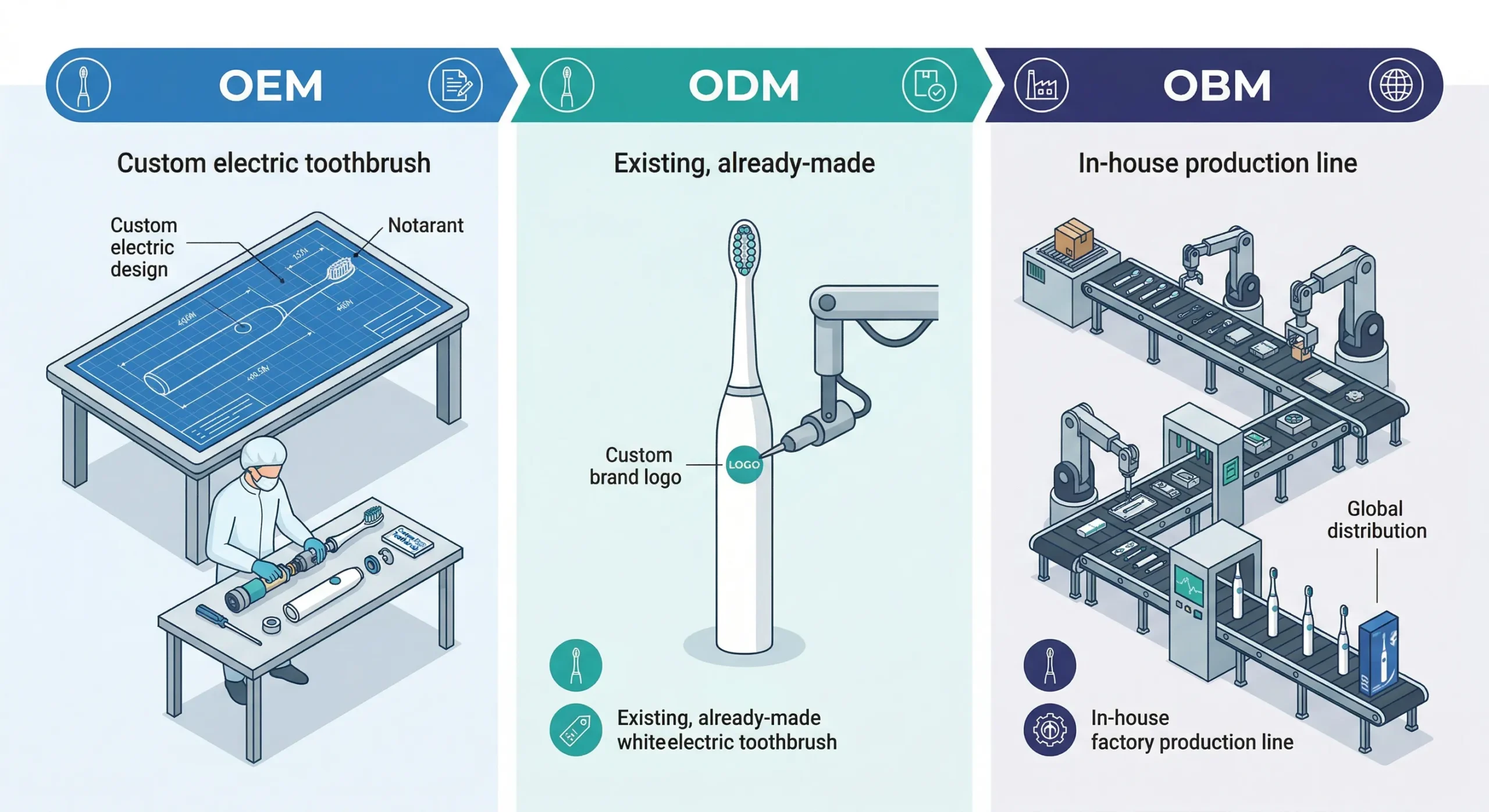
Er zijn twee hoofdtrajecten voor private label productcreatie — ODM en OEM. Kies op basis van je tijdlijn, budget en differentiatiedoelen. Onze productiefaciliteiten ondersteunen beide trajecten.
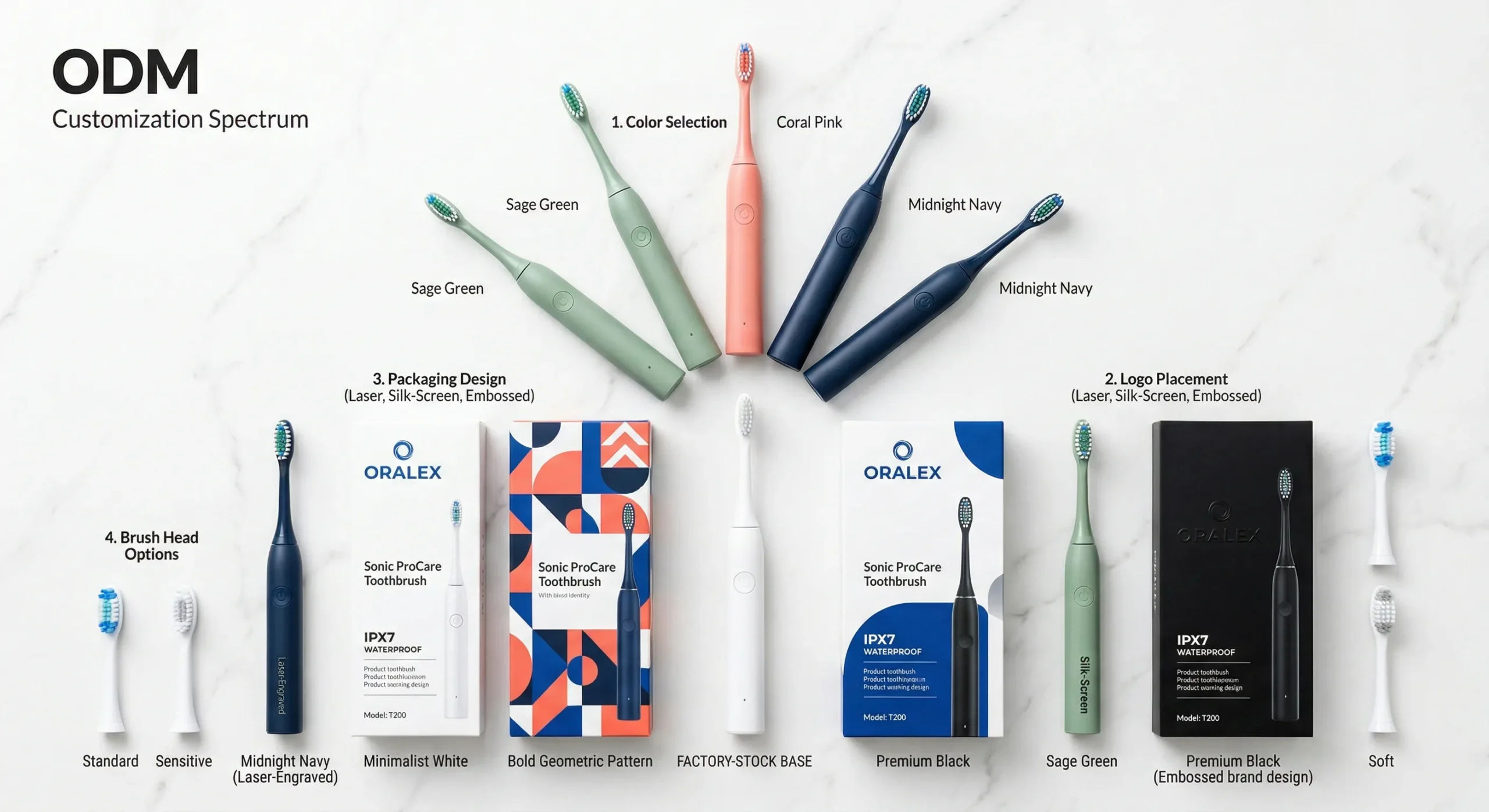
- ODM (Original Design Manufacturer): Kies uit bestaande, gecertificeerde productontwerpen. Voeg je logo en aangepaste verpakking toe. Snelste, laagste kosten, laagste risico. Beste voor eerste lanceringen.
- OEM (Custom Design): Werk samen met een fabrikant om een product te creëren volgens jouw specificaties. Unieker, maar vereist investering in gereedschap, langere tijdlijn en hogere MOQ.
- Voor uw eerste product: ODM is bijna altijd de betere keuze. Schakel over op OEM voor uw tweede of derde SKU zodra u de vraag heeft gevalideerd.
Beoordeel Fabrikanten & Bestel Monsters
Plaats nooit een productieorder zonder fysieke monsters te ontvangen en te testen. Uw evaluatieproces moet zowel het product zelf als de bedrijfspraktijken van de fabrikant omvatten. Zie onze klantcase studies om te begrijpen hoe gevestigde merken deze evaluatie aanpakken.
- Vraag tegelijkertijd monsters aan bij 3–5 fabrikanten — vergelijk kwaliteit, verpakking en reactiesnelheid
- Verifieer certificeringen: CE, FCC, FDA, RoHS — vraag om het daadwerkelijke certificaat (niet alleen een logo op de website)
- Controleer de online aanwezigheid van de fabrikant, het aantal jaren actief en referentieklanten
- Vraag naar minimale nabestelhoeveelheden en doorlooptijd voor herhaalorders
- Beoordeel de voorwaarden van de monsterovereenkomst: Wie is eigenaar van het aangepaste verpakkingsontwerp? Wat is de IP-positie met betrekking tot eventuele maatwerk?
Creëer Uw Merkidentiteit & Verpakking
Verpakking voor mondverzorgingsproducten moet twee dingen bereiken: merkwaarden duidelijk communiceren en voldoen aan de wettelijke etiketteringsvereisten voor uw doelmarkt. Begin parallel met het verpakkingsontwerp en de beoordeling van fabrikanten om tijd te besparen.
- Merkelementen: Logo, kleurenpalet, typografie, fotostijl, tone of voice
- Vereiste etiketinformatie (VS): Productnaam, netto-inhoud, naam en adres fabrikant/distributeur, ingrediënten-/materiaallijst, land van herkomst
- Vereiste etiketinformatie (EU): Naam en adres van de verantwoordelijke persoon, batchnummer, ten minste houdbaar tot (indien van toepassing), CPNP-meldingsreferentie (voor cosmetica)
- Gebruik een professionele ontwerper of Canva Pro — verpakking is uw stille verkoper op Amazon en in de winkelrekken
Plaats Productieorder & Beheer Kwaliteitscontrole
Zodra monsters zijn goedgekeurd en het verpakkingskunstwerk is afgerond, plaatst u uw productieorder. Standaard betalingsvoorwaarden zijn 30% aanbetaling, 70% vóór verzending (T/T). Kopers die voor het eerst kopen, komen soms 50/50 voorwaarden tegen — dit is normaal.
- Verstrek een duidelijke inkooporder (PO) met exacte SKU, hoeveelheid, verpakkingsspecificaties, certificeringseisen en leverdatum
- Vraag productiefoto's aan tijdens de productie (vooral voor eerste orders)
- Plan een inspectie vóór verzending via SGS, Bureau Veritas of een vergelijkbare externe inspecteur ($200–$400)
- Verifieer verzenddocumentatie: Commerciële factuur, paklijst, cognossement, certificaat van oorsprong, nalevingstestrapporten
Stel Uw Verkoopkanalen In
Bouw uw verkoopinfrastructuur terwijl de voorraad onderweg is. Wacht niet tot het product aankomt om te beginnen met het opzetten van uw Amazon-listing of website.
- Amazon FBA: Maak een Seller Central-account aan, voltooi de productlisting met een voor zoekwoorden geoptimaliseerde titel/bullets/beschrijving, dien aanvragen in voor relevante categorieën, maak A+ Content (voorheen EBC)
- DTC Website (Shopify): Installeer Shopify, kies een schoon thema, stel betalingsverwerking in, schrijf productpagina's, configureer verzendtarieven
- Groothandel/B2B: Maak een trade buyer-deck (productspecificaties, MOQ, prijzen, certificeringsdocumenten) — voor tandartspraktijken, spa's, hotelkopers
- Stel vanaf dag één voorraadbeheer in — oververkopen is een merkschadelijke fout op Amazon
Lancering, Reviews Genereren en Opschalen
De eerste 60–90 dagen na lancering zijn cruciaal. Uw doel is om voldoende reviews (20–50 op Amazon) te genereren om organische ranking op te bouwen, en voldoende DTC-verkoopgegevens om uw klantacquisitiekosten te begrijpen.
- Vine Programma (Amazon): Schrijf uw product in voor Amazon Vine voor vroege geverifieerde reviews ($0 voor ingeschreven ASIN's)
- Lanceer PPC: Begin met $20–$50/dag brede match campagnes om zoekverkeer te vangen terwijl u organische ranking opbouwt voor uw elektrische tandenborstel of water flosser
- Influencer seeding: 10–20 micro-influencers in mondgezondheid, duurzaam leven of ouderschapsniches voor UGC-content
- E-mailcaptatie vanaf dag 1: Zelfs op Amazon, gebruik insertkaarten om klanten naar uw website te leiden voor garantie registratie — e-mailadressen vastleggen voor toekomstige lanceringen
Mondverzorgingsmerk Lancering: Budgetplanning voor Drie Scenario's
| Kostenpost | Starter ($3K–$8K) | Groei ($15K–$50K) | Premium ($80K+) |
|---|---|---|---|
| Initiële voorraad (MOQ) | $800–$2.000 | $6.000–$20.000 | $25.000–$80.000 |
| Verzending & douane | $200–$500 | $800-$2.500 | $2.000–$8.000 |
| Certificeringen (indien nodig) | $0 (bamboe) | $1.500–$5.000 | $5.000–$15.000 |
| Verpakkingsontwerp | $300-$800 | $800–$3.000 | $3.000–$10.000 |
| Amazon setup + fotografie | $200–$500 | $500-$2.000 | $2,000–$5,000 |
| Lancering marketing (PPC + influencer) | $500–$1.500 | $2.000–$8.000 | $10,000–$30,000 |
| Totaalbereik | $3,000–$8,000 | $15.000–$50.000 | $80.000–$200.000+ |
Kanaalstrategie: Waar te Verkopen
🛒 Amazon FBA
✅ Direct verkeer & ingebouwd vertrouwen
✅ FBA verzorgt fulfillment
✅ Subscribe & Save voor nabestellingen
❌ Hoge verwijzingskosten (15% mondverzorging)
❌ Beperkte toegang tot klantgegevens
❌ Concurrerende PPC-kosten
🌐 DTC (Shopify)
✅ Volledig eigenaarschap van klantgegevens
✅ Hogere marges (geen marktplaatskosten)
✅ E-mail/SMS retentiemarketing
❌ U drijft al het verkeer (betaald)
❌ Langzamer op te bouwen zonder merk
❌ Complexiteit fulfillment operaties
🏪 Retail / Groothandel
✅ Volume orders met lage marketingkosten
✅ Merkzichtbaarheid in winkels
✅ Inkoopprogramma's voor tandartspraktijken
❌ Lange verkoopcycli (6–12 maanden)
❌ Betalingstermijnen kunnen 30–60 dagen zijn
❌ Retouren en marge druk
📦 Abonnement (Loyaliteit)
✅ Voorspelbare terugkerende inkomsten
✅ Hoogste LTV per klant
✅ Perfect voor opvulborstelkoppen
❌ Vereist eerst sterke merkloyaliteit
❌ Hoge churn in de eerste maanden
❌ Operationele complexiteit
🎯 Aanbevolen 2026 Speelboek: Start eerst met Amazon FBA (maanden 1–3). Bouw 30+ reviews en positieve ACOS op. Voeg Shopify DTC-website toe (maand 3–4). Start e-mailcapture en loyaliteitsprogramma. Na 6 maanden, solliciteer bij 1–2 specialzaken (natuurlijke gezondheid, tandheelkundige benodigdheden). Na 12 maanden, lanceer abonnementsnavulprogramma. Deze gefaseerde aanpak beperkt kapitaalrisico terwijl het opbouwt naar een volledig gediversifieerd kanaalmix.
Veelgestelde vragen: Hoe start ik een mondverzorgingsmerk?
V: Hoeveel geld heb ik nodig om een mondverzorgingsmerk te starten?
U kunt een private label mondverzorgingsmerk starten met slechts $3.000–$8.000 voor een enkele bamboe tandenborstel SKU op Amazon. Een completere lancering met een elektrische tandenborstel of water flosser als uw vlaggenschipproduct vereist doorgaans $15.000–$50.000 voor initiële voorraad, certificeringen, verpakking en marketing. Een volledige multi-categorie merkportfolio lancering kan variëren van $80.000–$200.000+.
V: Hoe lang duurt het om een mondverzorgingsmerk te lanceren?
Tijdlijn hangt af van uw productkeuze: bamboe tandenborstel (30–60 dagen), elektrische tandenborstel met ODM-selectie (60–90 dagen), aangepaste OEM met nieuw gereedschap (120–180 dagen). Voeg 4–12 weken toe voor certificeringstesten indien vereist. Uw website, Amazon-listing en branding kunnen parallel met productie worden ontwikkeld. De meeste merken bereiken hun eerste verkoop binnen 90–120 dagen na start van het proces.
V: Moet ik beginnen met Amazon FBA of mijn eigen DTC-website?
De meeste succesvolle mondverzorgingsmerken beginnen met Amazon FBA om de vraag te valideren, reviews te genereren en cashflow op te bouwen — en voegen vervolgens een DTC-website toe zodra ze een bewezen concept hebben. Amazon levert direct verkeer; DTC biedt op de lange termijn betere marges en klantgegevens. Een hybride aanpak (Amazon voor volume, DTC voor loyaliteit en abonnementen) is wat de meeste merken tegen maand 6–12 hanteren.
V: Wat is de minimale bestelhoeveelheid (MOQ) voor private label mondverzorgingsproducten?
MOQ varieert per producttype. Voor ODM-producten (selecteren uit bestaande ontwerpen): bamboe tandenborstel 500–1.000 stuks, handtandenborstel 1.000–2.000 stuks, elektrische tandenborstel 500–1.000 stuks, waterflosser 500–1.000 stuks. Voor OEM met aangepast gereedschap, verwacht 3.000–5.000 stuks minimum plus een eenmalige gereedschapskosten van $1.500–$5.000. De meeste beginnende merkeigenaren starten met ODM om initiële kapitaalverplichting te minimaliseren.
V: Welke certificeringen heb ik nodig om mondverzorgingsproducten op Amazon te verkopen?
Voor de Amerikaanse markt: CPSIA (kinderproducten), FCC-certificering (elektrische/Bluetooth-apparaten), FDA-establishmentregistratie (elektrische tandenborstels geclassificeerd als Klasse II medische hulpmiddelen). Voor de EU: CE-markering, RoHS-naleving, REACH-naleving. Specifiek voor Amazon moet u nalevingsdocumentatie uploaden naar Seller Central voordat listing-goedkeuring in beperkte subcategorieën. Batterijgevoede producten vereisen altijd extra documentatie.
V: Moet ik ODM of OEM gebruiken voor mijn eerste product?
Voor uw eerste product is ODM bijna altijd de betere keuze. ODM-producten gebruiken bestaande gecertificeerde ontwerpen — u voegt uw logo en aangepaste verpakking toe. Dit betekent lagere MOQ (500–1.000 eenheden), geen gereedschapskosten, snellere time-to-market (30–90 dagen vs. 120–180 dagen voor aangepaste OEM) en lager nalevingsrisico. Schakel over naar aangepaste OEM-productie op uw tweede of derde SKU zodra u vraag heeft gevalideerd en budget heeft voor gereedschapsinvestering.
V: Hoe vind ik een betrouwbare OEM-fabrikant voor mondverzorgingsproducten?
Begin met geverifieerde fabrikanten op Alibaba (Trade Assurance-leden met 3+ jaar geschiedenis) of bezoek Canton Fair (Guangzhou, april en oktober). Vraag fysieke monsters aan voordat u productieverplichtingen aangaat. Verifieer certificeringen — vraag om het daadwerkelijke testrapport, niet alleen een logo op de website. Controleer ISO 9001 of ISO 13485-status onafhankelijk. Voor elektrische producten, vereis CE- en FCC-certificaten met uw productnaam vermeld. Een pre-productie fabrieksaudit ($400–$800) wordt aanbevolen voor bestellingen boven $20.000.
V: Wat is een realistische winstmarge voor een private label mondverzorgingsmerk?
In de vroege fase (maanden 1–12), verwacht nettowinstmarges van 15–25% na Amazon-kosten (15%), FBA-kosten ($3–$7/eenheid), PPC-uitgaven ($2–$8/eenheid) en COGS. Bij volwassenheid met 50+ reviews en verminderde PPC-afhankelijkheid, kunnen nettowinstmarges 30–45% op Amazon bereiken. DTC-marges zijn doorgaans 45–60% bij vergelijkbare omzet. Abonnements-/navulbedrijfsmodellen (borstelkoppen, flosspatronen) behalen de hoogste langetermijnmarges — vaak 55–70% bruto — omdat herbestel-CAC bijna nul is.
Referenties
- 1、Grand View Research. (2025). Mondverzorgingsmarkt omvang, aandeel & trends analyse rapport. Ontleend aan https://www.grandviewresearch.com/industry-analysis/oral-care-market
- 2, Statista. (2025). Mondverzorging — wereldwijd: Marktgegevens & analyse. Ontleend aan https://www.statista.com/outlook/cmo/beauty-personal-care/oral-care/worldwide
- 3、U.S. Consumer Product Safety Commission. (2024). Kinderproductveiligheid en CPSIA-richtlijnen. Ontleend aan https://www.cpsc.gov/Business--Manufacturing/Business-Education/childrens-products
- 4、U.S. Food & Drug Administration. (2024). Elektrische tandenborstelclassificatie en 510(k)-vereisten (Klasse II medisch hulpmiddel). Ontleend aan https://www.fda.gov/medical-devices/classify-your-medical-device
- 5、European Commission. (2024). CE-markering en conformiteitsbeoordeling voor elektrische apparaten (LVD 2014/35/EU). Ontleend aan https://ec.europa.eu/growth/sectors/electrical-engineering/lvd-directive_en
- 6、International Organization for Standardization. (2016). ISO 13485:2016 — Medische hulpmiddelen: Kwaliteitsmanagementsystemen. Ontleend aan https://www.iso.org/standard/59752.html
- 7、Jungle Scout. (2025). Amazon FBA-verkopersrapport 2025: Omzetbenchmarks en categorieprestaties. Ontleend aan https://www.junglescout.com/resources/articles/amazon-seller-report/
Verken de volledige Mondverzorging OEM-gids serie
Klaar om uw eigen mondverzorgingsmerk te starten?
Relish Tech werkt samen met zowel beginnende merklanceerders als ervaren portfoliobouwers. Lage MOQs, volledige productielijn en deskundige begeleiding bij certificeringen en markttoetreding.
Boek een Gratis Merkconsult Bekijk Onze OEM-Diensten📧 info@relish-tech.com | 15+ jaar productie-ervaring