







Water Flosser vs Electric Toothbrush:
Which Should Your Brand Launch First?
A data-driven comparison for oral care brand founders. Covers market size, OEM costs, competition intensity, margins, and long-term brand strategy.
You've decided to enter the oral care market. You've identified your target consumer, you have a distribution channel in mind, and you're ready to source from an OEM manufacturer. There's just one question left: Do you launch with a water flosser or an electric toothbrush first?
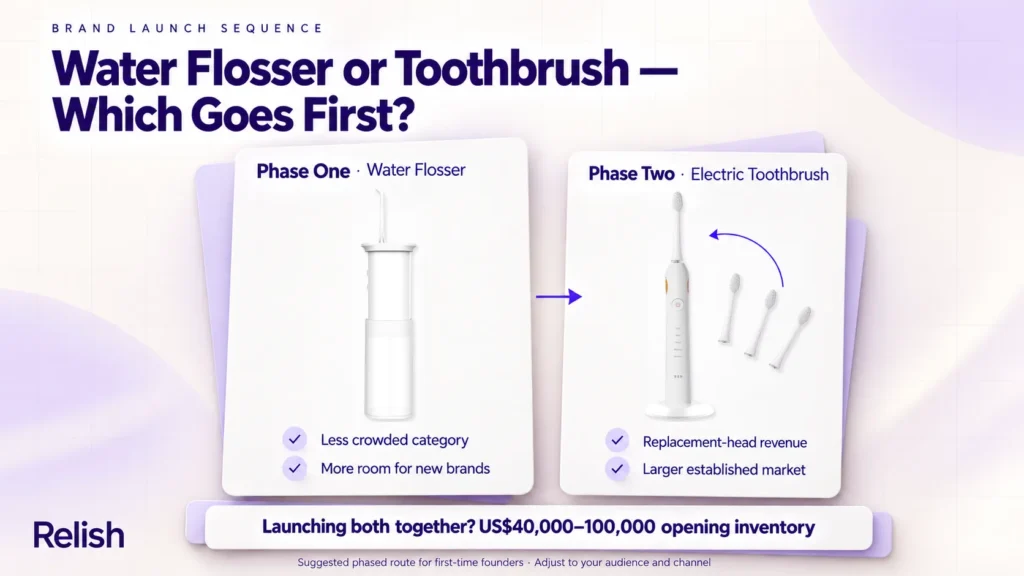
For most first-time oral care brand founders, a water flosser is the better initial launch product. Water flossers have more room for private labels (40%+ private label share vs. 25–30% for electric toothbrushes[1]), easier Amazon ranking (180K vs. 600K monthly searches), and higher gross margins (55–70%[2] vs. 50–65%)[2]. Electric toothbrushes win on LTV via replacement brush heads and mass-market demand, making them a good fit for Phase 2 expansion.
The answer depends on your capital, timeline, target market, and long-term brand vision. This guide breaks it down across every dimension that matters.
About the Manufacturer: Relish Technology
Relish Technology, a Shenzhen-based oral care OEM/ODM factory with 14+ years of export experience in water flosser and electric toothbrush manufacturing.
- 20,000 m² facility · 1.2M+ units monthly capacity · 120+ countries served
- Certifications: CE, FCC, FDA, ISO 9001, ISO 13485, RoHS, REACH, IPX7
Head-to-Head: The Complete Comparison
| Dimension | Water Flosser | Electric Toothbrush | Advantage |
|---|---|---|---|
| Market Size (2026) | ~$1.5 billion[1] | ~$7.0 billion[2] | Comparable |
| Market CAGR | 5.3–5.75% | 4.5–5.0% | WF (faster growth) |
| Brand Competition | Medium. Waterpik leads, many challengers | High. Oral-B & Philips dominate | WF (less competition) |
| Private Label Penetration | High. 40%+ market share | Medium. 25–30% market share | WF (easier entry) |
| OEM Factory Cost (entry) | $8–$12 FOB | $6–$10 FOB | ET (slightly lower cost) |
| Typical Retail Price | $25–$80 (cordless) | $20–$60 (sonic basic) | Comparable |
| Gross Margin Potential | 55–70%[2] | 50–65% | WF (marginally better) |
| Repeat Purchase (consumable) | Low. Nozzle tips only | High. Replacement brush heads | ET (LTV advantage) |
| Consumer Education Needed | Higher. Category awareness still building | Lower. Broad consumer awareness | ET (easier sell) |
| Amazon Keyword Competition | Medium. 50K–200K searches/mo | High. 500K–2M+ searches/mo | WF (easier ranking) |
| Certification Complexity | Medium. CE + FCC + IPX | Medium. CE + FCC + IPX | Similar |
| MOQ (ODM) | 500–1,000 pcs | 500–1,000 pcs | Similar |
| Sample Lead Time | 7–14 days | 7–14 days | Similar |
Market Dynamics
Electric Toothbrush: Mature Market with High Barriers
The electric toothbrush market is large ($7B+ globally) but dominated by Oral-B and Philips Sonicare, which together hold ~60% market share in premium segments. Private label and challenger brands compete effectively in the $20–$60 price band, where brand loyalty is lower and consumer decisions are more price-sensitive.
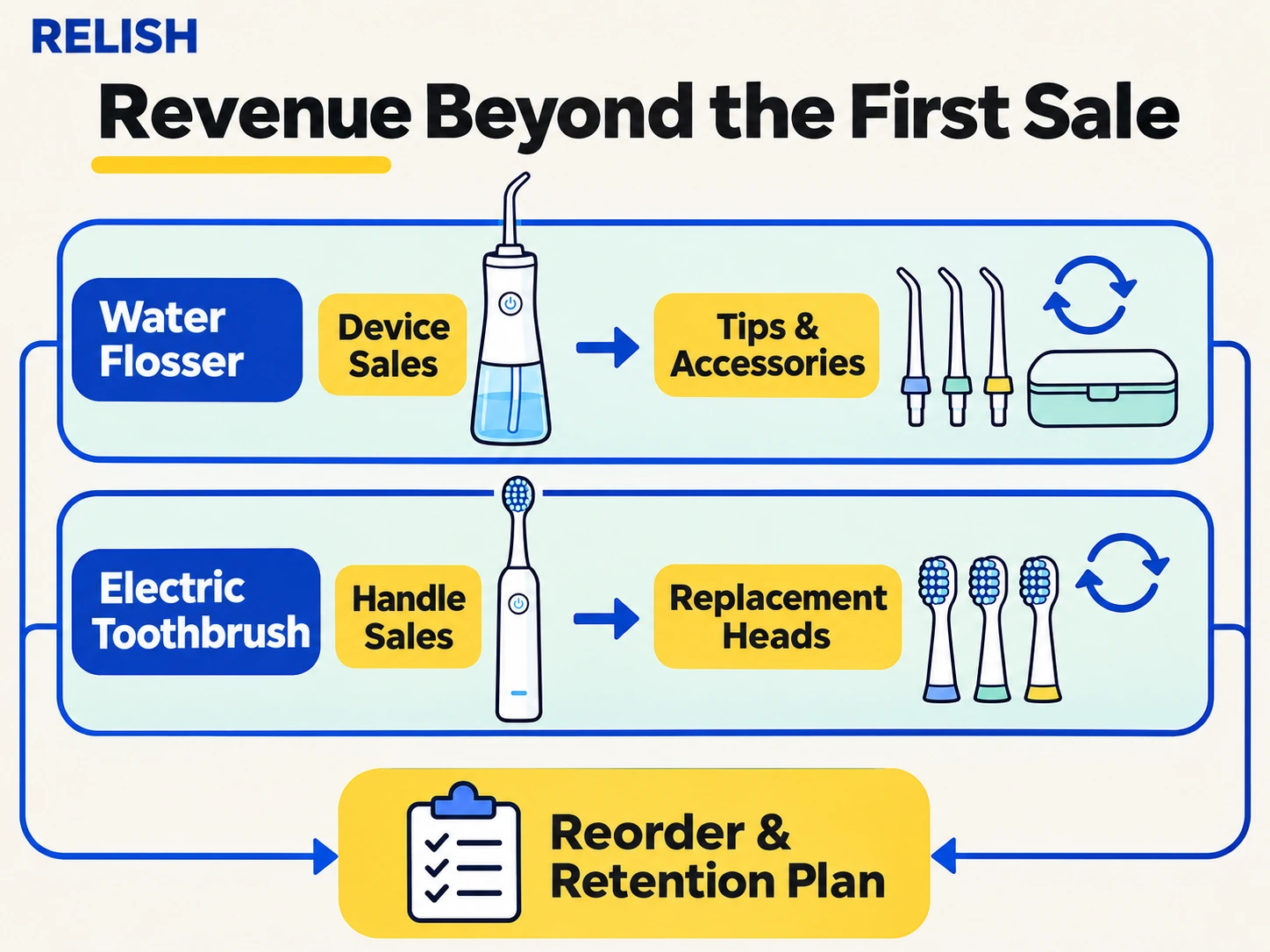
The real value in electric toothbrushes for private label brands is the consumable ecosystem: replacement brush heads generate 3–5x the annual revenue of the handle for active users. Building a subscription replacement head business creates predictable revenue and increases customer lifetime value (LTV).
Water Flosser: Fast-Growing Category with Open Lanes
Waterpik holds significant brand recognition, but the water flosser category doesn't have the same duopoly that Oral-B and Philips represent in electric toothbrushes. This means a well-positioned private label or emerging brand can capture meaningful market share more readily.
Consumer awareness of water flossers is growing but not saturated. This means a brand needs to invest in consumer education content, but it also means you're not fighting for attention against billion-dollar TV ad campaigns. Search volume for "water flosser" and related terms has climbed 35%+ in the past two years — the category is expanding on its own.
The Amazon Index
"Water flosser" generates ~180,000 searches/month on Amazon. "Electric toothbrush" generates ~600,000. Higher volume in electric toothbrush means more opportunity, but also more competition. Best Seller Rank #1 in water flossers typically requires fewer reviews and less PPC spend to achieve.
Financial Model: Which Business Builds Better?
Water Flosser Brand (Year 1 Scenario)
| Metric | Value |
|---|---|
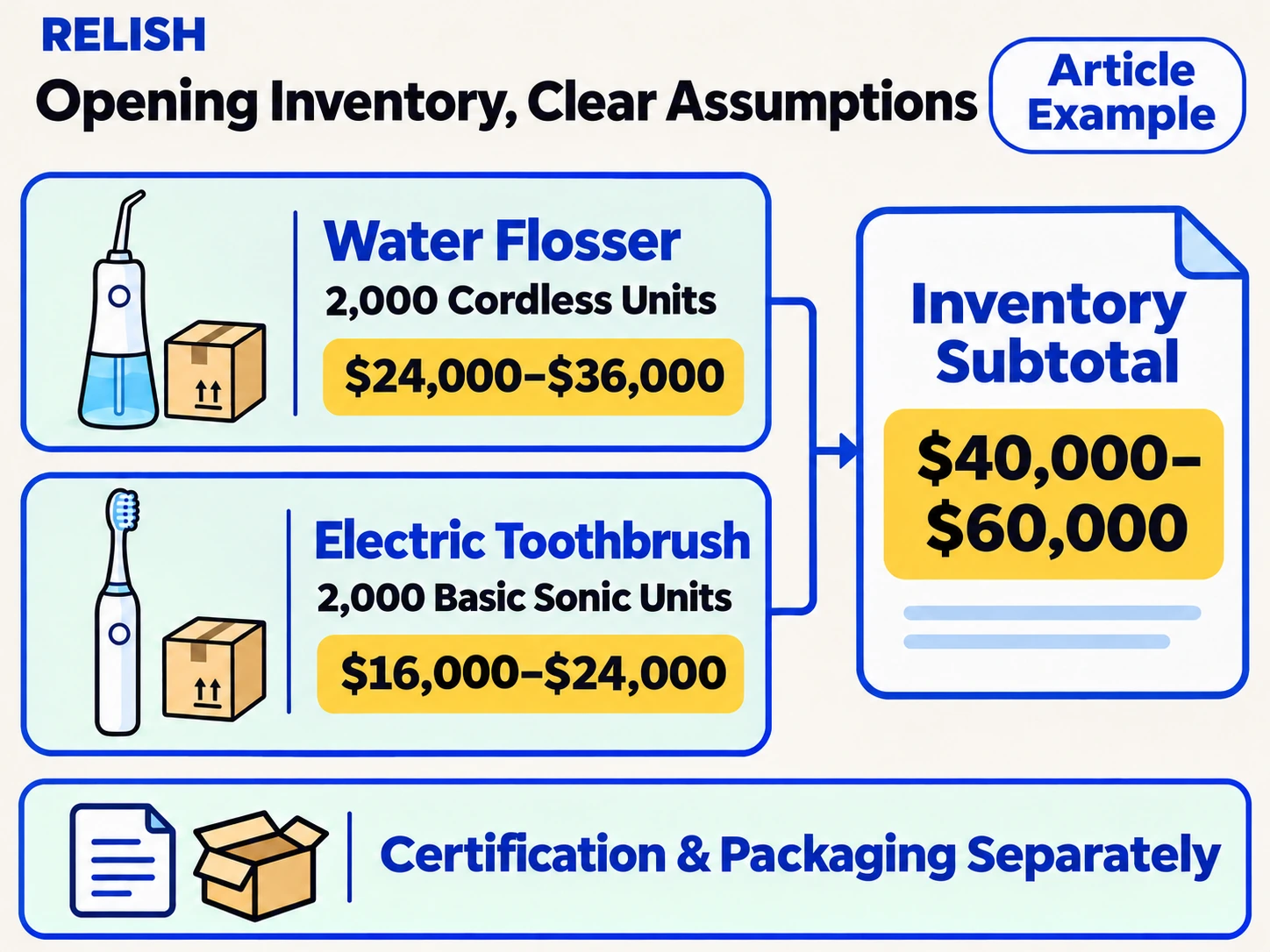
| Initial inventory (2,000 units cordless) | $24,000–$36,000 |
| Retail price (Amazon, DTC) | $35–$55 |
| Gross margin | 58–68% |
| Year 1 revenue (3 turns) | $210,000–$330,000 |
| Repeat purchase potential | Low. Primarily new units |
| Key competitive moat | Product differentiation, branding |
Electric Toothbrush Brand (Year 1 + Consumable Upside)
| Metric | Value |
|---|---|
| Initial inventory (2,000 units sonic basic) | $16,000–$24,000 |
| Retail price (Amazon, DTC) | $28–$45 |
| Gross margin | 55–65% |
| Year 1 hardware revenue | $168,000–$270,000 |
| Replacement heads (Year 2+) | +$8–12/user/year, high margin |
| 5-year LTV per customer | $55–$90 (handle + 4yr heads) |
Strategic Decision Framework
Choose Water Flosser First If:
Water Flosser is Right For You
- You want to enter a less crowded market with more room for challenger brands
- Your primary channel is Amazon/e-commerce (cordless dominates)
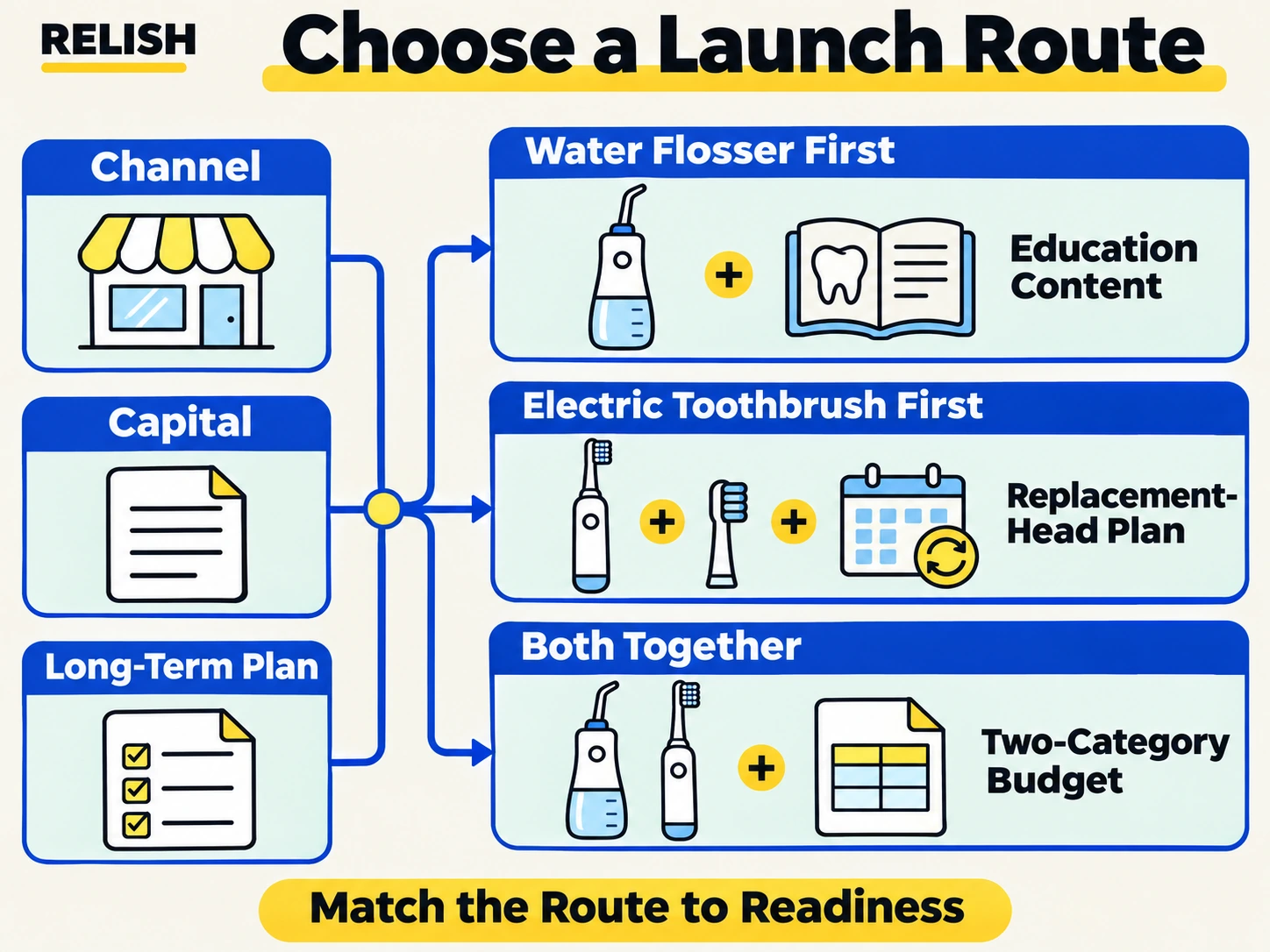
- You have $20,000–$50,000 initial capital
- You're comfortable creating educational content marketing
- Your target consumer is health-conscious, 25–45 age range
- You want higher unit ASP without fighting Oral-B on shelf
Electric Toothbrush is Right For You
- You want to sell into a category with proven mass-market consumer demand
- Your channel includes physical retail (pharmacy, supermarket)
- You have $40,000–$100,000+ capital and patient capital for year 2+ payoff
- Your long-term plan includes a subscription consumables revenue model
- You're targeting family and kids segments (high compliance category)
- You have a dental or professional healthcare distribution angle
The Best Strategy: Launch Both Together
The strongest oral care brand strategy is both products, sold as a paired system. A bundle of water flosser + electric toothbrush consistently outperforms either product sold independently on average order value (AOV), gifting appeal, and category authority.
Waterpik and Oral-B both carry the full product line for a reason: consumers who are serious about oral health tend to buy both. Cross-selling within your own ecosystem is also much cheaper than acquiring new customers each time.
Relish Tech's Bundle Advantage
As an OEM manufacturer producing both water flossers and electric toothbrushes, Relish Tech can supply your full oral care line from a single source: one quality standard, one supply chain, one account manager. Request a combo OEM quote for both categories.
Ready to Source Your Oral Care Product Line?
Relish Tech manufactures water flossers, electric toothbrushes, bamboo toothbrushes, and more. OEM/ODM for brands globally. Custom orders start at 1,000 units, with flexibility according to the actual order. In-stock wholesale orders start at 50 units. CE/FDA/FCC certified.
Request Catalog + PricingReferences
- Persistence Market Research. (2025). Global Water Flosser Market Report 2025–2033. Private label penetration 40%+ market share. [Source →]
- Straits Research. (2025). Electric Toothbrush Market Size & Share Analysis. Global market $7B+, CAGR 4.5–5.0%. [Source →]
- American Dental Association. (2024). Evidence-Based Clinical Recommendations. Powered toothbrushes reduce plaque 21% vs. manual. [Source →]