






Monddouche voor bruggen: zo reinig je onder een tandheelkundige brug
A water flosser for bridges may help clean beneath a fixed dental bridge. The false tooth, or pontic, can leave an area that a toothbrush cannot fully reach. Depending on the bridge design, a floss threader, bridge-specific floss or a water flosser can help with this part of your routine. This guide compares the options and explains how to use a water flosser according to the device instructions and your dental professional’s advice.
- A pontic can leave a space beneath a bridge where food may collect.
- A water flosser directs pulsed water beneath the bridge, where ordinary floss can be difficult to thread.
- The American Dental Association includes oral irrigators among interdental cleaning products; this does not establish suitability for every bridge or model.
- Follow the device instructions and your dental professional’s advice about tip choice, pressure, and frequency.
Start je een productlijn met monddouches? Lees de OEM-inkoopgids →
Waarom een tandheelkundige brug speciale reiniging nodig heeft
A fixed bridge replaces one or more missing teeth. Depending on its design, a pontic may sit above the gum and leave a space where food can collect. A toothbrush may not reach every surface beneath the pontic. Ordinary floss may not pass through a closed contact from above, but a floss threader or bridge-specific floss can be guided beneath it. A water flosser is another option to discuss with your dentist or hygienist.
Wat gebeurt er als je de ruimte niet reinigt?
Material that remains beneath a bridge can irritate the surrounding gum tissue. The American Dental Association (ADA) recommends cleaning between the teeth daily and includes oral irrigators among interdental cleaning products. For a bridge, a water flosser may be one suitable option. Your dentist or hygienist can demonstrate how to clean beneath the pontic.
Hoe een monddouche onder een brug reinigt
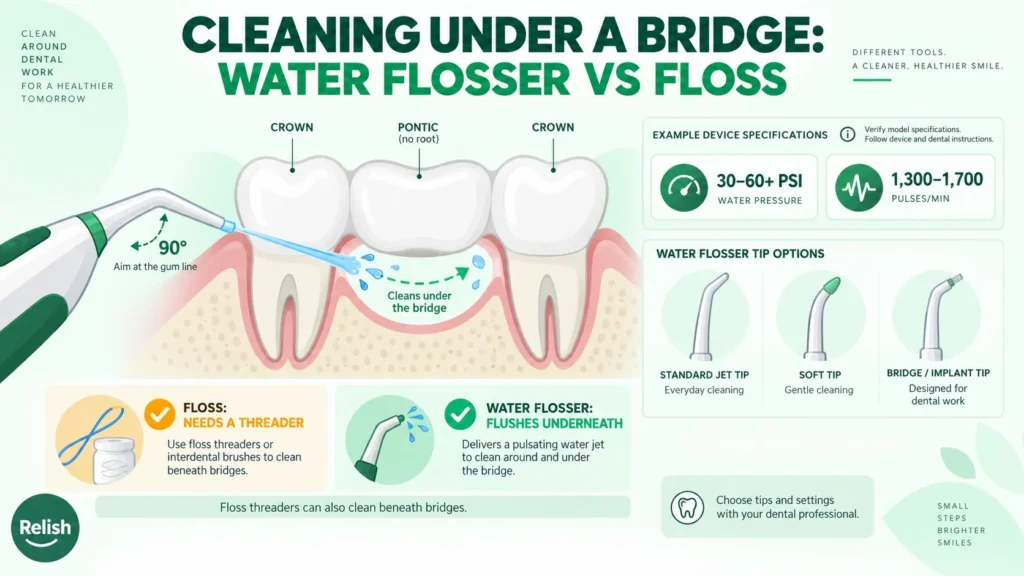
A water flosser directs a stream of water through a nozzle. Aiming the tip near the gumline beneath a bridge may help dislodge loose food debris from areas the stream can reach. Results depend on the device, tip, technique, and bridge design. A water flosser does not replace brushing or necessarily provide the same wiping action as floss.
Hoe de waterstraal de ruimte onder de brug bereikt
A floss threader or bridge-specific floss can be guided beneath the pontic and wiped along its underside. A water flosser may offer another way to flush loose debris without threading. NHS bridge-care guidance advises sweeping floss under the false tooth. Ask your dentist or hygienist to demonstrate the method that fits your bridge design.
Monddouche of floss voor bruggen
A floss threader helps you wipe beneath the false tooth; a water flosser directs water into areas its stream can reach. The table compares these functions for a fixed bridge.
A 2019 Cochrane review found that adding floss or interdental brushes to toothbrushing may reduce gingivitis or plaque, with low to very low certainty. Evidence for oral irrigators was limited and inconsistent, and most results were short term. These findings do not establish the best method for a particular bridge. A floss threader can help wipe beneath the pontic, while a water flosser can flush accessible areas around it.
Zo gebruik je een monddouche bij een brug
Correct positioning helps the water reach the intended area. Use a water flosser according to its instructions and the cleaning technique your dentist demonstrates.
- Start on the lowest pressure. Select the lowest setting recommended in the device instructions. Lean over the sink and place the tip in your mouth before turning the unit on. Adjust the setting only as directed.
- Follow the tip-angle instructions for your model. Aim along the gumline as directed by the manufacturer or your dental professional; do not force the tip beneath the gum.
- Trace the base of the bridge slowly. Move the tip slowly along the accessible gumline, following the device instructions and the technique demonstrated for your bridge.
- Clean the accessible sides. Where your bridge design allows, clean from the cheek and tongue sides as demonstrated by your dentist or hygienist.
- Finish with the contact points. Use floss or a floss threader at the accessible contacts and beneath the pontic, following your dental professional’s instructions.
Lees voor stapsgewijze uitleg over de rest van je mondverzorgingsroutine ook onze gids voor het reinigen van een opzetborstel.
De juiste monddouche voor bruggen kiezen
Check the manufacturer’s instructions and ask your dentist or hygienist whether a particular device and tip are suitable for your bridge. Adjustable pressure may let you choose a setting that feels comfortable; a larger reservoir can reduce refills, while a cordless model may be easier to travel with. Tip options vary by product, and compatibility with a specific bridge should not be assumed.
Selected portable models in the Relish range are listed with output of 1,300 to 1,700 pulses per minute and pressure settings from 30 PSI to above 60 PSI, depending on model and setting. Check the specifications for the model under consideration. These device figures do not establish a clinically appropriate setting for a healing site or a particular bridge.
Het mondstuk is net zo belangrijk als de handgreep
The tip and handle both affect how a water flosser is used. Tip designs vary by model; check the manufacturer’s instructions and ask your dentist which option is appropriate for your bridge. Replace tips according to the manufacturer’s guidance rather than assuming one interval applies to every product. For the product side of the choice, see our guide to portable versus countertop water flossers.
Voor merken: brugreiniging in het OEM-assortiment
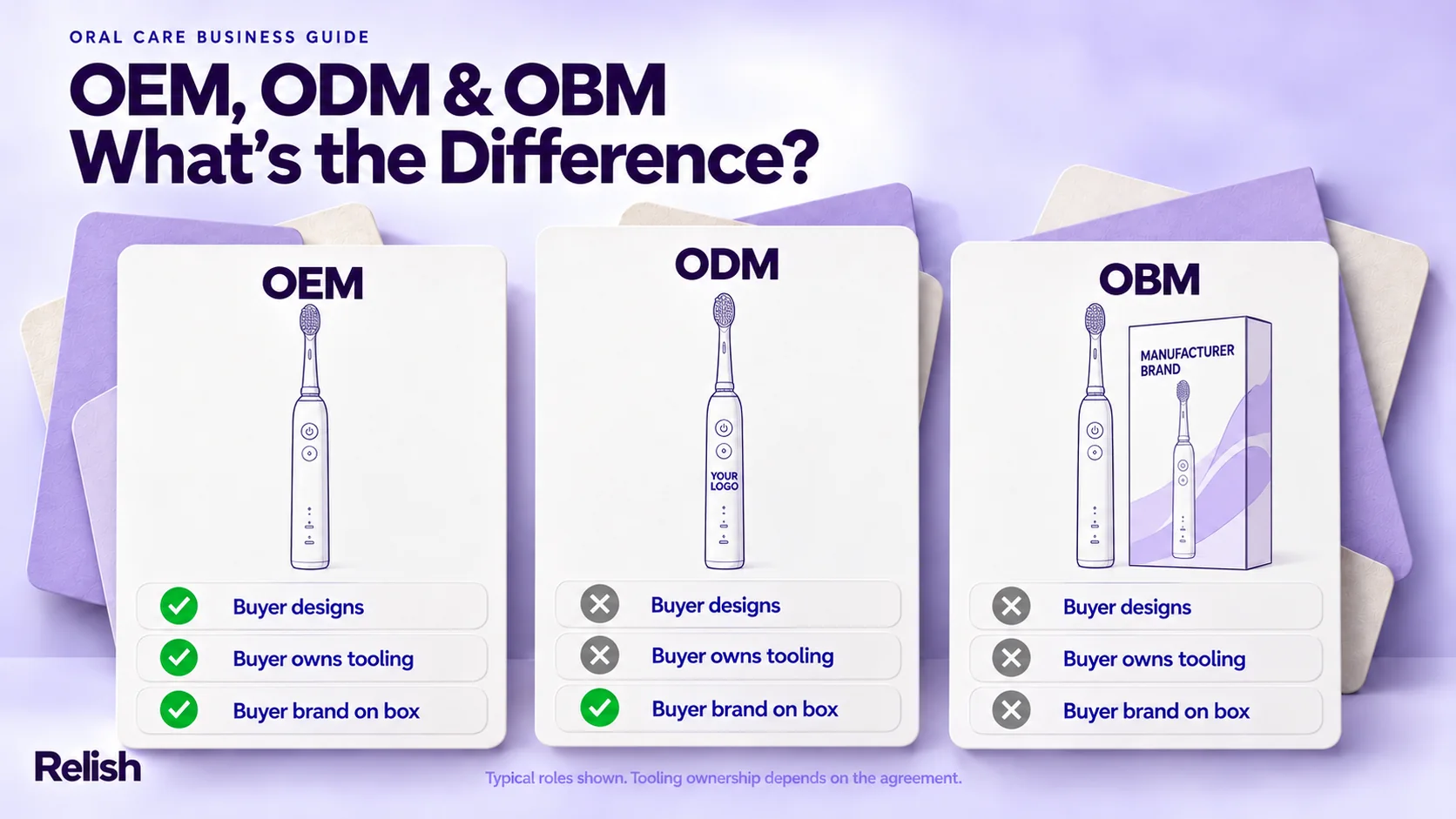
For OEM and private-label buyers, a water flosser intended for bridge cleaning needs a clearly defined use case and suitable instructions. Buyers comparing a water flosser for bridges may look at tip compatibility, pressure adjustment and ease of use. Describe the selected model’s features accurately and support any bridge- or implant-related claim with appropriate evidence.
- Bundle specialized tips. Confirm which tips fit the selected handle and which uses the manufacturer’s instructions cover. A bundled tip does not by itself establish suitability for every bridge or implant.
- Lead with adjustable pressure. Explain the available pressure settings and adjustment controls. Avoid describing a particular setting as suitable for healing tissue without appropriate evidence and dental guidance.
- Offer tip replacement packs. Offer compatible replacement tips with clear product identification and replacement instructions. See our replacement nozzles for available formats.
- Show the bridge use case. Use a clear demonstration that follows the device instructions. It should show how the product is used without implying an unsupported clinical result.
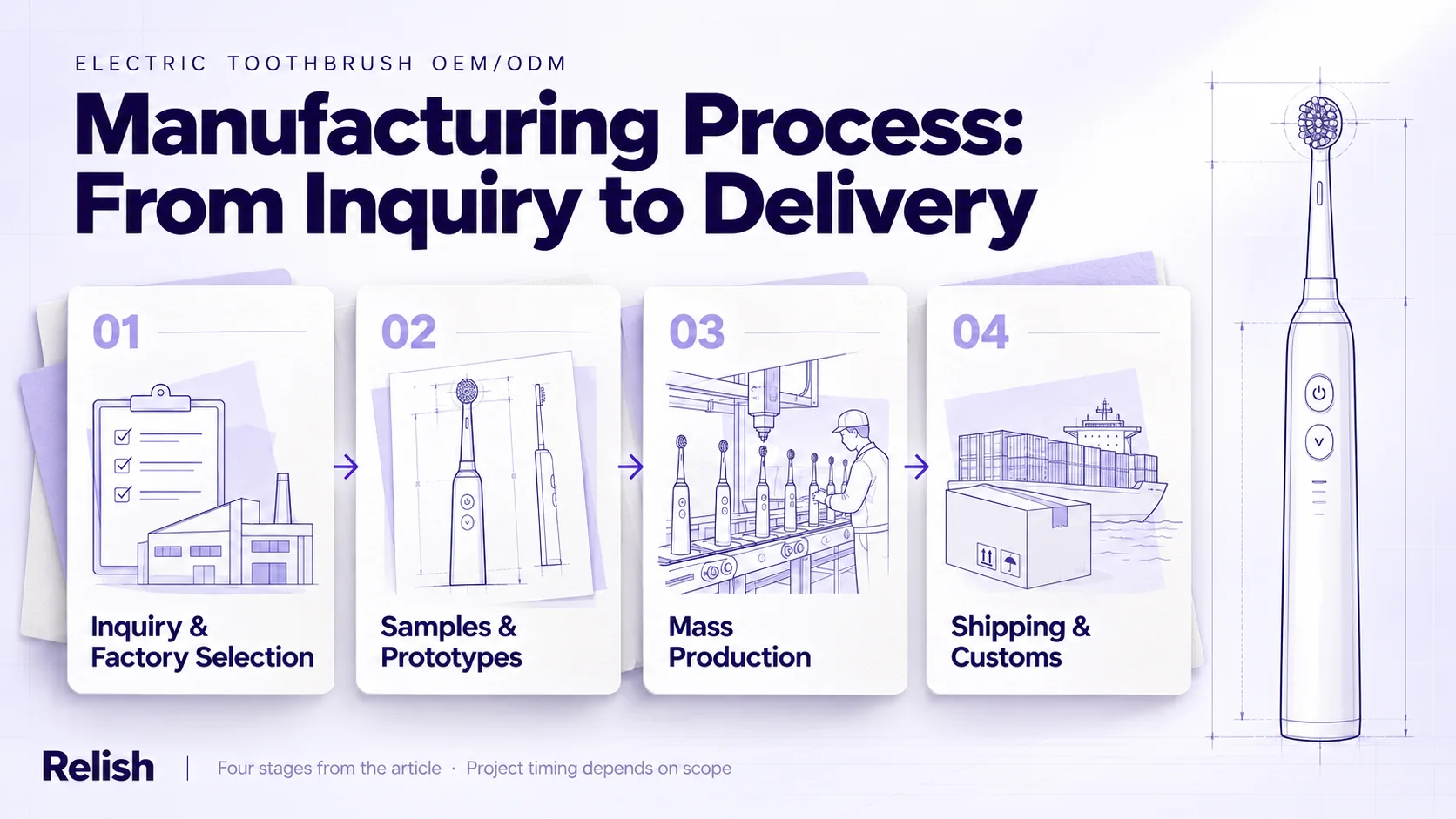
The standard MOQ for customized products, including private-label nozzles, is 1,000 units; smaller orders may be discussed case by case. Sample timing and production schedules are confirmed for each project after the product scope and specifications are agreed. The manufacturing facility holds ISO 9001 and ISO 13485 certifications. Product-specific regulatory documents and test reports depend on the model and destination market and should be confirmed for the selected configuration.
The internal reliability-testing log records more than 450 test items over nine months. Examples of recorded methods include IPX7 immersion under GB 4208-2017 (one metre of water for 30 minutes), a 72-hour full-unit test with waterproofing rechecks every 24 hours, 48-hour salt-spray testing under GB/T 2423.17-2008, and 72-hour immersion exposures in tap water, toothpaste slurry, and mouthwash. The programme also records checks of pressure and pulse ranges, plus a 19-point factory inspection for finished water flossers. These are test methods and records for identified samples or configurations; they do not establish that every model meets every rating or is suitable for every bridge. Reports should be reviewed for the exact model, sample, and acceptance criteria.
Customization options. Pressure, pulse, tips, and form factor may be adjustable within a platform’s design limits. The specifications in the table are starting points; confirm feasibility, tooling, target volume, and verification requirements for each requested configuration.
Relish Tech manufactures water flossers for OEM/ODM and private-label brands, with adjustable pressure options and specialized tips available by model. Browse the water flosser catalog to review current models.
Planning a water flosser for your product range? Contact Relish Tech →
Veelgestelde vragen
Kan ik een monddouche gebruiken bij een tandheelkundige brug?
Is een monddouche beter dan floss voor bruggen?
Welk mondstuk gebruik ik om onder een brug te reinigen?
Hoe vaak moet ik mijn brug met een monddouche reinigen?
Kan een monddouche een tandheelkundige brug beschadigen?
Moet ik floss blijven gebruiken als ik een monddouche gebruik?
Relish Tech supplies OEM/ODM water flossers with pressure settings and tip options that vary by model. Open the digital product catalog, or request a spec sheet and a sample unit to evaluate.
Richtlijnen voor het reinigen van bruggen zijn samengesteld op basis van aanbevelingen van de American Dental Association en bewijs uit Cochrane-systematische reviews. Geen vervanging voor professioneel tandheelkundig advies.
Bronnen
- American Dental Association. (z.d.). Dental floss / interdental cleaners. Geraadpleegd via https://www.ada.org/resources/ada-library/oral-health-topics/floss
- Leeds Teaching Hospitals NHS Trust. (z.d.). Bridges. Geraadpleegd via https://www.leedsth.nhs.uk/patients/resources/bridges/
- American Dental Association. (n.d.). Water flossers and water flossing. MouthHealthy. Retrieved from https://www.mouthhealthy.org/all-topics-a-z/water-flossers/
- Worthington, H. V., MacDonald, L., Poklepovic Pericic, T., Sambunjak, D., Johnson, T. M., Imai, P., & Clarkson, J. E. (2019). Home use of interdental cleaning devices, in addition to toothbrushing, for preventing and controlling periodontal diseases and dental caries. Cochrane Database of Systematic Reviews, 2019(4), CD012018. https://doi.org/10.1002/14651858.CD012018.pub2