



電動歯ブラシOEM向け認証ガイド:CE、FDA、FCCなど(2026年版)
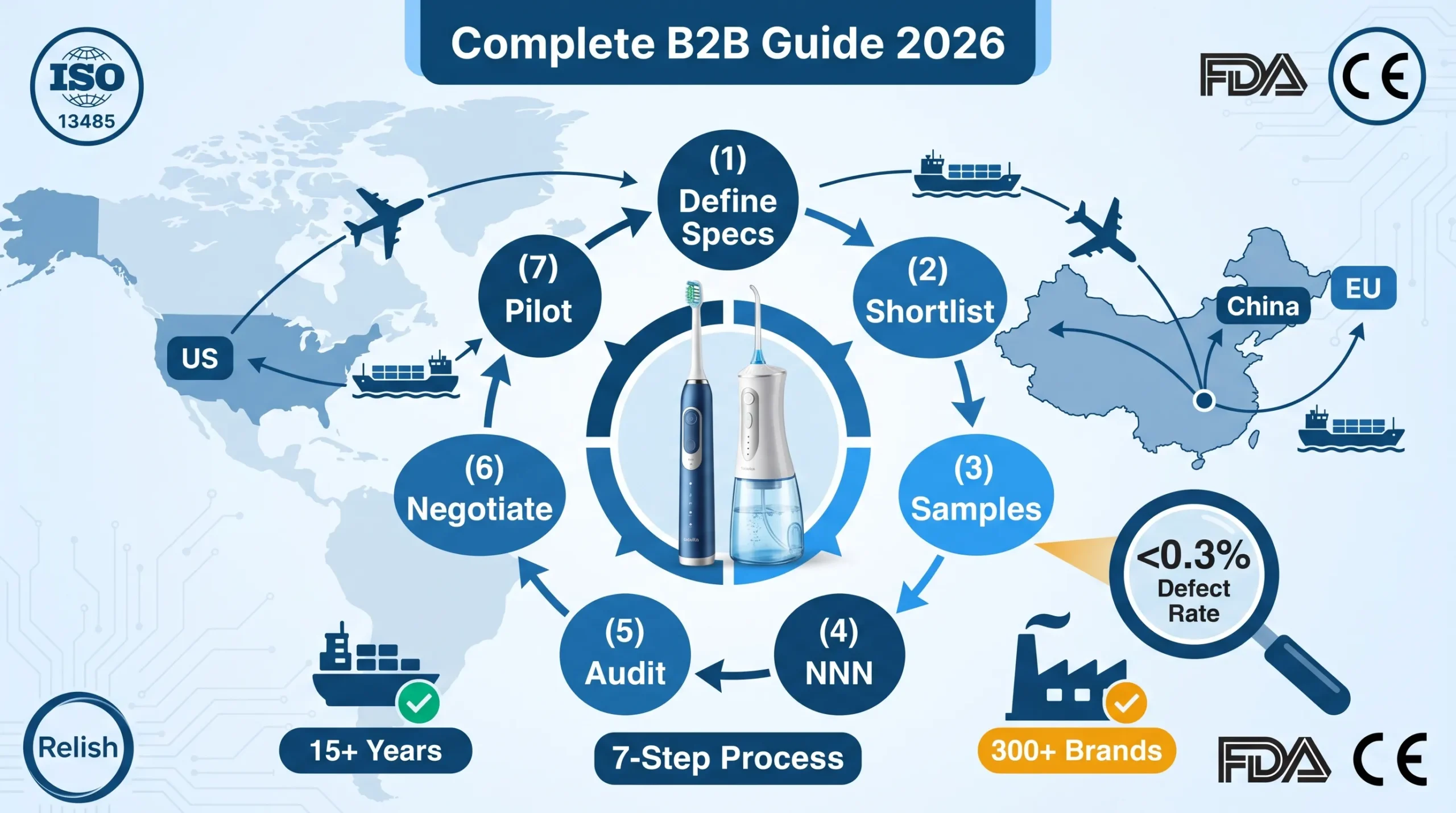
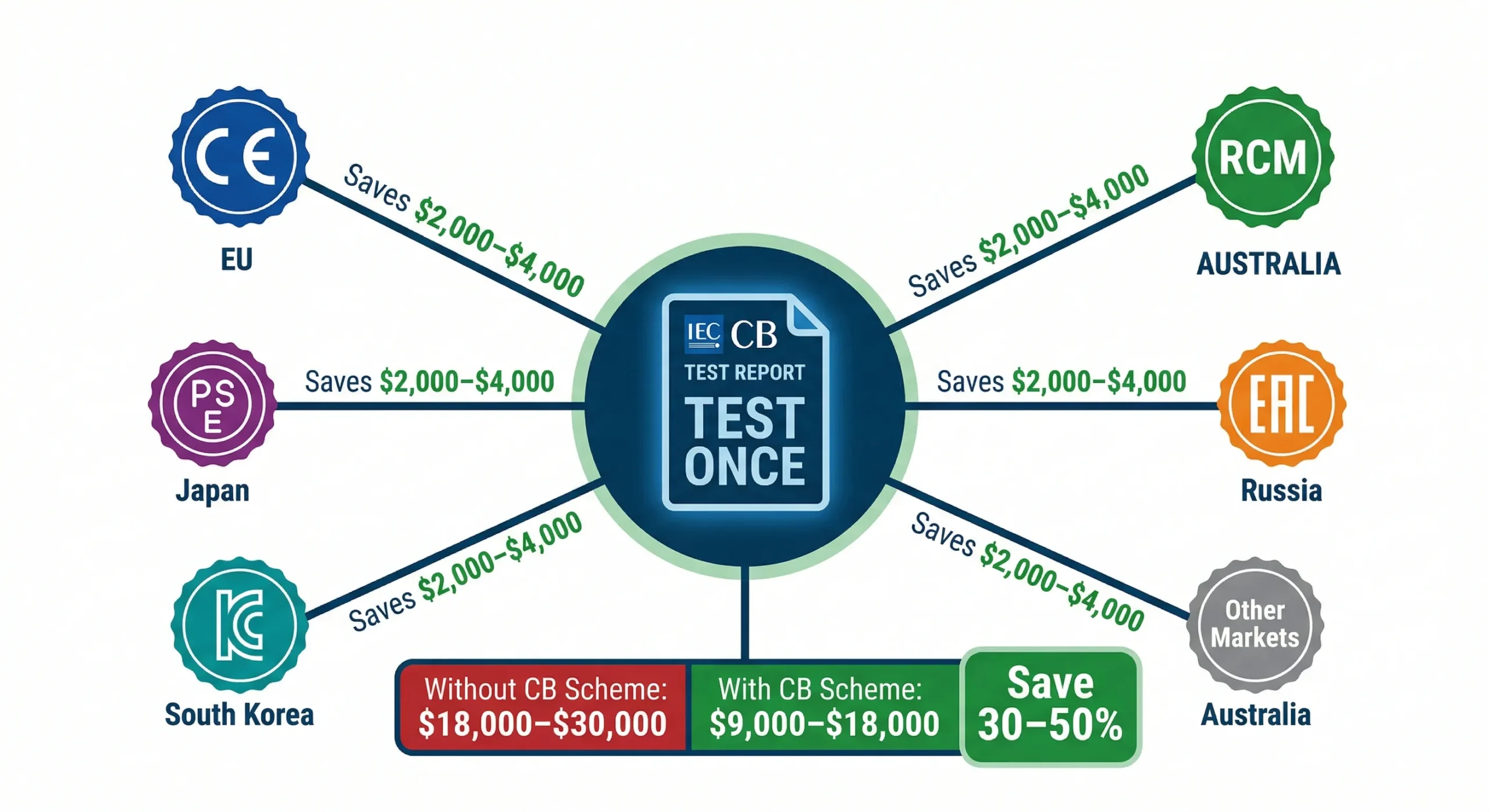
電動歯ブラシOEMは、対象市場ごとに必須認証を取得する必要があります:EU向けCE + RoHS(費用:$3,000~$8,000、4~8週間)、米国向けFCC(費用:$1,500~$4,000、2~4週間)、日本向けPSE、韓国向けKC、ロシア向けEAC。IPX7防水は業界標準です(法的要件ではありません)。CEはEU全27カ国をカバーし、FCCは米国のみをカバーします。IEC CBスキームを利用すると、1つの試験報告書で複数市場の認証を取得でき、3地域以上を対象とする場合、総コストを30~50%削減できます。.
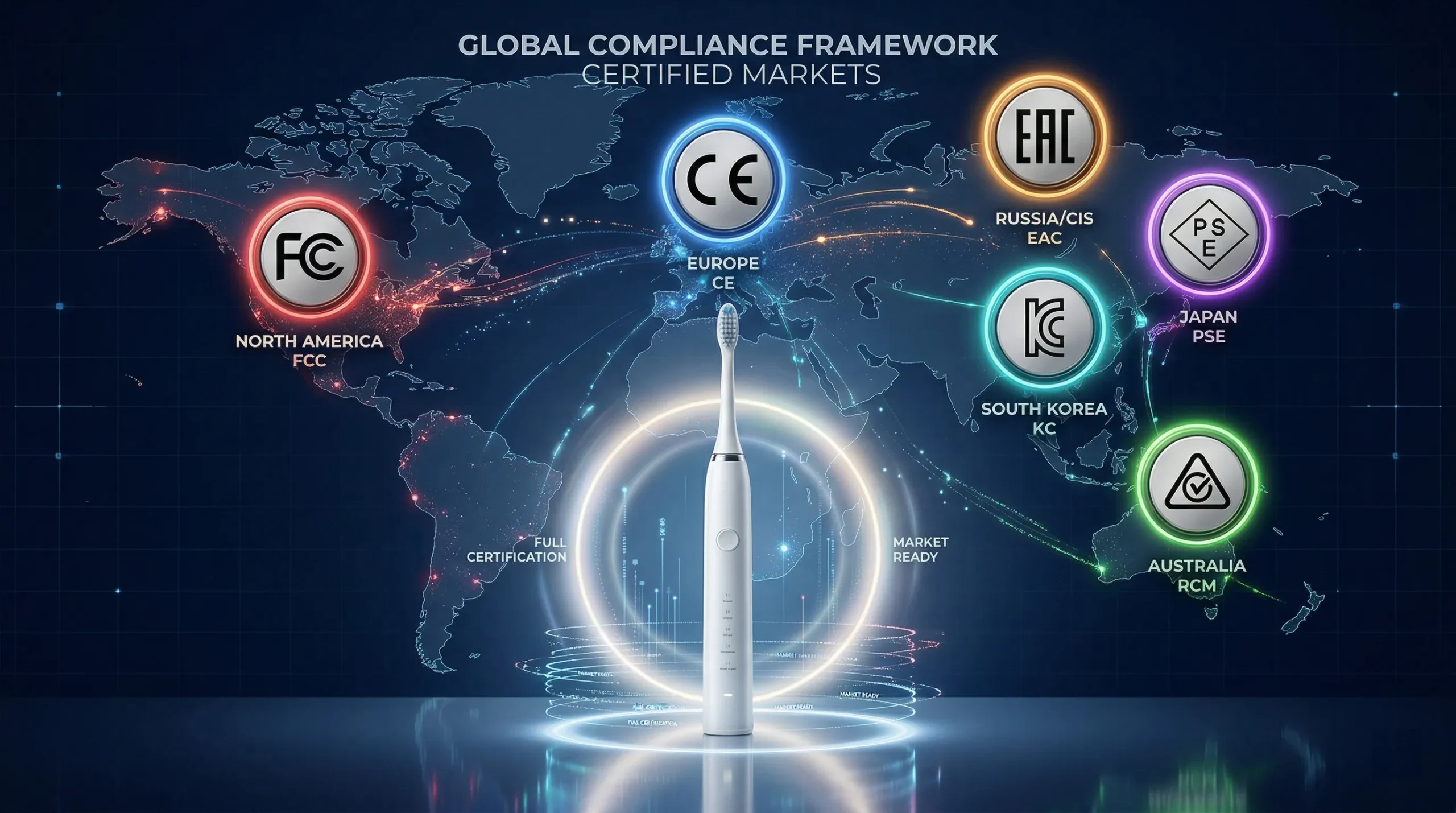
エグゼクティブサマリー:電動歯ブラシOEM認証
- EU必須(CE): EUで販売される電動歯ブラシは、LVD(2014/35/EU)、EMC(2014/30/EU)、RoHS(2011/65/EU)、およびRED(2014/53/EU、Bluetoothモデルの場合)に準拠する必要があります。費用:$3,000~$8,000 · 所要期間:4~8週間。CEはEU全27加盟国とEFTAをカバーします。.
- 米国必須(FCC + FDA): すべての電動歯ブラシにFCC SDoCが必要です。FDAクラスI機器登録は工場に義務付けられており、治療効果を謳わない一般消費者向けブランドは510(k)申請が免除されます。費用:$1,500~$4,000(FCC) · FDA施設登録:$11,423/年。.
- 複数市場での効率化: IEC CBスキームを利用すると、1セットの試験報告書をCE(EU)、PSE(日本)、KC(韓国)、RCM(オーストラリア)の基礎として使用でき、3市場以上を対象とする場合、認証総コストを30~50%削減できます。.
- 重要な洞察: ODM調達では、工場が既存プラットフォームで事前に取得しているCE、FCC、RoHS、IPX7の試験報告書を活用することで、認証コストを$5,000~$15,000節約できます。.
目次
クイックリファレンス:全認証の概要
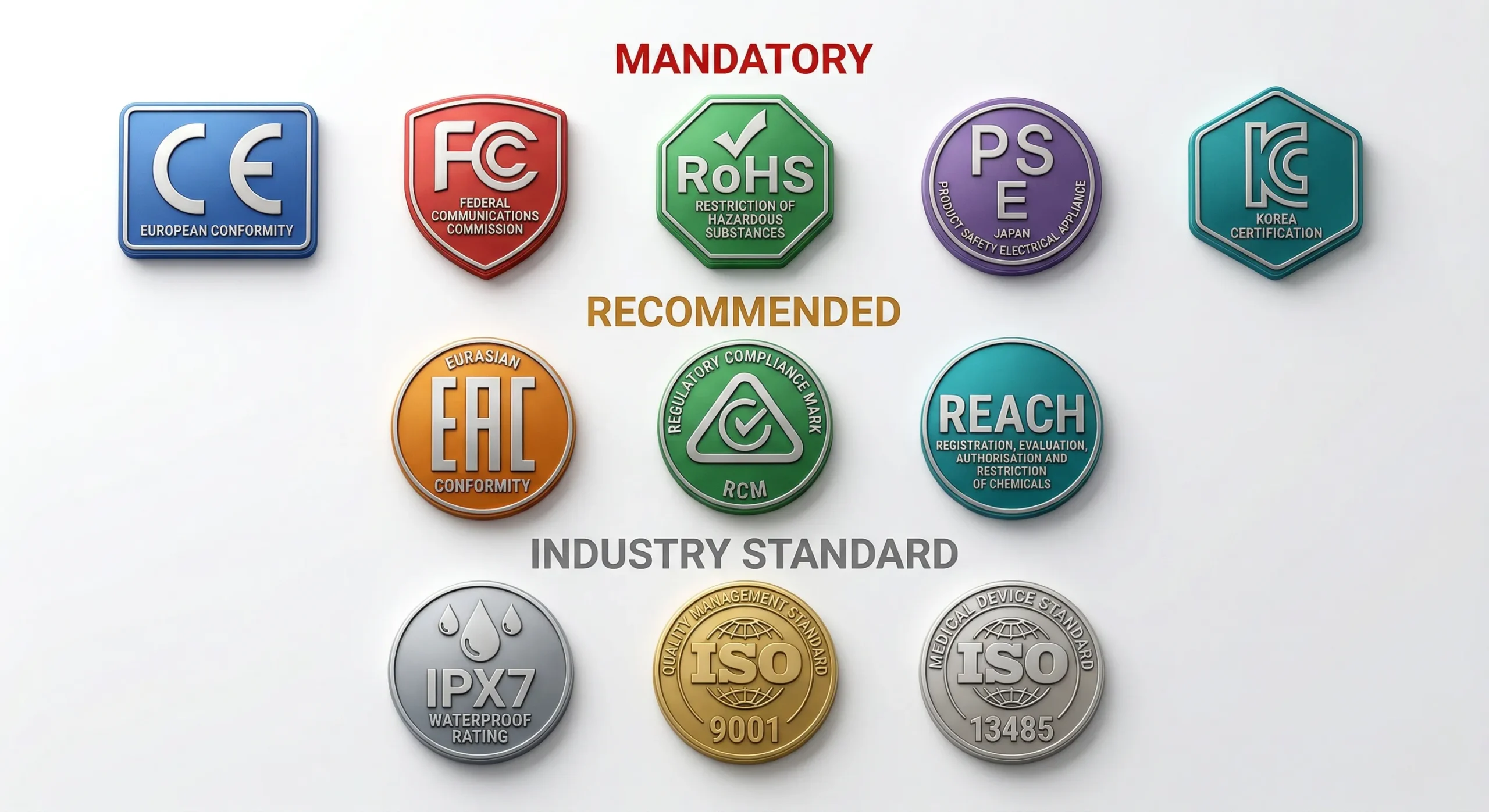
各認証の詳細に入る前に、電動歯ブラシOEM製造に関する完全なリファレンス表を以下に示します。
| 認証 | 市場 | 種類 | 一般的なコスト | タイムライン | 必須? |
|---|---|---|---|---|---|
| CE(LVD + EMC) | 欧州連合 | 安全性 + EMI | $3,000–$8,000 | 4~8週間 | 必須 |
| CE RED | EU(Bluetoothモデル) | 無線 | $2,000–$5,000 | 4~6週間 | Bluetooth搭載の場合 |
| FCC(SDoC) | 米国 | EMI | $1,500~$4,000 | 2~4週間 | 必須 |
| FDA登録 | 米国 | 医療機器 | $5,000~$15,000* | 4~12週間 | 必須* |
| RoHS | EU / グローバル | 環境 | $500-$2,000 | 2~4週間 | 必須(EU) |
| REACH | 欧州連合 | 化学物質安全性 | $1,000–$3,000 | 3~6週間 | 必須 |
| PSE(日本) | 日本 | 安全性 | $2,000–$5,000 | 4~8週間 | 必須 |
| KC(韓国) | 韓国 | 安全性 + EMI | $2,000–$5,000 | 4~8週間 | 必須 |
| EAC(ロシア/CIS) | ロシア、ベラルーシ、カザフスタン | 安全性 | $2,000–$4,000 | 6~10週間 | 必須 |
| アイピーエックスセブン | 全市場 | 防水 | $200–$800 | 1~2週間 | 業界標準 |
| ISO 9001 | 全市場 | 工場品質 | $3,000–$8,000 | 6–12 个月 | バイヤーが期待する品質 |
* FDAの費用と要件は分類によって異なります。治療効果を謳わない一般的な電動歯ブラシのほとんどはClass I 510(k)免除対象ですが、施設登録は必要です。.
CE + RoHS
欧州連合(27加盟国+EFTA)で販売するために必須。.
FCC + FDA Reg
米国で販売するために必須。FCCは電磁波、FDAは機器登録に関する規制。.
PSE + KC
日本と韓国で必須 — 高価格帯のプレミアムオーラルケア市場。.
ISO 13485
医療機器品質管理。工場の差別化を図り、臨床ポジショニングのブランドをサポート。.
📋 メーカーについて:Relish Technology
Relish Technologyは、深センを拠点とするオーラルケアOEM/ODM工場である。 14年以上の輸出経験 電動歯ブラシ業界において。当社の既存プラットフォームはすでに CE、FCC、RoHS、IPX7, 、およびPSE認証を取得しており、ODMやプライベートラベルのバイヤーは既存のテストレポートを活用できることが多く、認証にかかる数ヶ月の時間と$5,000~$15,000のテスト費用を節約できます。当社施設: 20,000 m²の工場 · 月産120万台以上 · ISO 9001、ISO 13485認証取得 · 120カ国以上に製品を輸出。. 認証コンサルテーションをリクエスト →
CEマーキング(欧州連合)
CEマーキングは、欧州で販売する電動歯ブラシブランドにとって最も重要な認証です。これがない場合、製品をEUで合法的に販売することはできず、税関で不適合品が差し押さえられ、廃棄される可能性があります。.
該当するEU指令
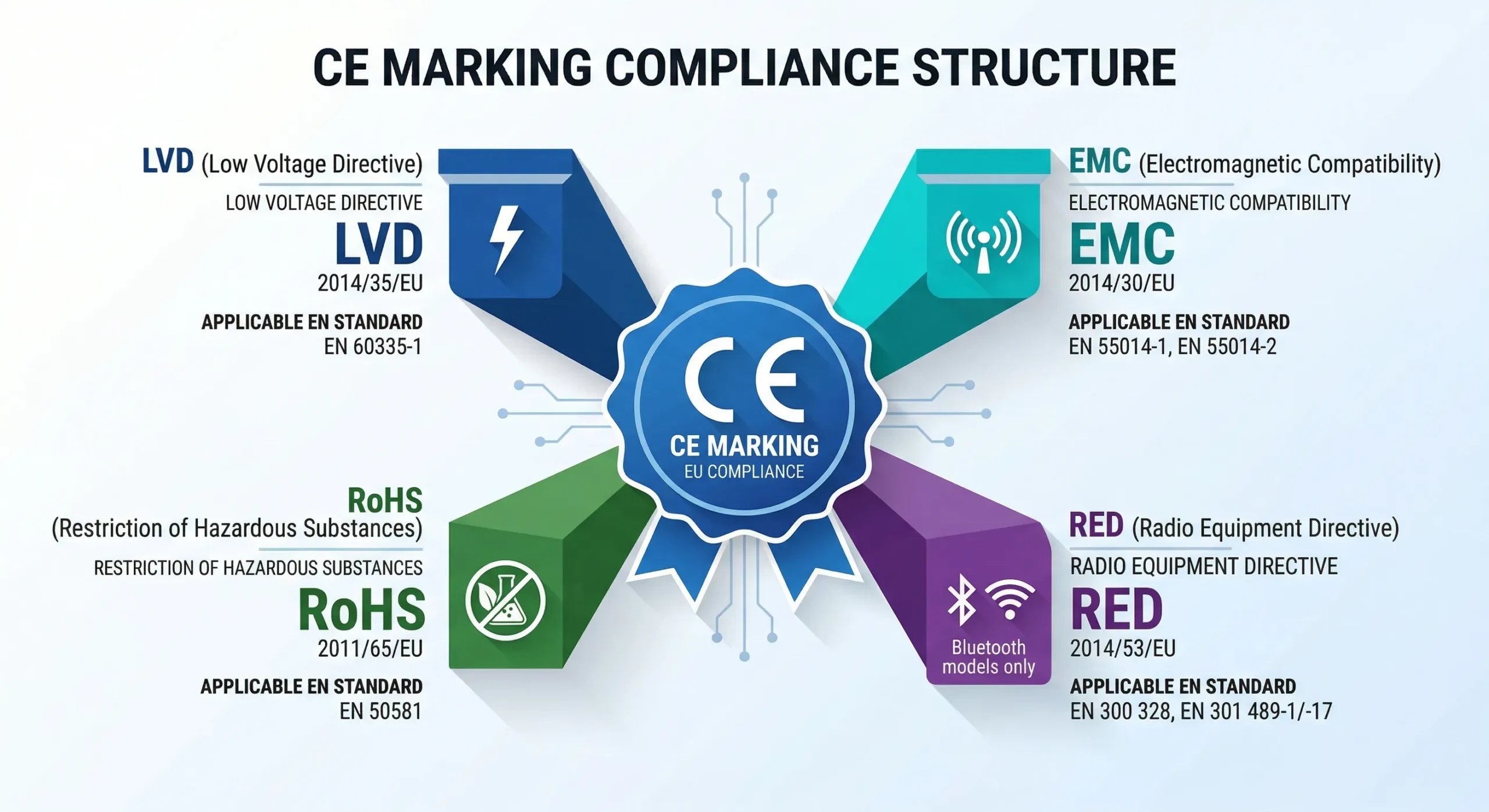
電動歯ブラシは 複数のEU指令に同時に該当します [1]. 。該当するすべての指令に準拠する必要があります:
- LVD(2014/35/EU)— 低電圧指令: 50~1000V ACで動作する電気機器の安全要件。電気絶縁、漏れ電流、機械的強度、耐熱性をテスト。規格:EN 60335-1(一般)+ EN 60335-2-52(口腔衛生機器固有)。.
- EMC(2014/30/EU)— 電磁両立性: 歯ブラシが過度の電磁干渉を放出せず、外部EMIに対して耐性があることを保証。規格:EN 55014-1(エミッション)+ EN 55014-2(イミュニティ)。.
- RoHS(2011/65/EU)— 有害物質制限指令: 電子部品およびはんだにおける鉛、水銀、カドミウム、六価クロム、PBB、PBDEの使用を制限。.
- RED(2014/53/EU)— 無線機器指令: 歯ブラシにBluetoothまたはワイヤレス充電機能がある場合のみ必要。. 無線周波数エミッションと安全性をテスト。追加費用:$2,000~$5,000。.
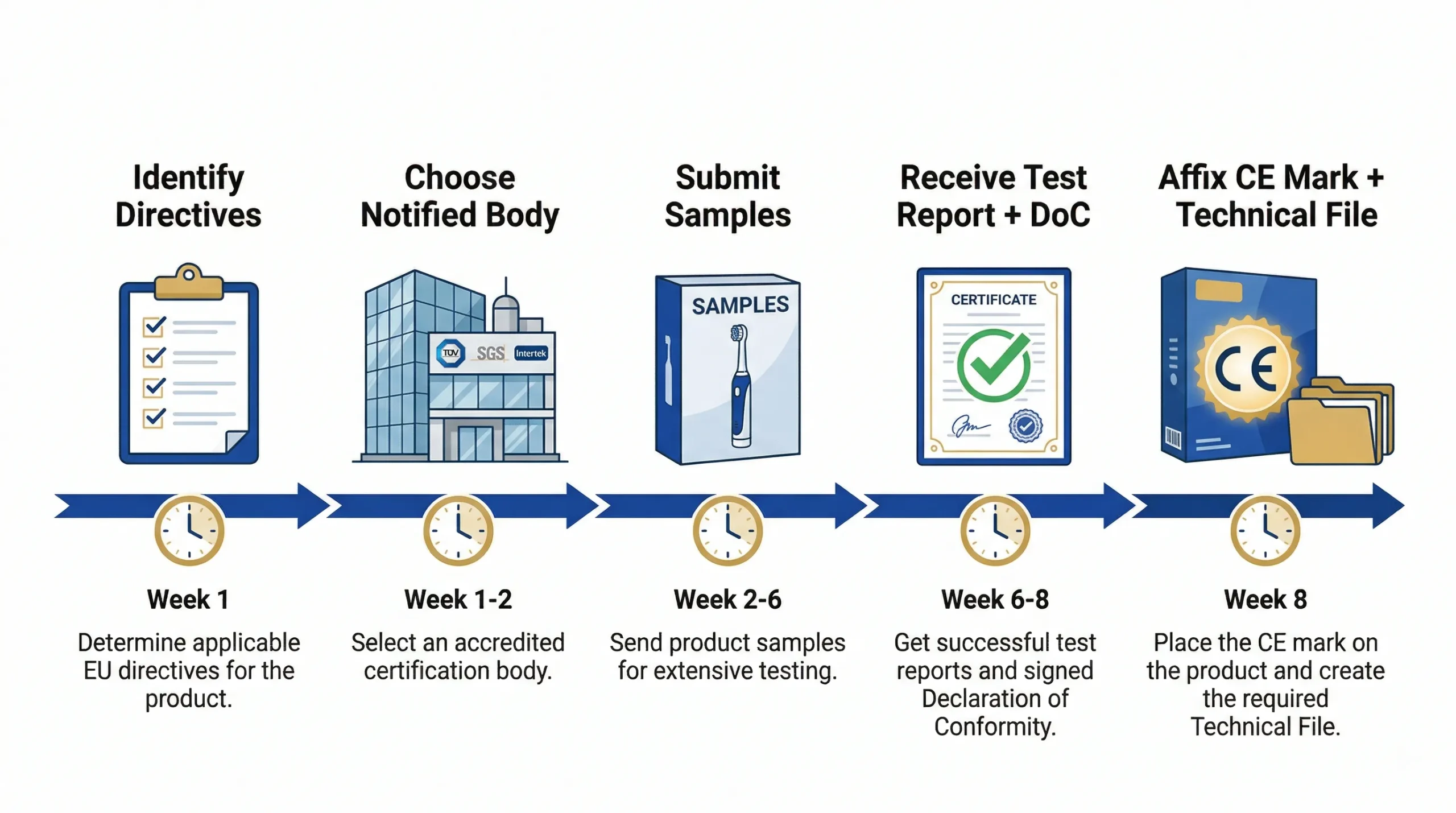
CE認証プロセス
該当する指令と規格を特定する
製品の特徴(Bluetooth?ワイヤレス充電?バッテリーの種類?)に基づき、該当するEU指令を判断する。各指令を対応するEN規格にマッピングする。.
認証機関(LVD用)を選定する
電動歯ブラシのLVD評価には通常、認証機関(EU指定の認定試験機関)が必要。選択肢:TÜV Rheinland、TÜV SÜD、SGS、Intertek、DEKRA。.
試験用サンプルを提出する
生産を代表するサンプル5~10個を選定した試験機関に送付する。試験内容:絶縁耐力、絶縁抵抗、漏れ電流、機械的強度、異常動作、水の浸入(IPX7)、EMC。.
試験報告書とEU適合宣言書(DoC)を受け取る
全試験に合格後、試験機関が試験報告書を発行する。ブランド/製造元として、EU適合宣言書(DoC)を作成し署名する。.
CEマーキングを貼付し、テクニカルファイルを準備する
製品、パッケージ、取扱説明書にCEマークを印刷する。試験報告書、リスクアセスメント、設計書類、DoCを含むテクニカルファイルをまとめる。このファイルは最終製造から10年間、検査のために保管する必要がある。.
⚠️ CEにおける「製造元」は誰か?
EU規制の枠組みでは、「製造元」とは製品とパッケージに名前と住所が記載される事業者を指す。製品に自社ブランド名が表示されている場合、, あなた が責任ある製造元となる——中国の工場ではない。つまり、CEの責任はあなたにある。工場との契約書に、CEコンプライアンスを誰が担当し、テクニカルファイルを管理するかを明確に定めること。.
FCC認証(米国)
FCC(連邦通信委員会)認証は、電磁エネルギーを放出する米国で販売されるすべての電子機器に必須——モーターとバッテリーを搭載した充電式電動歯ブラシも含まれる。.
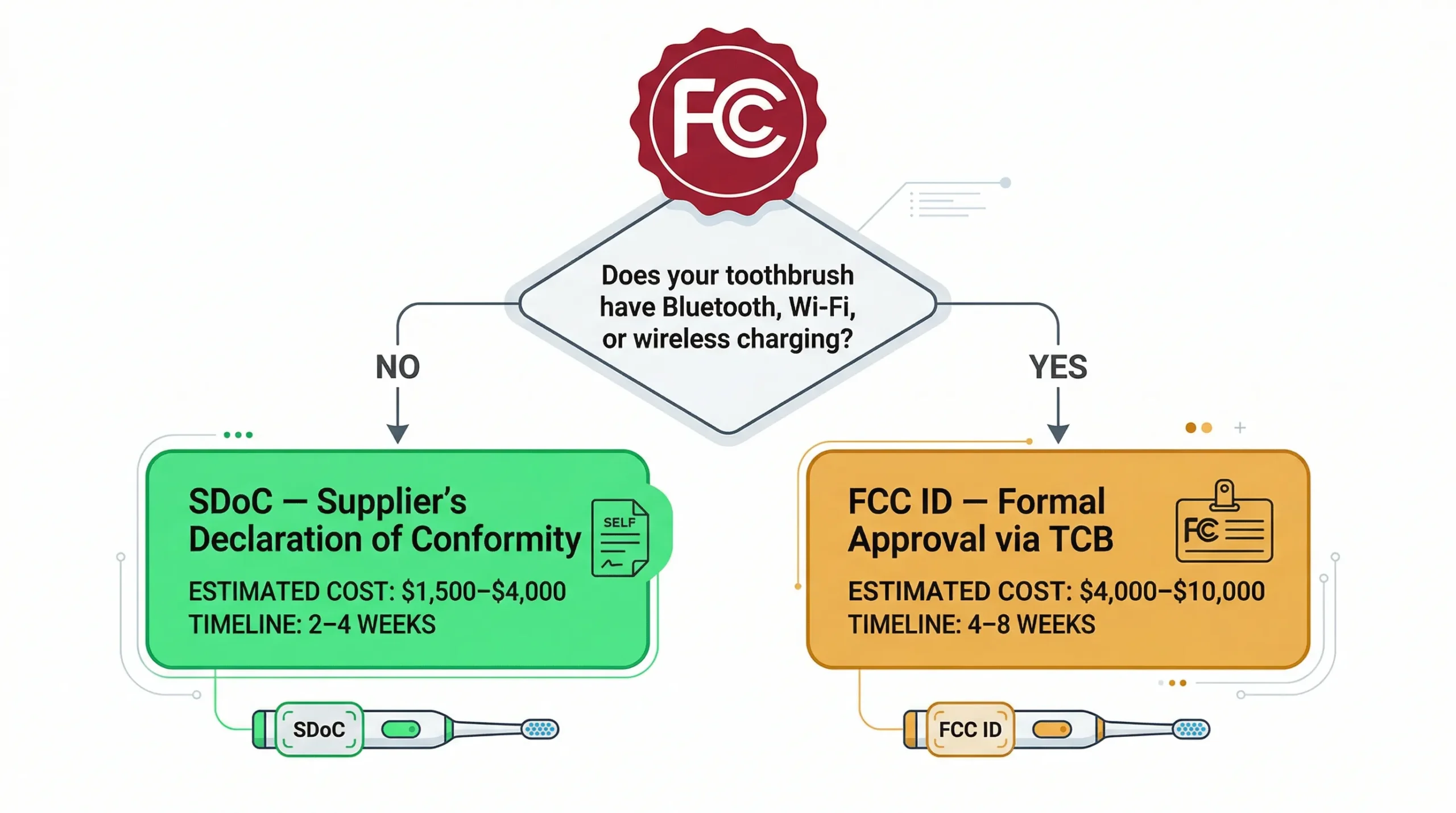
SDoC vs FCC ID
ほとんどの電動歯ブラシ(Bluetoothやワイヤレス充電なし)は、 SDoC(供給者適合宣言), の対象となり、これはより簡易な方法である:
- SDoC: FCCの承認は不要。認定試験機関で試験を受け、合格した試験報告書を取得し、自己宣言でコンプライアンスを証明する。FCCロゴと「This device complies with Part 15」の文言をラベルに表示。費用:$1,500~$4,000。.
- FCC ID: デバイスに意図的な放射器(Bluetooth、Wi-Fi、ワイヤレス充電)がある場合に必要。電気通信認証機関(TCB)を通じた正式なFCC承認が必要。費用:$4,000~$10,000。期間:4~8週間。.
試験要件
- Part 15.109: 放射エミッション——モーターの電磁放射がFCCの制限値以下であることを確認
- Part 15.107: 伝導エミッション——電源/USB充電ケーブルを通じたエミッションを試験
- AC電源線伝導エミッション: デバイスがACアダプター(USB直接接続ではない)で充電する場合
💡 ODMの利点:事前認証済みプラットフォーム
ODMで調達する場合、工場の既存の歯ブラシプラットフォームが有効なFCC SDoC試験報告書をすでに保有している可能性がある。モーター、バッテリー、回路基板が同一であれば、これらの報告書を自社ブランド版に活用できる。これにより$1,500~$4,000と2~4週間を節約できる。工場にFCC報告書が正確な構成をカバーしていることを確認すること。.
FDA要件(米国)
電動歯ブラシに関するFDAの役割は、オーラルケア製造において最も誤解されている分野の一つである。現実は以下の通り:
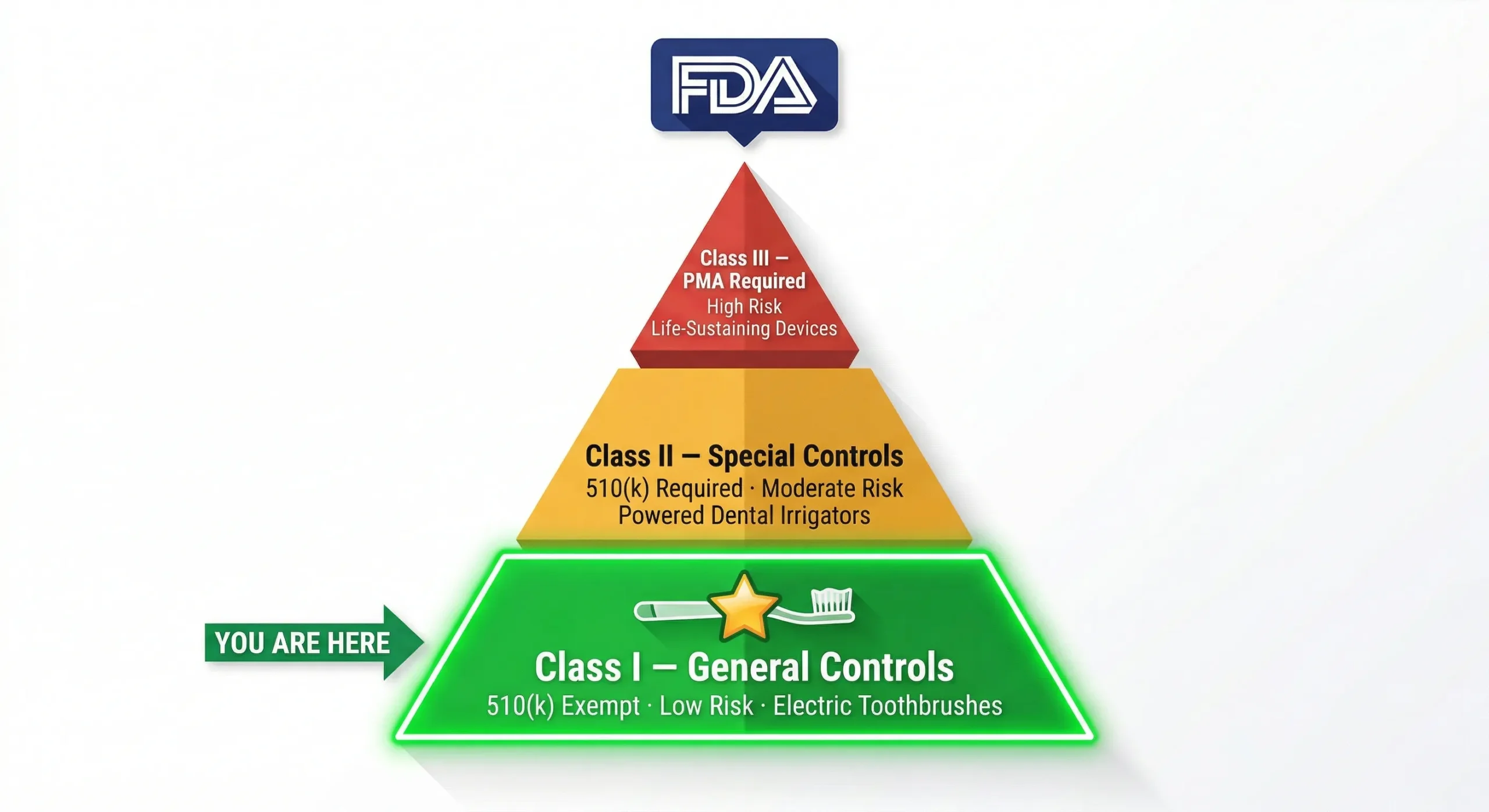
分類:クラスI医療機器(510(k)免除)
FDAはほとんどの消費者向け電動歯ブラシを クラスI医療機器 として分類し、21 CFR Part 872(歯科用機器)、具体的には872.6840(電動歯ブラシ)に該当する [3]. 。パッケージやマーケティング資料で治療効果を主張しない限り、一般的に510(k)事前販売通知は免除される。 IF パッケージやマーケティング資料で治療効果を主張しない場合。.
必要なもの
- 施設登録: 米国市場向け医療機器を製造するすべての製造施設はFDAに登録する必要がある。中国の工場が対応するが、ブランド側も「初回輸入業者」として登録する必要がある。年間施設登録料(FY2026): $11,423.
- 機器リスト登録: 各製品モデルをFDAの機器データベースに登録し、登録施設と紐付ける必要がある。.
- 品質システム(21 CFR Part 820): クラスI免除デバイスの場合、完全なQSR準拠は必須ではありませんが、FDAは「適切な品質管理」を期待しています。ほとんどの本格的なOEM工場はISO 13485、または最低でもISO 9001を取得しています。.
- 有害事象報告(MDR): 製品が傷害を引き起こした場合、30日以内にFDAに医療機器報告書を提出しなければなりません。.
510(k)が必要な場合
- 製品が治療効果を謳う場合:「歯肉炎を治療する」、「歯周病を逆転させることが臨床的に証明された」、「FDA認可済み」"
- 製品が市場の既存製品と大幅に異なる技術を使用する場合
- 保険償還やプロフェッショナル歯科使用のために医療機器として販売したい場合
510(k)が必要な場合、追加 $20,000~$100,000 そして 3~12ヶ月 をスケジュールに加えてください。.
⚠️ 電動歯ブラシに「FDA承認」と表示しないでください
FDAはクラスI医療機器を「承認」しません。登録するものです。電動歯ブラシのマーケティング資料に「FDA承認」と使用することはコンプライアンス違反です。正しい表現:「FDA登録済み」または「FDAリスト掲載」。この区別はFTC広告コンプライアンスにとって重要です。.
RoHSおよびREACH(環境コンプライアンス)
RoHS(有害物質使用制限指令)
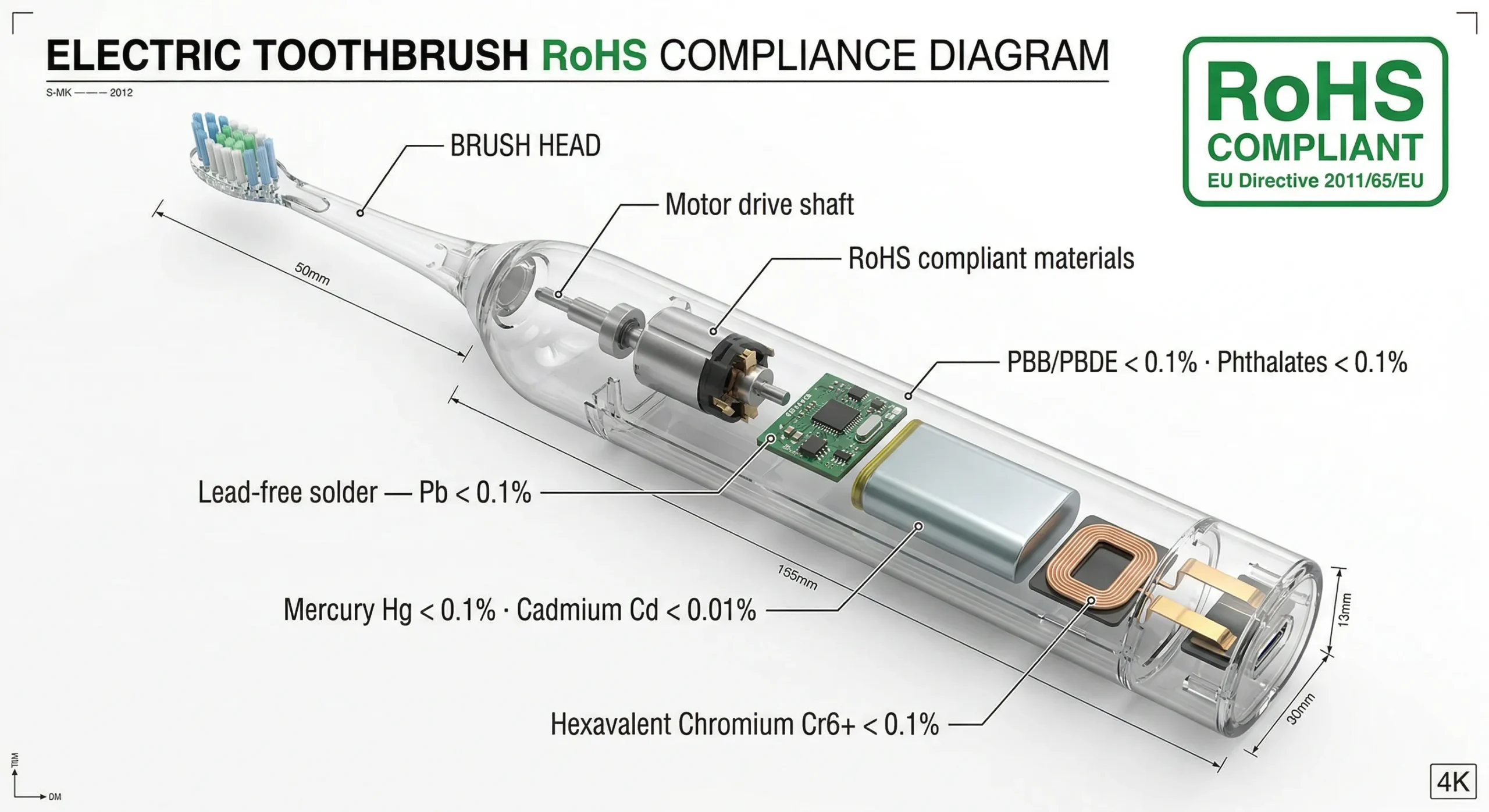
RoHSは、EUで販売される電子製品における有害物質の濃度を制限します [1]. 。この指令は現在、電子機器において 10種類の物質 を制限しており、鉛、水銀、カドミウム、六価クロム、PBB、PBDE、および4種類のフタル酸エステル(DEHP、BBP、DBP、DIBP)が含まれます [2]. 。電動歯ブラシにおいて最も重要な制限値は以下の通りです:
- 鉛(Pb): < 0.1%(1000 ppm)— はんだやPCB部品に最も重要
- 水銀(Hg): < 0.1% — 電池セルに関連
- カドミウム(Cd): < 0.01%(100 ppm)— 電池接点やメッキに関連
- 六価クロム(Cr6+): < 0.1% — 金属仕上げ
- PBB / PBDE: < 0.1% — プラスチック中の難燃剤
REACH(化学物質の登録、評価、認可、制限)
REACHは、EUで年間1トンを超えて製造または輸入される化学物質はすべてECHA(欧州化学物質庁)に登録することを要求します。電動歯ブラシブランドにとって、REACHは主に以下に影響します:
- プラスチックハウジング材料(ABS、PP、TPE)
- ブラシヘッドの毛(ナイロンフィラメント)
- 組み立てに使用される接着剤とシーラント
- 電池電解液
材料サプライヤーはREACH準拠の宣言書を提供する必要があります。OEM工場はコンプライアンス文書をまとめる責任がありますが、法的責任は製品にブランド名を表示する側にあります。.
💡 ODMの近道:事前準拠材料
確立されたODMプラットフォームは通常、すでにRoHS準拠の材料を使用しており、サプライヤーからのREACH宣言書を保有しています。新しい試験に費用を支払う前に、工場に既存のRoHS試験報告書とREACH SVHC(高懸念物質)スクリーニング報告書を依頼してください。.
アジア太平洋地域:PSE、KC、EACなど
日本と韓国は世界で最も価値の高いオーラルケア市場の一つです。日本の消費者はプレミアム電動歯ブラシに$50~$150を支払います。しかし、両市場とも厳格な輸入認証要件があります。.
🇯🇵 PSEマーク(日本)
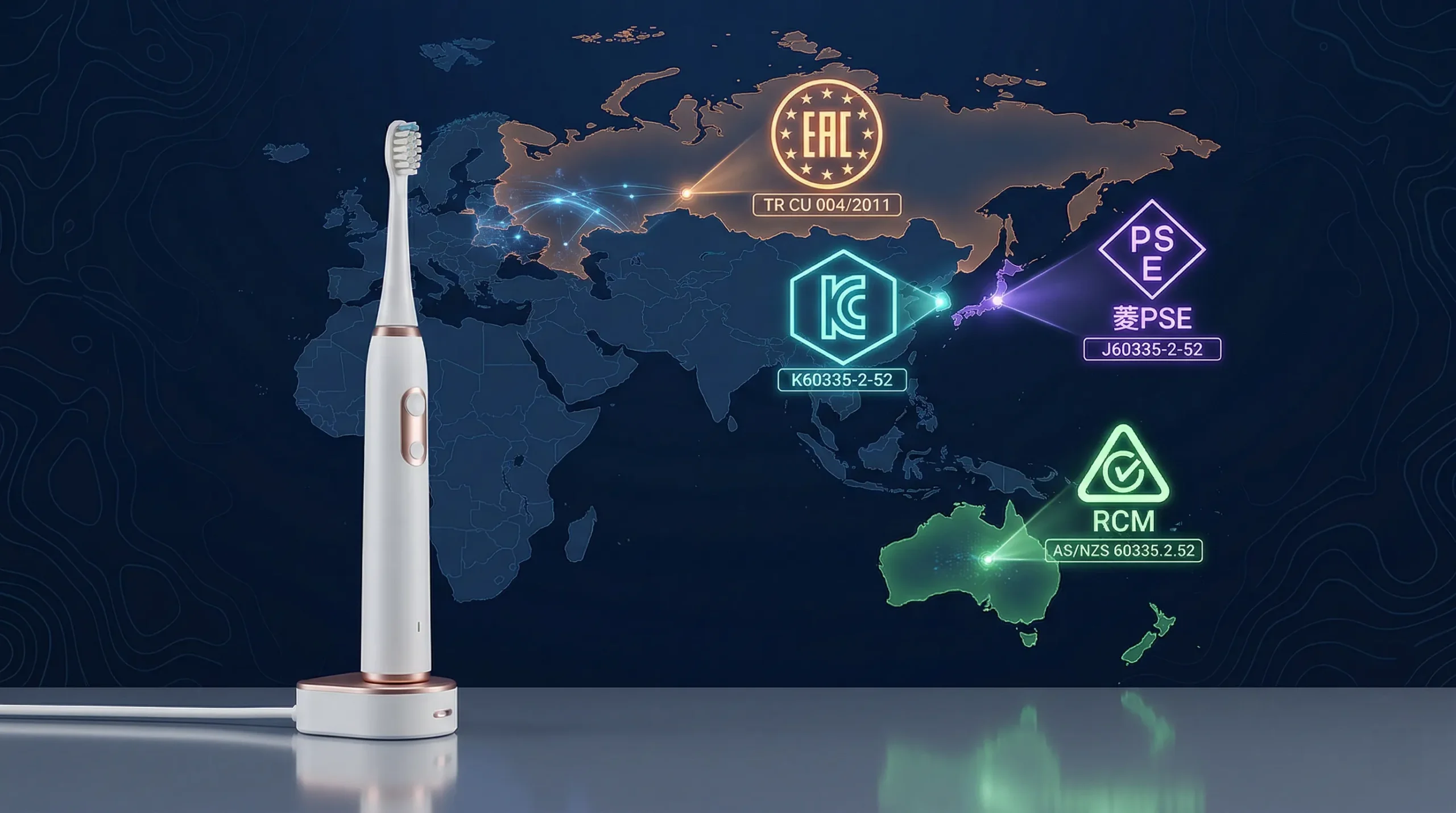
電動歯ブラシは日本の電気用品安全法(DENAN)の対象となります。これには PSE(電気用品安全法) 認証が必要です。.
- カテゴリ: おそらく「美容用電気器具」に分類され、登録認証機関による菱PSE(ダイヤマーク)が必要です
- 規格: J60335-2-52(IEC 60335-2-52の日本版)
- プロセス: 日本認定試験所での試験+工場検査(一部のCBスキームレポートは活用可能)
- コスト: $2,000–$5,000
- スケジュール: 4~8週間
🇰🇷 KCマーク(韓国)
韓国では KC(韓国認証) が電気歯ブラシに必要であり、韓国電気用品安全管理法に基づきます。.
- 規格: K60335-2-52(IEC規格の韓国版)
- プロセス: KTLまたはKTC認定試験所での試験。一部のIEC CBレポートは、追加の国家偏差試験により受け入れられます。.
- コスト: $2,000–$5,000
- スケジュール: 4~8週間
🇷🇺 EACマーク(ロシア/EAEU)
ユーラシア経済連合(ロシア、ベラルーシ、カザフスタン、アルメニア、キルギス)では EAC(ユーラシア適合) マーキングが電気機器に必要です。.
- 規格: GOST/TR CU 004/2011(低電圧機器)+GOST/TR CU 020/2011(EMC)
- プロセス: EAEU加盟国の認定試験所でのサンプル試験+量産証明書のための工場監査
- コスト: $2,000–$4,000
- スケジュール: 6~10週間
🇦🇺 RCMマーク(オーストラリア/ニュージーランド)
オーストラリアとニュージーランドは RCM(規制適合マーク) システムを共有しています。.
- 規格: AS/NZS 60335.2.52
- プロセス: 試験+国家データベースへの登録。IEC CBレポートは概ね広く受け入れられます。.
- コスト: $1,500–$3,000
- スケジュール: 3~6週間
IPX7防水等級
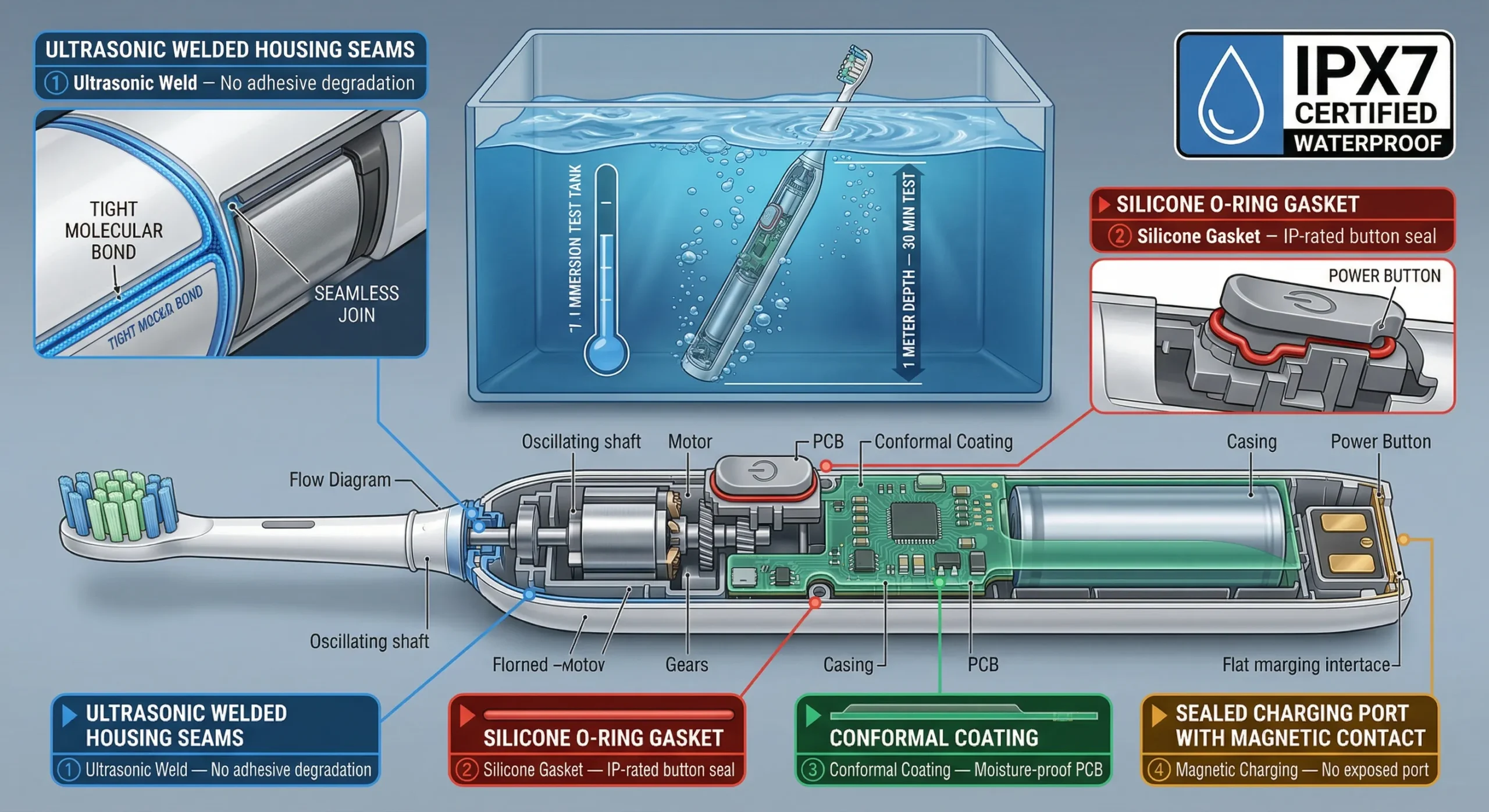
IPX7は政府が義務付ける認証ではなく、国際規格(IEC 60529)であり、あらゆる市場における電気歯ブラシの 事実上の最低要件 となっています。消費者はシャワー中に歯ブラシを使用し、流水ですすぐことを期待します。.
IPX7の意味
- デバイスは 水深1メートルへの30分間の浸漬
- に耐えることができます。
- 試験には、通電状態のデバイスを水槽に完全に沈めることが含まれます。
浸漬後、デバイスは正常に機能し、水の浸入が検出されない必要があります。
- OEM工場がIPX7を達成する方法 メインハウジングの継ぎ目の超音波溶着(接着剤ではない-接着剤は劣化する)
- すべてのボタンインターフェースと充電ポートのシリコーンガスケット PCB上のコンフォーマルコーティング(湿気による腐食防止)
- バッテリーコンパートメント(修理可能な場合)のOリングによるネジシール 試験とコスト
- IPX7試験費用は、認定試験所で1モデルあたり$200~$800。期間:1~2週間。ほとんどの信頼できるOEM工場は社内にIPX7試験設備を有し、最終QC段階(FQC)で生産ユニットの100%を試験します。工場に防水試験のカバレッジ率を確認してください- 100%インライン試験
が期待すべき基準です。
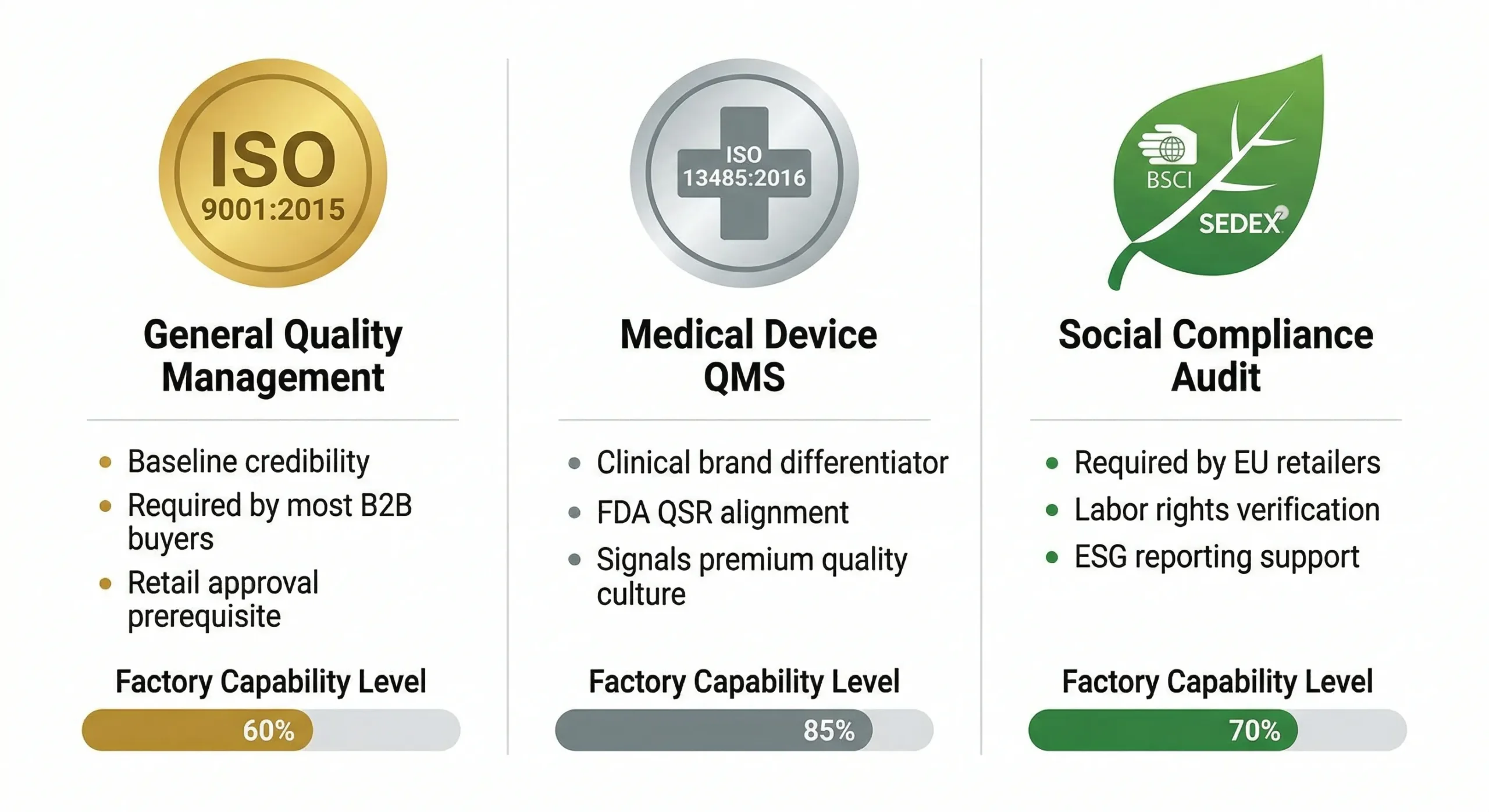
OEM工場向けISO規格 ISO認証は製品ではなく工場に適用されます。しかし、ブランドオーナーとして、工場のISO資格はバイヤーの信頼、小売承認、および規制リスクプロファイルに直接影響します。 対象範囲.
ブランドにとっての重要性
ISO 9001:2015.
| スタンダード | 一般品質マネジメントシステム(QMS) | ほとんどのB2Bバイヤーに期待される。小売バイヤーの承認に必要。ベースラインの信頼性。 |
|---|---|---|
| ISO 9001:2015 | 一般品質管理システム(QMS) | ほとんどのB2Bバイヤーが期待するもの。小売バイヤーの承認に必須。基本的な信頼性。. |
| ISO 13485:2016 | 医療機器向け品質マネジメント | 臨床志向ブランドの強力な差別化要因。FDA QSRコンプライアンスに必須。高い品質文化を示します。. |
| ISO 22716:2007 | 化粧品向け適正製造規範(GMP) | ハードウェアと併せてオーラルケア化粧品(歯磨き粉、マウスウォッシュ)を製造する場合に関連します。. |
| BSCI / SEDEX | 社会的コンプライアンスおよび倫理監査 | 多くのEU小売業者から要求されます。労働者の権利、労働条件、環境慣行を対象とします。. |
マルチマーケットブランド向け認証コスト戦略
複数の市場をターゲットにする場合、認証費用の総額はすぐに$15,000~$25,000を超える可能性があります。経験豊富なブランドがこれを効率的に管理する方法は次のとおりです:
CBスキーム:一度テストすれば、どこでも認証可能
について IEC CB(認証機関)スキーム これにより、認定試験所で1回のテストを実施し、そのCBテストレポートを世界中の各国認証の基礎として使用できます。3つ以上の市場をターゲットにする場合、総テスト費用の30~50%を節約できます。.
プロセス:CBテストレポート → CE(指定機関による審査) → PSE(日本) → KC(韓国) → RCM(オーストラリア)。各国の認証機関がCBレポートを審査し、現地の差異に対して軽微な追加テストを実施する場合があります。.
推奨認証シーケンス
段階的認証アプローチ
- フェーズ1(生産前): CBテストレポート + CE + FCC。費用:$5,000~$12,000。これによりEU + US — 最大の2市場が開放されます。.
- フェーズ2(初回出荷): IPX7テスト + RoHSテスト(CEに含まれていない場合)。費用:$500~$2,500。.
- フェーズ3(拡大): CBレポートを使用したPSE(日本)+ KC(韓国)。費用:$4,000~$10,000。2つのプレミアム市場が開放されます。.
- フェーズ4(量が増加した場合): EAC(ロシア/CIS)、RCM(オーストラリア)、BSCI監査。費用:$5,000~$10,000。.
💡 重要な洞察:ODMは認証コストを$5,000~$15,000節約
品質の高いODM工場は、既存のプラットフォームに対してCE、FCC、RoHS、場合によってはPSE/KC認証をすでに保有しています。ODM製品が(ブランディングのみ異なり)まったく同じ電子部品と筐体を使用する場合、工場の既存認証を活用できることが多く、数か月の時間と数千ドルを節約できます。これは、本格的なOEMに投資する前にODMから始めることの最も強力な財務的根拠の1つです。.
よくある質問
認証に関するサポートが必要ですか?
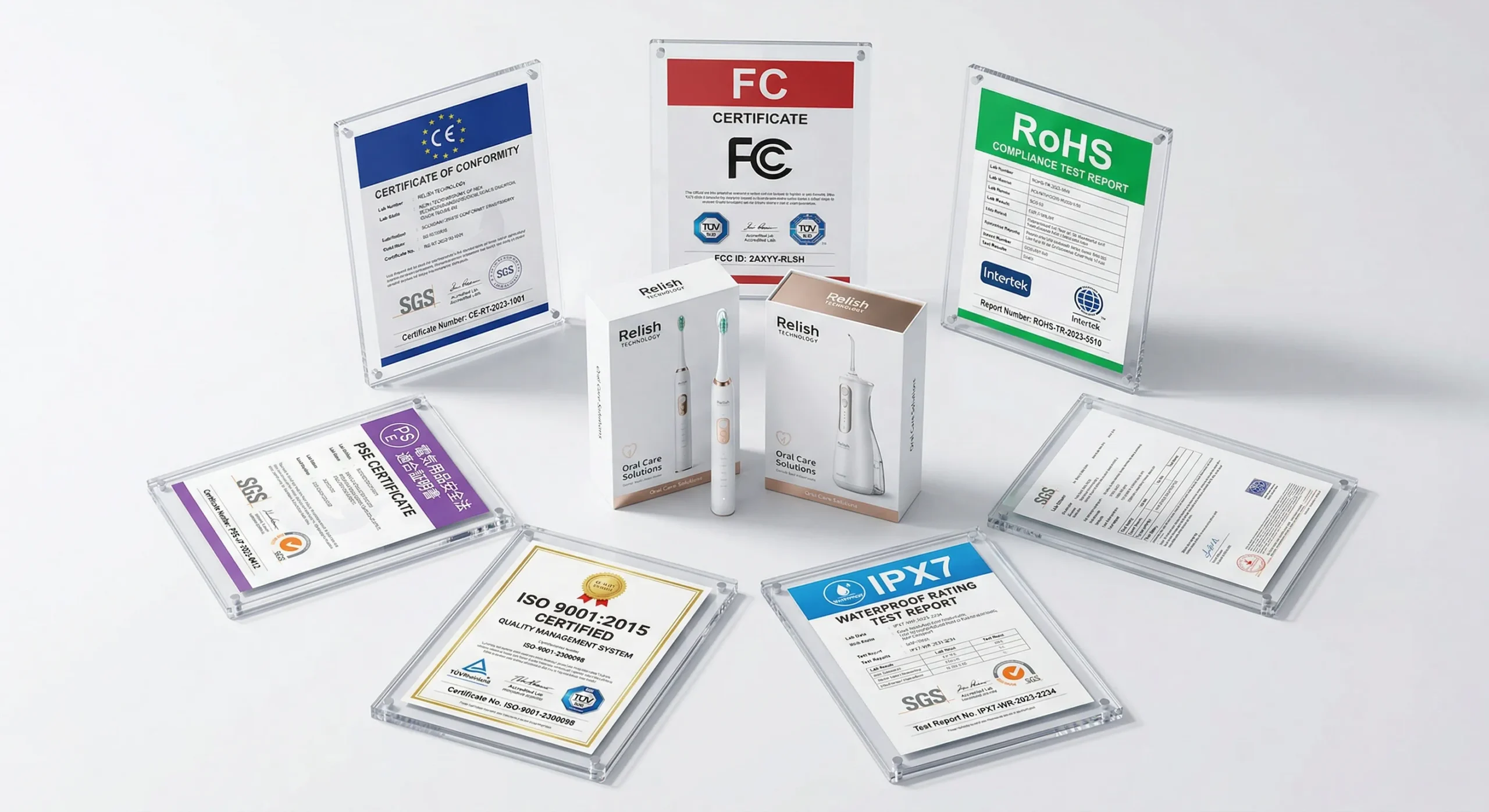
Relish Technologyの既存プラットフォームは CE、FCC、RoHS、およびIPX7認証. を保有しています。ODMプロジェクトでは、当社の既存コンプライアンスを活用いただけます — 数か月の時間と数千ドルのテスト費用を節約できます。. クライアント事例を見る →
認証サポートについてお問い合わせください OEM完全ガイドを読む参考文献
- [1] 欧州委員会環境総局 (2024年). RoHS指令 — 電気電子機器における特定有害物質の使用制限. .検索元 https://environment.ec.europa.eu/topics/waste-and-recycling/rohs-directive_en. 。指令2011/65/EU;鉛、水銀、カドミウム、六価クロム、PBB、PBDE、および4種類のフタル酸エステル(DEHP、BBP、DBP、DIBP)を含む10種類の有害物質を制限します。.
- [2] 欧州化学機関 (ECHA) (2024年). REACHの理解 — 化学物質の登録、評価、認可及び制限. .検索元 https://www.echa.europa.eu/regulations/reach/understanding-reach. 。REACHは2007年6月1日に発効し、ヘルシンキのECHAが管理しています。.
- [3] 米国食品医薬品局 (FDA)、医療機器・放射線保健センター (CDRH) (2024年). 医療機器 — 概要と機器分類. .検索元 https://www.fda.gov/medical-devices. 21 CFR Part 872(歯科用機器)872.6840に分類される電動歯ブラシ.