






Mercato dell'igiene orale sostenibile 2026: Tendenze e guida OEM
Why Sustainability Has Become a Core Differentiator in Oral Care
Il settore globale dell'igiene orale sta attraversando una trasformazione fondamentale. Quella che un tempo era una categoria definita dall'efficacia clinica e dal potere sbiancante viene ora sempre più misurata in base all'impatto ambientale. Dagli spazzolini in bambù che riempiono gli armadietti del bagno alle pastiglie di dentifricio ricaricabili che fanno il loro ingresso nelle farmacie europee, la sostenibilità è passata da marketing di nicchia ad aspettativa mainstream, rendendo l'igiene orale ecologica una delle sottocategorie in più rapida crescita nel settore della cura della persona.
Questo cambiamento riflette trasformazioni più profonde nei valori dei consumatori, nelle pressioni normative e nelle realtà della catena di approvvigionamento. Per i produttori di apparecchiature originali (OEM) che servono marchi di igiene orale in tutto il mondo, comprendere il mercato dell'igiene orale sostenibile è diventato essenziale per rimanere competitivi. I marchi che non si adattano rischiano di perdere rilevanza con la generazione che guiderà la crescita del mercato per i prossimi tre decenni.
La categoria tradizionale dell'igiene orale genera rifiuti sostanziali. Si stima che 50 milioni di spazzolini in plastica vengano gettati via nei soli Stati Uniti ogni settimana [UNEP]. La maggior parte degli spazzolini tradizionali impiega fino a 400 anni per decomporsi in discarica. I tubetti di dentifricio tradizionali, spesso realizzati con strati di materiali misti per proprietà barriera, sono raramente riciclabili. Queste realtà hanno creato sia una reazione negativa dei consumatori che uno slancio normativo che sta rimodellando l'intero ciclo di sviluppo del prodotto.
Per i produttori OEM come Relish Tech, questa trasformazione presenta sia sfide che opportunità. Lo sviluppo di alternative sostenibili richiede investimenti in nuovi materiali, protocolli di test e processi di certificazione. Tuttavia, i marchi che navigano con successo la transizione verso il mercato dell'igiene orale sostenibile ottengono l'accesso a segmenti di mercato premium, una maggiore fedeltà dei consumatori e vantaggi normativi in mercati sempre più focalizzati sulla sostenibilità come l'Unione Europea.
Sustainable Oral Care Market Size & Forecast (2025–2032)
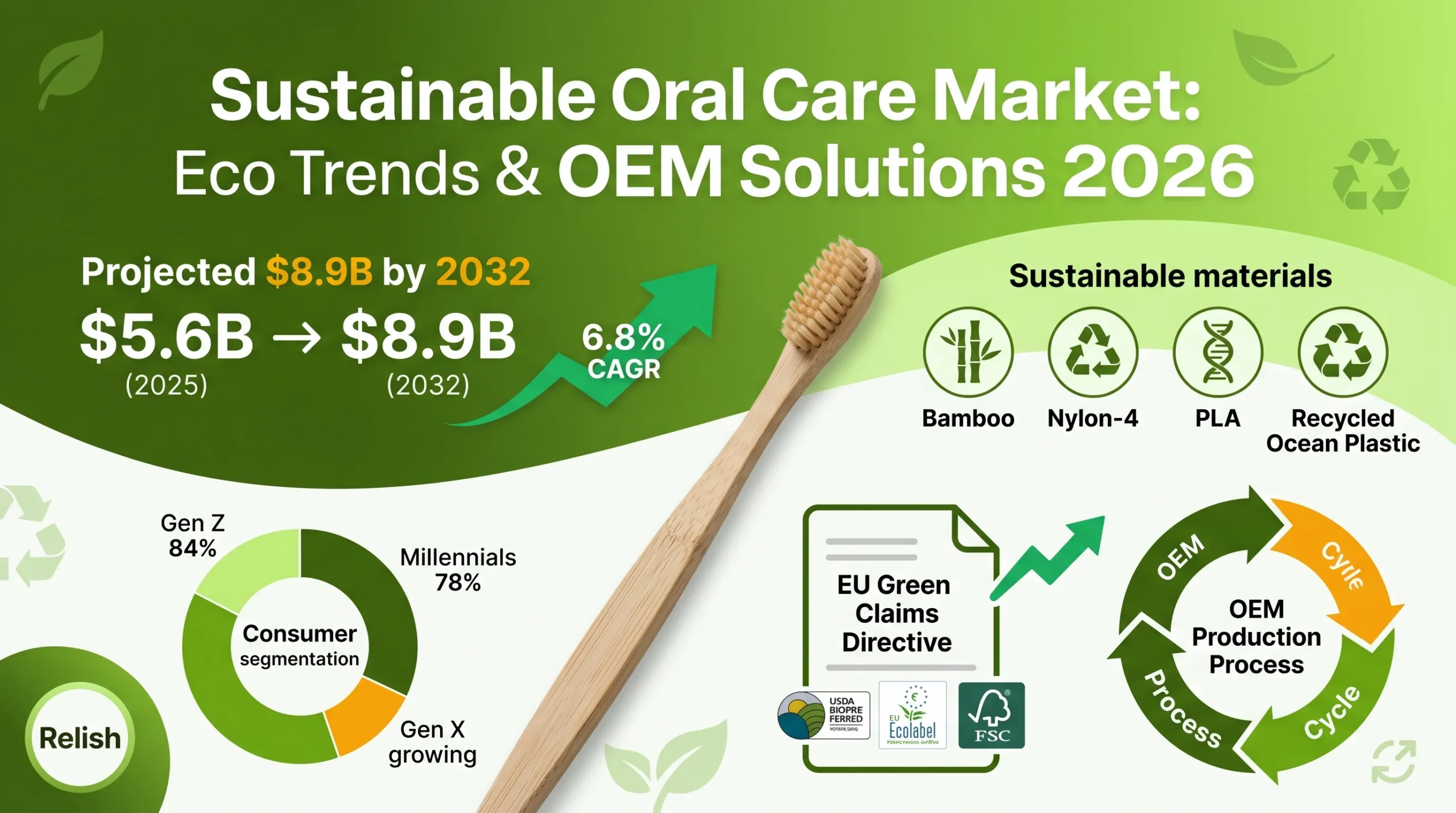
Il mercato dell'igiene orale sostenibile ha raggiunto circa $5.6 miliardi nel 2025, affermandosi come un segmento significativo e in crescita all'interno del più ampio settore dell'igiene orale. Gli analisti prevedono che questo mercato si espanderà a un tasso di crescita annuale composto (CAGR) del 6.8%, raggiungendo quasi $8.9 miliardi entro il 2032. Questa traiettoria di crescita supera la crescita del mercato convenzionale dell'igiene orale, indicando continui guadagni di quota di mercato per le alternative sostenibili.
Ripartizione per segmento
Spazzolini da denti sostenibili: Questo segment domina il mercato dell'igiene orale sostenibile, rappresentando circa il 42% delle entrate totali. Il segmento beneficia della catena di approvvigionamento più matura per materiali ecologici, in particolare bambù e setole biodegradabili. I marchi leader hanno stabilito una presenza sul mercato e i costi di cambio per i consumatori rimangono bassi. Il solo mercato degli spazzolini biodegradabili è cresciuto a quasi il 9% all'anno, trainato dall'adozione di bambù e materiali di origine vegetale.
Filo interdentale e prodotti interdentali ecologici: Rappresentando circa il 18% del mercato, questo segmento sta vivendo una rapida crescita poiché i consumatori estendono la coscienza della sostenibilità oltre gli spazzolini. Il filo interdentale in seta, gli spazzolini interdentali in bambù e le punte per idropulsori realizzate con materiali di origine vegetale stanno guadagnando terreno.
Dentifricio e collutorio sostenibili: Queste formulazioni, inclusi compresse, polveri e sistemi ricaricabili, rappresentano circa il 22% del mercato. Il segmento affronta sfide uniche legate alla stabilità della formulazione e alla durata di conservazione, ma sta crescendo rapidamente nei canali di vendita al dettaglio premium e basati su abbonamento.
Soluzioni di imballaggio a rifiuti zero: Sebbene non sia una categoria di prodotto in sé, l'imballaggio sostenibile rappresenta un fattore abilitante critico per la crescita in tutti i segmenti. I marchi stanno investendo in buste compostabili, contenitori ricaricabili e formule concentrate che riducono peso e volume dell'imballaggio.
Disponibilità dei consumatori a pagare un premio
Molteplici sondaggi tra i consumatori confermano che la sostenibilità impone un premio di prezzo nell'igiene orale. Un sondaggio del 2025 ha rilevato che il 67% degli intervistati ha espresso la volontà di pagare il 10-20% in più per prodotti per l'igiene orale sostenibili verificati. Tra i consumatori millennial e Gen Z in particolare, questa cifra sale al 78%, con il 34% che indica la volontà di pagare premi superiori al 25% per prodotti con credenziali di sostenibilità trasparenti.
Questa accettazione del premio crea opportunità significative per i marchi posizionati nel segmento sostenibile. Tuttavia, aumenta anche le aspettative dei consumatori per reali benefici ambientali. Il greenwashing, ovvero la pratica di fare affermazioni ambientali fuorvianti o infondate, affronta una crescente scetticismo dei consumatori e controllo normativo, in particolare nell'Unione Europea.
Oral Care Sustainability Trends & Material Innovations 2026
Manici in bambù e biodegradabili
Bambù certificato FSC I manici degli spazzolini si decompongono entro 6 mesi in condizioni di compostaggio, rispetto ai 400+ anni della plastica convenzionale. Il segmento del bambù rappresenta ora il 28% delle vendite di spazzolini premium in Europa occidentale.
Setole in Nylon-4 e PLA
Le setole a base biologica realizzate con olio di ricino (nylon-4) o amido di mais (PLA) offrono alternative compostabili al nylon-6,6 a base di petrolio. Le prestazioni sono pari a quelle delle setole convenzionali, riducendo l'impronta di carbonio fino al 65%.
Sistemi ricaricabili
I dispenser di dentifricio ricaricabili e i sistemi di collutorio a base di concentrato riducono i rifiuti di imballaggio dell'80-90%. I modelli in abbonamento forniscono entrate ricorrenti per i marchi offrendo comodità ai consumatori.
Plastica recuperata dagli oceani
Spazzolini da denti realizzati con plastiche certificate recuperate dagli oceani affrontano l'inquinamento marino creando al contempo narrazioni di marca convincenti. Qualità e durata sono paragonabili alle alternative in plastica vergine quando lavorati correttamente..
Imballaggio Minimo
Imballaggi senza plastica che utilizzano cartone riciclato, inchiostri a base vegetale e nessun materiale laminato eliminano i tradizionali blister. I materiali di imballaggio a base di funghi e alghe stanno emergendo come alternative commerciali. Per soluzioni di imballaggio sostenibili pronte per il marchio, consulta le nostre opzioni di imballaggio personalizzate.
Produzione a Impatto Zero di Carbonio
I produttori leader stanno raggiungendo una produzione a impatto zero di carbonio attraverso energie rinnovabili, miglioramenti dell'efficienza e compensazioni di carbonio verificate. Le emissioni di Scope 3 nelle catene di approvvigionamento sono sempre più soggette ai requisiti dei marchi..
Stai sviluppando prodotti sostenibili per l'igiene orale?
Parla con il nostro team di ingegneria riguardo a materiali di origine biologica, bambù certificato FSC e conformità alle Dichiarazioni Ecologiche dell'UE..
Ottieni un Preventivo OEM Personalizzato4. Regulatory Landscape: EU Green Claims Directive & Packaging Laws
The European Union continues to lead global regulatory development for environmental claims. The EU Green Claims Directive, expected to take full effect by 2027, introduces stringent requirements for environmental marketing. Key provisions include prohibition of generic environmental claims like "eco-friendly" or "green" without substantiation, mandatory use of standardized communication methods for claims, and verification requirements through independent third parties.
For oral care brands selling in the EU, this regulatory environment creates both compliance obligations and competitive advantages. Brands with robust sustainability credentials and verified documentation can leverage compliant claims against competitors relying on vague or unsubstantiated green marketing. Conversely, brands with weak sustainability positioning face challenges updating marketing materials while competitors strengthen theirs.
The EU Packaging and Packaging Waste Regulation (PPWR) introduces additional requirements including mandatory recycled content percentages for plastic packaging (starting at 10% by 2030, reaching 25% by 2040), restrictions on certain single-use plastic formats, and extended Producer Responsibility (EPR) schemes with modulated fees favoring recyclable and reusable packaging.
OEM manufacturers serving EU market brands must ensure their production processes and documentation support these compliance requirements. This includes material certifications, lifecycle assessments, and traceability documentation that brands need for their regulatory submissions.
5. Who Is Buying Green Dental Products? Consumer Segmentation
Generational Breakdown
Generation Z (Born 1997-2012): This demographic shows the highest engagement with sustainable oral care, with 84% indicating environmental factors influence their purchase decisions. Gen Z consumers are most likely to research brand sustainability practices before purchasing and demonstrate strong loyalty to brands perceived as genuinely committed to environmental responsibility. They prefer digital-first purchasing channels and are highly responsive to influencer and peer recommendations regarding sustainable products.
Millennials (Born 1981-1996): Millennials represent the largest current market for sustainable oral care products, combining high purchase frequency with strong sustainability values. This demographic drives premium segment growth and shows high acceptance of subscription and e-commerce models. Millennials with children demonstrate particular interest in sustainable products for family use.
Generation X (Born 1965-1980): This segment shows growing sustainability engagement, particularly regarding health and wellness angles for sustainable products. Gen X consumers often have higher disposable income and demonstrate willingness to pay for premium sustainable options. They represent an underserved segment for sustainability-focused oral care marketing.
Baby Boomers (Born 1946-1964): While historically less focused on sustainability in purchasing decisions, Baby Boomers with higher education levels and urban residence show increasing sustainability engagement. This segment responds well to practical benefits (durability, health) alongside environmental credentials.
Regional Preferences
European Consumers: Lead global sustainable product adoption, with Scandinavian countries, Germany, and the Netherlands showing the highest engagement. European consumers demonstrate the strongest preference for verified certifications and transparent supply chains. Regulatory familiarity means European consumers are increasingly skeptical of unverified green claims.
North American Consumers: Show strong sustainable product interest, particularly on the coasts and in urban centers. The US market shows greater variation between premium and mass-market sustainable positioning than European equivalents. Canadian consumers align more closely with European sustainability expectations.
Premium vs. Mass Market: Sustainable oral care has historically skewed toward premium positioning, but mass-market sustainable alternatives are emerging rapidly. Private label sustainable oral care products in European retailers are gaining significant market share, challenging branded premium sustainability positioning.
6. OEM Manufacturing Solutions for Sustainable Products
Natural Oral Care Manufacturing: Material Sourcing
Sustainable oral care manufacturing begins with material selection. For bamboo components, OEMs must source from FSC (Forest Stewardship Council) certified plantations ensuring responsible forest management. China's Jiangxi province has emerged as a center for FSC-certified bamboo production, offering consistent quality and supply chain traceability. Learn more about our bamboo toothbrush OEM capabilities. Premium bamboo toothbrush handles require careful processing to ensure smooth surfaces, sterilization, and durability matching conventional alternatives.
Recycled plastics require careful supplier selection and processing. Ocean-recovered plastics present additional quality control challenges, as material properties vary based on recovery source and processing method. Certified recycled content documentation requires documented chain-of-custody from collection through manufacturing.
OEM Production Parameters for Sustainable Oral Care: Standard MOQ ranges from 1,000 to 3,000 units for bamboo toothbrushes and 2,000 to 5,000 units for complete sustainable oral care kits. Standard production Lead Time is 30–45 days for custom sustainable orders, including material certification verification. All products undergo AQL 1.5 inspection for major defects and AQL 2.5 for minor defects, compliant with ISO 2859-1 sampling standards.
Bio-Based Alternatives
The development of bio-based alternatives to conventional oral care components represents a significant technical challenge. Nylon-4 bristles derived from castor oil offer compostable alternatives with performance characteristics matching conventional bristles. However, achieving consistent quality across production batches requires specialized manufacturing expertise and testing protocols.
PLA (polylactic acid) derived from corn starch has found applications in packaging materials but faces challenges in direct oral contact applications. Research continues on improved PLA formulations with enhanced moisture resistance and durability suitable for oral care use cases.
Lifecycle Assessment (LCA) Documentation
Lifecycle assessment provides quantitative environmental impact data required for substantiating sustainability claims. Standard LCA methodology following ISO 14040/14044 guidelines covers raw material extraction, manufacturing, distribution, use phase, and end-of-life scenarios. For oral care products, use phase environmental impacts (water, energy) often exceed manufacturing impacts for electric devices.
OEM manufacturers increasingly provide product-specific LCA data to support brand customer regulatory compliance and marketing claims. However, LCA studies require significant expertise and carry costs that can present barriers for smaller brands without established sustainability programs.
Certification Pathways
Navigating international certification requirements is essential for OEM partnerships. For a detailed overview of electric toothbrush certifications, see our OEM certifications guide — most sustainability certifications (FSC, EU Ecolabel, B Corp) follow similar third-party verification frameworks.
USDA BioPreferred: This US Department of Agriculture program provides voluntary labeling for products derived from renewable agricultural materials. Biobased content must meet minimum percentage thresholds verified through USDA-approved testing laboratories. The program provides marketing advantages in US government procurement and increasingly recognized consumer visibility.
EU Ecolabel: The European Commission's official ecolabel applies lifecycle criteria including raw material selection, manufacturing processes, product performance, and end-of-life management. Oral care products represent a significant opportunity category, with relatively few products currently carrying the Ecolabel. The rigorous application process provides strong credibility for environmental claims.
B Corp Certification: While applied at the company level rather than product level, B Corp certification increasingly influences brand perception in sustainable oral care. B Corp certification requires assessment of environmental management, supply chain practices, and governance structures. Brands working with B Corp certified manufacturers can leverage this association in their marketing.
Ready to Launch Your Eco-Friendly Oral Care Brand?
Get a customized OEM quote with your sustainability requirements — from material sourcing to certification support.
Start Your Project7. How Relish Tech Supports Sustainable Oral Care OEM
As an established oral care OEM manufacturer, Relish Tech has developed comprehensive capabilities for sustainable product development and production. Operating from a 20,000m² facility with 300+ employees and 15 production lines, we combine scale with sustainability-focused manufacturing processes. Our gli impianti di produzione incorporate sustainability-focused processes including FSC-certified bamboo handle production, certified recycled plastic processing, and bio-based material options for appropriate applications.
We maintain relationships with certified material suppliers across bamboo, recycled plastics, and bio-based alternatives. Our engineering team works directly with brand partners to select appropriate sustainable materials based on target market requirements, cost parameters, and certification objectives. We provide lifecycle assessment support including data collection protocols, methodology guidance, and third-party verification coordination.
Our certification navigation services help brands identify relevant sustainability certifications for their target markets and guide products through application processes. We maintain documented quality systems meeting ISO 13485 for medical device manufacturing, supported by 20+ successful FDA and CE facility audits, providing foundations for sustainability certification applications that require manufacturing process verification.
For brands targeting the European market, our regulatory affairs team supports compliance documentation for EU Green Claims Directive requirements, including substantiation file preparation and verification coordination. We help brands develop defensible environmental claims backed by documented evidence meeting regulatory scrutiny.
The "halo effect" of sustainability branding extends beyond the product — eco-conscious packaging and carbon-neutral shipping claims increase repeat purchase rate by 18–25% in premium oral care. Consumers who identify as sustainability-focused buyers demonstrate 2.3× higher lifetime value than conventional buyers, according to brand cohort analysis.
Punti Chiave
- The sustainable oral care market will grow from $5.6B (2025) to $8.9B by 2032 at 6.8% CAGR, outpacing conventional oral care growth
- Consumer willingness to pay premium for sustainable products remains strong, particularly among millennials and Gen Z
- Material innovation in bamboo, bio-based bristles, and recycled plastics has matured to commercial viability
- EU regulatory environment is setting global standards for environmental claims verification
- OEM manufacturers with documented sustainability credentials and certification support provide significant competitive advantages
- Carbon-neutral manufacturing claims require third-party verification to withstand consumer and regulatory scrutiny
- Refillable and concentrated delivery systems represent the next frontier for the sustainable oral care market and packaging innovation
Browse more industry insights →
Ready to Develop Your Sustainable Oral Care Line?
Partner with Relish Tech for OEM manufacturing solutions that meet your sustainability goals and market requirements.
Contatta il Nostro TeamDomande frequenti
Qual è la dimensione prevista del mercato dell'igiene orale sostenibile entro il 2032?
The sustainable oral care market is projected to reach $8.9 billion by 2032, growing from $5.6 billion in 2025 at a compound annual growth rate (CAGR) of 6.8%. This growth is driven by increasing consumer preference for eco-friendly products, regulatory support for sustainable practices, and continued material innovation in biodegradable and recycled materials.
Quali sono i materiali ecologici più comuni utilizzati negli spazzolini da denti sostenibili?
The most common eco-friendly materials include FSC-certified bamboo for handles (biodegradable within 6 months), nylon-4 bristles made from castor oil (compostable), PLA bristles derived from corn starch, recycled ocean plastic, and plant-based biopolymers for packaging. Each material offers different performance characteristics and certification pathways.
Quanto sono disposti a pagare i consumatori un premio per prodotti per l'igiene orale sostenibili?
Research shows that 67% of consumers are willing to pay a 10-20% premium for verified sustainable oral care products. Among millennials and Gen Z specifically, 78% express willingness to pay this premium, with 34% indicating acceptance of premiums exceeding 25% for products with transparent sustainability credentials.
Quali certificazioni sono importanti per i prodotti per l'igiene orale sostenibili?
Key certifications include USDA BioPreferred for biobased content verification, EU Ecolabel for European market credibility, FSC certification for bamboo materials, B Corp certification for company-level sustainability, Cradle to Cradle for circular economy positioning, and various compostability certifications like OK Compost.
Che cos'è la Direttiva UE sulle Dichiarazioni Ambientali e come influisce sui marchi di prodotti per l'igiene orale?
The EU Green Claims Directive requires brands selling in Europe to substantiate environmental claims with verifiable evidence from independent third parties. It prohibits vague terms like "eco-friendly" or "green" without proof and mandates standardized communication methods. Brands must prepare substantiation files and undergo verification processes for environmental marketing claims.
In che modo i produttori OEM possono supportare una produzione sostenibile di prodotti per l'igiene orale?
OEM manufacturers can support sustainable oral care production through FSC-certified material sourcing, bio-based alternative development and testing, lifecycle assessment documentation, compostability testing coordination, regulatory compliance support for EU Green Claims and packaging regulations, and certification pathway navigation for brands targeting specific markets.
Riferimenti
- Grand View Research. (2025). Sustainable Packaging Market Size, Share & Trends Analysis Report. https://www.grandviewresearch.com
- Euromonitor International. (2025). Global Consumer Trends in Oral Care. Sustainability and premiumization patterns in personal care markets. Retrieved from https://www.euromonitor.com/oral-care
- Commissione Europea. (2024). EU Green Claims Directive Proposal COM(2024) 541. Requirements for environmental claim substantiation. https://ec.europa.eu
- McKinsey & Company. (2025). The State of Fashion: Sustainability. Consumer willingness to pay and brand sustainability positioning. Retrieved from https://www.mckinsey.com/industries/retail/our-insights/state-of-fashion
- USDA BioPreferred Program. (2025). Biobased Product Market Analysis. https://www.usda.gov/biopreferred