

Kids' Electric Toothbrush OEM: Manufacturing & Product-Safety Guide
Children's electric toothbrushes need product-specific design and safety review. This guide outlines market rules, age grading, materials, brush-head design, testing documents, and OEM planning. Requirements depend on intended use, target age, product configuration, and destination market.
| Normes de sécurité | Confirm applicable rules |
|---|---|
| Motor setting | Set for the model |
| Measured design characteristic | Specify method and conditions for this model |
| Quantité minimale de commande | Confirm by configuration |
Résumé : brosse à dents électrique pour enfants OEM
Aperçu des principaux points de vue : Requirements for a children's electric toothbrush vary by intended use, design, configuration, and destination market. Electrical-appliance rules, toy regulations, chemical requirements, and marketplace documentation apply only where relevant to the product. A product marketed to children is not automatically a toy, and CE is a conformity mark rather than a general product certificate. This guide covers questions to resolve when planning a ligne de soins bucco-dentaires pour enfants en complément de votre brosse à dents électrique pour adultes portefeuille.
Project Documents to Confirm
Pourquoi les soins bucco-dentaires pour enfants constituent-ils une catégorie stratégique pour les marques de distributeurs ?
A children's oral-care line may complement an existing product portfolio. Demand, price positioning, and channel fit vary by market and customer; validate them with current research and project-specific evidence before committing to a launch.
A kids’ product may create opportunities for age-appropriate variants and replacement-head sales, but repeat purchases and cross-selling depend on the product, channel, and customer response. Treat these as hypotheses to test rather than guaranteed brand or lifetime-value outcomes.
💡 Stratégie de marque : A portfolio could include products for different age groups, provided each model is designed and labeled for its intended users. Test assortment, pricing, and replacement cycles with your target market; do not assume a fixed increase in lifetime customer value.
Children vs. Adult: Design Considerations
The dimensions and timer settings below are illustrative design-brief examples, not standard configurations or universal safety limits. Confirm the options and measurements for the intended model and age group.
Brosse à dents électrique pour enfants
🧑 Brosse à dents électrique pour adultes
Brosse à dents électrique pour enfants OEM : normes de sécurité et certifications
🇪🇺 Electrical safety: identify the applicable product standard
IEC 60335-2-52:2021 sets particular safety requirements for oral hygiene appliances, including electric toothbrushes within its scope. Confirm whether the standard and any national adoption apply to the exact product and destination market. Review the appliance and charger separately where appropriate. CE conformity assessment follows the legislation and procedure that apply; a Notified Body is involved only when that procedure requires one.
🧸 Toy-safety rules: assess whether the product is a toy
Whether a product is a toy depends on its intended use and characteristics; being designed for children or using cartoon graphics, sounds, or an app does not by itself settle the classification. Where toy legislation applies, identify the relevant requirements and conformity-assessment route for that product and market. EN 71-3 addresses migration of certain elements; it does not establish that a material contains no phthalates, BPA, or heavy metals. Check chemical requirements separately for the materials and intended oral contact.
🇺🇸 ASTM F963 - Standard Consumer Safety Specification for Toy Safety (États-Unis)
ASTM F963 is a toy-safety standard, not a universal requirement for every product used by children. In the United States, determine whether the product is a toy and which CPSC rules apply. The small-parts rule uses a specified test cylinder and has an exclusion for toothbrushes under 16 CFR 1501.3; that exclusion is limited to the small-parts rule and does not remove other safety duties or foreseeable-use risks. Evaluate the complete product and any detachable accessories under applicable requirements.
💦 Ingress-protection testing for the exact product
An IP rating describes an enclosure tested under specified conditions; it is not a general electrical-safety certification. Confirm the rating for the exact assembled toothbrush and follow its instructions. Do not infer that a charger or charging base is water-resistant unless separately rated and tested. Select any ingress-protection target from the product brief and applicable requirements, not from age alone.
⚠️ Design and verification: Assess brush-head retention and detachable parts against the intended age, foreseeable pulling, twisting, biting, and drop use, and applicable market requirements. Use a defined test method and acceptance criteria for the exact model. Do not present one pull-force value as a universal legal threshold.
Design by Age Group
Age bands and dimensions are starting points for a product brief, not statutory limits or universal clinical recommendations. Validate fit, materials, brush-head design, motor settings, and supervision for the exact model and market.
Caregiver-Led Early Oral Care
- Choose an age-appropriate cleaning approach for the child and follow professional guidance.
- Caregivers should supervise and assist according to the child’s development and the product instructions.
- A teether may soothe gums, but it does not replace cleaning emerging teeth.
- Use only products labeled for the intended age and oral-contact use.
- Assess materials and chemical requirements for the exact product and destination market.
- Do not rely on a generic “FDA grade” label; request evidence relevant to the material and intended use.
Première brosse électrique
- Petite tête de brosse ronde (14-16mm)
- Choose bristle softness, diameter, and tip geometry for the intended age and model; verify the finished brush head.
- Set motor characteristics for the exact model and intended use; VPM is not a universal child-safety limit.
- Poignée épaisse pour les petites mains
- Couleurs vives, personnages préférés
- Repères audio pour un brossage de 2 minutes
Performance des juniors
- Tête de brosse moyenne (16-18 mm)
- Choose bristle design for the intended age and model; diameter alone does not determine softness.
- Set and verify motor performance for the exact model; do not present a universal age-based range.
- Poignée étroite s'approchant de la taille adulte
- A pressure-alert or speed-reduction feature may be considered; verify its behavior and do not imply it prevents all injury.
- If adding an app, review privacy, consent, and child-data requirements in each market.
Adolescents / Transition
- Select a brush-head size and shape that fit the intended users and the exact model.
- Choose motor settings and features for the product; age alone does not establish suitability.
- Consider optional features only when appropriate for the intended users and supported by product instructions.
- Use age-appropriate packaging and instructions.
- Offer replacement heads only after confirming compatibility with the specific platform.
- Do not imply teen and adult models share replacement heads unless compatibility is confirmed.
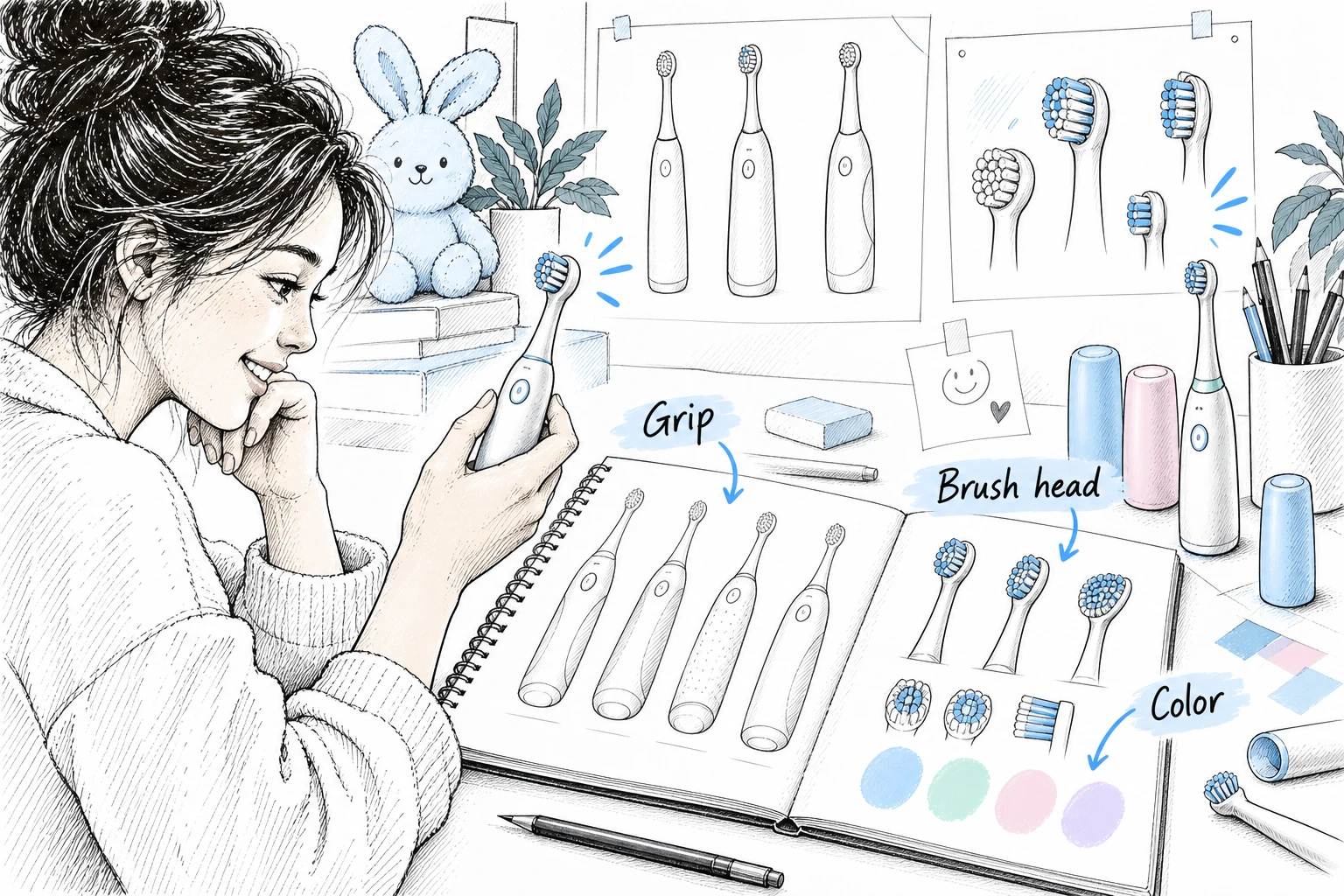
Kids Electric Toothbrush OEM: Indicative Cost & MOQ Planning
| Configuration | Coût unitaire FOB | Quantité minimale de commande | Délai de réalisation | Notes |
|---|---|---|---|---|
| Brosse ODM pour enfants (3-6 ans), emballage de marque | $5.50-$9.00 | 1,000 units standard; smaller orders assessed case by case | 45-60 jours | Existing documents may apply only if they cover the exact model and market. |
| Brosse pour enfants OEM (personnalisation des couleurs) | $7.00-$12.00 | 1,000 units standard; smaller orders assessed case by case | 60-80 jours | Couleurs personnalisées, logo sur la poignée |
| Set familial pour enfants (3 couleurs + étui de voyage) | $12-$18/set | 1,000 units standard; smaller orders assessed case by case | 65-85 jours | Positionnement des coffrets cadeaux, vente au détail haut de gamme |
| OEM entièrement personnalisé pour les enfants (nouveau moule pour la poignée) | $10-$22 | 1,000 units standard; smaller orders assessed case by case | 120-150 jours | Tooling and intellectual-property rights depend on the written agreement. |
| Kit enfants + adultes | $14-$28/kit | 1,000 units standard; smaller orders assessed case by case | 60-80 jours | "Positionnement du "pack famille |
Stratégie de positionnement de la marque pour les soins bucco-dentaires pour enfants
The purchase decision for children's toothbrushes is made by parents but influenced by children. Consider age-appropriate packaging and features, then validate them with the target market. Ask about options d'emballage sur mesure for the project and discuss production capabilities for the specific project.
Ce que les parents recherchent
- Applicable product and market documentation
- Dental endorsements only when documented and authorized
- Age-appropriate instructions and supported product claims
- Model-specific pressure feedback, if available; it cannot prevent every brushing injury
- Application ou minuterie pour créer une habitude
- Disponibilité d'une tête de brosse de remplacement
Ce à quoi les enfants réagissent
- Couleurs et thèmes préférés
- Musique ou son pendant le brossage
- Fonctions de récompense et de gamification
- Emballage et déballage amusants
- Couleurs assorties des frères et sœurs
- Caractéristiques lumineuses ou indicateurs clignotants
Questions fréquentes
Q : Quelles sont les normes de sécurité applicables aux brosses à dents électriques pour enfants ?
There is no single checklist for every children’s toothbrush. Identify intended use and age grading, then check the electrical-appliance, toy, chemical, labeling, and marketplace rules that apply in each destination market. IEC 60335-2-52 addresses oral hygiene appliances within its stated scope; toy rules apply only when the product is classified as a toy. Verify brush-head retention, materials, and ingress protection for the exact model using applicable methods, without treating one force, motor, or IP value as a universal legal limit.
Q : En quoi une brosse à dents électrique pour enfants diffère-t-elle d'un modèle pour adultes dans la fabrication OEM ?
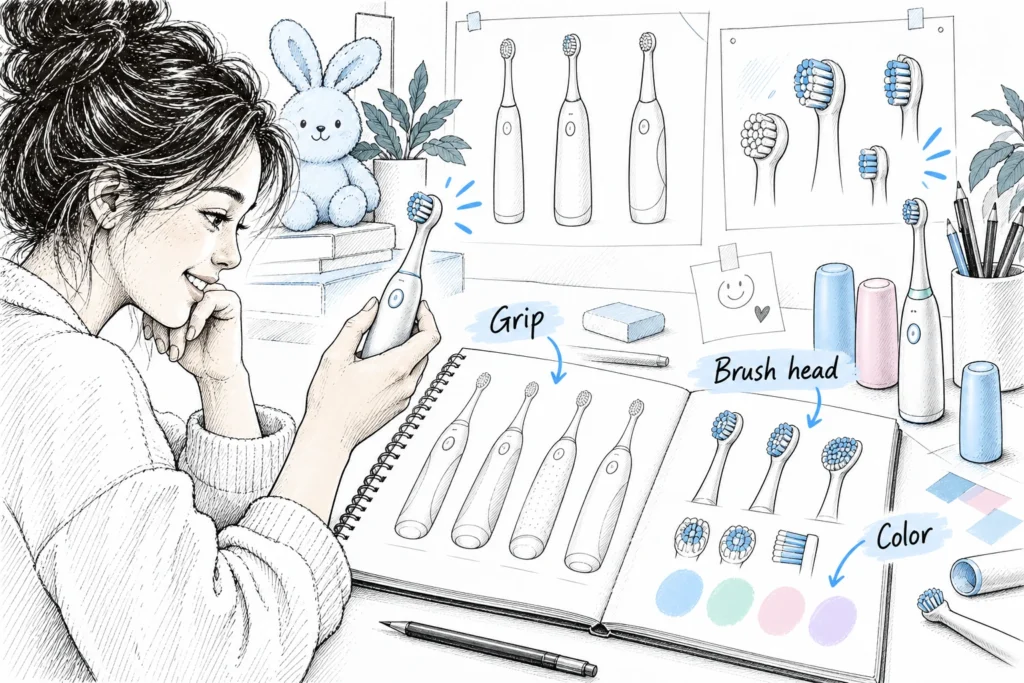
Design may differ in handle fit, brush-head size, bristle selection, controls, and supervision guidance. Set dimensions and motor performance for the intended users and model; they are not universal safety limits. Assess detachable components and foreseeable use against applicable requirements, and verify any timer or pressure feature on the actual product.
Q : Quel est le MOQ pour la brosse à dents électrique pour enfants OEM ?
MOQ, sample quantity, unit price, and tooling cost depend on the model, materials, packaging, customization, and test plan. Use the table only as an early planning reference and request a written quotation for your configuration. Confirm sample needs with the laboratory; there is no universal 100-unit sample requirement.
Q : Quelle est la taille idéale de la tête de brosse pour les enfants âgés de 3 à 6 ans ?
There is no universal ideal size for every child aged 3–6. Evaluate brush-head fit, bristle design, handle grip, and instructions for the intended model and age group, with appropriate product and dental review. Use a defined retention test based on foreseeable use and applicable requirements rather than assuming a fixed force threshold.
Q : Les brosses à dents électriques pour enfants doivent-elles être étanches selon la norme IPX7 ?
IPX7 is not a universal requirement for children’s toothbrushes and does not by itself establish electrical safety. If a model claims an IP rating, verify the exact assembled product against the applicable test method and follow its instructions. Do not assume the charger or charging base shares the toothbrush rating.
Q : Quelle est l'amplitude maximale des vibrations pour les brosses à dents pour enfants ?
No universal maximum vibration amplitude or VPM value establishes safety for every children’s toothbrush. Specify the measurement location, method, and operating conditions for the exact model, and assess performance against applicable requirements and intended use. VPM and amplitude describe different characteristics and are not interchangeable.
Q : Puis-je utiliser le même moule pour les brosses à dents pour enfants et pour adultes ?
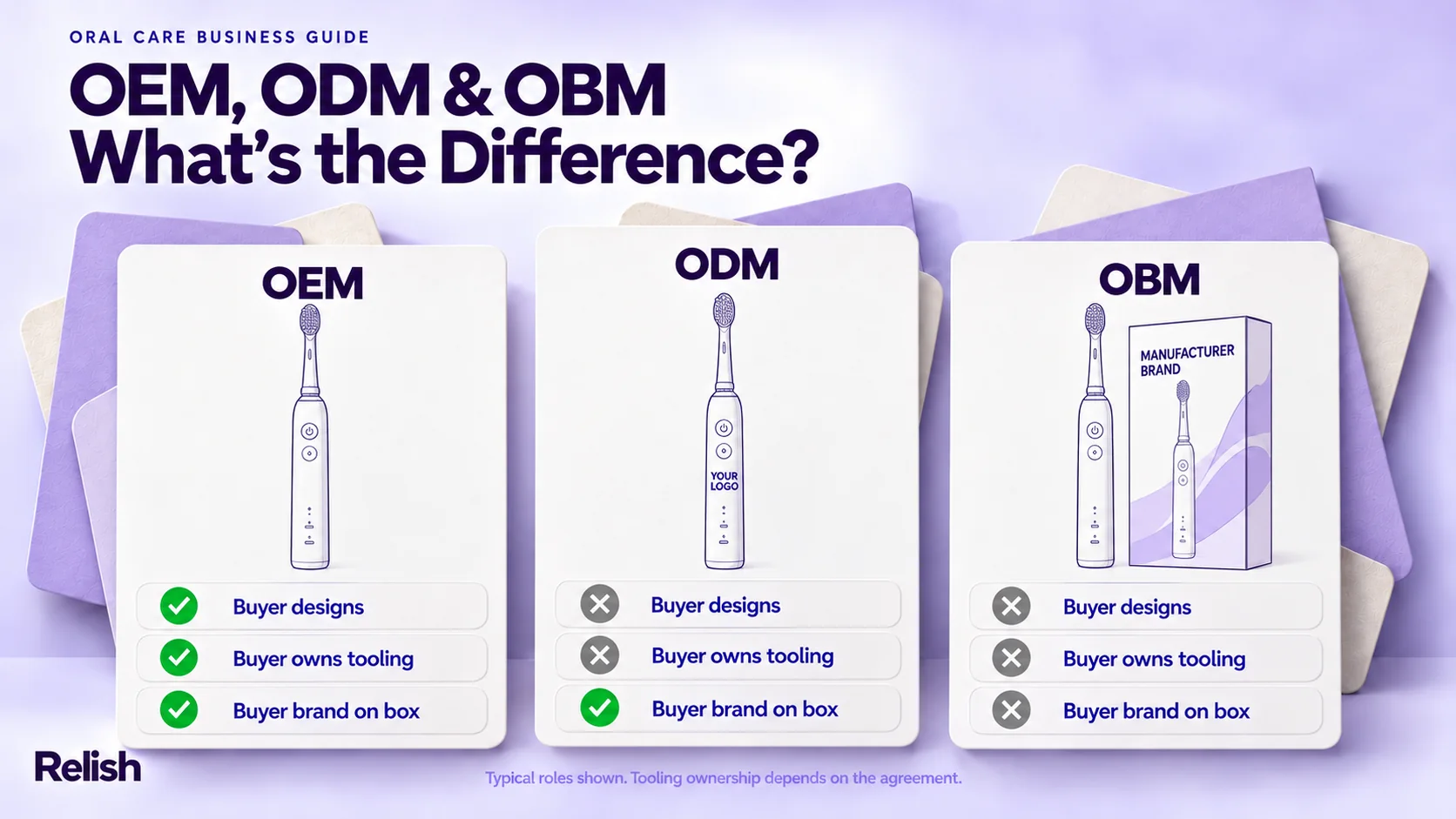
Not always. A platform or component may be reusable if it suits the intended users and meets applicable design and verification requirements. Review handle fit, brush head, controls, materials, foreseeable use, and market rules for each model. Document tooling, design, and intellectual-property ownership in the written agreement.
Q : Quelles sont les certifications requises pour vendre des brosses à dents pour enfants sur Amazon ?
Marketplace documentation requests vary by site, product category, and current compliance policy. Check Seller Central for the target marketplace and provide genuine, model-specific documents when requested. Do not assume every toothbrush needs ASTM F963, EN 71, a CPC, or the same upload sequence; classification and applicable rules determine the required evidence.
Références
- European Committee for Standardization. EN 71-1:2014+A1:2018: Safety of toys — Part 1: Mechanical and physical properties. See current toy-safety standards information at CEN.
- ASTM International. (2023). ASTM F963-23: Standard consumer safety specification for toy safety. ASTM International.
- European Parliament and Council. (2009). Directive 2009/48/EC of the European Parliament and of the Council of 18 June 2009 on the safety of toys. EUR-Lex.
- U.S. Consumer Product Safety Commission. Toy Safety FAQ. The FAQ describes when toy rules and ASTM F963 apply; classification depends on the product. CPSC Toy Safety FAQ.
- International Electrotechnical Commission. (2021). IEC 60335-2-52:2021: Household and similar electrical appliances — Safety — Part 2-52: Particular requirements for oral hygiene appliances. IEC 60335-2-52:2021.
- American Academy of Pediatric Dentistry. (2009). Healthy Smiles Guidebook. General oral-health education for caregivers; not evidence for product-specific safety thresholds. AAPD Healthy Smiles Guidebook.
- U.S. Consumer Product Safety Commission. Small Parts for Toys and Children’s Products. The toothbrush exclusion under 16 CFR 1501.3 is limited to the small-parts rule. CPSC Small Parts guidance.
Poursuivre la lecture
Lancez la ligne de soins bucco-dentaires de vos enfants
Ask about available children’s toothbrush models, customization, and project-specific MOQ. Product documentation and conformity status must be confirmed for the exact model, configuration, and destination market; color or packaging changes do not establish that existing test reports apply.
Discuss a Kids Oral-Care Project Explore OEM Planning Options📧 info@relish-tech.com