








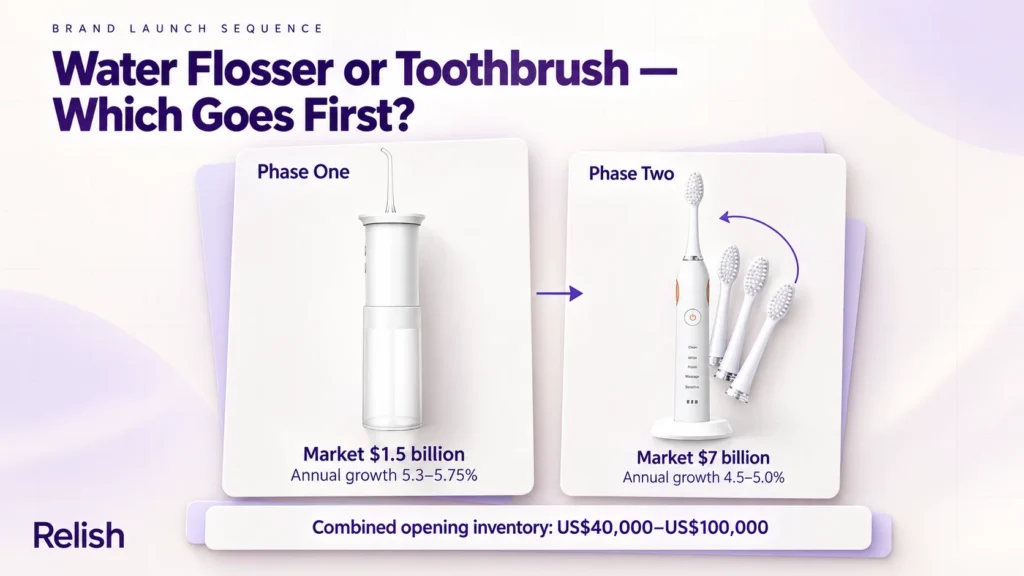
Hydropulseur ou brosse à dents électrique :
Quel produit votre marque devrait-elle lancer en premier ?
Une comparaison basée sur les données pour les fondateurs de marques de soins bucco-dentaires. Couvre la taille du marché, les coûts OEM, l'intensité de la concurrence, les marges et la stratégie de marque à long terme.
Vous avez décidé d'entrer sur le marché des soins bucco-dentaires. Vous avez identifié votre consommateur cible, vous avez un canal de distribution en tête et vous êtes prêt à vous approvisionner auprès d'un fabricant OEM. Il ne reste qu'une seule question : Lancez-vous d'abord un hydropulseur ou une brosse à dents électrique ?
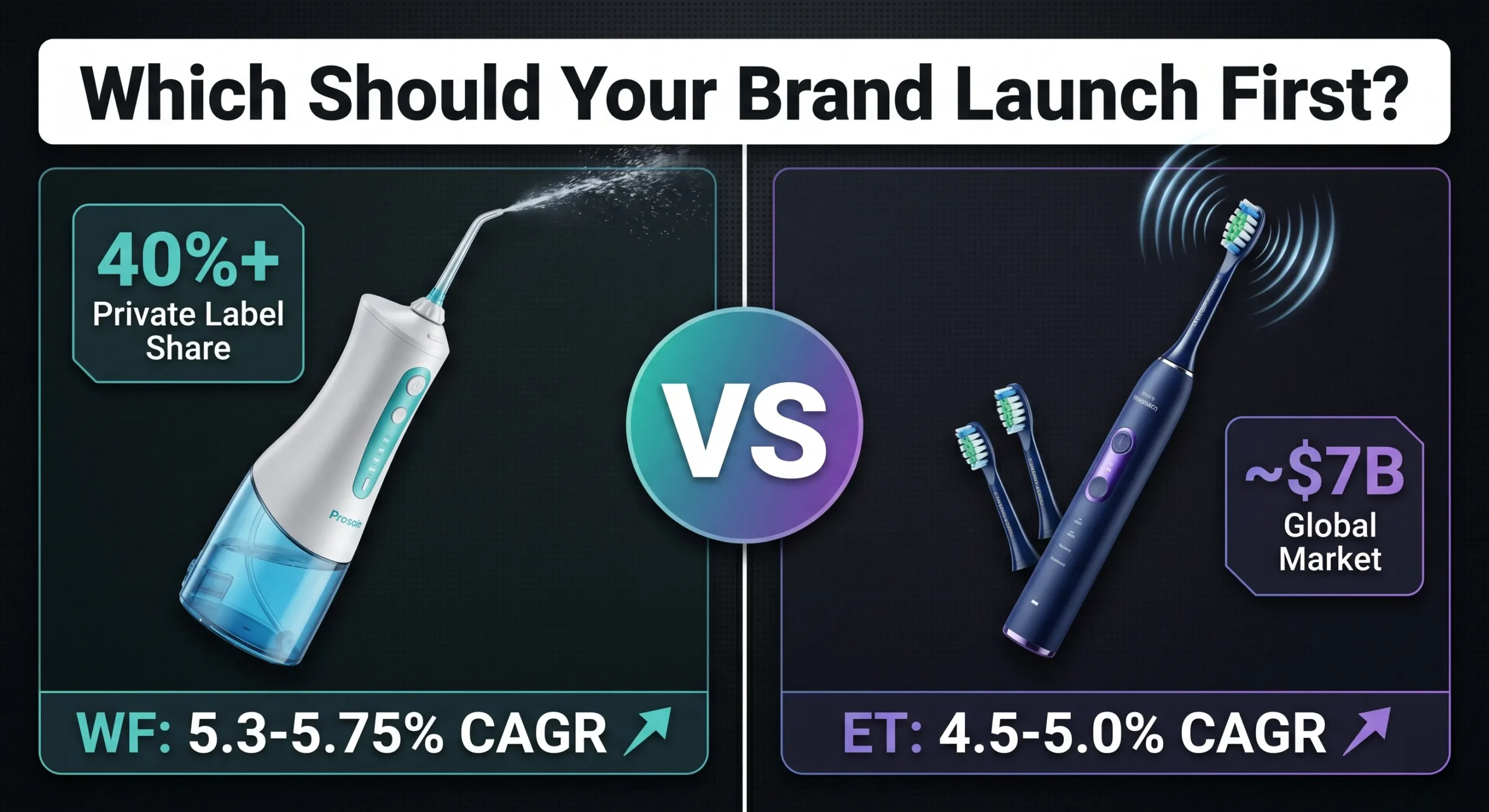
Pour la plupart des fondateurs qui créent leur première marque de soins bucco-dentaires, l’hydropulseur est le meilleur produit de départ. Les hydropulseurs offrent davantage de place aux marques propres (plus de 40% de part de marché contre 25–30% pour les brosses à dents électriques[1]), un classement Amazon plus accessible (180 000 contre 600 000 recherches mensuelles) et des marges brutes plus élevées (55–70%[2] contre 50–65%)[2]. Les brosses à dents électriques sont plus avantageuses en matière de valeur vie client (LTV) grâce aux têtes de rechange et à la demande de masse, ce qui les rend adaptées à une expansion en deuxième phase.
La réponse dépend de votre capital, de votre calendrier, de votre marché cible et de votre vision de marque à long terme. Ce guide décompose la question sous tous les angles importants.
À propos du fabricant : Relish Technology
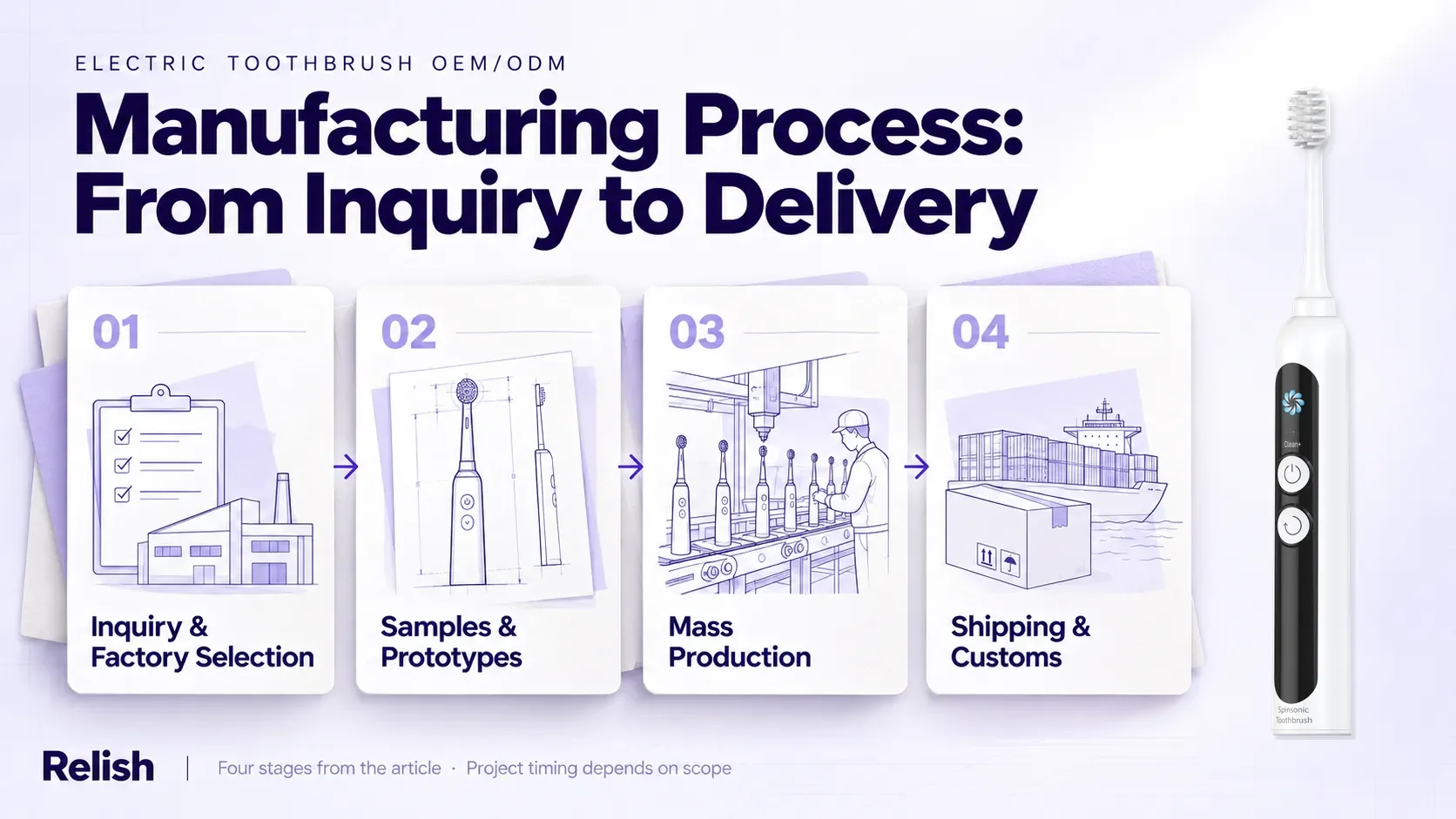
Relish Technology est une usine OEM/ODM de produits de soins bucco-dentaires basée à Shenzhen, avec plus de 14 ans d’expérience à l’export dans la fabrication d’hydropulseurs et de brosses à dents électriques.
- 20,000 m² de superficie d’usine · plus de 1,2 million d’unités de capacité mensuelle · plus de 120 pays desservis
- Certifications : CE, FCC, FDA, ISO 9001, ISO 13485, RoHS, REACH, IPX7
Comparaison directe : tous les critères essentiels
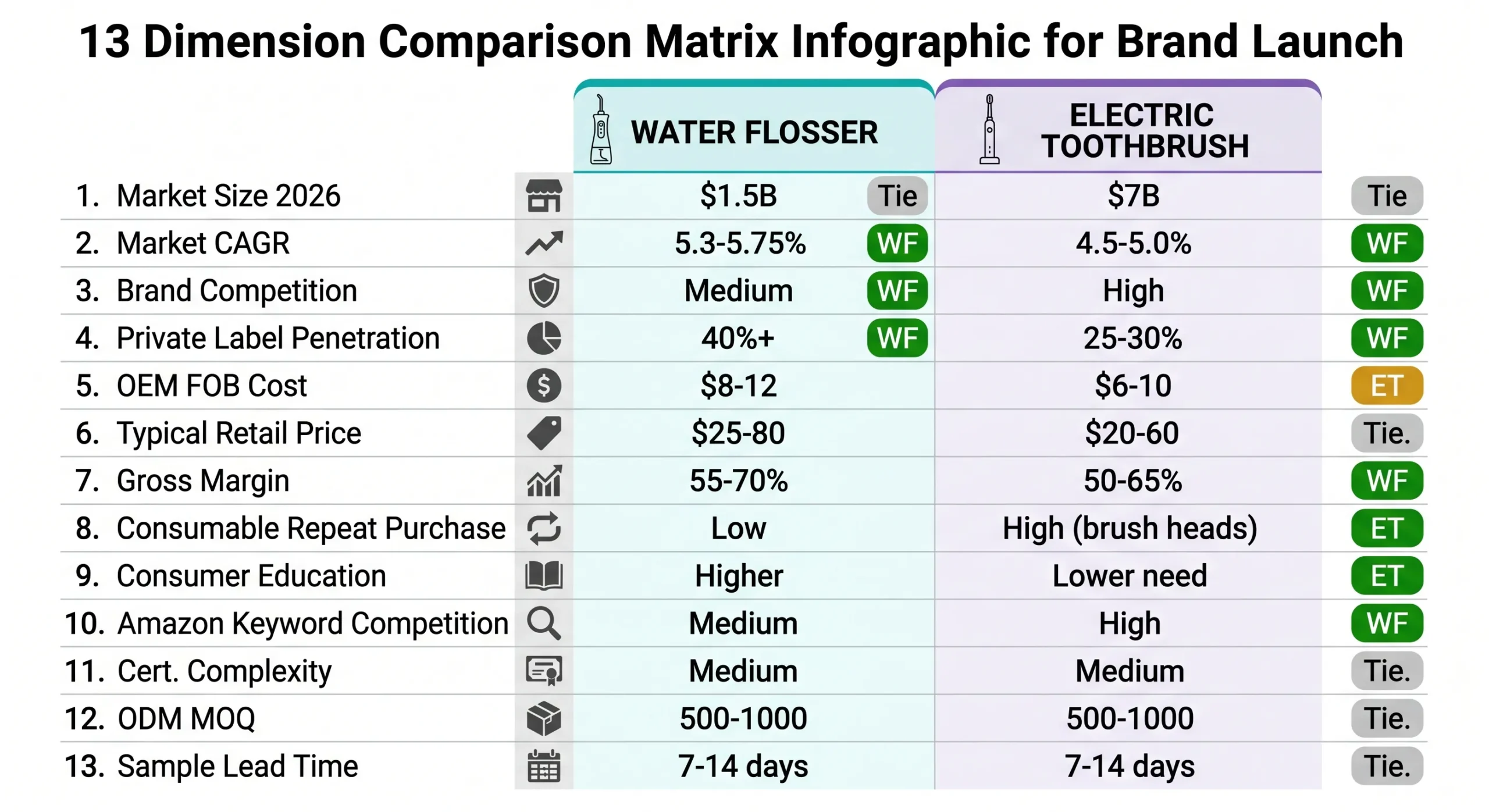
| Paramètre | Hydropulseur | Brosse à dents électrique | Avantage |
|---|---|---|---|
| Taille du marché (2026) | ~$1,5 milliard[1] | ~$7,0 milliards[2] | Comparable |
| TCAC du marché | 5.3–5.75% | 4.5–5.0% | WF (croissance plus rapide) |
| Concurrence de marques | Moyenne. Waterpik mène, de nombreux challengers | Élevée. Oral-B et Philips dominent | WF (moins de concurrence) |
| Pénétration des marques de distributeur | Élevée. 40%+ de part de marché | Moyenne. 25–30% de part de marché | WF (entrée plus facile) |
| Coût d'usine OEM (entrée) | 8–12 $ FOB | 6–10 $ FOB | ET (coût légèrement inférieur) |
| Prix de vente typique | $25–$80 (sans fil) | $20–$60 (sonique basique) | Comparable |
| Potentiel de marge brute | 55–70%[2] | 50–65% | WF (marginalement meilleur) |
| Achat répété (consommable) | Faible. Embouts seulement | Élevé. Têtes de brosse de remplacement | ET (avantage LTV) |
| Éducation consommateur requise | Plus élevée. Notoriété de catégorie encore en construction | Plus faible. Notoriété grand public large | ET (vente plus facile) |
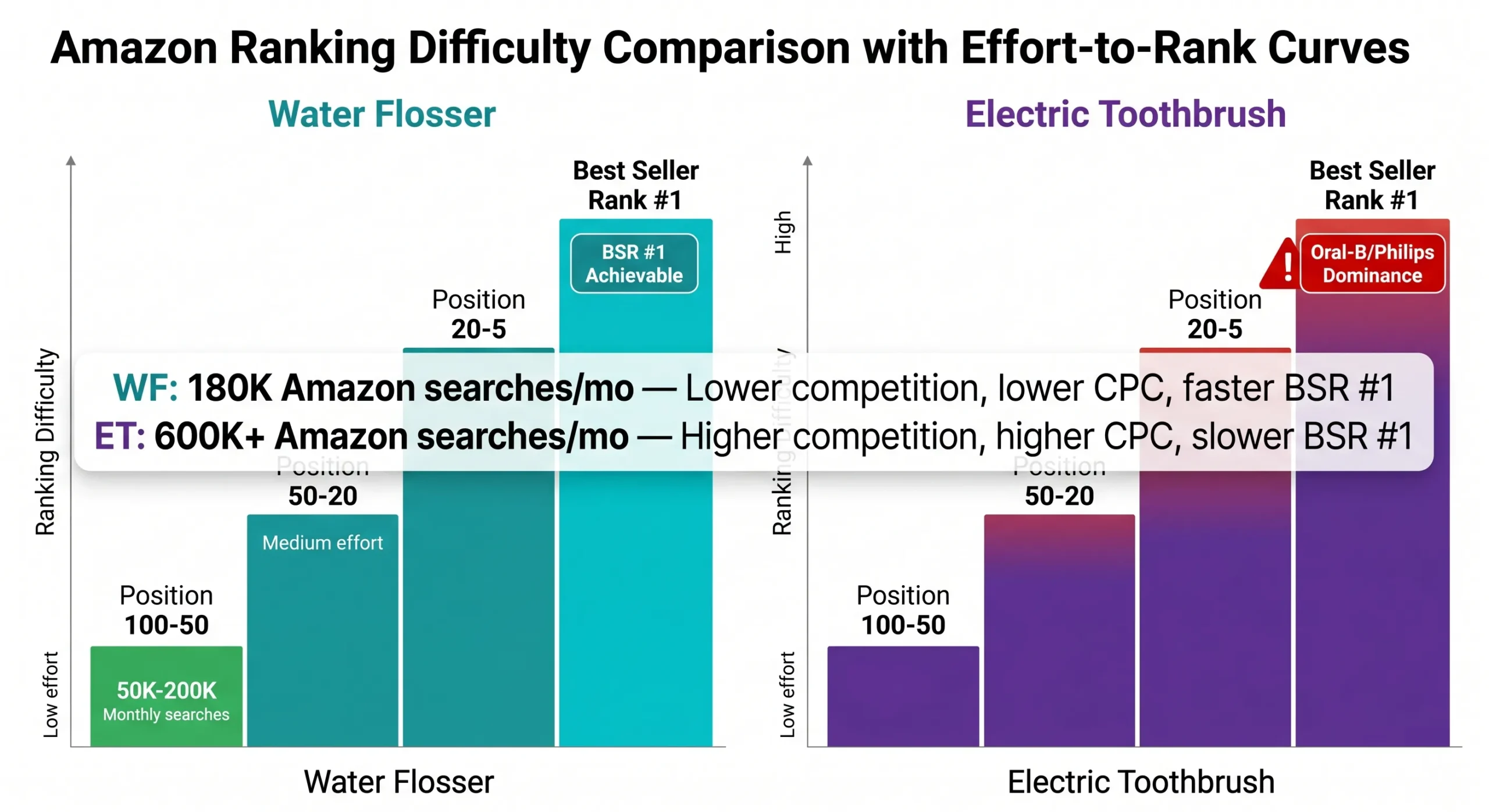
| Concurrence sur les mots-clés Amazon | Moyenne. 50K–200K recherches/mois | Élevée. 500K–2M+ recherches/mois | WF (classement plus facile) |
| Complexité des certifications | Moyenne. CE + FCC + IPX | Moyenne. CE + FCC + IPX | Similaire |
| Quantité minimale de commande (ODM) | 500–1000 pièces | 500–1000 pièces | Similaire |
| Délai d'échantillonnage | 7–14 jours | 7–14 jours | Similaire |
Dynamique du marché
Brosse à dents électrique : marché mature avec barrières élevées
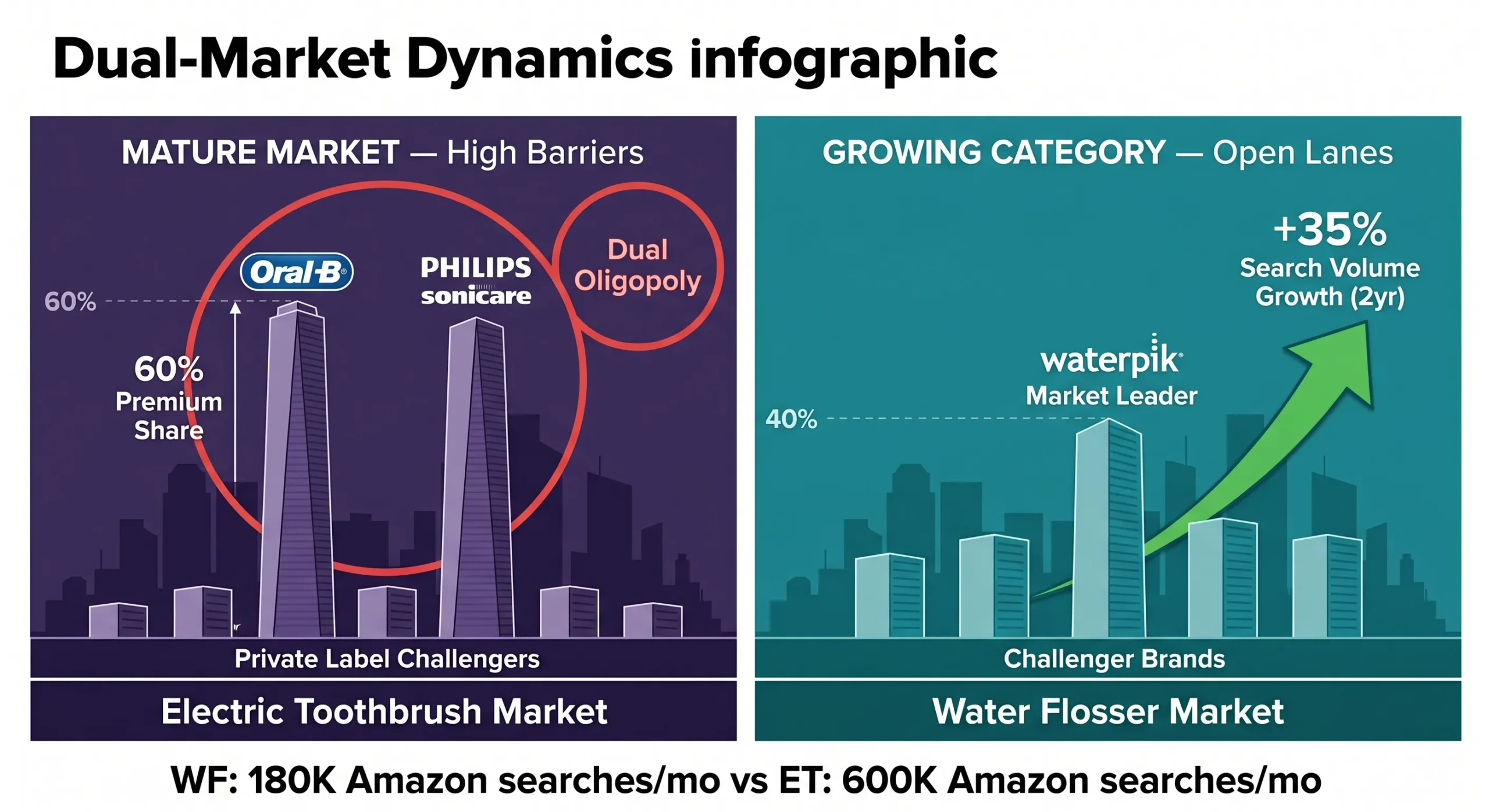
Le marché des brosses à dents électriques est vaste ($7B+ mondialement) mais dominé par Oral-B et Philips Sonicare, qui détiennent ensemble ~60% de parts de marché dans les segments premium. Les marques privées et les marques challenger concurrencent efficacement dans la fourchette de prix $20–$60, où la fidélité à la marque est plus faible et les décisions des consommateurs sont plus sensibles au prix.
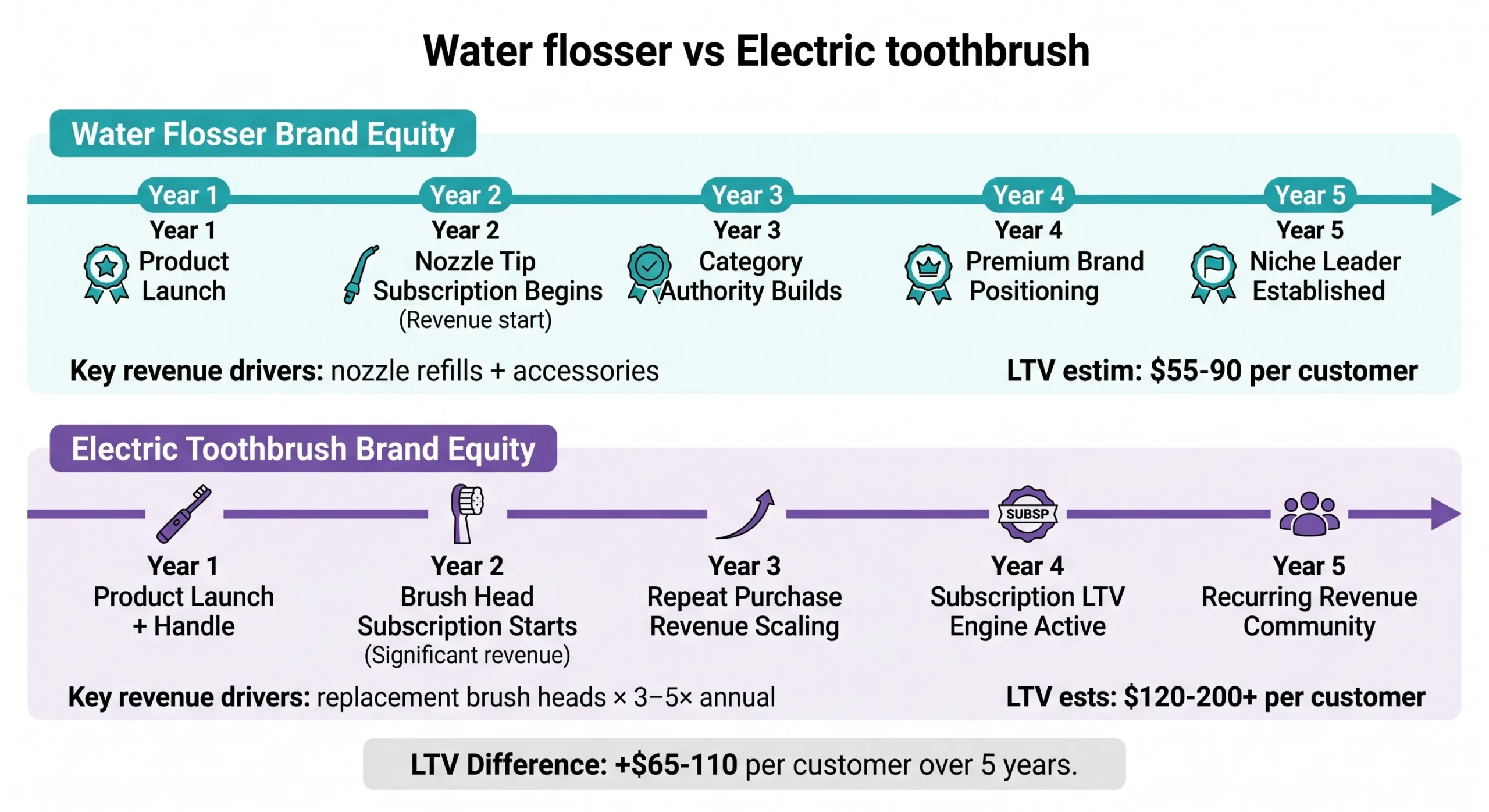
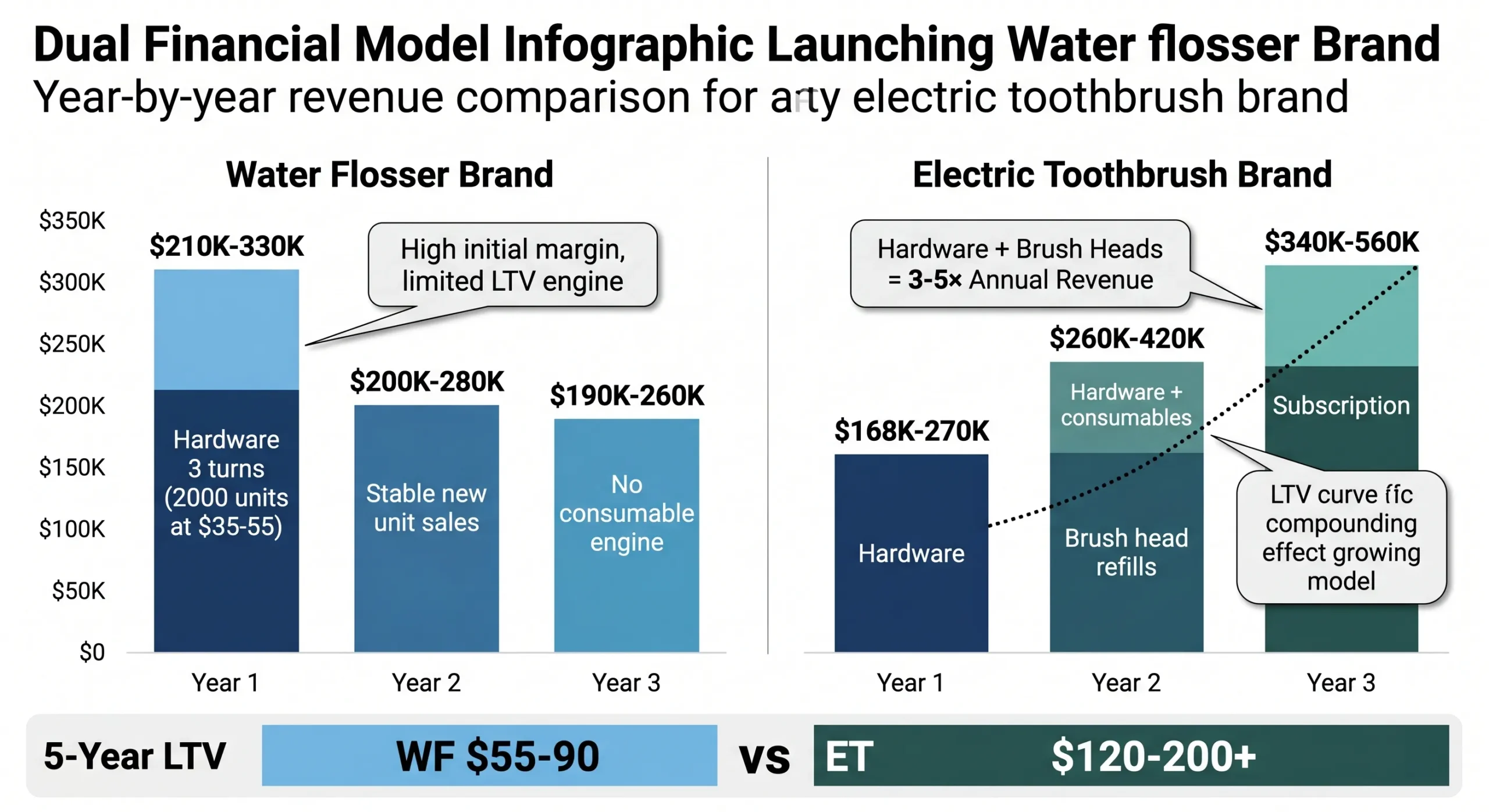
Pour les marques propres, la véritable valeur des brosses à dents électriques réside dans l’écosystème de consommables : les têtes de rechange achetées par les utilisateurs actifs génèrent pour la marque un chiffre d’affaires annuel égal à 3–5 fois celui du manche. Un abonnement aux têtes de rechange crée des revenus prévisibles et augmente la valeur vie client (LTV).
Hydropulseur : catégorie en croissance rapide avec des voies ouvertes
Waterpik jouit d'une reconnaissance de marque significative, mais la catégorie des hydropulseurs ne présente pas le même duopole qu'Oral-B et Philips dans les brosses à dents électriques. Cela signifie qu'une marque privée ou émergente bien positionnée peut capturer plus facilement une part de marché significative.
La notoriété des hydropulseurs auprès des consommateurs est en croissance mais pas saturée. Cela signifie qu'une marque doit investir dans du contenu éducatif pour les consommateurs, mais aussi que vous ne luttez pas pour attirer l'attention contre des campagnes publicitaires télévisées de plusieurs milliards de dollars. Le volume de recherche pour " water flosser " et les termes associés a augmenté de 35%+ au cours des deux dernières années — la catégorie se développe d'elle-même.
L'indice Amazon
Les requêtes anglaises « water flosser » et « electric toothbrush » génèrent respectivement environ 180 000 et 600 000 recherches par mois sur Amazon. Un volume plus élevé pour les brosses électriques offre davantage d’opportunités, mais aussi plus de concurrence. La première place au Best Seller Rank des hydropulseurs nécessite généralement moins d’avis et de dépenses PPC.
Modèle financier : quelle activité offre les meilleures perspectives ?
Marque d'hydropulseur (scénario année 1)
| Métrique | Valeur |
|---|---|
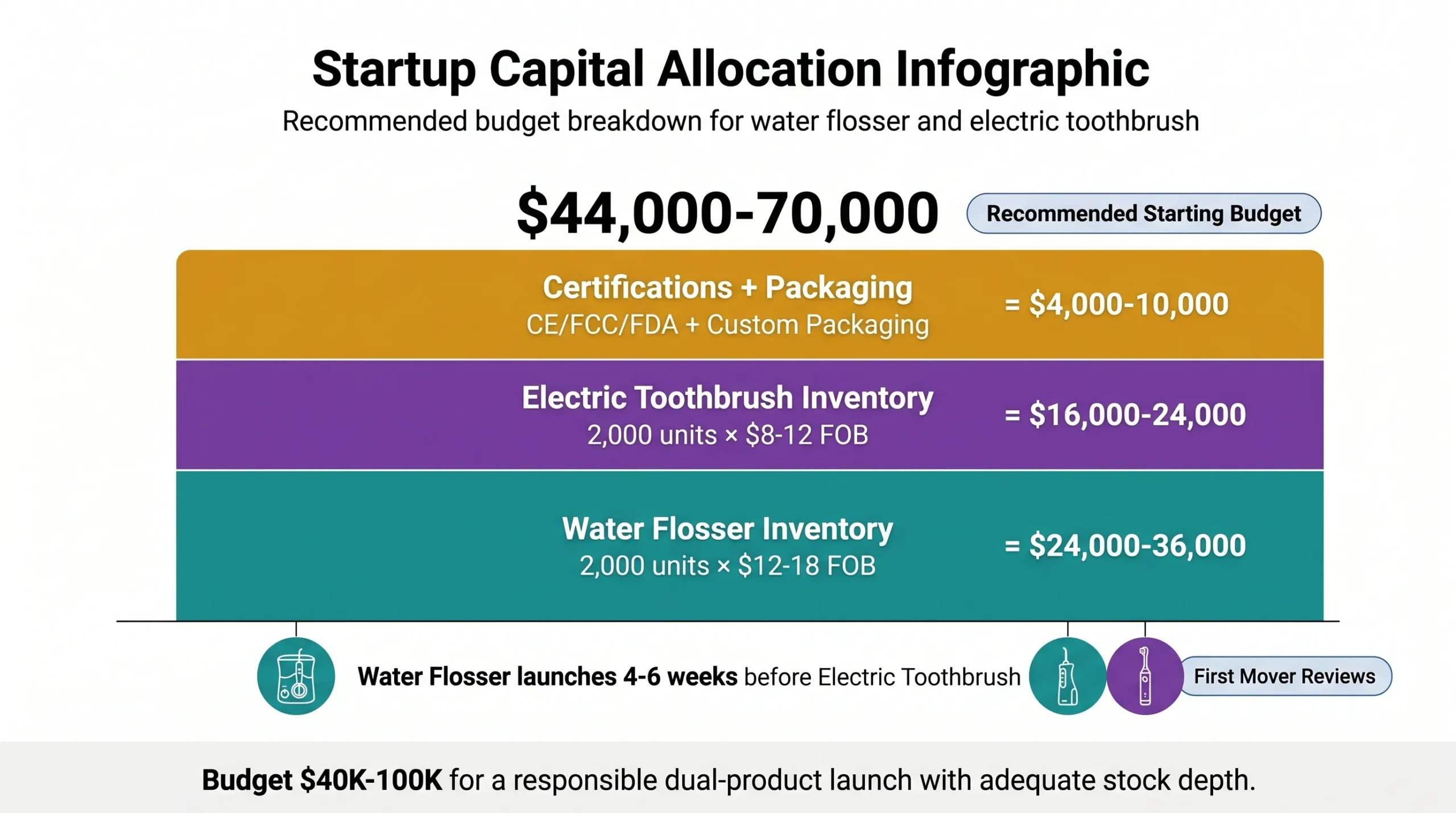
| Stock initial (2 000 unités sans fil) | $24 000–$36 000 |
| Prix de détail (Amazon, DTC) | $35–$55 |
| Marge brute | 58–68% |
| Revenu année 1 (3 rotations) | $210 000–$330 000 |
| Potentiel d'achat répété | Faible. Principalement de nouvelles unités |
| Avantage concurrentiel clé | Différenciation produit, image de marque |
Marque de brosse à dents électrique (année 1 + potentiel consommable)
| Métrique | Valeur |
|---|---|
| Stock initial (2 000 unités soniques de base) | $16 000–$24 000 |
| Prix de détail (Amazon, DTC) | $28–$45 |
| Marge brute | 55–65% |
| Revenu matériel année 1 | $168 000–$270 000 |
| Têtes de remplacement (année 2+) | +$8–12/utilisateur/an, marge élevée |
| LTV sur 5 ans par client | $55–$90 (manche + têtes sur 4 ans) |
Cadre de décision stratégique
Choisissez l'hydropulseur en premier si :
L'hydropulseur est fait pour vous
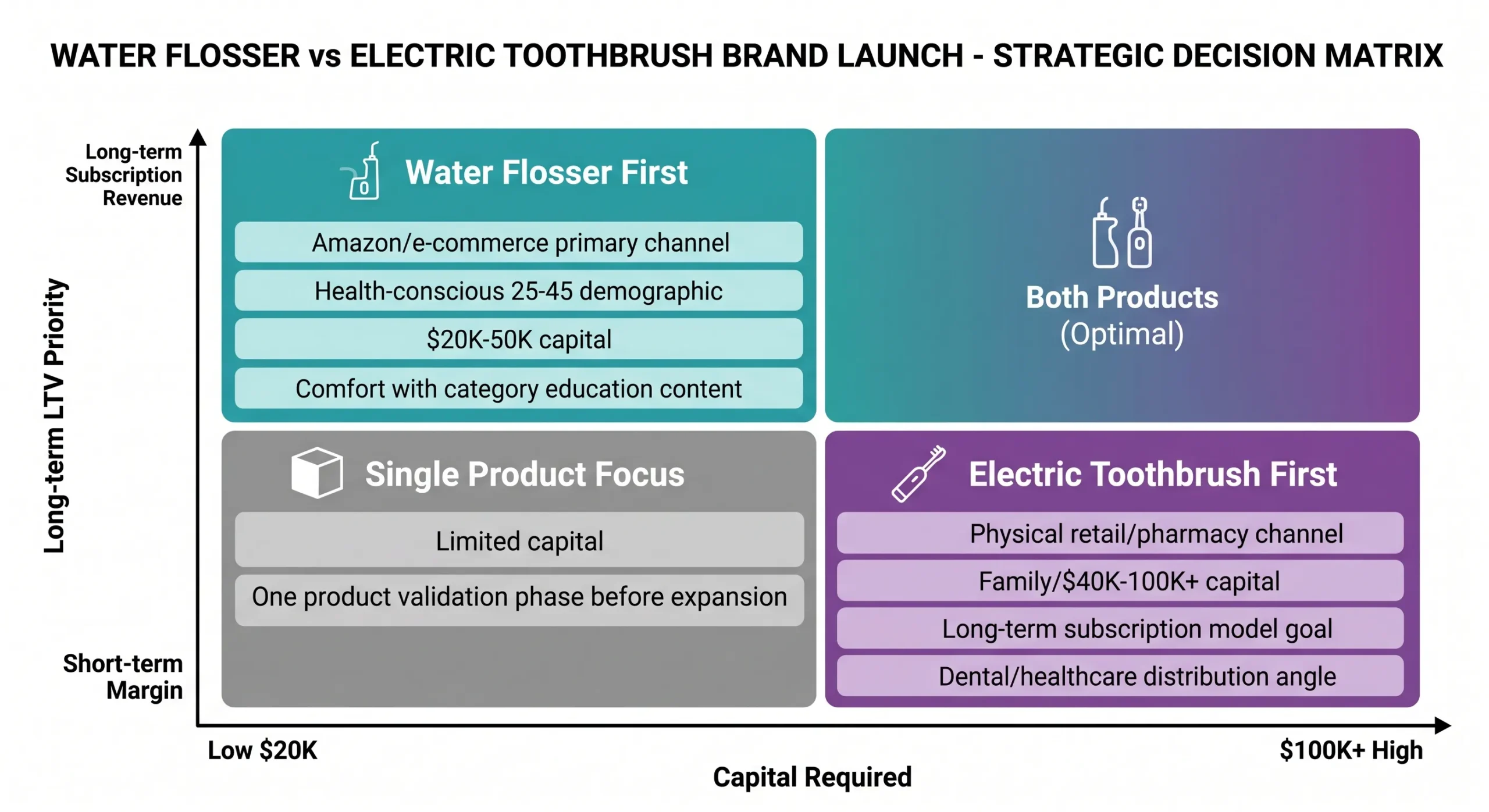
- Vous souhaitez entrer sur un marché moins saturé avec plus d'espace pour les marques challenger
- Votre canal principal est Amazon/e-commerce (les modèles sans fil dominent)
- Vous disposez d'un capital initial de $20 000 à $50 000
- Vous êtes à l'aise avec la création de contenu éducatif marketing
- Votre consommateur cible est soucieux de sa santé, âgé de 25 à 45 ans
- Vous visez un prix unitaire plus élevé sans affronter Oral-B en rayon
La brosse à dents électrique est faite pour vous
- Vous souhaitez vendre dans une catégorie avec une demande grand public éprouvée
- Vos canaux incluent la vente au détail physique (pharmacie, supermarché)
- Vous disposez d'un capital de $40 000 à $100 000+ et d'une patience financière pour un retour sur investissement en année 2+
- Votre stratégie à long terme inclut des revenus issus d’un abonnement aux consommables
- Vous ciblez les segments famille et enfants (catégorie à forte observance)
- Vous avez un angle de distribution dentaire ou professionnel de santé
La meilleure stratégie : lancer les deux ensemble
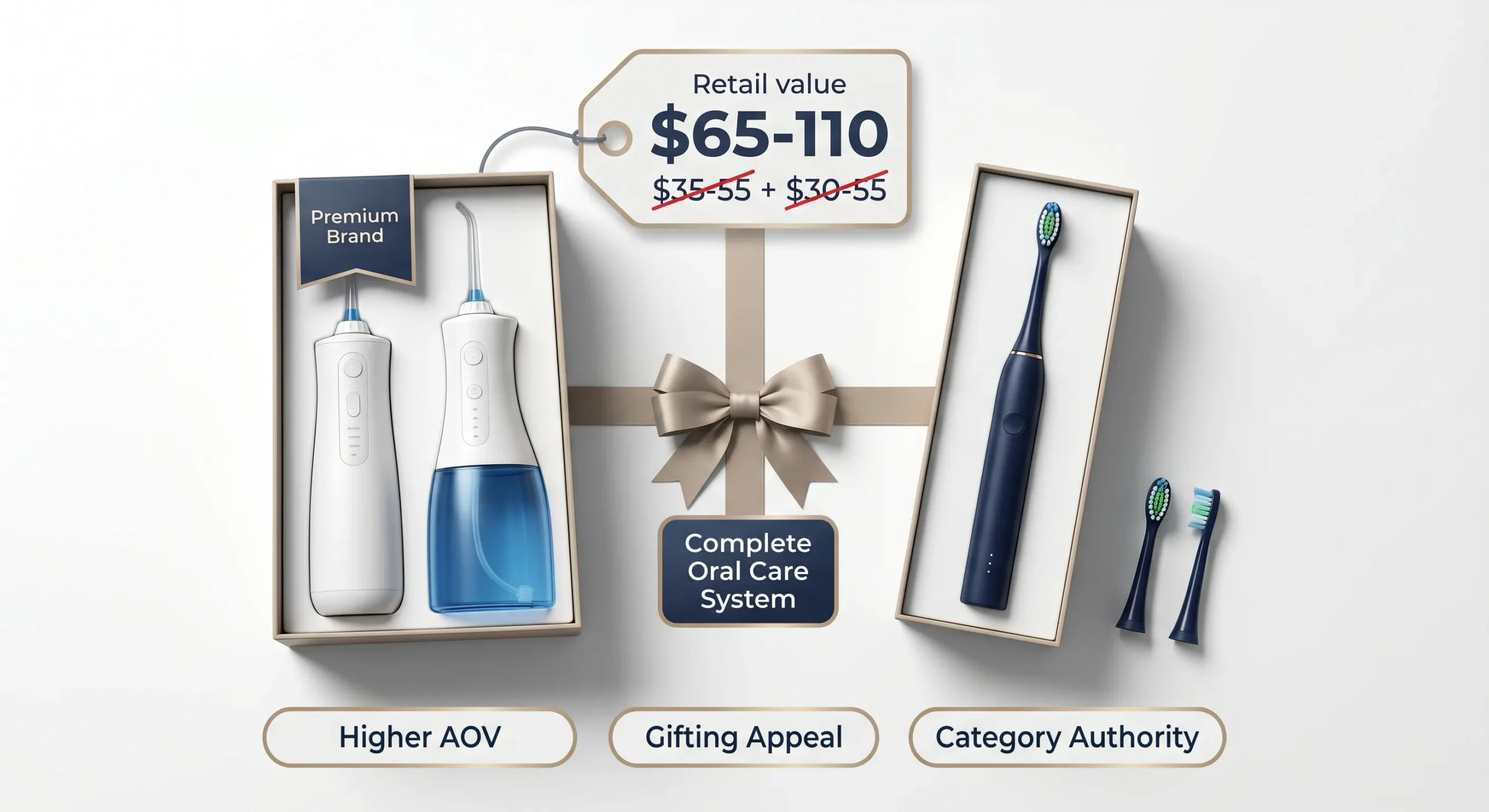
La stratégie la plus solide pour une marque de soins bucco-dentaires consiste à vendre les deux produits comme un système complémentaire. Un ensemble hydropulseur et brosse à dents électrique surpasse régulièrement la vente séparée de chaque produit en valeur moyenne de commande (AOV), en attrait comme cadeau et en autorité dans la catégorie.
Waterpik et Oral-B proposent tous deux la gamme complète pour une raison : les consommateurs sérieux en matière de santé bucco-dentaire ont tendance à acheter les deux. La vente croisée au sein de votre propre écosystème est également bien moins coûteuse que l'acquisition de nouveaux clients à chaque fois.
L'avantage du bundle de Relish Tech
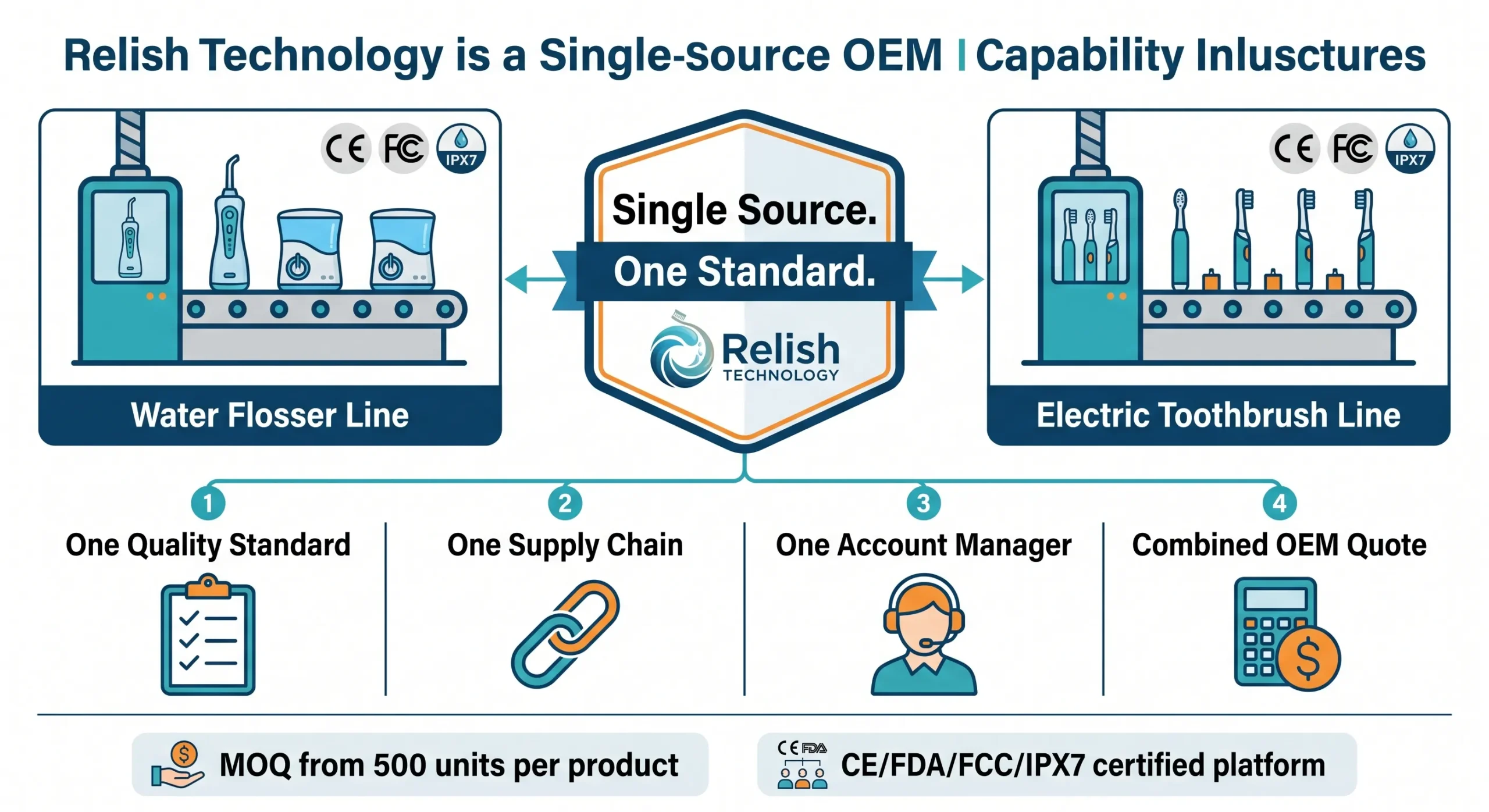
En tant que fabricant OEM produisant à la fois des hydropulseurs et des brosses à dents électriques, Relish Tech peut fournir votre gamme complète d'hygiène bucco-dentaire à partir d'une source unique : un seul standard de qualité, une seule chaîne d'approvisionnement, un seul gestionnaire de compte. Demandez un devis OEM combiné pour les deux catégories.
Prêt à vous approvisionner pour votre gamme d’hygiène bucco-dentaire ?
Relish Tech fabrique des hydropulseurs, des brosses à dents électriques, des brosses à dents en bambou et plus encore. OEM/ODM pour les marques du monde entier, MOQ à partir de 500 unités, certifié CE/FDA/FCC.
Demander le catalogue + les prixRéférences
- Persistence Market Research. (2025). Rapport mondial sur le marché des hydropulseurs 2025–2033. Pénétration du marché en marque privée de 40%+ de part de marché. [Source →]
- Straits Research. (2025). Analyse de la taille et des parts du marché des brosses à dents électriques. Marché mondial de $7 milliards+, TCAC de 4,5 à 5,0%. [Source →]
- Association dentaire américaine. (2024). Recommandations cliniques fondées sur des preuves. Les brosses à dents électriques réduisent la plaque dentaire de 21% par rapport aux brosses manuelles. [Source →]
FAQ