








进入日本口腔护理市场:2026 年 PSE 认证指南
Your comprehensive guide to entering the Japanese oral care market. Understand PSE certification requirements, PMD Act compliance, labeling regulations, and how to partner with an experienced China OEM manufacturer for Japan market success.
Why Japan is a Premium Market for Oral Care
Japan represents one of the most attractive yet demanding markets for electric toothbrush products globally. With a population of approximately 125 million and one of the world's highest life expectancies, Japan's consumer base demonstrates sophisticated preferences, exceptional product expectations, and willingness to pay premium prices for high-quality oral care solutions.
The Japanese oral care market is valued at over USD 3.5 billion annually, making it the second-largest market globally after the United States. Electric toothbrush penetration has grown steadily, with premiumSonic and ultrasonic models gaining particular traction among health-conscious consumers aged 35-60. The market is characterized by strong brand loyalty, with established players like Philips (Sonicare), Panasonic, and Lion commanding significant market share—but foreign brands continue to capture premium segments through differentiated positioning.
What distinguishes Japan from other markets is the consumer's expectation of continuous innovation and exceptional quality. Japanese shoppers rank "made in Japan" and "German-made" highest in quality perception (internal customer data, 2025). However, this does not preclude foreign brands from success; rather, it demands transparent communication about quality assurance, rigorous testing, and supply chain transparency. Brands that can credibly demonstrate their quality control processes—from raw material sourcing to final assembly—compete effectively in Japan's premium oral care segment.
The regulatory environment, while rigorous, rewards brands that invest in compliance. Products that meet Japanese standards carry significant credibility throughout Asia-Pacific, as many regional markets reference Japanese standards or accept Japanese certification as evidence of quality. Japan's regulatory framework also signals manufacturing excellence to global markets, making Japan compliance a valuable brand asset beyond the Japanese market itself.
Japan Oral Care Market Overview for Electric Toothbrush Brands
Understanding the Japanese oral care market structure is essential for effective market entry strategy. The market is served through diverse retail channels, each with distinct requirements, consumer expectations, and competitive dynamics.
Market Size and Growth Drivers
The Japanese oral care market benefits from several structural growth drivers. An aging population creates sustained demand for products addressing gum health, sensitivity, and restorative oral care. Rising health consciousness, particularly post-COVID, has increased consumer attention to personal hygiene and preventive care products. The premiumization trend continues, with consumers willing to upgrade from manual to electric toothbrushes and from basic to advanced models. For electric toothbrush manufacturers entering Japan, these demographic and behavioral trends represent a sustained market opportunity over the medium-to-long term.
Market segmentation for electric toothbrush products reveals distinct opportunities across price tiers. The mass-market segment (below JPY 3,000 / USD 20) is dominated by Panasonic and local brands with extensive retail distribution. The mid-premium segment (JPY 3,000-8,000) represents the fastest-growing category, where foreign brands like Philips Sonicare and Oral-B compete effectively. The ultra-premium segment (above JPY 8,000) includes advanced sonic and ultrasonic toothbrushes with smart features, primarily serving affluent consumers and dental practice recommendations.
Key Retail Channels
Don Quijote
Discount retailer with extensive electronics and health sections. Known for tourist purchases and unique product discovery. Requires competitive pricing.
Matsumoto Kiyoshi
Drugstore chain with strong cosmetics and health positioning. Appeals to health-conscious female consumers aged 25-55. Premium shelf placement opportunities.
Tokyu Hands
Lifestyle department store emphasizing quality and innovation. Attracts early adopters and quality-focused consumers. Ideal for premium positioning.
Amazon Japan
Fastest-growing channel for electric toothbrush brands. Search-driven discovery, review ecosystems, and FBA fulfillment simplify logistics. Explore our electric toothbrush product range.
Traditional retailers require Japanese-language packaging, point-of-sale materials, and often prefer established distributor relationships. E-commerce platforms offer faster entry but require competitive positioning against established listings. Many brands pursue a dual-channel strategy, building brand presence through e-commerce while establishing retail partnerships for long-term growth.
PSE Certification Requirements
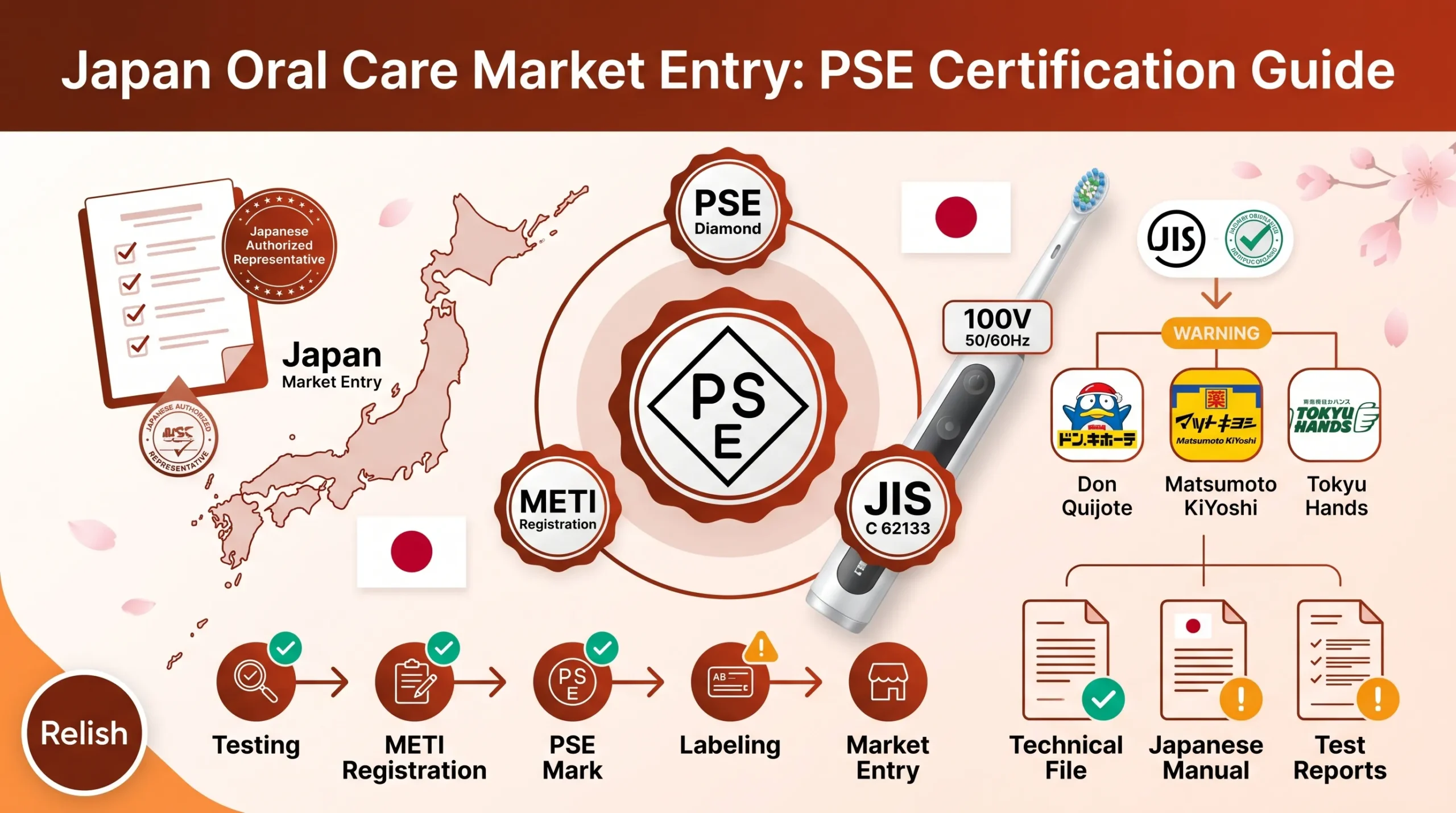
The Electrical Appliance Safety Law (DENAN), formally known as the "Act on the Improvement of the Quality, Performance and Safety of Electrical Products," establishes Japan's product safety framework for electrical products. For manufacturers entering Japan with an electric toothbrush, PSE certification is the mandatory compliance gateway before any retail listing or import clearance can proceed.
Understanding PSE Circle vs. Diamond Mark
The PSE system distinguishes between two categories of electrical products, each with different compliance requirements:
| Category | Mark | 产品 | Compliance Route |
|---|---|---|---|
| Non-Specified Products | PSE Circle (round) | Lower-risk electrical products | Self-declaration by manufacturer; no government registration required |
| Specified Products | PSE Diamond (diamond-shaped) | Higher-risk products including most oral care devices | Mandatory testing by registered testing institution + METI registration |
Electric toothbrushes are classified as specified products under DENAN because they contain motors and electronic circuits and come into contact with the human body. This classification requires the PSE diamond mark, mandatory testing, and METI (Ministry of Economy, Trade and Industry) registration.
METI Registration Process
METI registration is a prerequisite for legally selling specified electrical products in Japan. The process involves several key steps:
Engage a Japanese Business Entity
METI registration requires a Japanese-based responsible party—typically your importer, distributor, or an authorized representative service. This entity becomes the registered manufacturer/importer in METI's database.
Product Testing
Submit samples to a METI-registered testing institution (ITEI or JQA) for testing against applicable J-standards. For electric toothbrushes, relevant standards include J 60335-1 (general requirements) and product-specific standards. Testing typically takes 4-8 weeks.
Technical Documentation
Prepare Japanese-language documentation including test reports, circuit diagrams, parts lists, instruction manuals, and the PSE application form. All documentation must be in Japanese or include certified Japanese translations.
Submit METI Application
Your Japanese representative submits the complete application package to METI. Processing time is typically 2-4 weeks assuming complete documentation. METI issues a registration number upon approval.
Apply PSE Mark
Upon METI registration, affix the PSE diamond mark to the product, packaging, and instruction manual. The mark must include the name of the registered party, the product name/model, and the applicable voltage.
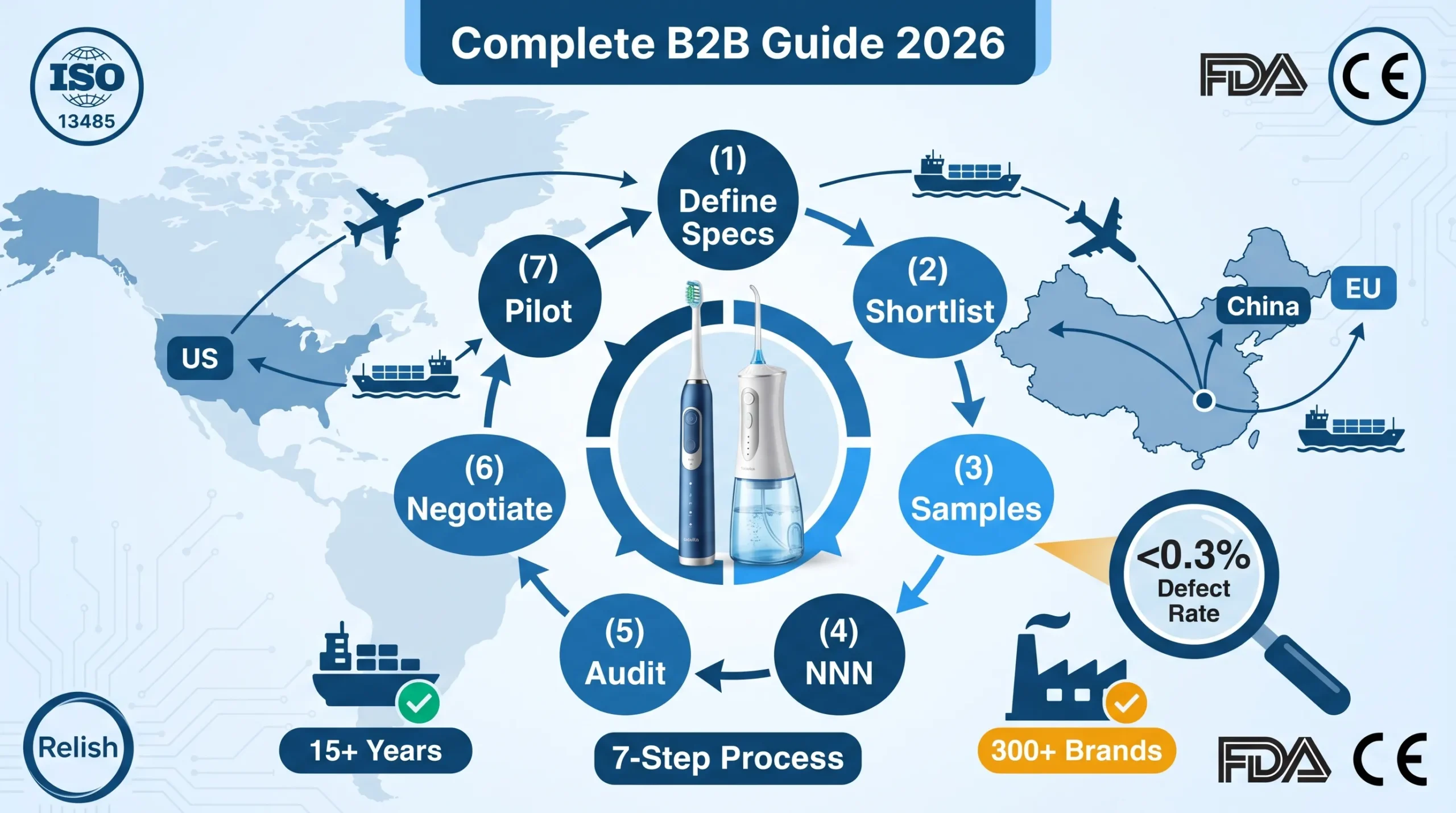
The entire PSE certification process for an electric toothbrush typically requires 3-5 months, including testing, documentation preparation, and METI registration. Planning for this timeline is essential when developing your Japan market entry schedule.
PMD Act (Pharmaceutical and Medical Device Act) Compliance
The Act on Safety of Regenerative Medicine and the Pharmaceutical and Medical Device Act (PMD Act) govern medical devices in Japan. For electric toothbrush brands entering Japan, determining PMD Act applicability depends on your product's intended use and marketing claims.
When Does PMD Act Apply to Oral Care?
The PMD Act applies when products are marketed with medical or therapeutic claims. Electric toothbrushes positioned as general consumer products for "tooth cleaning" fall outside PMD Act requirements. However, products marketed for:
- Treating or preventing dental disease
- Reducing gingivitis or periodontitis
- Whitening teeth through chemical action (rather than mechanical cleaning)
- Providing therapeutic benefits to gums or oral tissues
...may be classified as medical devices and subject to PMD Act requirements, including prefectural government registration and potential third-party certification through the Pharmaceutical and Medical Device Agency (PMDA).
Medical device classification triggers additional requirements including third-party certification, adverse event reporting systems, and post-market surveillance obligations. The compliance burden is substantial and should be weighed against potential marketing advantages before pursuing medical device classification.
Labeling Requirements for Japan
Japan has some of the world's most detailed labeling requirements for electric toothbrush products. Non-compliance can result in product removal at customs, retailer returns, and reputational damage from consumers and retail partners.
Mandatory Label Elements
All electrical products sold in Japan must display the following information in Japanese:
- Product Name: Clear identification of the product type and model designation
- Voltage Rating: "100V" prominently displayed (Japan uses 100V nominal household voltage)
- Frequency Compatibility: "50Hz/60Hz" for products operating across Japan's dual-frequency grid
- Power Consumption: Wattage in watts (W) or power consumption in watts
- PSE Mark: The diamond or circle PSE symbol must be clearly visible
- Manufacturer Information: Name and address of the manufacturer (or registered importer)
- Date of Manufacture: Manufacturing date or lot number for traceability
- Country of Origin: "Country of Origin: China" (or applicable country) — note that Japanese consumers and retailers value supply chain transparency, and OEM manufacturers like Relish Tech can provide custom electric toothbrush packaging for Japan that addresses both regulatory labeling requirements and retailer shelf presentation standards.
Voltage Considerations
Japan operates at 100V nominal voltage (actual range 100-110V) with dual frequency—50Hz in eastern Japan and 60Hz in western Japan. Electric toothbrushes must be designed for 100V operation and dual-frequency compatibility. Products designed for 220-240V European operation will be damaged if connected to Japanese mains voltage—never assume global voltage compatibility without explicit verification.
Charging bases require particular attention. While the toothbrush itself may accept 100-240V input (making it globally compatible), the actual charging base plug and input specifications must match Japanese requirements. Your OEM manufacturer should offer 100V-compatible variants or confirm the global voltage range covers 100V operation.
Distribution Channels in Japan
Establishing effective distribution for electric toothbrush brands in Japan requires navigating a complex retail landscape and understanding the relationship dynamics between suppliers, distributors, and retailers. Foreign brands typically enter through one or more of the following channels:
Import/Distribution Partners
Japanese trading companies and specialized importers provide the most common entry route for foreign electric toothbrush brands. These partners handle customs clearance, regulatory compliance, warehousing, and retail relationships. Major trading companies including Mitsui, Sumitomo, and Marubeni have consumer products divisions, while specialized oral care distributors offer deeper category expertise.
Distribution partnerships typically involve exclusivity arrangements in exchange for investment in market development. Negotiate terms carefully, as exclusivity can limit future flexibility. Key considerations include:
- Territory scope (Japan only vs. broader Asia-Pacific)
- Minimum purchase commitments and exclusivity conditions
- Marketing investment obligations and co-op advertising
- Performance thresholds for exclusivity maintenance
- Rights to sell through e-commerce channels
Amazon Japan Direct Selling
Amazon Japan has become a significant channel for electric toothbrush brands, offering faster entry than traditional retail partnerships. Amazon's FBA (Fulfillment by Amazon) service handles storage, picking, packing, shipping, and customer service, simplifying logistics for foreign sellers.
Requirements for Amazon Japan include PSE certification documentation, Japanese-language product listings, competitive pricing, and strong review generation. Successful brands invest in Amazon-specific optimization, including Japanese keyword research, A+ content with lifestyle imagery, and potentially Amazon Stores for brand building.
Japanese Authorized Representative Services
For brands seeking to maintain more control over distribution while meeting regulatory requirements, Japanese Authorized Representative (AR) services provide an alternative to full distribution partnerships. AR services handle METI registration, PSE mark application, and regulatory compliance while allowing brands to sell directly or through selected retail partners.
How Relish Tech Supports Japan Market Entry
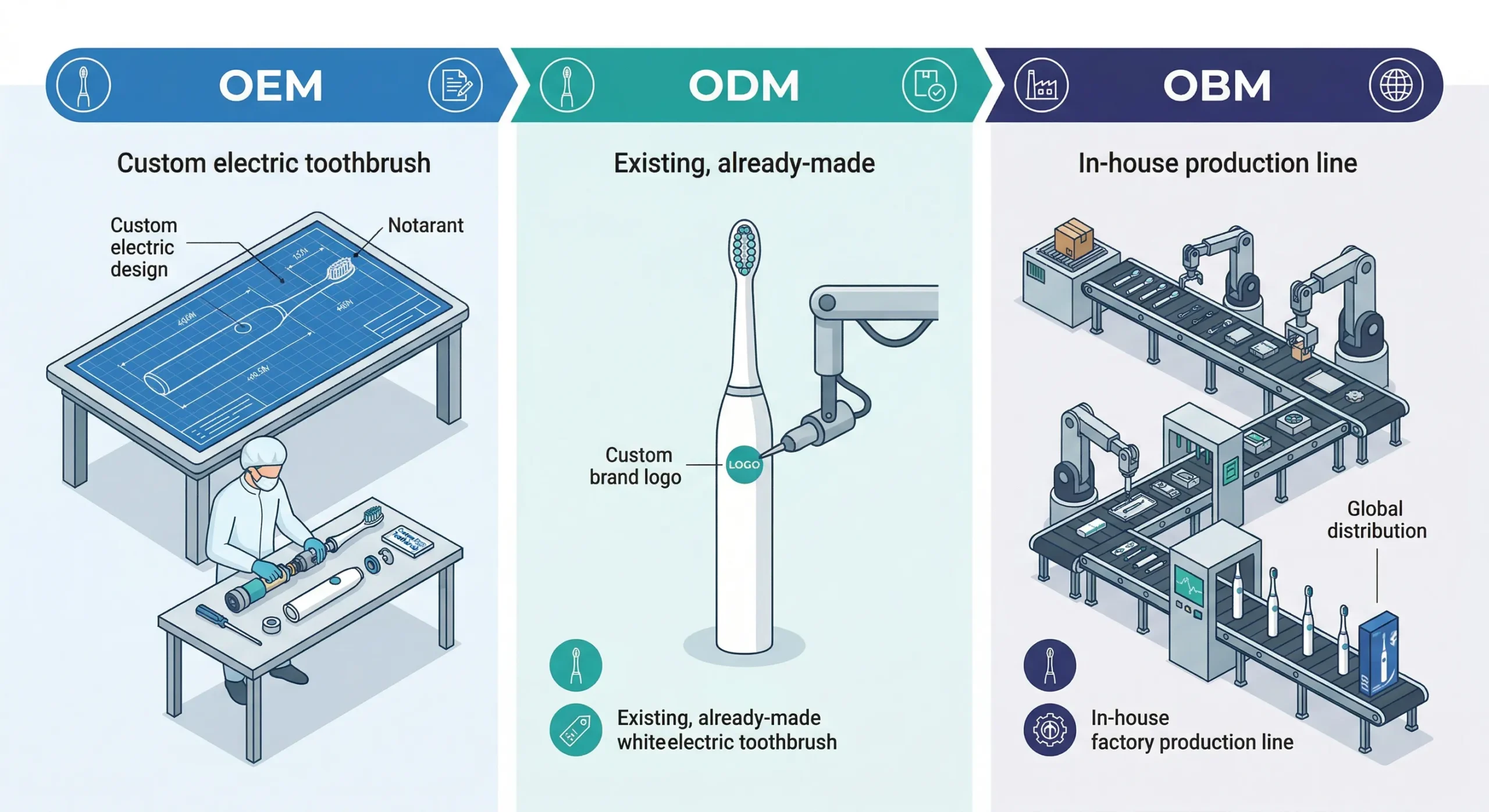
Successfully entering the Japanese market requires products designed from the outset for Japan's specific requirements. Relish Tech has developed specific capabilities to support electric toothbrush brands pursuing Japan market entry: 100V product variants, JIS-standard testing coordination, PSE certification management, and Japanese-language documentation support.
Our Japan market support capabilities include designing and manufacturing electric toothbrush products that meet Japan's specific regulatory and consumer requirements:
- 100V Product Variants: We offer dedicated 100V product configurations designed specifically for the Japanese market, ensuring complete electrical compatibility and regulatory compliance.
- Japanese-Language Documentation: Our team coordinates professional Japanese translation of instruction manuals, technical specifications, and compliance documentation, ensuring linguistic accuracy and regulatory compliance.
- JIS Standard Compliance: We understand J-standard equivalents to IEC standards and incorporate JIS compliance considerations into product design and testing programs from project inception.
- Battery Compliance: Our products meet JIS C 62133 requirements for lithium battery safety, with UN 38.3 documentation available for all battery-containing products.
- PSE Testing Support: We work directly with METI-registered testing institutions to facilitate efficient testing processes and minimize certification timelines.
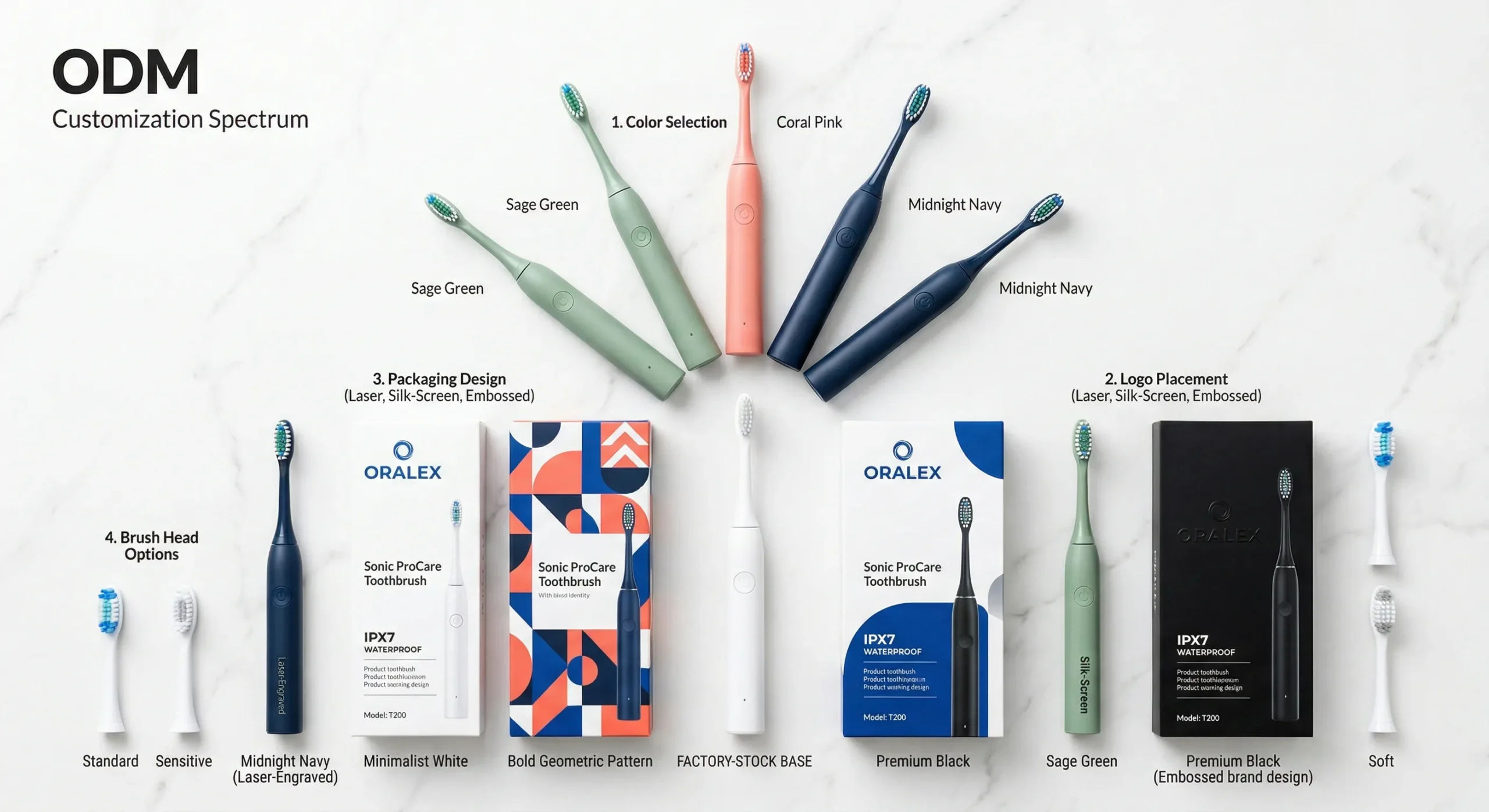
- Customization for Japanese Preferences: We accommodate Japanese market preferences including compact packaging for drugstore shelving, specific color palettes preferred by Japanese consumers, and product features aligned with Japanese oral care routines.
Learn more about our research and development capabilities and how we support Japan market entry by exploring our R&D page, reviewing our full certifications portfolio, or contacting our team directly to discuss your Japan market requirements.
主要收获
- Japan is a premium electric toothbrush market worth over USD 3.5 billion, with strong consumer demand for high-quality products and willingness to pay premium prices.
- PSE diamond certification is mandatory for electric toothbrushes sold in Japan, requiring testing by registered institutions and METI registration before market entry.
- Voltage compatibility (100V, 50/60Hz) is essential—products designed for 220-240V will be damaged by Japanese mains voltage.
- Japanese-language labeling, PSE mark placement, and METI registration require a Japanese-based business entity (importer, distributor, or authorized representative).
- PMD Act compliance applies only if products make medical/therapeutic claims—careful marketing language keeps most electric toothbrushes in the general consumer product category.
- Partnering with an OEM manufacturer experienced in Japan requirements simplifies compliance and accelerates market entry timelines. Read our electric toothbrush OEM manufacturing guide for a practical overview of the process.
Navigate Japan Market Entry for Your Electric Toothbrush
Relish Tech's Japan market specialists can assess your electric toothbrush product against PSE certification requirements, advise on METI registration strategy, and connect you with accredited testing institutions. Get a free initial consultation to understand your compliance pathway.
Request a Japan Market Consultation- MOQ: Japan-specification electric toothbrush production available from 500 units per SKU, with sample MOQ as low as 50 units for market testing
- 交货期: 3-5 months total PSE certification timeline including 4-8 weeks testing, 2-4 weeks METI registration, and 45-60 days production
- QC Standards: ISO 13485 quality system, pre-shipment AQL 1.5 inspection, 100V electrical testing confirmation, Japanese-language documentation review
- 认证: PSE/DENAN compliance support, JIS C 62133 battery testing, UN 38.3 transport documentation, Japanese-language IFU coordination
Ready to Enter the Japan Market with Your Electric Toothbrush?
Relish Tech has helped numerous electric toothbrush brands successfully enter the Japanese market. Our experienced team understands PSE certification, METI requirements, and Japanese consumer preferences.
联系我们的团队常见问题
Below are the most common questions we receive from electric toothbrush brands exploring Japan market entry. For specific guidance tailored to your product and business model, contact our team.
参考资料
For brands entering Japan with an electric toothbrush product, the regulatory landscape combines PSE certification, METI registration, and labeling compliance into a structured pathway to market. Working with an experienced China OEM manufacturer who understands Japan's requirements significantly reduces the time and cost of this process. Relish Tech supports electric toothbrush brands through PSE testing coordination, 100V product variants, and Japanese-language documentation—providing the compliance infrastructure needed for successful Japan market entry.
- Ministry of Economy, Trade and Industry (METI). "Electrical Appliance Safety Law (DENAN) Overview." https://www.meti.go.jp/english/policy/consumer_products_safety.html
- Japan External Trade Organization (JETRO). "Regulations and Procedures for Importing Cosmetics and Toiletries." https://www.jetro.go.jp/
- Pharmaceutical and Medical Device Agency (PMDA). "Medical Device Regulatory Framework in Japan." https://www.pmda.go.jp/english/
- Japanese Standards Association. "JIS C 62133:2022 Secondary cells and batteries – Safety requirements for portable sealed secondary cells." JSA.
- Ministry of Health, Labour and Welfare. "Act on Securing Quality, Efficacy and Safety of Products Including Pharmaceuticals and Medical Devices (PMD Act)." https://www.mhlw.go.jp/english/
- Japan External Trade Organization (JETRO). "Japan Market Report: Oral Care and Personal Hygiene Products." https://www.jetro.go.jp/en/reports/market/
- Japan Ministry of Economy, Trade and Industry. "Guide to PSE Certification for Electrical Appliances." https://www.meti.go.jp/english/policy/consumer_products_safety.html