





自有品牌电动牙刷:完整品牌指南 (2026)
Plan your private label electric toothbrush launch around the product, brand and sales channel. The illustrative budget in this guide totals USD 8,600–36,600. Relish custom orders start at 1,000 units, with flexibility for individual projects; stocked products are available wholesale from 50 units. An existing ODM platform can shorten development, while final timing and profitability depend on the model, compliance work, order size and selling costs.
执行摘要:自有品牌电动牙刷发布
- Startup investment: The example budget totals USD 8,600–36,600 for samples, initial production, packaging, brand identity, photography, a website, launch marketing, compliance work and freight. Existing platform documentation can reduce duplicated work when it covers your exact product configuration.
- Margins by channel: Calculate product gross margin separately from platform, fulfillment, advertising and return costs. Replacement brush heads can support repeat purchases, but subscription profitability depends on customer retention and the cost of serving each order.
- Example launch sequence: Start with one channel, such as Amazon FBA, and prepare Brand Registry and A+ Content if eligible. Add a direct-to-consumer website and an optional replacement-head subscription as demand develops, then approach retail buyers with sales and customer-feedback data.
- Launch priorities: (1) Check trademark availability in your target markets before committing to branding. (2) Develop packaging that communicates product quality and the customer benefit clearly. (3) Plan replacement-head availability and after-sales support from the start.
目录
1. 什么是口腔护理领域的自有品牌?
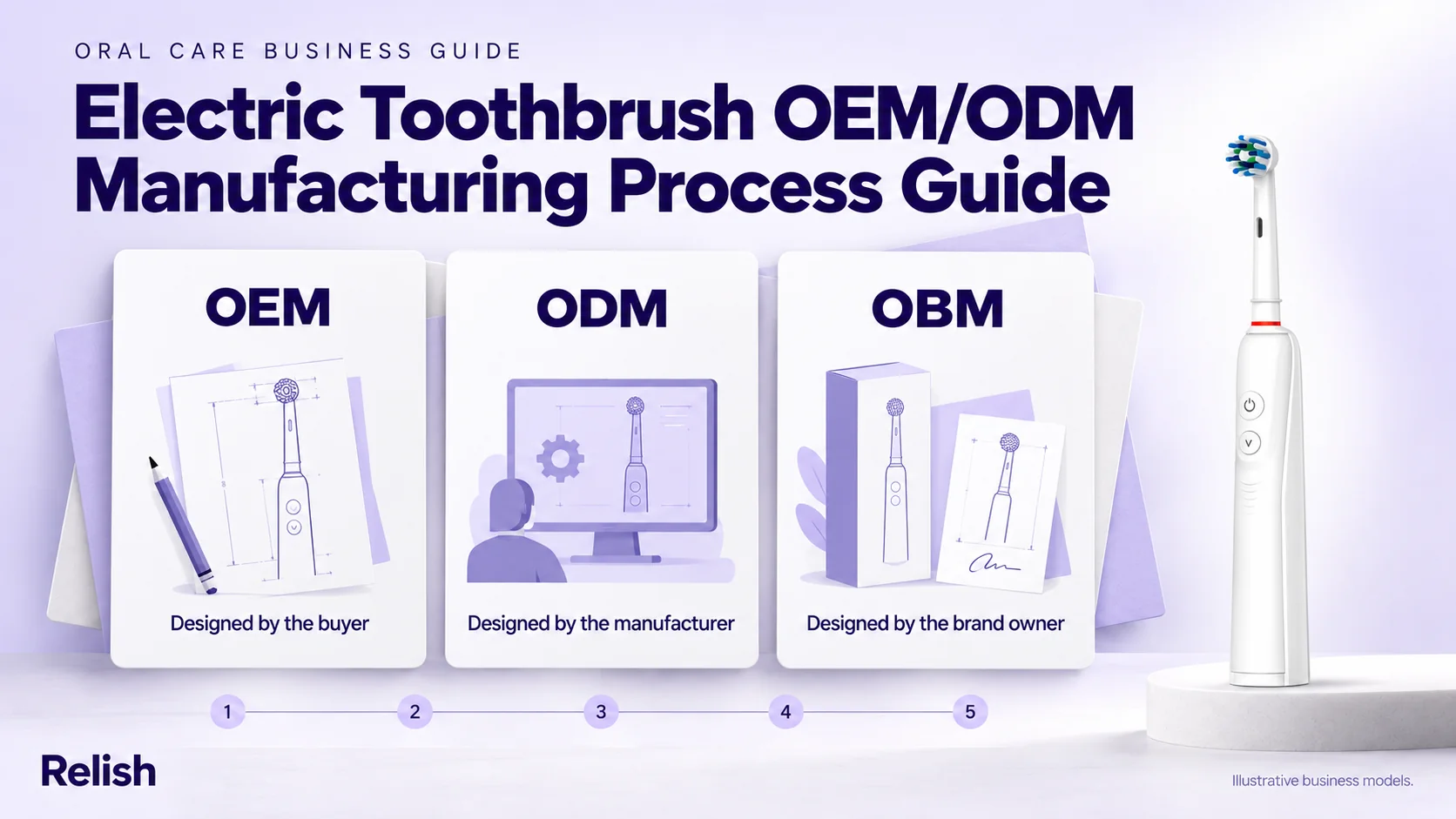
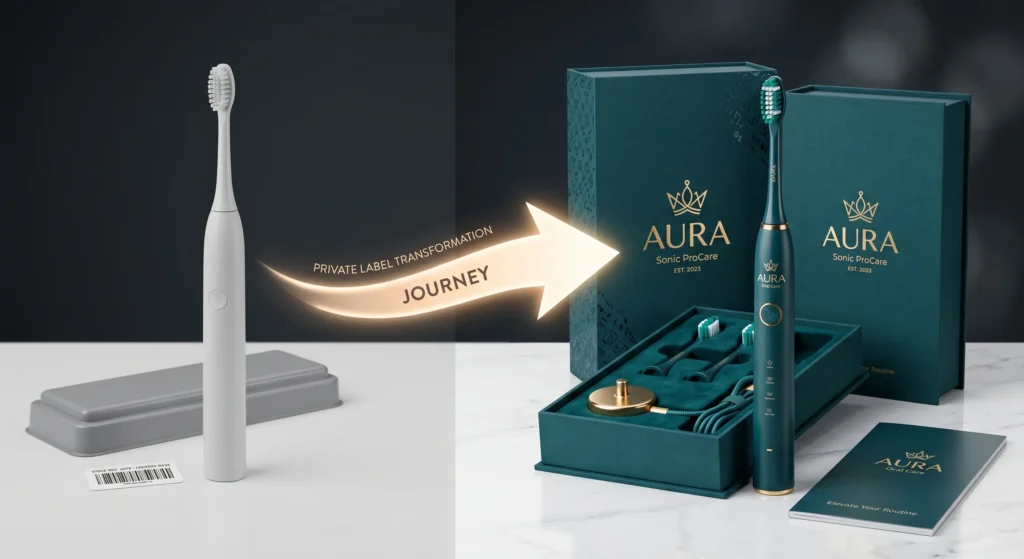
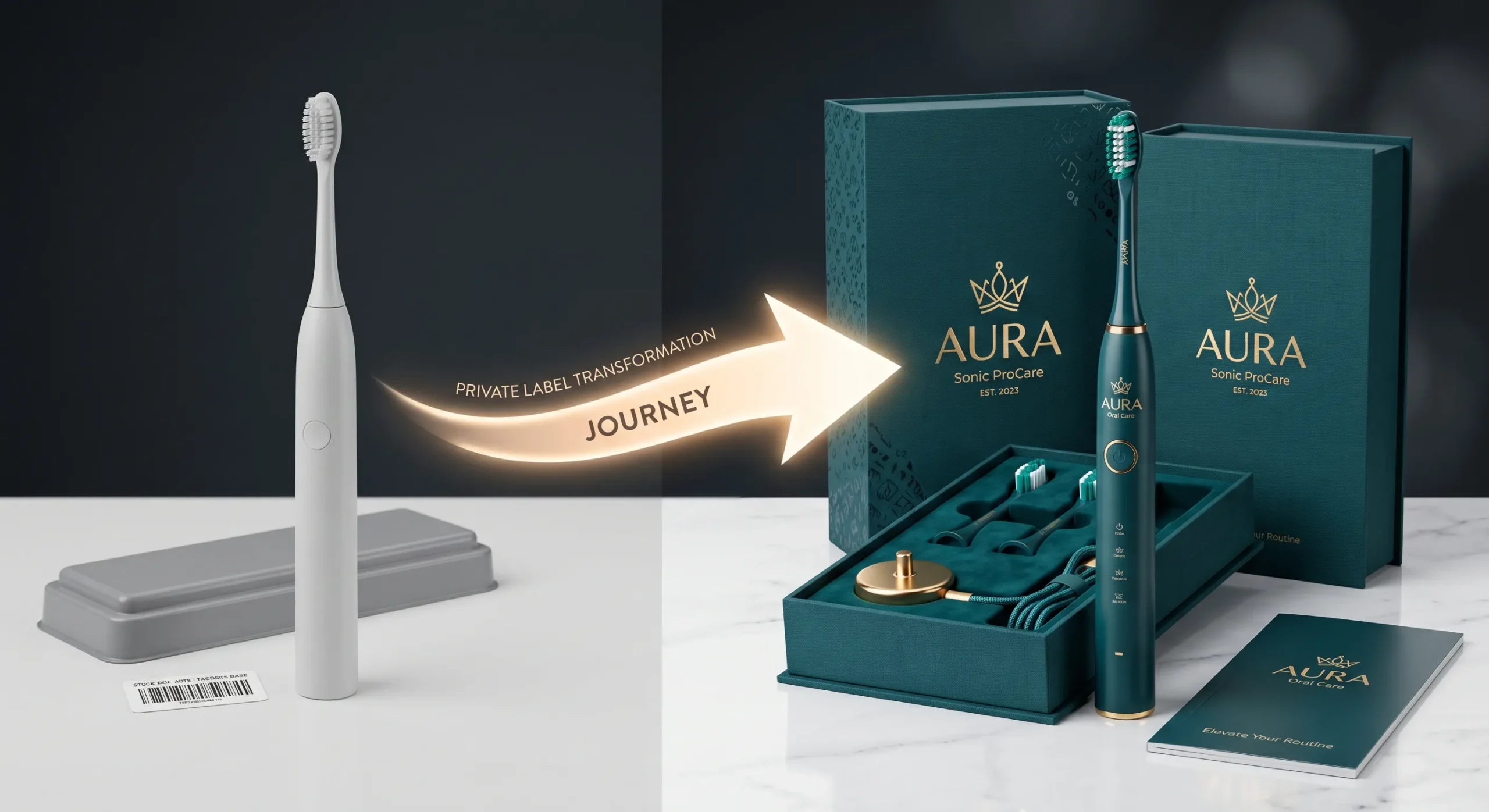
自有品牌意味着采用现有制造商的产品,并以您自己的品牌名称销售。在口腔护理行业,这通常涉及:
- 选择工厂平台: 从制造商现有的声波牙刷型号(电机、电池、充电、功能)中选择
- 定制外观: 定制外部颜色、表面处理(哑光/亮光/触感柔软)、标志位置(丝印、激光雕刻、压印)
- 设计包装: 完全定制包装——盒子设计、内衬布局、说明书、保修卡
- 建立品牌: 品牌名称、定位、网站、营销内容、亚马逊 listing、社交媒体存在
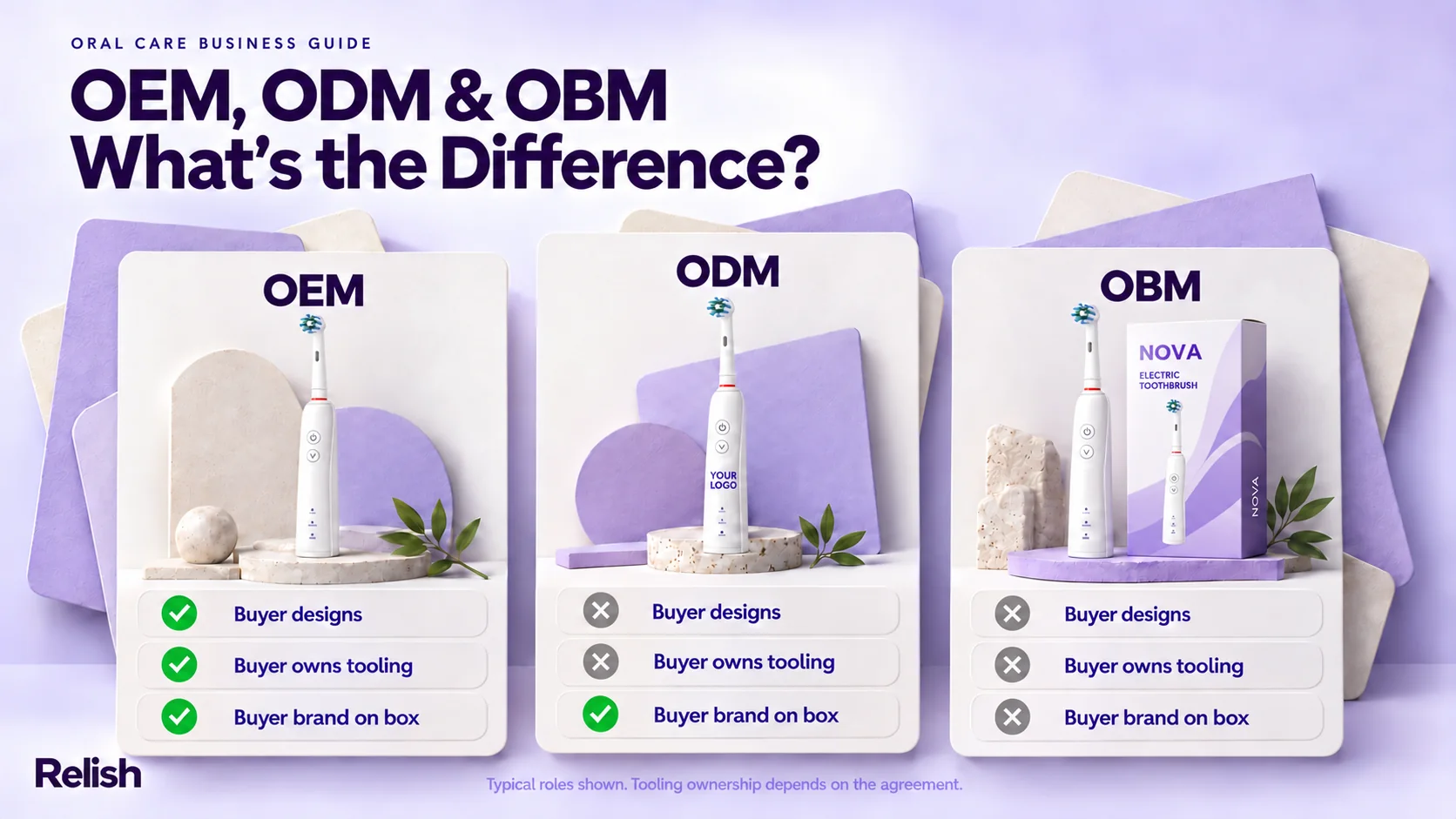
自有品牌 vs. 白标
Suppliers may use these terms differently. A useful working distinction is:
- 白标: An existing product with limited changes, often your logo and packaging. It can simplify launch preparation, though product differentiation is limited.
- 自有品牌: An existing product sold under your brand, with selected colors, packaging and marketing. Agree ownership of designs, tooling and intellectual property in the contract; brand ownership alone does not establish those rights.
💡 口腔护理领域的自有品牌机会
Straits Research estimates the global electric toothbrush market at 2026年的50.2亿美元 ,并预测到 2034年的85亿美元, with a 6.8% CAGR for 2026–2034 [1]. For a new brand, the practical opportunity is to serve a clearly defined customer need with dependable product quality, distinctive presentation and reliable replacement-head supply.
📋 制造商简介:Relish Technology
Relish Technology is a Shenzhen-based oral care OEM/ODM manufacturer with 14 年以上的出口经验 in private label electric toothbrush manufacturing. Custom orders start at 1,000 units, with flexibility for individual projects; stocked products are available wholesale from 50 units. Our capabilities include a 20,000平方米厂房, monthly capacity of 1.2M+ units, 300+ workers, 30+ R&D engineers and exports to 120+ countries. Existing platforms have CE, FCC, RoHS, IPX7 and PSE documentation as applicable. We help you check the documentation against your chosen model, materials and target market. 查看客户案例研究 → | 请求自有品牌咨询 →
2. Brand Positioning: 5 Practical Approaches
Your positioning shapes the target price, packaging, sales channels and product selection. Choose one primary direction before starting design. The prices and features below are planning examples, rather than quotations or fixed specifications.
🎯 优质专业型
- Professional positioning, with dentist endorsements only where genuine and authorized
- 简约包装,高端开箱体验
- App连接,5+模式,含旅行盒
- Marketing: product demonstrations, relevant creator reviews and documented professional partnerships
⚖️ 智能性价比
- Everyday performance at an accessible price
- 简洁现代品牌形象,优质摄影
- 3–4种模式,USB充电,IPX7
- 营销:亚马逊PPC,对比内容
💰 预算之王
- Value-focused pricing and volume-based offers
- 简易包装,多支装(2支装,家庭装)
- 基础功能,2种模式
- 营销:价格导向,批量折扣
🌿 环保理念
- Material choices supported by specific recycling or environmental evidence
- Natural colors and verified environmental claims
- Replacement-head supply with clear material and disposal information
- Marketing: practical material, packaging and waste-reduction information
🧒 儿童/家庭
- 趣味角色,鲜艳色彩,儿童友好设计
- 面向家长的包装,含安全信息
- Age-appropriate design, soft bristles, a timer and a gentle mode, with relevant safety checks
- 营销:育儿达人,教育内容
3. 核心品牌识别要素
工厂生产您的品牌产品前,需备齐以下标识资产:
品牌名称
A suitable domain and a name checked for trademark conflicts
标志
矢量文件(AI/EPS)用于印刷
色彩方案
主色+辅色+强调色(潘通色号)
字体设计
主字体+副字体用于包装
包装设计
含印刷稿的包装盒刀模图
产品摄影
场景图+白底图
For box styles, print finishes and order-specific packaging requirements, see Relish Technology’s custom packaging services →
品牌命名清单
⚠️ Plan trademark protection before committing to production
Search for conflicting marks and discuss applications in your manufacturing and sales markets with a qualified trademark adviser. File before committing to branded production where appropriate; an application is not an approved registration. Amazon Brand Registry accepts eligible pending or registered trademarks from designated offices. Filing and professional fees vary by market and class; check current official fees and obtain a project-specific estimate.
4. Packaging Design: Make the First Impression Count
Packaging helps shoppers understand your product before they open it. Make the main benefit, contents and brand identity clear in both a small online image and a retail display. The unboxing experience should support the quality of the product inside.
📦 硬质盒(高端)
Illustrative cost: USD 0.80–2.00 per box; quantity and specification to be quoted
- 磁吸翻盖或掀盖设计
- EVA泡沫或模塑纸浆内衬
- 可提供局部UV、烫金、压印工艺
- 最佳适用:高端定位(零售价$40+)
📦 滑盖盒(中端)
Illustrative cost: USD 0.40–1.00 per box; quantity and specification to be quoted
- 外滑套+内托盘
- 简洁现代的外观
- 全彩印刷,哑光或光面覆膜
- 最佳适用:智能价值定位(零售价$20–$40)
📦 开窗盒(经济型)
Illustrative cost: USD 0.20–0.50 per box; quantity and specification to be quoted
- 带窗口切口的简单瓦楞纸盒
- 无需打开即可看到产品
- 适合大批量订单的高性价比方案
- 最佳适用:预算定位(零售价$10–$20)
📦 吊牌/泡壳包装(配件)
Illustrative cost: USD 0.10–0.30 per pack; quantity and specification to be quoted
- Product with a hang tag, blister pack or transparent clamshell, as appropriate
- 适用于替换刷头、旅行盒
- 材料最少化,空间效率最大化
- 最佳适用:配件及附加产品
包装设计要求
Use the following as a layout checklist, then confirm the information legally required for your product and destination:
- 正面面板: Brand logo, product name, key benefits, color identification where useful and required marks in their prescribed form
- 背面面板: Specifications, package contents, channel-compatible barcodes, applicable regulatory information, manufacturer details and required importer or responsible-person contact details
- 侧面面板: Appropriate language information, instructions or a tutorial QR code, and warranty details; a QR code does not replace required printed information
- 内部: 快速入门指南、USB线(如适用)、备用刷头、注册卡
多市场包装策略
A common box with market-specific sleeves or inserts can simplify production. Confirm required languages, warnings, labels and responsible-party details for each destination before approving artwork. Agree variant quantities and printing costs with the packaging supplier.
5. 启动成本明细
The following is an illustrative planning budget. Recalculate it for your selected model, quantity, market and sales channel before placing an order.
| 项目 | 预算范围 | 备注 |
|---|---|---|
| 产品样品(3轮) | $300–$600 | Existing-model sample → branded sample → approved reference sample. Confirm sample and express-delivery charges with the supplier. |
| Initial production run (model and quantity to be quoted) | $4,000–$12,000 | Illustrative product budget. Confirm model, order size, finish and any tooling separately; a new color does not necessarily require a new mold. |
| 定制包装(1,000–2,000个) | USD 500–2,000 | 设计费:$500–$1,500(自由职业者或机构)。印刷成本:每盒$0.30–$1.00。 |
| 品牌标识(Logo、配色、命名) | $500–$3,000 | Obtain a scope-based quote for naming, visual identity and trademark services. Official filing fees and professional fees are separate. |
| 产品摄影 | $300–$1,500 | 白底亚马逊拍摄:$150–$300。场景拍摄:$500–$1,000。视频:$300–$1,000。 |
| 网站(Shopify或落地页) | $200–$2,000 | Budget for your chosen plan, domain, theme or design work and payment processing. Check current provider prices and avoid counting the same service twice. |
| Amazon launch budget (advertising and compliant review programs) | USD 2,000–5,000 | |
| Compliance review and testing, where needed | $0–$8,000 | Review existing platform documentation first. Additional testing, technical-file work or market-specific assessment may be needed for your configuration and brand responsibilities; obtain a scoped laboratory quote. |
| Freight and delivery for the initial order | USD 800–2,500 | Obtain a current quote for the destination, shipment volume and delivery terms. Include customs, inland delivery and any warehouse receiving charges. |
| 总预算范围 | USD 8,600–36,600 | The row minima total USD 8,600 and maxima USD 36,600. These are example allocations, not a complete quotation; ongoing operating costs and working capital need a separate allowance. |
6. 最小起订量、单件成本与定价策略
按量级划分的单件成本
| 数量 | 单件成本(基础款) | 单件成本(中端款) | 单件成本(高端款) |
|---|---|---|---|
| 500 units (subject to project review) | $6.50–$8.00 | $9.00–$12.00 | $14.00–$18.00 |
| 1,000件 | $5.50–$7.00 | $8.00–$10.50 | $12.00–$16.00 |
| 3,000件 | $4.50–$6.00 | $7.00–$9.00 | $10.00–$14.00 |
| 5,000个 | $3.50–$5.00 | $6.00–$8.00 | $9.00–$12.00 |
| 10,000+台 | $3.00–$4.50 | $5.00–$7.00 | $8.00–$11.00 |
Illustrative FOB Shenzhen unit costs, not a current quotation. Relish custom orders start at 1,000 units with project-specific flexibility; stocked-product wholesale starts at 50 units. Confirm packaging, freight, duties and other landed costs separately.
定价公式
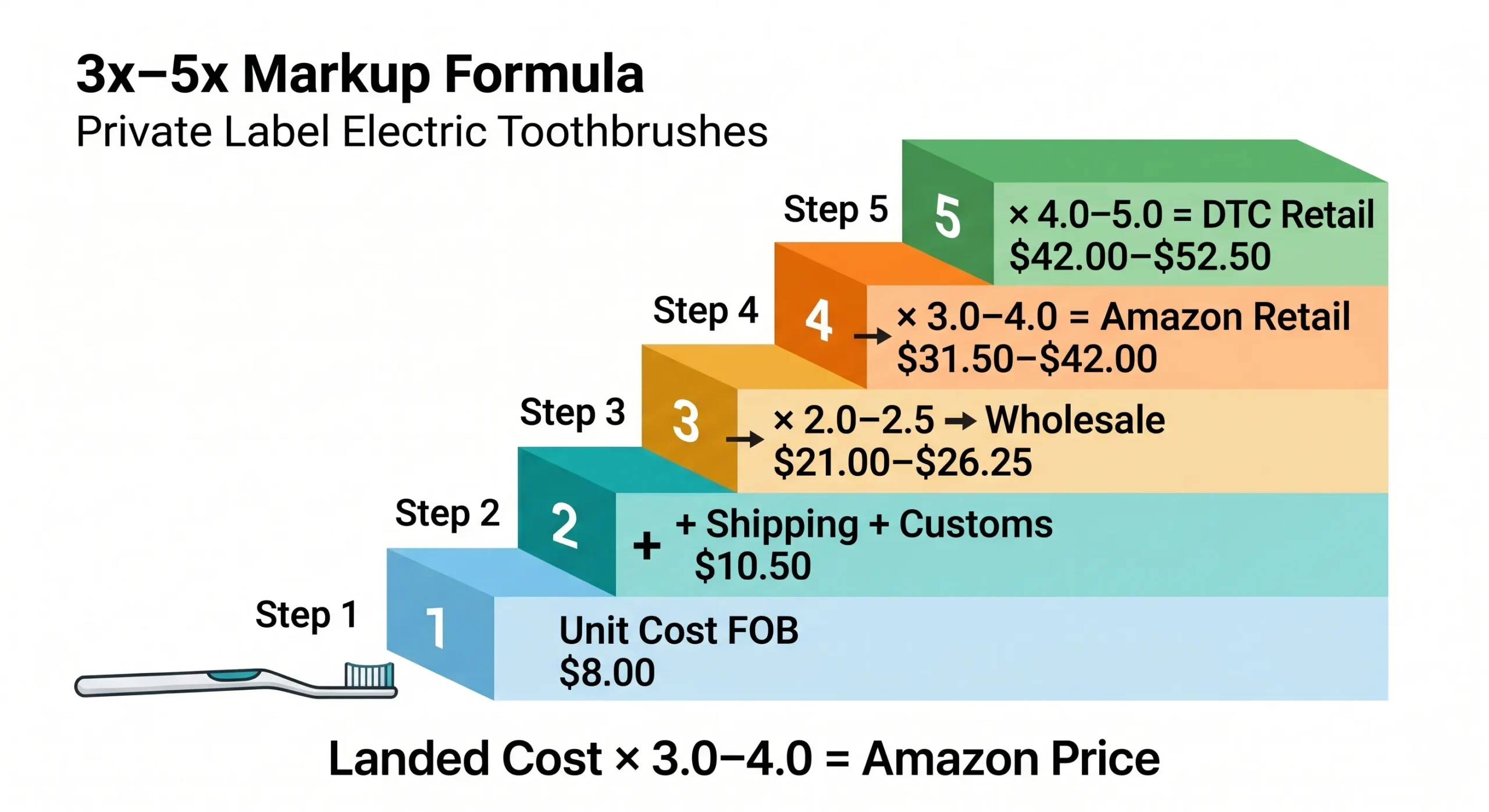
Use price multiples as scenarios, then check the resulting margin against all channel costs. A selling price of three times cost means a 200% markup and a 66.7% gross margin before other selling costs.
- 到岸总成本: 单位成本 + 运费 + 关税 + 保险
- Wholesale scenario: Landed cost × 2.0–2.5; check distributor economics and your own margin
- Amazon retail scenario: Landed cost × 3.0–4.0; model referral, fulfillment, advertising and return costs separately
- Direct-to-consumer retail scenario: Landed cost × 4.0–5.0; test customer acquisition, fulfillment and repeat-purchase economics
💡 Build repeat purchases around replacement brush heads
Replacement brush heads give customers a reason to return after the initial toothbrush purchase. Plan compatible head availability, clear reorder instructions and an optional subscription. Recommend replacement according to wear and product guidance; the ADA advises replacing toothbrushes about every three to four months, or sooner when bristles fray. Measure repeat purchases and retention before projecting customer lifetime value.
7. Margins and Costs by Sales Channel
亚马逊FBA
Deduct the actual referral and fulfillment fees, advertising, returns and other channel costs; FBA fees are not a fixed 15% of selling price.
DTC(Shopify)
Model platform charges, payment processing, fulfillment, shipping and marketing. Check which payment charges apply to your setup to avoid double-counting.
零售/分销商
Start from your actual wholesale selling price and landed cost, then account for discounts, returns and support. Distributor and retailer margins are separate from your profit.
订阅(刷头)
Include head cost, pick-and-pack, shipping, payment fees, discounts, cancellations and customer support when assessing subscription profitability.
One possible channel sequence for a new brand:
- Months 1–3: Prepare an Amazon launch if it suits your market, with compliant listings, eligible brand tools and a controlled advertising test.
- Months 3–6: Develop a direct-to-consumer website and collect marketing consent; test a replacement-head subscription if customers want it.
- Months 6–12: Approach retail buyers when sales, product quality and customer feedback provide a useful basis for discussion.
8. 上市策略
亚马逊专属策略
- Listing content: Write a clear title with your brand and relevant product terms, then explain verified features through accurate images, benefit-led bullet points and A+ Content where eligible. Follow the current marketplace and category rules.
- Advertising test: Use automatic and manual campaigns to learn which searches convert. Set an initial budget you can sustain, then adjust bids and keywords using actual sales and acquisition costs.
- Reviews: Use eligible programs such as Amazon Vine and approved review-request tools. Vine enrollment does not guarantee a set number of reviews. Do not offer incentives for positive reviews or send repeated requests.
- Product presentation: Use accurate photography, feature diagrams and demonstrations. Any comparison with named competitors should use current, verifiable specifications.
DTC内容策略
- 品牌故事页面: "我们为什么创立[Brand]"——消费者能与创始人故事产生共鸣。真实感 > 精致感。
- 教育内容: "如何正确刷牙","声波 vs. 旋转 vs. 手动","何时更换刷头" — 将您的品牌定位为专家的内容。
- 订阅优惠: Make replacement-head ordering convenient, with an optional discount where the economics support it. State the price, delivery frequency, renewal and cancellation terms clearly.
- 电子邮件营销: With the customer’s consent, send helpful setup information, care tips and timely replacement reminders, with a clear unsubscribe option.
9. 多市场本地化
For international sales, localization includes the product configuration, required information and sales content as well as translation:
| 元素 | 需要本地化的内容 | 常见错误 |
|---|---|---|
| 产品 | Compatible charging equipment, voltage and frequency where relevant, plus required model, rating, identification and warning labels | Assuming an EU plug fits UK sockets, or treating a plug change as sufficient for all local requirements |
| 包装 | Required languages, applicable regulatory marks, channel-compatible barcodes and responsible-party contact details | 单一语言包装盒发往所有市场 |
| 使用说明书 | Complete, professionally checked instructions, warnings and units of measurement appropriate to the market | Literal machine translation, missing sentences or instructions that do not match the supplied product |
| 亚马逊产品页面 | 标题、要点、描述、后台关键词均使用各市场当地语言 | 在.de、.fr、.es市场使用相同的英文产品页面 |
| 市场营销 | 色彩联想、文化偏好、本地网红合作 | 在日本/欧盟市场使用以美国为中心的营销策略 |
💡 高性价比本地化方案
Use a common product design where practical, then plan destination-specific labels, instructions, packaging and charging equipment. Keep all required model, rating and safety information on the product or packaging as applicable. Agree language variants and costs before production; one shared housing does not by itself establish compliance in every market.
10. Example Launch Timeline: From Brief to First Sale
品牌基础建设
Choose the brand name, complete initial trademark searches and plan applications. Secure a suitable domain and social accounts, then define the visual identity, positioning and target price.
工厂筛选与样品订购
Send a clear RFQ to three to five shortlisted factories. Compare responses and order existing-model samples, with sample and delivery costs agreed in advance. Check quality, function and packaging.
品牌样品与包装设计
选定工厂。委托包装设计(与品牌样品生产同步进行)。确认品牌样品的颜色、表面处理及Logo位置。
产前样品与亚马逊店铺搭建
Approve the reference sample. Prepare compliant listing content and apply for Amazon Brand Registry if eligible; designated offices may support pending as well as registered trademarks.
生产与拍摄
Produce the agreed order after sample approval and compliance planning. Prepare product photography and demonstrations in parallel; confirm the production schedule for the actual model and quantity.
质检与发货
Complete agreed pre-shipment checks and resolve issues before releasing the contractually due balance. Plan freight, customs clearance and warehouse receiving with the forwarder; confirm current transit estimates.
上市!
Once inventory is received and the listing is ready, begin the launch campaign and monitor feedback, returns and advertising costs. The week ranges are an example plan; development, testing and logistics can change the schedule.
11. 上市前检查清单
在下达生产订单前,请确认清单中的每一项:
产品与质量
品牌与包装
法律与合规
亚马逊与市场营销
12. 常见问题
准备打造您的自有品牌?
Relish Technology supports private label electric toothbrush launches with existing product platforms, custom colors, packaging design and compliance-document review. Custom MOQ starts at 1,000 units with project-specific flexibility; stocked-product wholesale starts at 50 units. 了解其他品牌如何与我们合作推出产品 →
参考资料
- [1] Straits Research. Electric Toothbrush Market Size & Growth Analysis. The current summary estimates USD 5.02 billion for 2026 and forecasts USD 8.50 billion by 2034, with a 6.8% CAGR for 2026–2034. Retrieved from https://straitsresearch.com/report/electric-toothbrush-market.
- [2] 美国牙科协会。 牙刷:口腔健康专题. Advice covers brushing twice daily for two minutes and replacing toothbrushes about every three to four months, or sooner when bristles are frayed. Retrieved from https://www.ada.org/resources/ada-library/oral-health-topics/toothbrushes.
- [3] Amazon. Brand Registry and Amazon Vine: official eligibility and program information. Retrieved from https://sell.amazon.com/brand-registry 和 https://sell.amazon.com/programs/vine.