







Закупка средств гигиены полости рта из Китая:
Полное руководство B2B 2026
Закупка средств гигиены полости рта из Китая требует понимания, на какие города ориентироваться, как проверять фабрики и как выстроить защиту интеллектуальной собственности до передачи любых дизайнов. Это руководство охватывает весь процесс — от выбора правильного производителя до согласования минимальных объемов заказа, понимания сертификации и управления контролем качества — на основе более чем 15-летнего опыта производства средств гигиены полости рта в Шэньчжэне.
Основные выводы
- Закупка средств гигиены полости рта из Китая начинается с выбора правильного региона: Шэньчжэнь и дельта Жемчужной реки обладают самой плотной в мире экосистемой компонентов
- Ведущие производители имеют сертификаты ISO 13485, регистрацию FDA и CE — всегда проверяйте их перед заказом
- Типичный минимальный объем заказа: 500–5 000 единиц OEM / 2 000–10 000 единиц ODM (индивидуальная оснастка)
- Подпишите соглашение NNN до передачи любого дизайна — оно имеет юридическую силу в соответствии с китайским договорным правом
- Бюджет 4–5 месяцев от первого контакта до прибытия на склад для запуска нового продукта
- Уровень брака ниже 0.3% достижим с сертифицированными производителями и инспекцией AQL
Закупка средств гигиены полости рта из Китая является доминирующей стратегией закупок для брендов электрических зубных щеток и ирригаторов по всему миру — и на это есть веские причины. Провинция Гуандун в Китае, особенно Шэньчжэнь и прилегающие города, обладает самой полной в мире цепочкой поставок для средств гигиены полости рта: производители моторов, аккумуляторов, фабрики литья пластмасс, производители печатных плат и заводы полной сборки — все в радиусе 50 километров. Такая плотность напрямую обеспечивает экономическую эффективность, скорость прототипирования и гибкость производства, с которыми не может сравниться ни одна другая страна.
Но закупка средств гигиены полости рта из Китая не лишена рисков. Качество фабрик сильно варьируется. Кража интеллектуальной собственности, некачественные компоненты и несоблюдение нормативных требований могут уничтожить бренд еще до его запуска. Это руководство содержит основные знания, необходимые каждому владельцу бренда для безопасной, эффективной и прибыльной закупки средств гигиены полости рта из Китая.
Почему Китай доминирует в производстве средств для ухода за полостью рта
Понимание почему лидерства Китая помогает использовать его сильные стороны, а не просто принимать их как данность. Когда закупка средств гигиены полости рта из Китая, знание географических и структурных преимуществ конкретных городов определяет каждое последующее решение.
Преимущество цепочки поставок Шэньчжэня
Закупка средств гигиены полости рта из Китая означает использование региона дельты Жемчужной реки Шэньчжэня — который производит приблизительно 65% мировых электрических зубных щеток (Grand View Research, 2025). Концентрация специализированных поставщиков не имеет аналогов в мире:
| Компонент | Поставщики в районе Шэньчжэня | Время выполнения | Стоимость по сравнению с импортом |
|---|---|---|---|
| Двигатели постоянного тока (звуковые/колебательные) | 50+ | 3-7 дней | на 40–60% ниже |
| Литий-ионные аккумуляторы | 80+ | 5–10 дней | на 30–50% ниже |
| Печатные платы / электронное управление | 200+ | 5–15 дней | на 35–55% ниже |
| Литье под давлением ABS/PC | 150+ | 7–21 день | на 25–40% ниже |
| Нейлоновая щетина | 30+ | 5–10 дней | на 30–45% ниже |
| Упаковка (розничные коробки) | 200+ | 5–14 дней | на 20–35% ниже |
Производственная экосистема средств ухода за полостью рта в Шэньчжэне создает самоподдерживающееся преимущество для закупка средств гигиены полости рта из Китая: концентрация поставщиков компонентов привлекает сборочные заводы; плотность сборочных заводов привлекает больше поставщиков компонентов; глубина экосистемы привлекает специалистов по НИОКР и возможности быстрого прототипирования. За четыре десятилетия Шэньчжэнь создал самую высокую концентрацию производственных мощностей по выпуску электрических зубных щеток и ирригаторов среди всех городов мира — и эту плотность уникально трудно воспроизвести в масштабе где-либо еще.
Такая плотность цепочки поставок позволяет заводу в Шэньчжэне создать прототип новой электрической зубной щетки за 2-4 недели, по сравнению с 8–16 неделями в Европе или Северной Америке. Для владельцев брендов, конкурирующих по скорости вывода на рынок, это само по себе является преобразующим фактором.
Экономика затрат
Заводские затраты на электрические зубные щетки от проверенных OEM-поставщиков из Китая обычно варьируются от 6–28 долларов США за единицу в зависимости от технологии и функций. Ирригаторы варьируются от 8–35 долларов США за единицу. Эти цены FOB включают сборку, базовую проверку ОТК и стандартную упаковку.
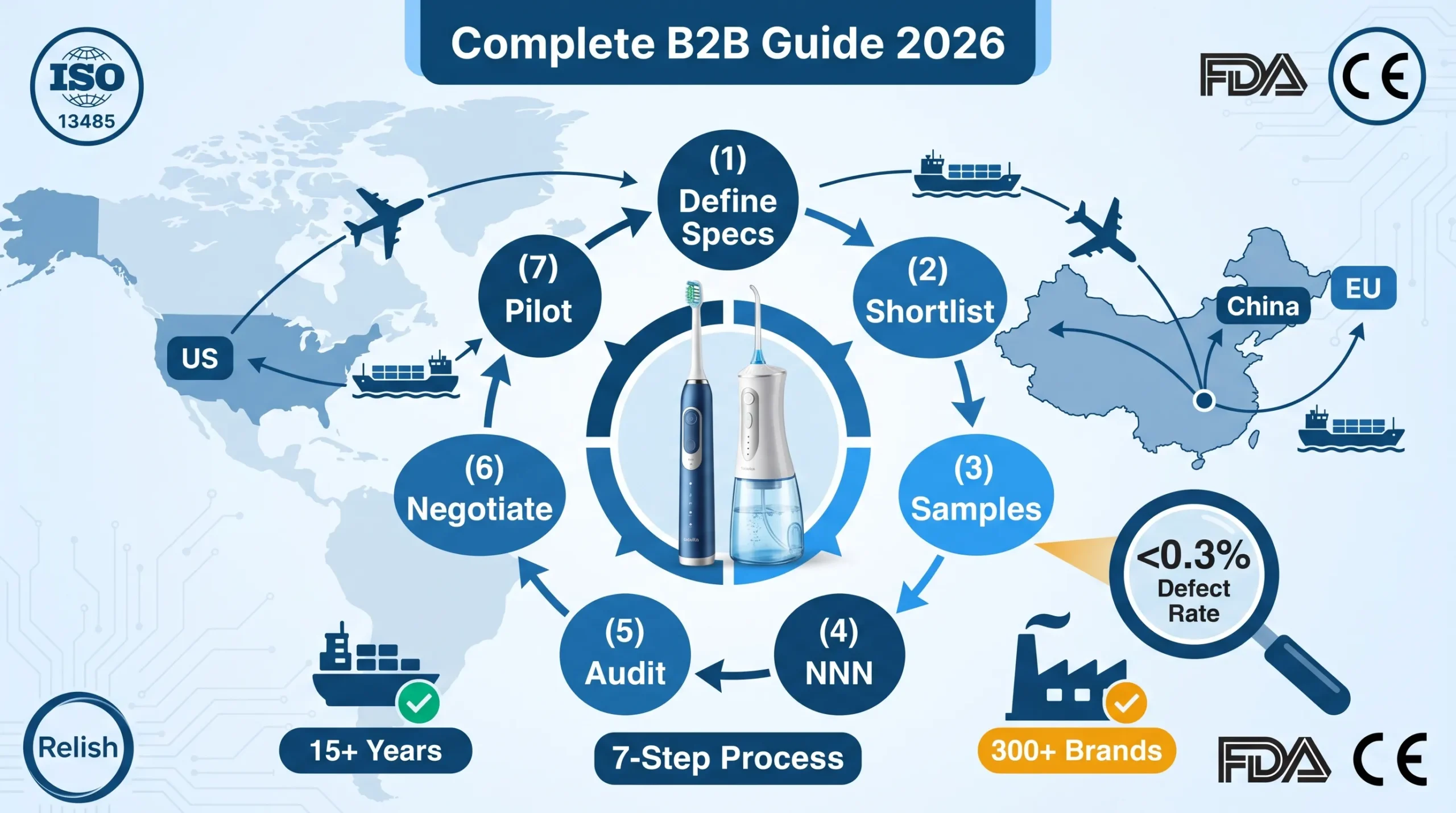
Как закупать средства для ухода за полостью рта из Китая: процесс из 7 шагов
Это руководство из 7 шагов охватывает нашу полную систему сорсинга. Дополнительные ресурсы: Контрольный список аудита фабрики из 30 пунктов | Руководство по NNN соглашению | Процесс контроля качества | Снижение рисков в цепочке поставок | Производственный хаб Шэньчжэнь
Закупка средств гигиены полости рта из Китая следует структурированному процессу. Пропустите шаги — особенно комплексную проверку и защиту ИС — и вы рискуете дорогостоящими ошибками. Следуйте этой системе каждый раз.
Определите характеристики вашего продукта и целевой рынок
Прежде чем обращаться к любому производителю, задокументируйте требования к продукту: тип технологии (звуковая/колебательная/УФ), режимы чистки, емкость аккумулятора, класс IPX, целевая розничная цена и рынок назначения (США/ЕС/Япония/другие). Ваш целевой рынок определяет, какие сертификаты требуются — это формирует круг подходящих производителей.
Составьте короткий список из 3–5 проверенных производителей
Ищите кандидатов на Alibaba (Gold Supplier + Trade Assurance), Made-in-China, Кантонской ярмарке и по отраслевым рекомендациям. Отдавайте приоритет фабрикам с: (a) сертификатом ISO 13485, (b) опытом работы в сфере ухода за полостью рта более 5 лет, (c) действующими клиентами среди западных брендов, (d) выделенной экспортной командой. Никогда не полагайтесь на одну фабрику. Для более широкого сравнения мировых производственных регионов и контрольных списков проверки смотрите наше руководство по производителям средств ухода за полостью рта.
Запросите образцы и техническую документацию
Запросите образцы продукции вместе с: сертификатом ISO 13485 (проверьте срок действия), отчетами об испытаниях продукта (UN 38.3 для батарей, IEC 60335 для электробезопасности), документацией CE/FDA и заполненным отчетом о проверке ОТК (AQL 1.5 или 2.5). Качество образцов — это самый четкий сигнал о качестве производства.
Подпишите NNN соглашение до передачи дизайнов
NNN соглашение (о неразглашении, неиспользовании и необходе) регулирует ваши отношения в рамках китайского законодательства — оно более применимо в Китае, чем NDA в американском стиле. Предоставьте его вашему производителю до обсуждения любого проприетарного дизайна, формулы или технологии. Авторитетные производители подписывают такие соглашения в обычном порядке. Смотрите наше полное руководство по NNN соглашению.
Проведите аудит фабрики
Аудит фабрики — личный или через аккредитованную третью сторону (SGS, Bureau Veritas, Intertek) — подтверждает производственные мощности, системы управления качеством, соблюдение трудового законодательства и технические возможности оборудования. Используйте структурированный контрольный список из 30 пунктов. См. наш Контрольный список для аудита фабрик в Китае. Этот шаг настоятельно рекомендуется для заказов свыше 1 000 единиц.
Согласование коммерческих условий
Ключевые условия для переговоров: (a) цена за единицу при объемных скидках, (b) стоимость пресс-форм ($3 000–$25 000 за индивидуальные формы), (c) условия оплаты (стандартно: депозит 30%, 70% перед отгрузкой), (d) стоимость образцов и сроки изготовления, (e) гарантия и политика замены дефектных изделий. Документируйте все в официальном OEM-соглашении о производстве.
Размещение пилотного заказа перед полным производством
Разместите пилотный заказ на 300–500 единиц для проверки качества продукции, точности упаковки и надежности доставки перед тем, как брать на себя обязательства по крупным партиям. Организуйте предотгрузочную инспекцию для пилотных заказов. Стоимость инспекции в $300–500 значительно перевешивает риск отбраковки целого контейнера по прибытии.
Сертификации, необходимые для продукции по уходу за полостью рта, поставляемой из Китая
Продукция для ухода за полостью рта — особенно электрические зубные щетки и ирригаторы — подпадает под различные нормативные требования в зависимости от целевого рынка. При закупка средств гигиены полости рта из Китая, ваш китайский производитель должен поддерживать вас в этом процессе. Ознакомьтесь с нашим полным руководством по сертификации для получения подробных требований.
| Рынок | Требуемая сертификация | Применимая продукция | Временная шкала | Кто подает заявку |
|---|---|---|---|---|
| Соединенные Штаты | Регистрация FDA (21 CFR Part 880) | Электрические зубные щетки (Класс II) | 3-6 месяцев | Владелец бренда (агент в США) |
| Европейский союз | Маркировка CE (LVD + EMC) | Все электрические средства ухода за полостью рта | 2-4 месяца | Уполномоченный представитель в ЕС |
| Глобальный (Качество) | ISO 13485 | Требование производителя | Постоянно | Производитель |
| Великобритания (после Brexit) | Маркировка UKCA | Все электрические средства ухода за полостью рта | 2-4 месяца | Ответственное лицо в Великобритании |
| Япония | Знак PSE (METI) | Электрические зубные щетки | 3-6 месяцев | Импортер в Японии |
| Австралия | Знак RCM | Все электрические устройства | 2–3 месяца | Австралийский импортер |
Закупаете средства для ухода за полостью рта из Китая? Получите предложение от завода в течение 48 часов
Relish Technology — зарегистрирована FDA, сертифицирована CE, ISO 13485. Более 15 лет производства электрических зубных щеток и ирригаторов в Шэньчжэне. Соглашение NNN доступно до передачи любого дизайна.
Запросить коммерческое предложение от фабрики →Защита интеллектуальной собственности при закупках из Китая
Защита интеллектуальной собственности — это вопрос, который чаще всего поднимают западные владельцы брендов. Риск реален, но управляем при правильном подходе. При закупка средств гигиены полости рта из Китая, правоприменение в сфере ИС в Китае значительно улучшилось: Шэньчжэньский суд по интеллектуальной собственности рассмотрел более 18 000 дел по ИС в 2024 году, при этом иностранные истцы выиграли большинство полностью оспариваемых дел (Министерство коммерции КНР, 2024).
Четырехуровневая система защиты ИС
При закупка средств гигиены полости рта из Китая, используйте эту четырехуровневую систему для защиты ваших дизайнов и брендовых активов на каждом этапе:
- Сначала соглашение NNN: Перед любой передачей дизайна обеспечьте подписание производителем соглашения NNN, регулируемого китайским законодательством (не законодательством США). Это предотвращает раскрытие, несанкционированное использование и обход — все три вектора риска ИС.
- Регистрируйте товарные знаки в Китае напрямую: При закупка средств гигиены полости рта из Китая, помните, что Китай — страна первого заявителя. Зарегистрируйте название бренда и логотип в Национальном управлении интеллектуальной собственности Китая (CNIPA) до обращения к производителям. Стоимость: $300–800/класс.
- Патенты на полезные модели для функциональных инноваций: Если ваш продукт имеет новый механизм, подайте заявку на патент на полезную модель в CNIPA ($500–2,000 с местной IP-фирмой). Патенты на полезные модели предоставляют защиту на 10 лет и оформляются быстрее, чем патенты на изобретения.
- Сегментация цепочки поставок: Избегайте передачи полных спецификаций продукта одному поставщику. Закупайте ключевые компоненты у разных поставщиков, оставляя финальную сборку у одного проверенного партнера. Это ограничивает риски на каждом уровне.
Контроль качества: чего ожидать от ведущего китайского производителя
Разница в качестве — самый большой риск, когда закупка средств гигиены полости рта из Китая. Сертифицированные производители высшего уровня (ISO 13485) обеспечивают уровень дефектов ниже 0,3% — сопоставимо с европейскими стандартами производства. Фабрики второго уровня имеют в среднем 1–3%. Разница — в системах управления качеством.
Входной контроль материалов (IQC)
Лучшие фабрики, когда закупка средств гигиены полости рта из Китая проверяют 100% поступающих моторов, батарей и печатных плат на соответствие техническим спецификациям перед запуском в производство. Поставщики, не прошедшие 3 последовательные проверки, исключаются. Для OEM в области ухода за полостью рта ознакомьтесь с нашим Руководством по контролю качества OEM , охватывающим каждый этап.
Внутрипроцессный контроль качества (IPQC)
Автоматизированный оптический контроль (AOI) и статистическое управление процессами (SPC) на каждом этапе производства выявляют дефекты в реальном времени. Ищите фабрики с планами выборки AQL 1.5 по умолчанию (не AQL 4.0, который пропускает значительно больше дефектов).
Финальный контроль (OQC)
При закупка средств гигиены полости рта из Китая, 100% функциональное тестирование каждой электрической зубной щетки и ирригатора — частота вибрации, водонепроницаемость (тест погружения IPX5 или IPX7), производительность батареи и целостность упаковки — является стандартом на фабриках высшего уровня. Настоятельно рекомендуется предотгрузочная инспекция третьей стороной (SGS, Bureau Veritas) для заказов свыше 1 000 единиц.
Планирование сроков и логистики
Закупка средств гигиены полости рта из Китая требует точного планирования сроков, чтобы избежать дорогостоящих дефицитов и задержек запуска. Используйте эту структуру для любого запуска новой электрической зубной щетки или ирригатора:
| Фаза | Деятельность | Продолжительность | Примечания |
|---|---|---|---|
| Месяц 1 | Отбор фабрик, образцы, NNN-соглашение | 3–4 недели | Запустите 3+ фабрики параллельно |
| Месяц 2 | Оценка образцов, аудит фабрики, коммерческие переговоры | 3–4 недели | Бронируйте аудит заранее; у аудиторов срок выполнения 2–3 недели |
| Месяц 3 | Подписание OEM-соглашения, утверждение оснастки/дизайна | 2-3 недели | Оснастка для индивидуальных пресс-форм: 3–5 недель |
| Месяц 3–4 | Пилотная производственная партия (300–500 единиц) | 3–4 недели | Запланируйте предотгрузочную инспекцию |
| Месяц 4–5 | Полный производственный заказ | 30–45 дней | Индивидуальный ODM: 60–90 дней |
| +30 дней | Морские перевозки (Шэньчжэнь → Западное побережье США) | 14–18 дней | Авиаперевозки: 5–7 дней, в 4–6 раз дороже |
| +30 дней | Таможенное оформление + получение на складе | 7–14 дней | Заложите 3 недели резерва на таможню |
Выбор подходящего производителя: OEM против ODM
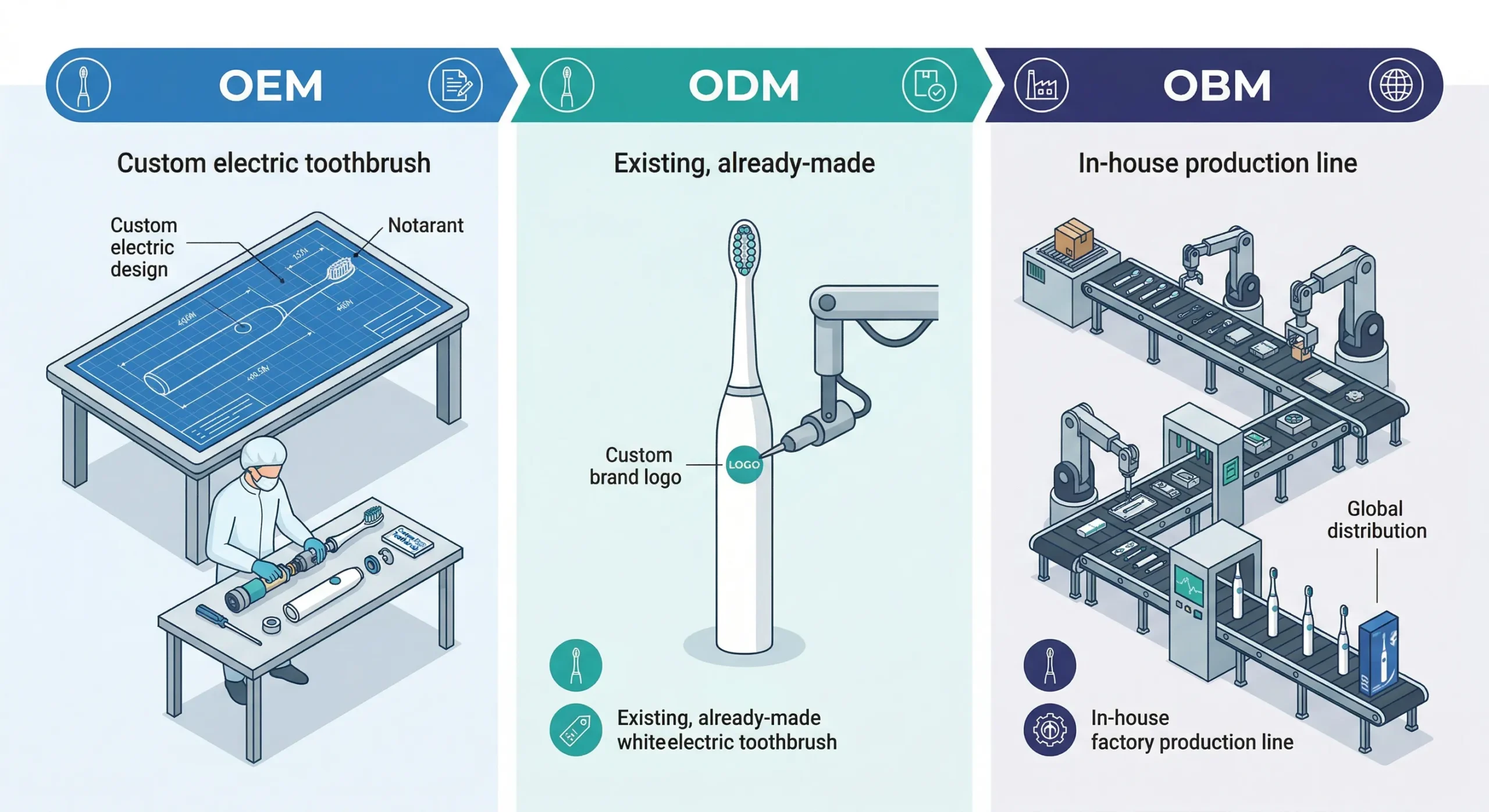
Понимание различий между OEM и ODM критически важно, когда закупка средств гигиены полости рта из Китая — это правильно формирует объем проекта и бюджет с самого начала.
| Модель | Кому принадлежит дизайн | Уровень настройки | MOQ | Стоимость | Временная шкала |
|---|---|---|---|---|---|
| OEM (Чистый) | Владелец бренда предоставляет полный дизайн | Максимальный | 2,000–10,000 | Оснастка: $5,000–$30,000 | 60-120 дней |
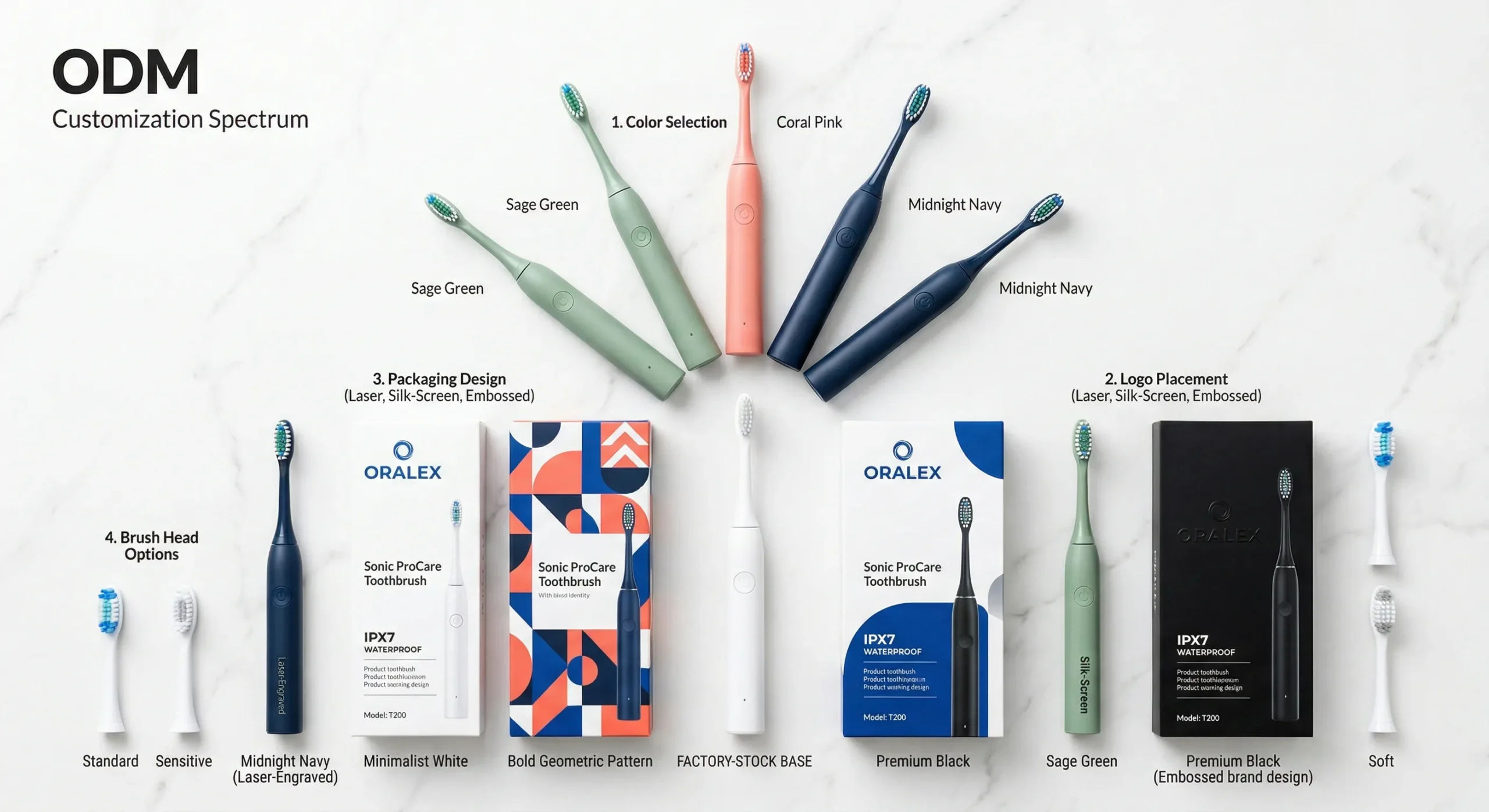
| ODM (под ключ) | Производитель владеет базовым дизайном | Логотип, цвет, упаковка | 500–3,000 | Минимальная оснастка | 30–60 дней |
| Частная марка | Производитель владеет всем | Только этикетка и упаковка | 300–1,000 | Нет | 15-30 дней |
Большинство новых брендов начинают с ODM или Private Label для проверки рыночного спроса перед инвестициями в собственную оснастку. Как только ваш бренд наберет обороты, переход к полному OEM с индивидуальными технологиями (например, платформы Relish Vibrosonic™ или Rotasonic™) создает защитимую дифференциацию, которую конкуренты не смогут легко скопировать.
Тревожные сигналы: когда стоит отказаться от китайского производителя
При закупка средств гигиены полости рта из Китая, определенные предупреждающие знаки однозначны. Следите за этими «красными флагами» на любом этапе процесса поиска поставщика:
- Отказывается подписывать NNN-соглашение: При закупка средств гигиены полости рта из Китая, надежная фабрика подписывает NNN-соглашения регулярно. Отказ — серьезный «красный флаг».
- Не может предоставить оригинальные (не скопированные) сертификаты: Запросите оригинал сертификата на сайте органа по сертификации. Поддельные сертификаты ISO существуют.
- Необычно низкий MOQ без объяснения причин: MOQ ниже 300 единиц для кастомных продуктов часто указывает на торговую компанию, а не на фабрику.
- Нет фиксированного адреса фабрики или проверяемых помещений: Всегда подтверждайте физический адрес фабрики через спутниковый снимок Google Maps и сверяйте его с фотографиями производства.
- Образцы поступают с характеристиками, отличными от указанных в коммерческом предложении: Это указывает либо на субподряд, либо на намеренное искажение информации.
- Коммерческие предложения на 30%+ ниже рыночных: Аномально низкие цены обычно означают некачественные компоненты — вы заплатите позже через возвраты и жалобы клиентов.
Часто задаваемые вопросы
Часто задаваемые вопросы, когда закупка средств гигиены полости рта из Китая — от проверки фабрики до сертификатов, защиты ИС и сроков поставки:
Готовы закупать средства для ухода за полостью рта из Китая?
Relish Technology — более 15 лет OEM/ODM-производства в Шэньчжэне. Зарегистрирована в FDA, сертифицирована CE, ISO 13485. Запросите образцы и приглашение на аудит фабрики уже сегодня.
Запросить коммерческое предложение от фабрики →Ссылки и источники
- Grand View Research. (2025). Отчет о размере и росте рынка электрических зубных щеток, 2025–2030. Grand View Research Inc. Получено из https://www.grandviewresearch.com/industry-analysis/oral-care-market
- Международная организация по стандартизации. (2016). ISO 13485:2016 — Медицинские изделия — Системы менеджмента качества — Требования для целей регулирования. ISO. Получено из https://www.iso.org/standard/54934.html
- Управление по санитарному надзору за качеством пищевых продуктов и медикаментов США (FDA). (2024). Стоматологические устройства класса II: Электрическая зубная щетка (21 CFR Part 880). FDA.gov. Получено из https://www.fda.gov/medical-devices/class-ii-special-controls-and-class-ii-devices/electrically-operated-dental-handpiece-systems-class-ii-special-controls
- Министерство коммерции Китайской Народной Республики. (2024). Ежегодный отчет о защите интеллектуальной собственности в Китае, 2024. MOFCOM. Получено из https://english.mofcom.gov.cn/
- Суд по интеллектуальной собственности Шэньчжэня. (2024). Ежегодная статистика судебных споров по ИС, 2024. Извлечено из https://www.sz.gov.cn/cn/xxgk/zfxxgj/zcfg/
- Исследовательский отдел Statista. (2025). Мировой рынок контрактного производства средств по уходу за полостью рта — региональная доля производства 2024. Statista. Получено из https://www.statista.com/topics/4834/shenzhen/
- Американская стоматологическая ассоциация. (2023). Электрическая зубная щетка: сводка доказательств эффективности. ADA.org. Получено из https://www.ada.org/resources/research/science-and-research-institute/oral-health-topics/powered-toothbrushes