









Rynek inteligentnych szczoteczek do zębów do 2026 r.: trendy w dziedzinie sztucznej inteligencji i przewodnik dla producentów OEM
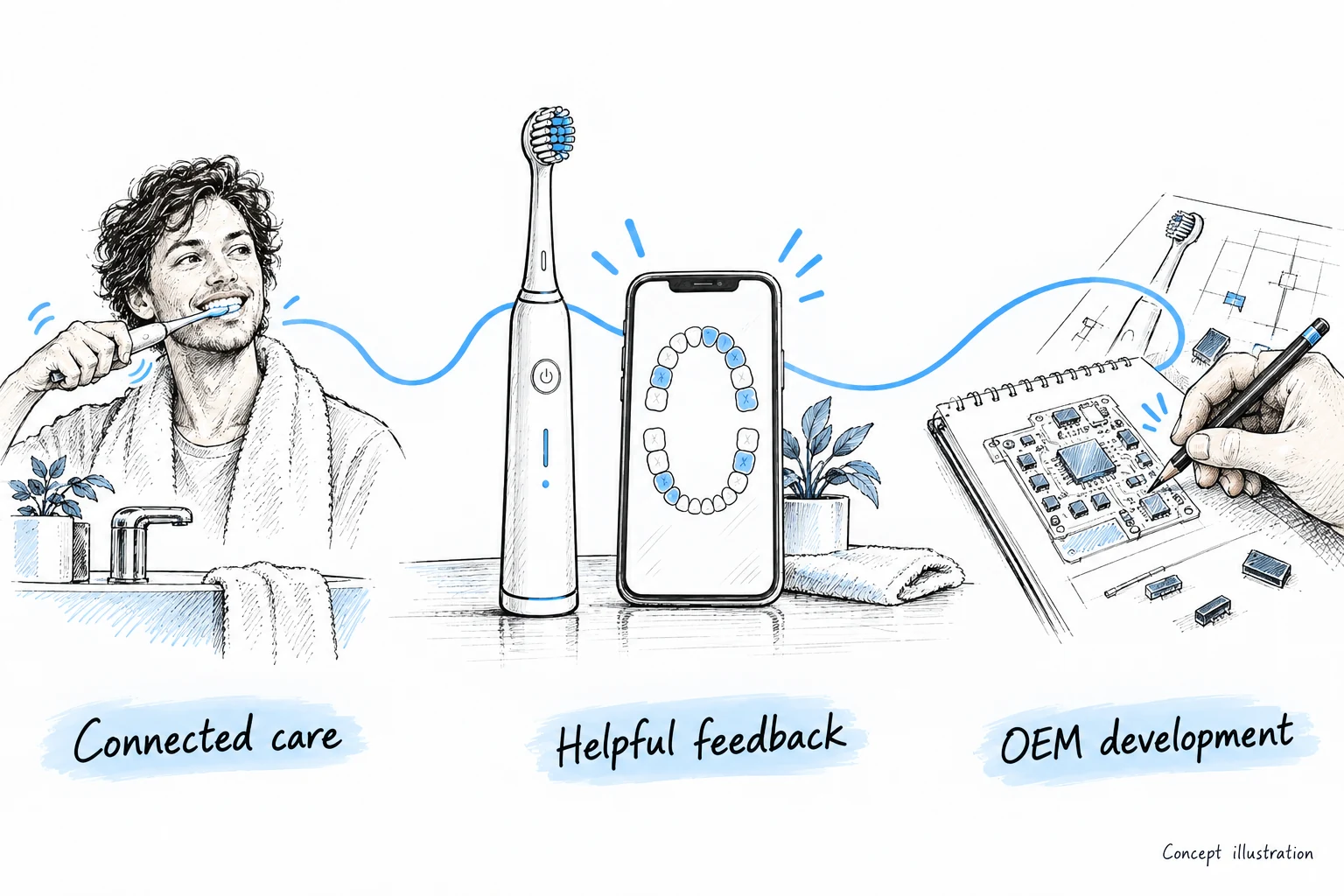
Rynek inteligentnych szczoteczek do zębów przechodzi gruntowną transformację. Kategoria, która początkowo była traktowana jako nowość i zdominowana przez marki z segmentu premium, przekształciła się w szybko dojrzewający segment, w którym sztuczna inteligencja, połączone ekosystemy oraz angażowanie użytkowników poprzez elementy gier zmieniają oczekiwania konsumentów. Dla producentów OEM i partnerów marki zrozumienie tych zmian nie jest już kwestią wyboru — to strategiczna konieczność.
W 2026 r. połączenie spadających kosztów czujników, dojrzewających ekosystemów Bluetooth Low Energy oraz coraz bardziej zaawansowanych algorytmów sztucznej inteligencji stworzyło na rynku inteligentnych szczoteczek do zębów bezprecedensowe możliwości dla marek, które mogą się wyróżnić dzięki inteligentnym funkcjom. Jednak droga od pomysłu do konsumenta wiąże się z koniecznością sprostania złożonym wyzwaniom inżynieryjnym, wymogom regulacyjnym oraz szybko zmieniającym się oczekiwaniom konsumentów. Niniejsza kompleksowa analiza przedstawia trendy technologiczne, dynamikę rynku oraz kwestie związane z produkcją, które decydują o sukcesie w branży inteligentnych produktów do higieny jamy ustnej.
Czym charakteryzuje się inteligentna szczoteczka do zębów w 2026 roku
Definicja "inteligentnej szczoteczki do zębów" znacznie ewoluowała od pierwszych modeli wyposażonych w Bluetooth, które jedynie rejestrowały czas szczotkowania, co odzwierciedla szybki rozwój technologiczny rynku inteligentnych szczoteczek do zębów. Dzisiejsze inteligentne szczoteczki do zębów stanowią połączenie precyzyjnej inżynierii, technologii czujników i inteligentnego oprogramowania, które razem zapewniają znaczącą poprawę zdrowia jamy ustnej.
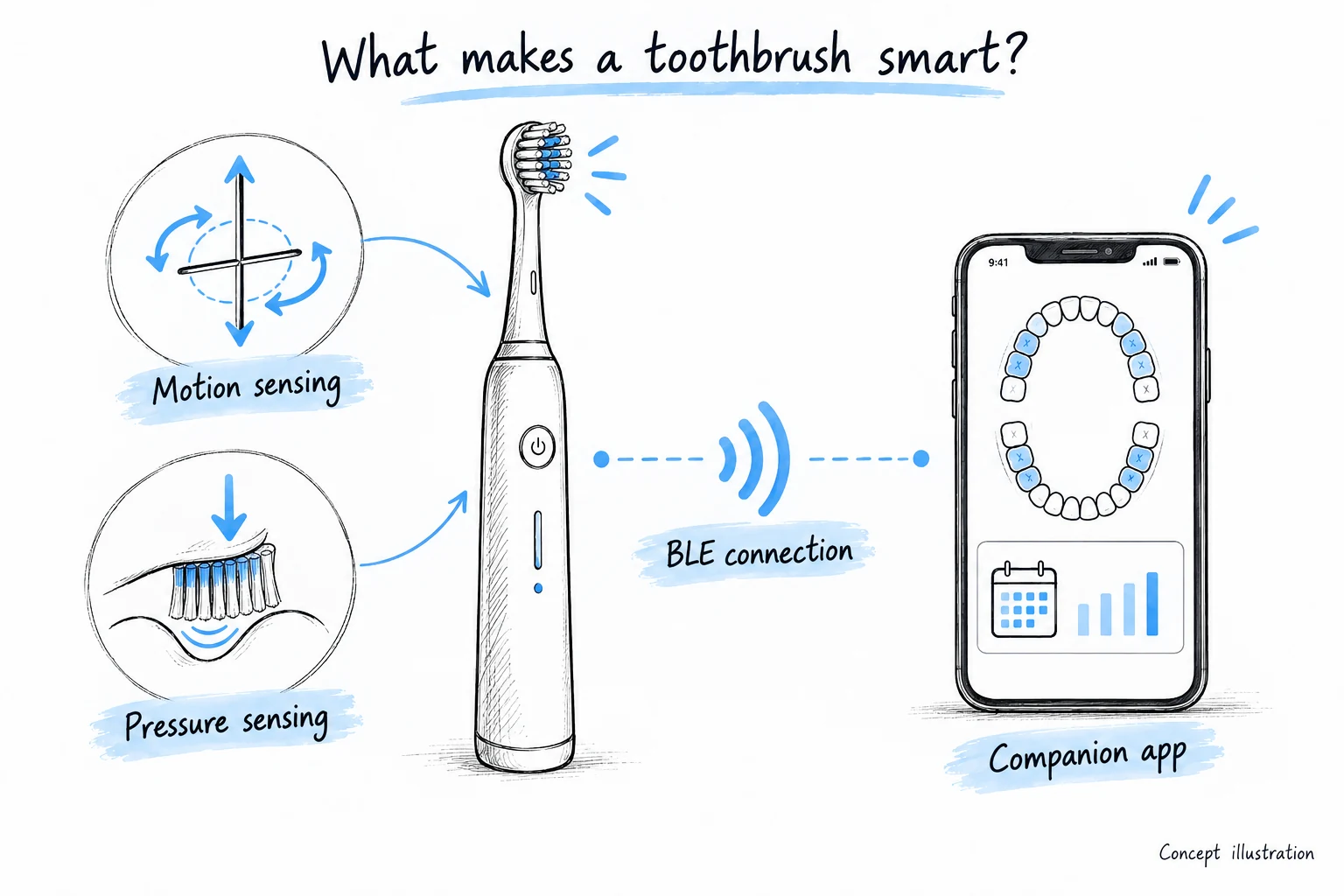
W gruncie rzeczy inteligentna szczoteczka do zębów łączy w sobie cztery kluczowe elementy technologiczne, które odróżniają ją od tradycyjnych modeli elektrycznych:
Czujniki ruchu
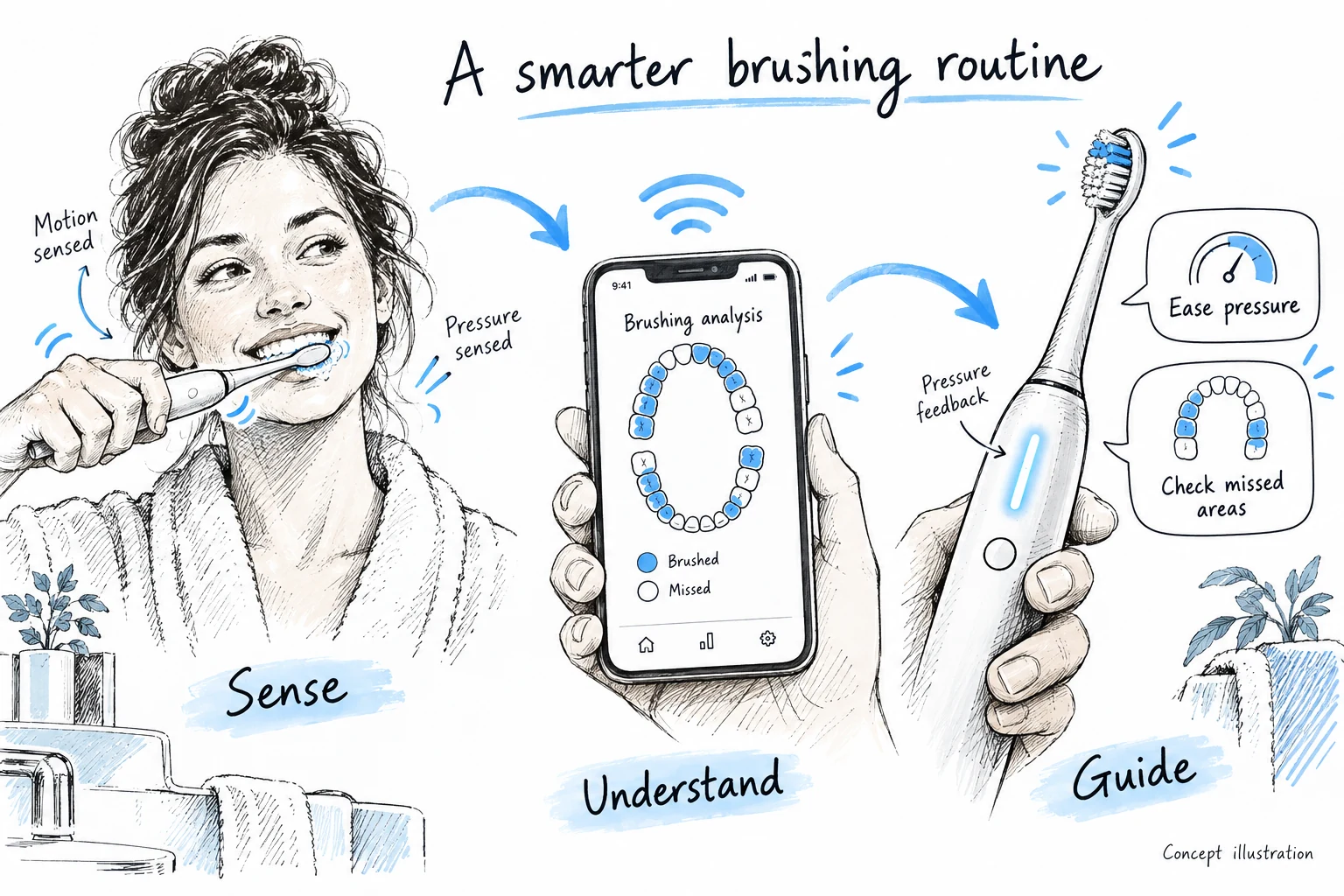
Nowoczesne inteligentne szczoteczki do zębów wykorzystują akcelerometry i żyroskopy do śledzenia ruchu główki szczoteczki w przestrzeni trójwymiarowej. Te czujniki MEMS (mikroelektromechaniczne systemy) wykrywają wzorce drgań, prędkość szczotkowania oraz zmiany kierunku z niezwykłą precyzją. Akcelerometr mierzy siły przyspieszenia liniowego, zazwyczaj w zakresie od ±2 g do ±16 g, natomiast żyroskop rejestruje prędkość obrotową, umożliwiając algorytmom odtworzenie pełnego ruchu szczotkowania.
Czujniki ciśnienia
Wbudowane rezystory czułe na nacisk lub czujniki piezoelektryczne monitorują siłę wywieraną podczas szczotkowania. Czujniki te zazwyczaj wykrywają siły w zakresie od 0 do 300 gramów, ostrzegając użytkowników, gdy nacisk przekroczy próg 150 gramów, z którym wiąże się uszkodzenie tkanki dziąsłowej. Dane z czujników służą zarówno do wizualnej informacji zwrotnej w czasie rzeczywistym (za pomocą diod LED na rączce), jak i do śledzenia postępów w czasie za pomocą aplikacji towarzyszących.
Łączność Bluetooth
Moduły Bluetooth Low Energy (BLE) umożliwiają stałą komunikację między szczoteczką do zębów a aplikacjami na smartfony. Te Specyfikacje Bluetooth SIG określić standardy interoperacyjności, które stanowią podstawę tego ekosystemu. Nowoczesne rozwiązania wykorzystują technologię BLE 5.0 lub nowszą, osiągając prędkość transmisji danych do 2 Mbps przy zachowaniu niskiego zużycia energii, niezbędnego do zapewnienia wielotygodniowej żywotności baterii. Połączenie to umożliwia przekazywanie wskazówek trenerskich w czasie rzeczywistym, automatyczne rejestrowanie sesji szczotkowania oraz płynną synchronizację danych z pamięcią w chmurze.
Aplikacja towarzysząca
Warstwa oprogramowania przekształca surowe dane z czujników w przydatne dla użytkownika informacje – jest to funkcja, której obecności coraz częściej oczekuje się na rynku inteligentnych szczoteczek do zębów. Aplikacje towarzyszące analizują wzorce szczotkowania, identyfikują miejsca pominięte podczas szczotkowania, śledzą trendy dotyczące siły nacisku w czasie oraz dostarczają spersonalizowane porady. Wiele aplikacji wykorzystuje modele uczenia maszynowego, które udoskonalają zalecenia w oparciu o zgromadzone dane użytkowników, zapewniając coraz bardziej spersonalizowane wskazówki dotyczące higieny jamy ustnej.
Przegląd rynku inteligentnych szczoteczek do zębów
Światowy rynek inteligentnych szczoteczek do zębów stanowi jeden z najbardziej dynamicznych segmentów szeroko pojętej branży produktów do higieny jamy ustnej. Zrozumienie aktualnej skali tego rynku oraz prognozowanych tendencji stanowi niezbędny kontekst dla planowania strategicznego i podejmowania decyzji inwestycyjnych.
Według Grand View Research (2025) rynek inteligentnych szczoteczek do zębów stanowi obecnie około 15% całego rynku szczoteczek elektrycznych, a udział ten stale rośnie w miarę jak funkcje inteligentne przenoszą się z segmentu premium do segmentu średniej klasy cenowej. Ten wskaźnik penetracji odzwierciedla tendencje obserwowane w innych kategoriach elektroniki użytkowej, gdzie funkcje początkowo zarezerwowane dla produktów flagowych ostatecznie stają się standardem we wszystkich segmentach cenowych. Dla dostawców OEM rynek inteligentnych szczoteczek do zębów stanowi najszybciej rozwijającą się podkategorię w branży produkcji artykułów do higieny jamy ustnej.
Rozkład rynków regionalnych
Stopień upowszechnienia na rynku różni się znacznie w zależności od regionu (Statista, 2025), co odzwierciedla różnice w stopniu wykorzystania technologii przez konsumentów, świadomości w zakresie opieki zdrowotnej oraz strukturze dochodów rozporządzalnych:
- Ameryka Północna (40%) — Najwyższe wskaźniki upowszechnienia wynikają z silnej kultury korzystania z nowych technologii, ugruntowanych ekosystemów monitorowania aktywności fizycznej oraz wysokiej świadomości powiązań między zdrowiem jamy ustnej a ogólnym stanem zdrowia. Stany Zjednoczone przodują pod względem liczby pobrań aplikacji towarzyszących oraz upowszechnienia inteligentnych szczoteczek do zębów klasy premium.
- Europa (35%) — Silny wzrost wynikający z przetwarzania danych zgodnego z RODO, rosnącego poparcia ze strony specjalistów stomatologicznych dla inteligentnych urządzeń do szczotkowania zębów oraz rygorystycznych przepisów dotyczących ochrony środowiska, które sprzyjają preferowaniu produktów trwałych.
- Azja i Pacyfik (20%) — Najszybciej rozwijający się region, zwłaszcza w Chinach, Japonii i Korei Południowej, gdzie upowszechnienie smartfonów i znajomość technologii stwarzają sprzyjające warunki. W Japonii obserwuje się wysoki poziom akceptacji zaawansowanych funkcji coachingowych opartych na sztucznej inteligencji.
- Reszta świata (5%) — Rynki wschodzące wykazują pierwsze oznaki upowszechnienia się tej usługi, zwłaszcza w ośrodkach miejskich, gdzie rośnie popularność turystyki stomatologicznej oraz świadomość na temat prywatnej opieki zdrowotnej.
Trendy technologiczne napędzające rozwój segmentu inteligentnych rozwiązań
Szybki rozwój technologii inteligentnych szczoteczek do zębów odzwierciedla szersze trendy w dziedzinie elektroniki użytkowej, sztucznej inteligencji oraz podłączonych do sieci urządzeń medycznych. Sześć głównych trendów technologicznych zmienia obecnie dynamikę konkurencji oraz oczekiwania konsumentów na rynku inteligentnych szczoteczek do zębów.
3a. Analiza szczotkowania z wykorzystaniem sztucznej inteligencji
Sztuczna inteligencja stanowi najważniejszy czynnik wyróżniający na obecnym rynku inteligentnych szczoteczek do zębów, wpływając na zróżnicowanie produktów w poszczególnych przedziałach cenowych. Analiza szczotkowania oparta na sztucznej inteligencji wykracza daleko poza proste funkcje timera, umożliwiając spersonalizowane wskazówki, które dostosowują się do indywidualnych zachowań użytkownika i w wymierny sposób poprawiają efekty szczotkowania.
Wdrożenie sztucznej inteligencji na rynku inteligentnych szczoteczek do zębów charakteryzują dwa główne podejścia techniczne:
Podejście oparte na wizji komputerowej
Niektórzy producenci eksperymentowali z wbudowanymi kamerami lub wykorzystują aparaty w smartfonach do analizy techniki szczotkowania. Użytkownik ustawia smartfon tak, aby obejmował jamy ustnej, a algorytmy przetwarzania obrazu identyfikują szczotkowane obszary, wzorce pokrycia oraz potencjalne problemy. Chociaż podejście to wydaje się obiecujące pod względem precyzji, napotyka na praktyczne ograniczenia, w tym wymagania dotyczące ustawienia urządzenia, problemy z oświetleniem oraz kwestie związane z prywatnością.
Podejście oparte na analizie ruchu
Wiodąca implementacja analizuje wzorce ruchów główki szczoteczki na podstawie danych z akcelerometru i żyroskopu. Modele uczenia maszynowego, wytrenowane na podstawie tysięcy sesji szczotkowania, potrafią odróżnić prawidłową technikę od nieskutecznych wzorców, wykrywając takie problemy, jak nadmierny nacisk, niewystarczające pokrycie powierzchni oraz nieprawidłowe kąty szczotkowania. Podejście to nie wymaga żadnego dodatkowego sprzętu poza standardowymi czujnikami inteligentnej szczoteczki do zębów.
Przykłady z branży: Szczoteczka Philips Sonicare Diamond Clean 9900 wykorzystuje oparte na sztucznej inteligencji rozpoznawanie głowicy oraz adaptacyjne tryby czyszczenia, które dostosowują się do wykrytych wzorców szczotkowania. Seria iO marki Oral-B wykorzystuje algorytmy sztucznej inteligencji, aby zapewnić wskazówki dotyczące techniki szczotkowania w czasie rzeczywistym, a aplikacja wyświetla mapy pokrycia pokazujące, które obszary zostały odpowiednio wyczyszczone.
3b. Czujniki ciśnienia i sprzężenie zwrotne w czasie rzeczywistym
Monitorowanie nacisku stało się podstawową funkcją na rynku inteligentnych szczoteczek do zębów, pozwalającą zapobiegać jednej z najczęstszych przyczyn problemów ze zdrowiem jamy ustnej: nadmiernej sile szczotkowania. Badania kliniczne konsekwentnie wykazują, że szczotkowanie z użyciem siły przekraczającej 150 gramów znacznie zwiększa ryzyko cofania się dziąseł i erozji szkliwa (Journal of Clinical Periodontology, 2023).
Nowoczesne rozwiązania w zakresie wykrywania ciśnienia oferują wiele kanałów sprzężenia zwrotnego:
- Wizualne wskaźniki ciśnienia — Okrągłe diody LED o różnych kolorach na rączce szczoteczki zapewniają natychmiastową i zawsze widoczną informację zwrotną. Kolor zielony oznacza optymalny nacisk, żółty sygnalizuje konieczność zwrócenia uwagi, a czerwony ostrzega przed zbyt dużą siłą.
- Sprzężenie zwrotne dotykowe — Zmiany w charakterze wibracji informują o poziomie nacisku bez konieczności skupiania uwagi wzroku, co jest przydatne podczas szczotkowania na ślepo lub dla osób z wadami wzroku.
- Powiadomienia z aplikacji — Ciche powiadomienia wyświetlane w aplikacjach towarzyszących dostarczają szczegółowych informacji zwrotnych, nie zakłócając przy tym procesu szczotkowania zębów. Wielu użytkowników uważa, że informacje zwrotne z aplikacji są bardziej przydatne niż wskaźniki na rączce szczoteczki.
- Monitorowanie w czasie — Dane dotyczące nacisku zebrane w ujęciu tygodniowym i miesięcznym ujawniają wzorce zachowań, nad których poprawą użytkownicy mogą pracować pod okiem specjalisty. Na rynku inteligentnych szczoteczek do zębów długoterminowe monitorowanie nacisku stało się kluczowym czynnikiem wyróżniającym produkt na tle konkurencji.
3c. Bluetooth 5.0 i integracja z ekosystemem aplikacji
Dojrzałość technologii Bluetooth Low Energy odegrała kluczową rolę w zapewnieniu praktycznej funkcjonalności na rynku inteligentnych szczoteczek do zębów. Specyfikacje BLE 5.0 i nowsze zapewniają połączenie niskiego zużycia energii, niezawodnej łączności oraz wystarczającej przepustowości niezbędnej do ciągłej transmisji danych z czujników.
Do kluczowych funkcji łączności, które sprzyjają upowszechnianiu się inteligentnych szczoteczek do zębów, należą:
Praca w trybie energooszczędnym
Dzięki energooszczędności technologii BLE bateria wystarcza na ponad 14 dni, mimo ciągłej pracy czujników i regularnej transmisji danych. Na rynku inteligentnych szczoteczek do zębów wydłużona żywotność baterii ma bezpośredni wpływ na wskaźniki akceptacji wśród konsumentów. Stanowi to kluczowy wymóg dotyczący komfortu użytkowania — konsumenci oczekują inteligentnych funkcji bez niedogodności związanych z częstym ładowaniem.
Przechowywanie danych aplikacji i historia szczotkowania
Aplikacje towarzyszące przechowują szczegółową historię szczotkowania zębów, co pozwala na rozliczalność i śledzenie postępów. Na rynku inteligentnych szczoteczek do zębów jakość aplikacji w coraz większym stopniu decyduje o sukcesie marki. Użytkownicy mogą przeglądać częstotliwość szczotkowania, czas trwania, oceny techniki oraz wzorce nacisku w ujęciu dziennym, tygodniowym i miesięcznym. Te dane zebrane w czasie przekształcają szczotkowanie zębów z anonimowej codziennej rutyny w możliwe do monitorowania zachowanie związane ze zdrowiem.
Konta rodzinne dla wielu użytkowników
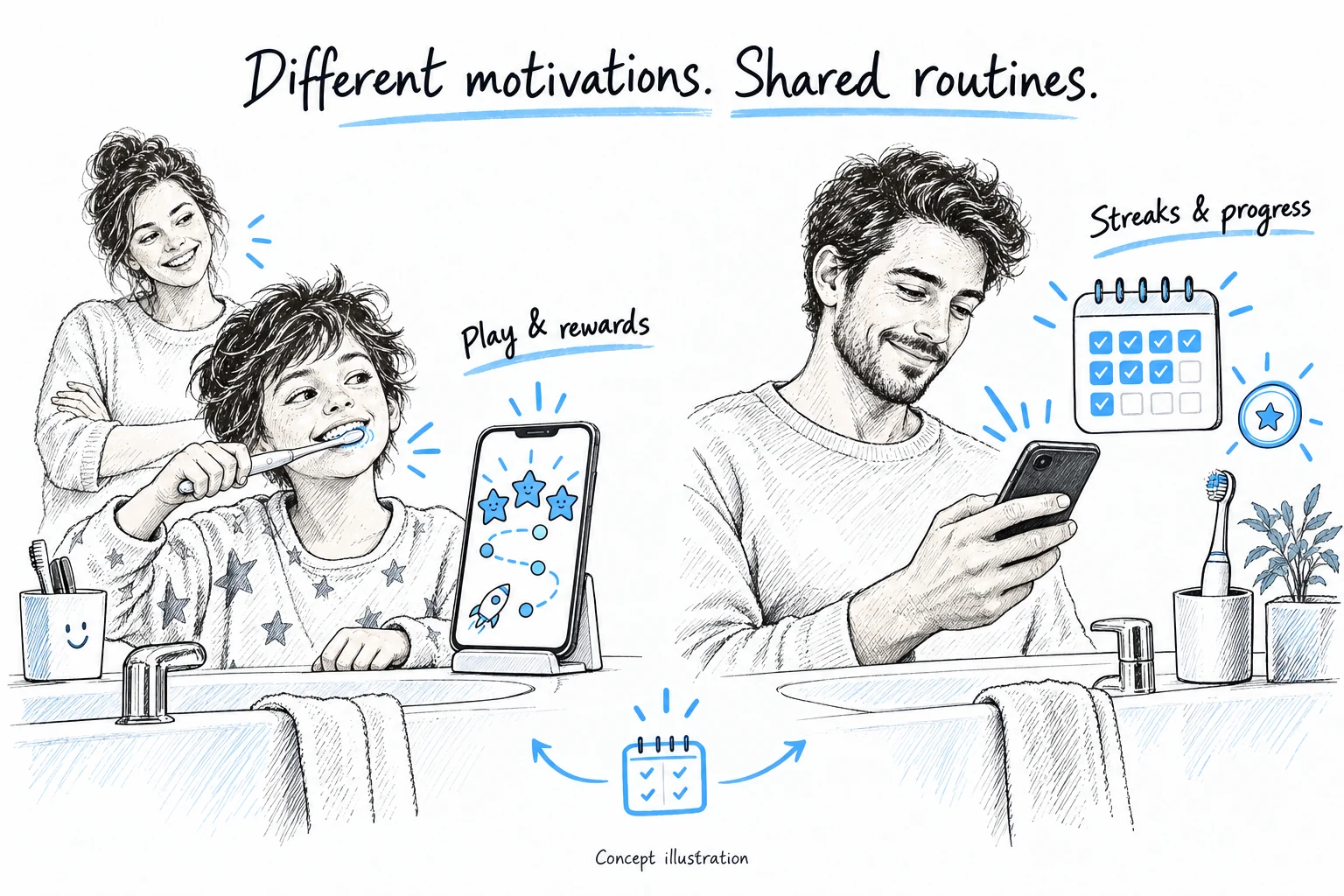
Funkcje konta rodzinnego umożliwiają wielu członkom gospodarstwa domowego wspólne korzystanie z jednej rączki szczoteczki (z indywidualnymi główkami), przy zachowaniu oddzielnych profili szczotkowania. Takie rozwiązanie okazuje się szczególnie cenne dla rodzin z dziećmi, które dopiero nabierają nawyków związanych ze szczotkowaniem zębów, ponieważ rodzice mogą monitorować, czy dzieci przestrzegają zaleceń, bez konieczności ciągłego nadzoru.
Synchronizacja w chmurze
Synchronizacja danych z serwerami w chmurze gwarantuje, że dane dotyczące szczotkowania zębów są zachowywane na wszystkich urządzeniach i nie ulegają utracie w przypadku zgubienia lub wymiany urządzenia. Przechowywanie danych w chmurze pozwala również producentom udoskonalać algorytmy sztucznej inteligencji w oparciu o zbiorcze, zanonimizowane dane użytkowników, tworząc cykle ciągłego doskonalenia produktów, z których korzysta cały rynek inteligentnych szczoteczek do zębów.
3d. Grywalizacja dla dzieci i dorosłych
Grywalizacja stała się skuteczną strategią zwiększającą zaangażowanie na rynku inteligentnych szczoteczek do zębów, pozwalającą sprostać podstawowemu wyzwaniu, jakim jest utrzymanie trwałej zmiany nawyków związanych z higieną jamy ustnej. Badania opublikowane w czasopiśmie „Journal of Dental Research” (2024) wykazują, że metody szczotkowania oparte na grywalizacji zwiększają wskaźniki przestrzegania zaleceń o 30–40% w porównaniu z rozwiązaniami nieopartymi na grywalizacji.
Gry z minutnikiem szczotkowania zębów
Gry interaktywne są zsynchronizowane z sesją szczotkowania, a postępy w grze zależą od rzeczywistego czasu szczotkowania i stosowanej techniki. Ukończenie pełnej, dwuminutowej sesji szczotkowania – zgodnie z zaleceniami dentystów – staje się integralnym elementem mechaniki gry, a nie tylko abstrakcyjną wytyczną dotyczącą zdrowia.
Nagrody i serie
Czerpiąc z wzorców projektowych aplikacji fitnessowych, aplikacje do inteligentnych szczoteczek do zębów przyznają punkty, odznaki i odblokowują osiągnięcia za regularne szczotkowanie. Mechanika „serii” buduje dynamikę — użytkownicy są zmotywowani do utrzymywania codziennych sekwencji szczotkowania, aby uniknąć zerwania wyrobionych nawyków. Niektóre aplikacje oferują dopłaty do darowizn na cele charytatywne w zamian za osiągnięcie celów związanych ze szczotkowaniem, co stanowi dodatkową motywację wynikającą z wpływu społecznego.
Modele przeznaczone specjalnie dla dzieci
Inteligentne szczoteczki dla dzieci — rozwijający się podsegment rynku inteligentnych szczoteczek — kładą nacisk na zaangażowanie dzieci poprzez wykorzystanie licencji na postacie z bajek, zabawne efekty dźwiękowe oraz tryby szczotkowania dostosowane do wieku. Współpraca z Disneyem, Marvelem i „Gwiezdnymi Wojnami” przekształca mycie zębów w zabawę z udziałem ulubionych bohaterów. Krótsze tryby szczotkowania (90 sekund w porównaniu z zaleceniami dla dorosłych) są dostosowane do krótszej zdolności koncentracji młodszych dzieci, jednocześnie pomagając w wykształceniu podstawowych nawyków.
Podejście oparte na gamifikacji obejmuje również produkty dla dorosłych na rynku inteligentnych szczoteczek do zębów, choć charakteryzuje się bardziej wyrafinowanymi systemami nagród. Gamifikacja skierowana do dorosłych skupia się raczej na subtelnych osiągnięciach, wizualizacji postępów oraz integracji z szerszymi ekosystemami zdrowotnymi, a nie na jawnych mechanizmach gry.
3e. Dezynfekcja promieniami UV + inteligentne ładowanie
Oprócz podstawowych funkcji związanych z szczotkowaniem zębów producenci coraz częściej wprowadzają technologie uzupełniające, które poprawiają higienę i komfort użytkowania. Dwa istotne dodatki to dezynfekcja promieniami UV oraz zaawansowane systemy ładowania.
Stacje dezynfekujące UV-C
Stacje dezynfekujące UV-C, coraz częściej spotykane na rynku inteligentnych szczoteczek do zębów, wykorzystują promieniowanie ultrafioletowe o krótkiej długości fali w celu ograniczenia zanieczyszczenia bakteryjnego na główkach szczoteczek pomiędzy kolejnymi użyciami. Zaawansowane wersje inteligentne monitorują zakończenie cyklu dezynfekcji, przypominają użytkownikom o konieczności wymiany główek szczoteczek na podstawie liczby godzin użytkowania oraz uwzględniają status dezynfekcji w informacjach zwrotnych wyświetlanych w aplikacji. Chociaż samodzielne urządzenia do dezynfekcji promieniowaniem UV istnieją już od lat, zintegrowane wersje inteligentne oferują dodatkowo funkcje monitorowania użytkowania i przypomnień. Dla marek kierujących swoją ofertę do konsumentów dbających o środowisko, nasze inicjatywy na rzecz zrównoważonego rozwoju obejmuje również zaopatrzenie w opakowania i komponenty.
Inteligentne stacje ładujące
Inteligentne systemy ładowania — coraz częściej spotykana funkcja na rynku inteligentnych szczoteczek do zębów — monitorują stan baterii, optymalizują schematy ładowania w celu przedłużenia jej żywotności oraz dostarczają informacji zwrotnych dotyczących użytkowania. Niektóre stacje dokujące klasy premium są wyposażone w technologię ładowania bezprzewodowego, zapewniającą wygodę wynikającą z braku kabli. Monitorowanie stanu baterii pomaga użytkownikom zorientować się, kiedy jej pojemność spadła na tyle, że konieczna jest jej wymiana.
Kluczowi gracze na rynku inteligentnej pielęgnacji jamy ustnej
W otoczeniu konkurencyjnym rynku inteligentnych szczoteczek do zębów występują zarówno uznani giganci branży dóbr konsumpcyjnych, dysponujący rozległymi zasobami badawczo-rozwojowymi, jak i innowacyjne start-upy przesuwające granice technologiczne. Rynek inteligentnych szczoteczek do zębów obejmuje zarówno modele ekonomiczne o wartości $25, jak i urządzenia klasy premium o wartości $349. Zrozumienie pozycjonowania poszczególnych graczy pozwala uzyskać wgląd w ewolucję rynku oraz możliwości wyróżnienia się na jego tle.
| Marka | Model flagowy | Kluczowa funkcja inteligentna | Cena detaliczna | Dostępność produktów OEM |
|---|---|---|---|---|
| Philips Sonicare | Diamond Clean 9900 | Coaching oparty na sztucznej inteligencji, rozpoznawanie głowicy szczoteczki | $299–$349 | Ograniczona |
| Oral-B (P&G) | Seria iO 9 | Mapowanie ciśnienia i pokrycia oparte na sztucznej inteligencji | $249–$299 | Ograniczona |
| Foreo | Seria BEAR | Regulacja intensywności za pomocą aplikacji, tryby zsynchronizowane z mimiką twarzy | $179–$299 | Selektywny |
| Colgate | Szczoteczka do zębów Hum Smart | Niedrogie usługi monitorowania i coachingu online | $49–$79 | Dostępne |
| Gobrushing | Playbrush Smartseries | Grywalizacja jako priorytet – zaangażowanie dzieci | $39–$59 | Otwarte partnerstwo |
| XFT | Seria Smart Sonic | Pozycjonowanie pod kątem wartości, niezbędne inteligentne funkcje | $25-$45 | W pełni oryginalne (OEM) |
Tabela pokazuje wyraźne zróżnicowanie cenowe: marki z segmentu premium (Philips, Oral-B, Foreo) osiągają ceny w przedziale $179–$349, oferując zaawansowane funkcje oparte na sztucznej inteligencji, podczas gdy opcje zorientowane na wartość (Colgate, Gobrushing, XFT) konkurują w przedziale $25–$79, oferując podstawowe funkcje łączności. Ta stratyfikacja tworzy odrębne segmenty rynku, do których producenci OEM na rynku inteligentnych szczoteczek do zębów mogą kierować swoje produkty, stosując odpowiednie zestawy funkcji i strategie cenowe.
Wyzwania związane z produkcją OEM inteligentnych szczoteczek do zębów
Produkcja inteligentnych szczoteczek do zębów wiąże się z wyzwaniami inżynieryjnymi, które znacznie różnią się od tych występujących przy produkcji tradycyjnych szczoteczek elektrycznych, co pozwala wyróżnić konkurencyjnych dostawców na rynku inteligentnych szczoteczek do zębów. Nasz przewodnik po produkcji szczoteczek elektrycznych na zlecenie (OEM) szczegółowo opisuje cały proces produkcyjny. Zintegrowanie czujników, łączności bezprzewodowej i oprogramowania wiąże się ze złożonością, która wymaga specjalistycznej wiedzy z wielu dziedzin. W przypadku nabywców OEM typowy czas realizacji zamówienia na standardowe platformy inteligentne wynosi 8–10 tygodni, a opracowanie funkcji niestandardowych wydłuża ten czas o 4–6 tygodni. Cała produkcja przed wysyłką poddawana jest kontroli wyrywkowej zgodnie z normą AQL 1,5/2,5.
Projektowanie płytek drukowanych i oprogramowanie układowe
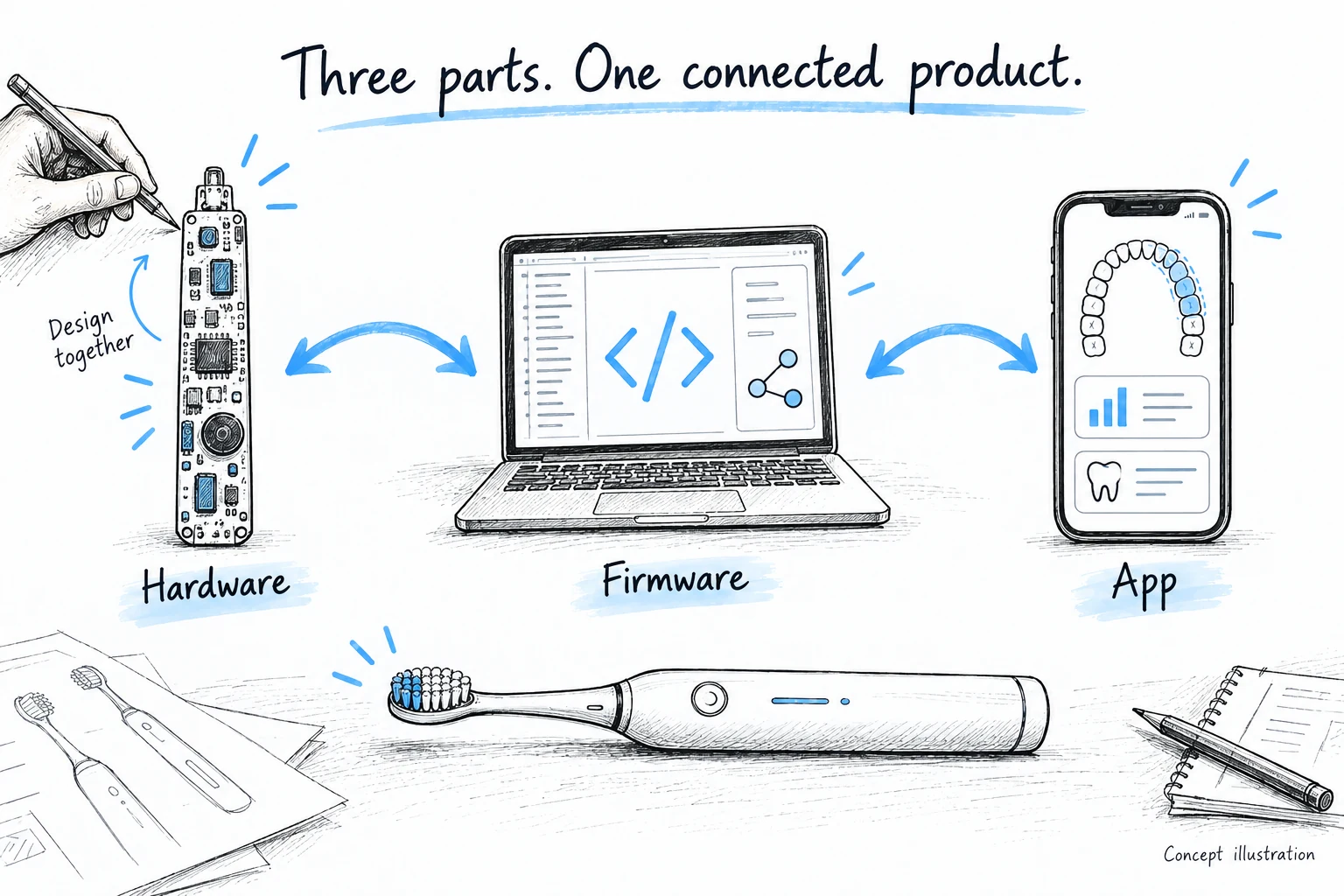
Projekt płytki drukowanej (PCB) do inteligentnych szczoteczek do zębów musi uwzględniać wiele wymagań, co stanowi wyzwanie techniczne określające barierę wejścia na rynek inteligentnych szczoteczek do zębów: niewielkie rozmiary pozwalające na umieszczenie płytki w ergonomicznych uchwytach, niskie zużycie energii zapewniające dłuższą żywotność baterii, niezawodną łączność bezprzewodową oraz solidną integralność sygnału z czujników.
Wybór mikrokontrolera
Wybór mikrokontrolera ma kluczowy wpływ zarówno na koszt, jak i na możliwości urządzenia. Seria nRF52 firmy Nordic Semiconductor stała się de facto standardem wśród mikrokontrolerów na rynku inteligentnych szczoteczek do zębów, oferując optymalne połączenie zintegrowanej funkcji BLE, mocy obliczeniowej, analogowych interfejsów czujników oraz energooszczędności. Alternatywami są mikrokontrolery STM32WB firmy STMicroelectronics oraz ESP32 firmy Espressif, przeznaczone do zastosowań, w których istotnym czynnikiem jest koszt.
Integracja modułu BLE
Oprócz wyboru mikrokontrolera, projektowanie anteny BLE wymaga szczególnej uwagi. Na konkurencyjnym rynku inteligentnych szczoteczek do zębów parametry radiowe mają bezpośredni wpływ na oceny komfortu użytkowania. Anteny drukowane na płytce drukowanej (PCB) zapewniają korzyści kosztowe, ale wymagają rygorystycznych testów we wszystkich pozycjach użytkowania. Ceramiczne anteny chipowe zapewniają bardziej stabilną wydajność, ale zwiększają koszty komponentów. Certyfikacja zgodności z przepisami (FCC, CE) wymaga kompleksowych testów radiowych, co wiąże się z dodatkowymi ograniczeniami czasowymi i kosztowymi. Zobacz naszą Przewodnik po certyfikatach szczoteczek elektrycznych aby zapoznać się ze szczegółowymi wymaganiami.
Cykl życia oprogramowania układowego
Oprogramowanie układowe inteligentnej szczoteczki do zębów obejmuje wiele podsystemów: pozyskiwanie danych z czujników, protokoły komunikacyjne BLE, sterowanie silnikiem, zarządzanie zasilaniem oraz obsługę aktualizacji OTA. Na rynku inteligentnych szczoteczek do zębów jakość oprogramowania układowego ma równie kluczowe znaczenie jak niezawodność sprzętu. Opracowanie pełnego zestawu funkcji zajmuje zazwyczaj 4–6 miesięcy, a następnie wymagana jest bieżąca konserwacja w celu usuwania błędów i wprowadzania aktualizacji zabezpieczeń. Obsługa aktualizacji OTA wiąże się z dodatkową złożonością, obejmującą wdrożenie bezpiecznego rozruchu, szyfrowaną dystrybucję oprogramowania oraz mechanizmy przywracania poprzedniej wersji.
Tworzenie aplikacji
Na rynku inteligentnych szczoteczek do zębów aplikacja towarzysząca stanowi główny czynnik wyróżniający marki, a jednocześnie generuje największe koszty związane z jej opracowaniem. Tworzenie aplikacji wymaga ciągłych inwestycji, które wykraczają znacznie poza etap pierwszego wprowadzenia na rynek.
Wybór platformy ma znaczący wpływ na podejście do tworzenia oprogramowania. Tworzenie aplikacji natywnych dla systemów iOS (w języku Swift) i Android (w języku Kotlin) zapewnia optymalną wydajność oraz dostęp do funkcji platformy, ale wymaga prowadzenia równoległych prac programistycznych. Frameworki wieloplatformowe, takie jak React Native i Flutter, umożliwiają współdzielenie kodu, ale mogą wiązać się z pewnymi ograniczeniami w zakresie optymalizacji wydajności i dostępu do funkcji natywnych.
Zgodność z przepisami dotyczącymi ochrony danych osobowych stanowi wymóg niepodlegający negocjacjom. Dane dotyczące zdrowia podlegają wzmożonej kontroli regulacyjnej w wielu jurysdykcjach:
- RODO (UE) — Wymaga wyraźnej zgody na przetwarzanie danych dotyczących zdrowia, przestrzegania zasad minimalizacji danych oraz zapewnienia prawa do usunięcia danych
- CCPA (Kalifornia) — Nakłada obowiązek ujawnienia polityki prywatności oraz zapewnienia konsumentom prawa dostępu do danych
- HIPAA (USA, o ile ma to zastosowanie) — W przypadku udostępniania danych podmiotom świadczącym usługi opieki zdrowotnej obowiązują dodatkowe wymogi dotyczące bezpieczeństwa i dostępu
- Wymagania dotyczące App Store — Zarówno Apple, jak i Google wymagają ujawnienia informacji dotyczących prywatności i mogą klasyfikować aplikacje przetwarzające dane zdrowotne jako związane z medycyną
Dla producentów OEM działających na rynku inteligentnych szczoteczek do zębów, którzy nie dysponują własnymi zasobami do tworzenia aplikacji, strategiczne partnerstwa z wyspecjalizowanymi firmami zajmującymi się tworzeniem aplikacji zdrowotnych stanowią najbardziej niezawodną drogę do wejścia na rynek. Kluczowe znaczenie ma wybór partnerów posiadających doświadczenie właśnie w zakresie podłączonych do sieci urządzeń zdrowotnych, a nie ogólnych twórców aplikacji mobilnych.
Optymalizacja żywotności baterii
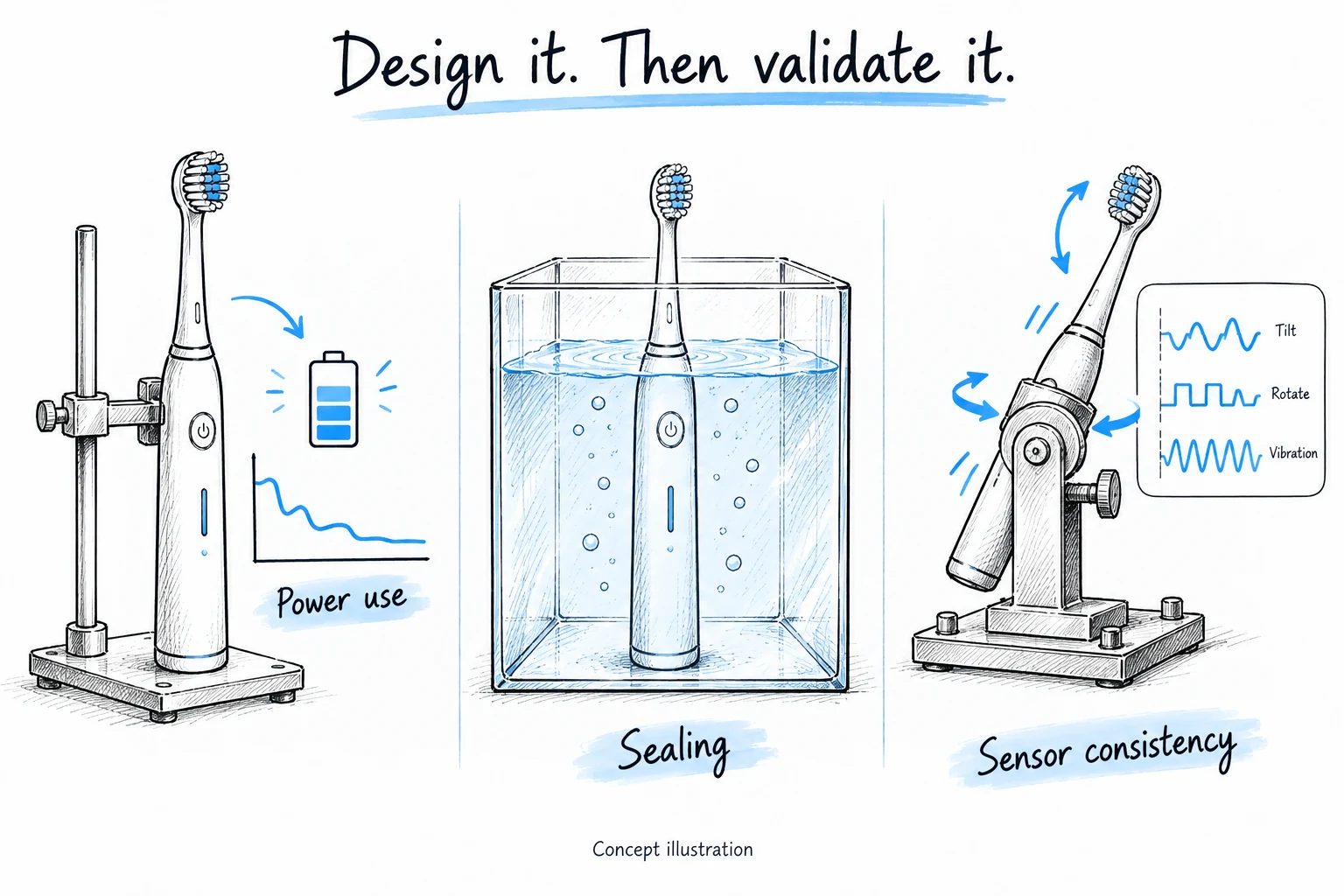
Oczekiwania konsumentów zakładają ponad 14 dni pracy między ładowaniami, pomimo ciągłej pracy czujników i regularnej transmisji danych przez BLE — jest to standard, którego spełnienia coraz częściej oczekuje się na rynku inteligentnych szczoteczek do zębów. Osiągnięcie tego celu wymaga systematycznej optymalizacji obejmującej dobór sprzętu, projekt oprogramowania układowego oraz zarządzanie wzorcami użytkowania.
Specyfikacje docelowe
- Aktywne użytkowanie (2 szczotkowania dziennie): 14–21 dni na jednym ładowaniu
- Pobór mocy w trybie czuwania: < 50 μA średnio
- Zasięg sygnału BLE: zoptymalizowany pod kątem wydajności połączeń
- Opóźnienie aktywacji czujnika: < 100 ms od wykrycia ruchu
Strategie optymalizacji
Optymalizacja żywotności baterii zaczyna się od doboru komponentów — regulatorów napięcia o niskim prądzie spoczynkowym, wydajnych przetworników DC-DC oraz obwodów czujników z wyłączaniem zasilania. Optymalizacja oprogramowania układowego polega na wdrażaniu trybów uśpienia o wysokim stopniu oszczędzania energii pomiędzy sesjami szczotkowania, przy czym wybudzanie jest wyzwalane przez wykrycie ruchu, a nie ciągłe odpytywanie. Dobór pojemności baterii polega na znalezieniu równowagi między wymaganiami dotyczącymi czasu pracy a kwestiami związanymi z wagą i kosztami.
Wodoodporność (IPX7+) z elektroniką
Inteligentne szczoteczki do zębów muszą sprostać ekstremalnym warunkom środowiskowym: zanurzeniu w wodzie, kontaktowi z pozostałościami pasty do zębów oraz wahaniom temperatury panującym w łazience. Spełnienie wymagań certyfikatu IPX7 stanowi podstawowy wymóg na rynku inteligentnych szczoteczek do zębów. Zapewnienie niezawodnej wodoodporności przy jednoczesnym uwzględnieniu elementów elektronicznych stanowi kluczowe wyzwanie inżynierii produkcji.
Wymóg IPX7
Certyfikat IPX7 wymaga, aby urządzenia wytrzymały zanurzenie w wodzie na głębokość 1 metra przez 30 minut bez przedostawania się wody do wnętrza. Wymaga to kompleksowego uszczelnienia wszystkich otworów: komory baterii, styków ładowania, przycisków oraz połączeń konstrukcyjnych urządzenia.
Technologie uszczelniające
- Zgrzewanie ultradźwiękowe — Pozwala na trwałe łączenie elementów obudowy z tworzywa sztucznego bez uszczelek ani klejów. Wymaga precyzyjnego zaprojektowania formy oraz kontrolowanych parametrów zgrzewania.
- Masa uszczelniająca — Hermetyzacja żywicą epoksydową lub silikonową chroni zespoły płytek drukowanych. Należy ją wykonać przed zamontowaniem akumulatora; w wyniku tego powstają zespoły, których nie da się naprawić.
- Uszczelki — Uszczelki silikonowe lub z TPE stosowane w miejscach połączeń mechanicznych zapewniają niezawodne uszczelnienie, ale wymagają starannej kontroli montażu i z czasem mogą ulegać degradacji.
- Powłoki hydrofobowe — Powłoki w skali nano na zespołach płytek drukowanych zapewniają dodatkową ochronę przed wnikaniem wilgoci przez ewentualne niedoskonałości uszczelnień.
Wymagania dotyczące testowania
Certyfikacja IPX7 wymaga przeprowadzenia testów seryjnych z wykorzystaniem próbek produkcyjnych. Sprzęt testowy obejmuje urządzenia do badania szczelności metodą spadku ciśnienia, służące do weryfikacji na linii produkcyjnej, oraz testy pełnego zanurzenia dla próbek certyfikacyjnych. Producenci OEM muszą dysponować własnymi możliwościami testowymi na miejscu lub współpracować z certyfikowanymi laboratoriami badawczymi.
Kalibracja czujników i spójność
Sukces na rynku inteligentnych szczoteczek do zębów zależy od stałej wydajności czujników. Czujniki MEMS charakteryzują się nieodłącznymi różnicami między partiami — akcelerometry i żyroskopy z tej samej partii produkcyjnej mogą wykazywać przesunięcia zerowe i współczynniki skalowania, które wpływają na dokładność pomiarów. Bez kalibracji algorytmy śledzenia ruchu szczoteczki dają niejednolite wyniki w poszczególnych egzemplarzach.
Proces kalibracji fabrycznej
Firma Relish Tech stosuje zautomatyzowane stacje kalibracyjne, które określają charakterystykę każdego czujnika na etapie montażu. Proces ten polega na umieszczaniu szczoteczek do zębów w znanych pozycjach, pomiarze sygnałów wyjściowych czujników, obliczaniu współczynników korekcyjnych oraz zapisywaniu danych kalibracyjnych w pamięci nieulotnej mikrokontrolera. Taka kalibracja jednopunktowa zazwyczaj zmniejsza błąd pomiaru o 80–90%.
Zarządzanie zmiennością partii
Oprócz kalibracji poszczególnych urządzeń zmiana partii czujników wymaga ponownej kwalifikacji parametrów kalibracyjnych. Uzgodnienie z dostawcami preferowanych partii czujników pozwala ograniczyć wahania i upraszcza procedury kalibracyjne.
Jak firma Relish Tech podchodzi do współpracy z producentami oryginalnego sprzętu (OEM) w zakresie inteligentnych szczoteczek do zębów
Firma Relish Tech prowadzi w Shenzhen zakład o powierzchni 20 000 m², posiadający certyfikat ISO 13485:2016, zatrudniający ponad 300 pracowników i wyposażony w dedykowane linie montażowe do inteligentnych szczoteczek do zębów. Nasze podejście oparte na platformie umożliwia markom skuteczne konkurowanie na rynku inteligentnych szczoteczek do zębów, niezależnie od etapu rozwoju, na jakim się znajdują. Dzięki ponad 200 projektom płytek drukowanych do inteligentnych szczoteczek zrealizowanym od 2020 roku nasze doświadczenie w inżynierii sprzętowej w połączeniu ze strategicznymi partnerstwami pozwala nam tworzyć konkurencyjne oferty inteligentnych szczoteczek do zębów.
Możliwości własne
Nasz zespół inżynierów dysponuje pełnym zestawem umiejętności niezbędnych do opracowania inteligentnej szczoteczki do zębów:
- Zespół ds. projektowania płytek drukowanych — Nasi wyspecjalizowani inżynierowie, posiadający doświadczenie w zakresie technologii BLE i układów mieszanych, projektują niestandardowe płytki drukowane zoptymalizowane pod kątem zastosowań w inteligentnych szczoteczkach do zębów. Oferujemy projekty referencyjne dla popularnych architektur, zapewniając jednocześnie możliwość dostosowania ich do konkretnych wymagań poszczególnych marek.
- Tworzenie oprogramowania układowego — Inżynierowie oprogramowania wbudowanego implementują algorytmy śledzenia szczotkowania, protokoły BLE, sterowanie silnikiem i zarządzanie energią. Infrastruktura aktualizacji OTA umożliwia ulepszenia funkcji po premierze oraz łatki bezpieczeństwa.
- Testowanie IPX7 — Zakładowe urządzenia do testów środowiskowych obejmują testery szczelności z pomiarem spadku ciśnienia, komory temperatury i wilgotności oraz zbiorniki do pełnego zanurzenia. Testy certyfikacyjne są przeprowadzane z akredytowanymi laboratoriami zewnętrznymi.
Strategiczne partnerstwa w zakresie rozwoju aplikacji
Uznając, że rozwój aplikacji wymaga specjalistycznej wiedzy z zakresu technologii zdrowotnych, Relish Tech nawiązała partnerstwa ze sprawdzonymi programistami aplikacji zdrowotnych. To podejście umożliwia nam oferowanie kompletnych rozwiązań sprzętowych i programowych, przy jednoczesnym zapewnieniu jakości aplikacji i zgodności z przepisami.
Nasz model partnerski uznaje podstawową prawdę: dla marek inteligentnych szczoteczek do zębów aplikacja jest głównym wyróżnikiem, podczas gdy sprzęt umożliwia to doświadczenie. Utrzymując elastyczność w partnerstwach dotyczących rozwoju aplikacji, zapewniamy klientom możliwość wyróżnienia się poprzez oprogramowanie, korzystając jednocześnie z naszej wiedzy specjalistycznej w zakresie platform sprzętowych.
Harmonogram od prototypu do produkcji
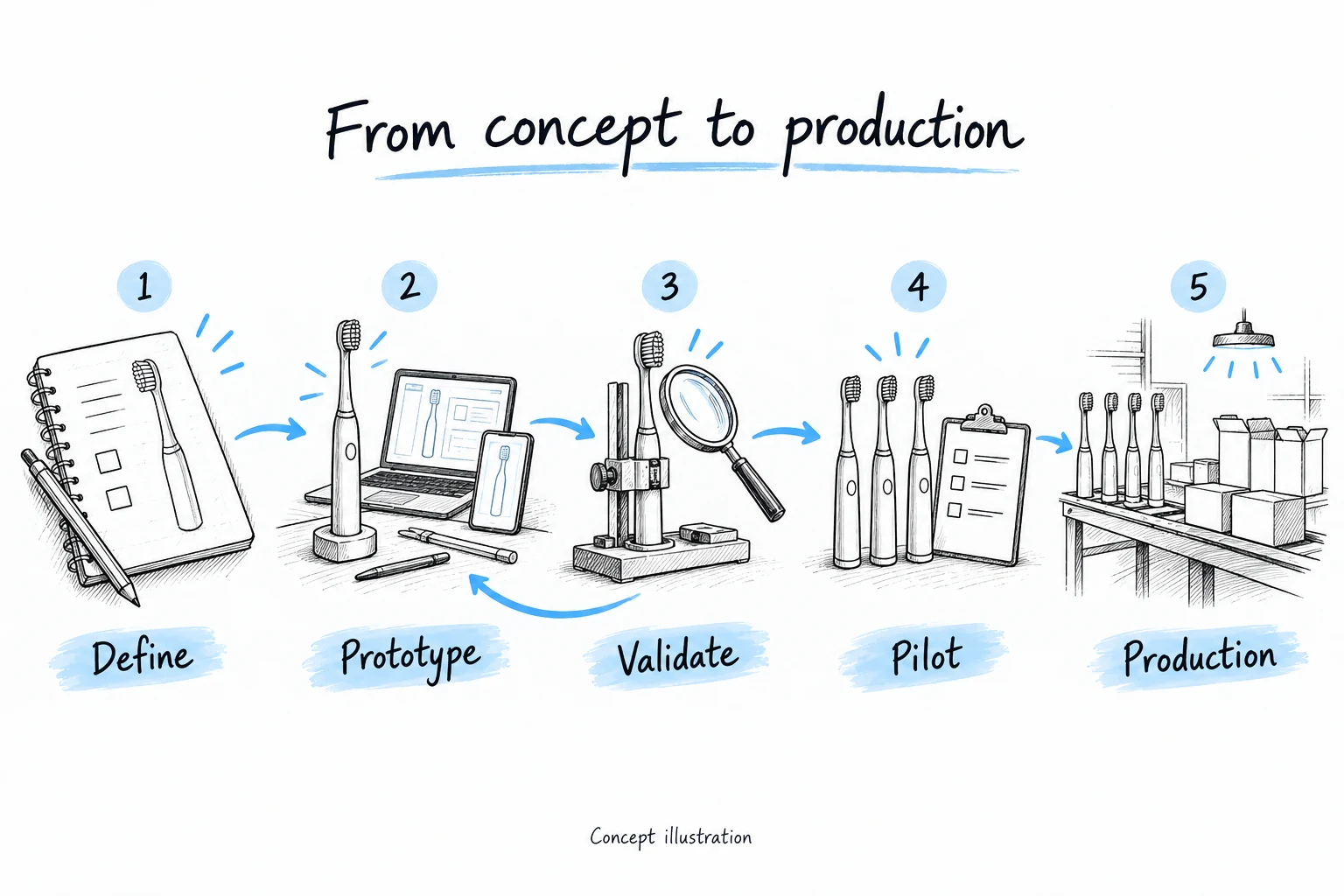
Rozwój inteligentnej szczoteczki do zębów od koncepcji do produktu gotowego do produkcji zazwyczaj wymaga 6–9 miesięcy przy zastosowaniu podejścia platformowego Relish Tech:
- Miesiące 1–2 — Walidacja koncepcji, finalizacja specyfikacji i wybór komponentów
- Miesiące 3–4 — Opracowanie prototypu i wstępna implementacja oprogramowania wbudowanego
- Miesiące 5–6 — Testy weryfikacyjne projektu, udoskonalanie oprogramowania wbudowanego i rozpoczęcie rozwoju aplikacji
- Miesiące 7–8 — Korekty narzędzi przedprodukcyjnych i seria pilotażowa
- Miesiąc 9 — Kwalifikacja produkcyjna i gotowość do premiery
Podejście standaryzacyjne
Aby zmniejszyć ryzyko rozwojowe i przyspieszyć czas wprowadzenia na rynek, Relish Tech oferuje standaryzowaną platformę bazową z modułowymi dodatkami inteligentnymi. Marki mogą wybierać spośród ustalonych konfiguracji:
- Essential Smart — Łączność BLE, podstawowe śledzenie szczotkowania, informacja zwrotna o nacisku, podstawowe funkcje aplikacji
- Connected Coach — Ulepszone czujniki, analiza szczotkowania z AI, grywalizacja, premium doświadczenie aplikacji
- Premium Smart — Pełny zestaw funkcji obejmujący integrację sterylizacji UV, ładowanie bezprzewodowe, zaawansowane coaching AI
To modułowe podejście umożliwia szybsze wejście na rynek ze sprawdzoną technologią, przy jednoczesnym zachowaniu możliwości wyróżnienia się. Dla marek wchodzących na rynek inteligentnych szczoteczek do zębów standaryzowane platformy znacząco skracają czas do osiągnięcia przychodów.
Perspektywy rynkowe: Kiedy inteligentne stanie się standardem?
Rynek inteligentnych szczoteczek do zębów znajduje się w punkcie zwrotnym. Po latach pozycjonowania wyłącznie w segmencie premium na rynku inteligentnych szczoteczek do zębów, podstawy technologiczne wspierają teraz szerszą penetrację rynku. Zrozumienie trajektorii krzywej adopcji umożliwia strategiczne planowanie zarówno dla marek, jak i producentów.
Prognoza krzywej adopcji
W oparciu o porównywalne wzorce adopcji technologii i obecną dynamikę rynku, prognozujemy następujące fazy adopcji:
- 2024–2026 (obecnie) — Początek fazy wczesnej większości. Inteligentne funkcje dostępne w różnych przedziałach cenowych, z funkcjami premium AI nadal skoncentrowanymi w produktach flagowych.
- 2027–2028 — Przyspieszenie adopcji głównego nurtu. Łączność Bluetooth staje się oczekiwana, a nie wyjątkowa w produktach średniej półki ($50–$100).
- 2029–2030 — Nasycenie rynku podstawową łącznością. Zaawansowane coaching AI pozostaje wyróżnikiem premium. Tradycyjne niepołączone elektryczne szczoteczki do zębów stają się segmentem budżetowym/niszowym.
Dynamika kompresji cen
Trendy kosztów komponentów napędzają agresywną kompresję cen na całym rynku inteligentnych szczoteczek do zębów:
- Koszt modułu BLE — Spadł z $8–12 (2019) do $2–4 (2024), zbliżając się do $1 dla zastosowań wielkoseryjnych do 2026 r.
- Akcelerometr/Żyroskop — Połączone czujniki MEMS są teraz dostępne poniżej $1 w wolumenie, w porównaniu z $5+ pięć lat temu
- Czujniki ciśnienia — Rezystory czułe na nacisk poniżej $0.50, umożliwiające podstawowe wykrywanie nacisku w produktach budżetowych
Według analizy branży półprzewodników (IC Insights, 2024), całkowity wzrost kosztów materiałów (BOM) dla podstawowych funkcji inteligentnych spadł z $25–40 (2019) do $15–25 (2024), z ciągłą presją w kierunku $10–15 do 2027 r. Ta redukcja kosztów umożliwia integrację funkcji inteligentnych w produktach detalicznych za $35–55 przy jednoczesnym utrzymaniu zdrowych marż.
Prognoza rynkowa na 2030 r.
Do 2030 r. przewidujemy, że 40%+ elektrycznych szczoteczek do zębów średniej półki (w cenie $35–55) będzie zawierać łączność Bluetooth jako standardową funkcję. Definicja "inteligentnego" odpowiednio się przesunie – podstawowa łączność i informacja zwrotna o nacisku będą oczekiwane, podczas gdy zaawansowanie coachingu AI będzie wyróżniać ofertę premium od budżetowej.
Dla producentów OEM ta prognoza niesie jasne implikacje: rynek inteligentnych szczoteczek do zębów wymaga platform, które nie są już opcjonalnymi liniami produktów, ale strategicznymi koniecznościami do utrzymania konkurencyjności we wszystkich segmentach rynku.
Podstawy zaopatrzenia OEM — inteligentna szczoteczka do zębów
- MOQ: 1 000 sztuk dla uznanych platform inteligentnych; 2 500 sztuk dla umiarkowanej personalizacji; 5 000+ dla pełnego rozwoju niestandardowego
- Czas realizacji: 8–10 tygodni standardowa platforma; 4–6 tygodni dodatkowo na funkcje niestandardowe; 2 tygodnie kontrola jakości przed wysyłką
- Fabryka: Obiekt w Shenzhen o powierzchni 20 000 m², 300+ pracowników, certyfikat ISO 13485:2016, dedykowane linie montażowe inteligentnych szczoteczek do zębów
- Kontrola jakości: AQL 1,5 (wady krytyczne) / AQL 2,5 (wady główne); 100% testy funkcjonalne łączności BLE i kalibracji czujników
- Certyfikaty: FDA 510(k), znak CE (MDR 2017/745), ISO 13485:2016, FCC Part 15, REACH, RoHS
Kluczowe wnioski
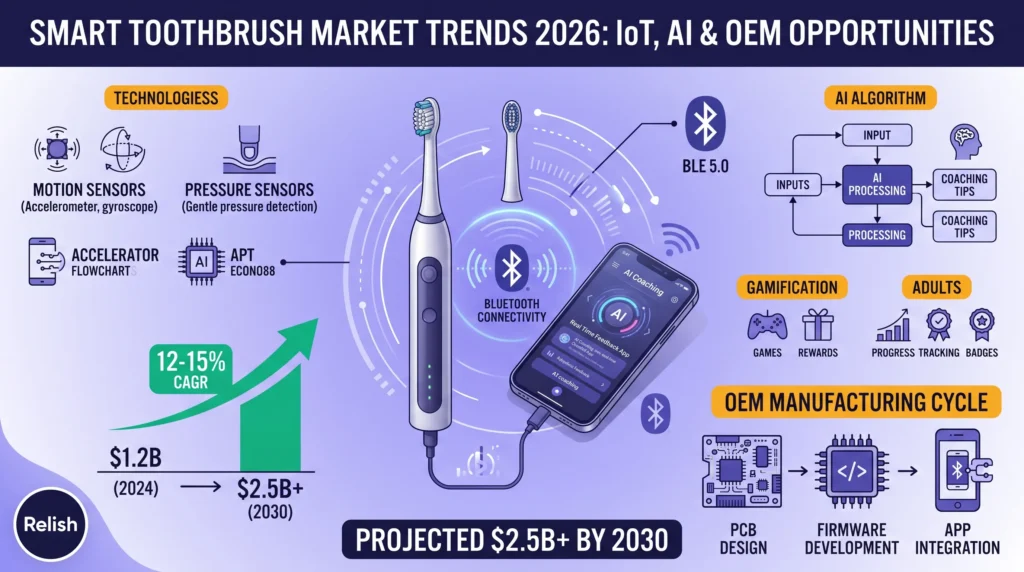
- Wzrost rynku: Rynek inteligentnych szczoteczek do zębów rośnie w tempie 12–15% CAGR, prognozowany do osiągnięcia 2,5 mld USD do 2030 r.
- Wpływ AI: Coaching AI poprawia spójność szczotkowania o 30–40% w porównaniu z instrukcją manualną, zwiększając postrzeganą wartość dla konsumenta
- Ekonomika komponentów: BLE 5.0 i czujniki niskiego poboru mocy są teraz opłacalne dla modeli średniej półki, umożliwiając szerszy dostęp do rynku
- Struktura kosztów: Rozwój aplikacji jest głównym czynnikiem kosztowym (30 000–150 000 USD); wzrost BOM sprzętu wynosi tylko 15–40 USD za funkcje inteligentne
- Wykonalność inżynieryjna: Wodoszczelność IPX7 z wbudowaną elektroniką jest technicznie osiągalna przy użyciu nowoczesnych technik zalewania i zgrzewania ultradźwiękowego
- Trajektoria rynku: Do 2030 r. łączność Bluetooth będzie standardem w 40%+ średniopółkowych OEM szczoteczek elektrycznych, czyniąc rynek inteligentnych szczoteczek do zębów domyślną kategorią produkcyjną
Często zadawane pytania
Jaka jest różnica między połączoną szczoteczką do zębów a inteligentną szczoteczką do zębów?
Chociaż terminy te są często używane zamiennie, połączona szczoteczka do zębów zazwyczaj odnosi się do urządzeń, które po prostu przesyłają dane o szczotkowaniu do aplikacji przez Bluetooth, oferując podstawowe śledzenie i historię. Inteligentna szczoteczka do zębów idzie dalej, wykorzystując algorytmy AI, które analizują wzorce szczotkowania, zapewniają coaching w czasie rzeczywistym i oferują spersonalizowane rekomendacje. Inteligentne szczoteczki do zębów używają zaawansowanych czujników i uczenia maszynowego, aby aktywnie poprawiać technikę użytkownika, a nie tylko ją rejestrować.
Ile kosztuje opracowanie aplikacji do inteligentnej szczoteczki do zębów?
Opracowanie w pełni funkcjonalnej aplikacji towarzyszącej do inteligentnej szczoteczki do zębów kosztuje zazwyczaj od $30 000 do $150 000, w zależności od złożoności. Podstawowe aplikacje z prostym śledzeniem szczotkowania kosztują $30 000–$50 000, podczas gdy aplikacje średniej klasy z coachingiem AI i grywalizacją kosztują $50 000–$100 000. Aplikacje premium z zaawansowanym uczeniem maszynowym, obsługą wielu użytkowników i integracją ze specjalistami stomatologicznymi mogą przekroczyć $150 000. Roczna konserwacja dodaje kolejne 15–20% kosztów rozwoju na aktualizacje i zgodność z platformami.
Jakie przepisy dotyczące ochrony danych mają zastosowanie do aplikacji inteligentnych szczoteczek do zębów?
Aplikacje inteligentnych szczoteczek do zębów zbierające dane zdrowotne muszą spełniać wiele przepisów. W UE RODO ma zastosowanie do wszystkich danych osobowych, ze szczególnymi wymogami dla danych zdrowotnych sklasyfikowanych jako "dane szczególnej kategorii" zgodnie z art. 9. W USA CCPA dotyczy mieszkańców Kalifornii, podczas gdy klasyfikacja FDA urządzeń medycznych i HIPAA mogą mieć zastosowanie, jeśli dane są udostępniane podmiotom świadczącym opiekę zdrowotną. Sklepy z aplikacjami wymagają zgodności z polityką prywatności, a aplikacje przetwarzające dane zdrowotne mogą wymagać rejestracji jako urządzenie medyczne w zależności od deklarowanych zastosowań. Producenci OEM muszą zapewnić, że projekty sprzętu i aplikacji wspierają zasady ochrony danych już na etapie projektowania.
Jak Relish Tech optymalizuje żywotność baterii w inteligentnych szczoteczkach do zębów?
Relish Tech stosuje kilka strategii, aby osiągnąć żywotność baterii powyżej 14 dni. Wybieramy mikrokontrolery o niskim poborze mocy, takie jak seria Nordic nRF52 ze zintegrowanym BLE, używamy wydajnych konfiguracji czujników, które aktywują się tylko podczas szczotkowania, wdrażamy inteligentne zarządzanie energią przechodzące w głęboki sen między użyciami oraz optymalizujemy oprogramowanie sprzętowe, aby zminimalizować czas aktywnej pracy. Nasz zespół inżynieryjny przeprowadza modelowanie żywotności baterii na wczesnym etapie rozwoju i weryfikuje je testami w rzeczywistych warunkach użytkowania przed zatwierdzeniem produkcji.
Jaka jest typowa minimalna ilość zamówienia OEM dla inteligentnych szczoteczek elektrycznych?
MOQ dla inteligentnych szczoteczek elektrycznych zazwyczaj wynoszą od 1 000 do 5 000 sztuk na SKU, co jest wyższe niż w przypadku podstawowych szczoteczek elektrycznych ze względu na dodatkowe komponenty i wymagania testowe. Relish Tech oferuje elastyczne struktury MOQ: 1 000 sztuk dla ustalonych inteligentnych platform z niewielką personalizacją, 2 500 sztuk dla umiarkowanych modyfikacji funkcji oraz 5 000+ sztuk dla pełnego niestandardowego rozwoju inteligentnych urządzeń. Wyższe wolumeny znacząco obniżają koszty jednostkowe, przy zamówieniach 10 000+ sztuk obserwuje się redukcję kosztów o 20–30% w porównaniu do zamówień 1 000 sztuk.
Kiedy funkcje inteligentnych szczoteczek do zębów staną się standardem, a nie opcją premium?
Przejście z segmentu premium do standardowego już trwa. Do lat 2027–2028 funkcje inteligentne wejdą w fazę wczesnej większości, ponieważ koszty komponentów nadal spadają. Przewidujemy, że do 2030 roku łączność Bluetooth będzie standardem w 40%+ średniopółkowych szczoteczek elektrycznych (w cenie $35–55). Podstawowe funkcje połączone (timer szczotkowania, informacja zwrotna o nacisku) staną się standardem, podczas gdy zaawansowane AI coaching pozostanie wyróżnikiem premium. Producenci OEM powinni już teraz przygotować platformy gotowe na funkcje inteligentne, aby pozostać konkurencyjnymi na tym zmieniającym się rynku.
Referencje
-
Grand View Research. (2025).
2. Electric Toothbrush Market Size, Share & Trends Analysis Report, 2025–2030.
3. International Electrotechnical Commission. (2023).
4. IEC 60335-2-13: Safety of Household and Similar Electrical Appliances — Particular Requirements for Oral Hygiene Appliances.
5. U.S. Food & Drug Administration. (2024).
6. Class II Dental Devices: Electric Toothbrush (21 CFR Part 880).
7. ISO 13485:2016 — Medical Devices — Quality Management Systems.
8. American Dental Association. (2024).
9. Powered Toothbrush Efficacy Evidence Summary.
10. Statista Research Department. (2025).
11. Global Electric Toothbrush Manufacturing Cost Analysis.
12. How to Design Electric Toothbrush:From Concept to Mass Production 1
13. how to design electric toothbrush concept to production. Raport analizy rynku inteligentnych szczoteczek do zębów: wielkość, udział i trendy, 2025–2030. https://www.grandviewresearch.com/industry-analysis/smart-toothbrush-market -
Statista. (2025).
. Połączone urządzenia do higieny jamy ustnej — statystyki i fakty. https://www.statista.com/topics/7290/connected-oral-care/ - Mordor Intelligence. (2025). Rynek inteligentnych szczoteczek do zębów — wzrost, trendy i prognozy (2025–2030). https://www.mordorintelligence.com/industry-reports/smart-toothbrush-market
-
IEEE Standards Association. (2022).
. IEEE 802.15 — Standardy bezprzewodowych sieci osobistych dla zastosowań w opiece zdrowotnej. https://standards.ieee.org/standard/802_15_6-2012.html -
Koninklijke Philips N.V. (2024).
. Raport roczny 2024 — Segment higieny jamy ustnej. https://www.results.philips.com/ - The Procter & Gamble Company. (2024). Raport roczny 2024 — Dział higieny jamy ustnej. https://investor.pg.com/
- Journal of Clinical Periodontology. (2023). Siła szczotkowania a recesja dziąseł: systematyczny przegląd i metaanaliza. Journal of Clinical Periodontology, 50(4), 412–426.