







スマート歯ブラシ市場2026:AIトレンドとOEMガイド
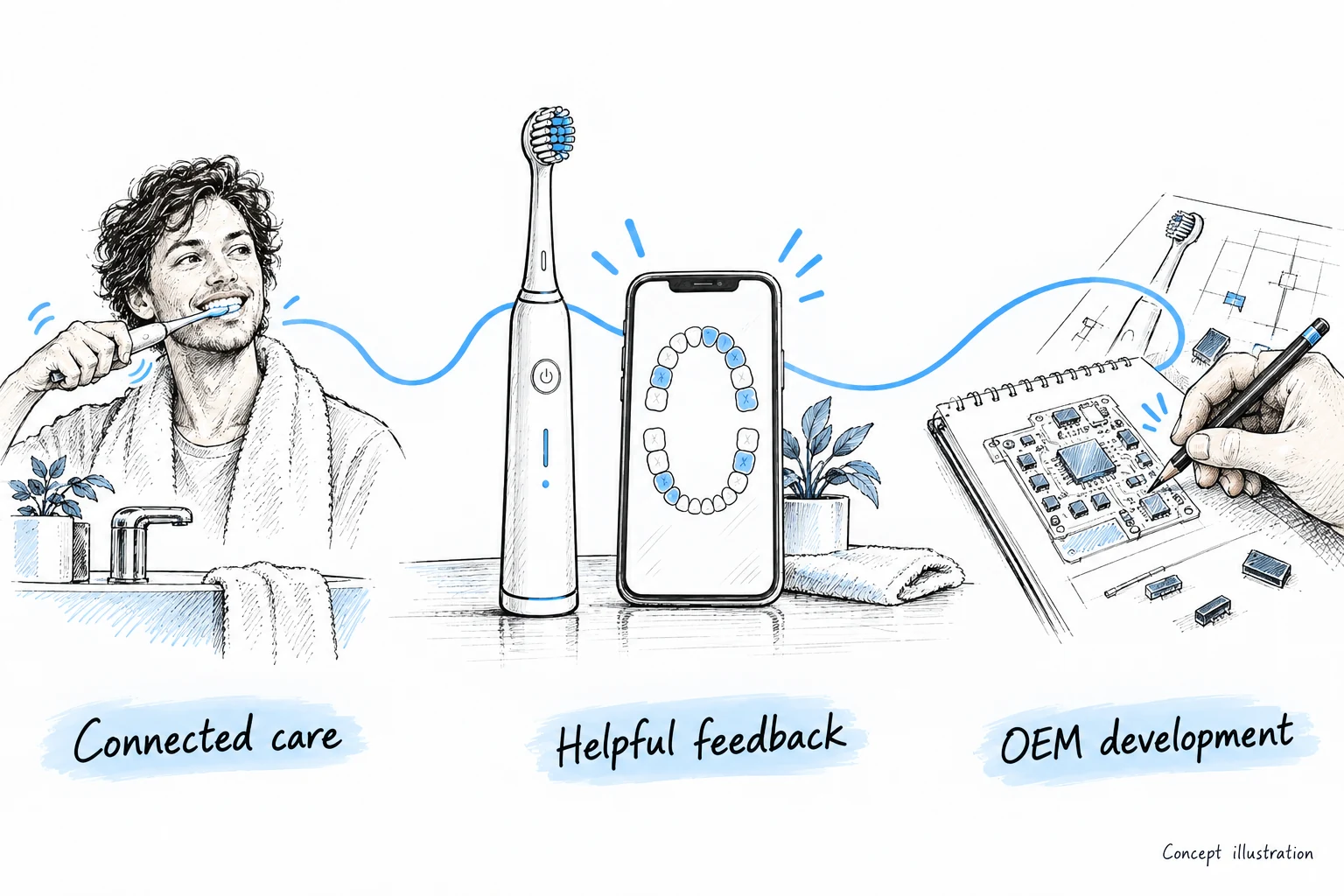
スマート歯ブラシ市場は根本的な変革を遂げています。かつてはプレミアムブランドが支配する新規カテゴリーとして始まったものが、人工知能、接続エコシステム、ゲーミフィケーションによるユーザーエンゲージメントが消費者の期待を再形成する、急速に成熟するセグメントへと進化しました。OEMメーカーやブランドパートナーにとって、これらの変化を理解することはもはや選択肢ではなく、戦略的必須事項です。.
2026年には、センサーコストの低下、Bluetooth Low Energyエコシステムの成熟、そしてますます高度化するAIアルゴリズムの収束により、スマート歯ブラシ市場においてブランドがスマート機能を通じて差別化する前例のない機会が生まれています。しかし、コンセプトから消費者への道のりには、複雑なエンジニアリング上の課題、規制要件、急速に進化する消費者の期待への対応が伴います。この包括的な分析では、スマートオーラルケア分野での成功を定義する技術トレンド、市場動向、製造上の考慮事項を探ります。.
2026年のスマート歯ブラシの定義
「スマート歯ブラシ」の定義は、単にブラッシング時間を追跡するだけの初期のBluetooth対応モデルから大きく進化し、スマート歯ブラシ市場の急速な技術成熟を反映しています。今日のスマート歯ブラシは、精密工学、センサー技術、ソフトウェアインテリジェンスの融合を表し、これらが総合的に意味のある口腔衛生の改善をもたらします。.
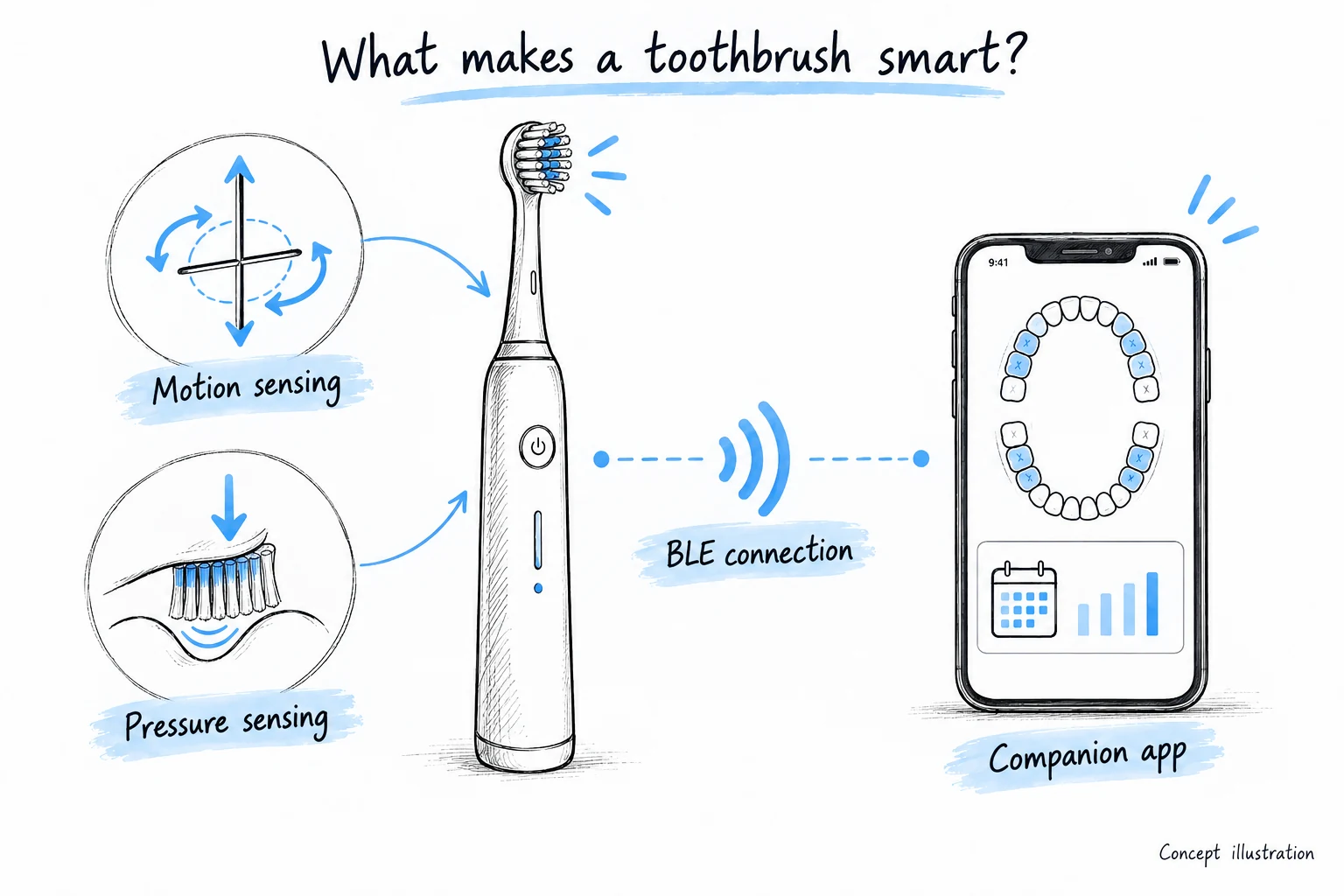
その核心において、スマート歯ブラシは従来の電動モデルと区別する4つの必須技術コンポーネントを統合しています:
モーションセンサー
現代のスマート歯ブラシは、加速度計とジャイロスコープを採用して、ブラシヘッドの動きを三次元空間で追跡します。これらのMEMS(微小電気機械システム)センサーは、振動パターン、ブラッシング速度、方向の変化を驚くべき精度で検出します。加速度計は通常±2gから±16gの範囲の線形加速度力を測定し、ジャイロスコープは回転速度を捉え、アルゴリズムが完全なブラッシング動作を再構築できるようにします。.
圧力センサー
統合された感圧抵抗器または圧電センサーが、ブラッシング中に加えられる圧力を監視します。これらのセンサーは通常0~300グラムの力を検出し、圧力が歯肉組織の損傷に関連する150グラムの閾値を超えた場合にユーザーに警告します。センサーデータは、ハンドルのLEDを介したリアルタイムの視覚的フィードバックと、コンパニオンアプリケーションを通じた長期的な追跡の両方に供給されます。.
Bluetooth接続
Bluetooth Low Energy(BLE)モジュールにより、歯ブラシとコンパニオンのスマートフォンアプリケーション間の継続的な通信が可能になります。 Bluetooth SIG仕様 このエコシステムを駆動する相互運用性標準を定義します。最新の実装ではBLE 5.0以降を使用し、複数週間のバッテリー寿命に不可欠な低消費電力を維持しながら、最大2 Mbpsのデータ転送速度を達成します。この接続により、リアルタイムのコーチングフィードバック、自動ブラッシングセッション記録、クラウドストレージへのシームレスなデータ同期が可能になります。.
コンパニオンアプリケーション
ソフトウェア層は、生のセンサーデータを実用的なユーザーインサイトに変換します。これはスマート歯ブラシ市場でますます期待される機能です。コンパニオンアプリはブラッシングパターンを分析し、カバレッジのギャップを特定し、経時的な圧力傾向を追跡し、パーソナライズされたコーチングの推奨を提供します。多くのアプリケーションは、蓄積されたユーザーデータに基づいて推奨を改善する機械学習モデルを組み込み、ますますパーソナライズされた口腔衛生ガイダンスを生み出します。.
スマート歯ブラシ市場概要
世界のスマート歯ブラシ市場は、より広範なオーラルケア業界の中で最もダイナミックなセグメントの1つです。市場の現在の規模と予測される軌道を理解することは、戦略的計画と投資判断に不可欠なコンテキストを提供します。.
Grand View Research(2025年)によると、スマート歯ブラシ市場は現在、電動歯ブラシ市場全体の約15%を占めており、スマート機能がプレミアム価格帯からミッドレンジ価格帯に移行するにつれて、このシェアは拡大し続けています。この浸透率は、他の家電カテゴリーで観察されるパターンを反映しており、当初はフラッグシップ製品に限定されていた機能が、最終的には価格帯全体で標準となるものです。OEMサプライヤーにとって、スマート歯ブラシ市場はオーラルケア製造における最も成長率の高いサブカテゴリーです。.
地域別市場分布
市場の採用状況は地域によって大きく異なり(Statista、2025年)、消費者の技術採用、ヘルスケア意識、可処分所得パターンの違いを反映しています:
- 北米(40%) — 強い技術採用文化、確立されたフィットネストラッキングエコシステム、口腔と全身の健康関連性への高い認識により、最も高い採用率。米国はコンパニオンアプリのダウンロードとプレミアムスマート歯ブラシの採用でリードしています。.
- 欧州(35%) — GDPR準拠のデータ処理、スマートブラッシングツールに対する歯科専門家の支持の高まり、耐久性のある製品選好を促進する強力な環境規制により、力強い成長を維持。.
- アジア太平洋(20%) — 最も急速に成長している地域、特に中国、日本、韓国では、スマートフォンの普及と技術への親しみが好条件を生み出しています。日本は高度なAIコーチング機能の高い受容性を示しています。.
- その他の地域(5%) — 特に歯科ツーリズムと民間ヘルスケアへの認識が高まっている都市部で、初期の採用兆候を示す新興市場。.
スマートセグメントを牽引する技術トレンド
スマート歯ブラシ技術の急速な進化は、家電製品、人工知能、コネクテッドヘルス機器における幅広いトレンドを反映しています。現在、スマート歯ブラシ市場では6つの主要な技術トレンドが競争力学と消費者の期待を再形成しています。.
3a. AI搭載ブラッシング分析
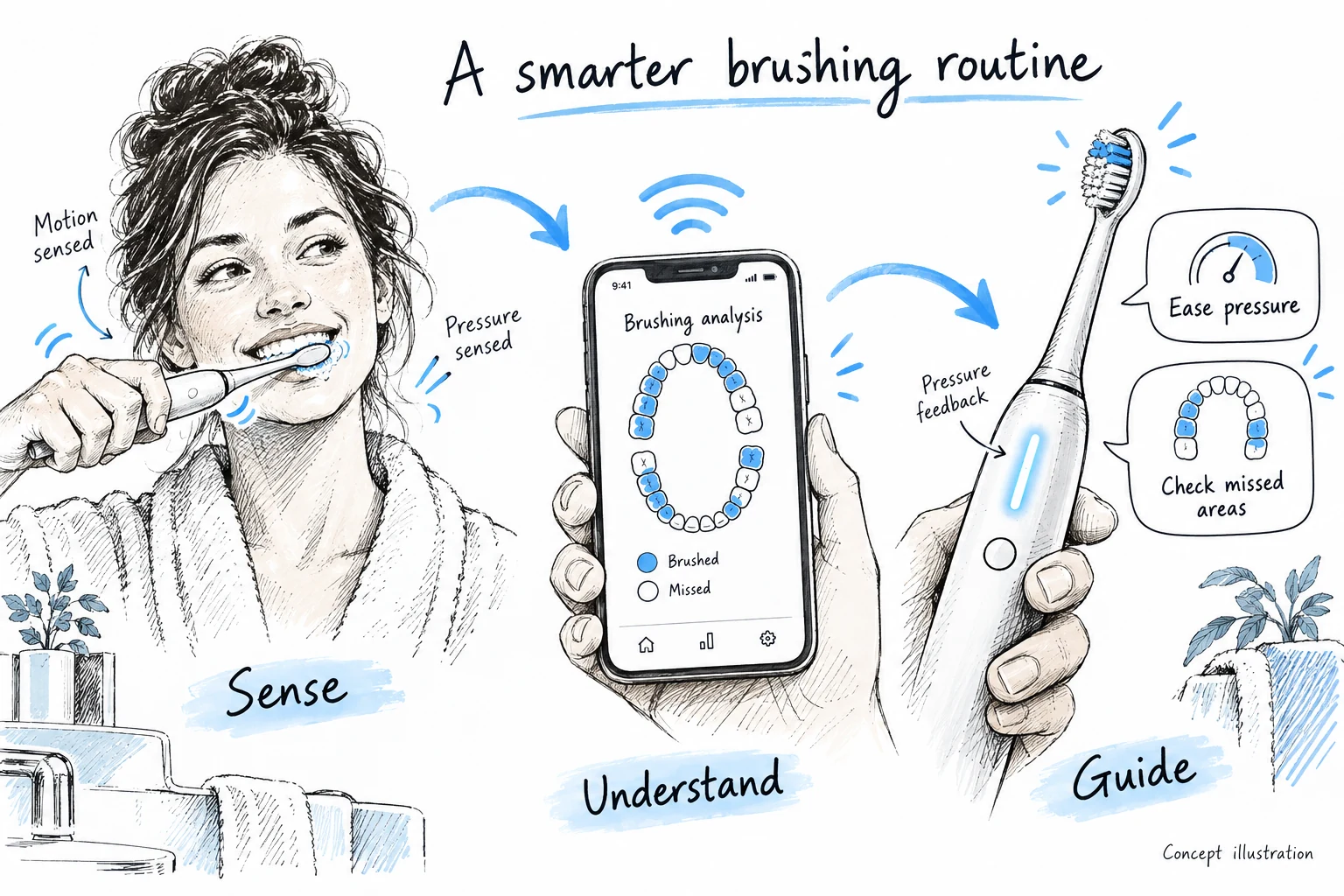
人工知能は、現在のスマート歯ブラシ市場において最も重要な技術的差別化要因であり、価格帯全体での差別化を推進しています。AI搭載ブラッシング分析は、単純なタイマー機能をはるかに超え、個々のユーザーの行動に適応し、ブラッシング結果を測定可能な形で改善するパーソナライズされたコーチングを実現します。.
スマート歯ブラシ市場におけるAI実装は、主に2つの技術的アプローチによって特徴づけられます。
コンピュータビジョンアプローチ
一部のメーカーは、統合カメラを実験的に導入したり、スマートフォンのカメラに依存してブラッシング技術を分析しています。ユーザーはスマートフォンを口腔内が見えるように配置し、コンピュータビジョンアルゴリズムがブラッシング中の領域、カバレッジパターン、潜在的な問題を特定します。精度の面で有望ですが、このアプローチは位置決め要件、照明の問題、プライバシーに関する考慮事項など、実用的な制限に直面しています。.
モーション分析アプローチ
主流の実装は、加速度計とジャイロスコープのデータを通じてブラシヘッドの動きパターンを分析します。数千のブラッシングセッションでトレーニングされた機械学習モデルは、正しい技術と非効果的なパターンを区別し、過度の圧力、不十分なカバレッジ、不適切なブラッシング角度などの問題を特定します。このアプローチは、標準的なスマート歯ブラシセンサー以外の追加ハードウェアを必要としません。.
業界事例: Philips Sonicare Diamond Clean 9900は、検出されたブラッシングパターンに応答するAI駆動のブラシヘッド認識と適応型クリーニングモードを採用しています。Oral-BのiOシリーズは、AIアルゴリズムを使用してブラッシング技術に関するリアルタイムガイダンスを提供し、アプリは適切な注意が払われた領域を示すカバレッジマップを表示します。.
3b. 圧力センサーとリアルタイムフィードバック
圧力監視はスマート歯ブラシ市場において基本機能となり、口腔健康問題の最も一般的な原因の一つである過度なブラッシング力を解決しています。臨床研究では、150グラム以上の力でブラッシングすると歯肉退縮やエナメル質侵食のリスクが有意に増加することが一貫して示されています(Journal of Clinical Periodontology, 2023)。.
最新の圧力センシング実装は複数のフィードバックチャネルを提供します:
- 視覚的圧力インジケーター — 歯ブラシハンドル上の色分けされたLEDリングが即時かつ常時視認可能なフィードバックを提供します。緑は最適な圧力、黄は注意が必要、赤は過度な力を警告します。.
- 触覚フィードバック — 振動パターンの変化により、視覚的な注意を必要とせずに圧力状態を伝達し、目を閉じたブラッシングや視覚障害のあるユーザーに有用です。.
- アプリ通知 — コンパニオンアプリケーションを通じたサイレント圧力アラートが、ブラッシング体験を妨げずに詳細なフィードバックを提供します。多くのユーザーは、アプリベースのフィードバックをハンドルインジケーターよりも実用的だと感じています。.
- 長期追跡 — 数週間から数ヶ月にわたって集約された圧力データは、ユーザーが専門家の指導のもとで改善に取り組める行動パターンを明らかにします。スマート歯ブラシ市場において、長期圧力追跡は主要な差別化機能となっています。.
3c. Bluetooth 5.0 & アプリエコシステム統合
Bluetooth Low Energy技術の成熟は、スマート歯ブラシ市場全体で実用的な機能を可能にする上で重要な役割を果たしてきました。BLE 5.0およびその後の仕様は、継続的なセンサーデータ伝送に必要な低消費電力、信頼性の高い接続性、および十分な帯域幅の組み合わせを提供します。.
スマート歯ブラシの採用を促進する主要な接続機能は以下の通りです:
低消費電力動作
BLEの電力効率により、継続的なセンサー動作と定期的なデータ伝送にもかかわらず14日以上のバッテリー寿命が実現します。スマート歯ブラシ市場において、延長されたバッテリー寿命は消費者の採用率に直接影響を与えます。これは重要なユーザー体験要件であり、消費者は頻繁な充電の不便さなしにスマート機能を期待します。.
アプリデータ保存 & ブラッシング履歴
コンパニオンアプリケーションは、説明責任と進捗追跡を提供する包括的なブラッシング履歴を維持します。スマート歯ブラシ市場全体で、アプリの品質がブランドの成功をますます決定づけています。ユーザーは、ブラッシング頻度、時間、テクニックスコア、圧力パターンを日、週、月単位で確認できます。この長期データは、歯磨きを匿名の日常ルーチンから追跡可能な健康行動へと変革します。.
マルチユーザーファミリーアカウント
ファミリーアカウント機能により、複数の家族メンバーが個別のブラシヘッドを使用して単一の歯ブラシハンドルを共有しながら、個別のブラッシングプロファイルを維持できます。このアプローチは、ブラッシング習慣を身につけている子供がいる家族にとって特に価値があり、親は常時の監視なしにコンプライアンスを確認できます。.
クラウド同期
クラウドサーバーへのデータ同期により、ブラッシングデータがデバイス間で保持され、デバイスの紛失や交換後も存続します。クラウドストレージはまた、メーカーが匿名化された集約ユーザーデータを使用してAIアルゴリズムを改善することを可能にし、スマート歯ブラシ市場全体に利益をもたらす継続的な製品改善サイクルを生み出します。.
3d. 子供と大人向けゲーミフィケーション
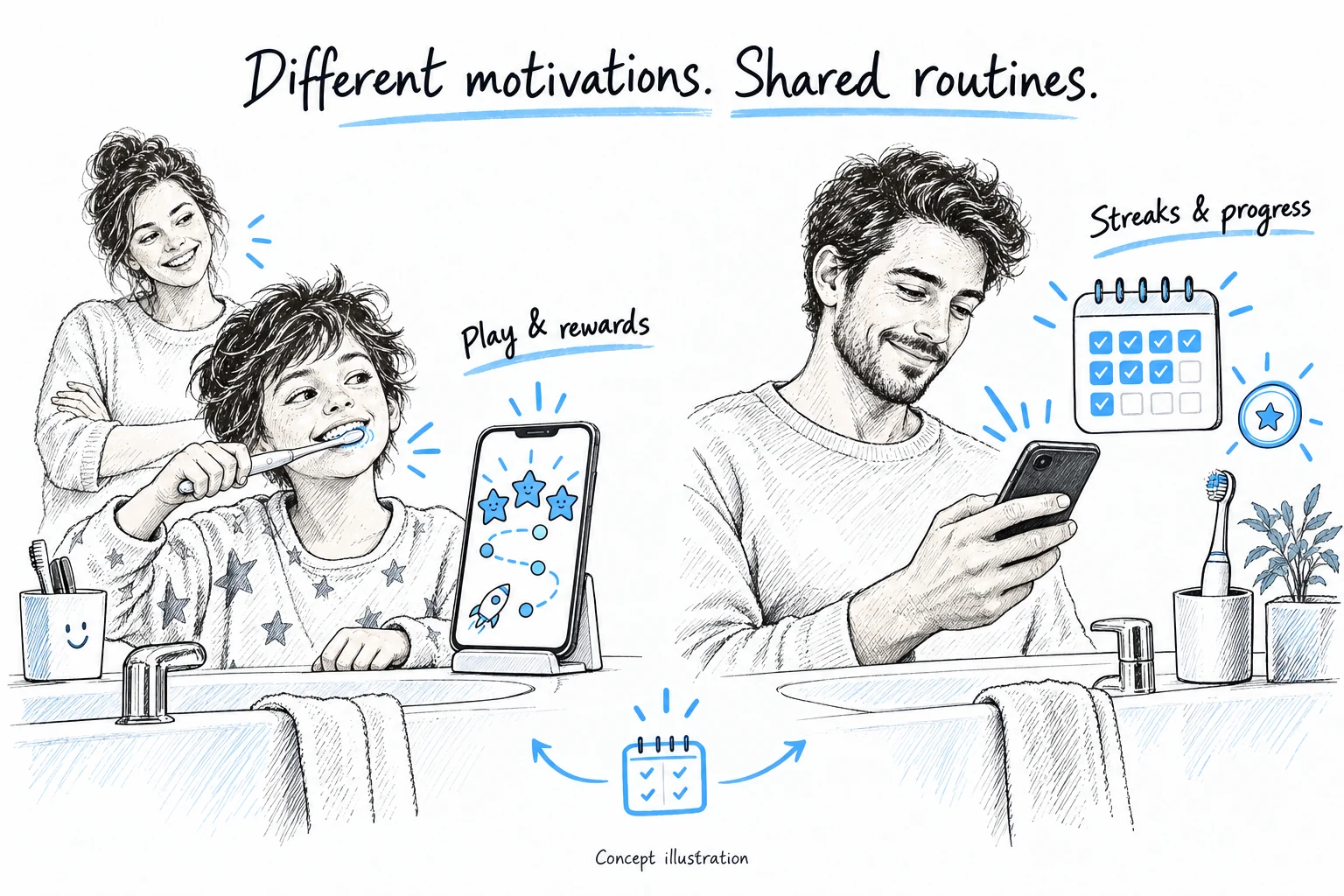
ゲーミフィケーションは、スマート歯ブラシ市場において強力なエンゲージメント戦略として浮上し、一貫した口腔衛生行動変容を維持するという根本的な課題に取り組んでいます。Journal of Dental Research(2024年)に掲載された研究では、ゲーミフィケーションを活用したブラッシングアプローチにより、非ゲーミフィケーション代替手段と比較してコンプライアンス率が30~40%向上することが示されています。.
ブラッシングタイマーゲーム
インタラクティブなゲームはブラッシングセッションと同期し、進捗は実際のブラッシング時間とテクニックに結びついています。歯科医推奨の完全な2分間を完了することが、抽象的な健康ガイドラインではなく、ゲームメカニクスの不可欠な要素となります。.
報酬と連続記録
フィットネスアプリのデザインパターンを参考に、スマート歯ブラシアプリは一貫したブラッシングに対してポイント、バッジ、達成アンロックを付与します。連続記録メカニクスは勢いを生み出し、ユーザーは確立された習慣を壊さないように毎日のブラッシングシーケンスを維持する動機付けられます。一部のアプリでは、ブラッシング目標に対するチャリティ寄付マッチングを組み込み、社会的影響の動機付けを追加しています。.
子供向け専用モデル
子供向けスマート歯ブラシ(スマート歯ブラシ市場の成長サブセグメント)は、キャラクターライセンス、楽しい効果音、年齢に適したブラッシングモードを通じてエンゲージメントを重視しています。ディズニー、マーベル、スター・ウォーズのコラボレーションにより、歯磨きがキャラクター主導の遊び体験に変わります。短いブラッシングモード(大人の推奨に対して90秒)は、若い注意力に対応しながら基礎習慣を構築します。.
ゲーミフィケーションアプローチはスマート歯ブラシ市場の大人向け製品にも拡張されていますが、より洗練された報酬構造を備えています。大人向けゲーミフィケーションは、露骨なゲームメカニクスよりも、微妙な達成、進捗の可視化、およびより広範な健康エコシステムとの統合に傾向があります。.
3e. UV除菌 + スマート充電
コアのブラッシングインテリジェンスを超えて、メーカーは衛生とユーザー体験を向上させる補完技術をますます組み込んでいます。UV除菌と高度な充電システムは、2つの重要な機能追加を表します。.
UV-C除菌ステーション
UV-C除菌ドックは、スマート歯ブラシ市場でますます一般的になり、短波長紫外線を使用して使用間のブラシヘッド上の細菌汚染を低減します。高度なスマートバージョンは、除菌サイクルの完了を追跡し、使用時間に基づいてブラシヘッド交換をリマインダーし、除菌ステータスをアプリフィードバックに統合します。独立したUV除菌器は何年も前から存在していますが、統合されたスマートバージョンは使用追跡とリマインダー機能を追加します。環境意識の高い消費者をターゲットとするブランド向けに、当社の サステナビリティイニシアチブ はパッケージングと部品調達にまで拡張されています。.
スマート充電ドック
スマート充電ドック—スマート歯ブラシ市場で成長中の機能—は、バッテリーの健全性を監視し、充電パターンを最適化してバッテリー寿命を延ばし、使用状況に関するフィードバックを提供します。一部のプレミアムドックはワイヤレス充電技術を採用し、ケーブル不要の利便性を実現しています。バッテリー健全性モニタリングは、ユーザーがバッテリー容量が交換を要するほど低下したタイミングを把握するのに役立ちます。.
スマートオーラルケアの主要プレイヤー
スマート歯ブラシの競争環境は、豊富な研究開発リソースを持つ確立された消費財大手と、技術の限界に挑む革新的なスタートアップが混在しています。スマート歯ブラシ市場は、$25のバリューモデルから$349のプレミアムデバイスまで幅広く展開されています。各プレイヤーのポジショニングを理解することで、市場の進化と差別化の機会に関する洞察が得られます。.
| ブランド | フラッグシップモデル | 主要スマート機能 | 小売価格 | OEM対応可否 |
|---|---|---|---|---|
| フィリップスソニッケアー | ダイヤモンドクリーン9900 | AIコーチング、ブラシヘッド認識 | $299~$349 | 限定 |
| Oral-B(P&G) | iOシリーズ9 | AI搭載の圧力およびカバレッジマッピング | $249~$299 | 限定 |
| Foreo | BEARシリーズ | アプリ制御の強度、顔の動きに同期するモード | $179–$299 | セレクティブ |
| コルゲート | Humスマート歯ブラシ | 手頃な価格の接続トラッキングとコーチング | $49–$79 | 利用可能 |
| ゴブラッシング | プレイブラシ スマートシリーズ | ゲーミフィケーション重視、子供のエンゲージメント | $39–$59 | オープンパートナーシップ |
| XFT | スマートソニックシリーズ | バリュー志向、必須のスマート機能 | $25-$45 | フルOEM |
この表は明確な価格階層を示しています:プレミアムブランド(Philips、Oral-B、Foreo)は高度なAI機能を備え$179–$349の価格帯を占め、一方バリュー志向のオプション(Colgate、Gobrushing、XFT)は$25–$79の範囲で基本的な接続機能を競っています。この階層化により、スマート歯ブラシ市場のOEMメーカーは適切な機能セットと価格戦略でターゲットにできる明確な市場セグメントが生まれています。.
スマート歯ブラシのOEM製造における課題
スマート歯ブラシの製造は、従来の電動歯ブラシ生産とは根本的に異なる工学的課題を提示し、スマート歯ブラシ市場で競争力のあるサプライヤーを際立たせます。. 当社の電動歯ブラシOEM製造ガイド は、完全な生産ワークフローを詳述しています。センサー、ワイヤレス接続、ソフトウェアの統合は、複数の分野にわたる専門知識を必要とする複雑性をもたらします。OEMバイヤーにとって、標準的なスマートプラットフォームのリードタイムは8~10週間で、カスタム機能開発にはさらに4~6週間が追加されます。全生産は出荷前にAQL 1.5/2.5抜き取り検査を受けます。.
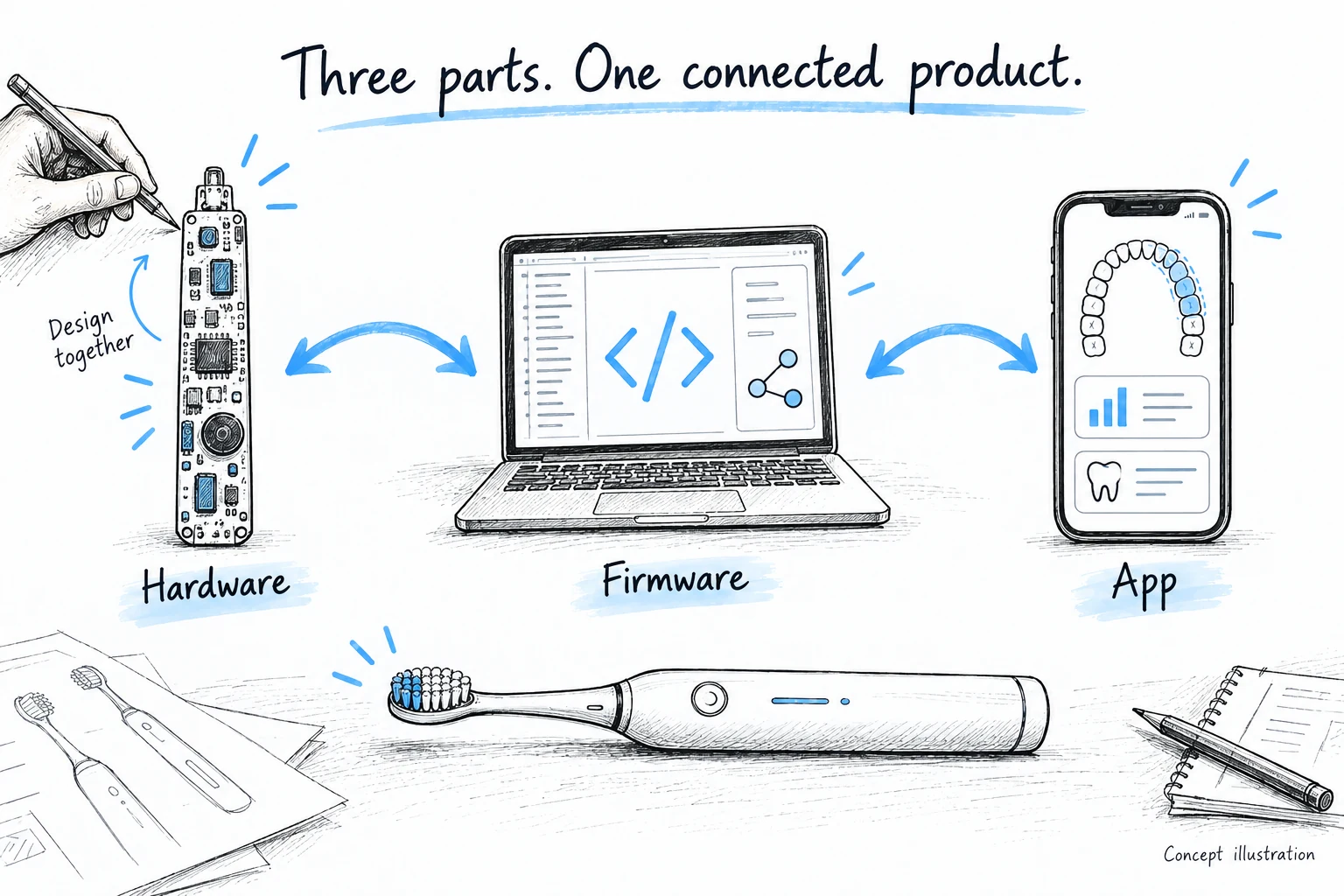
PCB設計とファームウェア
スマート歯ブラシのプリント基板(PCB)設計は、スマート歯ブラシ市場の製造参入障壁を定義する技術的課題である複数の要件のバランスを取る必要があります:人間工学に基づいたハンドルに収まる小型フォームファクター、バッテリー寿命延長のための低消費電力、信頼性の高いワイヤレス接続、センサーからの堅牢な信号整合性。.
マイクロコントローラユニットの選定
MCUの選定はコストと性能の両方に重大な影響を与えます。Nordic Semiconductor nRF52シリーズは、スマート歯ブラシ市場全体で事実上のMCU標準として登場し、統合BLE機能、処理能力、アナログセンサーインターフェース、電力効率の最適な組み合わせを提供します。代替案には、STMicroelectronicsのSTM32WBや、コスト重視のアプリケーション向けEspressifのESP32が含まれます。.
BLEモジュールの統合
MCU選定に加えて、BLEアンテナ設計には細心の注意が必要です。競争の激しいスマート歯ブラシ市場では、RF性能がユーザーエクスペリエンス評価に直接影響します。PCB上のプリントアンテナ設計はコスト面で有利ですが、使用位置全体での厳格なテストが求められます。セラミックチップアンテナはより一貫した性能を提供しますが、部品コストが増加します。規制認証(FCC、CE)には包括的なRFテストが必要であり、タイムラインとコストの考慮事項が追加されます。詳細は当社の 電動歯ブラシ認証ガイド をご覧ください。.
をご参照ください。ファームウェア開発ライフサイクル
スマート歯ブラシのファームウェアは、センサーデータ取得、BLE通信プロトコル、モーター制御、電源管理、OTAアップデート処理など、複数のサブシステムを包含します。スマート歯ブラシ市場では、ファームウェアの品質はハードウェアの信頼性と同様に重要です。完全な機能セットの開発には通常4~6ヶ月を要し、バグ修正とセキュリティアップデートのための継続的なメンテナンスが必要です。OTA機能は、セキュアブート実装、暗号化ファームウェア配布、ロールバックメカニズムなど、さらなる複雑性をもたらします。.
アプリ開発
スマート歯ブラシ市場において、コンパニオンアプリケーションはブランドにとって主要な差別化要因である一方、最大の開発コストを構成します。アプリ開発には、初期リリースをはるかに超える継続的な投資が必要です。.
プラットフォームの選択は開発アプローチに大きく影響します。ネイティブiOS(Swift)およびAndroid(Kotlin)開発は最適なパフォーマンスとプラットフォーム機能へのアクセスを提供しますが、並行した開発作業が必要です。React NativeやFlutterを含むクロスプラットフォームフレームワークはコード共有を可能にしますが、パフォーマンス最適化やネイティブ機能へのアクセスを犠牲にする可能性があります。.
データプライバシーコンプライアンス は、交渉の余地のない要件です。健康データは複数の法域で強化された規制の監視下にあります:
- GDPR(EU) — 健康データ処理に対する明示的な同意、データ最小化の原則、および消去権の実装が必要
- CCPA(カリフォルニア州) — プライバシーポリシーの開示と消費者データアクセス権を義務付け
- HIPAA(米国、該当する場合) — データが医療提供者と共有される場合、追加のセキュリティおよびアクセス要件が適用されます
- App Storeの要件 — AppleとGoogleの両方がプライバシー開示を要求し、健康データアプリを医療関連と分類する可能性があります
スマート歯ブラシ市場において内部アプリ開発能力を持たないOEMメーカーにとって、専門的なヘルスアプリ開発会社との戦略的パートナーシップが最も信頼性の高い市場参入経路を提供します。重要なのは、一般的なモバイルアプリ開発者ではなく、特にコネクテッドヘルスデバイスに経験のあるパートナーを選ぶことです。.
バッテリー寿命の最適化
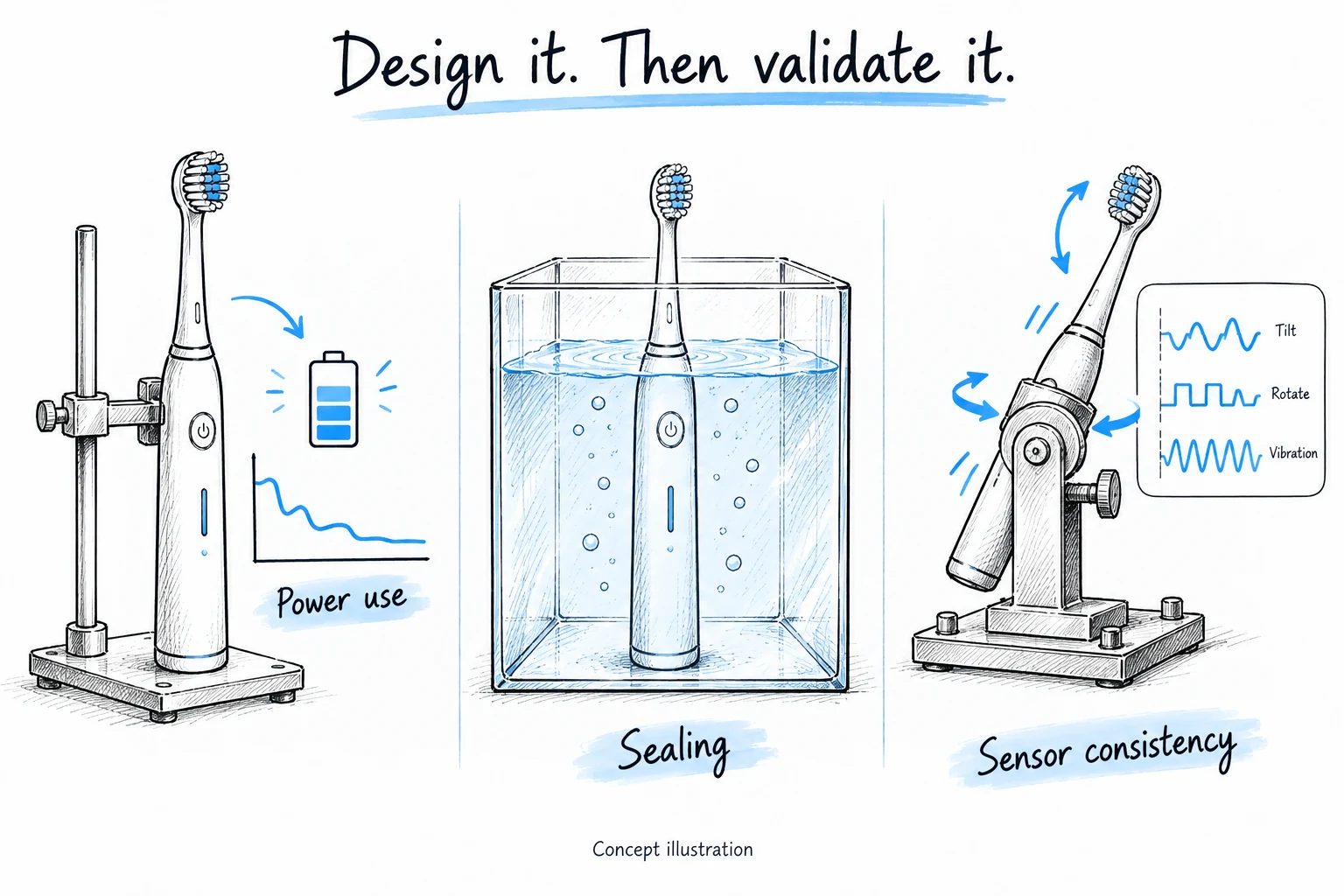
継続的なセンサー動作と定期的なBLEデータ送信にもかかわらず、消費者は充電間隔14日以上を期待しており、これはスマート歯ブラシ市場でますます標準となっています。この目標を達成するには、ハードウェア選定、ファームウェア設計、使用パターン管理にわたる体系的な最適化が必要です。.
目標仕様
- アクティブ使用(1日2回のブラッシング):充電1回あたり14~21日
- 待機時消費電力: < 50 μA 平均
- BLEアドバタイズ電力:接続効率に最適化
- センサー起動レイテンシ: モーション検出から < 100ms
最適化戦略
バッテリー寿命の最適化は部品選定から始まります—低静止電流電圧レギュレータ、効率的なDC-DCコンバータ、パワーゲート付きセンサー回路。ファームウェアの最適化では、ブラッシングセッション間に積極的なスリープモードを実装し、連続ポーリングではなくモーション検出によるウェイクアップを採用します。バッテリー容量の選定は、動作時間と重量・コストのバランスを考慮します。.
電子機器を備えた防水性(IPX7+)
スマート歯ブラシは過酷な環境課題に直面します:水没、歯磨き粉の残留物への曝露、浴室環境での温度変化。IPX7認証の達成はスマート歯ブラシ市場の基本要件です。電子機器を収容しながら信頼性の高い防水性を実現することは、製造エンジニアリングの中核的な課題です。.
IPX7要件
IPX7認証では、デバイスが1メートルの水没に30分間耐え、浸水がないことが求められます。これには、バッテリーコンパートメント、充電接点、ボタンインターフェース、製品の継ぎ目など、すべての開口部での包括的なシーリングが必要です。.
シーリング技術
- 超音波溶着 — シールや接着剤なしでプラスチックハウジング部品を恒久的に接合します。精密な金型設計と制御された溶着パラメータが必要です。.
- ポッティングコンパウンド — エポキシまたはシリコーンによる封止でPCBアセンブリを保護します。バッテリー取り付け前に適用する必要があり、修理不可能なアセンブリになります。.
- ガスケットシール — 機械的インターフェースでのシリコーンまたはTPEガスケットは信頼性の高いシーリングを提供しますが、注意深い組み立て管理が必要で、経時的に劣化する可能性があります。.
- 疎水性コーティング — PCBアセンブリへのナノスケールコーティングは、シールの不完全部からの湿気侵入に対する二次的な保護を提供します。.
試験要件
IPX7認証には、生産サンプルを使用したバッチテストが必要です。テスト装置には、生産ライン検証用の圧力減衰リークテスターと、認証サンプル用の完全浸漬テストが含まれます。OEMメーカーは、テスト能力を自社で維持するか、認定テストラボと提携する必要があります。.
センサーキャリブレーションと一貫性
スマート歯ブラシ市場での成功は、一貫したセンサー性能に依存します。MEMSセンサーは本質的にバッチ間変動を示します—同じ製造ロットの加速度計やジャイロスコープでも、オフセットバイアスやスケールファクターにばらつきがあり、測定精度に影響を与えます。キャリブレーションなしでは、ブラシ追跡アルゴリズムが生産ユニット間で一貫性のない結果を生み出します。.
工場キャリブレーションプロセス
Relish Techは、組み立て時に各センサーを特性評価する自動キャリブレーションステーションを実装しています。プロセスでは、歯ブラシを既知の向きに配置し、センサー出力を測定し、補正係数を計算し、キャリブレーションデータをMCUの不揮発性メモリに保存します。この単一点キャリブレーションにより、通常、測定誤差が80~90%削減されます。.
バッチ変動管理
個別ユニットのキャリブレーションに加えて、センサーロットの変更にはキャリブレーションパラメータの再認定が必要です。サプライヤーとの間で優先センサーロットを確立することで、変動を低減し、キャリブレーション手順を簡素化します。.
Relish Techのスマート歯ブラシOEMへのアプローチ
Relish Techは、深センにある20,000m²のISO 13485:2016認証施設を運営し、300名以上のスタッフと専用のスマート歯ブラシ組立ラインを擁しています。当社のプラットフォームアプローチにより、ブランドは開発段階に関わらずスマート歯ブラシ市場で効果的に競争できます。2020年以降200以上のスマート歯ブラシPCB設計を納品し、当社のハードウェアエンジニアリングの専門知識は、競争力のあるスマート歯ブラシ製品を可能にする戦略的パートナーシップと組み合わされています。.
社内能力
当社のエンジニアリングチームは、スマート歯ブラシ開発に必要な完全なスキルセットを網羅しています:
- PCB設計チーム — BLEとミックスドシグナルの専門知識を持つ専任エンジニアが、スマート歯ブラシ用途に最適化されたカスタム基板を設計します。一般的なアーキテクチャのリファレンスデザインを維持しつつ、ブランド固有の要件に合わせたカスタマイズを可能にします。.
- ファームウェア開発 — 組み込みソフトウェアエンジニアがブラシ追跡アルゴリズム、BLEプロトコル、モーター制御、電力管理を実装します。OTAアップデートインフラにより、発売後の機能改善とセキュリティパッチが可能です。.
- IPX7テスト — 社内環境試験設備には、圧力減衰リークテスター、温湿度チャンバー、完全浸漬タンクが含まれます。認証テストは認定された外部試験機関と連携して実施されます。.
戦略的アプリ開発パートナーシップ
認識していること アプリ開発には専門的なヘルステクノロジーの専門知識が必要です, 、Relish Techは実績のあるコネクテッドヘルスアプリ開発企業とのパートナーシップを確立しています。このアプローチにより、アプリの品質と規制遵守を確保しながら、ハードウェアとソフトウェアの完全なソリューションを提供することが可能になります。.
当社のパートナーシップモデルは、スマート歯ブラシブランドにとって、アプリが主要な差別化要因であり、ハードウェアが体験を実現するという基本的な真実を認識しています。アプリ開発パートナーシップの柔軟性を維持することで、お客様が当社のハードウェアプラットフォームの専門知識を活用しながら、ソフトウェアを通じて差別化を図ることができるようにしています。.
プロトタイプから量産までのタイムライン
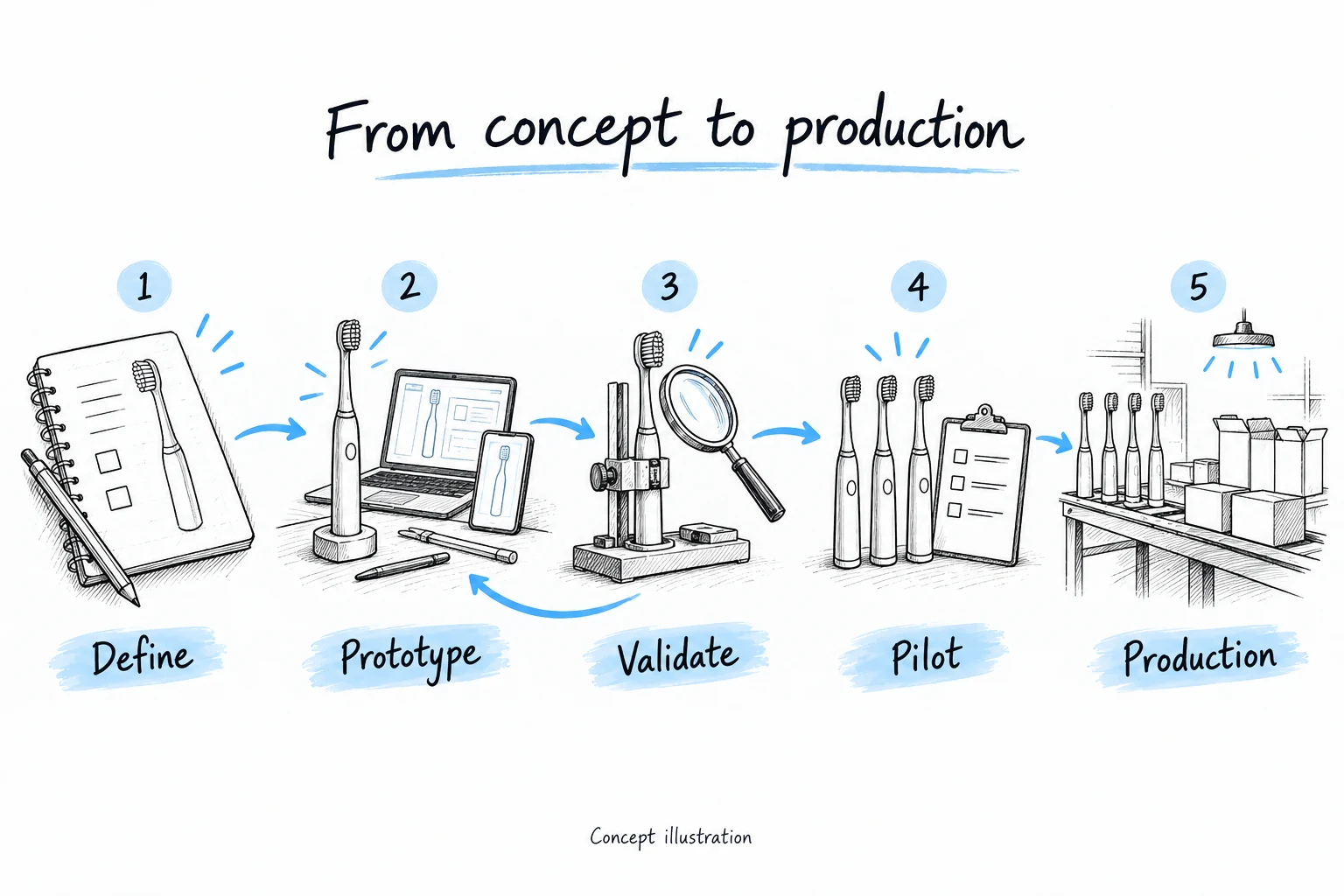
Relish Techのプラットフォームアプローチによるスマート歯ブラシの開発は、コンセプトから量産準備完了製品まで、通常6~9ヶ月を要します:
- 1~2ヶ月目 — コンセプト検証、仕様確定、コンポーネント選定
- 3~4ヶ月目 — プロトタイプ開発と初期ファームウェア実装
- 5~6ヶ月目 — 設計検証テスト、ファームウェア改良、アプリ開発開始
- 7~8ヶ月目 — 量産前の金型調整とパイロットラン
- 第9个月 — 生産認定と発売準備完了
標準化アプローチ
開発リスクを低減し市場投入までの時間を短縮するため、Relish Techは標準化されたベースプラットフォームとモジュール式スマートモジュール追加オプションを提供しています。ブランドは確立された構成から選択できます:
- エッセンシャルスマート — BLE接続、基本的なブラッシングトラッキング、圧力フィードバック、必須アプリ機能
- コネクテッドコーチ — 強化センサー、AIブラッシング分析、ゲーミフィケーション、プレミアムアプリ体験
- 高端智能 — UV除菌統合、ワイヤレス充電、高度なAIコーチングを含むフル機能セット
このモジュール式アプローチにより、差別化の機会を維持しながら、実績のある技術で市場への迅速な参入が可能になります。スマート歯ブラシ市場に参入するブランドにとって、標準化されたプラットフォームは収益化までの時間を大幅に短縮します。.
市場展望:スマートが標準になるのはいつか?
スマート歯ブラシ市場は転換点にあります。スマート歯ブラシ市場における長年のプレミアム専用ポジショニングを経て、技術基盤は現在、より広範な市場浸透をサポートしています。採用曲線の軌道を理解することで、ブランドとメーカーの両方が戦略的計画を立てることが可能になります。.
採用曲線予測
同等の技術採用パターンと現在の市場動向に基づき、以下の採用フェーズを予測しています:
- 2024~2026年(現在) — アーリーマジョリティフェーズの開始。スマート機能が価格帯全体で利用可能に。プレミアムAI機能は依然としてフラッグシップ製品に集中。.
- 2027–2028 — 主流採用の加速。Bluetooth接続がミッドレンジ製品($50~$100)で例外的ではなく標準的に。.
- 2029–2030 — 基本接続機能の市場飽和。高度なAIコーチングはプレミアムの差別化要因として残る。従来の非接続電動歯ブラシは低価格/ニッチセグメントに。.
価格圧縮のダイナミクス
コンポーネントコストのトレンドがスマート歯ブラシ市場全体で積極的な価格圧縮を推進:
- BLEモジュールコスト — $8~12(2019年)から$2~4(2024年)に低下、2026年までに大量アプリケーション向けに$1に近づく
- 加速度計/ジャイロスコープ — 統合MEMSセンサーが現在、大量購入で$1未満で入手可能、5年前の$5以上から低下
- 圧力センサー — 力検出抵抗器が$0.50未満で、バリュー製品での基本的な圧力感知を実現
半導体業界分析(IC Insights、2024年)によると、基本スマート機能のためのハードウェア部品表(BOM)の総増加額は、$25~40(2019年)から$15~25(2024年)に低下し、2027年までに$10~15への継続的な圧力がかかっています。このコスト削減により、健全なマージンを維持しながら、$35~55の小売製品へのスマート機能統合が可能になります。.
2030年の市場予測
2030年までに、当社は ミッドレンジ電動歯ブラシの40%以上 (価格帯$35~55)がBluetooth接続を標準機能として組み込むと予測しています。「スマート」の定義はそれに応じて変化し、基本接続と圧力フィードバックは標準となり、AIコーチングの洗練度がプレミアムとバリューを差別化するでしょう。.
OEMメーカーにとって、この予測は明確な意味を持ちます:スマート歯ブラシ市場は、もはやオプションの製品ラインではなく、市場セグメント全体で競争力を維持するための戦略的必要性であるプラットフォームを要求しています。.
OEM調達の要点 — スマート歯ブラシ
- MOQ: 確立されたスマートプラットフォームで1,000台、中程度のカスタマイズで2,500台、完全カスタム開発で5,000台以上
- リードタイム 標準プラットフォームで8~10週間、カスタム機能追加でさらに4~6週間、出荷前QAで2週間
- 工場: 20,000m²の深圳施設、300名以上のスタッフ、ISO 13485:2016認証、専用スマート歯ブラシ組立ライン
- QC: AQL 1.5(致命缺陷)/ AQL 2.5(主要缺陷);100% BLE连接与传感器校准功能测试
- 資格: FDA 510(k)、CE标志(MDR 2017/745)、ISO 13485:2016、FCC Part 15、REACH、RoHS
要点
- 市场增长: 智能牙刷市场以12–15%的复合年增长率增长,预计到2030年将达到25亿美元以上
- AI影响: 与手动指导相比,AI辅导可将刷牙一致性提高30–40%,提升消费者价值认知
- 组件经济性: BLE 5.0和低功耗传感器现已在中端型号中实现成本效益,促进更广泛的市场准入
- コスト構造: 应用开发是主要成本驱动因素(3万–15万美元);智能功能的硬件物料清单增加仅为15–40美元
- 工程可行性: 采用现代灌封和超声波焊接技术,嵌入电子元件的IPX7防水等级在技术上是可行的
- 市场轨迹: 到2030年,蓝牙连接将成为40%以上中端OEM电动牙刷的标准配置,使智能牙刷市场成为默认制造类别
よくある質問
コネクテッド歯ブラシとスマート歯ブラシの違いは何ですか?
虽然这些术语经常互换使用,但连接型牙刷通常指通过蓝牙将刷牙数据传输到应用程序的设备,提供基本追踪和历史记录。智能牙刷则更进一步,通过集成AI算法分析刷牙模式、提供实时指导反馈和个性化建议。智能牙刷利用先进传感器和机器学习主动改善用户技巧,而不仅仅是记录数据。.
スマート歯ブラシアプリの開発にはどのくらいの費用がかかりますか?
开发一款功能全面的智能牙刷配套应用程序通常需要花费$30,000至$150,000,具体取决于复杂程度。具备简单刷牙追踪功能的基础应用程序成本为$30,000–$50,000,而配备AI指导和游戏化功能的中端应用程序成本为$50,000–$100,000。具备高级机器学习、多用户支持及牙科专业人士集成功能的高端应用程序可能超过$150,000。年度维护费用另需增加开发成本的15–20%,用于更新和平台兼容性维护。.
スマート歯ブラシアプリにはどのデータプライバシー規制が適用されますか?
收集健康数据的智能牙刷应用必须遵守多项法规。在欧盟,GDPR适用于所有个人数据处理,对根据第9条归类为"特殊类别"数据的健康数据有特殊要求。在美国,CCPA适用于加州居民,而 FDA医疗器械分类 和HIPAA可能适用于与医疗保健提供者共享数据的情况。应用商店要求遵守隐私政策,处理健康数据的应用可能需要根据预期声明进行医疗器械注册。OEM制造商必须确保硬件和应用设计遵循数据隐私设计原则。.
Relish Techはスマート歯ブラシのバッテリー寿命最適化にどのように取り組んでいますか?
Relish Techは、14日以上のバッテリー寿命を実現するために複数の戦略を採用しています。統合BLEを備えたNordic nRF52シリーズのような低消費電力マイクロコントローラを選択し、ブラッシングセッション中のみ作動する効率的なセンサー構成を使用し、使用間隔でディープスリープするスマート電力管理を実装し、アクティブな動作時間を最小化するためにファームウェアを最適化しています。当社のエンジニアリングチームは、開発初期にバッテリー寿命モデリングを実施し、生産承認前に実使用テストで検証を行います。.
スマート電動歯ブラシの一般的なOEM最小注文数量はいくらですか?
スマート電動歯ブラシの最小発注数量(MOQ)は、通常1,000~5,000台/SKUであり、基本電動歯ブラシよりも高い水準です。これは追加部品や試験要件によるものです。Relish Techでは柔軟なMOQ体制を提供しており、確立されたスマートプラットフォームへの軽微なカスタマイズは1,000台、中程度の機能変更は2,500台、完全なカスタムスマート開発は5,000台以上となります。大量発注により単価は大幅に低減し、10,000台以上の注文では1,000台の注文と比較して20~30%のコスト削減が可能です。.
スマート歯ブラシの機能がプレミアムではなく標準になるのはいつですか?
从高端向标准的转变已经开始。到2027–2028年,随着组件成本持续下降,智能功能将进入早期大众采用阶段。我们预测,到2030年,蓝牙连接将成为中端电动牙刷(价格$35–55)中40%以上的标配。基本连接功能(刷牙计时器、压力反馈)将成为基本门槛,而高级AI指导将保持为高端差异化优势。OEM制造商应现在准备支持智能的平台,以在这个变化的市场中保持竞争力。.
参考文献
- グランド・ビュー・リサーチ(2025). 智能牙刷市场规模、份额与趋势分析报告,2025–2030. https://www.grandviewresearch.com/industry-analysis/smart-toothbrush-market
- Statista。(2025年). 互联口腔护理设备——统计与事实. https://www.statista.com/topics/7290/connected-oral-care/
- モルドール・インテリジェンス(2025). 智能牙刷市场——增长、趋势与预测(2025–2030). https://www.mordorintelligence.com/industry-reports/smart-toothbrush-market
- IEEE标准协会。(2022年). IEEE 802.15——医疗保健应用无线个域网标准. https://standards.ieee.org/standard/802_15_6-2012.html
- 皇家飞利浦公司。(2024年). 2024年度报告——口腔保健部门. https://www.results.philips.com/
- 宝洁公司。(2024年). 2024年度报告——口腔护理部门. https://investor.pg.com/
- 《临床牙周病学杂志》。(2023年)。刷牙力与牙龈退缩:系统综述与荟萃分析。. Journal of Clinical Periodontology, 50(4), 412–426.