









Water Flosser Market Size Report: Growth Trends & OEM Guide 2026
The global water flosser market is on track to reach $1.66 billion by 2033. This report covers market segmentation, regional dynamics, consumer adoption trends, and OEM manufacturing strategies from a manufacturer's perspective.

Why Water Flossers Are the Fastest-Growing Oral Care Segment
Within the broader oral care industry, water flossers — also called oral irrigators or water jets — have emerged as one of the most dynamic product categories. While the global electric toothbrush market grows at approximately 7.8% annually, the water flosser segment is expanding at a comparable pace from a much smaller base, creating an attractive growth multiplier. The category has evolved from a niche dental professional recommendation to a mainstream consumer product, driven by several converging factors.
First, the clinical evidence base for water flossing has strengthened considerably. Multiple peer-reviewed studies have demonstrated that water flossers are as effective as — and in some cases more effective than — traditional string floss for plaque removal and gingivitis reduction. The American Dental Association (ADA) Seal of Acceptance has been awarded to several water flosser products, giving mainstream credibility to a device that was once viewed as supplementary.
Second, the product itself has improved dramatically. Modern water flossers are smaller, quieter, more powerful, and significantly more affordable than the countertop units that dominated the category a decade ago. The emergence of portable, battery-powered models at sub-$30 price points has removed the adoption barrier for price-sensitive consumers and opened new distribution channels including travel retail and pharmacy chains.
Third, demographic tailwinds are reinforcing growth. The global orthodontic patient population — the primary user group for water flossers — is expanding rapidly, with an estimated 20+ million people wearing braces or clear aligners worldwide at any given time. Aging populations in developed markets are also driving adoption, as older adults often have difficulty with traditional flossing due to reduced manual dexterity. From a broader market perspective, water flossers serve as a natural cross-sell complement to electric toothbrush brands, creating bundled product opportunities for OEM manufacturers and brand owners.
Global Water Flosser Market Size & Forecast (2025–2033)
The global water flosser market was valued at approximately $1.06 billion in 2025 and is projected to reach $1.66 billion by 2033, reflecting a compound annual growth rate of 5.75% over the forecast period. This growth trajectory reflects steady consumer adoption, expanding distribution, and continued product innovation.
The market has grown from approximately $680 million in 2020, meaning it has expanded by more than 55% in just five years. This acceleration is notable because it occurred despite supply chain disruptions during the pandemic period and global inflation pressures that constrained discretionary spending on personal care products.
Market by Product Type: Countertop vs. Cordless/Portable
The water flosser market is divided into two primary product categories, each with distinct characteristics and growth profiles:
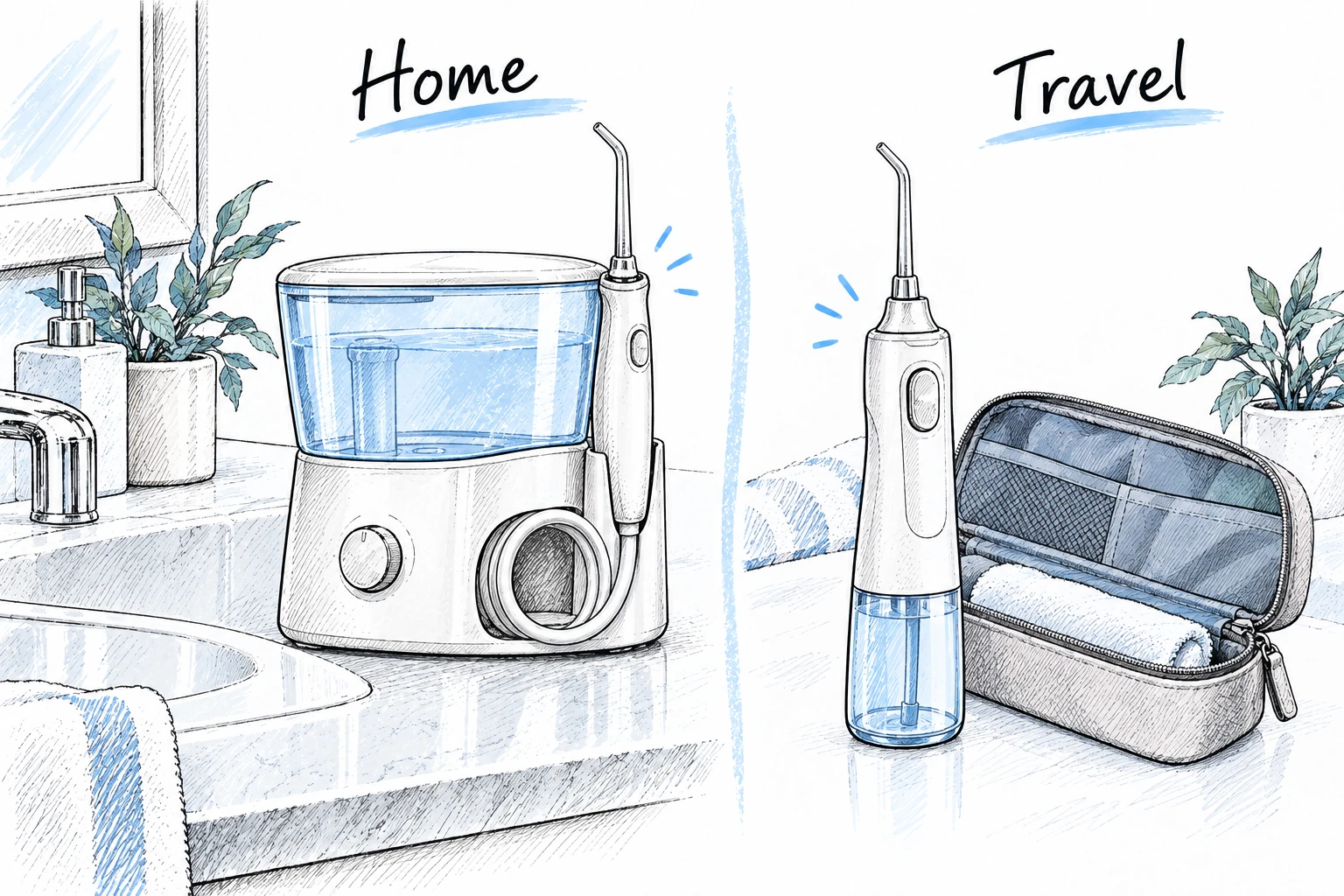
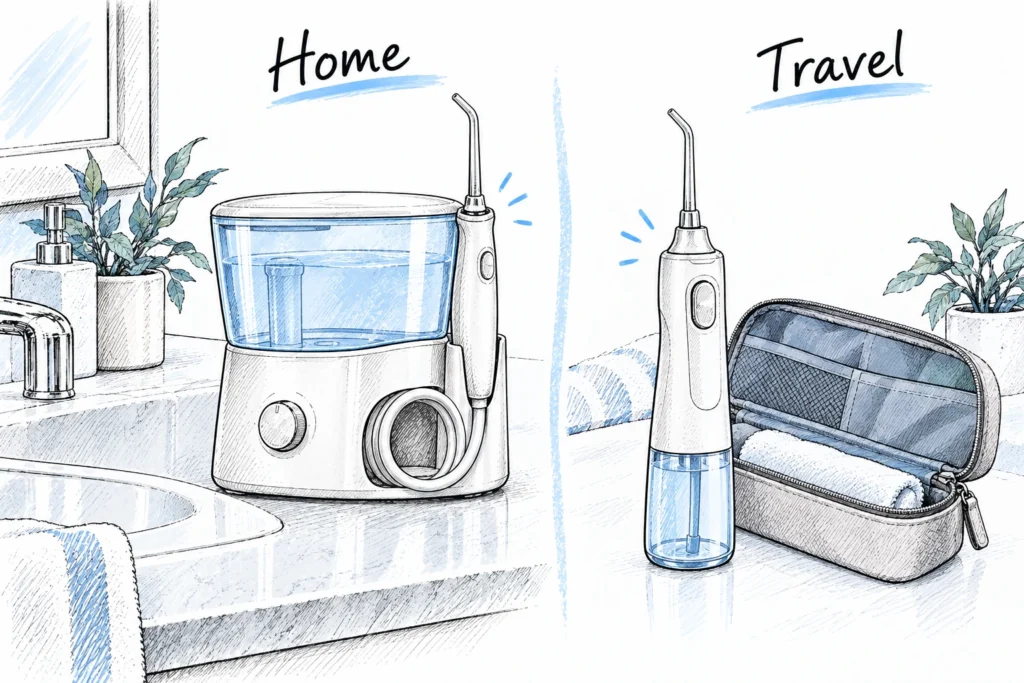
- Countertop water flossers: These units plug into wall outlets and feature large water reservoirs (typically 600–1,000 mL), multiple pressure settings (often 8–10), and maximum cleaning power. They account for approximately 55% of global revenue due to their higher average selling price ($60–$120 retail). However, their growth rate is moderating as consumers increasingly prefer portable alternatives.
- Cordless/portable water flossers: Battery-powered units with smaller reservoirs (150–300 mL), designed for convenience and travel. This segment represents approximately 45% of revenue but is growing at 8–10% annually — nearly double the overall market rate. Average retail prices range from $20 to $60, with entry-level models available at $15–$25. This segment is where most OEM opportunity lies for new market entrants.
Market by End User: Consumer vs. Professional
The consumer segment dominates the market, accounting for approximately 82% of total revenue. These are units purchased by individuals for home use through retail channels, e-commerce platforms, and direct-to-consumer brands. The professional segment — dental offices, orthodontic practices, and periodontists who purchase water flossers for patient use or resale — accounts for approximately 18% of revenue but plays a disproportionate role in driving consumer awareness and adoption through dental professional recommendations.
Market by Distribution: Online vs. Retail
Online channels (including Amazon, brand websites, and marketplace platforms) now account for approximately 48% of global water flosser sales, up from 35% in 2020. The shift toward e-commerce has been particularly beneficial for new OEM brands, which can reach global consumers without the lead times and slotting fees associated with physical retail. Pharmacy and specialty retail chains remain important channels, accounting for approximately 30% of sales, while big-box retailers (Walmart, Target, Costco) contribute the remaining 22%.
Regional Market Analysis
North America: The Largest Market
North America is the world's largest water flosser market, accounting for approximately 38% of global revenue ($403 million in 2025). The United States alone represents roughly $350 million of this total. Several factors explain North America's dominance: high dental insurance coverage, a strong culture of preventive dental care, a large orthodontic patient population (approximately 4 million Americans in orthodontic treatment at any time), and sophisticated e-commerce infrastructure. Waterpik, headquartered in the United States, has been the dominant brand for decades, but the market has opened to competition from OEM-sourced brands selling through Amazon and DTC channels.
Europe: Growing Through Dental Recommendations
Europe accounts for approximately 28% of global water flosser revenue ($297 million in 2025). The European market is characterized by strong dental professional recommendation rates, particularly in Germany, the UK, France, and the Netherlands. European consumers tend to be early adopters of oral care innovations and are willing to pay a premium for products with clinical endorsements. The growth rate in Europe is approximately 6.2% annually, slightly above the global average, driven by increasing awareness of periodontal disease prevention.
Asia-Pacific: The Fastest-Growing Region
Asia-Pacific represents approximately 24% of global revenue ($254 million in 2025) but is growing at an estimated 8.5% CAGR — the fastest of any region. China's domestic water flosser market has expanded dramatically, driven by rising disposable incomes, growing awareness of oral hygiene standards, and the aggressive marketing of water flossers on Chinese e-commerce platforms (Tmall, JD.com, Xiaohongshu). Japan remains the most mature Asian market, with high penetration among dental-conscious consumers. India and Southeast Asia represent nascent but rapidly growing markets with enormous long-term potential.
Consumer Trends Driving Growth
Orthodontic Users: Braces and Clear Aligners
Orthodontic patients represent the single largest identifiable user segment for water flossers. Cleaning around brackets, wires, and clear aligner attachments is significantly more challenging than cleaning natural teeth, and dental professionals universally recommend water flossers for orthodontic patients. With the global clear aligner market growing at 15–20% annually and traditional orthodontic treatment remaining common, the orthodontic patient pool is expanding rapidly. For OEM brands, positioning water flossers as an "essential accessory" for orthodontic care is one of the most effective marketing strategies.
Gum Disease Prevention
Gingivitis and periodontal disease affect an estimated 46% of adults globally (approximately 3.5 billion people), according to WHO data. As awareness of the systemic health consequences of periodontal disease grows — including links to cardiovascular disease, diabetes complications, and adverse pregnancy outcomes — consumers are increasingly seeking effective interdental cleaning solutions. Water flossers are particularly effective at targeting the gumline where periodontal disease begins, creating a strong clinical rationale for adoption.
IoT Integration: Smart Water Flossers
The smartification trend that has transformed the electric toothbrush market is now reaching water flossers. Connected water flossers with Bluetooth functionality, app integration, and usage tracking are entering the market, primarily at the premium end ($80–$150 retail). While currently representing a small percentage of total sales (estimated 5–8%), smart water flossers serve as a signal of the category's maturation and its integration into broader connected oral health ecosystems. For OEM manufacturers, smart water flossers represent a higher-margin product opportunity but require investment in PCB design, firmware development, and companion app engineering.
OEM Manufacturing Landscape for Water Flossers
The OEM manufacturing ecosystem for water flossers is concentrated in Southern China, with Shenzhen and Dongguan as the primary production centers. The engineering requirements for water flossers are distinct from electric toothbrushes, creating both specialized capability requirements and competitive advantages for experienced manufacturers. For brands new to oral care hardware, our water flosser OEM buyer guide covers supplier vetting, tooling decisions, and compliance requirements in detail.
Key Components and Engineering Considerations
- Pump technology: The pump is the heart of any water flosser. Diaphragm pumps are the most common type, offering good pressure consistency and reasonable cost ($0.80–$2.50 per unit depending on quality). Piston pumps deliver higher maximum pressure but are more expensive and louder. Pump quality directly affects product lifespan, noise level, and user satisfaction — this is the single most important component to specify correctly.
- Water reservoir: Reservoir design involves trade-offs between capacity, product footprint, and manufacturing cost. Countertop models use large ABS reservoirs (600–1000 mL), while portable models use smaller integrated tanks (150–300 mL). Reservoir material must be food-grade, BPA-free, and resistant to mineral buildup.
- Battery and power management: Portable water flossers typically use lithium-ion batteries (1000–2000 mAh) with USB-C charging. Battery optimization is critical — consumers expect 2–4 weeks of use between charges. IPX7 waterproof rating is mandatory for all cordless models.
- Motor: Miniature DC motors drive the pump mechanism. Motor quality affects noise level, vibration, and power efficiency. Quality motors cost $1.50–$4.00 per unit.
- Nozzle assembly: Interchangeable nozzle tips are a recurring revenue opportunity (similar to brush heads for toothbrushes). Common tip types include classic jet, orthodontic, periodontal, and tongue cleaner. Standardizing on a universal nozzle thread allows compatibility across product lines.
Shenzhen Supply Chain Advantage
The Shenzhen manufacturing corridor offers unique advantages for water flosser production. Pump manufacturers, motor suppliers, battery producers, injection molders, and PCB assembly facilities are all concentrated within a compact geographic area, enabling rapid prototyping (typically 15–25 days for a functional prototype) and competitive pricing. The region's deep expertise in micro-pump technology — developed initially for industrial applications and subsequently adapted for consumer products — provides a quality foundation that competing regions (Vietnam, India) cannot yet match for this specific product category.
Common OEM Challenges
Manufacturers entering the water flosser space should be aware of several recurring challenges:
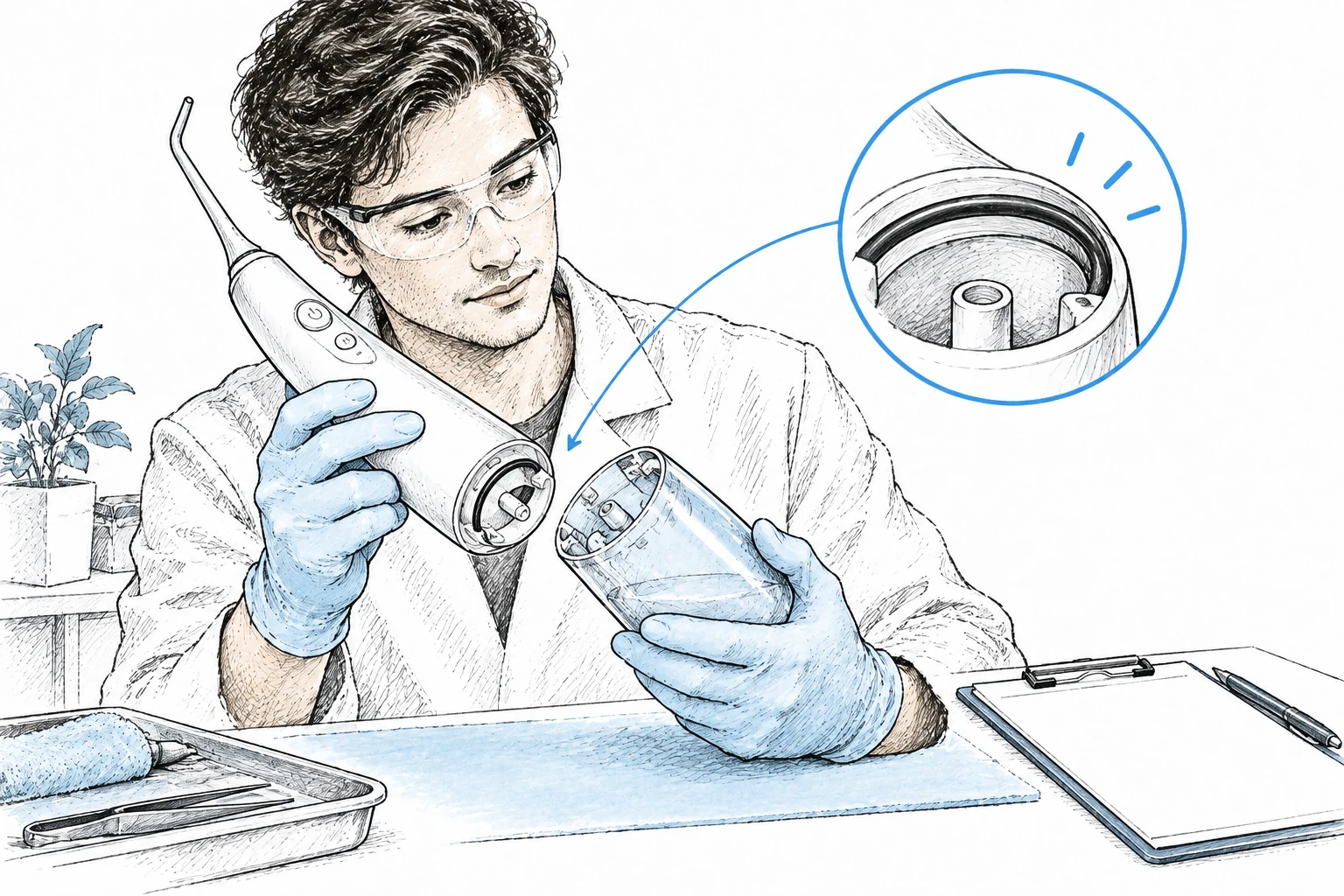
- Water leakage: The primary quality concern. Pump housing seals and reservoir connections must be engineered to withstand repeated pressurization cycles without degradation. IPX7 testing under real-use conditions is essential.
- Noise levels: Consumer expectations for noise are increasingly strict. Premium models must operate below 65 dB. This requires careful motor mounting, vibration isolation, and acoustic chamber design.
- 圧力の一貫性: Battery voltage drops as charge depletes, which can affect pump output. Quality units include voltage regulation circuitry to maintain consistent pressure across the battery discharge curve.
- Mold longevity: Water reservoir molds require specialized surface treatment to prevent part sticking and ensure dimensional accuracy over high-volume production runs.
Relish Technology manufactures water flossers for 300+ global brands. MOQ from 500 units, standard lead time 8–12 weeks, custom tooling 14–20 weeks. FDA / CE / ISO 13485 certified.
Get a Free OEM Quote →How Relish Tech Supports Water Flosser Brands
Relish Technology offers comprehensive OEM manufacturing services for water flosser brands, spanning the full product lifecycle from concept through mass production. Trusted by 300+ oral care brands globally, our manufacturing capabilities in Shenzhen include:
- Product design and engineering with dedicated R&D team for oral care devices
- Industrial design support including 3D modeling, rendering, and ergonomic optimization
- Prototype development with functional testing in 15–25 business days
- Pump technology sourcing from qualified, pre-vetted component suppliers
- Injection molding with in-house mold design and maintenance
- PCB design and assembly for electronic controls and smart features
- Quality management under ISO 13485 and ISO 9001 certified systems
- Regulatory support for CE, FDA, and RoHS compliance
- Packaging design and production including sustainable materials options
- Flexible MOQ structures starting from 500 units; standard lead time 8–12 weeks, custom tooling 14–20 weeks
Whether you are launching a new water flosser brand, expanding an existing oral care line, or developing a custom water flosser for a dental professional network, our team can guide you through every stage of the manufacturing process. View our water flosser range, learn more about our private label guide, or contact us to discuss your specific project requirements.
Market Data: Product Type by Region
| Region | Countertop Revenue | Portable Revenue | Total Revenue | Share |
|---|---|---|---|---|
| North America | $238M | $165M | $403M | 38.0% |
| Europe | $171M | $126M | $297M | 28.0% |
| Asia-Pacific | $122M | $132M | $254M | 24.0% |
| Latin America | $38M | $29M | $67M | 6.3% |
| Middle East & Africa | $22M | $17M | $39M | 3.7% |
| Global Total | $591M | $469M | $1,060M | 100% |
Key Takeaways
- Global water flosser market valued at $1.06B (2025), projected $1.66B by 2033 at 5.75% CAGR
- Portable/cordless models are the fastest-growing segment at 8–10% annual growth
- North America leads with 38% market share; Asia-Pacific grows fastest at 8.5% CAGR
- Orthodontic patients are the primary driver of adoption, with 20M+ in treatment globally
- OEM MOQs range from 500–2,000 units; unit costs from $6–$22 depending on specifications
- Pump quality and water leakage prevention are the critical manufacturing quality factors
- Smart/connected water flossers represent a nascent but high-margin product opportunity
Launch Your Water Flosser Brand with Relish Tech
From concept to mass production, we provide complete OEM manufacturing for water flossers. Get a customized quote and product proposal.
Request a Manufacturing QuoteRelated Articles
よくある質問
参考文献
This analysis of the global water flosser market draws on the following industry sources:
- Grand View Research. (2025). Water flosser market size, share & trends analysis report. .検索元 https://www.grandviewresearch.com/industry-analysis/oral-irrigator-market
- スタティスタ(2026). Oral irrigation / water flosser — market data & forecasts. .検索元 https://www.statista.com/topics/oral-care/
- Mordor Intelligence. (2025). Oral irrigator market — growth, trends, and forecasts (2025–2030). .検索元 https://www.mordorintelligence.com/industry-reports/oral-irrigator-market
- American Dental Association. (2025). ADA Seal of Acceptance: Water flossers and oral irrigators. .検索元 https://www.ada.org/resources/research/science-and-research-institute/oral-health-topics/water-flossers
- Transparency Market Research. (2025). Water flosser market — global industry analysis, size, share, growth, trends, and forecast. .検索元 https://www.transparencymarketresearch.com/water-flosser-market.html
- World Health Organization. (2023). Oral health. .検索元 https://www.who.int/health-topics/oral-health
- International Organization for Standardization. (2024). ISO 13485:2016 — quality management systems for medical devices. .検索元 https://www.iso.org/standard/59752.html