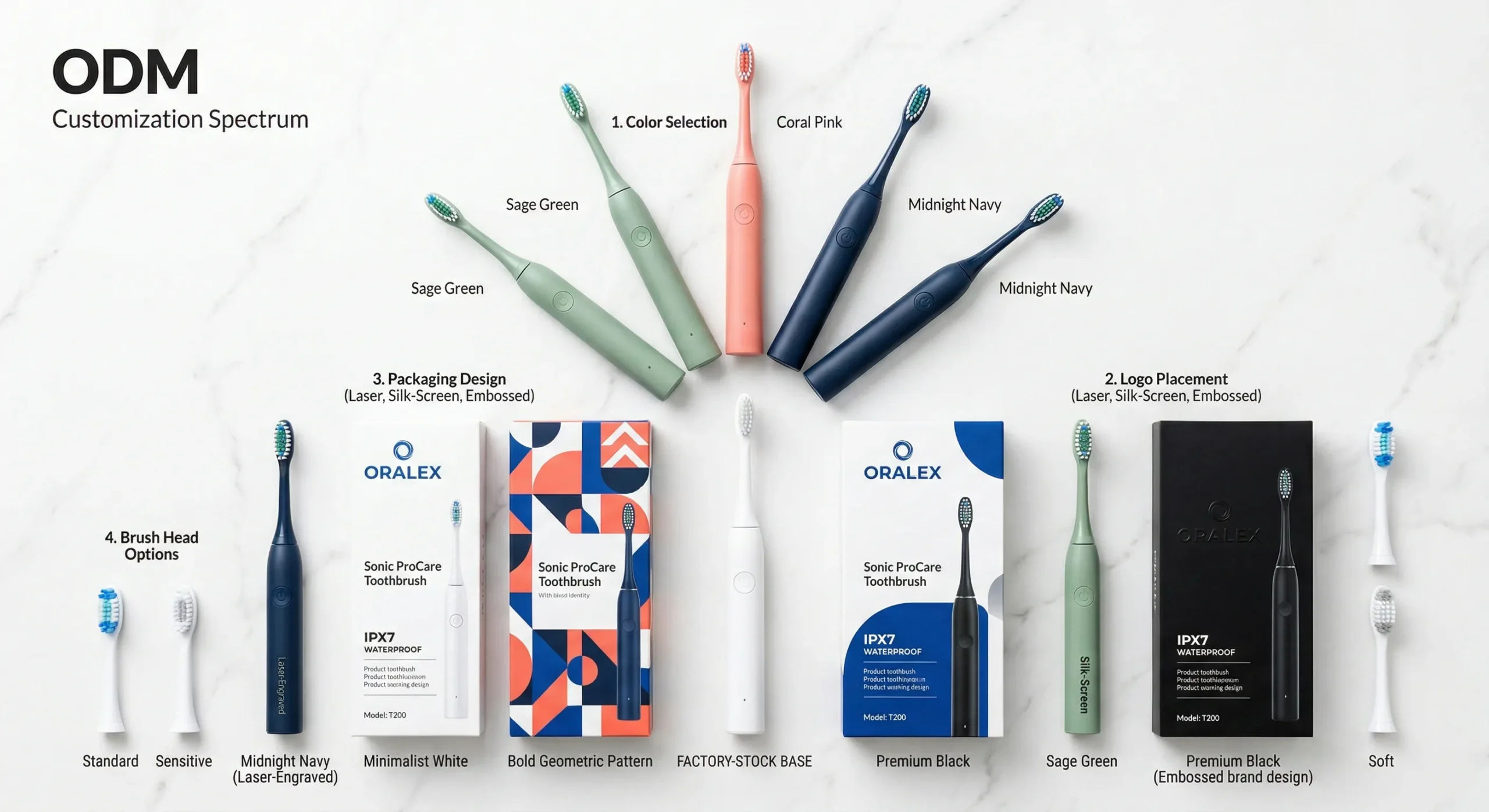












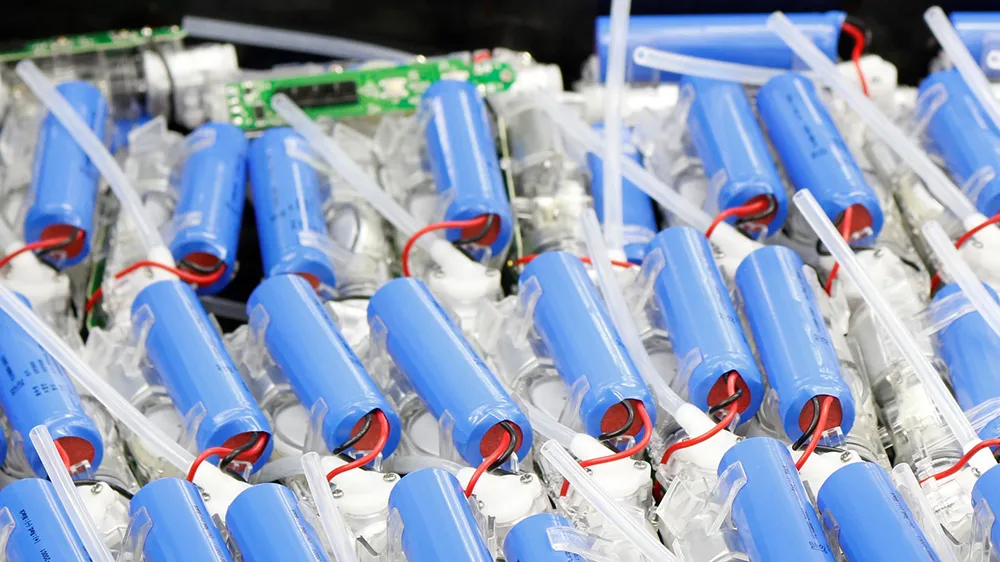
電動歯ブラシ combine compact electronics with a carefully designed brushing mechanism. The vintage Broxodent advertisement below shows an early corded design—a useful starting point for exploring how today’s electric toothbrushes are built.
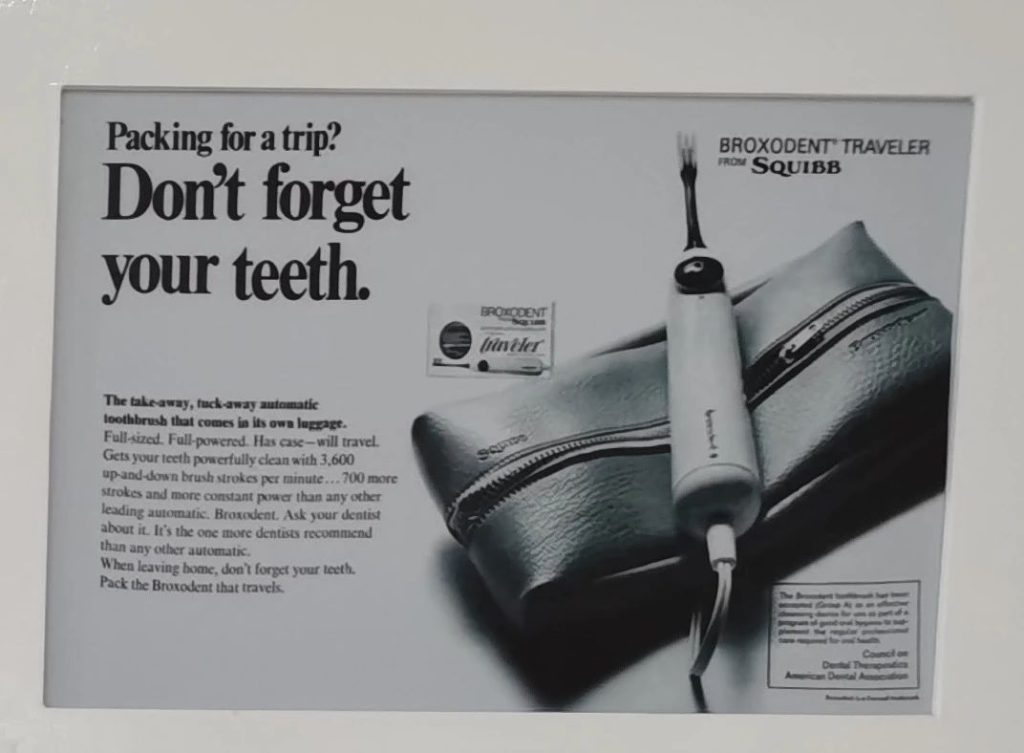
The Broxodent shown here used a power cable. Modern rechargeable designs place the battery, motor and control electronics inside the handle, giving users more freedom of movement. The manufacturing process brings these components together in a compact, comfortable product.
How does a sonic toothbrush clean?
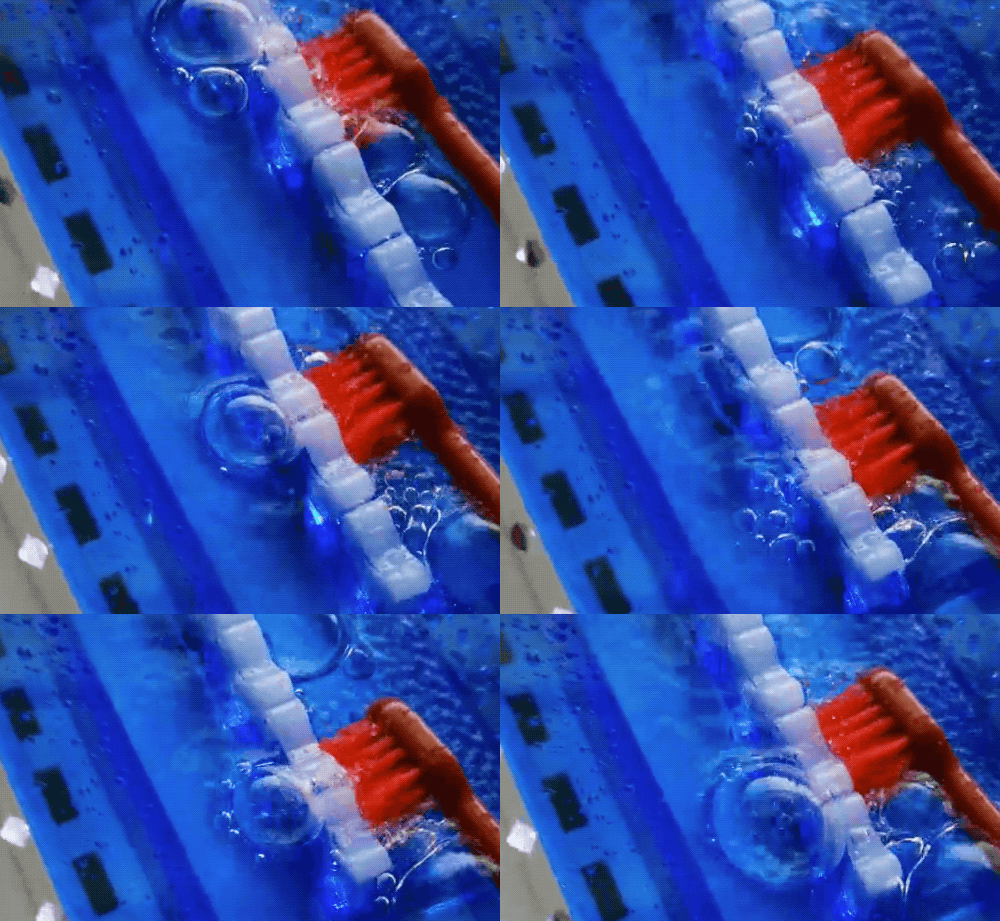
A sonic electric toothbrush uses rapid mechanical movement of the brush head. Its name does not mean that it cleans with ultrasound. The drive transmits motion through a shaft to move the bristles with a small amplitude; the direction and movement pattern depend on the design.
Bristle contact removes plaque from the tooth surface, while rapid brush-head movement also moves the surrounding liquid. The demonstration below shows this fluid movement around a tooth model. It illustrates the mechanism rather than measuring cleaning performance in the mouth.
With the basic mechanism in mind, let’s look at how an electric toothbrush is designed, manufactured and assembled.
全体設計
Design starts with the shape of the handle, material selection, colors and intended functions. Engineers also plan the layout of the motor, circuit board, battery and, where used, the charging coil. The complete design must balance comfort, appearance, portability, assembly access and ease of use.
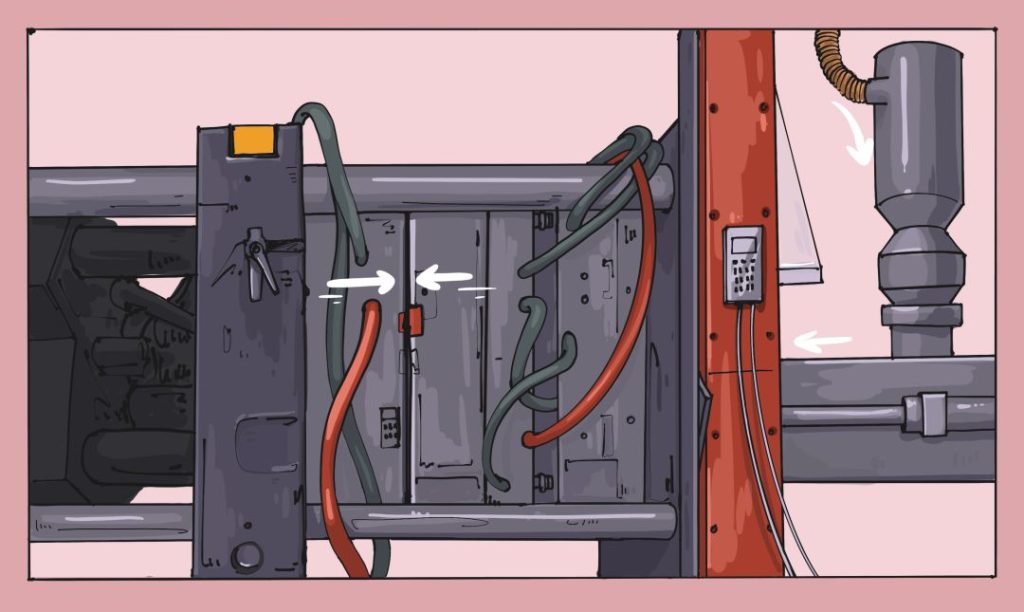
Injection-molded housing
ABS is one of the plastics used for toothbrush housings and internal supports; the material depends on the product design. In injection molding, plastic granules are melted and injected into a mold. The part cools and solidifies before it is removed for subsequent finishing and assembly.
Before assembly, the inside of the housing is cleaned and inspected for unwanted residue. The illustration below shows one possible camera-based inspection setup, with an enlarged view of the housing interior.
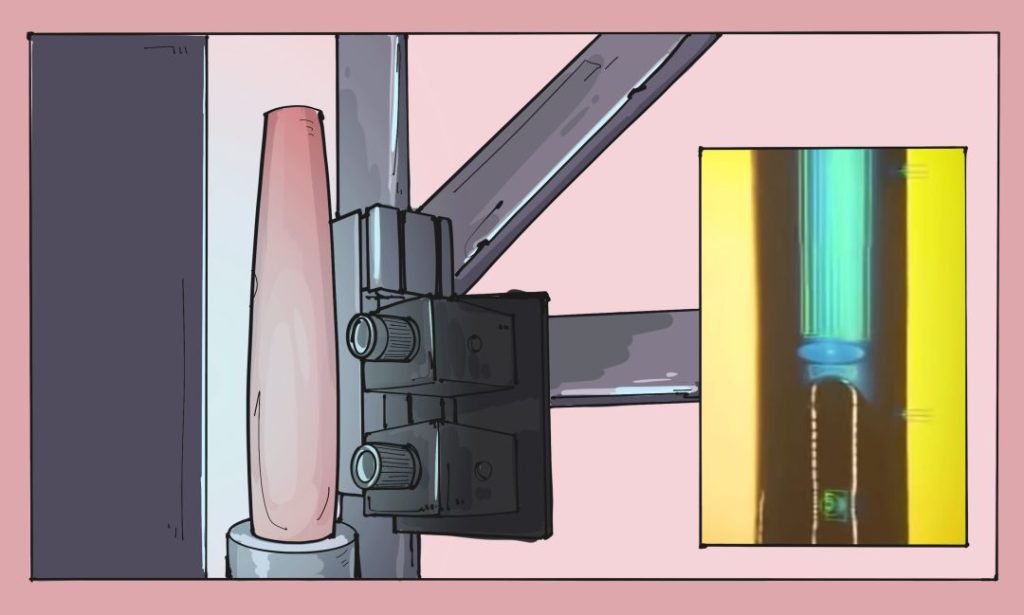
Keeping the housing clean helps prevent loose particles from interfering with components or sealing surfaces. Clean assembly and a well-designed seal both contribute to a reliable finished product.
Sonic drives and motors. A 音波式歯ブラシ’s advertised strokes per minute should not be confused with motor revolutions per minute. For example, 31,000 strokes per minute is a brush-motion specification used for some models, not a universal motor speed. Drive construction and operating frequency vary by product.
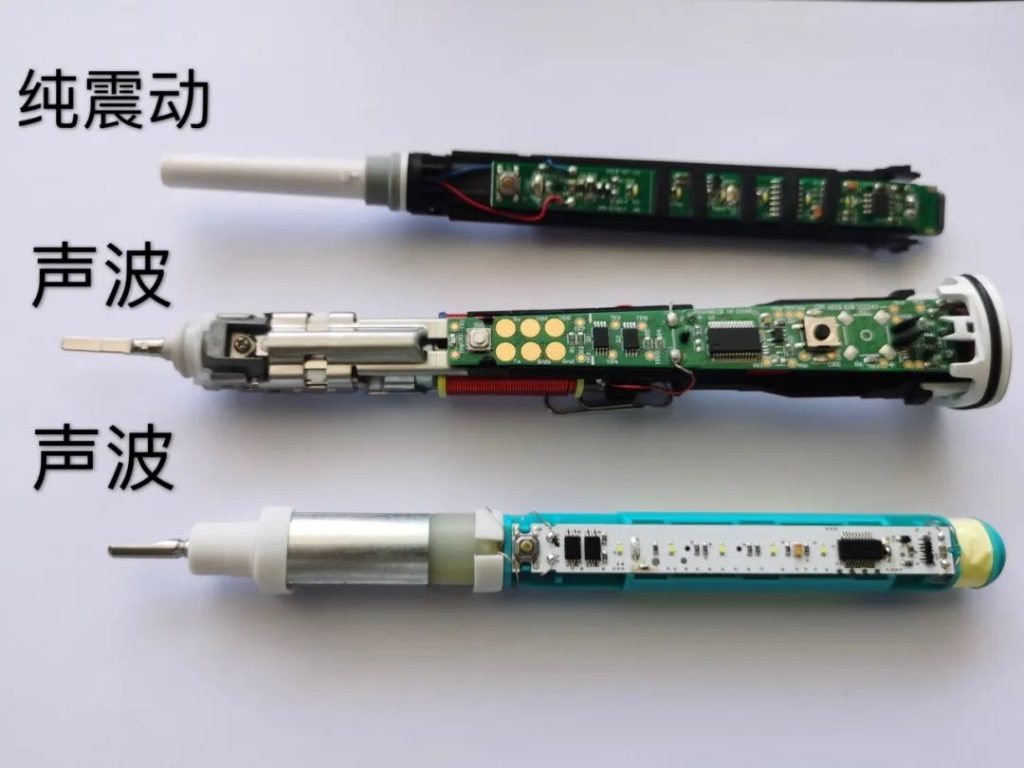
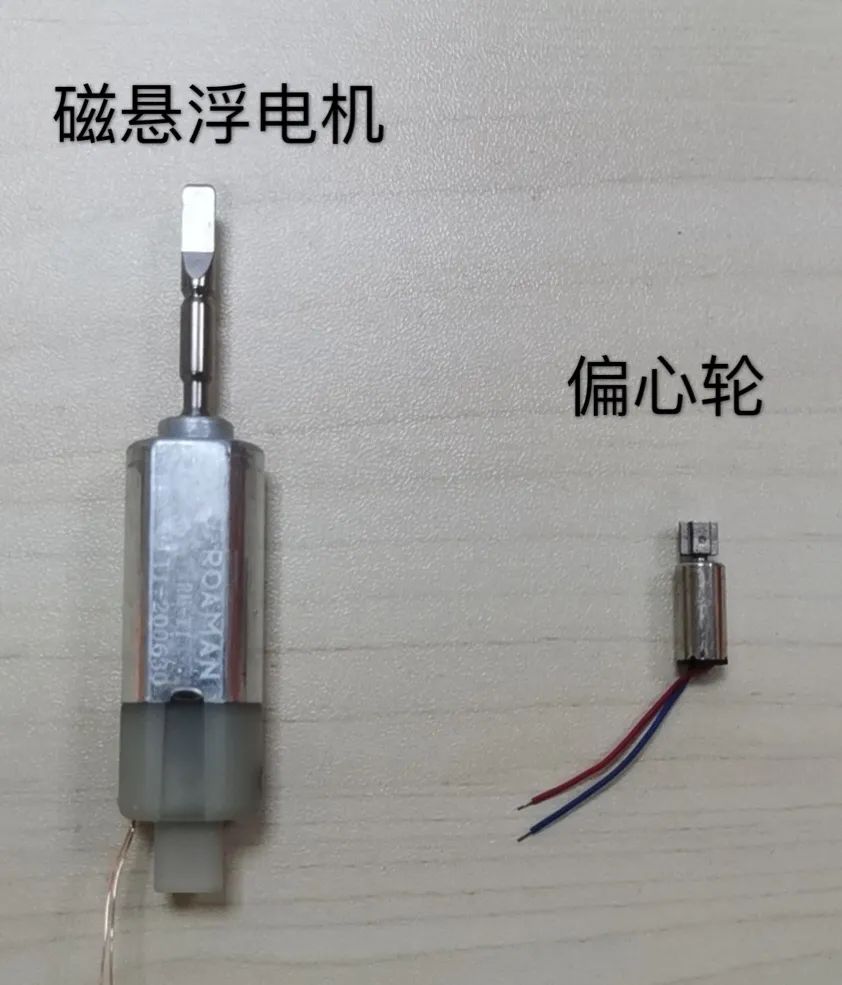
The comparison below shows two different drive constructions: a larger drive assembly on the left and a compact eccentric-weight motor on the right. An eccentric motor generates vibration through an unbalanced rotating mass. A dedicated sonic drive is designed to transfer controlled motion to the brush head. The appearance of a motor alone does not establish the finished toothbrush’s cleaning performance.
The demonstration below shows a metal spoon being attracted to the drive housing. This demonstrates magnetic attraction; it does not demonstrate a friction-free suspended rotor or measure cleaning performance.
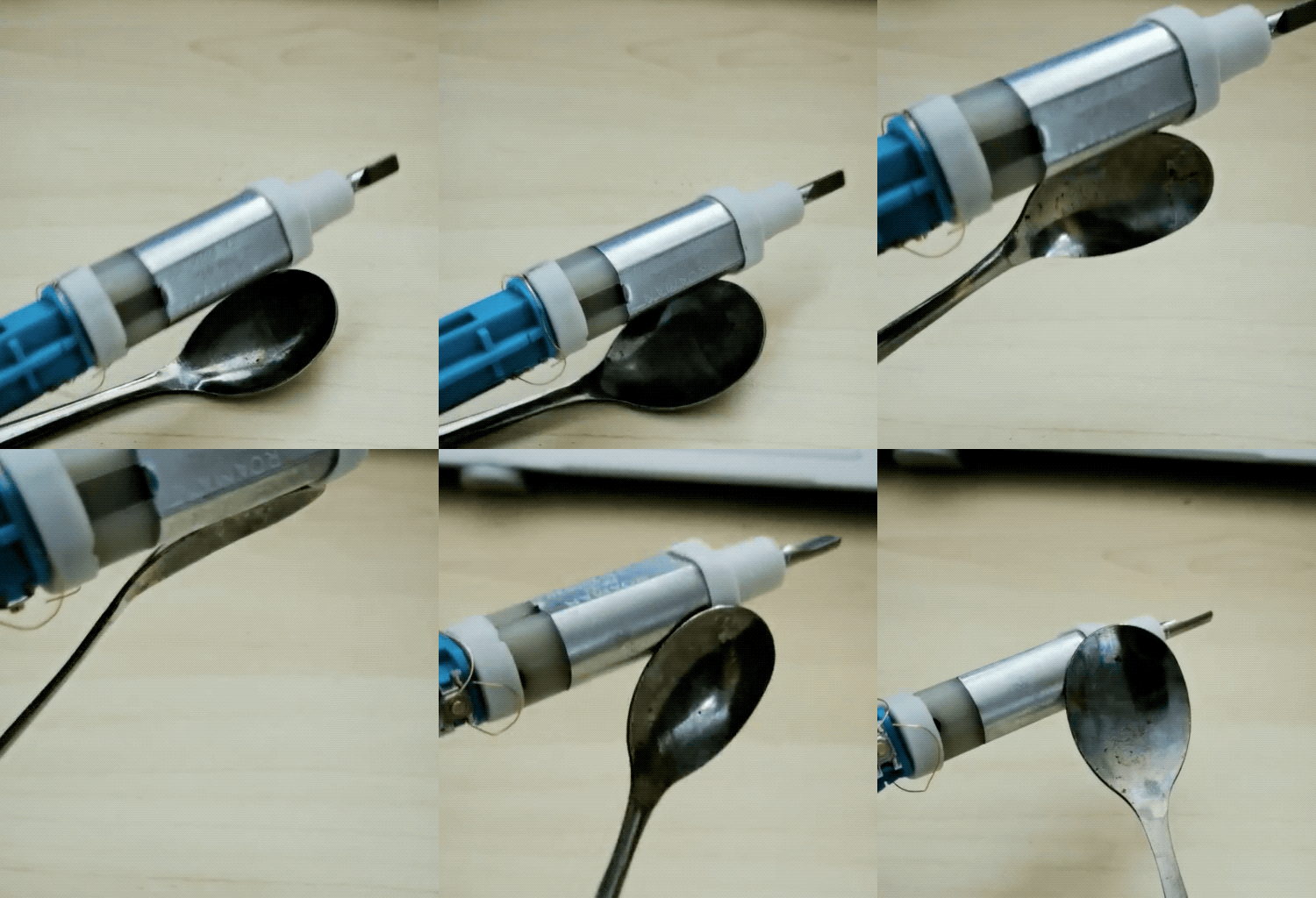
In an electromagnetic sonic drive, controlled electrical current produces a changing magnetic field that moves a supported mechanical assembly. The shaft transfers that motion to the brush head. The exact coil, magnet and support arrangement depends on the design. The term “magnetic levitation” should not be taken to mean that every sonic toothbrush contains a freely floating rotor.
Control and power supply. Electric toothbrush manufacturers use a circuit-board assembly to manage the drive and other functions. Firmware stored in the controller sets the operating behavior, which may include intensity settings, a brushing timer and reminders to move to another area. A rechargeable battery supplies power. Designs with inductive charging also require a receiving coil and the associated charging circuitry.
Assembly and sealing. The motor, circuit board and battery are secured to an internal support, then fitted into the handle. Seals and other enclosure parts are installed according to the product’s assembly design.
The housing joints, shaft opening, buttons and charging interface all need suitable sealing. The illustration below shows one assembly configuration. A one-piece base alone does not establish waterproof performance; the finished enclosure must be tested against the product’s specified water-resistance requirements.
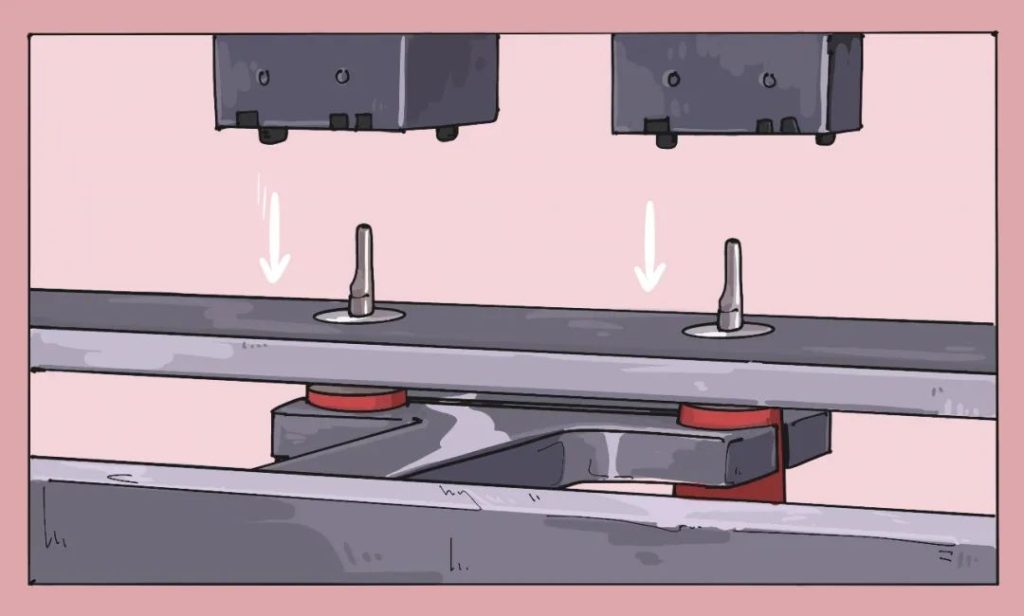
For OEM buyers, useful quality checks include seal integrity, battery condition, assembly consistency and the supplier’s product-testing records. These checks provide a stronger basis for assessing reliability than appearance or price alone.
Brush-head materials and oral-contact safety
The brush-head body is also commonly injection molded, but its material is selected for the intended design and contact with the mouth. “Food-grade” does not mean that a plastic is edible or that every brush head uses ABS. Material selection and the relevant safety testing should reflect the finished product’s intended use and target market.
Bristle tufting
Brush-head performance depends on the filaments, their arrangement and how securely they are retained. Materials such as nylon and PBT are used in different designs. In the anchor-based tufting process illustrated below, a bundle of filaments is folded and inserted into a prepared hole in the brush-head body.
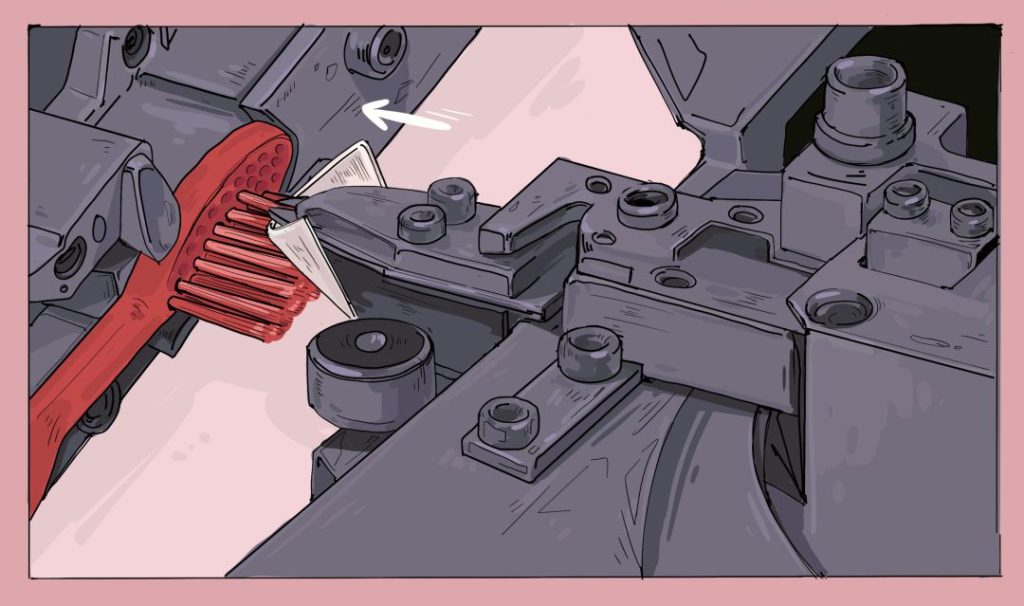
Securing bristle tufts
In anchor-based tufting, a small anchor holds the folded filament bundle in place. Anchor-free methods use a different fixing process and avoid this metal anchor. The selected method must provide secure tuft retention; neither method alone establishes the quality of the finished brush head.
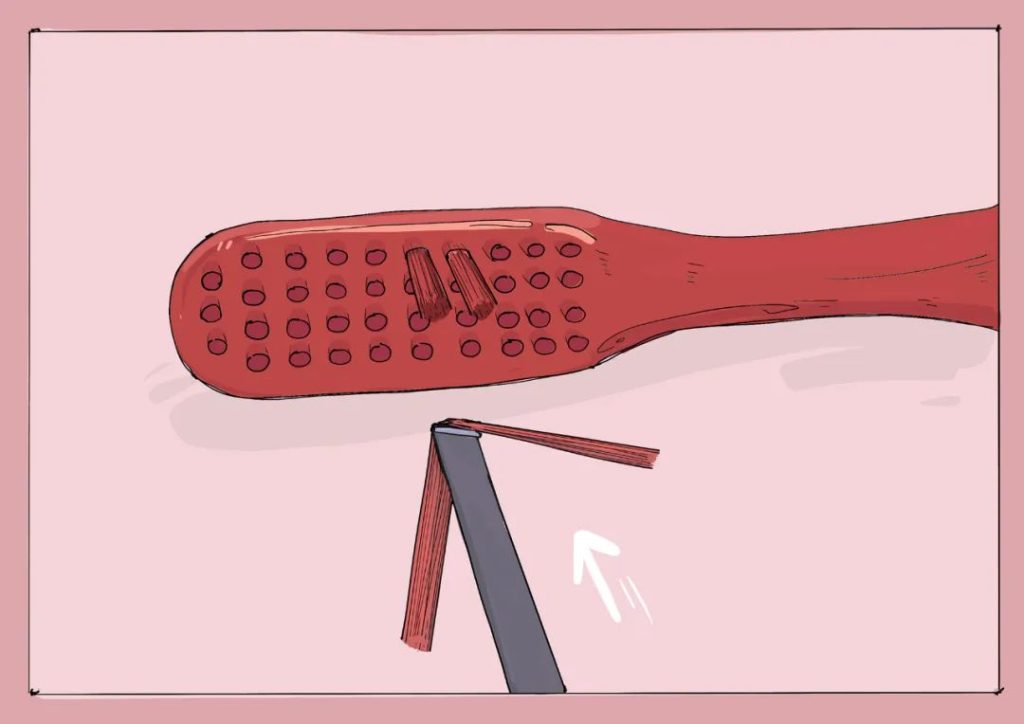
Trimming the bristles
After tufting, the bristles are trimmed to the specified length and profile. The illustration below shows a blade cutting the bristle bundles to shape.
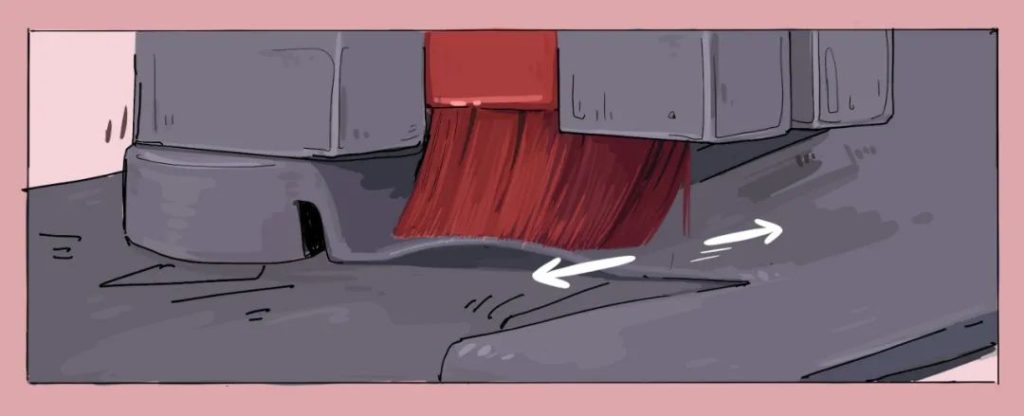
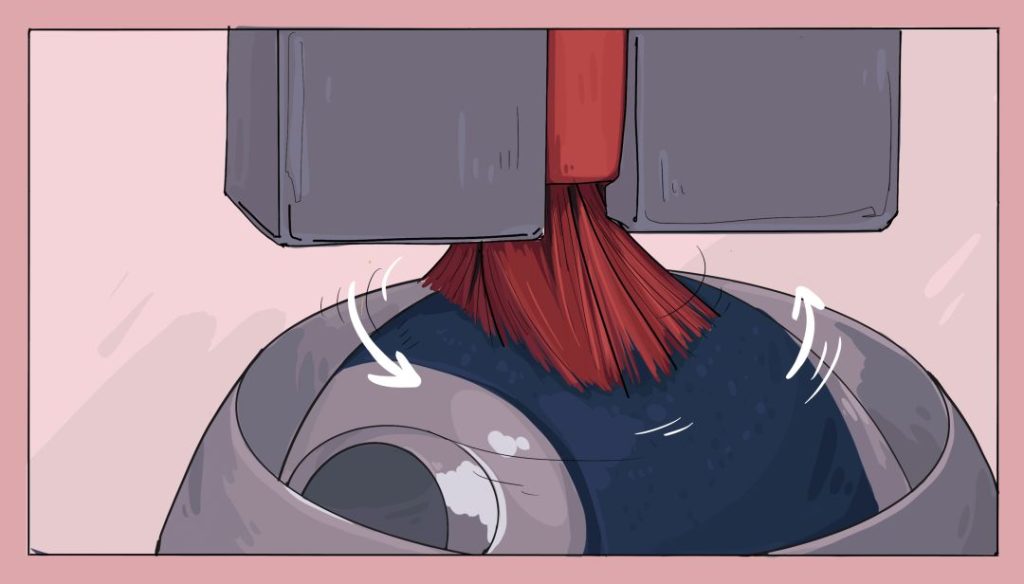
For filaments designed to have rounded ends, the cut tips are polished to reduce sharp edges. Tapered-tip filaments have a different tip geometry and require their own finishing and inspection criteria.
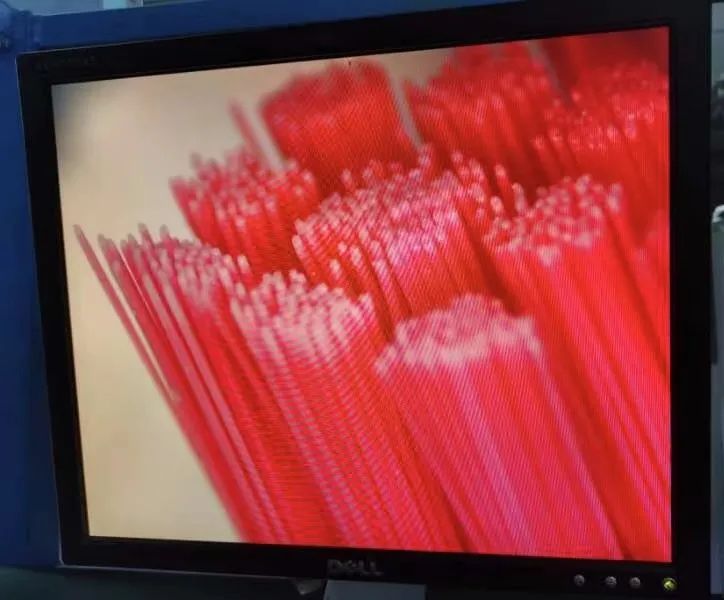
The photo below shows a brush head being examined under magnification. Lighting and focus are adjusted so the filament ends can be inspected clearly.
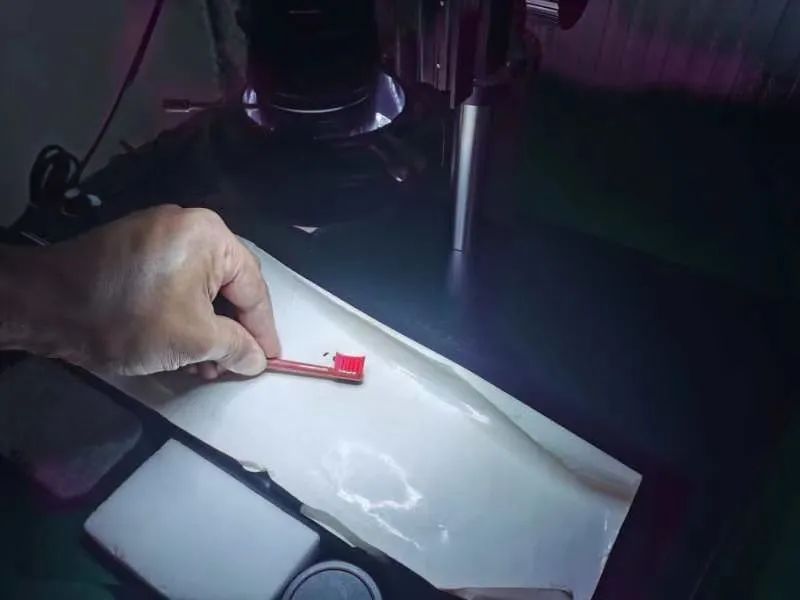
The enlarged image on the screen helps the inspector examine individual filament ends and compare them with the approved acceptance criteria. The outline of a whole tuft alone cannot establish whether every filament end is properly finished.
Bristles wear with use, so electric toothbrush manufacturers provide replacement and care instructions for their brush heads. A common recommendation is to replace the head about every three to four months, or sooner if the bristles become frayed. Follow the product’s care instructions when choosing a replacement.
Choosing bristles and brush-head geometry
Choose soft bristles and a brush-head size that lets you comfortably reach all tooth surfaces, including the back teeth. Tip shape alone does not determine cleaning quality or suitability for sensitive gums. Filament stiffness, head geometry and brushing pressure all matter.
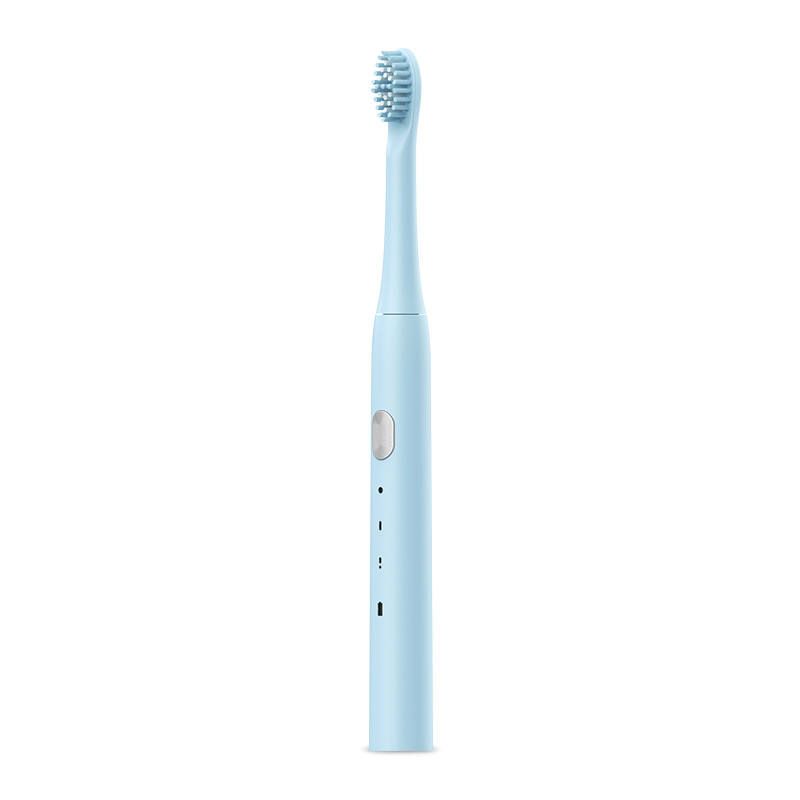
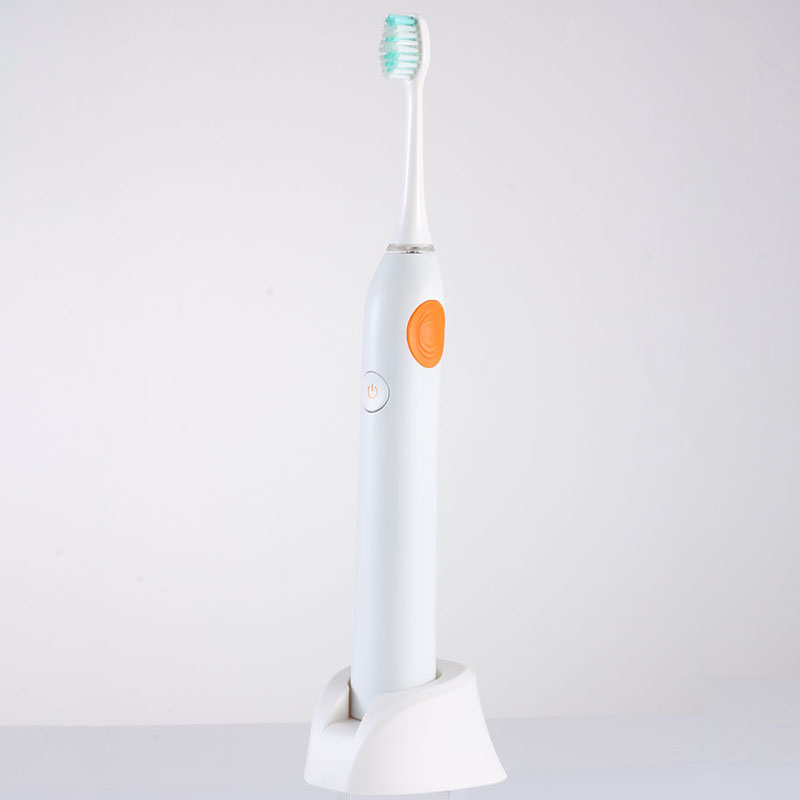
For travel, check whether the product includes a protective case and whether its charging arrangement suits your trip. Storage, charging and disinfection are separate functions; the toothbrush pictured below does not show a charging or disinfection case.
Shenzhen Relish specializes in manufacturing electric toothbrushes and oral irrigators, also known as water flossers. We offer a range of electric toothbrushes wholesale and OEM customization services. Our water flossers are also available wholesale at factory prices. We offer competitive pricing and look forward to working with your business.