











Sonic and ultrasonic toothbrushes sound similar, but they use different cleaning technologies. This guide explains their mechanisms, model-specific brushing techniques and practical features to compare when choosing a toothbrush.
Sonic vs. ultrasonic: what do the terms mean?
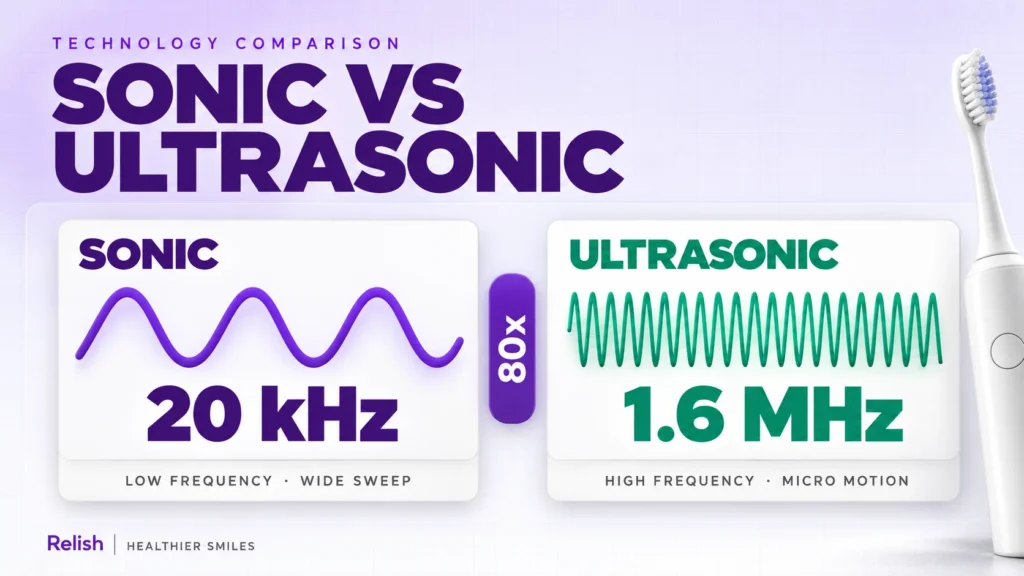
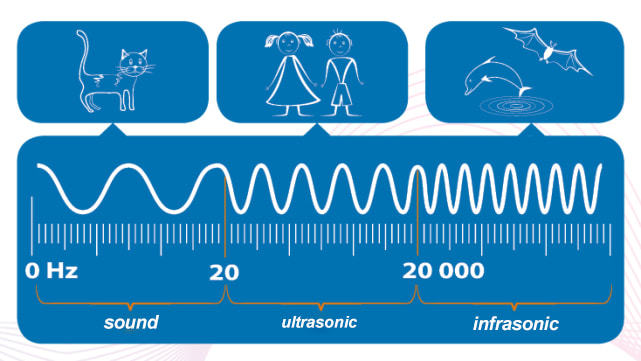
Ultrasound refers to sound above 20 kHz, beyond the usual upper limit of human hearing. A sonic toothbrush uses rapid mechanical bristle movement; an ultrasonic toothbrush contains a transducer that produces ultrasound. The two frequencies describe different actions and should not be compared as if both were brush-head movements.
Ultrasonic toothbrushes
An ultrasonic toothbrush uses a piezoelectric transducer to generate ultrasound. For example, the MEGASONEX M8S operates at 1.6 MHz and can combine ultrasound with sonic bristle movement. Transducer placement, output and operating modes depend on the model.
Ultrasound can be used as part of a toothbrush’s plaque-control system, sometimes alongside mechanical brushing. Cleaning performance depends on the specific design, technique and supporting evidence. A frequency specification alone does not establish pain relief, gum healing, tissue heating or complete cleaning between teeth.
超音波歯ブラシでの歯磨き方法
Ultrasonic toothbrush designs vary. The emmi-dent Metallic and MEGASONEX M8S illustrate two different approaches, with different instructions for head positioning and movement. Compare the exact model and its manual rather than assuming that every ultrasonic brush works the same way.
The emmi-dent Metallic manual instructs users to hold the bristles lightly and still against a small group of teeth, then move to the next area. Its position-change signal is separate from the ultrasound cleaning action. Follow that technique rather than scrubbing as with a manual toothbrush; transducer placement alone does not prove deeper gum penetration.
The MEGASONEX M8S combines 1.6 MHz ultrasound with a choice of sonic bristle speeds and also offers an ultrasound-only mode. Its manual gives specific brushing instructions. This does not establish a general ranking of how deeply different brands affect gum tissue.
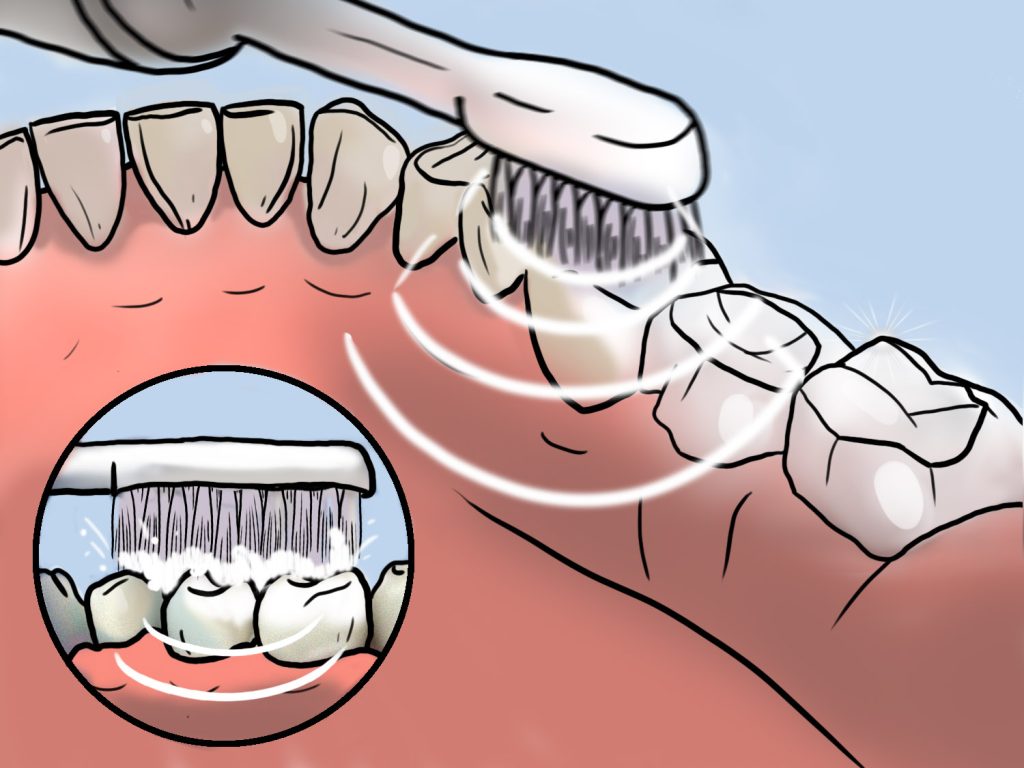
Choose a suitable mode and follow your model’s manual. A brush that combines sonic movement with ultrasound may require a different technique from a model used with stationary bristles.
- Use the head position, movement and light pressure specified by the manufacturer. For example, MEGASONEX M8S instructions include angling the bristles toward the gumline and moving them gently; emmi-dent Metallic instructions use a still position for each area.
- Clean every tooth surface twice a day. General oral-care guidance recommends about two minutes; some ultrasonic models specify a three-minute routine. Follow the model’s timing and your dental professional’s advice.
- When using fluoride toothpaste, spit out the excess rather than immediately rinsing it away. Follow any separate toothpaste instructions for the ultrasonic model and your dental professional’s advice.
- After brushing, clean the brush as directed and let it dry upright. Keep charging components dry and follow the manual’s instructions for charging and water exposure.
超音波ブラシ:メリットとデメリット
Ultrasound itself is inaudible, and some ultrasonic brushes offer little or no brushing vibration in certain modes. Use the operating indicator to check the device’s status. Quiet operation does not mean that the brush sterilizes the mouth or removes all plaque.
Features to consider in an ultrasonic toothbrush include:
- A cleaning system designed to support daily plaque removal when used as directed.
- Ultrasound-only or combined sonic-and-ultrasonic modes, where offered by the model.
- The toothpaste and brushing technique specified for that cleaning system.
- Brush-head designs and instructions suitable for the dental work you need to clean.
- Clear operating indicators and accessible replacement heads.
Practical limitations to consider include:
- The need to learn the model’s positioning and timing. Some systems specify a pause at each area, so the routine can differ from ordinary manual or sonic brushing.
超音波歯ブラシの選び方
- Check the actual ultrasound specification, the manual and evidence for the model. Choose according to cleaning needs and ease of use rather than assuming that a transducer in the brush head provides a stronger healing effect.
- Give each user a separate brush head. Check head compatibility, availability and replacement cost.
- For travel, compare the supplied case, charging arrangement and battery runtime.
音波式歯ブラシ
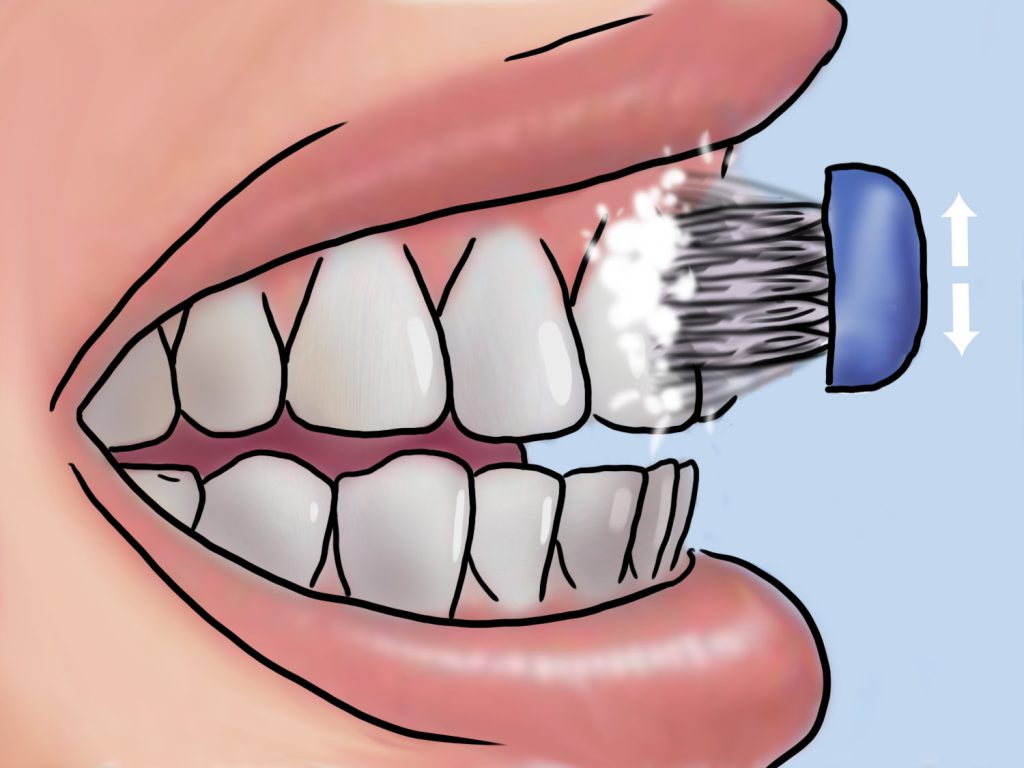
Sonic toothbrushes clean through rapid mechanical movement of the bristles. Many models use an electromagnetic drive, but frequency, amplitude and movement pattern vary. Published movement counts can use different counting methods, so they are not a direct measure of cleaning performance. Fluid movement can assist cleaning, while brushing all tooth surfaces and cleaning between teeth remain important. Oscillating-rotating brushes are a separate design category; not every electric toothbrush is a sonic toothbrush.
音波式歯ブラシ:メリットとデメリット
Sonic brushing supports regular removal of dental plaque before it hardens into tartar. A home toothbrush does not remove established tartar; that requires professional cleaning.
音波式ブラシの利点:
- Rapid bristle movement assists brushing when the head is guided over all tooth surfaces.
- A choice of soft brush heads can support comfortable plaque removal.
- Consistent daily cleaning helps limit the plaque buildup that can lead to tartar.
- Many models offer different head sizes and features such as timers or pressure feedback.
Practical limitations of sonic toothbrushes:
- The vibration may take time to get used to, and replacement-head cost and availability vary. After dental surgery or with painful gums, seek advice on the brush and technique appropriate for you.
音波式歯ブラシの選び方
音波式ブラシを選ぶ際に注意すべき点は以下の通りです:
- Compare cleaning comfort, brush-head design, pressure feedback and timers. A higher movement count or stronger vibration does not automatically mean better cleaning.
- Look for a comfortable mode and a suitable soft head. Persistent sensitivity, bleeding or gum pain needs dental assessment rather than relying only on a gentler setting.
- Check compatible replacement heads and their ongoing cost. Each user needs a separate head; children need an age-appropriate product and supervision as required.
- ブラシを旅行に持って行きたい場合は、旅行ケースが付属しているか確認してください。
Choosing between a sonic and an ultrasonic toothbrush
Choose a toothbrush you can use comfortably and consistently, with accessible replacement heads and clear instructions. Neither technology should be selected as a treatment for gum infection. For gum disease, recent dental work or persistent symptoms, ask your dental professional which product and technique fit your care plan.
When considering an ultrasonic toothbrush:
- Check the specific model’s ultrasound output, operating modes and supporting product evidence.
- Make sure its positioning, timing and toothpaste requirements fit your daily routine.
- Compare replacement-head supply, charging and travel needs.
When considering a sonic toothbrush:
- Look for a suitable soft head and instructions for cleaning around restorations or orthodontic appliances.
- Prioritize comfortable handling and helpful features such as pressure feedback or a timer.
- Include daily interdental cleaning and regular dental care; established tartar requires professional removal.
Relish manufactures electric toothbrushes and water flossers in Shenzhen, supplying wholesale products and OEM customization for oral care brands. Compare brush designs, head options and specifications for your market, then contact our team for factory pricing and a tailored project quote.