










Electric Toothbrush Manufacturers in China: A Supplier Evaluation Guide

1. How to Use This Supplier Evaluation Guide
Compare electric-toothbrush suppliers in China using ten practical criteria, from drive design and charging to materials, software and production controls. Start with the features your product needs, then ask each supplier for documents and samples that demonstrate its ability to deliver them.
Confirm the contracting company and factory address, and ask which production steps are subcontracted. Use the same product specification when reviewing samples, test reports and quotations so you can compare offers fairly.
For an overview of the development and sourcing process, see our OEM/ODM 生产指南. For broader supplier due diligence, see our oral-care sourcing guide.
2. Ten Supplier Capability Areas
Use these ten areas to build your supplier shortlist. A single factory may cover several of them; focus on the capabilities your product needs and the records that support the supplier’s offer.
Sonic drive systems
Ask how the motor, drive mechanism and brush head produce the stated movement, and review the test method behind any performance claim. Sonic and ultrasonic describe different technologies; neither label alone demonstrates a clinical benefit.
Oscillating-rotating brush heads
Examine how the head moves and attaches to the handle. Check replacement-head fit and retention, then confirm that production parts match the drawings and tested sample.
Connected products and firmware
For an app-connected toothbrush, agree the functions, supported operating systems, data collected and update process. Establish who owns the app and cloud service and who will maintain them after launch. Include the product’s wireless features in the market compliance review.
Experience with market compliance
Define the product’s intended use and marketing claims before requesting compliance documents. Match each report or certificate to the company, factory, model and scope it covers. FDA establishment registration and device listing do not mean FDA approval; quality-system certificates and social audits serve other purposes.
Children’s product design
Check the intended age range, handle and head size, instructions, warnings and materials against the destination market’s requirements. For character designs, confirm who holds the license and whether it covers your product and sales territory.
Materials and traceability
Identify material grades and suppliers, and ask how batches and substitutions are recorded. Read material and chain-of-custody certificates within their stated scope. Claims that a finished toothbrush is recyclable, biodegradable or sustainable need supporting evidence for that product.
Ultrasonic technology
If the product is described as ultrasonic, ask for its operating frequency, mechanism and supporting test results. Check that the evidence relates to the model being offered, and review clinical or periodontal claims separately.
Brush and water-flosser integration
Review the toothbrush and water-flosser functions individually, then test how they work together. Check the reservoir, pump, nozzles, charging system, cleaning instructions and availability of replacement parts.
Travel formats and charging
Check dimensions, case or cap design, charging method, battery configuration, and the contents of the retail package. Verify applicable battery transport and electrical requirements for the actual product and route.
Battery and charging engineering
Identify the battery and charger, and review charging protection and validation records. For runtime claims, ask how long and how often the toothbrush was operated, which mode was used and how the battery was charged before testing. Compare figures measured under comparable conditions.
3. Comparison Table: Questions to Ask Across Ten Capability Areas
Use the same questions for every supplier. Confirm MOQ and quoted terms for your chosen model, packaging and accessories, and request the documents listed below.
| Capability area | Product scope | Evidence to request | 最小订购量(MOQ) | Evaluation focus | Questions to resolve |
|---|---|---|---|---|---|
| Sonic drive systems | Drive and brush-head configuration | Specifications and model-specific tests | Request a quote | Motion and stated performance | Which exact configuration was tested? |
| Oscillating-rotating heads | Head mechanism and handle interface | Drawings, fit checks, and validation | Request a quote | Movement and replacement fit | Which heads are compatible? |
| Connected products | App, firmware, and radio features | Feature list and software scope | Request a quote | Wireless and support responsibilities | Who maintains the app and firmware? |
| Regulated-product projects | Intended use and target market | Current documents with holder and scope | Request a quote | Applicable requirements and party roles | Does each record match this product? |
| Children’s products | Age range, design, and labeling | Risk review and applicable tests | Request a quote | Age grading and market rules | Which age group and territory are covered? |
| Materials and traceability | Material grades and supply chain | Specifications and lot records | Request a quote | Change control and documentation scope | How are substitutions approved? |
| Ultrasonic capability | Claimed technology and model | Technical definition and test evidence | Request a quote | Technology and claim boundaries | What supports the ultrasonic description? |
| Brush/flosser integration | Combined functions and accessories | System specification and verification | Request a quote | Complete configuration and service parts | Which components are included? |
| Travel formats | Portable model and package | Dimensions and power details | Request a quote | Charging and destination requirements | What is included in the package? |
| Battery/charging | Battery and charger for the model | Component specs and test conditions | Request a quote | Safety, charging, and runtime method | How was runtime measured? |
4. How to Evaluate a Supplier for Your Project
Keep a comparison sheet for each supplier with its legal entity, factory address, proposed model, documents reviewed, unanswered questions and quotation assumptions. Record specification and bill-of-materials revisions so changes remain traceable.
Certificates and market requirements
Start with the product’s intended use, electrical and wireless features, claims and destination markets. Match compliance documents to the company, factory, scope and model they cover. ISO 13485 addresses a medical-device quality-management system; it does not approve a product. CE marking indicates conformity with applicable EU requirements, while FDA establishment registration and device listing identify registered operations and listed devices rather than FDA approval.
For US medical-device questions, review the FDA registration and listing information and the FDA QMSR page. For Great Britain, see the current UK government guidance on placing manufactured goods on the market. Confirm requirements for Northern Ireland separately.
MOQ, quotes, and tooling
Request a written quote for the exact SKU, order quantity, packaging, accessories, customization, and delivery terms. Ask suppliers to separate product price, tooling, testing, packaging, sample charges, and freight assumptions. MOQ can differ by stock model, color, packaging, custom housing, and new tooling; do not assume one figure applies to every order or supplier.
For custom work, define tooling ownership, maintenance, permitted use, change approval, and what happens when a project ends. Confirm in writing whether sample fees can be credited and which deliverables are included; do not rely on a general industry rule.
Samples and production controls
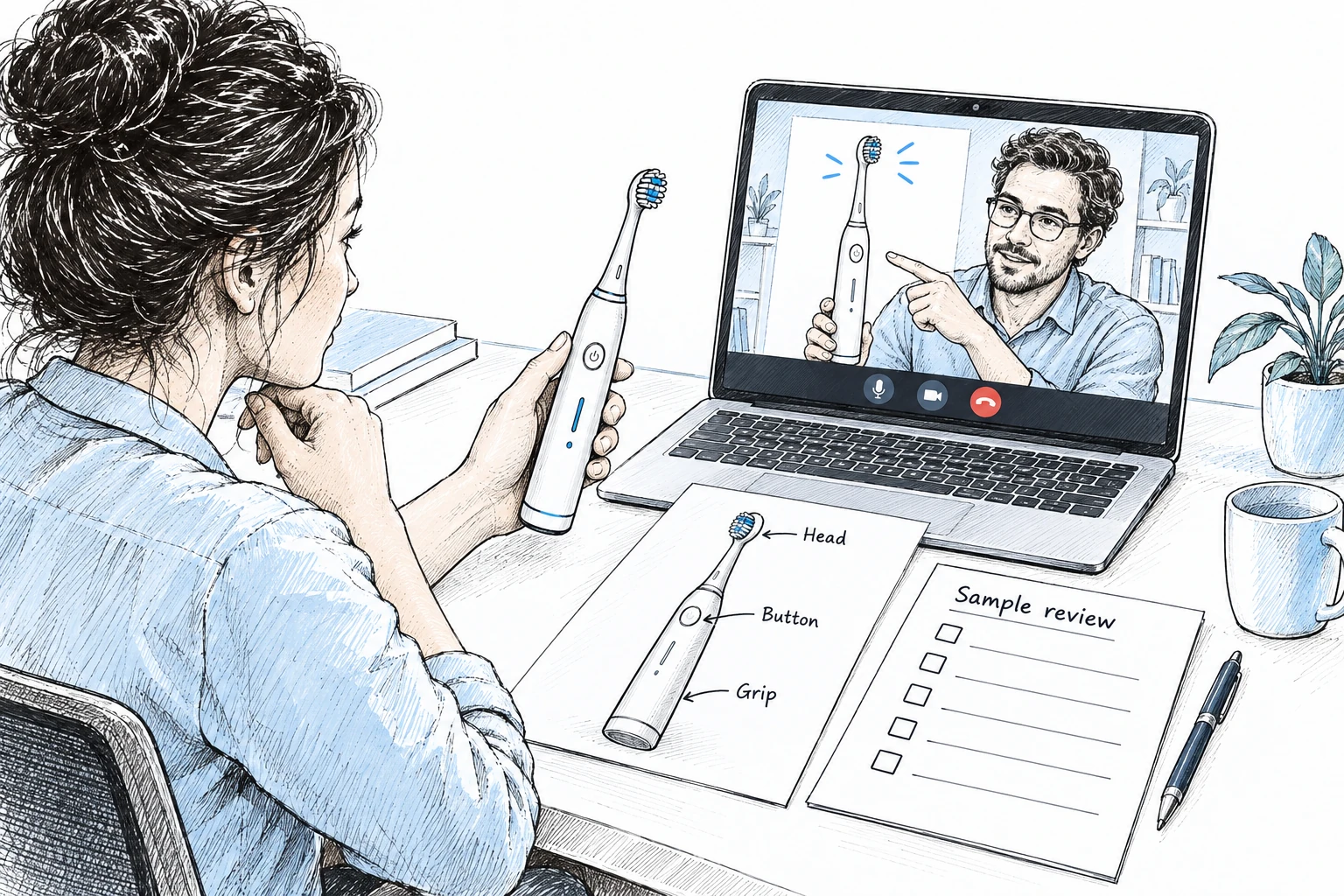
Record the sample’s model, revision, materials, firmware and test conditions, then check it against your specification. Agree how incoming materials, assembly and finished goods will be inspected, and how the supplier will notify you of changes before production.
AQL means acceptance quality limit, a parameter used in a sampling plan. Agree the standard, inspection level, defect categories, sample size and acceptance and rejection numbers. Sampling does not guarantee that every unit is defect-free; specify separate controls for safety-critical defects.
Communication, timing, and payment
Assess how clearly the supplier answers technical questions and records decisions, changes and unresolved issues. Agree working contacts, response times and an escalation process. Allow for local time zones and daylight-saving changes when arranging calls.
Build the schedule around sample approval, tooling, component availability, production capacity, testing and shipment. Tie payment milestones to the agreed deliverables and documents, and check bank or platform protection terms, fees and dispute procedures before relying on them.
5. Warning Signs During Supplier Review
Follow up on inconsistencies before committing to an order. Ask for an explanation and supporting records so you can decide whether the concern has been resolved.
Questions that need evidence
- Documents do not match the entity or model: Compare the certificate or test report with the named legal holder, site, scope, date, and product configuration.
- Unclear subcontracting: Ask which stages are performed at the stated site and which are assigned to outside providers.
- Sample and quote differ: Reconcile materials, accessories, packaging, firmware, and revision before comparing prices.
- Unexplained capacity or lead-time claims: Ask what assumptions, production steps, and current schedule support the estimate.
- Unspecified inspection terms: Put the inspection method, defect categories, sample size, and acceptance criteria in the project documents.
- Pressure to skip review: Keep time to verify identity, product claims, commercial terms, and market-specific responsibilities.
- Vague payment protection: Check the actual contract, platform rules, bank requirements, fees, and dispute process.
- Unclear material or design changes: Agree who may approve substitutions and how the approved version is recorded.
6. Shenzhen and the Pearl River Delta: A Sourcing Context
When reviewing suppliers in Shenzhen and the Pearl River Delta, ask how they source components and arrange tooling, testing, assembly and export shipments. Assess the actual factory and its production responsibilities alongside location, rather than assuming nearby suppliers have the same capabilities or costs.
Review which tasks the factory handles directly, where outside partners are involved and how design and material changes are controlled. For more context, see our Shenzhen oral-care manufacturing overview.
Supplier Review Checklist
Before approving a supplier or project, confirm these four items against the same product configuration:
Confirm the specification, BOM, accessories, packaging, and approved sample.
Check the entity, site, validity, model coverage, and issuing body.
Clarify quantity, tooling, samples, testing, packaging, delivery, and payment.
Document inspection methods, defect categories, acceptance criteria, and change control.
7. Discussing Your Project with Relish Tech
Use the same supplier checklist when discussing a project with Relish Tech. Confirm the contracting company and production responsibilities, review documents for your product and markets, and request a written quotation and schedule.
Relish provides oral-care OEM/ODM services. Share your product brief, target markets, order quantities and development requirements so the team can discuss suitable options and prepare samples and documents for review. Visit our OEM 制造服务页面 或 联系我们的团队.
要点速览
- Use the ten criteria to build a shortlist around the capabilities your product needs.
- Verify each certificate, test report, and claim against the legal holder, site, scope, validity, and exact product.
- Compare written quotes only after aligning the SKU, configuration, tooling, packaging, quantity, and delivery terms.
- Review samples and production controls separately, and agree how changes and defects will be handled.
- Document responsibilities, approvals, changes, payment milestones, and delivery assumptions before production.
Evaluating an Electric Toothbrush Project?
Share your target product, market, and project scope so the team can discuss the relevant OEM/ODM requirements.
联系我们的团队常见问题
How can I verify an electric-toothbrush supplier’s claims?
Start with the company and factory identity. Match specifications, certificates and test reports to the model being quoted, and check documents with their issuers. Review a sample against your brief and arrange a factory audit or independent inspection where it will help resolve remaining questions.
What MOQ should I expect for an electric toothbrush project?
There is no single MOQ that applies to every supplier or configuration. Quantity can depend on the model, color, packaging, custom housing, tooling, and component order requirements. Ask for a written quote at the quantities you are considering and identify any one-time charges separately.
What affects sample, tooling, and development costs?
Costs depend on the product specification, sample type, materials, customization, tooling, testing, packaging, and shipping. Ask which items are included, which are quoted separately, who owns the tooling, and whether any sample charge is credited under the written agreement.
How long does development and production take?
Ask for a schedule covering design approval, tooling, sample revisions, testing, component purchasing, production and shipping. Identify the milestones you must approve and the dependencies that could change the delivery date.
Which certifications or tests are needed in each market?
Requirements depend on the product’s intended use, electrical and wireless features, materials, claims, and destination market. A supplier’s certificate does not automatically cover every model or market. Verify the legal holder, site, scope, validity, and product coverage, and obtain market-specific advice when needed.
Which payment terms are standard when sourcing from China?
Agree payment terms for the transaction in writing, including milestones, fees, delivery documents and dispute handling. If using bank or platform protection, check its eligibility conditions, limits and reimbursement rules.
References and Further Reading
Use primary sources for regulatory questions and verify the current requirements that apply to the product and destination market.
- U.S. Food and Drug Administration. Device Registration and Listing. FDA information.
- U.S. Food and Drug Administration. Quality Management System Regulation (QMSR). FDA QMSR information.
- UK Government. Placing manufactured goods on the market in Great Britain. GOV.UK guidance.
- International Organization for Standardization. ISO 13485:2016, Medical devices — Quality management systems. ISO standard page.
- 欧盟委员会。 Electrical and electronic engineering industries. European Commission information.